TL;DR:
- The Lexus LC500 rear diffuser is an aerodynamic device made from dry carbon fiber that improves high-speed stability by managing underbody airflow. It works in conjunction with other aerodynamic components to generate downforce, reduce drag, and channel heat away from the vehicle, enhancing overall performance. Precise integration, material quality, and proper installation are essential to maximize its benefits and maintain the car’s balance.
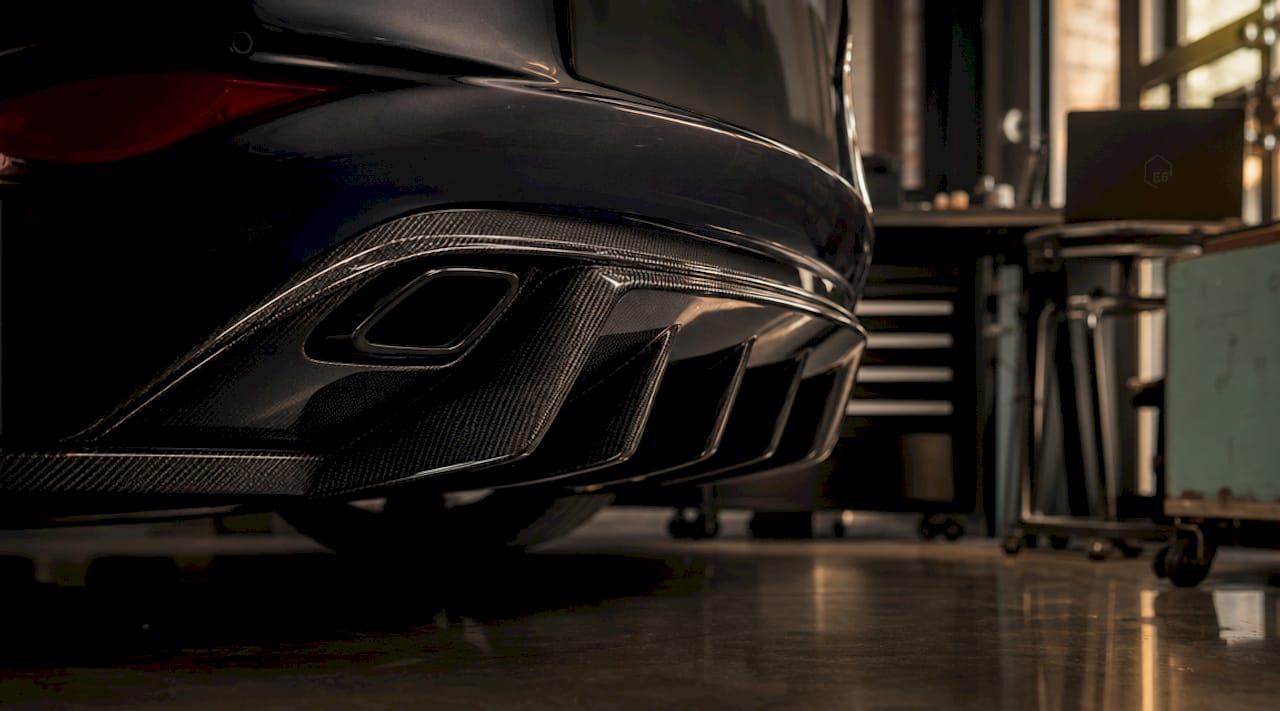
The Lexus LC500 rear diffuser is defined as an aerodynamic device mounted beneath the rear bumper that controls underbody airflow to reduce drag and improve high-speed stability. On the LC500, this component does double duty: it manages the aggressive aerodynamic demands of a 471-horsepower grand tourer while preserving the sculpted luxury-touring aesthetic Lexus engineers spent years refining. Dry carbon fiber has become the material of choice for this application, delivering superior thermal stability over wet layup alternatives while keeping added mass to an absolute minimum.
How does the rear diffuser improve aerodynamic performance on the Lexus LC500?
A rear diffuser works by accelerating airflow beneath the vehicle, reducing pressure under the car relative to the air above it. This pressure differential generates downforce without the drag penalty associated with large wings or spoilers. Properly designed rear diffusers reduce aerodynamic drag and improve vehicle stability at higher speeds by efficiently guiding airflow under the car. For the LC500, which is tuned for high-speed grand touring rather than outright track performance, that stability gain translates directly into driver confidence on sweeping highway curves and mountain passes.
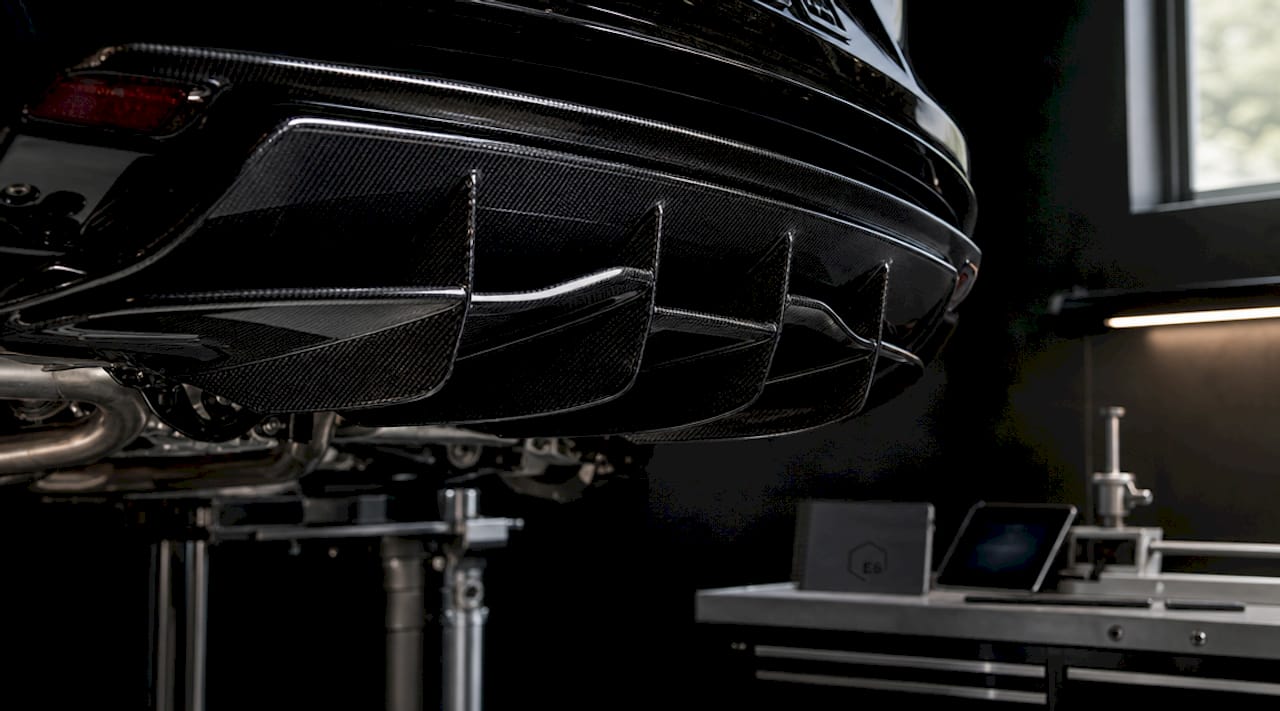
The LC500’s aerodynamic system functions as an interconnected network. The rear diffuser does not operate in isolation. It works in concert with the front splitter and side skirts to maintain balanced pressure across the entire underbody. Disrupting one element without addressing the others creates turbulence pockets that can destabilize the rear axle at speed.
Key aerodynamic benefits of a well-engineered LC500 rear diffuser include:
- Drag reduction: Smoothing the transition between underbody airflow and the wake behind the car lowers the drag coefficient measurably.
- Downforce generation: Accelerated underbody air creates a low-pressure zone that pulls the rear of the car toward the road surface.
- Thermal management: Channeling hot exhaust gases away from the underbody protects suspension components and reduces heat soak.
- Visual aggression: Vertical fins and wide openings signal performance intent without compromising the LC500’s luxury-touring character.
Carbon fiber construction is critical here. The LC500’s near-perfect weight balance is supported by rear-mounted dampers and adaptive suspension, meaning any rear-end mass addition shifts that balance. A dry carbon diffuser weighs a fraction of its fiberglass equivalent, preserving the chassis dynamics Lexus engineered from the factory.
What are the design styles and material options for LC500 rear diffusers?
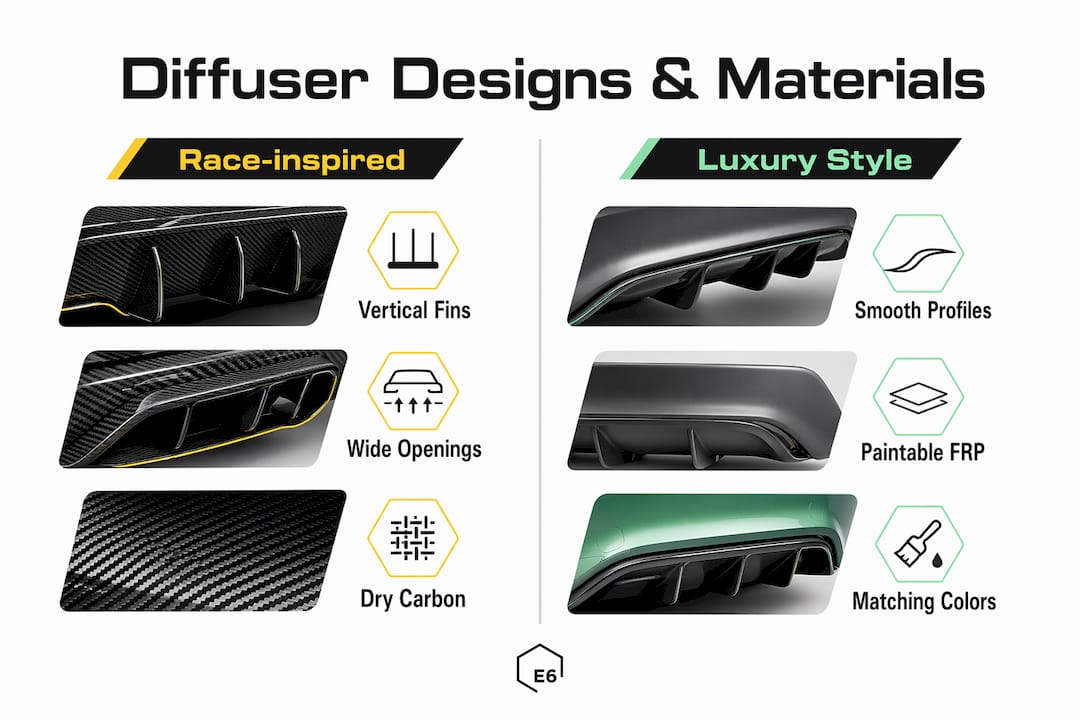
Race-inspired rear diffuser designs use vertical fins and wider openings for aggressive airflow management, while luxury-touring styles prioritize subtlety and refined finishes. For LC500 owners, the choice between these two directions defines the entire character of the rear end. An aggressive multi-fin diffuser with exposed 2×2 twill weave signals track intent. A lower-profile unit with a gloss clear coat reads as a factory-fitted performance option, which suits the LC500’s grand touring identity better for most owners.
| Style | Aesthetic | Material | Best for |
|---|---|---|---|
| Race-inspired | Vertical fins, wide openings, raw weave | Dry carbon fiber (matte) | Track days, aggressive builds |
| Luxury-touring | Low-profile, gloss finish, subtle fins | Dry carbon fiber (gloss) | Street presence, OEM+ look |
| FRP alternative | Any shape, painted finish | Fiberglass reinforced plastic | Budget builds, painted color match |
Material selection matters far beyond appearance. Autoclave-cured 2×2 twill dry carbon delivers a superior strength-to-weight ratio and heat resistance over wet layup processes. This distinction becomes critical when the LC500 is fitted with a high-flow exhaust. Wet carbon and fiberglass alternatives absorb heat from exhaust gases and deform over time, causing fitment gaps and surface cracking. Dry carbon fiber, cured under controlled pressure and temperature in an autoclave, resists deformation even when positioned inches from active exhaust outlets.
FRP remains a viable option for owners who want a painted finish that matches the body color, but it carries real tradeoffs. FRP units add more weight, absorb more heat, and require more frequent inspection for stress fractures around mounting points.
Pro Tip: If you are running an aftermarket exhaust on your LC500, specify autoclave-cured dry carbon for the diffuser without exception. The heat cycling from a performance exhaust will degrade wet carbon and FRP within 18 to 24 months of regular use.
How do diffuser upgrades integrate with the LC500’s exterior modifications?
A rear diffuser upgrade on the LC500 reaches its full potential only when paired with complementary aero components. The E6 High-Type Carbon Wing is engineered to work in aerodynamic balance with a rear diffuser, creating a coherent pressure management system across the rear of the car. Without a matched front splitter generating equivalent downforce at the nose, a high-downforce rear diffuser can create understeer at speed by loading the rear axle disproportionately.
Exhaust integration is equally important. The E6 Motorsports LFA-style exhaust routes exhaust gases through outlets that must align precisely with diffuser cutouts. Mismatched exhaust tip diameters or positions force fabricators to modify the diffuser opening, which compromises structural integrity and aerodynamic efficiency.
Consider these integration priorities before committing to a diffuser upgrade:
- Front aero balance: Pair the diffuser with a front splitter rated for equivalent downforce to maintain neutral handling at highway speeds.
- Exhaust tip compatibility: Confirm exhaust outlet diameter and position match the diffuser’s cutout specifications before ordering.
- Side skirt continuity: Side skirts channel underbody airflow to the diffuser. Gaps between skirt and diffuser create turbulence that negates downforce gains.
- Visual cohesion: Match carbon fiber weave pattern and finish across all exterior components for a factory-quality appearance.
The LC500’s chassis and suspension tuning for weight distribution is precise enough that even a 2-kilogram rear mass addition affects the car’s balance. This is not a platform that tolerates heavy fiberglass body kits without consequence.
Pro Tip: Order your diffuser, wing, and side skirts from the same manufacturer in a single batch. Weave pattern, resin tint, and gloss level vary between production runs, and mismatched carbon components are immediately visible in direct sunlight.
What should LC500 owners consider when selecting and installing a rear diffuser?
Fitment precision separates a professional-grade installation from an aftermarket compromise. Follow this sequence when selecting and installing a rear diffuser on the LC500 or LC500 Convertible:
- Confirm variant compatibility. The LC500 coupe and convertible share the same rear bumper architecture, but subframe bracing differs. Verify the diffuser is specified for your exact build year and body style, covering 2018 through 2025 production.
- Use factory mounting points.
Installation guidelines emphasize maintaining factory mounting points to prevent fitment issues and preserve exhaust performance. Drilling new holes into the rear bumper carrier weakens the structure and voids any warranty on the diffuser itself.
- Measure exhaust tip clearance. Before final installation, mock up the diffuser and measure clearance between exhaust tips and diffuser cutouts at operating temperature. Exhaust systems expand under heat, and a cold-fit measurement can result in contact damage once the car reaches operating temperature.
- Source from verified manufacturers. Specify manufacturers who publish autoclave cure cycle data and provide material certifications. Dry carbon fiber from an unverified source may use inconsistent resin ratios that compromise both heat resistance and structural integrity.
- Plan for professional finishing. Even bolt-on diffusers benefit from professional edge sealing and clear coat inspection after installation. Exposed carbon edges absorb moisture over time, causing delamination from the inside out.
Key takeaways
The Lexus LC500 rear diffuser design delivers maximum value only when dry carbon fiber construction, full aero kit integration, and precise exhaust compatibility are treated as non-negotiable requirements rather than optional upgrades.
| Point | Details |
|---|---|
| Dry carbon is the only viable material | Autoclave-cured 2×2 twill resists exhaust heat that degrades wet carbon and FRP within two years. |
| Full aero kit integration is required | A standalone diffuser without a matched front splitter can destabilize handling at high speed. |
| Exhaust compatibility must be confirmed first | Tip diameter and outlet position must align with diffuser cutouts before ordering any component. |
| Factory mounting points are non-negotiable | Drilling new attachment points weakens the bumper carrier and compromises diffuser fitment. |
| Style choice defines the build’s character | Race-inspired matte weave and luxury-touring gloss finish serve fundamentally different aesthetic goals. |
The real cost of getting the diffuser decision wrong
At E6 Carbon, we see the same mistake repeatedly from LC500 owners who are otherwise meticulous about their builds. They source a visually impressive diffuser from a manufacturer who cannot provide autoclave cure data, install it behind a high-flow exhaust, and return six months later with heat-warped edges and delaminating carbon. The diffuser looked correct in photographs. It was not correct in engineering.
The LC500 is a car that punishes compromise. Lexus engineers spent years calibrating the chassis balance, and the rear end of this platform is particularly sensitive to mass additions and aerodynamic imbalance. A rear diffuser’s performance depends entirely on its integration with other aerodynamic components. A diffuser alone, without front aero to match, does not improve the car. It changes it in ways that are difficult to predict and harder to reverse.
What I recommend consistently: treat the diffuser as the anchor of a complete rear aero system, not as a standalone visual upgrade. Pair it with a verified carbon wing, confirm exhaust compatibility before the diffuser ships, and specify dry carbon without exception. The LC500 carbon fiber guide we publish covers the material science in depth, and it is worth reading before any purchasing decision. The LC500 rewards precision. Give it that.
— E6 Engineering
Upgrade your LC500 with precision-engineered carbon fiber
E6 Carbon engineers dry carbon fiber rear diffusers and complete aero systems specifically for the Lexus LC500, using autoclave-cured 2×2 twill construction that withstands the thermal demands of high-performance exhaust systems. Every component is built to factory mounting specifications, eliminating the fitment compromises that plague generic aftermarket parts.

The E6 Carbon catalog for the LC500 extends beyond diffusers to include carbon wings, side skirts, and interior trim, all matched in weave pattern and finish for visual consistency. If you are building a complete exterior package or sourcing a single precision component, the LC500 dry carbon guide is the starting point. For the full catalog and expert consultation, visit E6 Carbon.
FAQ
What does a rear diffuser actually do on the Lexus LC500?
A rear diffuser accelerates underbody airflow and reduces pressure beneath the car, generating downforce and reducing drag at higher speeds. On the LC500, it also channels exhaust heat away from suspension components.
Why is dry carbon fiber better than wet carbon for an LC500 diffuser?
Dry carbon fiber, cured in an autoclave using 2×2 twill fabric, resists heat deformation from high-performance exhausts far better than wet layup carbon or fiberglass. Wet carbon and FRP alternatives degrade and warp within two years of regular use near active exhaust outlets.
Can I install just a rear diffuser without other aero modifications?
Installing a rear diffuser without a matched front splitter can destabilize handling at speed by loading the rear axle disproportionately. Full aero kit integration, including front splitter and side skirts, produces the best aerodynamic and handling results.
Does the LC500 diffuser fit both the coupe and convertible variants?
Most LC500 diffusers are compatible with both the coupe and convertible from 2018 through 2025, as both share the same rear bumper architecture. Always confirm fitment with the manufacturer for your specific build year and body style before ordering.
How do I match a new diffuser to my existing exhaust setup?
Measure exhaust tip diameter and outlet position before ordering a diffuser, then confirm the diffuser cutouts match those dimensions at operating temperature. Exhaust systems expand under heat, so a cold-fit measurement alone is not sufficient for a precise installation.