Choosing the right performance wheel for your luxury sports car feels overwhelming. With dozens of premium designs claiming superior aesthetics and track capability, how do you separate marketing hype from genuine engineering? This article breaks down the critical selection criteria and showcases proven wheel designs that deliver measurable performance gains while elevating your vehicle’s visual presence.
Table of Contents
- Selection Criteria For Performance Wheels In Luxury Sports Cars
- Forged Monoblock Wheels: Strength And Track Performance
- Multi-Piece Wheels: Customization And Design Flexibility
- Beadlock Wheels For Extreme Performance Conditions
- Carbon Fiber Wheels: The Ultimate Lightweight Option
- Aerodisc Wheels For Aerodynamic And Thermal Performance
- Summary Comparison Of Performance Wheel Designs
- Situational Recommendations: Choosing The Right Wheel For Your Luxury Sports Car
- Explore Premium Forged And Carbon Fiber Wheels At E6 Carbon
- Frequently Asked Questions
Key takeaways
| Point | Details |
|---|---|
| Performance wheels vary by construction, material, and use case | Forged monoblocks, multi-piece, carbon fiber, beadlock, and AeroDisc serve different priorities |
| Forged monoblocks balance weight and rigidity for track performance | Deliver 20-30% weight savings over cast wheels with superior strength-to-weight ratios |
| Multi-piece wheels offer customization but at higher cost and weight | Heavier by up to 15% than monoblocks yet provide bespoke configurations and repairability |
| Carbon fiber is lightest but costly, ideal for high-end track and show cars | Offers 30-40% weight reduction compared to aluminum alloy at 3 to 5 times the cost |
| Beadlock and AeroDisc wheels have niche performance advantages | Specialized for extreme torque handling and aerodynamic optimization respectively |
Selection criteria for performance wheels in luxury sports cars
Before you compare specific wheel designs, you need to understand what matters. The strength-to-weight ratio directly impacts acceleration, braking distance, and cornering response because lighter unsprung mass reduces rotational inertia. Material choice separates budget-conscious enthusiasts from performance purists, with forged aluminum offering excellent value while carbon fiber commands premium pricing for ultimate weight savings.
Construction type influences how your wheels handle stress. Monoblock designs maximize rigidity through single-piece manufacturing, while multi-piece construction trades some structural efficiency for wheel customization benefits like personalized offsets and finishes. Aesthetics matter equally, as your wheels must complement your vehicle’s design language whether you drive a Mercedes-AMG GT or a Lamborghini Huracan.
Track versus street use dictates priorities. Track-focused wheels prioritize thermal management to handle sustained brake heat and extreme cornering loads. Street wheels emphasize ride comfort, durability against potholes, and all-weather performance.
Pro Tip: Match your wheel width to your tire’s optimal contact patch. Wider isn’t always better, as excessive width can reduce steering precision and increase tramlining on grooved pavement.
Forged monoblock wheels: strength and track performance
Single-piece forged construction creates the foundation for serious track performance. The forging process compresses aluminum’s grain structure, producing wheels that exhibit 15-25% higher rigidity than multi-piece alternatives while maintaining lighter weight. This rigidity translates to sharper steering response and more predictable handling at the limit.
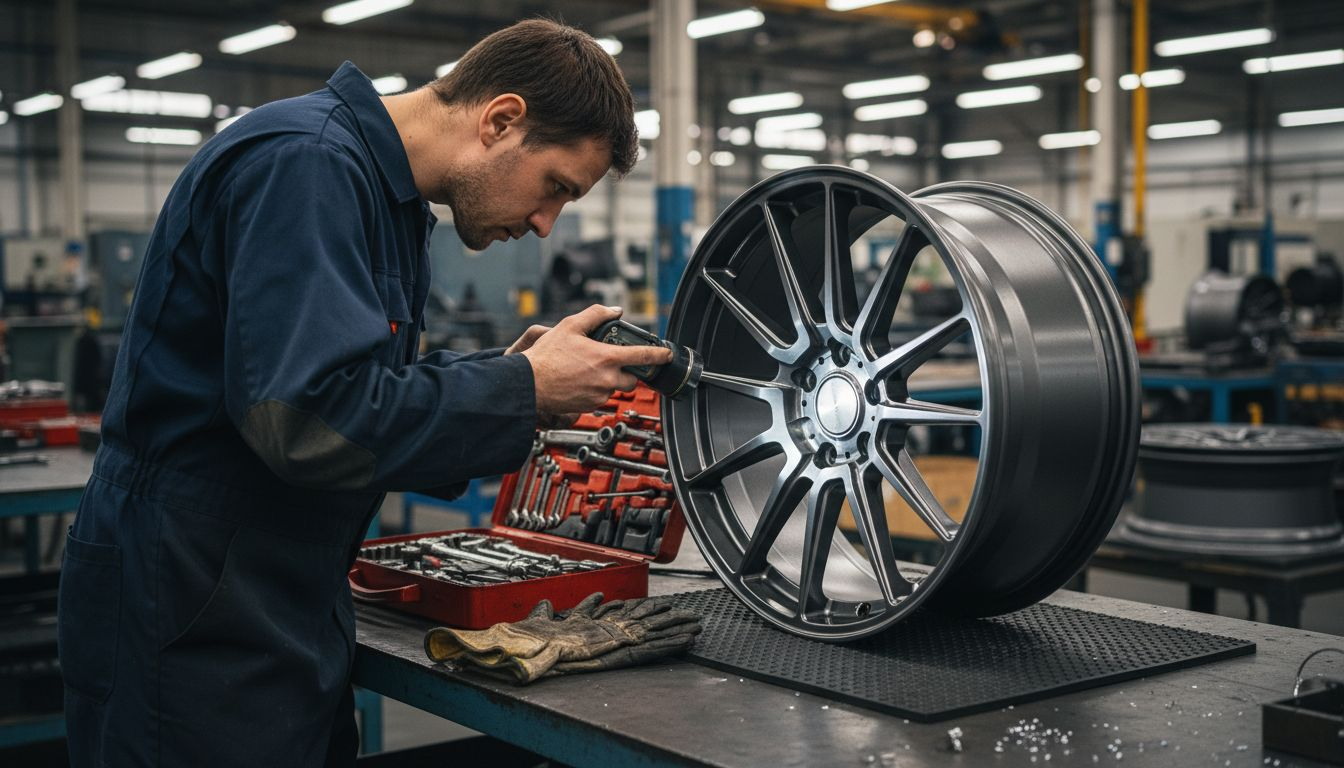
Weight savings reach 20-30% compared to traditional cast wheels. For a full set, you’re removing 20 to 40 pounds of unsprung mass, which improves suspension compliance and reduces lap times. Track driving demands this combination of low weight and high strength because wheels endure lateral forces exceeding 2g during hard cornering.
Cost efficiency makes forged monoblocks attractive. While they command premium pricing over cast options, they cost significantly less than multi-piece forged wheels or carbon fiber alternatives. E6 Forged AR01 wheels exemplify this balance, offering track-proven performance without the complexity of modular construction.
Key advantages include:
- Maximum structural rigidity for precise handling feedback
- Lightweight construction improving acceleration and braking
- Simplified maintenance with no multi-piece assembly points
- Cost-effective entry into premium forged wheel performance
- Proven durability under sustained track abuse
Pro Tip: Inspect forged wheels for heat discoloration around brake rotor contact zones after track sessions. Bluing indicates excessive brake temperatures that may require upgraded cooling ducts or pad compounds.
Multi-piece wheels: customization and design flexibility
Multi-piece wheels separate the center, barrel, and outer lip into distinct components. This modular approach enables bespoke configurations impossible with monoblock designs, letting you specify exact offsets, lip depths, and finish combinations. You can create a truly unique aesthetic that matches your vision perfectly.
The customization comes with weight penalties. Multi-piece wheels typically weigh 10-15% more than comparable forged monoblocks because the assembly hardware and overlapping material add mass. For enthusiasts prioritizing show-winning looks over ultimate track performance, this tradeoff proves acceptable.
Repairability offers long-term value. Curb damage that would total a monoblock wheel often requires replacing only the affected outer lip on a multi-piece design. This modularity reduces ownership costs despite 20-40% higher initial pricing reflecting the bespoke manufacturing and luxury positioning.
E6 Forged AR04 multipiece wheels showcase how premium materials and precision machining create wheels suitable for both street and occasional track use. E6 Forged JF10 wheels demonstrate the design flexibility possible when separate components allow complex spoke geometries.
Key characteristics include:
- Separate rim, center, and lip components for bespoke configurations
- Superior customization options for offsets, widths, and finishes
- Easier repair of individual damaged components
- Higher cost reflecting custom manufacturing and luxury market
- Primarily street and show use with some track capability
Beadlock wheels for extreme performance conditions
Beadlock wheels use mechanical clamping rings to secure tire beads against the rim. This design prevents tire slip during extreme torque application or when running very low air pressures for maximum contact patch. The system can handle up to 50% higher torque loads at low tire pressures than traditional wheels.
Drifting and off-road racing represent ideal applications. When you’re sliding sideways with full throttle or crawling over rocks at 8 psi, conventional tire mounting fails. Beadlocks maintain bead seal under conditions that would unseat normal tires.
Street legality creates limitations. Most jurisdictions prohibit beadlock wheels on public roads due to safety concerns about mechanical failure and noise from the external clamping ring. This restriction confines beadlocks to dedicated track and competition vehicles.
Weight increases come from the additional clamping hardware. The outer ring, bolts, and reinforced bead seat add 3 to 5 pounds per wheel compared to similar-size conventional wheels. For specialized applications requiring their unique capabilities, this weight penalty proves worthwhile.
Key features include:
- Mechanical locking rings preventing tire bead slip
- Extreme torque handling at very low tire pressures
- Ideal for drifting, off-road racing, and rock crawling
- Generally not street legal due to safety regulations
- Heavier than conventional wheels due to clamping hardware
For more details, explore beadlock wheel performance details covering engineering specifications.
Carbon fiber wheels: the ultimate lightweight option
Carbon fiber composite construction delivers the most aggressive weight reduction available. Expect 30-40% lighter wheels compared to forged aluminum equivalents, removing up to 60 pounds from a complete wheelset. This dramatic unsprung mass reduction transforms vehicle dynamics.
Acceleration improves measurably. Less rotational mass means your engine’s power reaches the pavement more efficiently. Braking distances shrink because lighter wheels require less force to decelerate. Handling sharpens as suspension can react faster to road inputs without heavy wheels fighting the dampers.
Manufacturing complexity drives costs to 3 to 5 times forged aluminum pricing. Carbon fiber layup requires specialized tooling, controlled curing cycles, and extensive quality validation. You’re paying for aerospace-grade materials and processes adapted to automotive applications.
Elite track enthusiasts and luxury show car owners represent the primary market. If you’re building a no-compromise track weapon or a concours-winning show car, carbon fiber wheels make sense. For daily driving or mixed-use vehicles, the cost rarely justifies the performance gain.
Maintenance demands attention. Carbon fiber tolerates impacts differently than metal, sometimes developing invisible internal damage. Professional inspection after any significant contact proves essential. Premium carbon fiber wheel options incorporate protective coatings and impact-resistant designs to enhance durability.
Key advantages include:
- Dramatic 30-40% weight reduction versus aluminum alloy
- Significant unsprung mass reduction improving all performance metrics
- Best suited for elite track use and luxury show applications
- Requires careful maintenance and damage inspection
- Premium pricing 3 to 5 times forged aluminum costs
Pro Tip: Carbon fiber wheels perform best in warm conditions. Cold temperatures below 40°F can reduce impact resistance, so avoid aggressive driving during winter warm-up periods.
Compare material properties through carbon fiber vs aluminum weight comparison data showing density and strength characteristics.
AeroDisc wheels for aerodynamic and thermal performance
AeroDisc wheels integrate smooth covers over traditional spoke designs to manipulate airflow. This aerodynamic optimization reduces drag up to 4% and improves brake cooling by 15%, creating measurable performance advantages at sustained high speeds. Wind tunnel testing demonstrates how the smooth surface reduces turbulence around the wheel well.
Brake cooling efficiency increases despite the apparently blocked airflow. The disc channels air across brake rotors more effectively than random turbulence from open spokes. Better heat dissipation maintains consistent brake pedal feel during extended track sessions.
Lap times improve through combined effects. Reduced drag increases straight-line speed while enhanced downforce from smoother underbody airflow aids high-speed stability. Aerodynamic testing showed a 0.015 reduction in drag coefficient, enhancing downforce and stability above 150 mph.
Customization options remain limited. The aerodynamic covers constrain visual design flexibility compared to multi-piece wheels where you can select spoke patterns and finishes. Function takes priority over form.
AeroDisc wheel integration examples show how complete aerodynamic packages optimize vehicle performance. Learn more through aerodynamic aero disc wheel benefits covering wind tunnel validation.
| Metric | Performance Gain |
|---|---|
| Drag reduction | Up to 4% |
| Brake cooling improvement | 15% better heat dissipation |
| Effective speed range | Above 120 mph |
| Drag coefficient reduction | 0.015 Cd improvement |
| Stability enhancement | Measurable above 150 mph |
Key characteristics include:
- Smooth covers reducing aerodynamic drag
- Enhanced brake cooling through directed airflow
- Lap time improvements in high-speed track use
- Limited visual customization versus open spoke designs
- Most effective during sustained speeds above 120 mph
Summary comparison of performance wheel designs
Direct comparison clarifies how different wheel types serve distinct priorities. The table below synthesizes weight, cost, strength, and application data to guide your decision.
| Wheel Type | Weight vs Cast | Cost Range per Set | Strength to Weight | Best Use Case | Customization Level | Repairability |
|---|---|---|---|---|---|---|
| Forged Monoblock | 20-30% lighter | $3,000 to $8,000 | Excellent | Track, street | Low | Replace only |
| Multi-Piece Forged | 15-25% lighter | $6,000 to $15,000 | Very good | Street, show | Extensive | Individual components |
| Carbon Fiber | 30-40% lighter | $15,000 to $40,000 | Outstanding | Elite track, show | Moderate | Limited, costly |
| Beadlock | 5-15% lighter | $2,500 to $6,000 | Good | Drift, off-road | Low | Replace only |
| AeroDisc | 20-30% lighter | $4,000 to $10,000 | Excellent | High-speed track | Very low | Replace only |
Forged monoblocks deliver the strongest performance-to-cost ratio for most enthusiasts. Multi-piece wheels justify their premium when visual customization matters as much as performance. Carbon fiber makes sense only when budget isn’t a constraint and you demand absolute minimum weight.
Beadlock wheels serve specialized extreme-torque applications where conventional mounting fails. AeroDisc wheels optimize aerodynamics for vehicles spending significant time above 120 mph on track.
Situational recommendations: choosing the right wheel for your luxury sports car
Match your wheel selection to how you actually use your vehicle. Follow this decision framework to narrow options:
- Define your primary use case: track-focused, street performance, show car, or balanced mix
- Set your budget tier: entry premium ($3,000 to $6,000), mid-range ($6,000 to $12,000), or elite ($12,000 plus)
- Prioritize weight versus customization based on performance goals versus aesthetic preferences
- Factor in long-term ownership costs including repairability and maintenance requirements
- Consult with fitment specialists to verify clearances for big brake kits and suspension modifications
Track-focused builds demand forged monoblocks or carbon fiber. The weight savings and rigidity translate to measurable lap time improvements. Street-driven cars benefit from multi-piece wheels offering customization without sacrificing too much performance. Show cars justify carbon fiber’s premium for the ultimate visual and weight statement.
Budget tiers create natural segmentation. Forged monoblocks offer outstanding value as entry-level premium wheels. Multi-piece forged wheels satisfy enthusiasts wanting bespoke aesthetics. Carbon fiber serves customers building no-compromise vehicles regardless of cost.
Durability considerations matter for daily drivers. Harsh winters, poor road conditions, and urban potholes favor repairable multi-piece designs over monoblocks requiring complete replacement after damage. Custom multi-piece wheel options provide this flexibility.
Pro Tip: Order wheels with winter delivery for spring installation. Manufacturers often offer better pricing during slow winter months, and you’ll avoid spring backorders when enthusiasts rush to prepare for driving season.
Explore premium forged and carbon fiber wheels at E6 Carbon
Ready to transform your luxury sports car with wheels engineered for performance and crafted for aesthetics? E6 Carbon specializes in premium forged and carbon fiber wheels tailored to your exact specifications. Our SS7 multipiece wheels combine bespoke design flexibility with track-capable strength, while AR03 forged wheels deliver lightweight performance at accessible pricing.
Every wheelset reflects precision engineering and meticulous craftsmanship. We work directly with luxury sports car owners to create custom configurations matching your vehicle’s capabilities and your driving ambitions. Browse our complete collection of premium performance wheels and discover how the right wheels elevate both performance and presence.
Frequently asked questions
Does lighter weight always mean better performance?
Lighter wheels improve acceleration, braking, and handling by reducing unsprung mass, but only if strength remains adequate. Excessively light wheels may flex under hard cornering or fail under track stress. Match weight reduction to your actual use case and always verify load ratings exceed your requirements.
Are beadlock wheels legal for street use?
Most jurisdictions prohibit beadlock wheels on public roads due to safety concerns about mechanical failure and debris from external clamping rings. Check your local vehicle codes before purchasing. Beadlocks remain legal and valuable for dedicated track, drift, and off-road competition vehicles.
How do I maintain carbon fiber wheels?
Inspect carbon fiber wheels regularly for impact damage, even minor curb contact. Clean with pH-neutral soap and soft microfiber towels, avoiding harsh chemicals that degrade protective coatings. Professional inspection after any significant impact ensures internal structure remains sound. Store in climate-controlled environments when possible.
Should I prioritize aesthetics or track function?
Balance depends on your driving habits. Track-focused cars demand lightweight, rigid wheels regardless of appearance. Street and show cars can emphasize aesthetics through wheel customization while maintaining adequate performance. Most enthusiasts find forged monoblocks or quality multi-piece wheels satisfy both priorities.
When should I consult a professional for wheel fitment?
Consult fitment specialists whenever you’re upgrading to significantly wider wheels, installing big brake kits, or lowering suspension. Clearance issues with calipers, fenders, and suspension components can cause dangerous failures. Professional verification ensures safe fitment and prevents costly mistakes from incorrect offset or width selections.