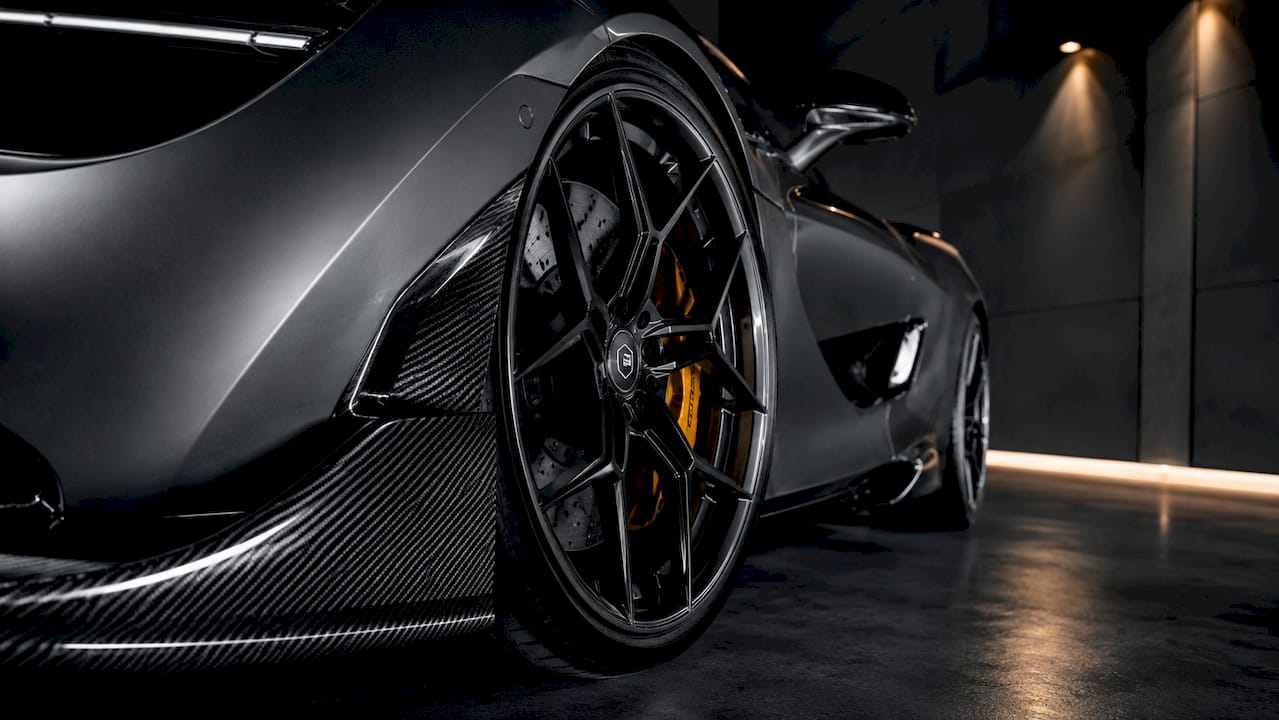
TL;DR:
- Cheap carbon fiber parts fail at high speeds due to internal defects like voids and inconsistent resin bonding from wet layup manufacturing. These flaws cause sudden delamination under aerodynamic loads, risking structural failure and safety, especially at track speeds. Only properly manufactured prepreg autoclave-cured parts reliably maintain integrity and performance.
Cheap carbon fiber parts fail at high speeds because they contain internal defects, including trapped air pockets and inconsistent resin bonding, that destroy structural integrity under aerodynamic load. These are not cosmetic flaws. They are manufacturing failures that cause wings, splitters, and side skirts to violently flex, warp, or detach at triple-digit speeds. Supercar owners driving AMG GT, McLaren 720S, or Lexus LC500 platforms face a specific risk: budget wet-layup components look identical to motorsport-grade parts until the moment they fail. Understanding why cheap carbon fiber parts fail is the first step toward making a decision that protects both your car and your life.
Why cheap carbon fiber parts fail at high speeds: wet layup vs. prepreg
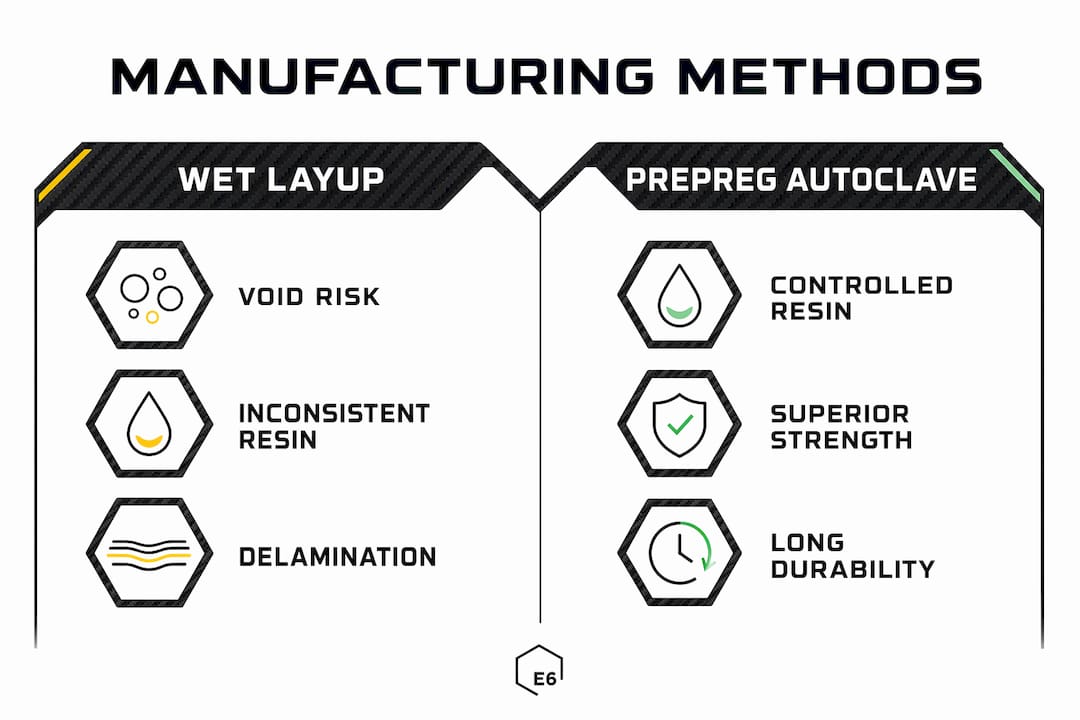
The manufacturing process is the single biggest predictor of carbon fiber structural integrity. Budget parts use wet layup, a process where dry fiber is hand-saturated with liquid resin on an open mold. That process introduces 10–25% variability in fiber alignment and resin saturation. That level of inconsistency means no two parts from the same production run carry the same load capacity.
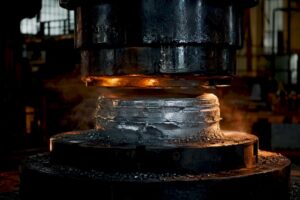
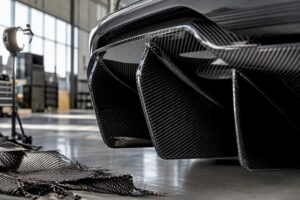
Motorsport-grade manufacturing uses prepreg, where resin is pre-impregnated into the fiber at a controlled 30–35% ratio before autoclave curing. The result is a part with uniform fiber orientation, zero excess resin, and no trapped voids. E6 Carbon uses autoclave-cured 2×2 twill construction across its aerodynamic catalog, which eliminates the variability that makes budget parts dangerous. The prepreg vs. wet layup difference is not a marketing distinction. It is an engineering one with direct safety consequences.
Parts priced more than 30% below market rate are a reliable red flag for wet layup construction and inadequate quality controls. The cost savings come directly from skipping the process controls that keep parts intact at speed.
Pro Tip: Before purchasing any carbon fiber aerodynamic component, ask the supplier for their resin-to-fiber ratio specification and curing method. A legitimate manufacturer answers immediately. A budget supplier cannot.
| Feature | Wet layup (budget) | Prepreg autoclave (motorsport) |
|---|---|---|
| Resin control | 10–25% variability | 30–35% controlled ratio |
| Fiber alignment | Inconsistent, hand-applied | Uniform, pre-impregnated |
| Void content | High (trapped air pockets) | Near-zero |
| Structural consistency | Part-to-part variation | Repeatable across production |
| Failure risk at speed | High | Low |
How do cheap carbon fiber parts fail structurally at speed?
Carbon fiber does not fail like metal. Carbon fiber failure modes include brittle fracture, delamination, and sudden breakage with no prior visible deformation. Metal bends before it breaks, giving you a warning. Carbon fiber gives you nothing. At 80 mph or above, aerodynamic pressure on a compromised splitter or rear wing is constant and intense. A part with internal voids does not gradually weaken. It holds, then fails completely.
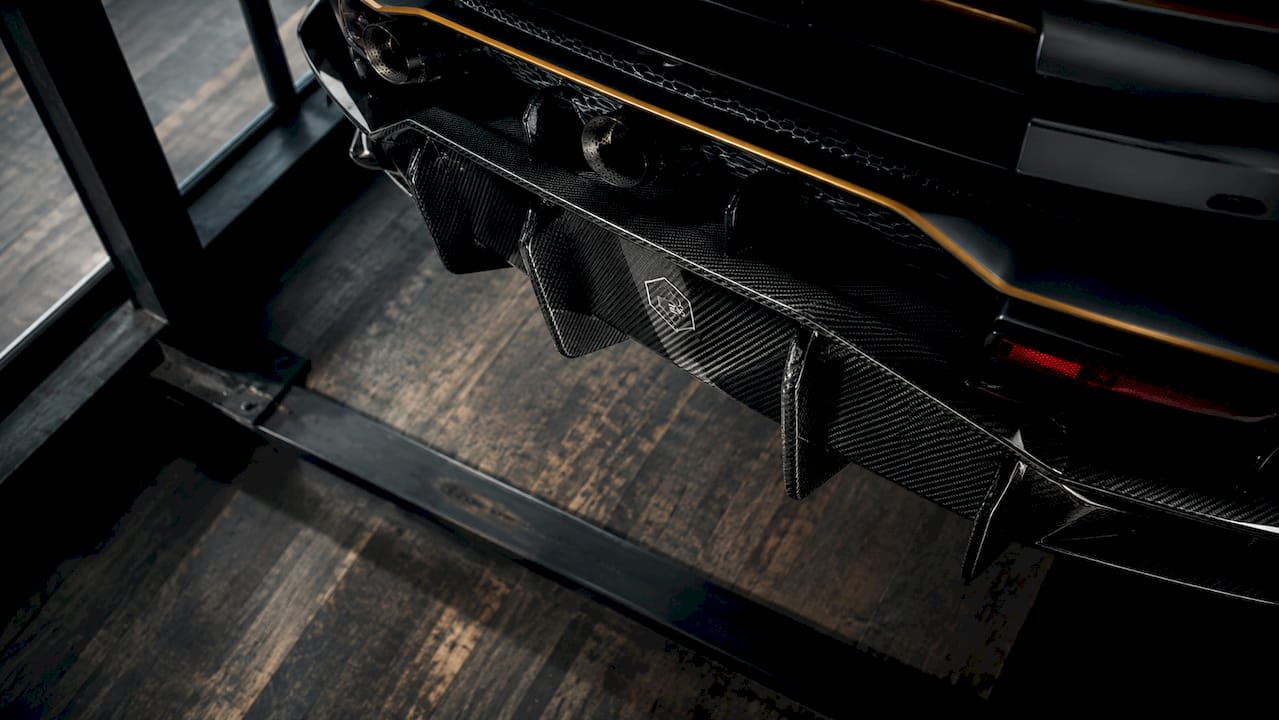
Delamination is the most common failure mode in budget parts. Internal layers separate when trapped air pockets or poor resin bonding allow the plies to peel apart under load. Once delamination begins, it is irreversible. Replacement is the only option, and minor chip repairs alone cost $300–$500. Full structural failures cost far more, and that assumes the part fails on a parked car rather than at speed.
The warning signs owners miss include:
- Hollow sound when tapping the part surface, indicating internal void or delamination
- Hairline cracks along the weave, especially near mounting points or edges
- Flex or vibration at highway speeds that was not present at installation
- Bubbling or lifting of the clear coat, which signals resin breakdown beneath the surface
“Consumers often underestimate the fatal nature of delamination and assume visual inspection suffices. Microscopic voids can cause sudden critical failures at high aerodynamic loads.”
Delamination-driven failure in budget parts has been documented within three months of installation, particularly under track-day vibration and sustained aerodynamic load. That timeline is not a worst-case scenario. It is a documented pattern.
Why does bonding and assembly determine whether a carbon fiber part survives?
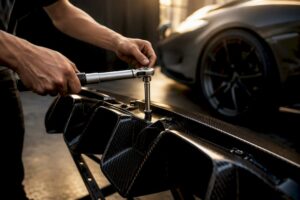
The joining method is where most cheap carbon fiber parts initiate their failure. Drilling without backing boards causes ply blow-out, the leading mechanical cause of delamination under high-speed vibration. Budget manufacturers skip this step because it adds time and cost. The result is a fastening point that looks secure but begins separating from the first hard acceleration.
Surface preparation before bonding is equally critical. Mold release agents and surface oils, if not removed through abrasion, solvent wipes, or plasma treatment, cause adhesive bonds to look correct initially but fail after humidity cycling or mechanical stress. A front splitter bonded to an untreated surface will hold in a showroom and fail on a highway on-ramp.
Proper assembly for any aerodynamic carbon fiber component requires:
- Surface abrasion and solvent cleaning of all bonding surfaces before adhesive application
- Plasma or primer treatment where long-term adhesive durability is required
- Backing boards at all drill points to prevent ply blow-out during fastener installation
- Washers and calibrated torque limits on all mechanical fasteners to distribute load without crushing the laminate
- Water sealing at all joints and edges to prevent moisture ingress that accelerates delamination
Pro Tip: All front splitters, side skirts, and wings require professional installation and strict water-sealing. E6 Carbon holds zero liability for improper installation or subsequent damages. Never self-install aerodynamic components on a vehicle driven at track speeds.
How does E6 Carbon compare to budget carbon fiber parts?
Process control and traceability determine quality in carbon fiber manufacturing, not just material grade. A supplier can use aerospace-grade fiber and still produce a dangerous part if resin ratios, curing schedules, and laminate orientation are not locked and verified. E6 Carbon builds every aerodynamic component to a documented laminate schedule with zero tolerance for process deviation.
The difference shows up in real-world performance. E6 Carbon’s autoclave-cured 2×2 twill components deliver motorsport-grade rigidity that remains completely unyielding under the aerodynamic loads generated by a McLaren 720S or Lamborghini Urus at speed. Budget parts flex. Flexing parts generate vibration. Vibration accelerates delamination. The Lexus LC500 dry vs. wet guide illustrates exactly how this plays out on a specific platform.
| Quality factor | Budget wet layup | E6 Carbon standard |
|---|---|---|
| Curing method | Open mold, ambient cure | Autoclave, controlled temperature |
| Resin ratio verification | None | Locked laminate schedule |
| Fiber orientation | Variable | Engineered per load direction |
| Delamination resistance | Low | High |
| Installation requirement | Often self-installed | Professional installation mandatory |
E6 Carbon’s catalog covers Mercedes-AMG, Lexus LC500, McLaren, Lamborghini, Ferrari, and BMW M platforms with fitment-verified components. Weight reduction and unsprung weight benefits are real only when the part stays intact. A detached splitter at 120 mph saves no weight and adds catastrophic risk.
Key Takeaways
Cheap carbon fiber parts fail at high speeds because wet layup manufacturing creates internal voids, inconsistent fiber alignment, and weak bonding that cannot survive sustained aerodynamic load.
| Point | Details |
|---|---|
| Manufacturing process is the root cause | Wet layup introduces 10–25% variability; prepreg autoclave curing eliminates it. |
| Delamination is irreversible | Once internal layers separate, replacement is the only fix, often within three months. |
| Bonding and fastening matter as much as material | Skipping surface prep or backing boards initiates failure at mounting points. |
| Price signals risk | Parts priced more than 30% below market rate indicate high-risk manufacturing shortcuts. |
| Professional installation is non-negotiable | All aerodynamic parts require expert mounting and water-sealing to perform safely at speed. |
The uncomfortable truth about carbon fiber quality
Carbon fiber is not simply a lighter metal substitute. It is a resin-limited composite with anisotropic properties, meaning its strength is directional. Load it correctly and it outperforms steel at a fraction of the weight. Load it incorrectly, or manufacture it with inconsistent fiber orientation, and it fails without warning.
The supercar community has a blind spot here. Owners who spend $300,000 on a McLaren 720S will spend $400 on a carbon fiber wing because it “looks right.” The weave pattern is identical. The failure mode is not. Budget parts delay the inevitable cost and concentrate the risk at the worst possible moment, which is a track day at 140 mph, not a parking lot at 5 mph.
What I have seen consistently is that the failure is never the carbon fiber itself. It is the process behind it. Even mid-tier suppliers with documentation can produce inconsistent parts when real process controls are absent. True quality lives in traceability, material testing, and locked curing schedules, not in paper certifications or visual inspection. Owners who prioritize certified, process-verified components from manufacturers like E6 Carbon are not paying for aesthetics. They are paying for the engineering discipline that keeps a part on the car instead of on the road.
— E6 Engineering
High-performance carbon fiber built to stay on the car
E6 Carbon engineers every aerodynamic component to the same standard as the motorsport programs that inspired them. From the LB Style dry-carbon hood for the Lamborghini Huracan to the full VNS body kit for the Urus, each part is autoclave-cured, fitment-verified, and built to remain unyielding under real aerodynamic load.

Every component in the E6 Carbon catalog is designed for professional installation with full water-sealing at all joints. The engineering precision that goes into manufacturing means nothing if the installation is compromised. Visit e6carbon.com to explore the full range of carbon fiber body kits, aerodynamic components, and platform-specific fitment guides for Mercedes-AMG, Lexus LC500, McLaren, and Lamborghini builds.
FAQ
Why do cheap carbon fiber parts fail so quickly?
Cheap parts use wet layup manufacturing, which creates 10–25% variability in fiber alignment and resin saturation. Those inconsistencies produce internal voids that delaminate under aerodynamic load, often within three months of use.
What does delamination look like on a carbon fiber part?
Delamination appears as a hollow sound when tapped, bubbling clear coat, or hairline cracks near mounting points. Once internal layers separate, the part cannot be repaired and must be replaced.
Is all carbon fiber the same quality?
Carbon fiber quality depends entirely on the manufacturing process, not the material itself. Prepreg autoclave-cured parts with controlled 30–35% resin ratios perform fundamentally differently from wet layup parts with uncontrolled resin saturation.
Can I install carbon fiber aerodynamic parts myself?
Professional installation is mandatory for all front splitters, side skirts, and wings. Improper mounting, missing backing boards, or inadequate water-sealing initiates delamination and creates serious safety risks at speed.
How do I spot a high-risk carbon fiber part before buying?
Parts priced more than 30% below market rate are a reliable indicator of wet layup construction and absent quality controls. Ask any supplier for their resin-to-fiber ratio, curing method, and laminate schedule before purchasing.