TL;DR:
- The E6 Motorsports LFA Style LC500 Exhaust combines dual-character sound modes, switching between drone-free cruising and a high-pitched supercar scream, with a valve-controlled system. The titanium or stainless steel material choices produce distinct tonal qualities, with titanium favoring high-frequency harmonics and stainless steel offering a deeper rumble. A mandatory diffuser replacement is required to accommodate the center-exit layout, and professional installation is strongly recommended.
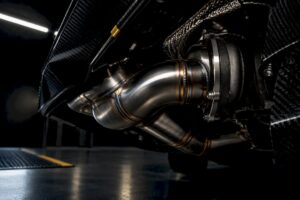
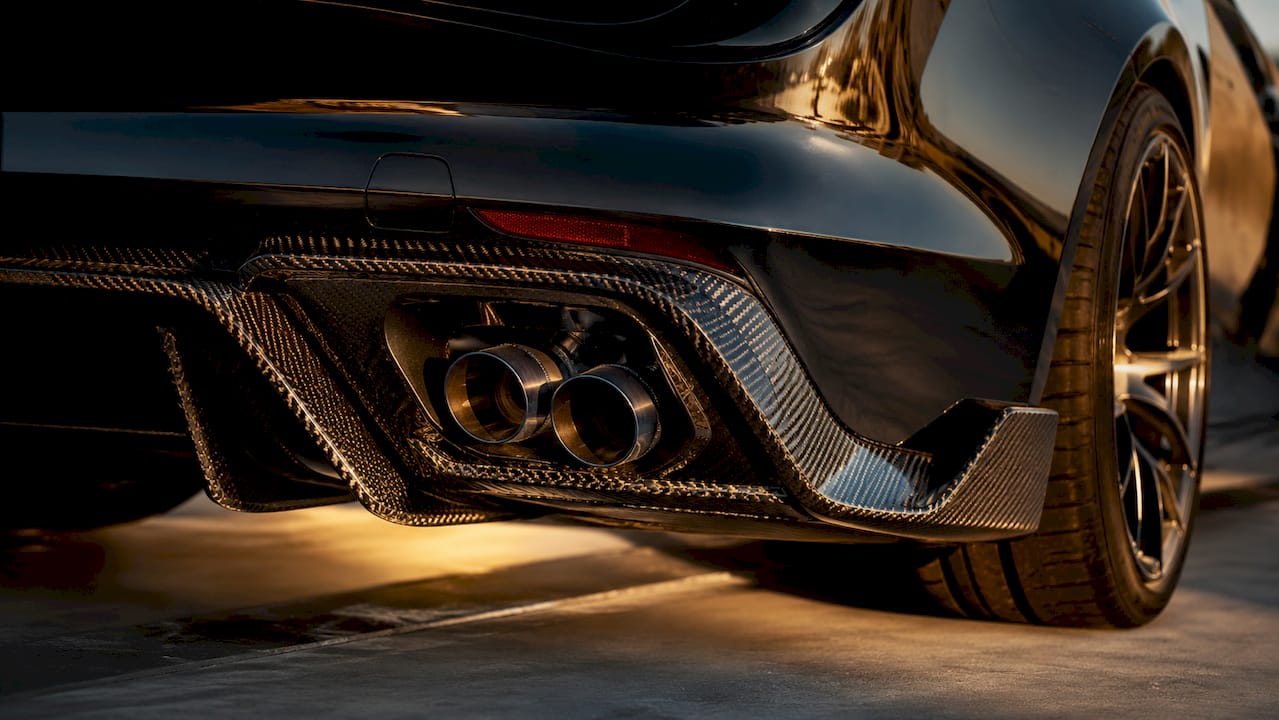
The acoustic engineering of the E6 Motorsports LFA Style LC500 Exhaust is defined as a dual-character sound system that switches between a drone-free executive cruise and a high-pitched supercar howl, all within a single valved muffler architecture. This is not a generic aftermarket pipe swap. E6 Carbon engineered this system around the same acoustic principles Yamaha applied to the original Lexus LFA, targeting the 6–8 kHz frequency range that gives the LFA its signature exotic scream. The system ships in titanium or stainless steel builds, each producing a distinctly different tonal character. A mandatory dry carbon diffuser replacement and professional installation complete the fitment. This is the exhaust the LC500’s naturally aspirated V8 deserves.
How does the E6 Motorsports valved exhaust achieve dual-character sound?
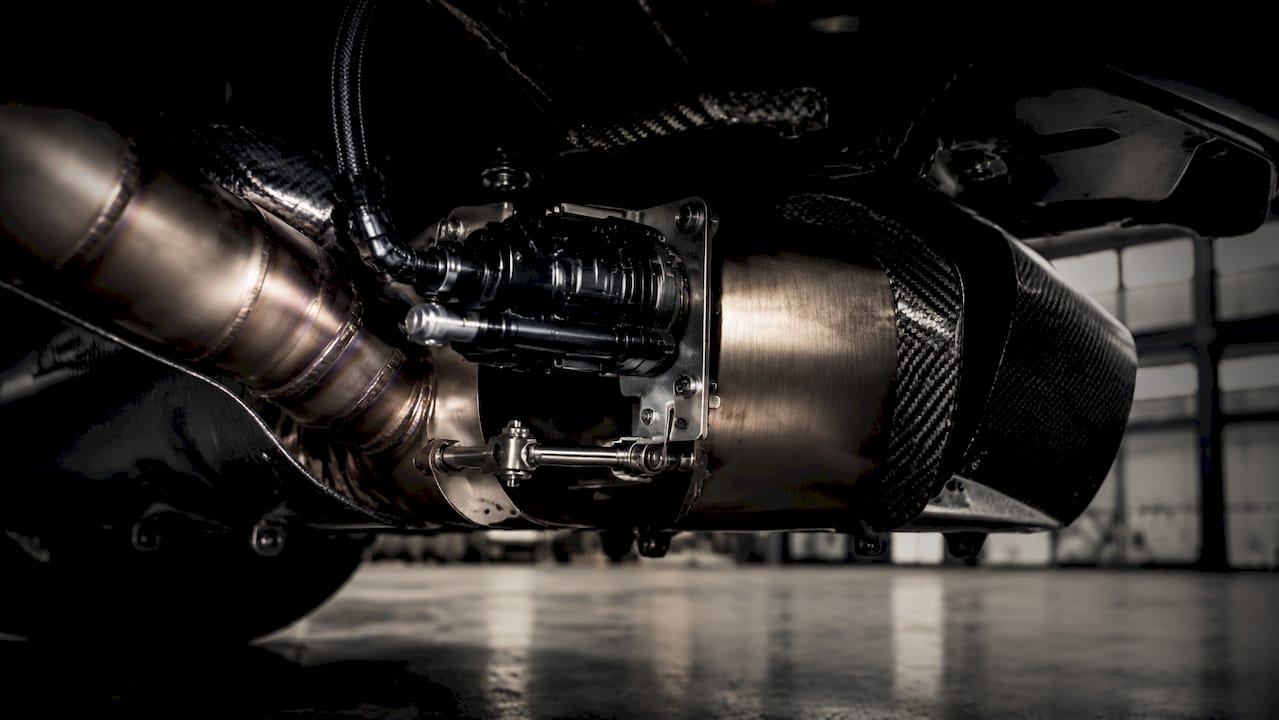
The E6 Motorsports valved exhaust system achieves dual-character sound through electronically controlled valves that redirect exhaust flow between two distinct paths. The engineering logic is straightforward, but the acoustic result is anything but ordinary.
Closed valve mode routes exhaust gases through sound-absorbing baffles inside the muffler body. The result is a refined, drone-free tone that suits executive highway cruising without fatiguing the cabin. LC500 owners who commute or travel long distances will find this mode indistinguishable from a well-tuned luxury GT car.
Open valve mode bypasses those baffles entirely. Exhaust gases travel through a tuned pipe design that maximizes high-frequency harmonics. The sound that emerges targets the same 6–8 kHz register the Lexus LFA’s titanium dual-stage rear silencers were engineered to produce. That frequency range is what separates an exotic scream from a generic V8 rumble.
The key acoustic benefits of the open valve mode include:
- High-frequency harmonic amplification that mirrors the LFA’s signature pitch
- Cleaner tonal separation between exhaust pulses at climbing RPMs
- Stronger in-cabin auditory feedback without resonance or boom
- A sound character that rewards hard acceleration without sounding coarse at idle
Yamaha designed the LFA’s exhaust and intake as musical instruments to create natural surround sound inside the cabin. E6 Carbon’s valve architecture borrows that philosophy and applies it to the LC500’s 5.0-liter V8 platform.
Pro Tip: Switch to open valve mode before entering a tunnel or canyon road. The acoustic feedback at 4,000–7,000 RPM in those environments is genuinely extraordinary.
Titanium vs. stainless steel: which material defines your exhaust tone?
Material selection is the single most consequential decision in LC500 exhaust design. Titanium and stainless steel produce fundamentally different sounds, and neither is universally superior. The right choice depends on the tonal character you want from your V8.
Titanium construction emphasizes high-frequency harmonics, producing a sharper, more exotic pitch that closely mirrors the LFA’s acoustic signature. Titanium is also significantly lighter than stainless steel, which reduces unsprung mass at the rear of the vehicle. The trade-off is cost: titanium fabrication commands a meaningful premium over stainless construction.
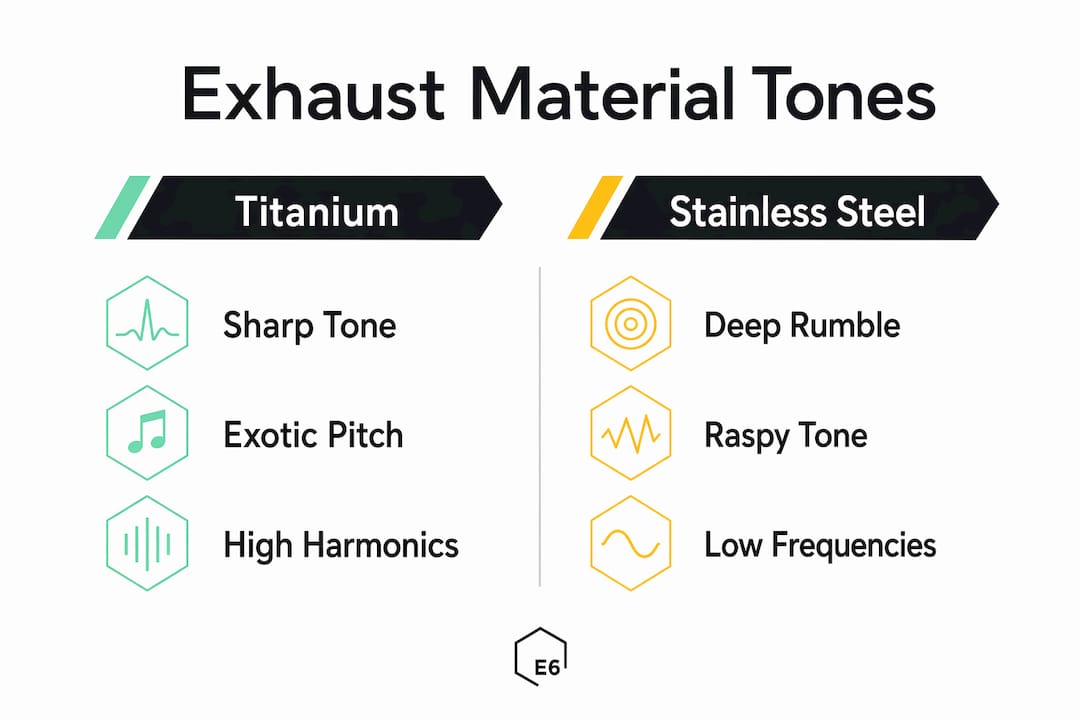
Stainless steel delivers a deeper, raspier V8 rumble with greater low-frequency presence. It is more forgiving in terms of heat cycling and corrosion resistance over long-term daily use. Owners who prefer a traditional American muscle-influenced tone over a European supercar pitch will find stainless steel the more satisfying choice.
| Feature | Titanium | Stainless Steel |
|---|---|---|
| Tonal character | Sharp, exotic, high-frequency | Deep, raspy, low-frequency rumble |
| Weight | Significantly lighter | Heavier |
| Durability | Excellent, heat-resistant | Excellent, corrosion-resistant |
| Cost | Higher | More accessible |
| LFA sound proximity | Very close | Moderate |
The LFA’s exhaust note uses equal-length headers and helical resonators to create a musical scream rather than a generic roar. Titanium’s acoustic properties preserve those high-frequency harmonics better than stainless steel at equivalent pipe geometries. That is why titanium is the preferred choice for owners who want the closest approximation to LFA acoustics.
Pro Tip: If you drive the LC500 daily in a coastal or high-humidity environment, stainless steel offers better long-term corrosion resistance with minimal acoustic compromise.
Why does the center-exit layout require diffuser replacement?
The center-exit exhaust routing on the E6 Motorsports system is physically incompatible with the LC500’s factory rear diffuser. The factory diffuser replacement is not optional. It is a mandatory fitment step, and skipping it creates both aesthetic and functional problems.
The required installation sequence follows this order:
- Remove the factory rear diffuser completely from the LC500’s underbody. The OEM unit blocks the center-exit exhaust outlets and cannot be modified to accommodate the new routing.
- Install the E6 LC500-F LFA-Style Dry Carbon Diffuser in its place. This component is engineered specifically for center-exit exhaust geometry and integrates cleanly with the E6 Motorsports exhaust tips.
- Route and mount the exhaust system with the new diffuser in place, confirming clearance at all heat-sensitive contact points.
- Verify valve function electronically before closing the underbody. Valve actuation must be confirmed in both open and closed positions before the vehicle returns to road use.
- Conduct a professional post-installation inspection covering all mounting hardware, heat shielding, and valve wiring.
The dry carbon diffuser serves two purposes beyond fitment. Aerodynamically, it manages airflow exiting the underbody at speed, reducing turbulence around the exhaust outlets. Visually, the autoclave-cured 2×2 twill weave finish complements the exhaust tips and elevates the LC500’s rear aesthetic to a level consistent with the car’s grand touring character.
Professional installation is strongly recommended for this system. E6 Carbon holds zero liability for damage, fitment failure, or performance issues resulting from improper installation. Valve wiring, exhaust routing, and diffuser alignment all require specialist knowledge and proper tooling.
How does the LFA-inspired exhaust note improve driver connection?
The LFA’s exhaust note was never purely aesthetic. Yamaha engineered it to serve a functional purpose: giving the driver real-time acoustic feedback on engine RPM and traction status without requiring instrument checks. E6 Carbon’s LFA-inspired design for the LC500 carries that same philosophy forward.
The acoustic benefits for LC500 drivers extend well beyond sound quality:
- RPM awareness: The rising pitch in open valve mode gives an intuitive sense of engine speed that mirrors the LFA’s driver auditory feedback system. Drivers naturally modulate throttle input based on sound alone.
- Traction feel: At the limit of grip, the exhaust note changes character subtly. That acoustic shift registers faster than any dashboard warning light.
- Engagement without fatigue: The dual-mode design means you get full acoustic engagement when you want it and executive calm when you do not. Valved exhaust systems provide this flexibility for both executive cruising and high-performance driving modes.
- Psychological reward: The high-frequency LFA howl triggers a measurably different emotional response than a low-frequency rumble. It signals precision and mechanical sophistication rather than brute force.
“Yamaha designed the LFA’s exhaust and intake as musical instruments, routing tuned sound to multiple cabin areas so the driver could sense engine RPM and traction status through hearing alone, without looking at gauges.”
That engineering principle is exactly what separates the E6 Motorsports system from a generic high-performance exhaust. The sound is not decoration. It is information.
Key Takeaways
The E6 Motorsports LFA Style Exhaust delivers genuine dual-character acoustics through valved muffler engineering, material selection, and mandatory diffuser integration that no other LC500 aftermarket system replicates.
| Point | Details |
|---|---|
| Valved dual-mode design | Closed valves deliver drone-free luxury cruising; open valves unlock an LFA-inspired high-frequency howl. |
| Titanium vs. stainless steel | Titanium produces a sharper, exotic pitch closer to the LFA; stainless steel delivers a deeper V8 rumble. |
| Diffuser replacement is mandatory | The center-exit layout requires removing the factory diffuser and fitting the E6 LC500-F Dry Carbon Diffuser. |
| Professional installation required | Valve wiring and exhaust routing demand specialist tools; E6 Carbon disclaims liability for improper installs. |
| Sound serves a functional role | The LFA-inspired acoustic tuning improves RPM awareness and traction feedback beyond pure aesthetics. |
The exhaust note as a design decision, not an afterthought
Working with the LC500 platform, one thing becomes clear quickly: the factory exhaust is competent but deliberately muted. Lexus tuned it for the broadest possible buyer, which means it satisfies no one completely. The 5.0-liter naturally aspirated V8 in this car has the mechanical architecture to produce something genuinely special. It just needs the right acoustic path to express it.
What makes the E6 Motorsports system stand apart is the engineering discipline behind the valve design. Most valved exhausts on the market treat the open mode as the “loud setting” and the closed mode as the “quiet setting.” E6 Carbon treats both modes as distinct acoustic characters, each tuned independently. The closed mode is not just quieter. It is genuinely refined. The open mode is not just louder. It is harmonically structured.
The titanium versus stainless steel decision is one I would not rush. If you drive the LC500 as a grand tourer and value the LFA connection deeply, titanium is the correct answer. If you want a more traditional V8 personality with long-term durability as the priority, stainless steel delivers without compromise. Both are legitimate choices. Neither is wrong.
The dry carbon diffuser is not an accessory. It is part of the system. Owners who try to retain the factory diffuser or delay that replacement will find the exhaust aesthetically incomplete and potentially problematic at the outlet. Get the full fitment done correctly, by a professional, the first time.
— E6 Engineering
Complete your LC500 with E6 Carbon’s aerodynamic components
The E6 Motorsports LFA-style exhaust upgrade changes how the LC500 sounds and presents at the rear. The logical next step is ensuring the rest of the car matches that standard.

E6 Carbon’s Lexus LC500 catalog includes the mandatory E6 LC500-F LFA-Style Dry Carbon Diffuser, autoclave-cured in 2×2 twill for structural integrity and a finish that holds up under heat cycling. The same catalog extends to the Z-Carbon Aero Kit, the AeroTech Carbon Fiber Hood, and a full suite of aerodynamic components engineered to the same fitment standard as the exhaust system. Every component ships with E6 Carbon’s “Fitment First” guarantee. For owners who want to understand the full scope of LC500 carbon fiber options before committing, the LC500 dry vs. wet carbon guide covers material differences, weight implications, and finish durability in detail.
FAQ
What does the E6 Motorsports valved exhaust sound like with valves closed?
With valves closed, the exhaust routes through sound-absorbing baffles that produce a refined, drone-free tone suited to highway cruising. The cabin remains quiet and composed, consistent with the LC500’s grand touring character.
Is the diffuser replacement truly mandatory for the E6 LC500 exhaust?
Yes. The center-exit exhaust layout is physically incompatible with the factory diffuser. The E6 LC500-F LFA-Style Dry Carbon Diffuser must be installed for correct fitment and appearance.
Why does titanium sound different from stainless steel on the LC500?
Titanium emphasizes high-frequency harmonics for a sharper, more exotic pitch, while stainless steel produces a deeper, raspier rumble. The material’s density and resonance properties directly shape the exhaust tone.
Can I install the E6 Motorsports exhaust myself?
Professional installation is strongly recommended. Valve wiring, exhaust routing, and diffuser alignment require specialist knowledge and tools. E6 Carbon holds zero liability for damage or performance issues from improper installation.
Does the LFA-style exhaust note serve any functional purpose beyond sound?
Yes. Yamaha’s acoustic engineering principles, applied to the original LFA, show that a well-tuned exhaust note improves driver RPM awareness and traction feedback without requiring instrument checks. The E6 system carries that functional design intent forward.