TL;DR:
- Powder coating dominates the automotive wheel market due to its durability, corrosion resistance, and low VOC emissions.
- Choosing the right coating depends on the wheel’s use, with layered systems like epoxy primer, corrosion layers, and topcoats providing optimal performance for specific platforms.
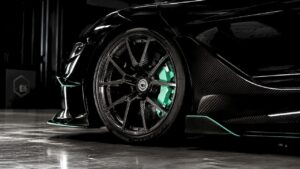
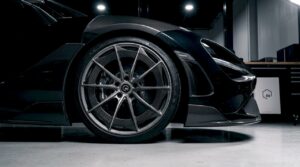
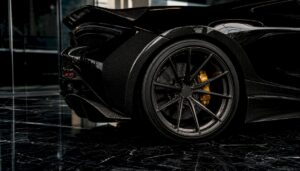
The three primary types of performance wheel coatings are powder coating (polyester or polyester-epoxy hybrid), liquid basecoat plus clearcoat systems, and ceramic topcoats. For forged aluminum and autoclave-cured carbon fiber wheels, the most durable result comes from a layered stack: epoxy powder primer, a KSL or KSP corrosion-protection layer, a polyester or metallic liquid basecoat, and an engineered clear or ceramic topcoat matched to the substrate. Powder coating held 52% of the automotive wheel coating market in 2025. This dominance is driven by its corrosion resistance, low VOC output, and proven durability across OEM and aftermarket applications. Ceramic topcoats represented roughly 5% of that same market but are growing fast in premium segments. The right choice depends on your use case, your platform, and whether you are building for the street, the track, or the show floor.
Quick reference by coating family:
- Powder coating (polyester/hybrid): Best all-around durability, low weight addition, and UV resistance for daily and street builds
- Liquid basecoat + clearcoat: Required for metallic effects, machined faces, and two-tone executions on multi-piece forged wheels
- Ceramic topcoats: High-heat and scratch-resistant protective layer; works over a correct primer/base system, not as a standalone finish
- PVD/anodizing: Mirror and metallic aesthetics for show builds with minimal added mass
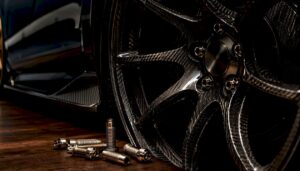
- Carbon-compatible clearcoats: UV-stabilized, low-temp-cure systems that preserve 2×2 twill weave depth on autoclave-cured components
Table of Contents
- What are the main coating families for performance wheels?
- Why does powder coating dominate the wheel market?
- When should you choose liquid basecoat and clearcoat systems?
- What do ceramic topcoats actually add to a wheel finish?
- How do PVD and anodizing compare for metallic wheel finishes?
- What finishing approach works for carbon fiber wheels and components?
- What performance trade-offs should you weigh before specifying a finish?
- What are the recommended finish stacks by use case?
- What questions should you ask your finisher before committing?
- How do you maintain and repair different wheel coating types?
- How E6 Carbon approaches wheel finishing for bespoke builds
- Key Takeaways
- Why finishing is an engineering decision, not a cosmetic one
- E6 Carbon builds what your platform actually demands
- FAQ
What are the main coating families for performance wheels?
Each coating family solves a different problem. Powder coating is the workhorse: durable, corrosion-resistant, and available in hundreds of colors and textures. Liquid basecoat plus clearcoat systems are the answer when you need metallic flake, mica effects, or the Class-A gloss depth that machined and diamond-cut faces demand. Ceramic topcoats sit above both as a protective layer, adding chemical resistance, hydrophobicity, and heat tolerance without meaningful weight.
Metallic finishes like PVD, vacuum metallization, and hard anodizing occupy a narrower niche. They deliver chrome-adjacent mirror effects at lower mass than traditional heavy plating, but they are best suited to show cars and low-mileage luxury builds where curb contact is rare. Carbon fiber components require their own category entirely: low-temperature-cure clearcoats with UV inhibitors that protect the resin chemistry without distorting the weave.
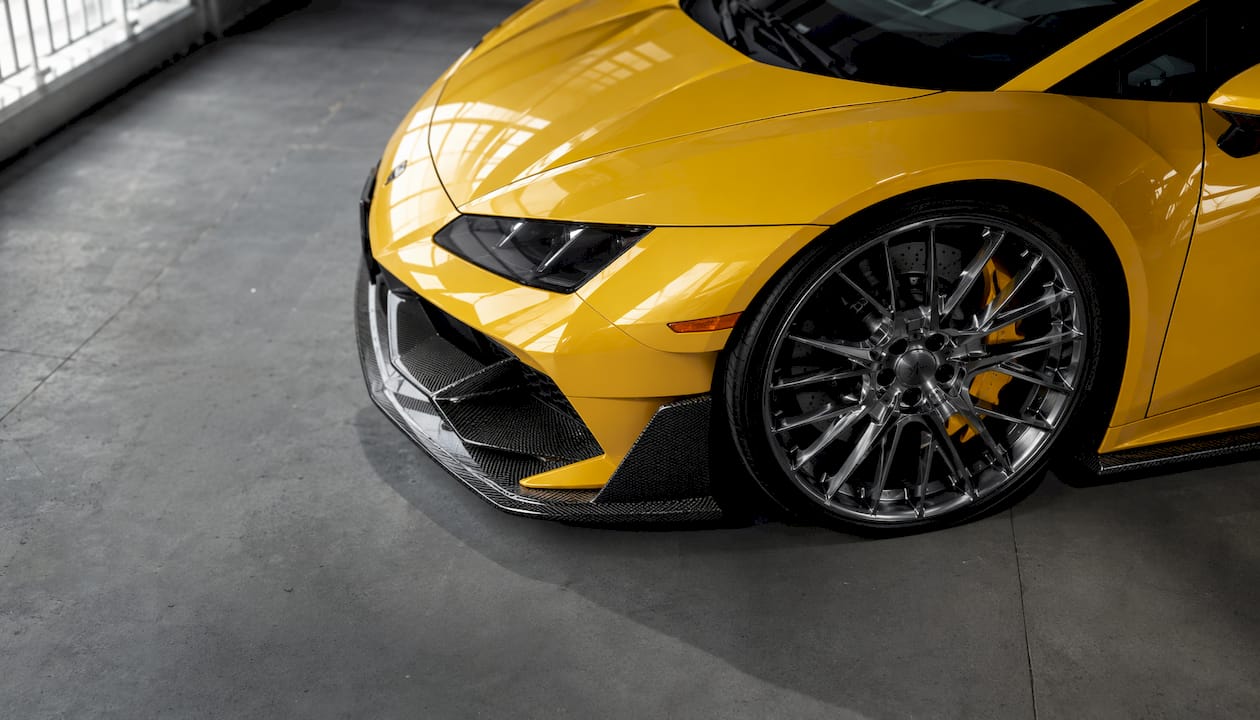
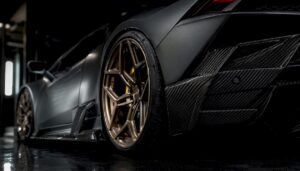
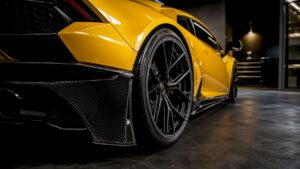
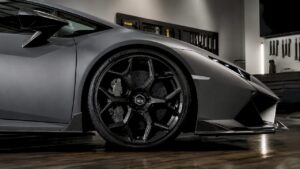
For Mercedes-AMG owners, the thermal and aesthetic demands of AMG-spec brake packages push most builds toward high-temp powder or liquid systems with ceramic topcoats. Lexus LC500 builds often prioritize the gloss depth of liquid metallic basecoats to complement the car’s sculpted body lines. McLaren and Lamborghini platforms, where unsprung weight reduction is a primary engineering target, favor the lightest possible finish stacks with autoclave-compatible clearcoats on carbon components.
Why does powder coating dominate the wheel market?
Polyester powders are the industry standard for exterior wheel applications. Epoxy powders are tough but chalk outdoors under UV exposure, making them suitable only as primers or in protected applications. Polyester-epoxy hybrids split the difference: better UV durability than pure epoxy, better edge adhesion than pure polyester.
The chemistry choice matters more than most owners realize. A polyester powder on a properly prepped forged wheel resists corrosion, flexes slightly under thermal cycling, and holds color for years. An epoxy powder used as a topcoat on the same wheel will chalk and fade within a season of sun exposure.
Powder adds 0.1–0.3 pounds per wheel in typical film builds. On a track-focused build where unsprung weight reduction drives every decision, that figure matters. Rotational inertia compounds the effect: mass at the rim’s outer diameter costs more in acceleration and braking response than the same mass at the hub. Specify the thinnest film build that meets your corrosion and durability targets.
Pro Tip: Preparation quality outperforms topcoat choice every time. A well-prepped wheel with a standard polyester powder will outlast a poorly prepped wheel with a premium specialty finish. Media blast to bare metal, apply an adhesion primer, and confirm surface profile before any powder goes on.
For track use, standard polyester powders can discolor under sustained brake-area temperatures of 500°F–700°F near calipers and inner barrel zones. Specify high-temperature-rated powder chemistries and request vendor thermal degradation data before committing.
When should you choose liquid basecoat and clearcoat systems?
Liquid basecoat plus clearcoat is the right call for any wheel requiring metallic flake, mica, or the mirror-depth gloss of a machined face. Powder cannot replicate the light-travel effect of a fine metallic liquid basecoat, and machined or diamond-cut faces need a stratified engineering stack to survive salt and moisture exposure.
The standard system for diamond-cut wheels runs: epoxy powder primer for adhesion, a liquid metallic basecoat, a KSL (liquid) or KSP (powder) corrosion-protection layer, and a GMA acrylic powder or liquid clearcoat. KSP uses polyester powder formulations; KSL is a liquid option, and each requires specific clearcoat chemistry to avoid filiform corrosion at the machined edge. Mixing KSL with a KSP-matched clearcoat is a common shop error that shows up as bubbling within 18 months.
Two-tone executions, a machined face paired with a powder-coated barrel, are popular on multi-piece forged wheels for Mercedes-AMG and Lexus LC500 builds. The visual contrast is striking, but the engineering consideration is the seal at the face-barrel interface. That joint must be masked precisely and sealed with the correct corrosion layer before clearcoat, or moisture wicks in and lifts the finish from the inside out.
Liquid systems are also easier to spot-repair than powder. A scuffed basecoat panel can be sanded, resprayed, and cleared without a full strip-and-recoat. That said, exact color matching requires panel-shop skill and a spectrophotometer; guessing the mix ratio by eye produces visible mismatches in direct sunlight.
What do ceramic topcoats actually add to a wheel finish?
Ceramics are a protective topcoat, not a primary finish. Applied over a correctly cured primer and base system, a professional-grade ceramic adds chemical resistance, a hydrophobic surface that sheds brake dust and road grime, and meaningful heat tolerance. Some wheel-targeted ceramic products claim heat resistance up to 300°C and hardness up to 9H on the pencil scale. Professional formulations like FEYNLAB’s Wheel & Caliper use high-solids ceramic chemistry designed for 1–2 years of protection under professional application.
The practical benefit for daily-driven exotic cars is maintenance. A ceramic-topped wheel repels brake dust adhesion, so weekly cleaning takes minutes instead of a dedicated session with iron remover. For track days, the heat resistance matters more than the hydrophobics.
Pro Tip: Never apply a ceramic topcoat over an uncured or poorly bonded base system. The ceramic seals in any adhesion defects underneath and makes them harder to address later. Confirm full cure of every layer below before ceramic application.
Ceramic durability varies by formulation and application quality. Many professional wheel ceramics recommend reapplication every 12–24 months. Consumer spray ceramics like Chemical Guys HydroSpin offer up to 12 months of protection and work well as maintenance coats over existing professional applications.
How do PVD and anodizing compare for metallic wheel finishes?
PVD (physical vapor deposition), vacuum metallization, and hard anodizing all deliver metallic or mirror effects at lower added mass than traditional chrome plating. PVD deposits a thin metallic film in a vacuum chamber, producing mirror-bright or colored metallic surfaces with good hardness and lower environmental impact than hexavalent chrome processes.
The trade-offs are real. PVD and anodized finishes are vulnerable to edge chipping under curb contact, and deep damage typically requires full refinishing rather than spot repair. Adhesion prep is specialized; standard media blasting protocols for powder can damage the substrate surface finish that PVD requires. These finishes belong on show cars, concours builds, and low-mileage luxury vehicles where appearance is the primary metric.
For styling wheels on luxury platforms like the Mercedes-AMG GT or Lexus LC500, PVD accents on a machined face paired with a liquid metallic barrel finish produce the most visually complex result. Just confirm your finisher has vacuum deposition capability in-house; outsourced PVD with inconsistent adhesion prep is a common failure point.
What finishing approach works for carbon fiber wheels and components?
Carbon fiber substrates demand a different finishing protocol than forged aluminum. High-cure-temperature coatings, anything requiring oven cure above the resin’s glass transition temperature, risk distorting the matrix and delaminating edges. Aggressive media blasting can damage the surface fiber layer and compromise the weave clarity that makes autoclave-cured 2×2 twill visually distinctive.
The correct approach uses clearcoat systems formulated for composite bonding, with UV inhibitors to prevent resin yellowing and chalking under sun exposure. Flexible clearcoats that accommodate the slight movement of carbon under load are preferable to rigid systems that can micro-crack at stress points. Ceramic topcoats can be integrated cautiously; confirm the ceramic’s cure temperature is compatible with the substrate before application.
Pro Tip: On autoclave-cured carbon components, the finish’s primary job is UV protection and weave preservation, not corrosion resistance. Prioritize UV-stabilized clearcoats and keep film builds light to protect unsprung weight reduction gains.
McLaren and Lamborghini builds using carbon fiber wheel options or carbon aero components benefit most from this approach. The weave depth on a properly finished autoclave-cured part is a visual signature; a heavy or improperly cured clearcoat obscures it.
What performance trade-offs should you weigh before specifying a finish?
Every coating decision involves four variables: weight, thermal tolerance, durability, and repairability. None of them can be optimized in isolation.
- Weight: Powder adds 0.1–0.3 lb per wheel; ceramics add negligible mass; liquid systems fall between the two depending on film build. On a track-focused Mercedes-AMG C63 or McLaren 720S, four wheels at 0.3 lb each is 1.2 lb of unsprung mass added purely by finish choice.
- Thermal tolerance: Standard polyester powders are not rated for sustained 500°F–700°F exposure at the inner barrel. Specify high-temp powders for track builds or accept discoloration after hard braking sessions. Pairing with high-performance brake components that manage heat transfer at the rotor face reduces the thermal load reaching the wheel finish.
- Durability vs. repairability: Powder is tough but requires full strip-and-recoat for major damage. Liquid basecoat systems are spot-repairable but need color-matching skill. Ceramics refresh with an overcoat but do not fix base-layer damage.
- Corrosion protection: KSL/KSP layers are non-negotiable for salt-exposed environments. Filiform corrosion under a machined face starts at the edge and spreads invisibly until the finish lifts.
What are the recommended finish stacks by use case?
Match the stack to the mission. These are shop-ready specifications:
- Street luxury / daily driver: Epoxy powder primer → polyester powder color coat → automotive-grade ceramic topcoat. Prioritize UV resistance and low maintenance. Suitable for Mercedes-AMG GLE, Lexus LC500, and similar daily-driven platforms.
- Track-focused forged wheels: Epoxy powder primer → KSP high-corrosion layer or liquid KSL → high-temp polyester powder or liquid metallic basecoat → high-temp-rated clearcoat or ceramic topcoat. Validate thermal ratings with vendor data before track use.
- Show / concours: Liquid metallic or mica basecoat → GMA acrylic powder clearcoat for Class-A gloss depth → PVD accents on machined faces as needed. Refer to artisan finishing techniques for hand-brushed and translucent options.
- Carbon aero components: Composite-compatible clearcoat with UV inhibitors → optional ceramic hydrophobic topcoat for maintenance ease. No high-temp oven cure; no aggressive blasting.
What questions should you ask your finisher before committing?
A finisher who cannot answer these questions in specific terms is not the right shop for a forged or carbon wheel build:
- What is your substrate prep method? Specify media type, grit, and surface profile target.
- What primer chemistry are you using? Epoxy powder or epoxy e-coat?
- Are you applying a KSL or KSP corrosion layer? Which clearcoat is matched to it?
- What powder type: polyester, epoxy, or hybrid? Is it high-temp rated for track use?
- What are your cure temperatures and dwell times? Provide the cure chart.
- How are machined faces masked? What is the masking sequence?
- What ceramic topcoat are you using? What is the solids percentage?
- Can you provide adhesion test results and documented film build in mils?
- What is your warranty, and does it cover track use?
- What is the estimated added weight per wheel?
Pro Tip: Ask for a “systems description,” not just a service name. A finisher who says “we powder coat” without specifying primer, corrosion layer, and clearcoat chemistry is describing a cosmetic service, not an engineering one. The systems approach is what separates a finish that lasts from one that fails at the first salt exposure.
How do you maintain and repair different wheel coating types?
Routine care is straightforward but chemistry-specific. Use alkaline-free wheel cleaners on ceramic and powder finishes. Acidic iron removers work on powder-coated surfaces but can etch PVD and anodized finishes permanently. Rinse wheels after every track session and after driving in salted conditions.
Repair paths differ by coating type:
- Powder-coated barrels: Spot sanding and touch-up is rarely successful because powder cannot be locally reapplied. Deep damage requires full strip-and-recoat.
- Liquid basecoat systems: Spot sand, respray the basecoat zone, and clear. Requires color matching; a spectrophotometer is the minimum standard for accuracy.
- Ceramic topcoats: Overcoat with a compatible ceramic product at the 12–24 month mark for professional-grade formulations. Consumer spray ceramics like Chemical Guys HydroSpin can be applied as maintenance coats between professional reapplications.
- PVD/anodized: Deep damage typically means full refinishing. Inspect edges regularly for chipping.
For long-term corrosion protection, inspect machined-face edges twice a year for early signs of filiform corrosion. Catching it at the edge before it spreads under the clearcoat is the difference between a spot repair and a full refinish.
How E6 Carbon approaches wheel finishing for bespoke builds
E6 Carbon’s finishing philosophy starts with the substrate and the platform, not the color card. Every E6 Forged wheel build begins with a systems-based specification: epoxy powder primer matched to the forged aluminum alloy, a KSL or KSP corrosion layer selected for the clearcoat chemistry, and a basecoat and topcoat stack engineered for the owner’s use case.
For Mercedes-AMG builds, E6 specifies high-temp powder chemistries validated against AMG-spec brake thermal profiles. Lexus LC500 builds typically use liquid metallic basecoats with GMA acrylic powder clearcoats for the gloss depth the platform’s styling demands. McLaren and Lamborghini builds prioritize the lightest possible finish stacks, with autoclave-compatible clearcoats on carbon components to protect weave clarity without adding mass.
Pro Tip: Request E6’s shop-verified cure charts and adhesion test documentation before approving a finish spec. These documents confirm that the chemistry chosen for your platform has been validated, not just selected from a catalog.
E6 Carbon offers engineering consultation to match finish stacks to platform fitment tolerances, brake heat profiles, and aesthetic targets. The goal is a finish that performs as precisely as the wheel beneath it.
Key Takeaways
The most durable performance wheel finish is always a systems-based stack: epoxy primer, corrosion layer, basecoat, and topcoat matched to the substrate and use case, not a single coating applied over bare metal.
| Point | Details |
|---|---|
| Powder dominates the market | Powder coating dominated the automotive wheel coating market in 2025, favored for durability and low VOC output. |
| Weight addition is measurable | Powder adds a measurable but small amount of weight per wheel; specify the thinnest film build that meets your corrosion and durability targets. |
| Track use demands high-temp specs | Brake-area temperatures can reach high levels that cause standard polyester powders to discolor without high-temp-rated chemistries. |
| Ceramics are topcoats, not foundations | Ceramic coatings add heat and scratch resistance but require a correctly cured primer and base system underneath. |
| E6 Carbon builds to platform specs | E6 Forged finishes are engineered per platform, with verified cure charts and KSL/KSP corrosion layers matched to Mercedes-AMG, Lexus LC500, and McLaren/Lamborghini thermal and fitment requirements. |
Why finishing is an engineering decision, not a cosmetic one
The conventional wisdom in the wheel finishing world treats coating as the last step, something you pick from a swatch book after the hard engineering is done. That framing produces failures. A finish specified without reference to brake heat profiles, salt exposure cycles, and unsprung weight targets is a cosmetic choice dressed up as engineering.
On a Mercedes-AMG GT or a McLaren 720S, the wheel finish operates in an environment that most coating shops never test for: sustained caliper-adjacent temperatures, high-speed airflow that accelerates moisture evaporation and concentrates road salt at the inner barrel, and the micro-flexing of a forged monoblock under lateral load. A polyester powder that performs flawlessly on a street SUV can fail within a track season on those platforms if the chemistry was not validated for the thermal and mechanical environment.
The same logic applies to carbon fiber components. The clearcoat on an autoclave-cured 2×2 twill part is not decorative protection. It is the UV barrier that prevents resin degradation, the flexible layer that accommodates composite movement, and the surface that determines whether the weave reads as a precision engineering material or a mass-market cosmetic. Choosing it by appearance alone misses the point entirely.
For owners building to a performance standard, the finisher’s systems documentation matters as much as the finish itself. Cure charts, adhesion test results, and film build measurements are not bureaucratic overhead. They are the evidence that the chemistry was applied correctly and will perform as specified.
E6 Carbon builds what your platform actually demands
Most wheel finishing shops offer a service. E6 Carbon offers an engineering specification. The difference shows up 18 months later, when a correctly specified finish on a forged aluminum wheel still looks and performs exactly as delivered, and a cosmetically applied powder coat on the same platform has started lifting at the machined face edge.
E6 Carbon’s bespoke wheel builds for Mercedes-AMG, Lexus LC500, McLaren, and Lamborghini platforms include full finishing specifications: epoxy primer, KSL/KSP corrosion layer, platform-matched basecoat, and a topcoat validated for the thermal and environmental demands of each build. Every specification comes with shop-verified cure charts and adhesion documentation. If you are specifying a finish for a forged or carbon wheel build and want a stack engineered to your platform, review E6’s bespoke forged wheel catalog and contact the team for an engineering consultation.
FAQ
What are the main types of performance wheel coatings?
The primary types are powder coating (polyester or polyester-epoxy hybrid), liquid basecoat plus clearcoat systems, and ceramic topcoats. Each serves a different function: powder for durable color, liquid systems for metallic effects and machined faces, and ceramics as a protective topcoat layer.
How much weight does powder coating add to a wheel?
Powder coating typically adds 0.1–0.3 pounds per wheel depending on film build. For track-focused builds where unsprung weight reduction is a priority, specify the thinnest film build that meets corrosion and durability requirements.
Can ceramic coatings handle track-level brake heat?
Some professional ceramic wheel coatings claim heat resistance up to 300°C, but ceramics function as topcoats, not thermal barriers. For sustained 500°F–700°F brake-area exposure, specify high-temp-rated powder or liquid chemistries in the base system and use ceramic as an additional protective layer above them.
What is the difference between KSL and KSP corrosion layers?
KSP is a polyester powder corrosion-protection layer; KSL is its liquid equivalent. Each requires specific clearcoat chemistry for optimal adhesion and corrosion resistance. Mixing a KSL layer with a KSP-matched clearcoat is a common shop error that leads to premature finish failure on machined and diamond-cut wheels.
How often should ceramic wheel coatings be reapplied?
Professional-grade ceramic wheel coatings typically require reapplication every 12–24 months. Consumer spray ceramics can be applied as maintenance coats between professional reapplications to extend protection and maintain hydrophobic performance.