TL;DR:
- High-performance upgrades involve hardware modifications that improve a vehicle’s power, airflow, and handling. Proper sequence, including fueling, forced induction, and ECU tuning, is essential to achieve reliable and measurable gains. Supporting parts like forged wheels and aero components further enhance overall performance without risking engine damage.
High-performance upgrades are targeted engineering modifications that increase a vehicle’s power output, airflow efficiency, and handling precision through measurable, hardware-driven changes. The best examples of high-performance upgrades span turbocharger core swaps, modular supercharger systems, forged engine builds, ECU calibration, and supporting bolt-on components. Each category delivers distinct gains, and the most effective builds treat these upgrades as an integrated system rather than isolated parts. Platforms like BMW M, Mercedes-AMG, Lexus LC500, and McLaren respond differently to each modification tier, which makes platform-specific sequencing the defining factor between a reliable build and an expensive failure.
1. What are focused turbocharger core upgrades?
A turbocharger core upgrade replaces the compressor and turbine internals without changing the external housing. This approach, known in the industry as a CHRA (center housing rotating assembly) swap, improves compressor efficiency and airflow capacity at the same boost pressure.
The results are significant. A G-Series II G40-1250 CHRA swap on a BMW S58 engine delivered 170 wheel horsepower and 176 lb-ft of torque gains without any increase in boost pressure. Output reached 1,192 hp and 1,029 lb-ft at 45 psi, with gains consistent above 4,000 rpm. That consistency above 4,000 rpm matters because it reflects real-world usable power, not a narrow dyno spike.
The key advantage of this approach is that airflow efficiency gains outperform raw boost increases in power-to-complexity ratio. Higher boost generates more heat and stress on seals, bearings, and intercoolers. A better compressor wheel moves more air at the same pressure, which keeps thermal load manageable.
Key benefits of a CHRA-focused upgrade:
- No boost increase required for substantial power gains
- Reduced heat generation compared to boost-only strategies
- Compatible with existing turbo housings and mounting hardware
- Pairs directly with BMW M3/M4 intake upgrades for compounded airflow gains
Pro Tip: On the S58 platform, pair the CHRA swap with upgraded front-mount intakes before touching boost targets. Airflow restriction upstream of the turbo is the most common limiter on otherwise well-built setups.
2. How modular supercharger systems redefine efficient power gains
Modular supercharger kits are engineered to deliver large power gains through phased hardware additions rather than a single large investment. The VMP Apex Predator supercharger system on a 5.2L platform demonstrates this clearly.
Running on pump gas, the setup achieves 908 rear-wheel horsepower. Adding E85 conversion with ID1300 injectors and a fuel pump booster adds another 44 rear-wheel horsepower on top of that figure. That 44 rwhp gain from fuel alone shows how much latent capacity a well-matched supercharger leaves on the table when running pump gas.
The modular design allows enthusiasts to phase upgrades in stages:
- Install the base supercharger with stock intercooler and throttle body
- Upgrade to a larger intercooler for sustained high-load cooling
- Add a larger throttle body to reduce inlet restriction
- Convert to E85 with upgraded injectors and fuel pump hardware
Each phase delivers measurable gains without requiring a full rebuild. The fuel system complexity of E85 conversion is real. Modern engine bays on platforms like the Mercedes-AMG GT and McLaren 720S are compact and unconventional in layout, which means injector and pump routing requires professional installation, not just parts swapping.
3. Examples of forged engine builds paired with turbo upgrades
Forged engine builds replace cast pistons and connecting rods with forged equivalents, raising the structural ceiling for boost and cylinder pressure. The real gains come when a forged bottom end is paired with a matched turbocharger and fueling system.
A Toyota GR Yaris build with an Artec Sport 450 turbo and upgraded injectors demonstrates the output range clearly:
| Fuel Type | Measured Output |
|---|---|
| Pump fuel | ~377 whp |
| E20 flex fuel | 479 bhp |
The GR Yaris forged build shows a power jump from near-stock to 479 bhp on E20 flex fuel. That result is only possible because the forged internals can sustain the cylinder pressure that the turbo and ethanol blend generate together. Without the forged bottom end, the same boost and fuel combination would destroy a stock engine.
For Mercedes-AMG M139 and M177 platforms, the same principle applies. The M139 in the A45 S already runs high specific output from the factory, which means forged internals become the prerequisite for any serious turbo upgrade rather than an optional addition.
Pro Tip: Always dyno-test on pump fuel before switching to an ethanol blend. The pump fuel baseline tells you whether the turbo and fueling system are calibrated correctly before adding the additional cylinder pressure of E85 or E20.
4. Why ECU tuning is critical to realizing upgrade potential
ECU tuning is the most critical step in any performance build. Without it, upgraded hardware produces inconsistent results and real risk of engine damage.
“The ECU is the central nervous system of the vehicle. Improper calibration creates lean conditions and detonation that destroy engines regardless of hardware quality. Every bolt-on upgrade requires a matching recalibration of fuel maps, ignition timing, and boost control to function safely.”
Professional ECU remapping adjusts fuel delivery, ignition timing, and boost targets to match the actual airflow and fueling capacity of the upgraded system. Without recalibration, increased airflow from intakes or exhausts goes unused or creates dangerous lean conditions.
The staged upgrade hierarchy structures this clearly. Stage 1 covers ECU tune, intake, and exhaust. Stage 2 adds intercoolers and fuel system upgrades. Stage 3 involves large forced induction and engine internals. Skipping ECU calibration at any stage undermines every hardware investment made before it.
Risks of running untuned modifications:
- Lean air-fuel ratios from increased airflow without fuel compensation
- Detonation from incorrect ignition timing under boost
- Boost spikes from uncontrolled wastegate behavior
- Accelerated wear on pistons, rings, and bearings
For professional ECU programming guidance, the engine ECU programming guide at Tuningbot covers tools, steps, and troubleshooting in depth.
5. Supporting bolt-on modifications that enhance overall performance
Bolt-on upgrades form the foundation layer of any performance build. They improve airflow, reduce weight, and sharpen handling without requiring internal engine work.
The most effective supporting modifications follow a logical sequence:
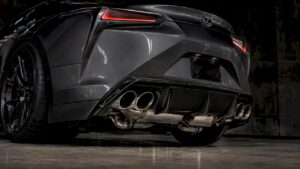
- Headers and exhaust: Reducing exhaust backpressure improves scavenging efficiency and supports turbo spool. A performance exhaust system on a Mercedes-AMG C63 or Lexus LC500 delivers measurable gains in mid-range torque and throttle response.
- Suspension components: Coilovers, sway bars, and upgraded bushings reduce body roll and improve corner entry speed. On McLaren and Lamborghini platforms, factory suspension geometry already favors track use, but aftermarket coilovers allow precise ride height and damping adjustment.
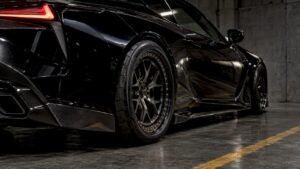
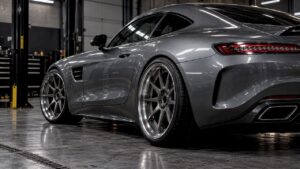
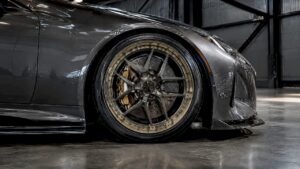
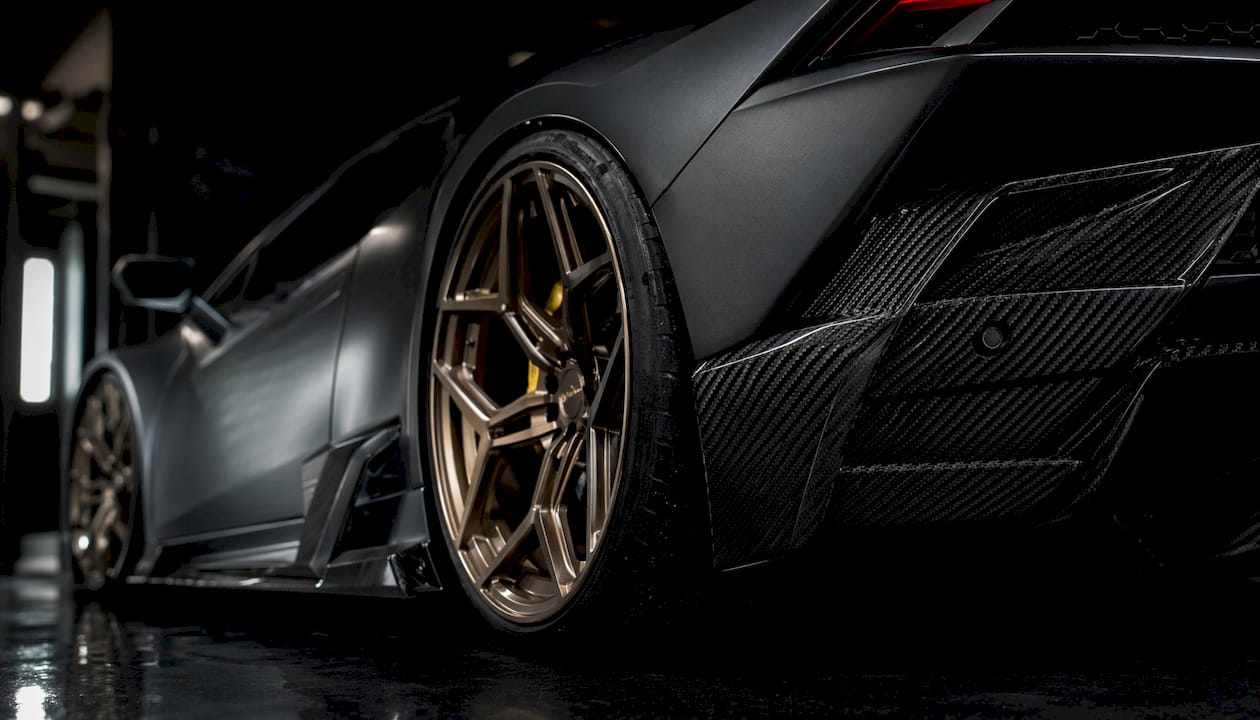
- Forged wheels: Reducing unsprung weight through forged aluminum wheels directly improves suspension response and cornering grip. The performance wheel upgrade guide shows how unsprung weight reduction can cut lap times without touching the powertrain.
- Intake manifolds and throttle bodies: Larger bore throttle bodies and ported intake manifolds reduce inlet restriction, which compounds the gains from turbo or supercharger upgrades.
Bolt-on upgrades only reach their full potential when the ECU is recalibrated to use the additional airflow. Without that step, the hardware investment delivers a fraction of its rated gain.
Key takeaways
The most effective high-performance builds treat turbocharger efficiency, fueling capacity, forged internals, and ECU calibration as a single integrated system rather than independent upgrades.
| Point | Details |
|---|---|
| Prioritize airflow over boost | CHRA swaps deliver 170 WHP gains without increasing boost pressure or thermal stress. |
| Phase supercharger upgrades | Modular kits allow staged gains from pump gas to E85 without a full rebuild. |
| Forge before boosting hard | Forged internals are a prerequisite for sustained high-boost turbo builds, not an optional add-on. |
| Tune every hardware change | ECU recalibration is required after every bolt-on addition to prevent lean conditions and detonation. |
| Reduce unsprung weight | Forged wheels improve suspension response and cornering without touching the powertrain. |
The sequencing mistake that costs enthusiasts the most
The most common error in performance builds is adding hardware before the ECU and fueling system can support it. I have seen this pattern repeatedly across Mercedes-AMG, Lexus LC500, and McLaren builds: an enthusiast installs a larger turbo or supercharger, skips the fuel system upgrade, and then wonders why the dyno numbers disappoint or why the engine fails within a season.
The correct sequence is always fueling first, then forced induction, then ECU calibration. On the M139 platform, the factory injectors are already near their duty cycle limit at stock boost. Any turbo upgrade without matching injectors and a fuel pump upgrade creates a lean condition that no amount of tuning can fully correct.
Platform-specific bottlenecks matter more than generic stage classifications. The staged upgrade hierarchy is a useful framework, but it does not account for the specific flow restrictions on each platform. The Lexus LC500’s 2UR-GSE responds differently to intake and exhaust changes than a McLaren 4.0L twin-turbo does. Treating them identically produces mediocre results on both.
The builds that deliver the best power-to-reliability ratio are always the ones where every component was chosen for that specific platform, sequenced correctly, and calibrated professionally. There are no shortcuts in this process that do not eventually show up on a dyno or in a repair bill.
— E6 Engineering
Precision parts for serious performance builds
Every powertrain upgrade you make puts more demand on the components that connect your car to the road. Forged wheels and autoclave-cured carbon fiber parts from E6 Carbon are engineered to meet that demand across BMW M, Mercedes-AMG, Lexus LC500, McLaren, and Lamborghini platforms.

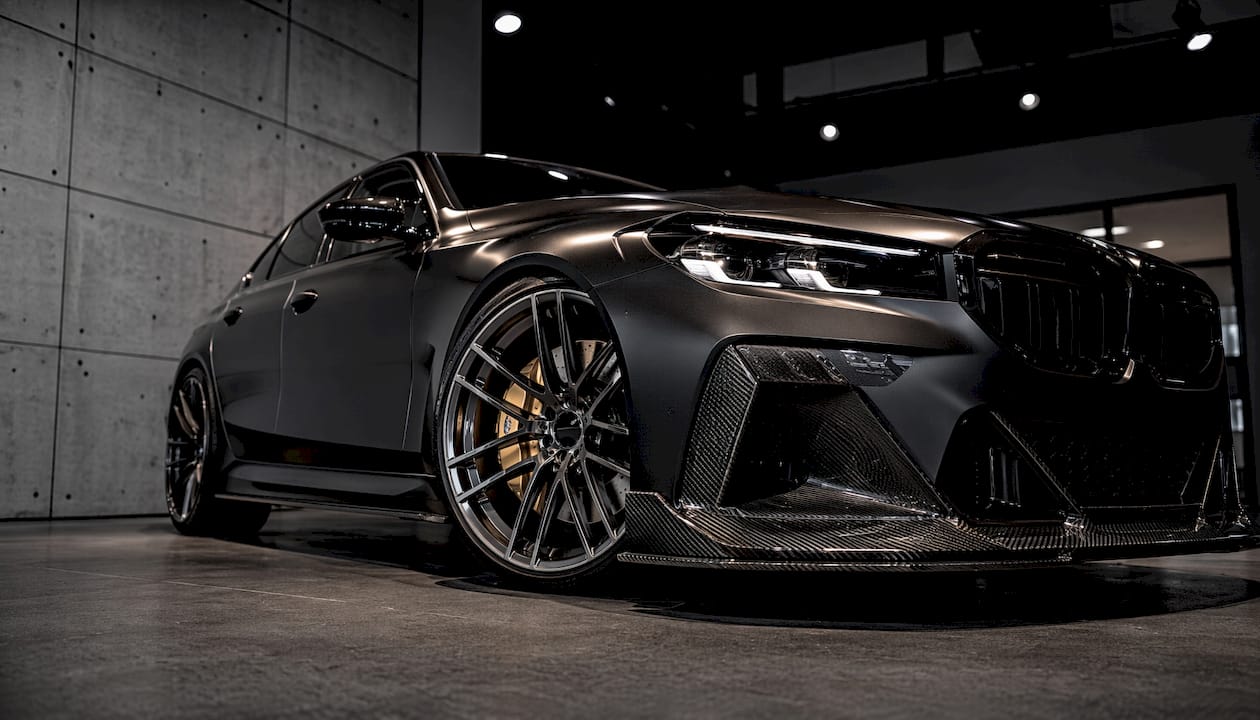
E6 Carbon’s monoblock and multi-piece forged wheel configurations reduce unsprung weight with tolerances that meet motorsport-grade standards. The advantages of forged aluminum over cast and flow-formed wheels are measurable in suspension response and cornering load capacity. For aerodynamic components, E6 Carbon’s autoclave-cured 2×2 twill carbon fiber body kits and top performance parts for luxury cars deliver structural integrity at high speed without adding mass. When your powertrain build is ready for the next level, the wheel and aero package needs to match it.
FAQ
What are the best examples of high-performance upgrades?
The most effective performance upgrades include turbocharger CHRA swaps, modular supercharger kits, forged engine builds, ECU recalibration, and bolt-on components like headers, intakes, and forged wheels. Each upgrade delivers measurable gains when sequenced correctly.
How much horsepower can a turbocharger core upgrade add?
A Garrett G-Series II G40-1250 CHRA swap on a BMW S58 engine added 170 wheel horsepower and 176 lb-ft of torque without any increase in boost pressure. Results vary by platform and supporting hardware.
Is ECU tuning required after bolt-on modifications?
ECU tuning is required after every hardware modification. Without recalibration, increased airflow from intakes or exhausts creates lean conditions and detonation that damage the engine regardless of hardware quality.
What is the difference between Stage 1 and Stage 2 upgrades?
Stage 1 covers ECU tune, intake, and exhaust. Stage 2 adds intercoolers and fuel system upgrades. The correct sequence always starts with ECU calibration before adding forced induction hardware.
Do forged wheels improve performance beyond aesthetics?
Forged wheels reduce unsprung weight, which directly improves suspension response, cornering grip, and braking performance. The gain is measurable in lap times and handling precision without any powertrain changes.