TL;DR:
- Selecting the right luxury wheels depends on precise measurements, construction quality, and finish durability.
- Forged wheels from aerospace-grade aluminum provide the best strength-to-weight ratio for high-end vehicles.
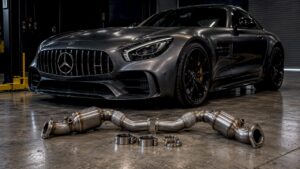
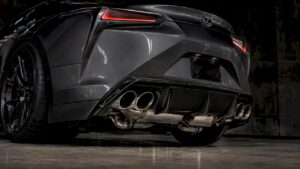
Styling wheels for luxury brands is the art and science of matching wheel design, fitment engineering, and surface finish to the specific character of a premium vehicle. The right wheel does more than change how a car looks. It reduces unsprung weight, sharpens steering response, and signals the owner’s commitment to the platform. Wheels with a proven motorsport background enhance both performance and driving experience on vehicles like the Mercedes-AMG GT, Lexus LC500, and McLaren 720S. Getting this decision right requires understanding construction methods, fitment parameters, and finish durability before a single lug nut is torqued.
What are the best prerequisites for styling luxury wheels?
Correct wheel selection starts with four measurements: bolt pattern, hub bore, offset, and center bore. Each one determines whether a wheel fits safely or creates vibration, fender rub, or suspension geometry problems. Platform-specific nuances matter enormously here.
Mercedes-AMG platforms typically run a 5x112mm bolt pattern with hub bores around 66.6mm. Offset tolerances are tight because AMG suspension geometry is calibrated at the factory for specific wheel positions. Lexus LC500 uses a 5×114.3mm bolt pattern, and its wide rear haunches allow meaningful offset variation for a more aggressive stance without compromising tire clearance. McLaren and Lamborghini platforms demand center-lock or multi-lug configurations with extremely precise hub-centric fitment, since any runout at high speed becomes a safety issue.
The tools you need before mounting any wheel include:
- A calibrated torque wrench set to the platform’s specification
- A hub-centric ring set matched to the wheel’s center bore
- A TPMS programming tool compatible with the vehicle’s sensor protocol
- A road-force balancer, not a standard spin balancer, for high-speed accuracy
- A dial indicator to verify runout after mounting
Pro Tip: Always verify hub bore diameter against the wheel’s center bore before ordering. A 1mm mismatch forces a hub-centric ring, which is acceptable, but a larger gap creates vibration that no amount of balancing will fix.
How to select and customize luxury wheels for performance and aesthetics
Wheel construction is the single biggest factor separating a wheel that looks good from one that performs. Three manufacturing methods define the market for high-end wheel styling.
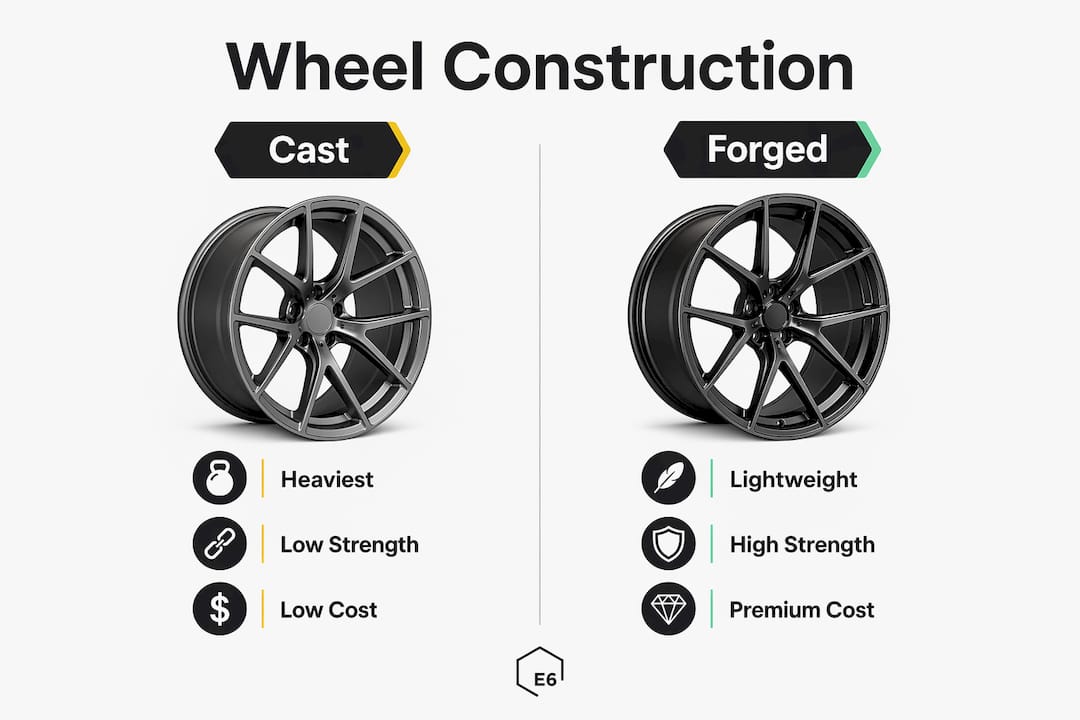
Cast wheels are poured into molds. They are the heaviest option and carry the lowest cost. Cast construction is acceptable for daily drivers but adds unsprung weight that dulls steering feel on performance platforms.
Flow-formed wheels start as cast blanks, then the barrel is stretched under heat and pressure. This process aligns the aluminum grain structure and produces a stronger, lighter barrel than casting alone. Flow-formed sets typically cost $1,500–$3,500 and represent the best value for enthusiasts who want weight savings without a full forged budget.
Forged wheels are pressed from a solid billet of aerospace-grade 6061-T6 aluminum under thousands of tons of pressure. The grain structure runs continuously through the wheel, producing the best strength-to-weight ratio available. Fully forged sets range from $4,000–$15,000 depending on configuration and finish. For Mercedes-AMG, Lexus LC500, and supercar platforms, forged is the correct choice.
| Construction type | Weight | Strength | Typical cost (set) |
|---|---|---|---|
| Cast | Heaviest | Lowest | Under $1,500 |
| Flow-formed | Moderate | Good | $1,500–$3,500 |
| Forged monoblock | Lightest practical | Excellent | $4,000–$8,000 |
| Forged multi-piece | Configurable | Excellent | $8,000–$15,000+ |
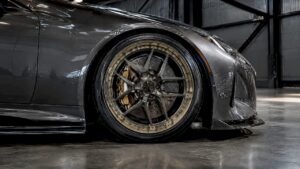
Finish selection shapes the visual identity of the build. Gloss black suits the AMG GT’s aggression. Brushed titanium or satin bronze reads as sophisticated on the Lexus LC500. McLaren and Lamborghini builds often use artisan wheel finishes like translucent candy colors over polished faces to complement factory paint programs.
Concave profiles and deep-lip multi-piece builds are the dominant trend in 2026 for supercar platforms. A deep concave face pushes visual mass inward, making the tire appear to wrap around the wheel. This works especially well on wide-body Lamborghini Huracán and Urus fitments where the fender arch frames the wheel like a gallery piece.
Pro Tip: Size up in diameter by no more than one inch over the factory specification. Going two or more inches larger forces a lower-profile tire that transmits road shock directly to suspension components and reduces ride quality noticeably on AMG and Lexus platforms.
What are the critical fitment and mounting considerations for safety?
Incorrect offset is the most common and most damaging mistake in luxury wheel fitment. Offset errors cause fender rub, alter scrub radius, and load wheel bearings at angles they were not designed to handle. On a Mercedes-AMG C63 or E63, even a 5mm offset deviation changes the steering feel measurably.
Hub-centric rings close the gap between the wheel’s center bore and the hub flange. Without them, the lug nuts carry lateral load they were designed to handle only in tension. The result is vibration at highway speed that no balancing procedure will resolve.
Torque is not optional. Lug nut torque specifications on luxury platforms range from 80 to 140 ft-lbs depending on the vehicle. Under-torquing allows micro-movement that fretts the seat surface. Over-torquing stretches the stud and can crack a forged wheel’s seat pocket. Always use a calibrated torque wrench and follow the platform’s published specification exactly.
Road-force balancing simulates the load a tire experiences under the vehicle’s weight. Standard spin balancing misses lateral stiffness variations in the tire that cause shimmy at 70 mph. Professional mounting on any forged wheel set requires road-force balancing as a minimum standard.
TPMS sensors must be transferred and recalibrated to the new wheels. Skipping this step triggers a warning light and, more critically, leaves the driver without accurate tire pressure data. On McLaren and Lamborghini platforms, TPMS calibration requires a factory or dealer-level scan tool.
Pro Tip: Retorque lug nuts after the first 50 miles of driving on a new wheel set. Thermal cycling and initial seating cause slight relaxation in the torque value, and a single retorque pass prevents long-term issues.
How to maintain and protect custom luxury wheels for lasting style
Premium wheel finishes require consistent care to hold their appearance. Neglecting maintenance accelerates corrosion and finish degradation, which affects both appearance and structural integrity over time.
A practical maintenance routine covers these points:
- Wash wheels every two weeks using a pH-neutral wheel cleaner. Acid-based or alkaline cleaners strip clear coats and attack polished aluminum within a single wash cycle.
- Apply a dedicated wheel sealant or ceramic coating after each deep clean. Coated surfaces resist brake dust bonding, which is the primary cause of finish pitting on performance vehicles.
- Inspect each wheel face and barrel for hairline cracks after any curb strike or pothole impact. Cracks in forged aluminum propagate under load and are not visible until they become dangerous.
- Store wheels off the vehicle on padded stands during seasonal swaps. Stacking wheels face-to-face damages spoke edges and finish surfaces.
- Check valve stem condition and TPMS sensor battery life annually. A failed sensor on a Lexus LC500 or AMG platform disables the entire TPMS system.
Pro Tip: Brake dust is mildly acidic. On gloss black or chrome finishes, dust left on the surface for more than a week begins etching the clear coat. A quick rinse after every track session or spirited drive extends finish life significantly.
The wheel lighting aesthetics dimension is worth considering for show builds. Illuminated wheel accents interact with finish choice in ways that change the car’s presence entirely at night, particularly on dark-colored AMG and Lamborghini builds.
Key Takeaways
Forged wheel selection for luxury platforms succeeds when fitment parameters, construction quality, and finish durability are treated as equally critical engineering decisions, not afterthoughts.
| Point | Details |
|---|---|
| Construction drives performance | Forged 6061-T6 aluminum delivers the best strength-to-weight ratio for AMG, Lexus, and supercar platforms. |
| Fitment parameters are non-negotiable | Bolt pattern, offset, and hub bore must match the platform exactly to prevent vibration and safety hazards. |
| Torque specs protect the investment | Lug nut torque between 80–140 ft-lbs must be applied with a calibrated wrench and verified after 50 miles. |
| Finish choice defines the build | Match finish character to the vehicle’s personality: gloss black for aggression, brushed tones for refinement. |
| Maintenance preserves value | pH-neutral cleaners and regular crack inspections protect both finish and structural integrity long-term. |
What I’ve learned from years of building luxury wheel fitments
The most common mistake I see is owners treating wheel selection as a purely visual decision. They choose a spoke pattern and finish, then work backward to fitment. That sequence produces problems. The correct approach starts with the platform’s engineering constraints and works forward to aesthetics.
On Mercedes-AMG builds, the suspension geometry is so precisely calibrated that offset deviations of even 7–8mm produce a steering feel the driver notices immediately. The Lexus LC500 is more forgiving in offset range, but its rear suspension compliance means a heavy wheel punishes ride quality in ways a lighter forged set simply does not. McLaren and Lamborghini platforms are the least forgiving of all. Their unsprung weight sensitivity is extreme, and the performance gains from lightweight wheels on these cars are not marginal. They are felt on the first corner.
The finish trend I find most interesting in 2026 is translucent candy over polished forged faces. It gives depth that flat colors cannot replicate, and it ages well because the polished substrate shows through even as the top coat wears. For owners who want a wheel that looks as good in five years as it does today, that construction is worth the premium.
My firm advice: prioritize a manufacturer with genuine motorsport engineering behind the product. Visual design is easy to copy. The grain structure of a properly forged billet and the tolerances held during machining are not.
— E6 Engineering
E6 Carbon forged wheels for your luxury platform
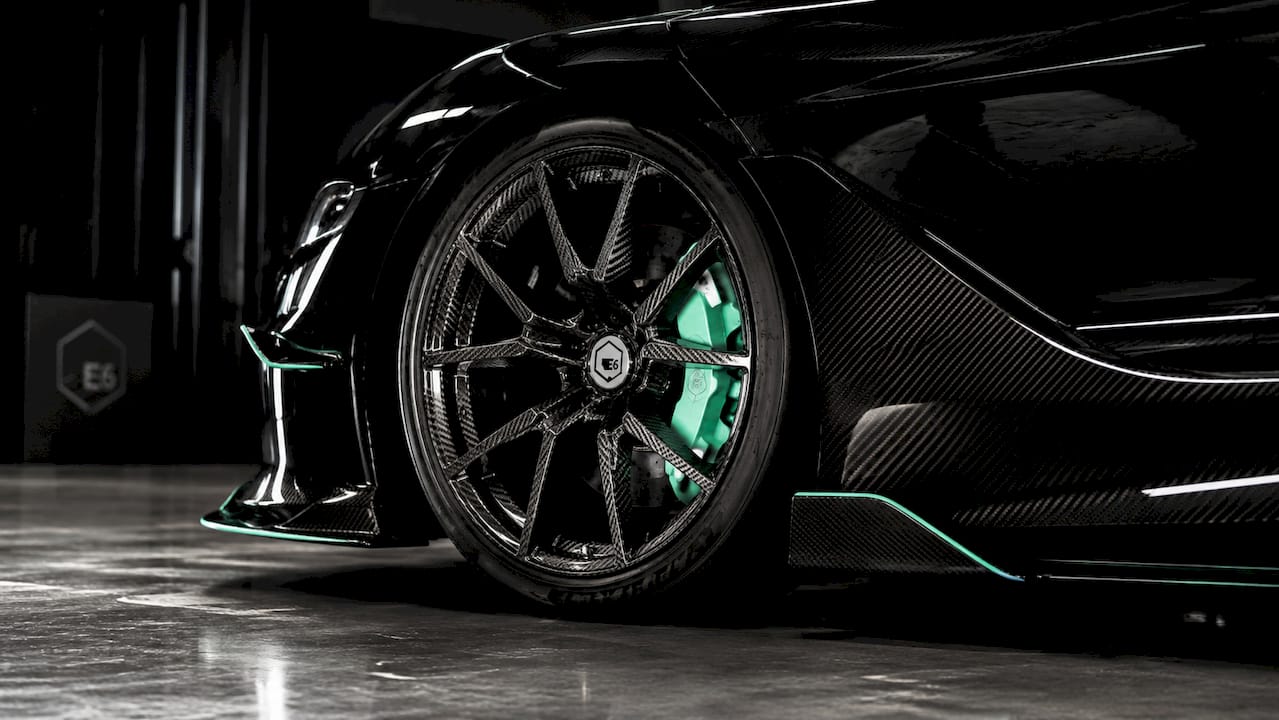
E6 Carbon engineers forged wheels specifically for the platforms where fitment precision matters most: Mercedes-AMG, Lexus LC500, McLaren, and Lamborghini. Every wheel in the E6 Forged catalog is produced from aerospace-grade aluminum billet and machined to tolerances that support both track use and exclusive street builds.
The E6 Forged lineup covers monoblock and multi-piece configurations, with custom offsets, center bore specifications, and finish options developed for each platform. Fitment consultation is part of the process, not an add-on. E6 Carbon’s engineering team verifies bolt pattern, offset, and hub bore against your specific vehicle before any wheel enters production. Explore the full range of E6 Forged wheels and request a fitment consultation to build a set engineered for your car.
FAQ
What is the best wheel construction for luxury cars?
Forged monoblock or multi-piece wheels made from aerospace-grade 6061-T6 aluminum deliver the best strength-to-weight ratio for luxury and performance platforms. They outperform cast and flow-formed options in both weight reduction and structural integrity.
How does wheel offset affect luxury vehicle performance?
Incorrect offset alters scrub radius, loads wheel bearings at unintended angles, and causes fender contact. Even a small offset deviation on platforms like Mercedes-AMG changes steering feel and handling balance measurably.
What torque spec should I use for luxury wheel lug nuts?
Lug nut torque ranges from 80 to 140 ft-lbs depending on the vehicle platform. Always follow the manufacturer’s published specification and retorque after the first 50 miles.
How do I clean premium wheel finishes without damaging them?
Use a pH-neutral wheel cleaner only. Acid-based or alkaline products strip clear coats and attack polished aluminum surfaces within a single wash cycle.
What wheel sizes work best for the Lexus LC500 and McLaren platforms?
The Lexus LC500 accommodates meaningful rear offset variation within its wide haunches, while McLaren platforms demand precise hub-centric fitment with minimal runout tolerance. Staying within one inch of the factory diameter specification preserves ride quality and tire availability on both platforms.