TL;DR:
- Reducing unsprung and rotating mass on the McLaren 750S improves handling, braking, and lap times significantly. Lighter forged wheels and carbon ceramic brakes lower inertia, enhancing suspension responsiveness and tire grip during high-G maneuvers. However, aftermarket upgrades must match OEM calibration to avoid compromising ride quality and suspension performance.
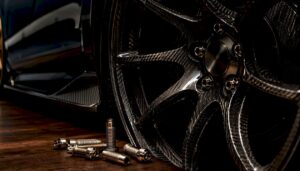
Unsprung mass is defined as the total weight of all components not supported by a vehicle’s suspension springs, including wheels, tires, brake rotors, and calipers. On the McLaren 750S, reducing this mass is the single most impactful modification for quicker lap times. The 750S already ships with the lightest forged wheels ever fitted to a McLaren production car, saving 13.8 kg over the previous generation. Carbon ceramic front rotors weigh approximately 5.5 kg versus 12 kg for iron equivalents, delivering a total unsprung mass reduction of roughly 22–24 kg across all four corners. Every gram shed from rotating and unsprung components translates directly into sharper steering, faster braking, and more consistent tire contact under high-G loads.
How does unsprung mass affect McLaren 750s lap times?
Unsprung mass directly controls how quickly the suspension can respond to track surface changes. The suspension’s job is to isolate the sprung mass, meaning the chassis, drivetrain, and driver, from road imperfections. When unsprung components are heavy, the suspension must overcome greater inertia before it can move. That delay costs grip.
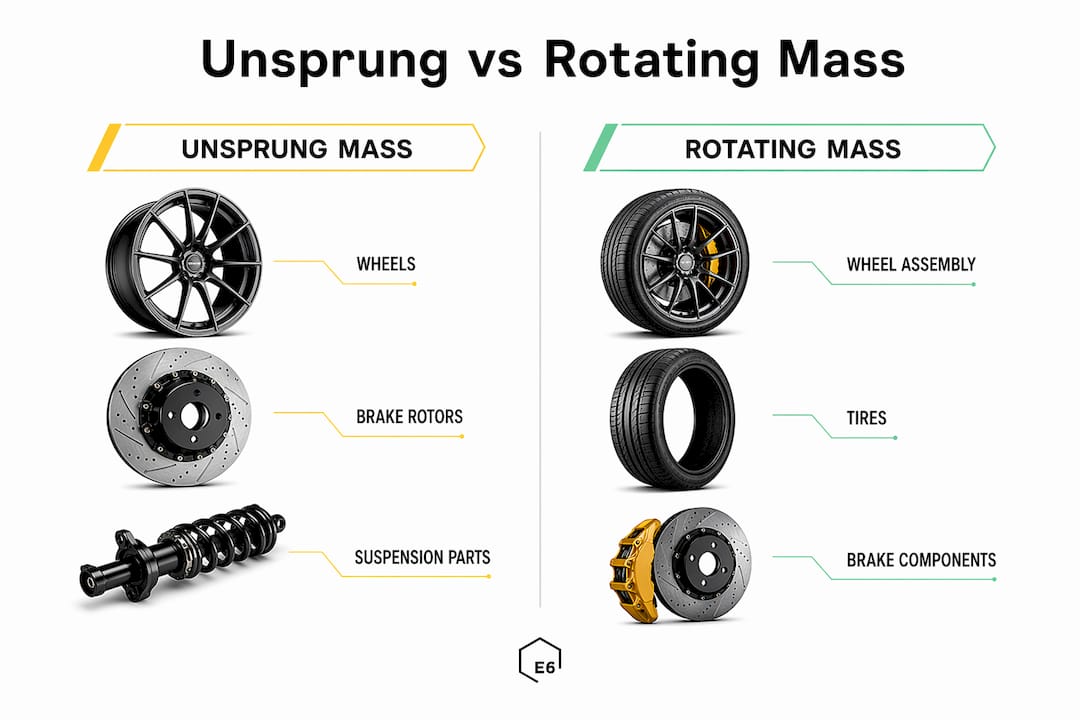
Heavy unsprung mass reduces suspension responsiveness, mechanical grip, and braking efficiency by forcing the suspension to work harder to maintain tire contact patch. On a track surface with curbs, ripples, or mid-corner bumps, that degraded contact patch translates directly into understeer, oversteer, or extended braking distances. The McLaren 750S’s active suspension is calibrated to react in milliseconds. Heavy wheels and rotors blunt that reaction.
Here is what heavy unsprung mass costs you on track:
- Slower suspension reaction: Greater inertia at the wheel means the damper cannot follow road surface changes at speed, reducing mechanical grip.
- Reduced tire contact patch: The wheel bounces rather than tracks, cutting the effective contact area under braking and cornering.
- Degraded steering precision: Heavier rotating assemblies resist direction changes, dulling turn-in response at corner entry.
- Longer braking distances: More rotational inertia means the rotor and wheel resist deceleration, requiring greater brake force and distance.
Pro Tip: When evaluating wheel upgrades for the 750S, weigh the complete corner assembly, including the wheel, tire, and rotor, not just the wheel alone. The combined rotating mass is what the suspension and brakes must manage.
What does rotating weight reduction do per corner?
Rotating weight and unsprung weight are related but distinct concepts. All rotating mass at the wheel is unsprung, but its effect on performance is amplified. The moment of inertia of rotating components is three times harder to accelerate than equivalent static mass. That multiplier makes rotating weight reduction the highest-return modification available on the 750S.
Shedding 5–8 lbs per corner through a forged monoblock wheel upgrade produces measurable gains across three performance areas:
- Steering turn-in: Lower rotational inertia reduces resistance to lateral direction changes. The front wheels respond to steering input faster, tightening corner entry.
- Brake response: Less rotating mass requires less kinetic energy to decelerate. Lighter rotating assemblies improve braking effectiveness and reduce stopping distances.
- Wheel deflection under load: A lighter wheel resists lateral deflection under high-G cornering loads, maintaining tire geometry and contact patch integrity.
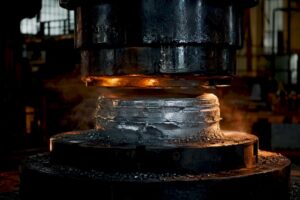
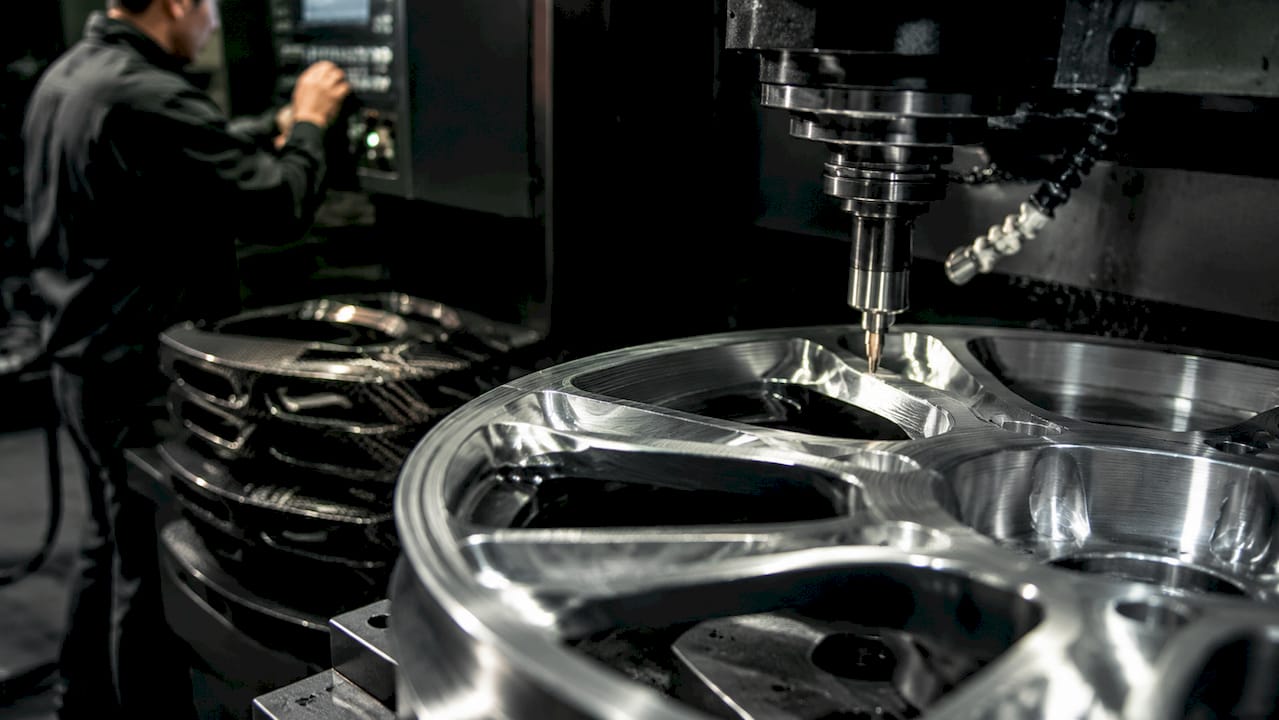
E6 Forged monoblock wheels in aerospace-grade 6061-T6 aluminum are machined from a single forged billet, eliminating the joint interfaces and material inconsistencies that add weight and reduce stiffness in multi-piece designs.
| Metric | OEM Forged Wheel | E6 Forged Monoblock |
|---|---|---|
| Construction | Multi-piece forged | Single-piece monoblock |
| Material | Forged alloy | 6061-T6 aerospace aluminum |
| Weight per corner savings | Baseline | 5–8 lbs |
| Grain structure | Standard forged | Dense continuous grain flow |
Pro Tip: Request a corner-by-corner weight breakdown from your wheel supplier before purchasing. Front and rear corners on the 750S carry different loads, and matching wheel weight to axle load distribution maximizes the suspension tuning benefit.
Forged 6061-t6 vs. cast and flow-formed wheels: which performs better?
The material and manufacturing process determine how much weight you can remove without sacrificing structural integrity. E6 Forged wheels use aerospace-grade 6061-T6 aluminum with dense, continuous grain flow that delivers superior strength-to-weight performance over cast or flow-formed alternatives. That grain continuity is not a marketing claim. It is a measurable structural property.
Cast wheels are poured as molten aluminum into a mold. The cooling process creates grain discontinuities, porosity, and inconsistent density throughout the material. To compensate for these structural weaknesses, cast wheels require more material and therefore more weight to achieve equivalent load ratings. Flow-formed wheels improve on casting by spinning the barrel under heat and pressure, but the hub and spoke sections remain cast, preserving the grain discontinuities where structural loads are highest.
| Property | Cast Wheel | Flow-Formed Wheel | 6061-T6 Forged Monoblock |
|---|---|---|---|
| Grain structure | Discontinuous | Partial improvement | Dense, continuous |
| Structural integrity | Lowest | Moderate | Highest |
| Weight for equivalent strength | Heaviest | Moderate | Lightest |
| Fatigue resistance | Lowest | Moderate | Highest |
| Track suitability | Street only | Street/occasional track | Full track use |
McLaren’s OEM forged wheels already represent a significant engineering commitment to reducing unsprung mass at the factory level. Aftermarket upgrades in 6061-T6 monoblock construction extend that philosophy further, targeting the precise tolerances required for the 750S’s active suspension calibration. Replacing OEM components with cast or flow-formed alternatives reverses those gains and introduces structural risk under sustained track loads.
How does McLaren’s active suspension use lighter rotating mass?
McLaren’s suspension components are precisely calibrated using the fixed unsprung weight and inertia characteristics of OEM carbon ceramic rotors and forged wheels. The damper valving, spring rates, and active suspension algorithms are tuned around those specific mass values. Fit heavier components and the calibration is off. The suspension overshoots, undershoots, or oscillates where it previously tracked cleanly.
Lighter rotating and unsprung mass enhances the effectiveness of those calibrated suspension components in four specific ways:
- Faster damper response: Less inertia at the wheel means the damper can execute its programmed stroke faster, keeping the tire in contact with the track surface through surface irregularities.
- Preserved spring rate effectiveness: Lighter unsprung mass improves the sprung-to-unsprung mass ratio, allowing the spring to control chassis motion without fighting wheel inertia.
- Sharper steering precision: The 750S’s steering geometry translates directly to driver feel. Lighter front rotating assemblies reduce the feedback lag between driver input and wheel response.
- Improved braking efficiency: Lighter unsprung and rotating mass enhance suspension component effectiveness by enabling faster adjustments and preserving suspension tuning integrity under threshold braking.
One trade-off exists. Reducing unsprung mass can increase cabin noise and harshness over rough surfaces because lighter components transmit higher-frequency vibrations more readily. On a dedicated track car, that is an acceptable exchange. On a street-driven 750S, it is worth factoring into your upgrade decision.
Key takeaways
Reducing unsprung and rotating mass on the McLaren 750S is the most physics-grounded path to quicker lap times, sharper steering, and more consistent braking performance.
| Point | Details |
|---|---|
| Unsprung mass defines grip | Lighter wheels, rotors, and brakes keep the tire in contact with the track under load. |
| Rotating weight multiplier | Rotating mass is three times harder to accelerate than static mass, making wheel weight reduction high-value. |
| 6061-T6 monoblock outperforms cast | Dense continuous grain flow delivers higher strength at lower weight than cast or flow-formed alternatives. |
| Active suspension requires matched mass | McLaren’s damper valving is calibrated to OEM component weights; lighter upgrades must preserve that calibration. |
| Trade-off exists | Reduced unsprung mass can increase NVH over rough surfaces, a factor for street-driven 750S owners. |
What we’ve learned building wheels for track-focused McLarens
From E6 Engineering’s perspective, the most common mistake track drivers make is treating wheel weight as a single number. A wheel that is 2 lbs lighter per corner sounds modest. Multiply that across four corners, factor in the rotational inertia multiplier, and you are effectively removing the equivalent of 24 lbs of static chassis weight in terms of dynamic response. That is a number that shows up in lap times and driver feel within the first session.
The second mistake is ignoring suspension recalibration after a wheel upgrade. The 750S’s active suspension is not a passive system that adapts automatically. If you change the rotating mass at the corner, the damper valving and spring rate assumptions built into the suspension calibration are no longer accurate. The best wheel upgrade we have seen on the 750S was paired with a damper revalve to match the new corner weights. The result was a car that felt genuinely faster and more planted, not just lighter.
Noise and ride quality do change. On track, that is irrelevant. On the street, it is worth a conversation before you commit. The physics are non-negotiable. What you decide to accept in exchange for the performance gain is a personal call.
— E6 Engineering
E6 forged monoblock wheels for the McLaren 750s
Track-focused 750S drivers need wheels engineered to the same standard as the car itself. E6 Carbon’s forged monoblock range is built from aerospace-grade 6061-T6 aluminum with dense continuous grain flow, machined to the precise tolerances required for McLaren’s active suspension calibration. Each wheel is designed to reduce rotating mass by 5–8 lbs per corner without compromising structural integrity under sustained high-G track loads.
E6 Carbon’s forged wheel engineering covers monoblock, multi-piece, and AeroDisc configurations, all built with Fitment First tolerances for McLaren platforms. If you are selecting a fitment for the 750S, the forged wheel performance guide details the construction standards and load ratings behind every build. The performance gain is real. The engineering behind it is verifiable.
FAQ
What is unsprung mass on the McLaren 750s?
Unsprung mass includes the wheels, tires, brake rotors, calipers, and suspension components not supported by the springs. On the 750S, the OEM forged wheels and carbon ceramic rotors already minimize this mass compared to iron brake setups.
How much weight do carbon ceramic brakes save on the 750s?
Carbon ceramic front rotors weigh approximately 5.5 kg versus 12 kg for iron rotors, delivering a total unsprung mass reduction of roughly 22–24 kg across all four corners of the 750S.
Why does rotating weight matter more than static weight?
The moment of inertia of rotating components is three times harder to accelerate than equivalent static mass. That multiplier means a 5 lb reduction in wheel weight produces a dynamic performance benefit equivalent to removing 15 lbs from the chassis.
Will aftermarket forged wheels affect the 750s’s active suspension?
Yes. McLaren’s suspension damper valving and spring rates are calibrated to OEM component weights. Lighter aftermarket forged wheels in 6061-T6 aluminum can improve suspension response, but heavier cast or flow-formed replacements will degrade handling even if total vehicle weight stays similar.
Does reducing unsprung mass have any downsides?
Lighter unsprung components can increase noise, vibration, and harshness over rough surfaces because less mass filters high-frequency road inputs. On a dedicated track car, this trade-off is acceptable. Street-driven 750S owners should factor it into their decision.