
TL;DR:
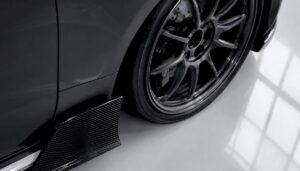
- Step lip wheels offer superior structural strength, reduced unsprung weight, and better clearance for large brakes. They enhance vehicle aesthetics with layered profiles and provide repairability after impact. These advantages make them the preferred choice for high-performance, exotic, and motorsport-inspired builds.
Why step lip wheels outperform other rim designs
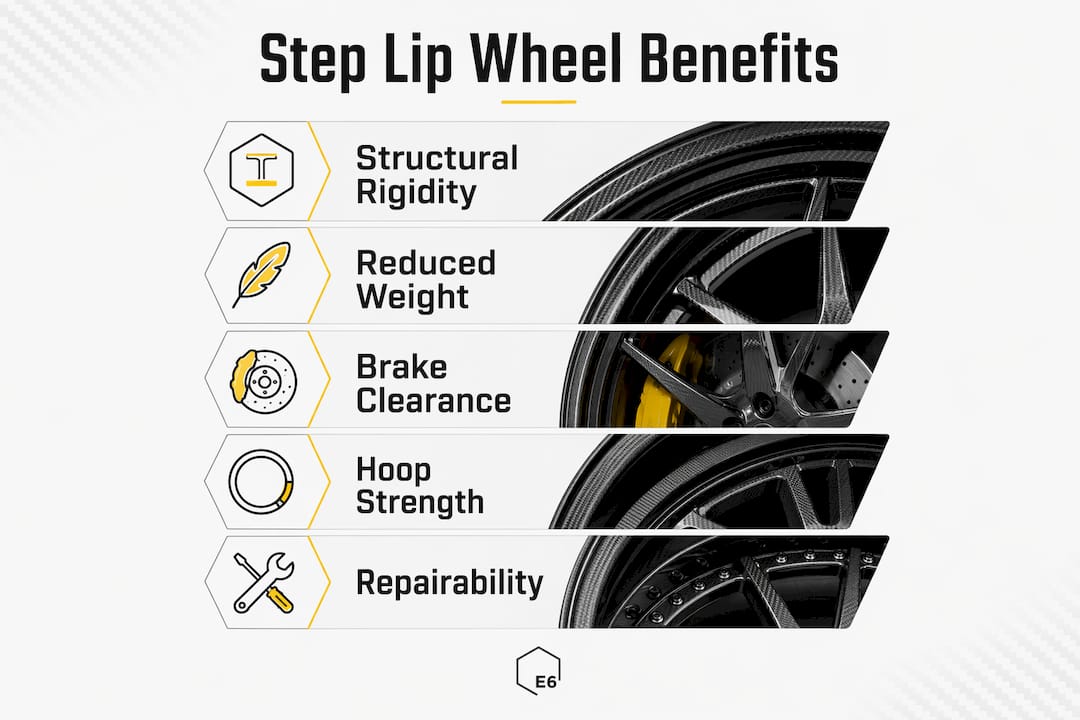
Step lip wheels are the preferred choice for performance builders because they deliver three things simultaneously: structural rigidity, reduced unsprung weight, and clearance for large brake systems. The stepped outer edge is not purely cosmetic. Each raised ridge along the barrel acts as a reinforcing rib, distributing lateral stress evenly rather than concentrating it at a single point.
Here is why serious builders keep coming back to this design:
- Structural strength: The stepped barrel ribs add rigidity without meaningful weight penalty, making the wheel more resistant to pothole deformation than a flat or reverse lip barrel.
- Lower unsprung weight: A smaller center disc diameter means less rotational mass at the corner, directly improving acceleration, braking, and steering response.
- Brake and suspension clearance: The stepped profile creates internal space for large calipers and aggressive suspension geometry, critical on platforms like Mercedes-AMG, Lexus LC500, McLaren, and Lamborghini.
- Repairability: The outer lip absorbs curb strikes and can be repaired or replaced without touching the center disc.
- Motorsport heritage: Racers and drifters have favored stepped lips for decades because the design holds up under high lateral loads.
E6 Carbon’s E6 Forged Wheels line applies this geometry through a “Fitment First” engineering approach, verifying clearances and offsets for each specific platform before a wheel ships.
Engineering and performance benefits of step lip wheels
1. Structural rigidity through rib geometry
The steps along the outer barrel function exactly like pressed ribs in sheet metal: they resist bending under load. Steps add reinforcing ribs that provide greater impact resistance than smooth lip barrels, and you can run two or three steps to compound that effect. More steps mean more hoop strength, which is why you see this geometry on dedicated track wheels and drift builds where lateral forces are extreme.
2. Reduced unsprung weight and rotational inertia
Step lip wheels use a smaller center disc than reverse lip designs. Because the disc is the heaviest single component of any wheel, shrinking it has a direct effect on rotational inertia. Reverse lip wheels carry roughly a 1-inch larger center disc, which adds both static weight and the rotational mass the engine must accelerate with every gear change. On a track car, that difference shows up in throttle response and corner exit speed.

Pro Tip: When comparing wheel specs, check center disc diameter alongside overall wheel weight. A wheel that looks light on paper can still carry excess rotational inertia if the disc is oversized.
3. Brake caliper and suspension clearance
Multi-piece forged wheels favor step lip barrels specifically because the stepped geometry creates internal clearance for large carbon ceramic rotors and aggressive caliper packages. Engineers at E6 Carbon work with this geometry on Mercedes-AMG builds where the factory brake package is already substantial, and aftermarket big brake kits push clearance requirements even further. The modular construction of 3-piece forged wheels makes step lip barrels the natural pairing: you can spec lip depth independently of the center disc to hit exact clearance targets.
4. Hoop strength under track stress
Technicians who work with racing and drifting applications consistently note that stepped lips enhance hoop strength under high lateral and cornering loads. A reverse lip barrel, by contrast, concentrates stress at the rolled edge. On a Lexus LC500 running aggressive negative camber for track days, that difference in barrel geometry translates directly to wheel longevity.
5. Repairability after impact
The outer lip is the first point of contact when a wheel strikes a curb or pothole. Step lip designs protect lip edges and maintain wheel integrity under harsh conditions, and the lip section on a multi-piece wheel can be replaced without scrapping the center disc. That is a meaningful cost advantage on a set of forged wheels priced for exotic platforms.
Aesthetic and functional styling advantages
Step lip wheels carry a visual depth that flat face and reverse lip designs simply cannot replicate. The layered profile creates shadow lines across the barrel, giving the wheel a three-dimensional look that reads well from a distance and holds up under close inspection at a show.
- Aggressive stance: The pronounced outer lip pushes the visual mass of the wheel outward, filling the fender arch on wide-body builds and lowered street cars.
- Classic motorsport aesthetic: Stepped lips have been a staple of muscle car and racing culture for decades. On a Lamborghini Huracán or a McLaren 720S, the retro geometry contrasts with the car’s modern surfacing in a way that reads intentional rather than dated.
- Wide tire compatibility: The stepped profile provides clearance for wider tire sections without compromising the outer lip’s visual depth, a balance that flat face wheels cannot achieve because their uniform surface sacrifices depth for simplicity.
- Finish versatility: Polished, brushed, or anodized step lips catch light differently at each step, adding complexity to the wheel’s appearance that a single-surface lip cannot match.
- Mercedes-AMG fitment: On AMG platforms, a deep step lip fills the wide rear haunches while maintaining the internal clearance the large AMG brake package demands.
- Lexus LC500 application: The LC500’s long, sweeping fenders reward a wheel with visual depth. A 5-inch step lip on a multi-piece forged wheel sits flush with the fender line without rubbing, a fitment outcome that requires precise offset calculation.
Compared to reverse lips, which tuck the flange inward for a cleaner, more modern profile, step lips read as bolder and more traditional. Neither is objectively superior; the choice depends on whether the build targets a contemporary look or a motorsport-heritage aesthetic.
Practical considerations when choosing step lip wheels
Fitment is where step lip builds succeed or fail. The stepped geometry gives you more variables to manage: lip depth, center disc diameter, offset, and backspacing all interact, and a mistake on any one of them can put the tire into the fender liner or the caliper into the barrel.
- Offset and backspacing: Step lip wheels typically run standard offsets that work with most tire widths, but verify clearance against your specific suspension geometry before ordering.
- Brake kit compatibility: Confirm caliper height and rotor diameter against the wheel’s internal barrel dimensions. On McLaren and Lamborghini platforms with carbon ceramic brakes, this check is non-negotiable.
- Tire sizing: The stepped outer lip accommodates wider tires than a flat face design, but the center disc diameter sets the inner clearance limit. Match both dimensions to your tire spec.
- Durability: The rib effect of the stepped barrel makes these wheels more resistant to bending from road hazards than smooth-barrel designs, and the lower manufacturing complexity of step lips relative to reverse lips generally keeps repair costs lower.
- Material and construction: Forged aluminum step lip barrels outperform cast equivalents in tensile strength and fatigue resistance. E6 Carbon’s Fitment First engineering process verifies every dimension against the target platform’s suspension travel and brake envelope before production.
Wheel vibration at speed is often traced back to offset errors or improper balancing rather than the lip design itself. If you notice steering wheel vibration after a wheel swap, recheck offset and balance before assuming a manufacturing defect.
Why step lip wheels remain the choice for elite performance builds
The case for stepped lips comes down to geometry doing multiple jobs at once.
- Rigidity: Stepped barrel ribs resist deformation under lateral track loads and road impacts.
- Weight: Smaller center discs reduce unsprung and rotational mass, improving every dynamic metric.
- Clearance: The stepped profile creates internal space for large brake kits and aggressive suspension on Mercedes-AMG, Lexus LC500, McLaren, and Lamborghini platforms.
- Aesthetics: The layered lip profile delivers visual depth and motorsport heritage that flat face designs cannot replicate.
- Repairability: Outer lip damage on a multi-piece forged wheel is addressable without replacing the center disc.
E6 Forged Wheels applies these principles across monoblock and multi-piece configurations, with E6 Carbon’s engineering team verifying fitment against each platform’s specific brake and suspension envelope. For builders who want the performance advantages of forged aluminum combined with the structural geometry of a step lip barrel, the combination is hard to argue against.
Ready to spec a set for your build? Browse the E6 Forged Wheels catalog and get fitment-verified options for your platform.
Key Takeaways
Step lip wheels deliver structural rigidity, reduced unsprung weight, and large-brake clearance simultaneously, making them the preferred choice for performance builds on platforms like Mercedes-AMG, Lexus LC500, McLaren, and Lamborghini.
| Point | Details |
|---|---|
| Structural rigidity | Stepped barrel ribs distribute stress evenly, resisting deformation from impacts and lateral track loads. |
| Unsprung weight reduction | Smaller center disc diameter reduces rotational inertia, improving acceleration, braking, and steering response. |
| Brake and suspension clearance | The stepped profile creates internal space for large calipers and aggressive suspension geometry on exotic platforms. |
| Repairability advantage | Outer lip damage on a multi-piece forged wheel can be repaired without replacing the center disc. |
| Fitment precision | Offset, backspacing, and brake clearance must all be verified per platform; E6 Carbon’s Fitment First process covers this. |
FAQ
What are step lip wheels?
Step lip wheels feature one or more raised edges along the outer barrel, creating a layered, stepped profile. This design adds structural rigidity and provides clearance for wider tires and large brake calipers.
Are step lip wheels stronger than reverse lip wheels?
Yes, generally. The stepped edges act as reinforcing ribs that resist bending under lateral and impact loads, while reverse lip barrels concentrate stress at the rolled edge.
Do step lip wheels reduce unsprung weight?
Step lip wheels use a smaller center disc diameter than reverse lip designs, which reduces both static weight and rotational inertia at the corner, improving handling responsiveness.
Which vehicles benefit most from step lip wheels?
High-performance platforms with large brake packages benefit most, including Mercedes-AMG, Lexus LC500, McLaren, and Lamborghini, where internal caliper clearance is a hard fitment constraint.
How do step lip wheels compare to flat face wheels aesthetically?
Step lip wheels create visual depth and a bold, layered profile with distinct shadow lines across the barrel. Flat face wheels offer a cleaner, minimalist look without the dimensional complexity of a stepped outer edge.