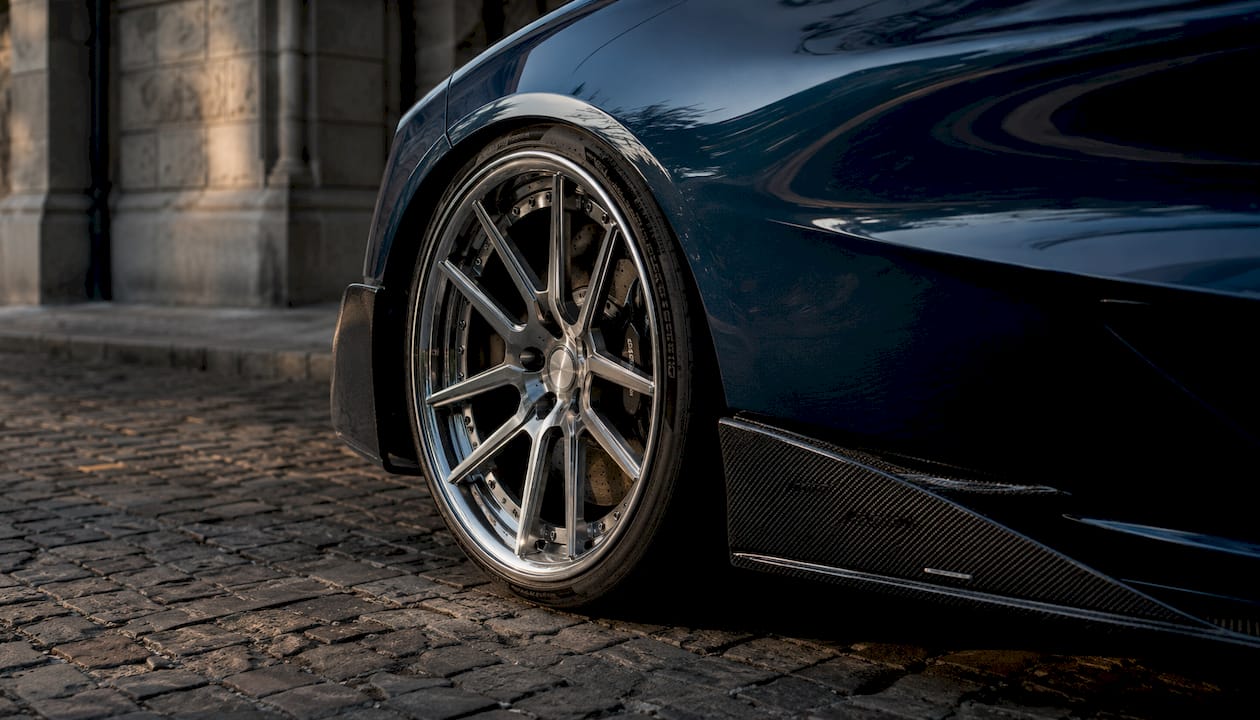
Advanced forging transforms raw metal into components with aligned grain flow, zero internal voids, and fatigue resistance that cast or machined parts simply cannot match. For performance vehicles where suspension, braking, and wheel systems absorb cyclic loads at extreme temperatures, the manufacturing process is not a secondary consideration. It is the difference between a component that holds at 150 mph and one that doesn’t.
The Forging Industry Association design guidelines confirm that forgings are free from internal porosity, producing uniform mechanical properties that are predictable under load. That predictability is what OEMs building platforms like Mercedes-AMG, Lexus LC500, McLaren, and Lamborghini depend on. And in 2026, Industry 4.0 forging integrates real-time simulation, automation, and data analytics to push dimensional precision further than any manual process could achieve.
Key reasons why advanced forging matters in high-performance automotive applications:
- Structural integrity: No internal voids or porosity, ensuring consistent load-bearing capacity
- Grain flow alignment: Directional strength matched to the part’s stress geometry
- Fatigue resistance: Forged parts reach 30–50% higher fatigue resistance than castings
- Thermal performance: Dense, uniform microstructure resists creep and brittle fracture at extreme temperatures
- Precision: Modern CNC-controlled forging achieves tolerances of ±0.2 mm directly after forging
Table of Contents
- Why advanced forging delivers technical advantages no other process can
- How advanced forging supports Mercedes-AMG, Lexus LC500, McLaren, and Lamborghini
- Why forged wheels outperform cast and flow formed alternatives
- E6 Carbon builds forged wheels engineered for the platforms that demand it
- Key Takeaways
- FAQ
Why advanced forging delivers technical advantages no other process can
1. Grain flow alignment produces directional strength
Forging permanently deforms metal under high compressive force, realigning the internal grain structure to follow the part’s geometry. The result is elongated, fine grains that carry tensile loads and resist crack propagation far better than the random grain orientation found in castings. Amfas International notes that this grain refinement and defect elimination directly increases reliability for high-performance OEMs. For a suspension knuckle or a brake caliper bracket, directional toughness is not optional.
2. Zero internal voids eliminate failure points
Casting traps gas pockets and shrinkage cavities during solidification. Forging closes them. The high-pressure deformation process produces density above 99.8% with minimal internal voids, removing the stress concentrators that cause premature fatigue failures. The FIA design guidelines describe this as the defining structural advantage of forging over any competing process.
3. Fatigue resistance under cyclic stress
Crankshafts, axle beams, and wheel hubs all experience millions of load cycles over a vehicle’s life. Forged parts resist crack initiation and propagation because loads distribute efficiently along the aligned grain structure. Forged aluminum specifically offers noticeably higher mechanical strength than comparable cast or extruded parts, enabling thinner and lighter designs without sacrificing safety margins.
4. Thermal performance in high-stress environments
The dense, uniform microstructure in forgings gives them stronger resistance to creep and brittle fracture at extreme temperatures. Brake systems, turbo housings, and exhaust-adjacent components all operate in thermal ranges where a porous casting degrades faster. Forging’s uniform structure also reduces the penetration of corrosive media, extending service life in harsh track environments.
5. Dimensional precision and fitment accuracy
Modern forging processes achieve tolerances of ±0.2 mm directly off the die. That level of precision reduces secondary machining requirements, speeds assembly, and ensures parts seat correctly the first time. For wheel fitment on a Mercedes-AMG GT or a Lexus LC500, a few tenths of a millimeter in hub bore or offset can affect both handling balance and long-term bearing wear.
6. Weight reduction without structural compromise
Because forged parts carry higher strength per unit of material, designers can reduce wall thickness and overall mass compared to cast equivalents. Forgings require substantially less material for the same function, benefiting unsprung weight reduction in wheel and suspension applications.
7. Lifecycle cost advantage over casting
Forging requires a higher initial tooling investment, but near-net-shape forming minimizes material waste and reduces machining time. The result is lower production costs in many projects, plus longer mold lifespan compared to casting tooling. Over a production run, those savings compound.
| Factor | Forging | Casting |
|---|---|---|
| Mechanical strength | Superior, aligned grain flow | Lower, random grain orientation |
| Internal defects | Virtually none | Porosity and shrinkage risk |
| Fatigue resistance | 30–50% higher than castings | Prone to fatigue failure |
| Dimensional tolerance | ±0.2 mm achievable | Wider variance typical |
| Initial tooling cost | Higher | Lower |
| Lifecycle cost | Lower due to reduced machining | Higher defect and rework risk |
How advanced forging supports Mercedes-AMG, Lexus LC500, McLaren, and Lamborghini
Mercedes-AMG: precision tolerances at the limit
Mercedes-AMG platforms demand components engineered to survive both track days and daily driving without degradation. Forged wheels on AMG GT and AMG C63 variants reduce unsprung weight, which directly improves steering response and suspension compliance. The AMG GT’s brake upgrade requirements are equally demanding. Forged aluminum brake components maintain structural integrity under the thermal cycling that destroys cast alternatives. E6 Carbon’s “Fitment First” engineering standard means every forged wheel for AMG platforms is dimensioned to OEM hub bore and offset specifications, eliminating the shimming and adapter compromises that introduce vibration.
Lexus LC500: luxury and performance in the same grain structure
The LC500 blends grand-touring refinement with genuine sports car capability, and its wheel and suspension loads reflect that dual purpose. Forged wheels on the LC500 reduce rotational inertia, which the naturally aspirated V8 appreciates at high revs. The platform’s wide-body proportions also demand precise offset engineering. E6 Carbon’s LC500 carbon fiber components pair with forged wheelsets to deliver a complete weight-reduction package without compromising the car’s signature aesthetic. Autoclave-cured 2×2 twill carbon body panels add stiffness where it matters while keeping mass off the front axle.
McLaren and Lamborghini: exotic-grade strength-to-weight ratios
McLaren and Lamborghini build cars where every kilogram of unsprung weight costs measurable lap time. Both manufacturers specify extremely tight tolerances for wheel fitment, and the carbon fiber monocoques they use demand that surrounding components match the same stiffness-to-weight philosophy. Forged monoblock wheels for these platforms can achieve the wall thickness reductions that multi-piece cast designs cannot, while maintaining the structural integrity required at 200+ mph. Lamborghini’s Huracán and Urus platforms, along with McLaren’s 720S and Artura, represent the upper end of what forging technology must deliver. E6 Forged’s multi-piece wheel configurations address the offset and width combinations these platforms require without adding rotational mass.
Pro Tip: When specifying forged wheels for McLaren or Lamborghini platforms, always confirm the center bore diameter and lug pattern against the OEM specification before ordering. Even a 0.5 mm bore mismatch creates harmonic vibration at speed that no amount of torquing corrects.
Why forged wheels outperform cast and flow formed alternatives
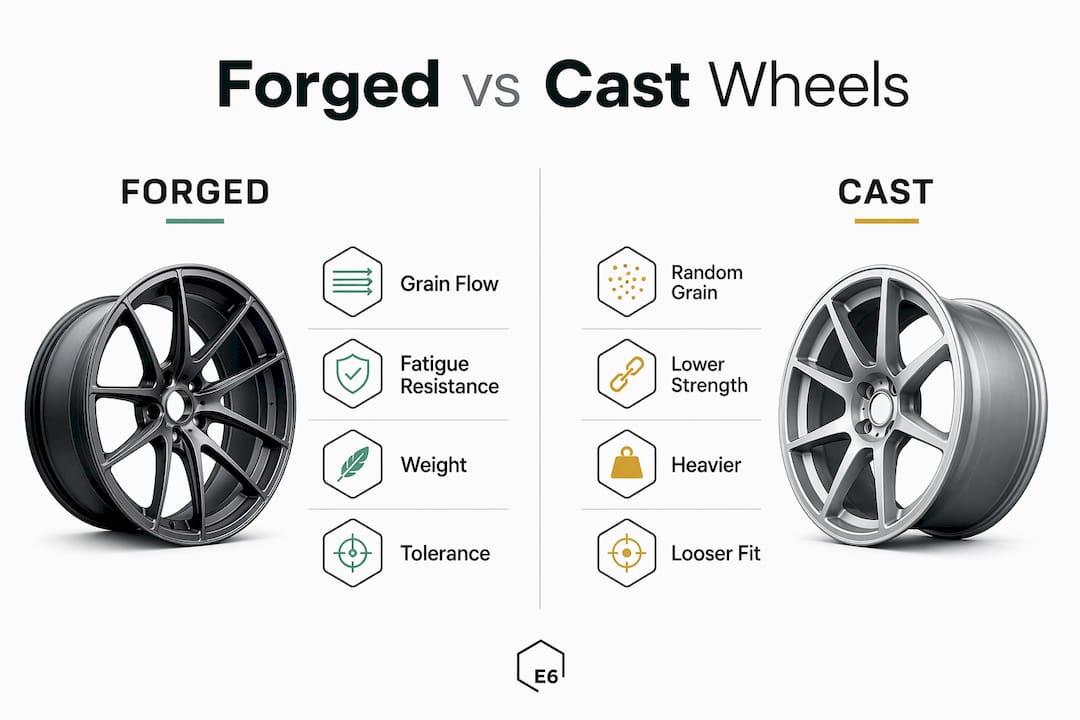
The grain structure argument is the core one. Cast wheels solidify from molten metal, leaving random grain orientation and the risk of micro-porosity throughout the material. Flow formed wheels improve on casting by stretching the barrel under pressure, which refines the barrel grain structure but leaves the center section cast. Forged wheels start as a solid aluminum billet and undergo full compression forging, aligning grain flow through every section of the wheel.
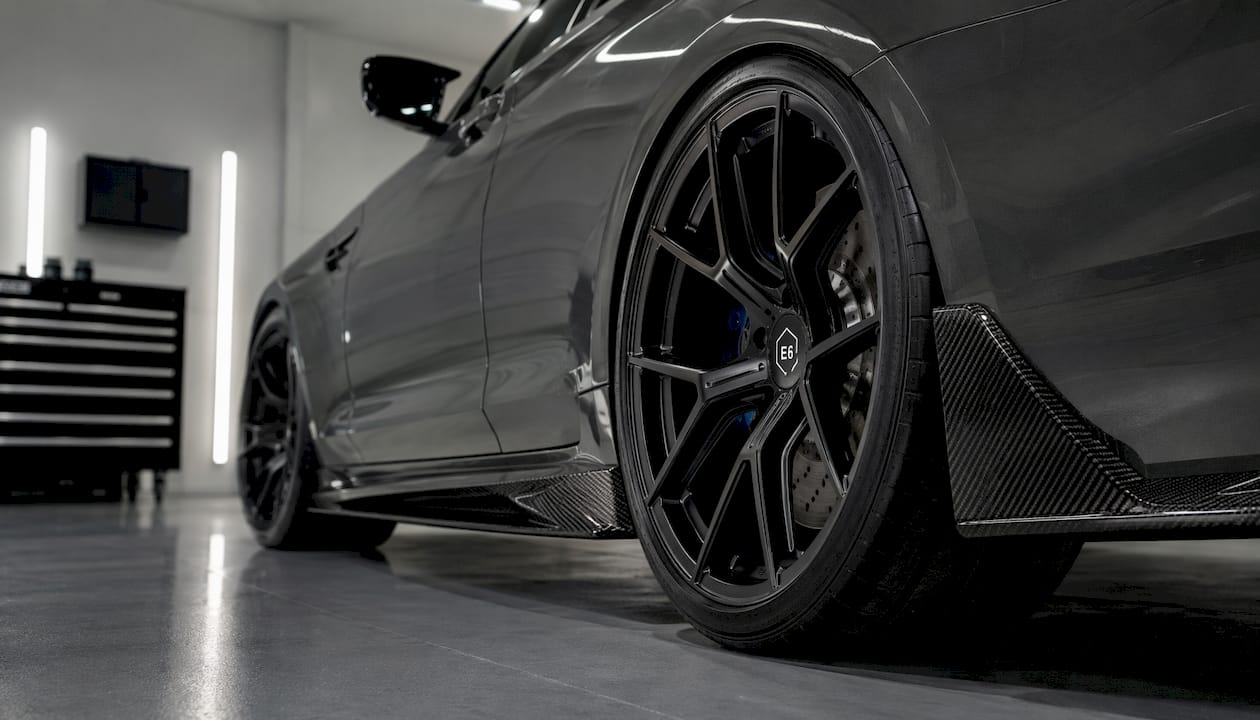
The practical results are measurable. Forged wheels achieve dimensional tolerances of ±0.2 mm, which means the wheel runs true without requiring balance weights to compensate for manufacturing variance. The grain structure advantages translate directly to fatigue life, particularly in the spoke roots where bending stress concentrates during cornering.
Weight is the other variable. A forged wheel of equivalent strength to a cast wheel is lighter because the material is denser and more efficiently distributed. That weight reduction at the wheel reduces unsprung mass, which improves suspension response, braking distance, and steering feel. On a 500-horsepower AMG or a 630-horsepower McLaren, the difference is felt immediately.
| Wheel type | Grain structure | Fatigue resistance | Weight | Tolerance |
|---|---|---|---|---|
| Forged monoblock | Full alignment, billet | Highest | Lowest | ±0.2 mm |
| Flow formed | Barrel only | Moderate | Moderate | Wider |
| Cast | Random | Lowest | Heaviest | Widest |
Long-term maintenance also favors forging. Cast wheels crack under impact loads that forged wheels absorb and deform slightly without catastrophic failure. For track use, that difference between a cracked wheel and a bent one can be the difference between a pit stop and a barrier.
E6 Carbon builds forged wheels engineered for the platforms that demand it
E6 Carbon’s forged wheel catalog covers monoblock, multi-piece, beadlock, and AeroDisc configurations, each engineered to the dimensional requirements of Mercedes-AMG, Lexus LC500, McLaren, and Lamborghini. The E6 Forged wheel lineup starts from billet aluminum and finishes to tolerances that match OEM fitment standards, with no adapters and no compromises on hub bore or offset.

Every wheel ships alongside autoclave-cured 2×2 twill carbon fiber components, from front lips and rear diffusers to full body kits. This gives you a complete weight-reduction and aesthetic package from a single source. The “Fitment First” engineering standard means every component is dimensioned to your specific platform before it leaves the shop. Browse the full E6 Forged catalog and configure your build at e6carbon.com/e6-forged-wheels.
Key Takeaways
Advanced forging produces void-free, grain-aligned components with 30–50% higher fatigue resistance than castings, making it the engineering standard for safety-critical automotive parts on platforms like Mercedes-AMG, Lexus LC500, McLaren, and Lamborghini.
| Point | Details |
|---|---|
| Fatigue resistance advantage | Forged parts achieve 30–50% higher fatigue resistance than castings, critical for cyclic-load components. |
| Dimensional precision | Modern forging reaches ±0.2 mm tolerances, reducing machining and improving fitment accuracy. |
| Weight reduction | Forged parts require around 20% less material for equivalent strength, directly cutting unsprung weight. |
| Thermal durability | Dense forged microstructure resists creep and brittle fracture in brake and turbo applications. |
| E6 Carbon platform fit | E6 Forged delivers monoblock and multi-piece forged wheels dimensioned to AMG, LC500, McLaren, and Lamborghini OEM specifications. |
FAQ
What makes advanced forging better than casting for performance cars?
Forging aligns the metal’s internal grain structure and eliminates porosity, producing parts with 30–50% higher fatigue resistance than castings. Cast parts carry random grain orientation and internal voids that become failure points under cyclic stress.
How does forging affect unsprung weight on high-performance vehicles?
Forged wheels are lighter than cast equivalents of the same strength because the denser, grain-aligned material allows thinner sections. Reducing unsprung weight improves suspension response, braking, and steering feel on platforms like the Mercedes-AMG GT and McLaren 720S.
What tolerances do forged wheels achieve?
Modern forging processes achieve dimensional tolerances of ±0.2 mm directly off the die, which means wheels run true with minimal balance correction and seat precisely to OEM hub bore specifications.
Does forging cost more than casting?
Initial tooling costs are higher for forging, but near-net-shape forming reduces material waste and machining time, delivering up to 15% lower production costs in some projects. Over a component’s lifecycle, forging typically costs less due to fewer defects and longer service life.
Which platforms does E6 Carbon support with forged wheels?
E6 Carbon engineers forged wheels for Mercedes-AMG, Lexus LC500, McLaren, and Lamborghini, among other exotic and luxury platforms, using “Fitment First” engineering to match OEM hub bore, offset, and load ratings.