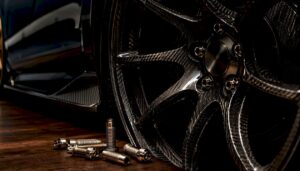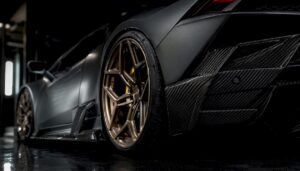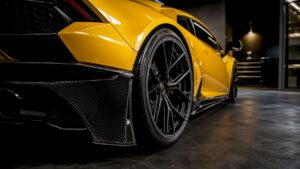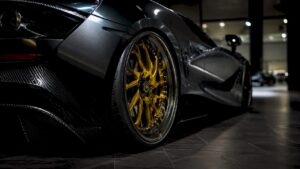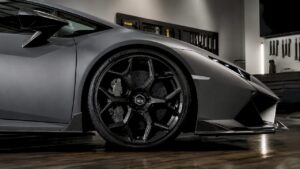
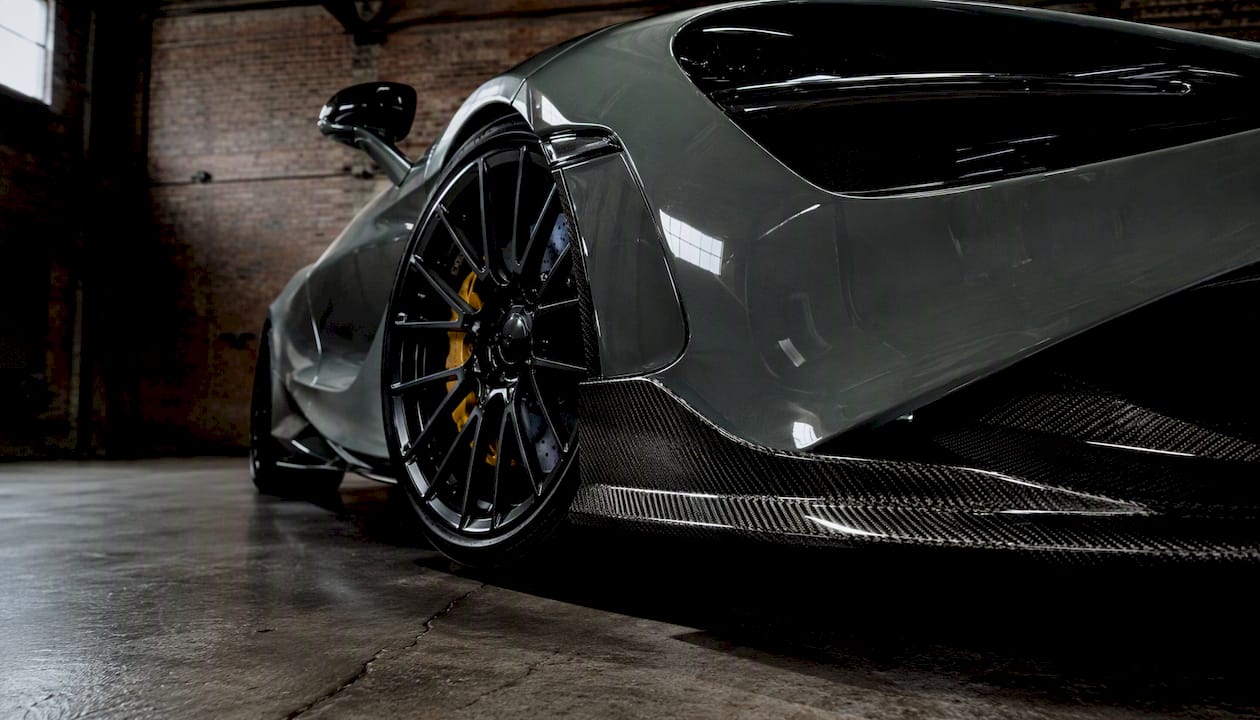
For U.S. owners of Mercedes-AMG, Lexus LC500, McLaren, and Lamborghini platforms, the strongest alternatives to larte-design.com fall into two clear categories: engineering-first autoclave carbon specialists and bespoke widebody houses. E6 Carbon sits at the top of the engineering-first tier, offering autoclave-cured 2×2 twill components, Fitment First tolerances, and integrated forged wheel packages that no single-category supplier matches. Larte Design itself positions basalt fiber as its mid-tier composite of choice, which is a legitimate paint-ready option but a different proposition than dry carbon for performance-focused builds.
Your immediate move: identify whether your build is performance-driven (autoclave carbon, unsprung weight reduction, track validation) or aesthetics-driven (paint-ready panels, widebody stance, show presence). That single decision narrows the field faster than any brand comparison.
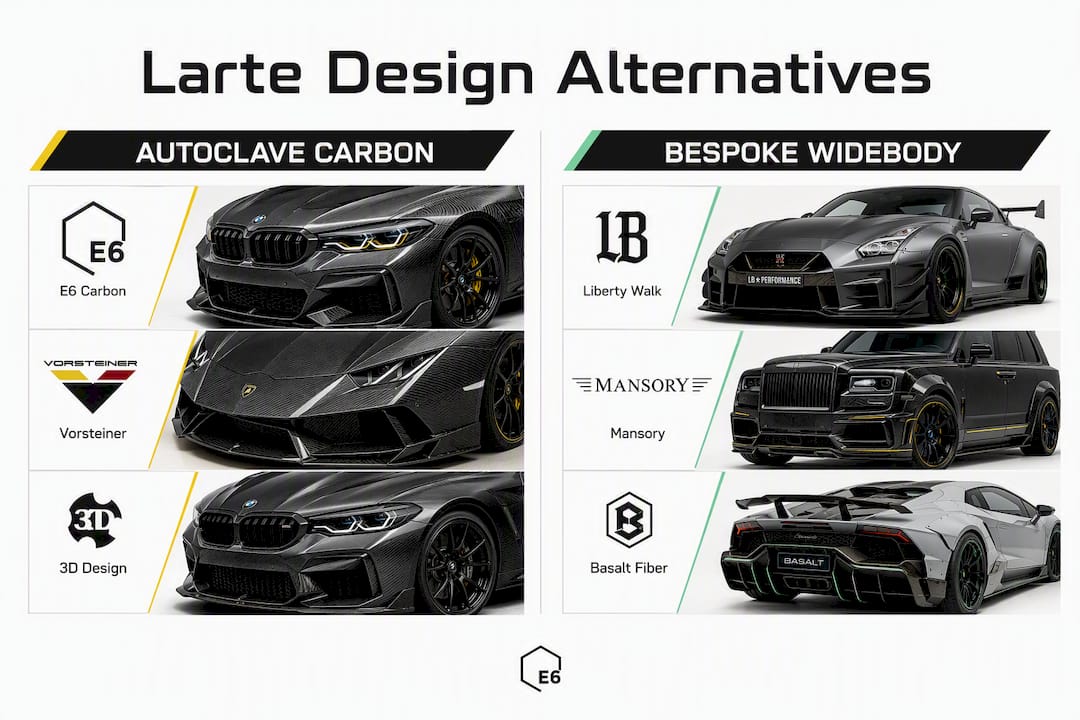
Mandatory coverage note: the SERP consensus for this topic features Vorsteiner, 3D Design, Liberty Walk, and Mansory as named alternatives. Each appears in the provider profiles below with an honest assessment of where they fit and where they fall short for U.S. buyers.
Table of Contents
- What are the best larte-design.com alternatives by category?
- How do you choose the right Larte Design alternative for your car?
- What do the major alternative providers actually offer?
- Why does manufacturing method change cost, fitment, and performance?
- How do alternative providers compare on customer service and responsiveness?
- What do user reviews and expert opinions say about these alternatives?
- What are the return and refund policies of alternative providers?
- Key Takeaways
- Why engineering credentials should be the first filter, not the last
- E6 Carbon offers autoclave carbon and forged wheels in one place
- Useful sources and where to verify specs, lead times, and fitment claims
- FAQ
What are the best larte-design.com alternatives by category?
| Provider Category | Best For | Materials & Method | Fitment Quality | Full Kit Price Range | Lead Time | US Availability |
|---|---|---|---|---|---|---|
| E6 Carbon / E6 Forged | Mercedes-AMG, Lexus LC500, McLaren, Lamborghini | Autoclave-cured 2×2 twill carbon | Fitment First, <2mm tolerance | Bespoke pricing on request | Project-dependent | Direct US sales, installation partners |
| A-tier autoclave carbon specialists (e.g., Vorsteiner, 3D Design) | BMW M, Porsche, Mercedes-AMG | Autoclave-cured carbon, some wet-layup | High, documented fitment | $21,000–$30,000+ full kit | 8 weeks | US dealers and direct |
| Bespoke widebody houses (e.g., Liberty Walk, Mansory) | Lamborghini, Ferrari, McLaren, AMG | Mixed: carbon, FRP, composite | Custom-engineered, variable | $21,000–$30,000+ or higher for full conversion | several weeks to a few months | Limited US partners |
| Basalt fiber / value-premium specialists | SUVs, luxury sedans, paint-match builds | Basalt fiber (paint-ready) | Moderate, paint-ready finish | $8,000–$18,000 full kit | several weeks | Online direct, some US dealers |
| Economy / visual kits | Entry luxury, show builds | ABS plastic, FRP | Low, often requires shop modification | Under $8,000 | 2–6 weeks | Widely available online |
Quick decision filters:
- If your Mercedes-AMG E63 or GT needs track-validated aero, autoclave carbon with documented tolerances is the only category worth considering.
- If you want factory paint matching on a Lexus LC500 without paying carbon premiums, basalt fiber is approximately 30% more cost-effective than carbon fiber while delivering comparable panel strength.
- Economy ABS kits rarely hold fitment on platforms with complex body lines. On a McLaren 720S or Lamborghini Huracán, poor fitment costs more in labor than the kit saves.
Stat: Premium body kits from high-tier manufacturers maintain fitment tolerances under 2mm; lower-tier kits frequently require significant shop modification, adding labor costs that erase the price advantage.
How do you choose the right Larte Design alternative for your car?
Start with platform fit. Ask every supplier for documented fitment on your exact make, model, and model year. Not “fits AMG GT” — “fits 2023 Mercedes-AMG GT63 S 4-door, pre-facelift.” Request photographs of installed kits on the same chassis, not renders.
Step-by-step evaluation checklist:
- Confirm platform-specific fitment documentation (photos, fitment report, or installation guide for your exact VIN generation).
- Ask whether parts are autoclave-cured carbon, dry carbon, wet-layup, basalt fiber, or FRP. Request a process description or factory certification.
- Request panel gap tolerances. Premium standard is under 2mm. Anything above 3mm means shop modification time.
- Ask for recommended shop-fitment hours per component and whether the supplier has a US installation partner network.
- Get a full landed cost: kit price + US shipping + customs/duties + paint (if applicable).
- Request the return and refund policy in writing, specifically for bespoke or custom-ordered parts.
- Ask for warranty terms: what’s covered, for how long, and what voids it.
Questions to copy and send to any supplier:
- “Can you provide fitment photos on [my exact model/year]?”
- “Are these parts autoclave-cured or wet-layup? Can you share your manufacturing process?”
- “What are your panel gap tolerances, and do you offer a fitment guarantee?”
- “What is the total landed cost to [my US state], including shipping and duties?”
- “What is your return policy for bespoke orders?”
Pro Tip: Basalt and fiberglass kits marketed as “paint-ready” often require additional surface prep and primer before painting. Always ask whether the paint allowance is included in the quote, and confirm whether autoclave carbon parts ship with a clearcoat or raw weave finish — repainting exposed carbon is expensive and rarely worth it.
What do the major alternative providers actually offer?
E6 Carbon and E6 Forged
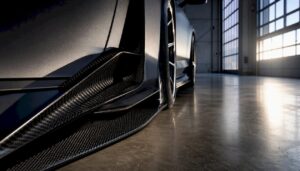
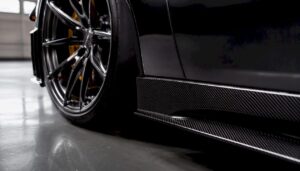
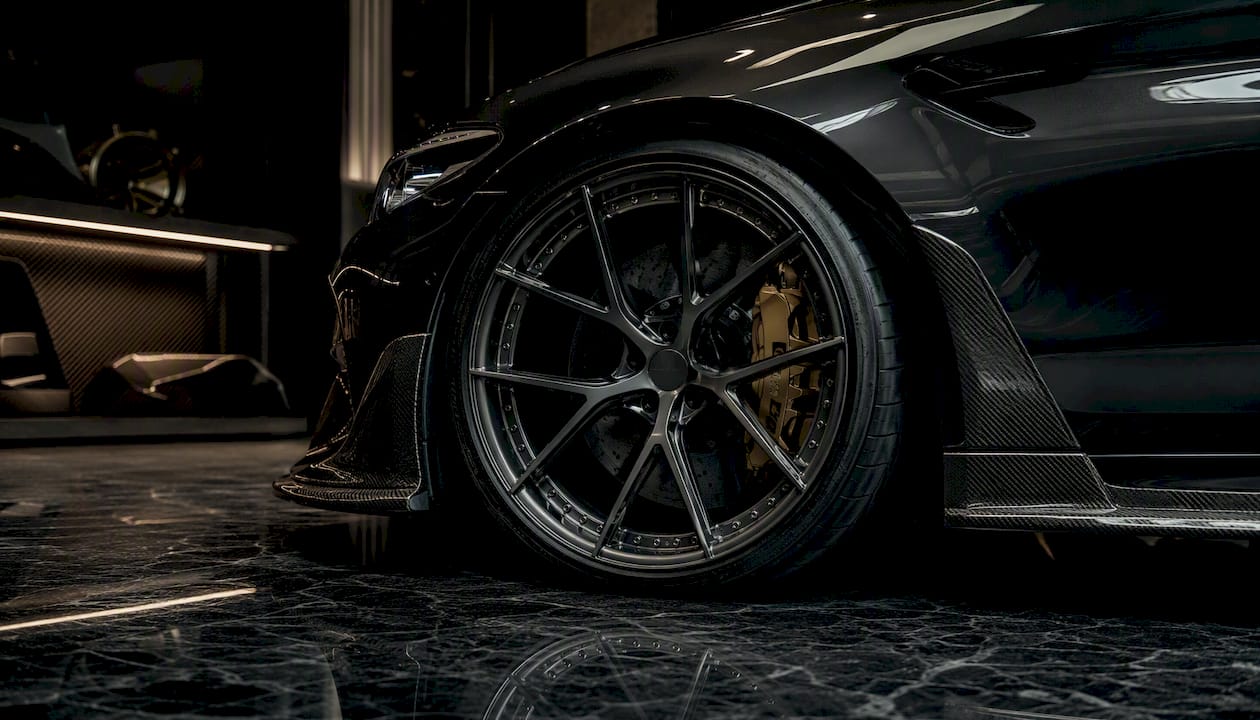
E6 Carbon manufactures autoclave-cured carbon fiber aero components and bespoke forged wheels for Mercedes-AMG, Lexus LC500, McLaren, Lamborghini, and Ferrari platforms. The Fitment First engineering approach means every component is developed against platform-specific tolerances, targeting under 2mm panel gaps. The catalog covers front lips, rear diffusers, side skirts, hoods, and full aero kits, alongside monoblock, multi-piece, beadlock, and AeroDisc forged wheel configurations.
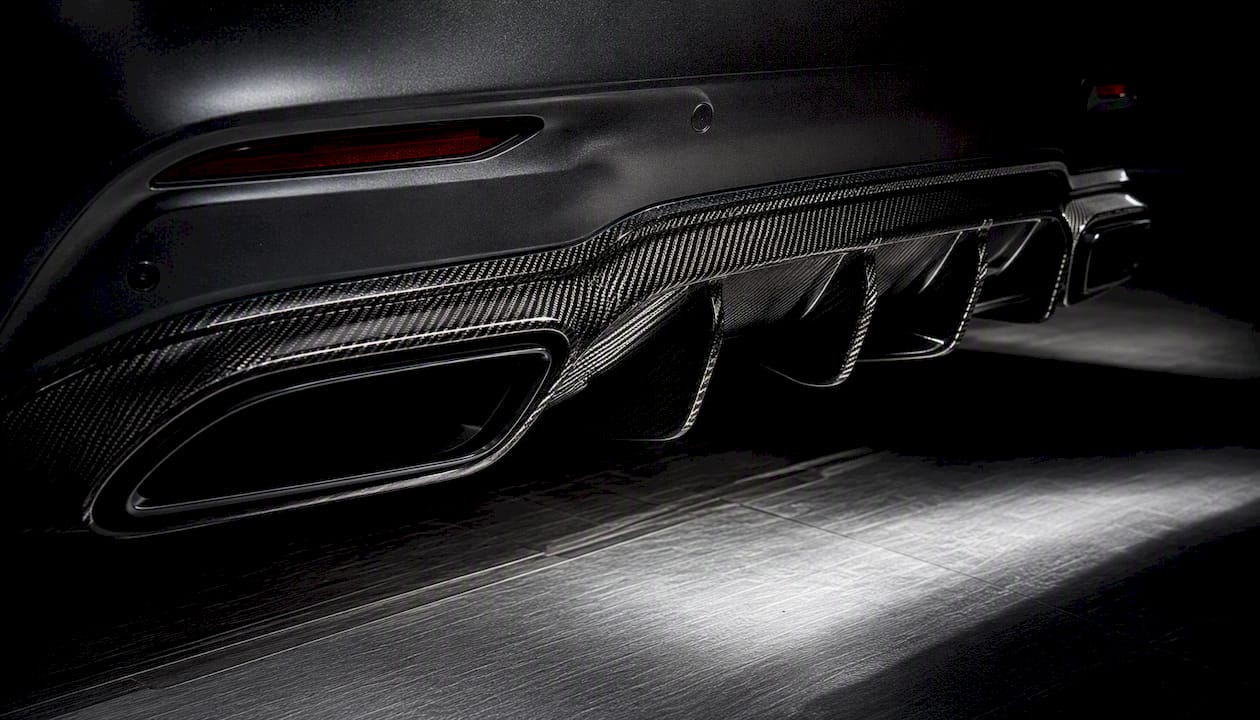
For Lexus LC500 owners, the Z-Carbon Aero Kit is a direct example of a full autoclave-cured package with documented fitment. The AeroTech Carbon Fiber Hood demonstrates the unsprung weight reduction argument in a single component. Performance integration goes further: turbo systems and fueling hardware are available alongside carbon and wheel packages, making E6 Carbon one of the few US-accessible suppliers that covers the full modification ecosystem rather than just aesthetics.
Trust signals: published portfolio with installed-vehicle photography, Fitment First engineering documentation, US direct sales, and installation partner access.
Vorsteiner and 3D Design (A-tier autoclave carbon specialists)
Vorsteiner and 3D Design represent the established A-tier for autoclave-cured carbon on BMW M and Mercedes-AMG platforms. Both publish fitment galleries and offer documented installation processes. Full kit pricing typically lands in the premium price range for high-end autoclave-cured carbon kits. Lead times depend on the supplier and kit complexity and can typically take several weeks to a few months. US dealer networks exist for both, though bespoke or one-off requests require direct factory engagement. Neither offers the integrated wheel-plus-aero ecosystem that E6 Carbon provides.
Liberty Walk (bespoke widebody houses)
Liberty Walk specializes in extreme widebody conversions, primarily for Lamborghini, Ferrari, and McLaren platforms. The aesthetic is unmistakable. Engineering, however, is conversion-focused rather than aero-performance-focused: fitment tolerances vary, and installation requires specialist shops with widebody experience. US availability is limited to a small number of authorized partners. Lead times for full conversions often run multiple months, and pricing for complete packages is generally at the luxury end of the market.
Mansory (ultra-luxury bespoke)
Mansory operates at the intersection of coachbuilding and tuning, targeting Rolls-Royce, Bentley, Lamborghini, and AMG G-Class owners. Material quality is high, but the offering is bespoke by nature: no standard catalog, no fixed pricing, and US availability depends on direct factory engagement or authorized US partners. For buyers who want a fully documented engineering process and predictable lead times, Mansory’s model introduces more uncertainty than the alternatives above.
Basalt fiber and value-premium specialists
This category covers suppliers who use basalt fiber, a volcanic-rock-derived composite that is significantly less expensive than carbon fiber while maintaining sufficient panel strength for painted applications. Larte Design itself falls into this category for many of its products. Full kits in this tier typically are priced in the mid-range category for painted body kits. Paint-ready finish is the primary advantage; exposed weave is not an option. For Mercedes-AMG GLE or GLS owners who want a body kit that color-matches the factory paint, this category makes economic sense.
Economy / visual kits (ABS and FRP)
ABS plastic and fiberglass kits are widely available online and price under $8,000 for a full set. Fitment on complex platforms is unreliable, and shop modification time often negates the savings. For a McLaren or Lamborghini, this category is not worth considering. For a show-only build on a less complex platform, it can work.
Why does manufacturing method change cost, fitment, and performance?
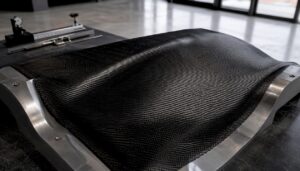
The difference between autoclave-cured carbon and wet-layup carbon is not cosmetic. Autoclave curing removes air pockets and controls resin content, producing stiffer, lighter panels with measurably lower void content. For aero parts on a Mercedes-AMG GT or McLaren 720S, that translates to consistent aerodynamic behavior and better unsprung weight reduction. Wet-layup parts look similar but carry more resin, weigh more, and are more prone to delamination under heat cycling.
| Material | Strength-to-Weight | Cost Ratio | Paintability | Typical Finish | Best Use Case |
|---|---|---|---|---|---|
| Autoclave-cured 2×2 twill carbon | Highest | Premium | Clearcoat or exposed weave | Exposed carbon weave | Performance aero, track builds, weight-critical components |
| Wet-layup carbon | High | Mid-premium | Clearcoat or exposed weave | Exposed carbon weave | Street builds, visual upgrades |
| Basalt fiber | Moderate-high | approximately 30% less costly than carbon fiber | Paint-ready | Paint-ready | Color-match builds, SUV kits, value-premium |
| FRP / fiberglass | Moderate | Low | Paint-ready | Paint-ready | Show builds, entry-level visual kits |
| ABS plastic | Low | Lowest | Paint-ready | Paint-ready | Economy visual kits only |
The <2mm fitment tolerance benchmark matters because it directly controls installation time. A kit engineered to that standard typically fits without modification. A kit with 4–5mm gaps requires shop hours to shim, adjust, and re-seal, which on a Lamborghini Huracán or AMG GT63 means labor costs that can rival the kit price itself.
Pro Tip: For track-focused AMG or McLaren builds where unsprung weight reduction is a priority, specify autoclave-cured dry carbon on rotating and aero components. For Lexus LC500 builds where factory color matching matters more than exposed weave, basalt or painted FRP delivers better value. The dry vs. wet carbon guide for LC500 covers this trade-off in detail.
How do alternative providers compare on customer service and responsiveness?
Response time and communication quality vary sharply across these categories. Engineering-first suppliers with US sales infrastructure, like E6 Carbon, typically respond within one business day and can provide fitment documentation, lead time estimates, and warranty terms in a single exchange. A-tier specialists like Vorsteiner and 3D Design operate through dealer networks, which adds a layer between the buyer and the factory.
Bespoke houses like Liberty Walk and Mansory are factory-direct by nature, and communication often runs through international representatives. Expect longer response cycles, especially for US buyers requesting custom configurations. Basalt and value-premium suppliers vary widely: some operate professional e-commerce operations with live chat and documented return policies; others are effectively importers with limited post-sale support.
The clearest signal of a responsive supplier is published documentation: a fitment gallery, a warranty page, and a stated lead time. Suppliers who cannot provide these upfront rarely improve after purchase.
What do user reviews and expert opinions say about these alternatives?
Industry analysts consistently emphasize that structural engineering, documented manufacturing processes, and fitment guarantees matter more than brand aesthetics when buyers want minimal installation risk and better resale retention. That finding aligns with what owners of Mercedes-AMG and McLaren platforms report in enthusiast forums: the most common complaint about mid-tier suppliers is not the visual result but the installation experience, specifically poor fitment requiring expensive shop time.
High-net-worth buyers are increasingly favoring bespoke, one-off carbon components because integrated designs with wind-tunnel validation retain more aftermarket value on the vehicle. For Lamborghini and McLaren owners in particular, a documented engineering process is part of the provenance story when the car is eventually sold.
Vorsteiner and 3D Design carry strong reputations in BMW M communities and have extended credibly into AMG platforms. Liberty Walk’s reputation is polarizing: the aesthetic is intentional and extreme, and buyers who want that specific look accept the fitment trade-offs. Mansory reviews among US buyers often cite the difficulty of US service and parts support as the primary friction point.
What are the return and refund policies of alternative providers?
Bespoke and custom-manufactured parts carry the most restrictive return policies across every category. A part manufactured to your platform and specification is not resalable, and most suppliers state clearly that custom orders are non-refundable once production begins. This is standard practice, not a red flag, but it makes pre-purchase verification critical.
For standard catalog parts, most A-tier suppliers accept returns within 30 days for uninstalled, undamaged components. Basalt and value-premium suppliers vary: some offer 14–30 day return windows; others treat all orders as final sale. Economy kit suppliers frequently have no return policy at all.
Before ordering from any supplier, request the return policy in writing and confirm whether it applies to your specific order type (catalog vs. custom). For bespoke projects, a deposit structure with milestone approvals is the standard risk-management approach.
Key Takeaways
E6 Carbon’s autoclave-cured 2×2 twill carbon and Fitment First engineering make it the strongest engineering-first alternative to Larte Design for US owners of Mercedes-AMG, Lexus LC500, McLaren, and Lamborghini platforms.
| Point | Details |
|---|---|
| Prioritize engineering-first suppliers | Autoclave-cured carbon and <2mm fitment tolerances reduce installation labor and protect resale value. |
| Match material to use case | Autoclave carbon for performance builds; basalt fiber, which is notably less costly than carbon fiber, for paint-match applications. |
| Verify before ordering | Request fitment photos, process documentation, warranty terms, and a full landed cost quote before committing. |
| Bespoke orders are non-refundable | Custom parts are non-returnable at every tier; confirm return policy in writing before any deposit. |
| E6 Carbon for integrated builds | E6 Carbon covers autoclave carbon aero, forged wheels, and performance hardware for Mercedes-AMG, Lexus LC500, McLaren, and Lamborghini in one catalog. |
Why engineering credentials should be the first filter, not the last
The conventional approach to shopping for body kits is to find a look you like and then work backward to a supplier. That logic works for off-the-shelf parts on common platforms. It fails on a Mercedes-AMG GT63, a Lexus LC500, or a McLaren 720S, where the body geometry is complex, the paint is expensive, and a 4mm panel gap is not a minor inconvenience.
The smarter filter is to start with manufacturing process and fitment documentation, then evaluate aesthetics within that qualified pool. A supplier who cannot provide autoclave process confirmation, platform-specific fitment photos, and a stated tolerance target is asking you to take on all the risk. On a $150,000+ vehicle, that is not a reasonable trade.
For Mercedes-AMG builds, the AMG-specific geometry and aggressive body lines demand tight tolerances on every aero component. Lexus LC500 owners face a different challenge: the LC500’s flowing body lines mean even small fitment errors are visible, and color matching is critical. McLaren and Lamborghini platforms require suppliers with documented experience on mid-engine geometry, where rear diffuser and side skirt fitment directly affects cooling airflow.
E6 Carbon’s engineering focus across all four of these platforms is the practical reason it appears at the top of this list, not brand preference.
E6 Carbon offers autoclave carbon and forged wheels in one place
Most buyers searching for larte-design.com alternatives end up evaluating three or four separate suppliers: one for carbon aero, one for wheels, sometimes a third for performance hardware. E6 Carbon collapses that into a single engineering relationship.
The catalog covers autoclave-cured 2×2 twill carbon body kits, front lips, rear diffusers, hoods, and side skirts for Mercedes-AMG, Lexus LC500, McLaren, and Lamborghini, alongside monoblock and multi-piece forged wheel configurations engineered for the same platforms. Fitment First engineering means every component is developed against platform-specific tolerances, and the US-accessible sales process means you can request fitment documentation, lead time estimates, and warranty terms before any commitment.
For buyers who want to understand why autoclave carbon commands a price premium before requesting a quote, the real reason premium carbon fiber costs more covers the manufacturing economics directly. When you are ready to spec a build, start at e6carbon.com and request fitment photos and a project quote for your platform.
Useful sources and where to verify specs, lead times, and fitment claims
Verifying supplier claims before ordering requires going beyond the product page. These sources provide independent context:
- Every Major Body Kit Brand Ranked — 2026 Tier List: covers manufacturing tier classifications, material comparisons (autoclave vs. wet-layup vs. basalt), and fitment benchmarks. Look for explicit autoclave mentions and tolerance data.
- LARTE Design: Analysis & Top Supplier Picks: supplier analysis covering Larte Design’s material positioning, price bands, and global distribution. Useful for understanding where basalt-fiber kits sit in the market and what full-kit pricing looks like across tiers.
- Larte Design Opens New Studio in Turin, Italy: Larte Design’s own blog, which includes installation guidance and company background. Useful for understanding the brand’s own installation expectations and ownership structure.
- Top Larte Design Competitors and Alternatives: corporate competitor listing for background research on Larte Design’s business classification. Not a product recommendation source, but useful for understanding the competitive landscape at a corporate level.
What to request from any supplier to verify claims:
- Written confirmation of manufacturing process (autoclave, wet-layup, or other) with factory documentation if available.
- Fitment photos on your exact platform and model year, not generic renders.
- Stated panel gap tolerance targets and installation hour estimates.
- Full warranty terms in writing, including what voids coverage.
- Total landed cost to your US address, including shipping, duties, and any paint or clearcoat requirements.
FAQ
Who are the main competitors of Larte Design?
The primary alternatives fall into four categories: autoclave carbon specialists (including E6 Carbon, Vorsteiner, and 3D Design), bespoke widebody houses (Liberty Walk, Mansory), basalt and value-premium suppliers, and economy FRP/ABS kit makers. Each targets a different buyer priority, from track performance to show aesthetics.
How much does a Larte Design body kit cost?
Full kits from Larte Design and comparable basalt-fiber suppliers typically range from $8,000 to $18,000 for mid-tier painted configurations. Premium autoclave carbon full kits from any A-tier supplier, including E6 Carbon, run $21,000–$30,000 or more depending on platform and configuration.
Who owns Larte Design?
Larte Design is a German-based tuning company. The brand recently opened a new studio in Turin, Italy, signaling an expansion into the Italian design market. Specific ownership details are not publicly listed beyond the corporate profile.
How long does Larte Design installation take?
Installation time depends on the kit complexity and the shop’s familiarity with the platform. Premium kits engineered to under 2mm tolerances typically require less shop modification and fewer hours than lower-tier kits. For complex platforms like Mercedes-AMG or McLaren, expect a full-day installation minimum; widebody conversions can run multiple days.
Is autoclave carbon worth the premium over basalt fiber?
For performance-focused builds on Mercedes-AMG, McLaren, or Lamborghini platforms, yes. Autoclave-cured carbon delivers lower void content, better strength-to-weight, and more consistent aerodynamic behavior. For paint-match builds on luxury SUVs where weight savings are secondary, basalt fiber is approximately 30% more cost-effective than carbon fiber, making it a defensible choice.