TL;DR:
- Prepreg carbon fiber consistently offers higher fiber volume fractions and lower variability than wet layup. It provides superior mechanical strength, surface finish, and structural reliability for performance automotive parts. Wet layup remains suitable only for prototypes and cosmetic components where strict quality control is less critical.
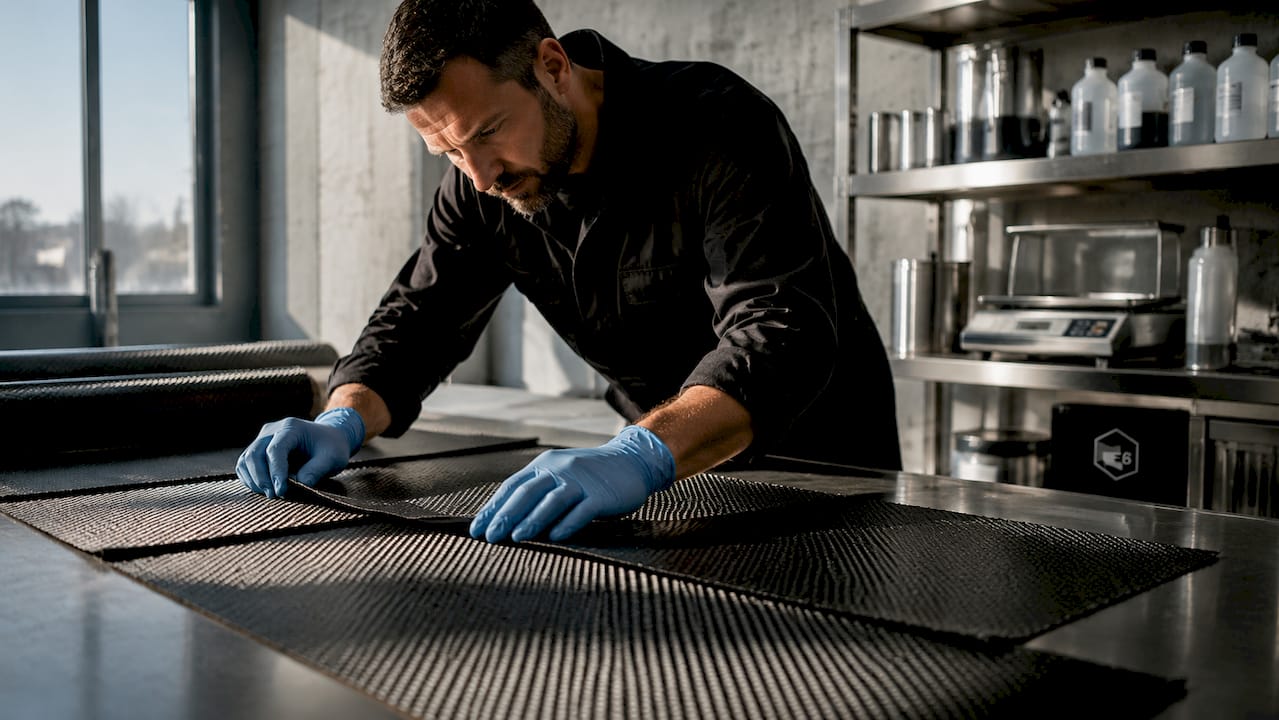
Prepreg carbon fiber is defined as fabric pre-impregnated with a precisely measured resin system, stored frozen at −18°C, and cured under heat and pressure inside an autoclave. The material breakdown in prepreg carbon fiber vs. wet layup manufacturing reveals a fundamental split in resin control, void content, and mechanical consistency that determines whether a part survives a track session or fails under load. Wet layup applies resin manually to dry fiber at ambient temperature, relying on technician skill and environmental conditions to achieve saturation. The gap between these two carbon fiber manufacturing methods is not cosmetic. It is structural, measurable, and consequential for every platform from Mercedes-AMG to McLaren.
How do fiber volume fraction and resin ratios differ between prepreg and wet layup?
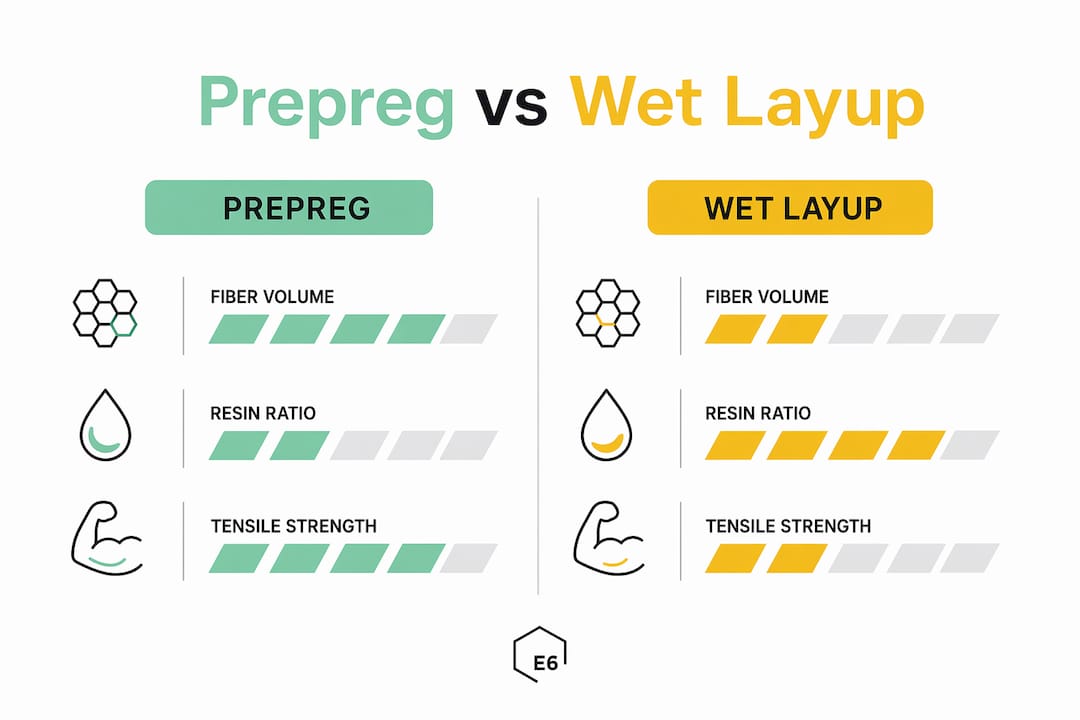
Fiber volume fraction is the single most important predictor of composite stiffness and weight efficiency. Prepreg achieves 55–65% fiber volume fraction consistently, while wet layup ranges from 38–55% with significant batch-to-batch variation. That difference means a wet layup part carries substantially more resin mass for the same structural footprint.
The resin-to-fiber ratio tells the same story. Prepreg resin-to-fiber ratios run approximately 35:65, calibrated at the factory before the material is frozen. Wet layup ratios hover near 50:50, depending entirely on how much resin a technician applies by hand. That variability directly undermines structural predictability.
For automotive applications, the consequences are real. A wet layup hood for a Lexus LC500 may weigh 15–20% more than its prepreg equivalent simply due to excess resin. That excess adds unsprung weight and reduces the stiffness-to-weight ratio that makes carbon fiber worth specifying in the first place.
Pro Tip: High fiber volume fraction correlates directly with improved stiffness and reduced part weight. When evaluating carbon fiber parts, ask the manufacturer for their documented fiber volume fraction, not just the fiber type.
| Property | Prepreg | Wet Layup |
|---|---|---|
| Fiber volume fraction | 55–65% | 38–55% |
| Resin-to-fiber ratio | ~35:65 | ~50:50 |
| Batch-to-batch variability | Less than 3% | 10–25% |
What are the cost and logistics differences between prepreg and wet layup?
Prepreg raw material costs 2–4 times more than dry fabric and resin for wet layup. Prepreg runs $40–90 per kilogram versus $15–30 per kilogram for wet layup materials. That premium reflects specialized factory impregnation, cold chain transport, and frozen storage infrastructure.
Tooling and equipment costs amplify the gap further:
- Prepreg tooling: $10,000–$50,000 per mold, plus autoclave capital investment
- Wet layup tooling: $1,000–$10,000 per mold, with no autoclave required
- Autoclave operating costs: Energy, maintenance, and cycle time add overhead per part
- Wet layup labor: Higher per part due to manual resin application and finishing
The long-term picture shifts in prepreg’s favor at medium-to-high production volumes. Prepreg reduces scrap and rework significantly compared to wet layup, where defects are discovered after cure and cannot be corrected. A single rejected wet layup part at the finishing stage costs more than the material savings justify.
Pro Tip: Production volume is the deciding variable. At fewer than 20 parts per year, wet layup’s lower tooling cost wins. Above that threshold, prepreg’s consistency and reduced rework begin to recover the material premium.
| Cost Factor | Prepreg | Wet Layup |
|---|---|---|
| Raw material cost | $40–90/kg | $15–30/kg |
| Tooling cost | $10K–$50K | $1K–$10K |
| Scrap and rework rate | Low | High |
How do mechanical properties and surface finish compare for automotive parts?
Tensile strength in prepreg reaches 800–1,200 MPa. Wet layup delivers 400–750 MPa. That range means a well-executed wet layup part can approach the lower end of prepreg performance, but the variability of 10–25% means you cannot guarantee which result you will get from any given part.
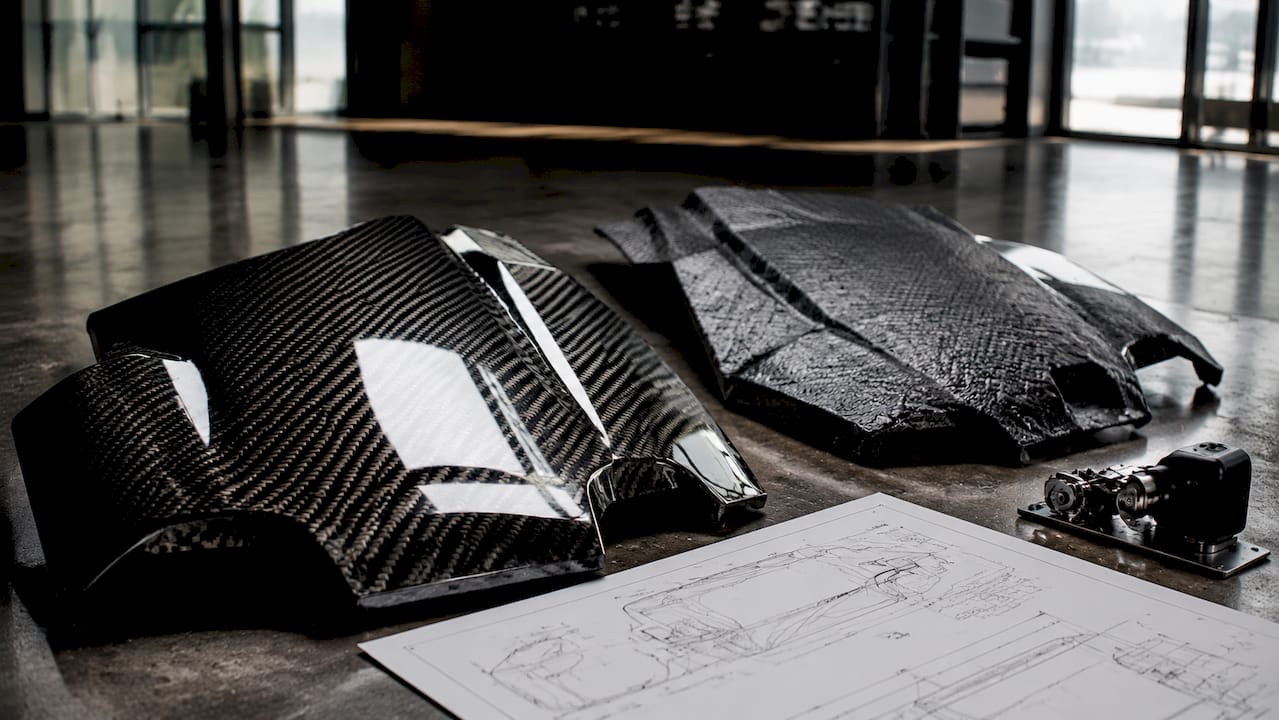
Autoclave curing at 120–180°C and 80–100 PSI consolidates the laminate under controlled conditions. The combination of heat and pressure drives out microscopic voids and resin-rich areas that form when resin is applied by hand. Void content in autoclave-cured prepreg parts is consistently below 1%, while wet layup voids can reach 5% or higher without vacuum assistance.
Surface finish is where the difference becomes visible. Prepreg delivers a pinhole-free 2×2 twill weave surface directly from the mold. Wet layup frequently produces resin pooling, print-through, and surface defects that require extensive sanding and finishing before a part is presentable. For a McLaren 720S front splitter or a Lamborghini Huracán rear diffuser, that surface quality is not optional.
Pro Tip: Achieving a flawless high-gloss finish with prepreg still requires precise vacuum bagging and controlled release film application. The process is more forgiving than wet layup, but it is not automatic.
| Property | Prepreg | Wet Layup |
|---|---|---|
| Tensile strength | 800–1,200 MPa | 400–750 MPa |
| Void content | Less than 1% | Up to 5%+ |
| Surface finish | Pinhole-free 2×2 twill | Resin pooling risk |
| Heat resistance | High | Moderate |
What process control challenges separate prepreg from wet layup?
Prepreg demands strict material handling discipline. Frozen storage at −18°C is non-negotiable. Once thawed, the material has a usable out-life of 2–4 weeks at room temperature. Exceed that window and the resin advances prematurely, producing a part with compromised mechanical properties that may look correct but will fail under load.
Wet layup introduces variability through the human element. Manual resin application is affected by ambient temperature, humidity, technician fatigue, and part geometry. Deep recesses and compound curves trap air and starve fiber of resin. The result is inconsistent fiber alignment and saturation that drives the 10–25% batch variability seen in wet layup composites.
Key process control risks by method:
- Prepreg: Out-life expiration, cold storage failure, incomplete vacuum bag seal, autoclave pressure drop
- Wet layup: Resin over-application, dry spots, fiber distortion during wet-out, ambient temperature swings during cure
Transitioning from a wet layup prototype to prepreg production requires full re-qualification. Laminate thickness, fiber orientation, and curing dynamics all change. Engineers who skip this step discover the mismatch at the worst possible time, during structural testing or on track.
When should you choose prepreg versus wet layup for automotive carbon parts?
The choice between prepreg and wet layup is an engineering decision framed by cost per pound saved versus required structural performance. Motorsport applications almost exclusively use autoclave-cured prepreg for chassis components, safety cells, and aerodynamic structures. The structural integrity requirements leave no room for the variability wet layup introduces.
Recommended application contexts:
- Mercedes-AMG GT body panels and splitters: Prepreg autoclave-cured components deliver the dimensional accuracy and surface quality required for factory-adjacent fitment on AMG GT platforms.
- Lexus LC500 aerodynamic trim: The Lexus LC500 carbon fiber catalog benefits from prepreg’s consistent 2×2 twill finish, where visual quality and weight savings are both priorities.
- McLaren and Lamborghini structural aero: Front splitters, rear diffusers, and canards on McLaren 720S and Lamborghini Huracán platforms require the 800–1,200 MPa tensile range that only prepreg reliably delivers.
- Prototype and cosmetic parts: Wet layup remains a cost-effective solution for non-structural prototype work, interior trim pieces, and low-volume cosmetic components where certification is not required.
The aftermarket carbon parts market reflects this split clearly. Premium manufacturers use prepreg for anything load-bearing or visible. Wet layup survives in budget cosmetic applications where structural performance is not the specification.
Key takeaways
Prepreg carbon fiber outperforms wet layup in every structural and finish metric because autoclave curing, controlled resin content, and frozen storage eliminate the variability that makes wet layup unsuitable for safety-critical automotive parts.
| Point | Details |
|---|---|
| Fiber volume fraction | Prepreg achieves 55–65% versus 38–55% for wet layup, directly improving stiffness and reducing weight. |
| Tensile strength gap | Prepreg delivers 800–1,200 MPa; wet layup reaches only 400–750 MPa with 10–25% batch variability. |
| Cost structure | Prepreg material costs 2–4 times more upfront but reduces scrap and rework at production volumes. |
| Surface finish | Autoclave-cured prepreg produces a pinhole-free 2×2 twill surface; wet layup requires extensive post-processing. |
| Application fit | Use prepreg for structural and visible parts; wet layup suits prototypes and non-structural cosmetic components. |
Why prepreg is the only standard worth defending
At E6 Carbon, we have seen what happens when a manufacturer cuts corners on process. A wet layup splitter on a track car looks identical to a prepreg part in a photo. Under load at 120 mph, the difference becomes structural. The void content, the resin-rich zones, the inconsistent fiber alignment — they all show up at the worst moment.
The cold storage requirement for prepreg is not overhead. It is quality control built into the supply chain. Toray carbon fiber stored at −18°C and processed within its out-life window produces a part that will not yellow, delaminate, or creep under sustained heat. That is not a marketing claim. It is the direct result of eliminating the variables that wet layup cannot control.
For Mercedes-AMG, Lexus LC500, and McLaren platforms, the weight savings from a prepreg part are real and measurable. The finish quality is repeatable. The structural performance is certifiable. Wet layup has its place in prototyping and budget cosmetic work. For anything that matters on a performance vehicle, prepreg is the only defensible standard.
— E6 Engineering
E6 Carbon autoclave-cured carbon fiber for your platform
E6 Carbon manufactures autoclave-cured carbon fiber body kits and aerodynamic components for Mercedes-AMG, Lexus LC500, McLaren, and Lamborghini platforms. Every part meets the prepreg manufacturing standards detailed in this article: controlled fiber volume fraction, void content below 1%, and a flawless 2×2 twill surface finish from the mold.

If you are specifying carbon fiber parts for a performance build and need components that meet the same structural standards as motorsport applications, the top performance parts for luxury cars catalog covers the full range of E6 Carbon solutions. Every component is engineered for fitment accuracy and track-ready structural integrity, not just show-car aesthetics.
FAQ
What is the main difference between prepreg and wet layup carbon fiber?
Prepreg uses factory-impregnated fiber stored frozen and cured in an autoclave, producing consistent resin-to-fiber ratios and low void content. Wet layup applies resin manually at ambient temperature, introducing variability in fiber saturation and mechanical strength.
Why does prepreg carbon fiber cost more than wet layup?
Prepreg raw materials cost $40–90 per kilogram versus $15–30 per kilogram for wet layup, reflecting specialized impregnation, cold chain logistics, and frozen storage requirements. Autoclave tooling and operating costs add further to the upfront investment.
Can wet layup carbon fiber be used on performance vehicles?
Wet layup suits non-structural cosmetic parts and prototypes where certification is not required. Safety-critical chassis components, aerodynamic structures, and load-bearing panels on performance vehicles require the tensile strength and consistency that only prepreg delivers.
How long can prepreg carbon fiber be stored before use?
Prepreg requires frozen storage at −18°C and has a usable out-life of 2–4 weeks after thawing at room temperature. Material used beyond this window risks premature resin advancement and compromised mechanical properties in the finished part.
What tensile strength does prepreg carbon fiber achieve compared to wet layup?
Prepreg carbon fiber reaches 800–1,200 MPa tensile strength. Wet layup achieves 400–750 MPa with batch variability of 10–25%, making it unsuitable for applications where consistent structural performance is required.