TL;DR:
- Hand-finished wheels undergo manual deburring, machining, and surface treatment for superior quality. They provide better structural integrity, longer lifespan, and customized aesthetics compared to factory wheels. The artisan process ensures precise tension, unique finishes, and higher durability, but requires longer production times and higher costs.
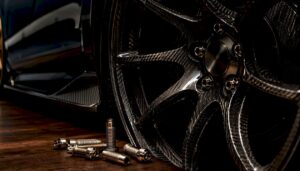
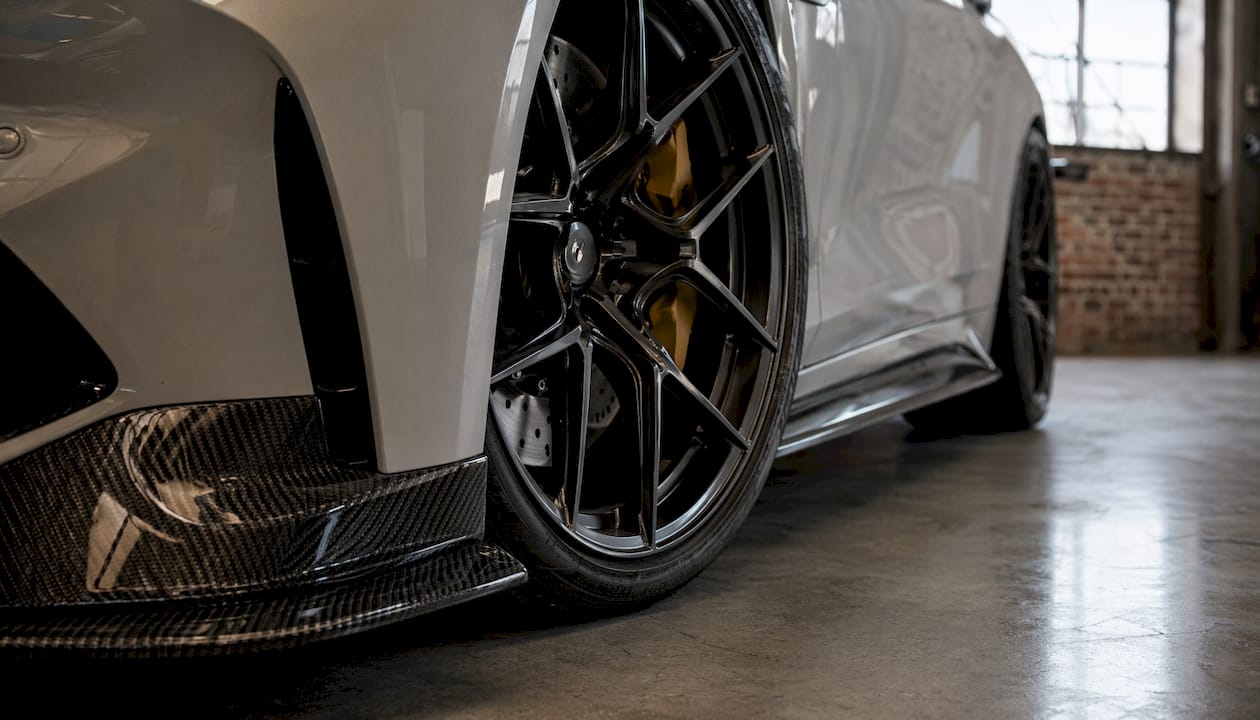
Hand-finished wheels are defined as wheels that undergo manual deburring, hand machining, and artisan surface treatment after the initial casting or forging process. This is the reason why hand finished wheels consistently outperform factory alternatives in structural integrity, longevity, and visual character. The difference is not cosmetic. Manual finishing corrects micro-imperfections that automated production lines miss entirely, producing a wheel that holds tighter tolerances and lasts longer under real driving stress. For enthusiasts building on platforms like Mercedes-AMG, Lexus LC500, or McLaren, that level of precision is not optional.
Why hand finished wheels outperform machine-finished alternatives
The artisan workflow behind a hand-finished wheel follows a strict sequence that mass production cannot replicate. After casting or forging, each wheel is manually deburred to remove sharp edges and casting flash. A skilled technician then performs hand machining on spoke faces, barrel lips, and hub bores to achieve tolerances that automated CNC passes alone cannot guarantee. Final stress-relief steps follow before any surface treatment begins.
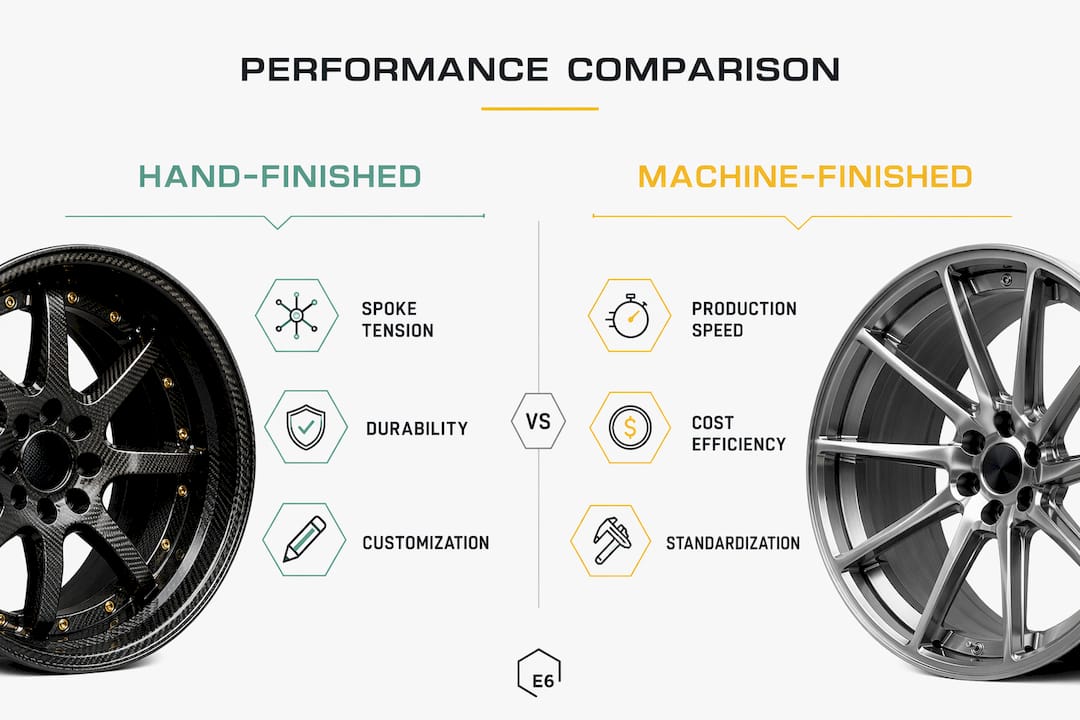
Machine-finished wheels move faster through production, but speed creates a specific problem. Machines produce factory wheels with uneven tension and surface inconsistencies that cause wheels to lose true faster and break spokes sooner. That mechanical variability compounds over time, especially on aggressive driving surfaces.
The quality control standard in artisan production is absolute. Wheels with imperfections after casting are rejected and remelted entirely rather than corrected downstream. That failure-is-not-an-option standard is why hand-finished wheels carry longer lead times and higher price points.
- Casting or forging: The blank is formed under controlled conditions.
- Manual deburring: Technicians remove all casting flash and sharp edges by hand.
- Hand machining: Spoke faces, lips, and hub bores are finished to tight tolerances.
- Stress relief: The wheel is inspected and treated to eliminate residual internal stress.
- Surface finishing: Artisan coatings, brushing, or machined highlights are applied.
Pro Tip: Ask your wheel builder for a rejection rate figure. Shops that hand-finish seriously will have one. A high rejection rate signals genuine quality control, not a marketing claim.
How does hand-finishing affect performance and durability?
The most direct performance benefit of hand-finishing is spoke tension consistency. Uneven spoke tension is the leading cause of wheels drifting out of true, and hand-tensioning eliminates the variability that machine assembly introduces. A wheel that stays true under load requires less maintenance and delivers more predictable handling feedback.
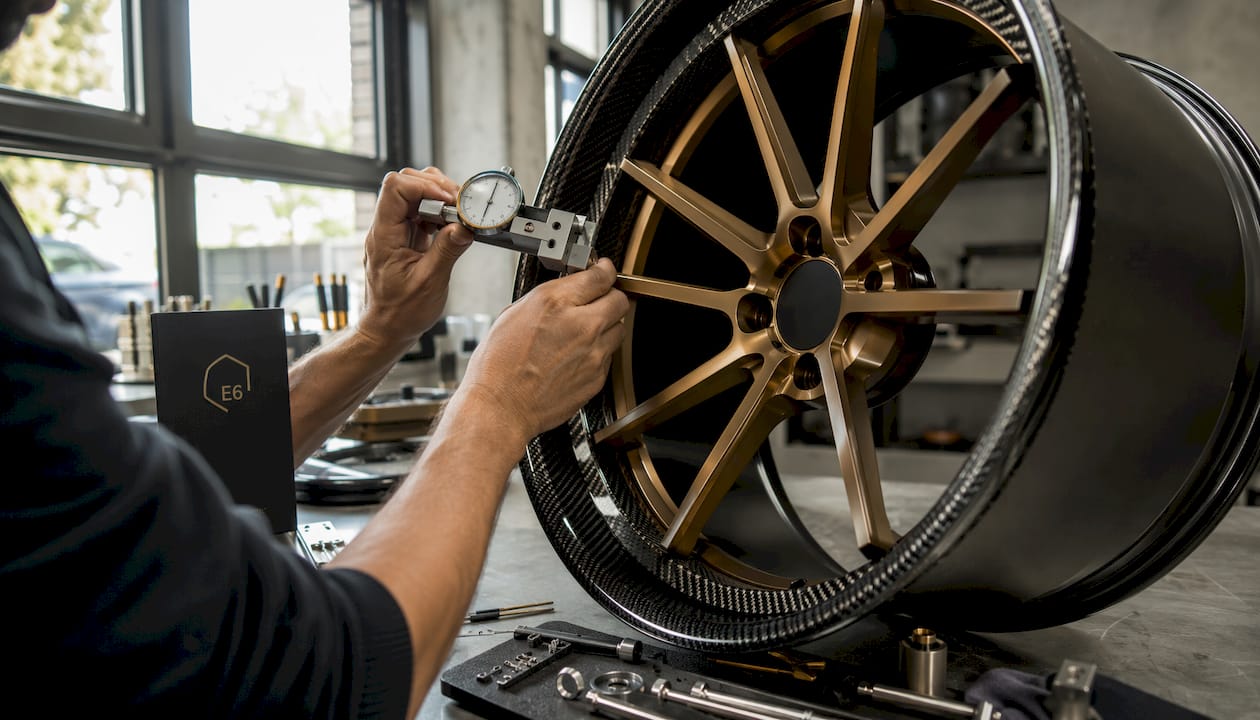
Hand-built wheels achieve even spoke tension and trueness that machine-built wheels cannot match, resulting in longer structural integrity over the life of the wheel. On a Mercedes-AMG E63 S running 21-inch staggered fitments, that difference shows up in reduced vibration at autobahn speeds and more consistent tire wear across the contact patch.
Custom hand-finishing also allows the builder to tune the wheel around the driver. Custom hand finishing lets wheels be built around individual driver weight, vehicle type, and typical road conditions for optimized performance and longevity. A Lexus LC500 used primarily on canyon roads demands different spoke geometry and tension calibration than the same car configured for track days.
| Factor | Hand-finished wheels | Machine-finished wheels |
|---|---|---|
| Spoke tension consistency | Even, manually verified | Variable, machine-set |
| Structural longevity | Extended, fewer stress failures | Shorter, accelerated wear |
| Tolerance control | Tight, hand-corrected | Standard CNC tolerance |
| Customization to driver | Full, built to spec | None, fixed production spec |
| Maintenance interval | Longer | Shorter |
Pro Tip: For McLaren and Lamborghini platforms where unsprung weight reduction is critical, specify hand-finished forged monoblock construction. The combination of forged aluminum and artisan finishing delivers the lowest rotating mass without sacrificing structural integrity.
What are the aesthetic and customization benefits?
Hand-finishing gives enthusiasts access to surface treatments that factory production cannot offer at scale. The range of artisan finishes available on bespoke wheels includes:
- Hand-brushed aluminum: A directional grain pattern applied by hand, producing a texture that catches light differently at every angle.
- Translucent powder coat over machined faces: The machined surface shows through the coating, creating depth that flat paint cannot achieve.
- Two-tone machined highlights: Spoke faces are machined to a mirror polish while the barrel and pockets retain a contrasting matte or satin finish.
- Custom color matching: Artisan shops mix and apply color to match specific vehicle paint codes, including bespoke shades for limited-production cars.
The deeper appeal of hand-finished wheels goes beyond color selection. Artisan hand finishing imparts a ‘soul’ and unique character prized by enthusiasts, blending manual work with traditional machinery for aesthetics that no two wheels replicate exactly. That individuality matters on a Lamborghini Huracán or a McLaren 720S, where the wheel is a visible extension of the car’s engineering identity.
The artisan wheel finishes guide from E6 Carbon covers how hand-brushed and translucent treatments integrate with specific vehicle color palettes and body lines. Matching the finish to the vehicle’s design language requires the kind of judgment that no automated system can program. That is the core reason why custom builders working on luxury and performance platforms specify hand-finished wheels as a non-negotiable requirement.
What practical trade-offs come with hand-finished wheels?
The most significant trade-off is lead time. Traditional hand-finishing limits production to roughly 20–30 wheels daily, and iconic artisan programs have carried waiting lists of up to two years. Enthusiasts who need wheels for an upcoming event or build deadline must plan well in advance.
Cost is the second consideration. Hand-finished wheels carry a higher upfront price than factory alternatives because skilled labor, rejection-based quality control, and low production volume all add to the unit cost. That premium is real, and it is justified by the performance and longevity data.
The maintenance picture, however, favors hand-finished wheels over time. Because spoke tension is set correctly from the start and tolerances are tighter, hand-finished wheels require fewer adjustments and are less prone to the stress fractures that develop in machine-built wheels under repeated load cycling. For drivers on platforms like the Mercedes-AMG GT or McLaren GT, that reduced maintenance frequency offsets a meaningful portion of the initial cost premium.
Hand-finished wheels represent the best investment when the vehicle, the driving conditions, and the owner’s standards all demand the highest level of precision. For custom builds reliant on meticulous manual finishing, the artisan approach is the only one that delivers consistent results across every unit.
Key Takeaways
Hand-finished wheels deliver superior structural integrity, longer service life, and genuine aesthetic individuality because manual craftsmanship corrects the tolerance and tension failures that automated production cannot prevent.
| Point | Details |
|---|---|
| Spoke tension is the key performance variable | Hand-tensioning eliminates the uneven tension that causes machine-built wheels to drift out of true. |
| Rejection-based quality control raises the standard | Imperfect castings are remelted entirely, not corrected, producing a structurally sound wheel every time. |
| Customization goes beyond color | Builders tune spoke geometry and tension to driver weight, vehicle type, and road conditions. |
| Lead times are long for a reason | Producing 20–30 wheels per day with full artisan quality control cannot be rushed without compromising the result. |
| Long-term cost is lower than it appears | Tighter tolerances and correct tension from the start reduce maintenance frequency and extend wheel life. |
The case for artisan finishing in an automated era
I have spent years fitting wheels to Mercedes-AMG, Lexus LC500, and McLaren platforms, and the pattern is consistent. The builds that hold up best over time and generate the least warranty conversation are the ones where the wheel was finished by hand. That is not nostalgia. It is a measurable outcome.
The automation argument sounds compelling until you see what a machine misses. A CNC pass produces a dimensionally correct spoke face, but it does not catch the micro-burr at the hub bore that creates fretting corrosion over 18 months of road use. A skilled finisher catches it in 30 seconds. That is the gap between a wheel that looks right and a wheel that performs right.
My recommendation for anyone building on a Lamborghini or McLaren platform: do not treat the wheel finish as the last decision. Specify it first, because the finish determines the lead time, and the lead time determines your build schedule. Forged aluminum construction combined with artisan hand finishing is the only combination I trust on cars where unsprung weight and structural precision both matter at the same time.
— E6 Engineering
E6 Carbon’s forged wheels: engineering meets artisan finishing
E6 Carbon builds every wheel in its forged lineup with artisan hand finishing as a standard step, not an upgrade. The monoblock and multi-piece configurations available through E6 Forged are produced to the same rejection-based quality control standard that defines the best artisan programs worldwide.

Whether you are specifying a staggered fitment for a Mercedes-AMG GT Black Series or a flush setup for a Lexus LC500 track build, E6 Carbon’s forged wheel catalog covers monoblock, multi-piece, beadlock, and AeroDisc configurations. Every wheel ships with verified spoke tension, hand-corrected tolerances, and the finish quality that performance platforms demand. The wheel design impact on both aesthetics and handling starts with the finishing process, and that process is where E6 Carbon does not compromise.
FAQ
What are hand finished wheels?
Hand-finished wheels are wheels that receive manual deburring, hand machining, and artisan surface treatment after the initial casting or forging process. This distinguishes them from factory wheels, which rely entirely on automated CNC and machine assembly.
Are hand finished wheels stronger than factory wheels?
Hand-built wheels achieve even spoke tension and structural trueness that machine-built wheels cannot match, resulting in longer-lasting integrity under repeated load. The manual quality control process also eliminates structural defects before they reach the driver.
Why do hand finished wheels take so long to produce?
Artisan production is limited to roughly 20–30 wheels per day, and any wheel with a casting imperfection is rejected and remelted rather than shipped. That standard makes lead times longer but guarantees the structural quality of every unit.
Can hand finished wheels be customized for my specific car?
Hand-finished wheels can be built around driver weight, vehicle type, and road conditions, making them the most personalized option available. Finishes including hand-brushed aluminum, translucent powder coat, and two-tone machined highlights can be specified to match any vehicle’s design language.
Are hand finished wheels worth the higher cost?
For performance platforms like Mercedes-AMG, Lexus LC500, and McLaren, the answer is yes. Tighter tolerances, correct spoke tension from the start, and rejection-based quality control reduce long-term maintenance costs and deliver handling precision that factory wheels cannot match.