

Most enthusiasts assume wheels are purely cosmetic, but wheel design significantly influences vehicle aesthetics by serving as a prominent visual element that shapes brand identity, consumer perception, and market differentiation. Beyond looks, wheel architecture impacts aerodynamic efficiency, brake cooling, handling dynamics, and overall vehicle character. This article explores the intricate relationship between wheel aesthetics and performance, examining spoke configurations, aerodynamic innovations, material choices, and size considerations that define luxury and sports vehicle applications. You’ll discover how to select wheels that enhance both visual appeal and functional capability.
Table of Contents
- Key takeaways
- How wheel design shapes vehicle aesthetics and brand identity
- Spoke design: balancing style, structural strength, and cooling performance
- Aerodynamic innovations in wheel design improving efficiency and style
- Size and material: the tradeoffs in wheel design for luxury and sports applications
- Upgrade your vehicle with expert-crafted forged wheels
- Frequently asked questions about wheel design and aesthetics
Key Takeaways
| Point | Details |
|---|---|
| Brand identity via wheels | Wheel design serves as a signature element that defines a vehicle’s visual character and helps differentiate brands in the market. |
| Spoke design tradeoffs | More spokes increase rigidity and load distribution but may add weight and drag, while open designs improve brake cooling and airflow. |
| Aerodynamics impact | Wheel aerodynamics contribute to overall vehicle efficiency and can influence fuel economy, with potential gains up to ten percent. |
| Material choice impact | The wheel material choice affects weight handling feel and long term durability. |
| Size and finish influence | Diameter width and surface finish shape the wheel’s stance and the perceived value of the vehicle. |
How wheel design shapes vehicle aesthetics and brand identity
Wheels function as a vehicle’s jewelry, instantly communicating luxury, sportiness, or utilitarian purpose. Wheel design significantly influences vehicle aesthetics by serving as a focal point that defines visual character before observers notice other details. Luxury brands like Mercedes-AMG and Lexus deploy distinctive wheel designs as signature elements, creating immediate brand recognition from profile views.
The finish, spoke geometry, and diameter work together to establish perceived value. Polished chrome surfaces project classic luxury, while matte black or brushed finishes suggest modern performance intent. Multi-spoke designs with intricate detailing communicate craftsmanship and exclusivity, whereas bold five-spoke patterns emphasize athletic capability. These visual cues shape consumer perception of the entire vehicle’s quality and purpose.
Market differentiation depends heavily on wheel styling choices. Ferrari’s signature star-pattern wheels instantly identify their vehicles, while Lamborghini’s Y-spoke designs reinforce angular, aggressive aesthetics. Sports car manufacturers understand that wheel design must align with overall vehicle language to maintain visual coherence. Mismatched wheel styles create cognitive dissonance, undermining the intended brand message.
Consumers consistently associate wheel customization trends with overall vehicle prestige, often judging build quality by wheel appearance alone. This perception drives enthusiasts to invest significantly in aftermarket options that better express their desired aesthetic. The wheel becomes a personal statement, transforming a stock vehicle into something uniquely theirs.
Key aesthetic factors influencing wheel impact:
- Spoke count and geometry defining visual density
- Surface finish establishing luxury versus performance character
- Diameter and width creating stance and presence
- Lip depth on multi-piece designs adding dimensional interest
- Color contrast between wheel face and vehicle body
“Wheels serve as the foundation of vehicle styling, where form and function converge to create lasting visual impressions that define automotive character.”
Pro Tip: Evaluate wheel designs by photographing your vehicle from multiple angles with digital overlays of potential styles. This preview method reveals how different spoke patterns interact with your car’s body lines before committing to a purchase.
Spoke design: balancing style, structural strength, and cooling performance
Spoke architecture determines both visual character and functional capability. Spoke design balances aesthetics with functional performance: more spokes enhance rigidity and load distribution but may increase weight and drag, while open designs improve brake cooling and airflow. This engineering tradeoff defines wheel selection for different applications.
Increasing spoke count from five to ten distributes cornering and braking loads across more contact points, reducing stress concentration on individual spokes. This enhanced rigidity benefits track applications where lateral forces exceed street driving conditions. However, additional spokes add rotational mass, marginally increasing acceleration times and reducing fuel efficiency. The weight penalty typically ranges from 0.5 to 1.5 kg per wheel depending on spoke thickness and material.
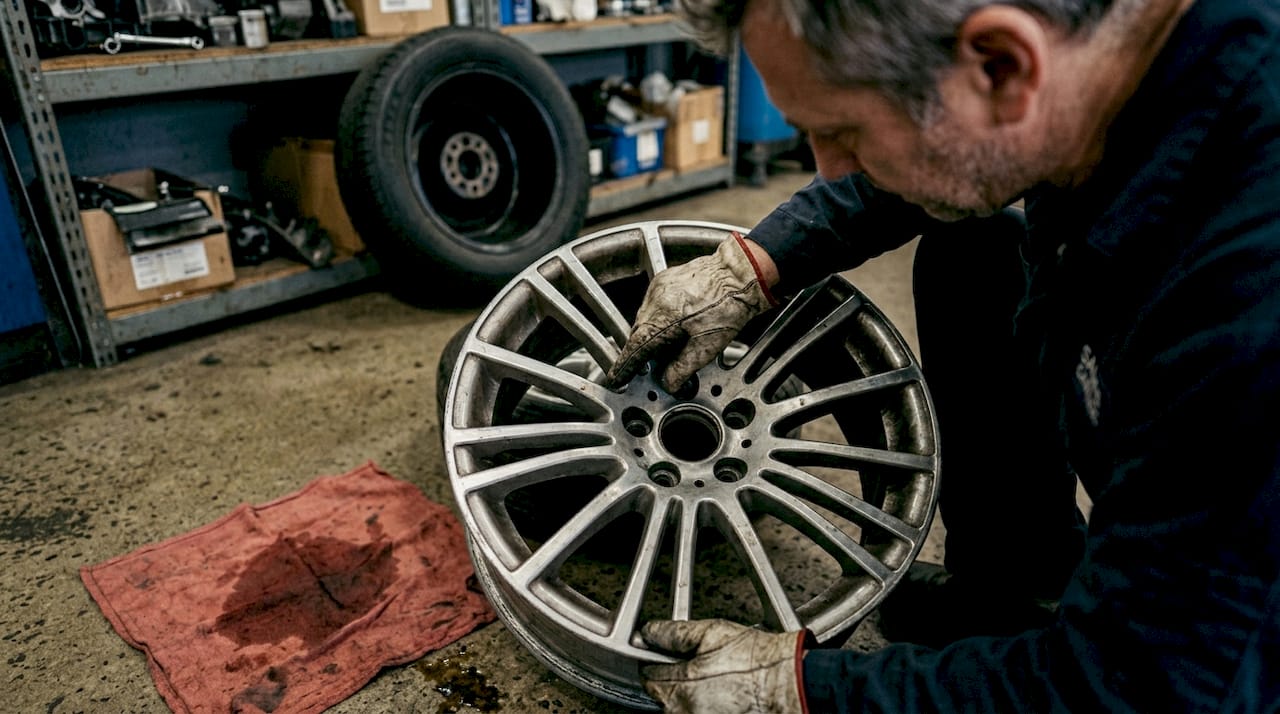
Open spoke layouts with wider gaps between elements allow airflow to reach brake rotors and calipers, dissipating heat more effectively during aggressive driving. This cooling benefit proves critical for sports applications where brake fade compromises safety and performance. Closed or mesh designs trap heat, requiring upgraded brake components to maintain consistent stopping power during extended track sessions.
Aerodynamic considerations further complicate spoke selection. Thin, blade-like spokes slice through air with minimal drag, while thick, sculptural designs create turbulence that increases resistance. The visual drama of bold spokes often conflicts with aerodynamic efficiency, forcing enthusiasts to prioritize either aesthetic impact or measurable performance gains.
Spoke design comparison:
| Style | Aesthetic Appeal | Structural Rigidity | Brake Airflow | Weight Efficiency |
|---|---|---|---|---|
| Five-spoke | Aggressive, clean | Moderate | Excellent | Best |
| Ten-spoke | Intricate, detailed | High | Good | Moderate |
| Mesh/multi-spoke | Luxury, complex | Very high | Poor | Lowest |
| Y-spoke | Modern, angular | High | Very good | Good |
The AR01 multipiece wheels demonstrate how manufacturers balance these factors through modular construction, allowing spoke face customization while maintaining structural barrels. Similarly, JF10 multipiece wheels offer spoke designs optimized for both visual impact and functional airflow.
Structural benefits of optimized spoke design:
- Enhanced load distribution during cornering reduces spoke fatigue
- Improved torsional rigidity maintains wheel geometry under stress
- Strategic material placement minimizes weight without sacrificing strength
- Ventilation channels integrated into spoke profiles enhance cooling
Pro Tip: Match spoke count to your driving style. Daily drivers benefit from five to seven spokes offering weight efficiency and easy cleaning, while track-focused builds should prioritize eight to ten spokes for maximum rigidity and heat management.
Aerodynamic innovations in wheel design improving efficiency and style
Wheel aerodynamics represent a significant yet often overlooked efficiency factor. Wheels contribute 10% to overall vehicle drag, making aerodynamic optimization particularly valuable for electric vehicles and sports cars where range and top speed matter. Modern designs incorporate features that reduce turbulence without compromising visual appeal.
Flat wheel faces and aerodynamic inserts smooth airflow around rotating surfaces, preventing the turbulent wake that creates drag. These elements maintain aesthetic flexibility through removable covers or integrated spoke profiles that appear sculptural while functioning aerodynamically. Manufacturers increasingly offer dual-purpose designs where performance and style coexist without compromise.
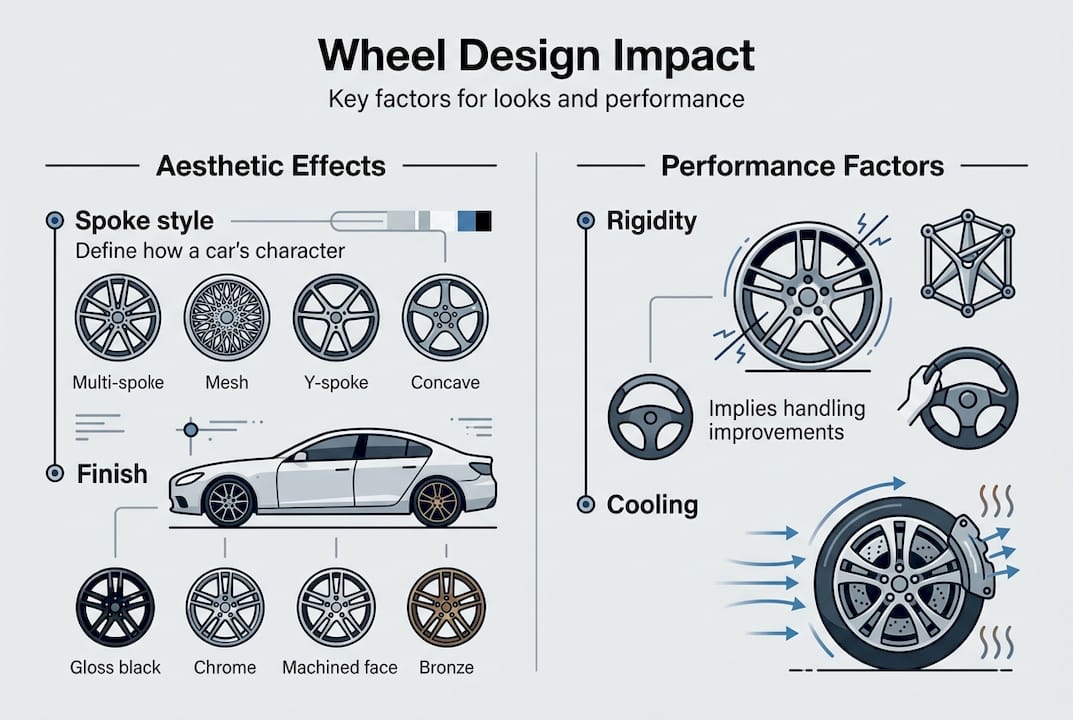
Bionic engineering principles borrowed from nature yield surprising efficiency gains. Bionic groove structures on spokes reduce vehicle drag coefficient by 2.85%, with front wheels achieving 8.37% improvement through enhanced flow stability. These microscopic surface patterns, inspired by shark skin and bird feathers, guide air molecules along optimal paths, reducing separation and vortex formation at high speeds.
Parametric design methods revolutionize wheel development efficiency and consistency. Parametric methods like V-shaped Dynamic Morphology Curve improve design efficiency by 50.9% fewer changes, enhancing brand consistency and sustainability in luxury wheel production. This computational approach generates variations that maintain aerodynamic properties while exploring aesthetic possibilities, accelerating the path from concept to production.
Aerodynamic feature effectiveness:
| Feature | Drag Reduction | Visual Impact | Application |
|---|---|---|---|
| Flat spoke faces | 3-5% | Moderate | Sports cars, EVs |
| Bionic grooves | 2.85% | Minimal | High-performance |
| Aerodynamic inserts | 6-8% | High | EVs, efficiency focus |
| Optimized spoke angles | 2-4% | Low | Track applications |
The AR03 multipiece wheels incorporate aerodynamic principles into multi-piece construction, demonstrating how premium designs achieve both visual drama and measurable efficiency gains. These innovations align with broader wheel customization trends emphasizing performance benefits alongside aesthetic transformation.
Aerodynamic design benefits:
- Reduced drag improves range for electric vehicles by 3-7%
- Enhanced high-speed stability through controlled airflow management
- Lower wind noise from reduced turbulence around wheel wells
- Improved brake cooling through directed airflow patterns
Pro Tip: Prioritize aerodynamic wheel designs if you regularly drive above 70 mph or own an electric vehicle where range optimization matters. The efficiency gains compound over thousands of miles, offsetting the premium cost of advanced designs.
Size and material: the tradeoffs in wheel design for luxury and sports applications
Wheel diameter and material composition create fundamental tradeoffs between aggressive styling and practical performance. Larger wheels enhance aggressive aesthetics and cornering stability for luxury and sports cars, with 22-24 inch diameters becoming standard for premium applications. However, upsizing beyond 24 inches introduces compromises that affect daily usability and vehicle dynamics.
Increased diameter reduces sidewall height, creating a stiffer connection between wheel and road surface. This rigidity improves cornering response and steering precision, allowing drivers to place vehicles more accurately through turns. The visual impact proves equally dramatic, filling wheel wells and creating the aggressive stance enthusiasts desire. Luxury brands leverage this aesthetic to project performance capability and modern styling.
The downsides emerge during real-world driving. Shorter sidewalls transmit more road imperfections to the chassis, creating a harsher ride that fatigues occupants on rough pavement. Potholes and curbs pose greater risks, as minimal sidewall offers less protection against impact damage. Increased unsprung weight from larger wheels also degrades suspension performance, forcing dampers to work harder controlling wheel motion over bumps.
Material selection profoundly influences these dynamics. Alloy and forged wheels reduce unsprung weight by up to 8kg per corner versus steel, improving handling, acceleration, braking, and aesthetics. This weight reduction allows suspension components to respond faster to road inputs, maintaining tire contact and maximizing grip. The performance advantage proves especially noticeable during aggressive driving where every kilogram matters.
Selecting optimal wheel size and material:
- Measure current wheel well clearance to determine maximum diameter without modifications
- Calculate the weight difference between stock and aftermarket options
- Verify offset and backspacing compatibility with suspension geometry
- Consider tire availability and cost for your chosen diameter
- Test drive similar setups to evaluate ride quality tradeoffs
- Confirm brake caliper clearance, especially with larger brake upgrades
Forged alloy construction delivers multiple advantages beyond weight reduction. The manufacturing process aligns metal grain structure, creating superior strength that allows thinner spoke profiles without sacrificing durability. This strength-to-weight optimization enables designers to create more intricate patterns that would fail in cast construction.
Forged alloy wheel benefits:
- Superior strength allows aggressive weight reduction without compromising safety
- Enhanced impact resistance prevents cracking from pothole strikes
- Better heat dissipation maintains structural integrity during track use
- Premium finish quality with smoother surfaces and finer details
- Longer service life with minimal degradation from road chemicals
The custom wheels for luxury cars guide explores how material and size choices define vehicle character while maintaining reliability. Proper selection requires understanding your priorities and typical driving conditions to avoid costly mistakes.
Pro Tip: Never exceed the manufacturer’s maximum wheel diameter recommendation without consulting suspension specialists. Oversized wheels can interfere with ABS sensors, cause rubbing during suspension compression, and void warranties. Always verify fitment through the forged wheels inspection guide before installation.
Upgrade your vehicle with expert-crafted forged wheels
Transforming your vehicle’s aesthetics and performance starts with selecting wheels engineered for both visual impact and functional excellence. Premium forged wheel designs deliver the lightweight strength and distinctive styling that define luxury and sports applications.
Explore custom wheels for luxury cars that blend cutting-edge aerodynamics with personalized aesthetics, offering configurations tailored to your specific vehicle and performance goals. Each design undergoes rigorous engineering to ensure optimal fitment and reliability.

Before installation, review the comprehensive forged wheel safety inspection guide to verify structural integrity and proper specifications. Follow the detailed forged wheel installation guide for correct mounting procedures that protect your investment and ensure safe operation. These resources provide the technical knowledge needed to maintain your wheels at peak performance.
Frequently asked questions about wheel design and aesthetics
What are the main visual factors that influence a wheel’s impact on vehicle aesthetics?
Spoke count, geometry, surface finish, diameter, and color create the primary visual impact. Multi-spoke designs communicate luxury and craftsmanship, while five-spoke patterns emphasize athletic capability. Finish choices like polished chrome, matte black, or brushed surfaces establish whether the wheel projects classic elegance or modern performance intent.
How does spoke count affect brake cooling and structural strength?
More spokes increase structural rigidity by distributing loads across additional contact points, beneficial for track applications with high lateral forces. However, additional spokes add weight and may restrict airflow to brake components. Open spoke designs with fewer, wider-spaced elements allow better heat dissipation, reducing brake fade during aggressive driving.
Can larger wheels cause issues with vehicle systems like ABS?
Yes, oversized wheels can interfere with ABS sensors, cause tire rubbing during suspension compression, and alter speedometer calibration. Incorrect offset or backspacing may position wheels too close to suspension components, creating contact during cornering. Always verify fitment specifications and maintain proper clearances to avoid system malfunctions and warranty issues.
What advantages do forged alloy wheels provide over steel wheels?
Forged alloys reduce unsprung weight by up to 8kg per corner, dramatically improving handling, acceleration, and braking response. The forging process creates superior strength, allowing thinner, lighter designs without sacrificing durability. Enhanced impact resistance, better heat dissipation, and premium aesthetics make forged wheels the preferred choice for luxury and performance applications.
How important is aerodynamic design in wheel selection for sports cars?
Aerodynamic wheel design reduces overall vehicle drag by 3-8%, significantly impacting high-speed stability and efficiency. Sports cars benefit from features like flat spoke faces, bionic groove patterns, and optimized spoke angles that minimize turbulent airflow. These improvements become increasingly valuable above 70 mph, where aerodynamic drag dominates energy consumption and affects top speed capability.