TL;DR:
- Upgrading luxury and exotic cars requires precise selection of forged wheels, autoclave-cured carbon fiber components, suspension tuning, and electronics integration. Forged wheels significantly reduce unsprung weight and enhance performance, while autoclave-cured carbon fiber offers superior strength and finish, especially on high-performance platforms. Proper fitment, professional installation, and platform-specific considerations ensure that upgrades improve performance without compromising safety or warranty coverage.
The aftermarket upgrade essentials for luxury and exotic cars come down to four categories: bespoke forged wheels, autoclave-cured carbon fiber components, precision suspension tuning, and electronics integration. Get any one of these wrong on a Mercedes-AMG GT63, Lexus LC500, or McLaren 750S, and you’re not just wasting money. You’re potentially compromising a vehicle engineered to tolerances most production cars never approach.
Here’s what every serious build on an elite platform requires:
- Bespoke forged wheels with platform-specific offset, bore, and load ratings
- Autoclave-cured carbon fiber body components using 2×2 twill weave construction
- Adjustable coilovers or sport springs with independent damping control
- Professional electronics integration preserving OEM parking sensors, steering controls, and driver-assist systems
- Fitment-verified mounting at factory points with zero permanent chassis modification
Each category has its own engineering logic. The sections below break down exactly what to prioritize, what to avoid, and how the best builds on these platforms actually come together.
Table of Contents
- 1. Why forged wheels are the most impactful upgrade you can make
- 2. How autoclave-cured carbon fiber changes the performance equation
- 3. Suspension upgrades that actually improve how your car drives
- 4. Professional installation protects your vehicle’s electronics
- 5. Fitment First: the engineering principle that separates good builds from great ones
- 6. What are the real benefits and risks of forged wheels?
- 7. How aftermarket upgrades affect your warranty and insurance
- 8. Solving fitment challenges across different luxury and exotic platforms
- 9. Compatibility checks when combining forged wheels and carbon fiber upgrades
- E6 Carbon builds the complete upgrade ecosystem for elite platforms
- Key Takeaways
- FAQ
1. Why forged wheels are the most impactful upgrade you can make
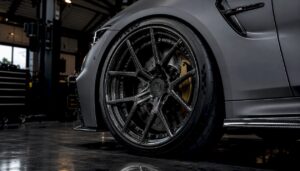
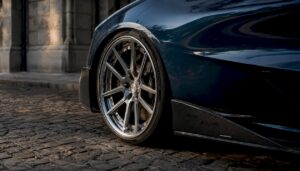
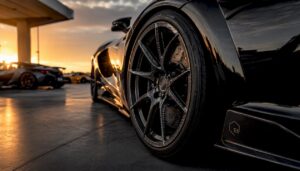
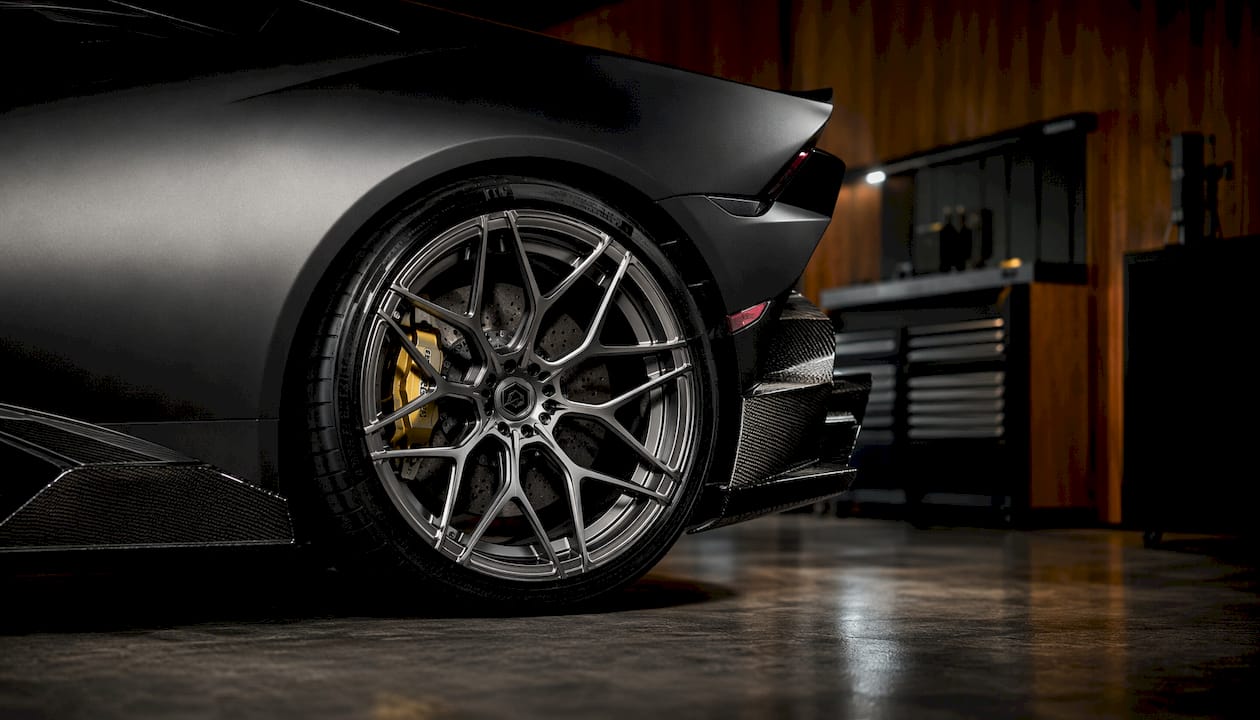
Forged wheels are the single highest-leverage modification on any exotic or luxury platform. The manufacturing process compresses a solid billet of aluminum alloy under thousands of tons of force, aligning the grain structure directionally and producing a wheel that is dramatically stronger than a cast equivalent at a fraction of the weight.
That weight difference matters because it’s all unsprung mass. Forged wheels reduce unsprung weight significantly compared to cast wheels, which directly improves acceleration response, cornering grip, and ride compliance. Your suspension doesn’t have to work as hard to keep the tire planted.
Wheel construction comparison:
| Construction | Strength | Weight | Customization | Typical Application |
|---|---|---|---|---|
| Monoblock forged | Highest | Lightest | Limited | Track-focused builds |
| Multi-piece forged | Very high | Light | Extensive | Exotic street/show builds |
| Flow-formed | Moderate | Medium | Moderate | Sport and entry luxury |
| Cast | Lowest | Heaviest | Low | OEM and budget replacement |
Monoblock forged wheels offer the best strength-to-weight ratio for track-focused builds, while multi-piece forged configurations allow diameter, width, and finish customization that monoblock designs can’t match. For a McLaren 750S or Lamborghini Huracán, where fitment tolerances are exceptionally tight, multi-piece wheels let you dial in the exact offset and lip depth the platform demands.
Cost for bespoke forged sets on exotic platforms typically runs from $4,000 to well over $12,000 depending on configuration, finish, and platform complexity. Maintenance is straightforward: regular torque checks at lug seats, periodic inspection of barrel welds on multi-piece designs, and pH-neutral wheel cleaners to protect anodized or powder-coated finishes.
2. How autoclave-cured carbon fiber changes the performance equation
Not all carbon fiber is the same. The difference between autoclave-cured components and wet-lay or vacuum-infused alternatives shows up in both structural performance and surface finish. Autoclave curing applies heat and pressure simultaneously, consolidating the resin matrix and eliminating voids that weaken lesser parts.
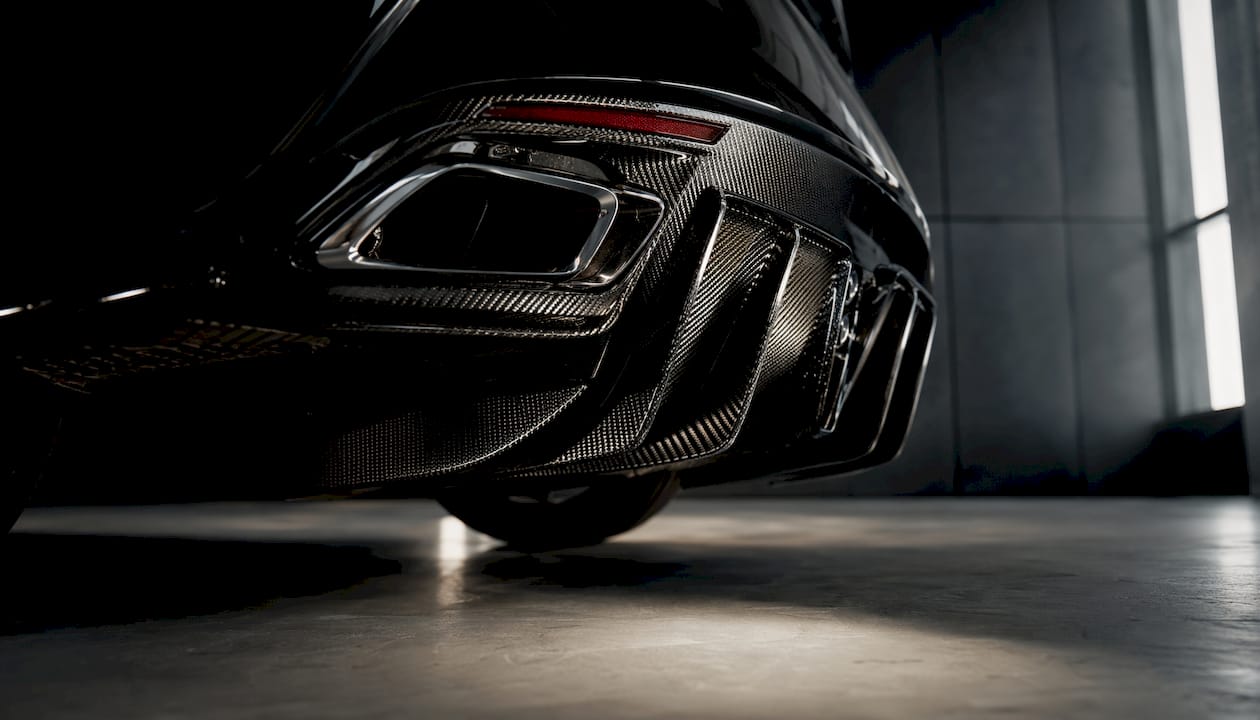
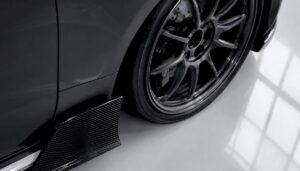
The 2×2 twill weave used in premium aerodynamic components produces a balanced fiber orientation that resists torsional stress from multiple directions. That matters on a front lip or diffuser that sees asymmetric aerodynamic loading at speed. Cheap carbon fiber parts can delaminate or crack under exactly these conditions.
Key body kit components for luxury and exotic platforms:
- Front lips: Reduce front-end lift and define the visual stance
- Rear diffusers: Manage underbody airflow and reduce drag at the trailing edge
- Side skirts: Seal the underbody aerodynamic channel between axles
- Hoods and trunk lids: The largest weight-reduction opportunity in a carbon body kit
For the Lexus LC500, the dry vs. wet carbon fiber distinction is particularly relevant. Dry carbon (autoclave-cured prepreg) is lighter and stiffer; wet carbon uses hand-laid fabric with resin applied manually, which produces a heavier, less consistent part.
Maintenance is simple but non-negotiable: UV-protective clear coat or ceramic coating over exposed weave, no pressure washing directly at panel edges, and annual inspection of mounting hardware for corrosion.
Pro Tip: Ask any carbon fiber supplier for their cure cycle documentation. A legitimate aerospace-grade manufacturer will specify autoclave temperature, pressure, and dwell time. If they can’t provide it, the part is almost certainly wet-laid.
3. Suspension upgrades that actually improve how your car drives
Adjustable coilovers reduce body roll and lower the center of gravity, which translates directly into sharper turn-in and more consistent chassis feedback. On a Mercedes-AMG C63 or E63, where the factory air suspension prioritizes comfort, a coilover conversion with independent rebound and compression damping lets you tune the same car for a track day and a highway cruise.
Independent damping adjustment is the key feature to prioritize. Compression damping controls how quickly the suspension compresses over a bump; rebound controls how quickly it returns. Getting these wrong produces either a car that skips over mid-corner bumps or one that wallows on exit. On McLaren platforms, the factory hydraulic suspension is sophisticated enough that most owners opt for spring rate changes and damper recalibration rather than full coilover replacement.
Suspension upgrade essentials by platform:
- Mercedes-AMG (C63, E63, GT63): Coilover kits with AMG-specific top mounts; verify compatibility with Active Body Control or airmatic systems before purchase
- Lexus LC500: Lowering springs or coilovers with Lexus-specific knuckle geometry; the rear multi-link setup is sensitive to camber changes
- McLaren (720S, 750S): Spring rate upgrades and damper recalibration; full coilover replacement requires specialist knowledge of the ProActive Chassis Control system
Signs that suspension components need attention before any upgrade include uneven tire wear, pulling under braking, or excessive body movement over highway expansion joints. Address these first.
4. Professional installation protects your vehicle’s electronics
Modern Mercedes-AMG and Lexus platforms run CAN bus architectures where nearly every system communicates with every other. Integrating aftermarket parts with these electronics requires interface modules and adapters that speak the factory protocol. Without them, you get OBD-II fault codes, disabled driver-assist features, or battery drain from modules that never enter sleep mode.
The risks of skipping professional installation:
- Loss of parking sensor calibration after bumper or lip replacement
- Steering angle sensor errors following suspension geometry changes
- Airbag system faults triggered by improper front fascia mounting
- Infotainment lockouts when head unit replacements don’t carry the correct CAN identifiers
On McLaren platforms, the Vehicle Control Unit is particularly unforgiving. Any modification that touches the front or rear clam structures needs to be verified against McLaren’s own service documentation. A specialist familiar with these systems will know which connectors to preserve and which modules require recalibration post-installation.
Reputable manufacturers design parts to meet or exceed OEM standards, but even the best component causes problems when installed without platform-specific knowledge. Budget for professional installation as part of the upgrade cost, not as an optional add-on.
5. Fitment First: the engineering principle that separates good builds from great ones
“Fitment First” is E6 Carbon’s core engineering philosophy, and it’s the right framework for any serious upgrade on an elite platform. Every component should mount at factory OEM points, hold tolerances that match or exceed the original specification, and be fully reversible without permanent modification to the chassis or body.
Reversibility is a core principle: premium carbon fiber and forged wheel upgrades that bolt directly onto factory mounting points allow complete transformation without compromising the vehicle’s structural integrity or resale position. E6 Carbon’s forged wheelsets are engineered to tight tolerances that optimize balance, mounting accuracy, and durability under dynamic loads.
Fitment challenges by platform:
- Mercedes-AMG GT63: Wide-body variants require specific offset calculations; standard AMG fitment data doesn’t transfer directly
- Lexus LC500: The rear fender profile is aggressive; aftermarket lips and skirts need precise CAD-verified templates to avoid panel gaps
- Lamborghini Huracán/Urus: Center-lock and bolt-pattern variations across model years require verification before any wheel order
Poor fitment produces consequences that go beyond aesthetics: uneven tire wear from incorrect camber loading, vibration harmonics from wheel imbalance, and in worst cases, structural failure of mounting points under track conditions.
Pro Tip: Before committing to any wheel or body kit purchase, request a test overlay using your vehicle’s exact VIN-specific dimensions. Reputable suppliers will provide CAD verification or a fitment guarantee. If they won’t, that’s your answer.
6. What are the real benefits and risks of forged wheels?
The benefits are concrete. Forged wheels are stronger, lighter, and more dimensionally consistent than cast alternatives. The grain-aligned aluminum structure resists cracking under impact loads that would fracture a cast wheel. On a track, that translates to confidence through high-speed corners where wheel failure is not a recoverable situation.
The risks are real but manageable. Forged wheels are more expensive to repair after curb damage because the material work-hardens during manufacturing, making cold straightening less reliable. A badly damaged forged wheel typically requires replacement rather than repair. They’re also a theft target on high-profile vehicles, which makes locking lug nuts a non-negotiable addition to any forged wheel installation.
One underappreciated risk: purchasing forged wheels from suppliers who don’t provide load rating documentation. A wheel rated for a 3,500-lb sedan is not appropriate for a 4,400-lb Mercedes-AMG GT63 4-Door. Always verify the wheel’s load index against your platform’s corner weight.
7. How aftermarket upgrades affect your warranty and insurance
The Magnuson-Moss Warranty Act protects US consumers: a manufacturer cannot void your entire vehicle warranty simply because you installed an aftermarket part. They can, however, deny warranty coverage for a specific component if they can demonstrate the aftermarket part caused the failure. On a $200,000 McLaren, that distinction matters enormously in practice.
Excessive customization can reduce resale value and may narrow your buyer pool despite the cost of the components. Keep all OEM parts when you remove them. A buyer who wants the car returned to stock should be able to do so, and that reversibility also protects your warranty position.
Insurance implications are straightforward: notify your insurer of significant modifications. Agreed-value policies for exotic vehicles typically require disclosure of aftermarket components above a certain dollar threshold. Undisclosed modifications can complicate or void a claim. Specialty insurers like Hagerty and Grundy are structured for modified exotic vehicles and understand the difference between a bespoke forged wheel set and a cheap body kit.
8. Solving fitment challenges across different luxury and exotic platforms
The most common fitment failures on luxury and exotic platforms aren’t measurement errors. They’re assumption errors. An owner assumes that because a wheel fits a Mercedes-AMG C63, it fits the C63 S with the wider track. It doesn’t. Or they assume a carbon lip designed for the standard Lamborghini Huracán fits the Performante with its factory aero package. It doesn’t either.
Platform-specific solutions:
- Mercedes-AMG: Always specify the exact AMG variant and model year. The GT63 4-Door, C63, and E63 each have distinct bolt patterns, hub bore dimensions, and suspension geometry that affect wheel selection
- Lexus LC500: The coupe and convertible share most fitment data, but the convertible’s reinforced sill structure affects side skirt mounting points
- McLaren: The 720S and 750S share a platform but differ in front splitter geometry; parts are not interchangeable without modification
- Lamborghini: Huracán variants (LP610, EVO, Performante, Sterrato) have meaningfully different front and rear fascia geometries
The solution in every case is the same: source from a supplier who maintains platform-specific fitment data, not one who lists “universal fit” as a selling point. Universal fit on an exotic car means it fits nothing perfectly.
9. Compatibility checks when combining forged wheels and carbon fiber upgrades
Combining multiple upgrade categories creates interaction effects that a single-category purchase doesn’t. A wider forged wheel set changes the fender clearance available for a carbon fiber wide-body kit. A lowered suspension changes the rake angle that determines how a front lip sits relative to the ground.
Before finalizing any multi-category build, verify:
- Wheel width vs. fender clearance: Confirm that the chosen wheel width and offset don’t create interference with the carbon fiber fender or arch liner at full suspension travel
- Suspension drop vs. lip ground clearance: A 25mm drop on a Lexus LC500 with a carbon front lip requires careful calculation of static and dynamic ground clearance
- Brake caliper clearance: Larger brake kits combined with forged wheels require spoke-to-caliper clearance verification, typically a minimum of 5mm at the closest point
- Tire profile vs. arch geometry: A wider tire on a forged wheel changes the effective rolling radius, which affects speedometer calibration and, on AMG platforms, the stability control thresholds
A performance build guide that treats each upgrade category in isolation will miss these interactions. The best builds are planned as systems, not as sequential individual purchases.
E6 Carbon builds the complete upgrade ecosystem for elite platforms
If you’re upgrading a Mercedes-AMG, Lexus LC500, McLaren, or Lamborghini, the component quality ceiling matters less than the integration quality. A bespoke forged wheelset that doesn’t account for your specific suspension geometry is just an expensive mistake.
E6 Carbon and E6 Forged engineer every component around the platform, not around a generic specification. The E6 Forged wheel catalog covers monoblock, multi-piece, beadlock, and AeroDisc configurations, each built to platform-specific tolerances with full load rating documentation. The carbon fiber catalog runs from front lips and diffusers to full body kits, all autoclave-cured with 2×2 twill prepreg and verified against OEM mounting points. Every order starts with a fitment consultation, not a size chart. If you’re ready to build it right, start with the E6 Forged wheel lineup and work outward from there.
Key Takeaways
Bespoke forged wheels and autoclave-cured carbon fiber components, installed by platform-specialist technicians, deliver the most measurable performance and aesthetic gains on luxury and exotic vehicles without compromising factory systems or warranty position.
| Point | Details |
|---|---|
| Forged wheel advantage | Grain-aligned aluminum construction reduces unsprung weight and resists impact failure better than cast or flow-formed alternatives. |
| Carbon fiber quality standard | Autoclave-cured 2×2 twill prepreg produces superior strength and finish; wet-laid alternatives carry delamination risk under aerodynamic load. |
| Fitment First principle | Every upgrade should mount at OEM factory points, maintain reversibility, and be verified against platform-specific VIN dimensions before purchase. |
| Warranty and insurance | The Magnuson-Moss Warranty Act protects consumers, but disclose modifications to your insurer and retain all OEM parts for reversibility. |
| E6 Carbon recommendation | E6 Carbon’s forged wheel and carbon fiber catalog is engineered to platform-specific tolerances for Mercedes-AMG, Lexus LC500, McLaren, and Lamborghini builds. |
FAQ
What makes forged wheels better than cast for exotic cars?
Forged wheels use a compressed billet manufacturing process that aligns the aluminum grain structure, producing a stronger, lighter wheel than casting can achieve. The weight reduction directly lowers unsprung mass, improving cornering response and ride quality.
Do aftermarket upgrades void the factory warranty?
Under the Magnuson-Moss Warranty Act, a manufacturer must demonstrate that a specific aftermarket part caused a failure before denying warranty coverage on that component. Retaining OEM parts and using professional installation protects your warranty position.
What is autoclave-cured carbon fiber and why does it matter?
Autoclave curing applies simultaneous heat and pressure to consolidate the resin matrix in carbon fiber prepreg, eliminating voids and producing a part with superior strength-to-weight ratio and a refined finish compared to wet-laid alternatives.
How do I verify wheel fitment for a Mercedes-AMG or McLaren?
Always specify the exact model variant, model year, and whether the vehicle has a factory wide-body or aero package. Request CAD verification or a fitment guarantee from the supplier; platform-specific offset, hub bore, and load rating must all be confirmed independently.
Can I combine forged wheels and a carbon fiber body kit on the same build?
Yes, but the two upgrades interact. A wider wheel changes fender clearance for carbon arches, and a suspension drop affects front lip ground clearance. Plan the full build as a system and verify caliper clearance, tire profile, and arch geometry before finalizing any individual component.