
Many enthusiasts believe all wheel finishes perform equally, but this couldn’t be further from the truth. The finish on your forged wheels dramatically affects both aesthetics and real-world performance, from heat dissipation to corrosion resistance. Understanding the science behind different finish technologies helps you make informed decisions that enhance your vehicle’s appearance while optimizing brake cooling, durability, and long-term value. This guide breaks down everything you need to know about performance wheel finishes in 2026.
Table of Contents
- Understanding Performance Wheel Finishes: What You Need To Know
- Types Of Wheel Finishes: Pros, Cons, And Performance Impact
- Choosing The Right Performance Wheel Finish For Your Driving Needs
- Maintaining And Caring For Your Performance Wheel Finish
- Explore Premium Forged Wheels With Expert Finishes At E6 Carbon
- Frequently Asked Questions About Performance Wheel Finishes
Key takeaways
| Point | Details |
|---|---|
| Finish diversity | Types range from basic paint to advanced PVD, each offering distinct durability and aesthetic characteristics. |
| Performance impact | Finish choice affects heat dissipation, weight reduction, and brake cooling efficiency in high-performance scenarios. |
| Maintenance variation | PVD requires only soap and water while chrome demands intensive seasonal care to prevent corrosion. |
| Usage alignment | Select finishes based on driving conditions, environment exposure, and lifecycle cost rather than appearance alone. |
| Industry standards | PVD and powder coating represent top-tier durability, preventing premature peeling and corrosion in luxury applications. |
Understanding performance wheel finishes: what you need to know
A performance wheel finish is far more than decorative coating. It’s an engineered surface treatment that protects the underlying forged aluminum while delivering specific functional benefits. The quality of any finish depends entirely on
meticulous surface preparation and application techniques, which separate professional-grade results from substandard work.
Before any coating touches your wheels, manufacturers must chemically strip existing finishes, remove all contaminants, and polish the base metal to precise specifications. This prep work determines how well the finish bonds and how long it lasts under stress. Skipping steps or rushing through preparation leads to premature failure, regardless of coating type.
Performance finishes serve three critical functions. First, they protect against environmental damage including road salt, brake dust, and UV degradation. Second, they manage heat transfer between brake components and surrounding air. Third, they contribute to the wheel’s overall weight profile, with some coatings adding negligible mass compared to heavier alternatives.
The finish types available today include painted, brushed, machined, electroplated, powder coating, and Physical Vapor Deposition (PVD). Each technology offers distinct trade-offs in durability, maintenance requirements, and performance characteristics. Exploring wheel customization options reveals how finish selection integrates with broader performance goals.
Pro Tip: Always verify that your wheel finisher performs proper chemical stripping and multi-stage surface preparation. Rushed prep work is the primary cause of finish failure within the first year.
Types of wheel finishes: pros, cons, and performance impact
Painted finishes represent the most accessible option, using automotive-grade paints applied through spray guns. They offer unlimited color choices and easy touch-up repairs, but painted finishes lack the durability of harder coatings. Chips and scratches appear quickly on daily drivers, especially in harsh climates. Paint also requires clear coat protection, adding weight and maintenance complexity.
Brushed finishes create a directional grain pattern through mechanical abrasion, revealing the raw aluminum beneath. This look appeals to minimalists seeking industrial aesthetics. However, brushed wheels demand constant maintenance because exposed aluminum oxidizes rapidly. They’re best suited for show cars with limited road exposure.
Machined finishes use CNC tools to cut precise patterns into the wheel face, creating brilliant reflective surfaces. While visually striking, machined areas are vulnerable to corrosion without protective clear coating. The clear coat itself becomes the weak point, yellowing and peeling over time when exposed to brake heat and road chemicals.
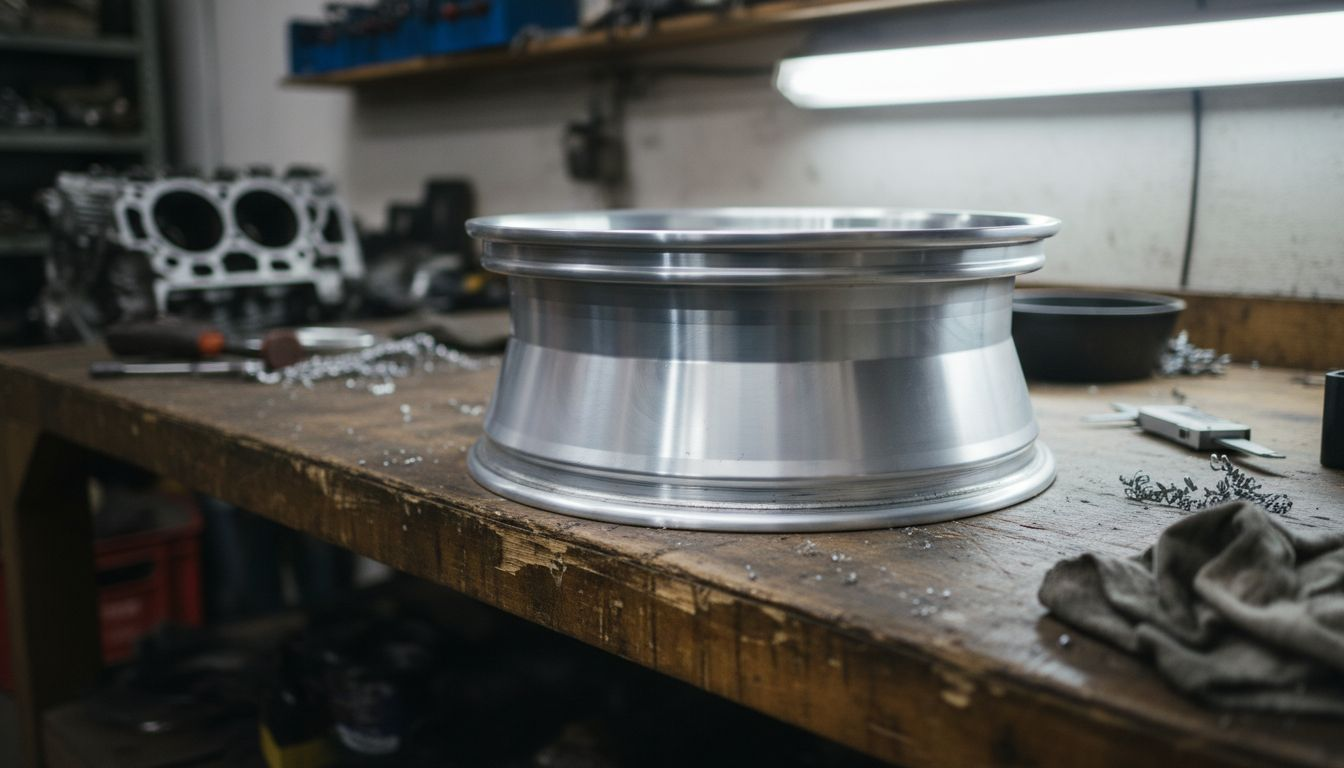
Electroplated chrome delivers mirror-like shine through chemical deposition of chromium onto the wheel surface. Traditional chrome looks stunning but adds significant weight, typically 2 to 4 pounds per wheel. Chrome also requires extensive seasonal maintenance and suffers from corrosion in winter climates, often necessitating complete removal during salt season.
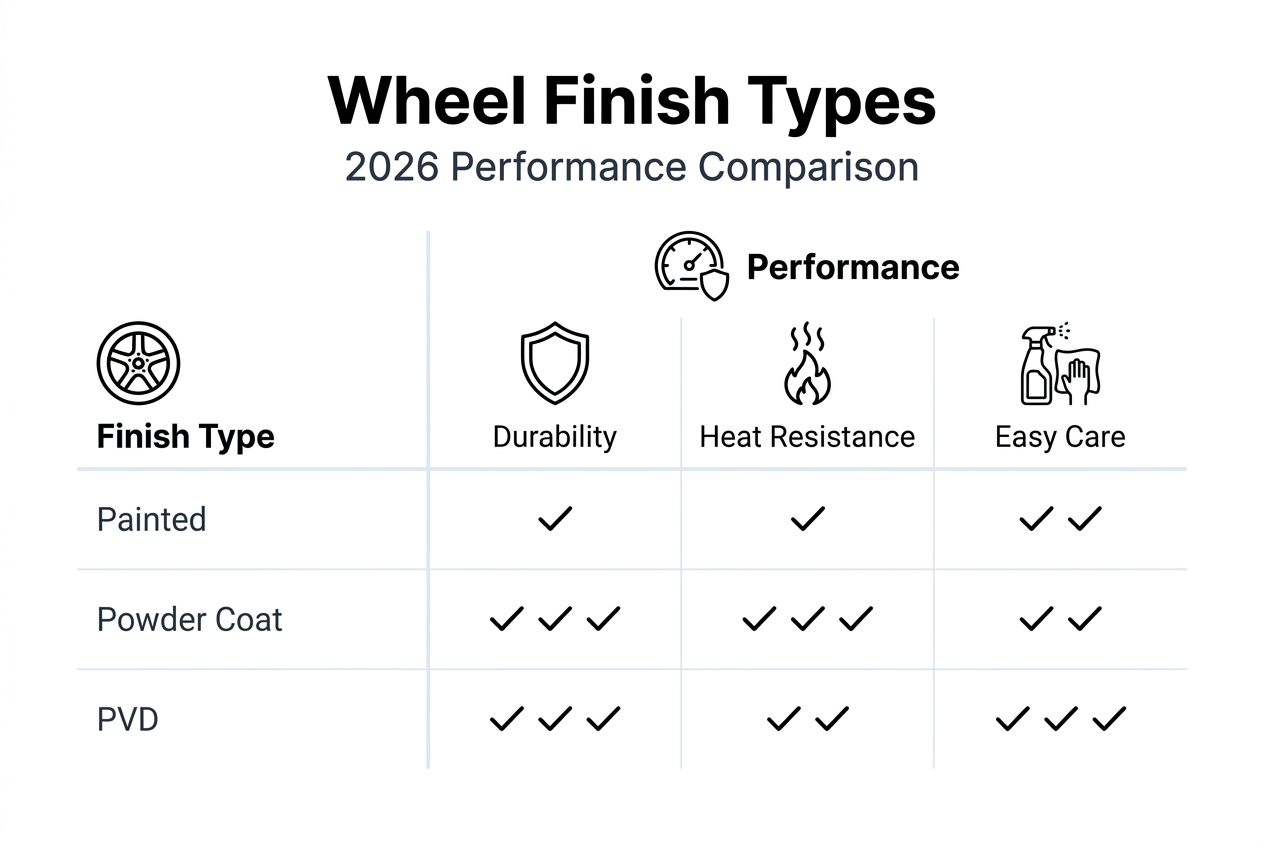
Powder coating significantly outperforms paint for durability and corrosion resistance. This process electrostatically applies dry powder particles that fuse into a uniform coating when baked at high temperatures. The resulting finish is four times thicker than paint, providing superior chip resistance and color retention. Powder coating handles brake heat exceptionally well, making it ideal for track-focused builds.
PVD technology represents the pinnacle of wheel finishing. This vacuum chamber process deposits ultra-thin metallic layers at the molecular level, creating finishes that are more durable than chrome while weighing less and resisting corrosion better. PVD finishes maintain their appearance with minimal maintenance and withstand extreme temperature cycling without degradation.
| Finish Type | Durability | Weight Impact | Maintenance | Heat Resistance |
|---|---|---|---|---|
| Painted | Low | Minimal | Moderate | Poor |
| Brushed | Very Low | None | High | Good |
| Machined | Low | Minimal | Moderate | Poor |
| Chrome | Moderate | High | Very High | Moderate |
| Powder Coat | High | Low | Low | Excellent |
| PVD | Very High | Minimal | Very Low | Excellent |
Finish color affects performance in measurable ways. Darker finishes absorb heat while lighter colors reflect it, directly impacting brake cooling efficiency. Black powder-coated wheels may run 15 to 20 degrees hotter than polished alternatives during aggressive driving, potentially reducing brake pad life and increasing fluid temperatures.
Pro Tip: If you frequently drive on track or in mountainous terrain, prioritize lighter-colored finishes with high thermal reflectivity. The brake cooling benefit outweighs aesthetic preferences when performance matters.
For comprehensive comparisons, the luxury wheel finish selection guide explores how premium finishes integrate with high-end vehicle applications. Understanding these options helps align your choice with both racing performance objectives and daily usability requirements.
Choosing the right performance wheel finish for your driving needs
Selecting the optimal finish requires honest assessment of how you actually use your vehicle. Street-driven luxury cars face different challenges than dedicated track machines or off-road builds. Environmental factors matter equally, as coastal humidity accelerates corrosion while desert heat degrades UV-sensitive coatings.
For daily drivers in moderate climates, powder coating delivers the best balance of durability, aesthetics, and cost. It resists chips from road debris, maintains color consistency through years of UV exposure, and requires only basic washing. Expect powder-coated wheels to look nearly new after five years of regular use.
Track-focused applications demand finishes that handle extreme thermal cycling. PVD excels here, maintaining structural integrity through repeated heating and cooling without cracking or discoloration. The weight savings compared to chrome also contribute to reduced unsprung mass, improving suspension response and lap times.
Off-road enthusiasts should prioritize impact resistance and ease of field repair. Powder coating again leads this category, as its thick layer absorbs rock strikes better than thin alternatives. When damage does occur, powder coating can be locally stripped and reapplied without full wheel refinishing.
Luxury vehicle owners often prioritize appearance longevity and resale value. PVD and powder coating prevent premature peeling, maintaining showroom appearance far longer than painted alternatives. This preservation directly translates to higher resale values, as buyers recognize quality finishes as indicators of overall vehicle care.
Lifecycle cost calculation matters more than initial price:
- Calculate total ownership period (typically 3 to 7 years for enthusiast vehicles)
- Estimate refinishing frequency based on finish type and usage intensity
- Add maintenance product costs (specialized cleaners, protective coatings)
- Factor in downtime and labor for periodic restoration work
- Compare total cost against initial finish investment
Choosing based on lifecycle economics rather than upfront cost often favors premium options like PVD. A finish costing twice as much but lasting four times longer delivers superior value while eliminating the hassle of repeated refinishing.
Climate considerations should drive finish selection as decisively as usage patterns. Coastal regions demand maximum corrosion resistance, making PVD and high-quality powder coating essential. Winter climates with heavy salt exposure similarly benefit from these durable options. Arid environments allow more flexibility but still reward UV-resistant finishes that prevent fading.
Pro Tip: Document your wheel finish condition with detailed photos at purchase. This baseline lets you objectively assess degradation over time and validate whether your chosen finish meets performance expectations.
For comprehensive guidance on optimizing your wheel setup, explore the performance wheel upgrade guide, which addresses finish selection within the broader context of vehicle performance enhancement.
Maintaining and caring for your performance wheel finish
Proper maintenance extends finish life exponentially while preserving appearance and protecting your investment. Different finishes demand specific care protocols, but all benefit from regular attention and gentle cleaning techniques.
PVD finishes require the simplest maintenance routine. Soap and water provide adequate cleaning, with no special products needed. Avoid abrasive compounds or harsh chemicals that might scratch the molecular coating. A soft microfiber wash mitt and pH-neutral car soap maintain PVD brilliance indefinitely.
Powder-coated wheels tolerate more aggressive cleaning but still benefit from gentle approaches. Use dedicated wheel cleaners that specify powder coat compatibility, avoiding acidic formulas designed for bare metal. Apply cleaners when wheels are cool to prevent chemical etching from heat-accelerated reactions.
Chrome and machined finishes demand intensive care to prevent corrosion. Chrome requires specialized metal polish applied monthly to maintain protection, plus immediate removal of brake dust before it bonds to the surface. Many enthusiasts remove chrome wheels entirely during winter months to avoid salt damage, storing them in climate-controlled environments.
Essential maintenance practices across all finish types:
- Rinse wheels before washing to remove loose abrasive particles
- Use separate wash mitts for wheels versus paint to prevent cross-contamination
- Clean wheels weekly during regular driving, daily after track sessions
- Inspect for finish damage after every car wash, addressing chips immediately
- Apply wheel-specific wax or sealant quarterly for added protection
- Never use automatic car washes with harsh brushes that scratch finishes
Brake dust represents the primary enemy of wheel finishes. The metallic particles embed in porous surfaces and chemically bond when heat-activated, creating permanent staining. Address brake dust within 48 hours of accumulation, before it fully bonds. Ceramic brake pads generate less corrosive dust than semi-metallic alternatives, significantly reducing finish degradation.
Winter storage protocols preserve finish integrity during harsh months. Thoroughly clean and dry wheels before storage, removing all brake dust and road salt residue. Store in cool, dry locations away from temperature extremes and direct sunlight. Consider applying a protective wax coating before storage to create a barrier against humidity.
Pro Tip: Keep a detailing spray and microfiber cloth in your vehicle for immediate brake dust removal after spirited driving. This 60-second habit prevents 90% of finish staining issues.
Common mistakes accelerate finish failure. Never spray cold water on hot wheels, as thermal shock can crack coatings. Avoid pressure washers at close range, which force water beneath finish edges and promote delamination. Skip tire shine products that spray onto wheel faces, as petroleum solvents degrade many finishes over time.
For detailed installation and maintenance procedures, the forged wheel installation guide provides complementary information on proper wheel care throughout the ownership lifecycle.
Explore premium forged wheels with expert finishes at E6 Carbon
Now that you understand how finish technology impacts both aesthetics and performance, it’s time to experience these benefits firsthand. E6 Carbon specializes in premium forged wheels featuring advanced PVD and powder coating finishes engineered for durability and visual impact.
Our manufacturing process combines aerospace-grade forging with precision finish application, ensuring every wheel meets exacting standards for strength and appearance. Whether you’re building a track weapon or enhancing a luxury daily driver, our wheel lineup delivers the performance characteristics discussed throughout this guide. The AR03 multipiece wheels showcase how premium finishes integrate with structural excellence, creating wheels that perform as beautifully as they appear. Our team provides expert guidance on finish selection tailored to your specific usage requirements and environmental conditions, ensuring optimal results.
Maintaining your investment remains simple with proper installation and care protocols. Follow the forged wheel installation guide for correct mounting procedures, then reference our safety inspection checklist to verify ongoing finish and structural integrity throughout ownership.
Frequently asked questions about performance wheel finishes
How does wheel finish affect brake performance?
Finish color and thermal properties directly influence brake cooling efficiency. Lighter-colored finishes reflect heat away from brake components, while darker finishes absorb and retain thermal energy, potentially increasing brake temperatures by 15 to 20 degrees during aggressive use. This temperature difference affects pad wear rates and fluid boiling points.
What maintenance is required for PVD versus powder coating?
PVD finishes need only regular washing with soap and water, requiring no special products or intensive care. Powder coating similarly demands minimal maintenance but benefits from quarterly application of wheel-specific sealant to maximize longevity. Both finishes vastly outperform chrome or painted alternatives in ease of care.
Can I repaint or refinish my wheels if the finish degrades?
Most finishes can be professionally stripped and reapplied, though the process requires complete wheel disassembly and careful surface preparation. PVD reapplication demands specialized vacuum chamber equipment available only at professional facilities. Powder coating and paint offer more accessible refinishing options through local shops.
Does wheel finish impact vehicle resale value?
Wheels with well-maintained premium finishes like PVD or powder coating significantly enhance resale value by signaling overall vehicle care and quality consciousness. Degraded or poorly maintained finishes have the opposite effect, suggesting neglect and potentially reducing offers by 3% to 5% of total vehicle value. Quality wheel customization preserves and enhances long-term value.