Swap out your stock wheels for premium forged units and you might think you’ve just made a cosmetic change. You haven’t. When Aston Martin fitted the DBX S with forged magnesium wheels, the SUV shed 40 lbs of unsprung weight and cut rotational inertia by 25 to 27 percent. That’s not a marginal tweak. That’s a fundamental shift in how the car handles, brakes, and communicates with the road. Most enthusiasts treat wheels as an aesthetic decision. The reality is that material, construction method, and design affect everything from acceleration response to ride quality. This article breaks down the science, the performance data, and the practical trade-offs so you can make a smarter choice for your build.
Table of Contents
- The science behind high-performance wheels
- Performance gains: Weight, inertia, and the driving experience
- Comparing forged magnesium, aluminum, and carbon fiber wheels
- Aesthetics and customization: Why wheels transform your car
- A fresh perspective: What most enthusiasts get wrong about wheel upgrades
- Find your perfect wheel: Premium solutions for performance and style
- Frequently asked questions
Key Takeaways
| Point | Details |
|---|---|
| Weight and inertia reduction | Choosing premium forged or magnesium wheels reduces unsprung weight and rotational inertia, transforming handling and responsiveness. |
| Material matters for durability | Track-focused carbon fiber is lighter but brittle, while forged magnesium offers repairability and strength for street use. |
| Aesthetics meet function | Forged wheels combine performance gains with customizable looks that enhance both vehicle style and resale value. |
| Smart upgrades require context | Matching wheel material and design to your driving environment ensures the best real-world results, balancing performance and practicality. |
The science behind high-performance wheels
Not all wheels are engineered the same way, and the differences go far deeper than looks. The construction method matters enormously. Cast wheels are poured into molds, which leaves microscopic voids in the metal and limits how thin the spokes can be made safely. Forged wheels are pressed under extreme force, aligning the metal’s grain structure and producing a denser, stronger component at a lower weight.
Material choice adds another layer of complexity. Here’s how the three main options compare at a glance:
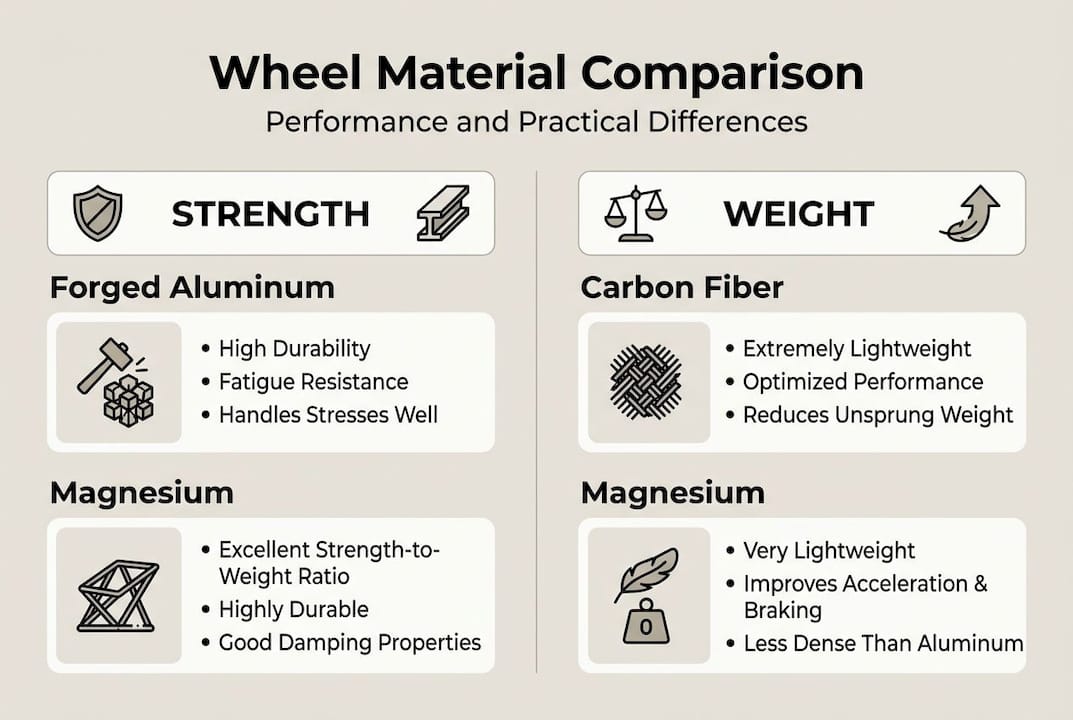
| Property | Forged aluminum | Forged magnesium | Carbon fiber |
|---|---|---|---|
| Weight | Moderate | Lightest metal option | Lightest overall |
| Strength | High | Very high (isotropic) | High but directional |
| Repairability | Good | Good | Very difficult |
| NVH performance | Good | Excellent | Variable |
| Cost | Moderate | High | Very high |
Magnesium stands out because it offers isotropic strength, meaning the material resists force equally in all directions. Carbon fiber, by contrast, is strong along its fiber orientation but can delaminate or crack when struck from an unexpected angle. Magnesium also absorbs vibration more naturally, which improves NVH, the noise, vibration, and harshness that you feel through the steering wheel and seat.
Carbon fiber wheels deliver impressive carbon fiber wheel benefits in pure weight reduction, but they require careful handling and specialized repair. Understanding the premium carbon wheel types available helps you match the right construction to your specific goals.
Key engineering factors to evaluate when choosing a wheel:
- Grain structure: Forged wheels have tighter grain alignment for superior fatigue resistance
- Wall thickness: Forged construction allows thinner walls without sacrificing safety
- Resonance behavior: Magnesium naturally damps vibration better than aluminum
- Impact response: Forged metals bend before they crack, giving you a warning before failure
Pro Tip: Match your wheel material to your primary use case first. If you drive on public roads regularly, repairability and impact resistance should rank above absolute weight savings.
Performance gains: Weight, inertia, and the driving experience
With the technical differences established, let’s see how those translate to real-world driving gains. Unsprung weight is the mass that moves with the wheel and suspension rather than being supported by the springs. Every pound you remove from this category has a disproportionate effect on handling because the suspension can react faster to road imperfections.
Rotational inertia is the resistance a spinning object has to changes in speed. Heavier wheels require more energy to accelerate and more braking force to slow down. Reduce that inertia and the engine feels more responsive, the brakes feel sharper, and the car changes direction more willingly.
Here’s how wheel upgrades affect driving dynamics step by step:
- Reduced unsprung mass allows the suspension to track road surfaces more accurately
- Lower rotational inertia improves throttle response and reduces braking distances
- Better NVH absorption translates to a more connected, less fatiguing driving experience
- Improved heat dissipation (in open-spoke forged designs) keeps brake temperatures in check
- Optimized fitment through custom offsets reduces bearing stress and improves steering feel
The Aston Martin DBX S case study makes this concrete. By switching to forged magnesium, the vehicle achieved a 25 to 27% inertia reduction alongside that 40 lb weight drop. On a performance SUV that already weighs over 5,000 lbs, those gains at the wheel are more impactful than adding equivalent weight savings elsewhere in the car.
| Upgrade type | Handling impact | Braking impact | Ride quality |
|---|---|---|---|
| Cast to forged aluminum | Moderate improvement | Moderate | Slight improvement |
| Forged aluminum to magnesium | Strong improvement | Strong | Noticeable improvement |
| Forged aluminum to carbon fiber | Strong improvement | Strong | Variable |
Exploring the racing wheel upgrade benefits in detail reveals why even street-driven performance cars benefit from this investment. When you’re ready to act, a structured approach to selecting performance wheels ensures you get the right fitment and specification the first time.
Comparing forged magnesium, aluminum, and carbon fiber wheels
Now that we’ve seen the technical and performance aspects, let’s break down how each material stacks up for specific use cases. The right answer depends on where you drive, how hard you push the car, and how much you value long-term practicality.
| Factor | Forged aluminum | Forged magnesium | Carbon fiber |
|---|---|---|---|
| Street durability | Excellent | Excellent | Moderate |
| Track performance | Very good | Excellent | Excellent |
| Curb/impact resistance | Good | Good | Poor |
| Repair options | Wide availability | Specialist required | Very limited |
| Weight penalty vs. carbon | Higher | Moderate | None |
Carbon fiber is a genuine engineering achievement. It delivers the lowest weight of any wheel material, which is why Formula 1 and endurance racing teams use it. But carbon fiber is brittle when struck by curbs or road debris, and repairing a damaged carbon wheel is either extremely expensive or simply not possible. Forged metals, by contrast, tend to bend rather than shatter, giving you both a visual warning and a repairable component.
“The real-world choice isn’t just about which material is lightest. It’s about which material survives your actual driving environment and keeps you safe when something unexpected happens.”
When to choose each material:
- Forged aluminum: Best all-around choice for street and occasional track use, wide repair network, strong value
- Forged magnesium: Premium street and track option, excellent NVH, repairable, best balance of weight and durability
- Carbon fiber: Dedicated track builds, show cars, or applications where absolute weight is the priority and impacts are controlled
Thinking about wheel design and aesthetics alongside material choice gives you a complete picture. A solid wheel matching guide helps you align material, size, and finish to your specific vehicle and goals.
Aesthetics and customization: Why wheels transform your car
Having explored the functional and material choices, let’s look at why wheels are also central to your car’s visual statement and individuality. A wheel change is the single modification with the highest visual impact per dollar spent. Nothing else transforms the stance, character, and presence of a luxury or performance car as immediately.
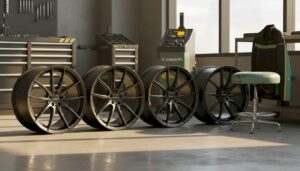
Forged construction opens up design possibilities that casting simply can’t match. Because the material is stronger, designers can create thinner, more aggressive spokes with complex geometry that would crack under load in a cast wheel. The result is a wheel that looks as purposeful as it performs. Wheel design impacts both performance and aesthetics simultaneously, which is why the best builds treat them as one decision, not two.
Customization factors to consider:
- Finish type: Polished, brushed, gloss painted, matte, or color-matched to bodywork
- Spoke count and geometry: Affects both airflow to brakes and visual weight of the wheel
- Center bore and offset: Critical for proper fitment and handling characteristics
- Lip depth: Multi-piece wheels allow custom lip depth for a tailored stance
- Color accents: Barrel color, spoke face, and hardware can all be specified independently
Resale value is another factor most enthusiasts underestimate. A premium forged wheelset from a recognized manufacturer adds documented value to a collector car or a well-specified sports car. Buyers recognize quality, and a set of bespoke forged wheels signals that the owner invested in the right upgrades.
Pro Tip: If you drive in varied conditions, choose a finish that ages gracefully. Polished and chrome finishes show brake dust and minor scratches immediately. A brushed or satin finish hides daily wear while still looking premium.
Deep guidance on performance wheel finishing helps you pick a look that holds up over time. Understanding the full case for custom wheels for luxury cars shows why this investment pays dividends in both driving satisfaction and vehicle value. The wheel customization benefits extend well beyond appearance.
A fresh perspective: What most enthusiasts get wrong about wheel upgrades
Here’s the uncomfortable truth: chasing the lightest possible wheel is often the wrong goal for street-driven cars. Carbon fiber wheels are genuinely impressive, but they were designed for controlled environments. A single pothole or parking lot curb can cause damage that costs more to fix than the wheels themselves.
Forged magnesium sits in a position that most enthusiasts overlook. It’s not as exotic-sounding as carbon fiber, but it delivers strength and repairability that carbon simply can’t match on public roads. The performance gap between magnesium and carbon is smaller than the marketing suggests. The durability gap is not.
We’ve seen customers spend significant money on carbon fiber wheels for daily-driven Ferraris and Lamborghinis, only to face repair bills that dwarf the original investment after a single unfortunate encounter with a pothole. Forged magnesium or premium forged aluminum would have delivered 90% of the performance benefit with a fraction of the risk.
The smartest buyers ask one question first: where does this car actually spend most of its time? Track-only builds can justify carbon. Everything else should seriously consider forged metal. Exploring the real story behind carbon fiber myths will challenge some assumptions you may have carried for years.
Find your perfect wheel: Premium solutions for performance and style
Understanding the science and trade-offs is the foundation. Taking action on that knowledge is where the real transformation happens.

At E6 Carbon and E6 Forged, we build wheels and carbon fiber components for enthusiasts who refuse to compromise on either performance or craftsmanship. Whether you’re specifying a track build or upgrading a daily-driven luxury car, our team guides you through every decision. Start with a proper forged wheel safety inspection to understand your current setup, then follow our detailed forged wheel installation guide when you’re ready to fit your new set. Our AR01 multipiece wheels represent the pinnacle of what bespoke forged construction can deliver for your build.
Frequently asked questions
What is the biggest performance benefit of forged magnesium wheels?
Forged magnesium wheels reduce unsprung weight and rotational inertia dramatically, with real-world examples like the Aston Martin DBX S showing a 25 to 27% inertia reduction alongside a 40 lb weight saving, directly improving handling, braking, and throttle response.
Are carbon fiber wheels practical for street use?
Carbon fiber wheels are brittle under impacts from curbs and potholes and are extremely difficult to repair, making forged magnesium or forged aluminum a more practical choice for street-driven performance cars.
How do I choose the best wheel material for my luxury or sports car?
Prioritize your primary use case: forged magnesium offers the best balance of weight, strength, and repairability for street and track use, while carbon fiber suits dedicated track builds where controlled conditions reduce impact risk.
Does wheel customization impact performance or just aesthetics?
Customization affects both: material selection, spoke geometry, and fitment influence weight and handling, while finish and design choices define your car’s visual identity, making wheel design a unified performance and aesthetic decision.