
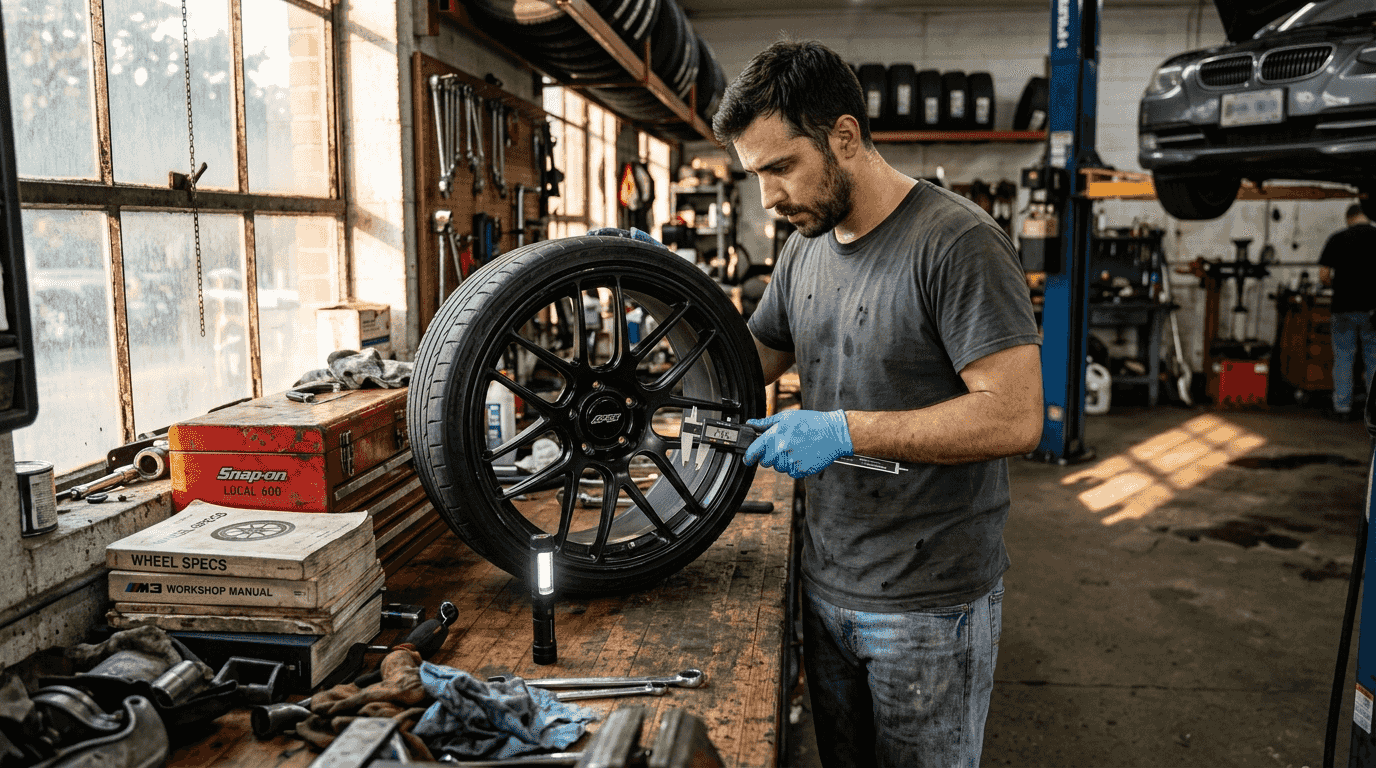
Forged wheels promise superior strength and weight savings, but not all products live up to their claims. Without proper inspection, you risk installing counterfeit or defective wheels that compromise both safety and performance. This guide walks you through the essential steps to verify authenticity and structural integrity, ensuring your investment delivers the performance and peace of mind you expect from genuine forged wheels.
Table of Contents
- Introduction To Forged Wheels And Inspection Importance
- Prerequisites: What You Need Before Inspecting
- Step-By-Step Inspection Process
- Common Defects And How To Identify Them
- Common Mistakes And Failure Points In Inspection
- Expected Outcomes: How To Know The Results Of Your Inspection
- Explore E6 Forged Wheels And Installation Guidance
- FAQ
Key takeaways
| Point | Details |
|---|---|
| Inspection combines multiple methods | Visual, dimensional, acoustic, and non-destructive testing provide comprehensive verification of wheel authenticity and integrity. |
| Forged wheels differ significantly from cast | Forging creates wheels at least 20% lighter and significantly stronger than cast alternatives through high-pressure metal compression. |
| Common defects threaten safety | Cracks, laps, folds, and porosity compromise structural integrity and require both visual inspection and advanced testing to detect. |
| Multiple inspection methods reduce risk | Relying on a single method may miss hidden damage; combining visual, acoustic, and NDT approaches ensures thorough assessment. |
Introduction to forged wheels and inspection importance
Forged wheels are manufactured by applying high pressure to solid metal, compressing the material into a dense, uniform structure. This process creates components that are lighter and stronger than their cast counterparts, making them ideal for high-performance applications where every pound matters.
Cast wheels, by contrast, are formed by pouring molten aluminum or magnesium into molds. The cooling process leaves microscopic air pockets and grain boundaries that reduce strength and increase weight. These structural differences directly impact handling, acceleration, and braking performance on both street and track.
Inspection serves as your first line of defense against counterfeit products and manufacturing defects. Even genuine forged wheels can harbor hidden flaws from production or shipping damage. A thorough evaluation confirms you’re getting what you paid for and protects against catastrophic failure at speed.
The stakes are particularly high for luxury and sports vehicle owners who push their cars to performance limits. A wheel failure during spirited driving or track use can lead to loss of control, costly vehicle damage, and serious injury. Understanding wheel customization and weight reduction benefits starts with verifying the quality of the components you’re installing.
Key characteristics that distinguish forged wheels include:
- Visible machining marks and grain flow patterns on the barrel and face
- Significantly lower weight compared to cast wheels of identical size
- Dense, uniform metal structure without porosity or voids
- Superior strength-to-weight ratio enabling thinner spoke designs
- Higher cost reflecting the intensive manufacturing process
The forging process itself involves multiple quality checkpoints, but post-production verification remains essential. Shipping damage, improper storage, or manufacturing inconsistencies can compromise even premium products. Your inspection validates that the wheels you receive meet the safety and performance standards you expect.
Prerequisites: what you need before inspecting
Proper preparation makes the difference between a superficial glance and a comprehensive evaluation. Set up a clean, well-lit workspace with adequate room to manipulate and examine each wheel from multiple angles. Natural daylight or high-intensity LED lighting reveals surface details that dim garage lighting obscures.
Essential tools for thorough inspection include:
- Digital calipers and micrometers for precise dimensional measurements
- Non-marring rubber or plastic hammer for tap testing
- Magnifying glass or jeweler’s loupe for examining surface details
- Digital scale capable of measuring wheel weight accurately
- Flashlight or inspection light for examining barrel interiors
- Clean microfiber cloths for removing dirt without scratching
Advanced inspectors may access non-destructive testing equipment, though this typically requires professional facilities. If you’re verifying expensive wheels or have safety concerns, professional NDT services provide the highest confidence level.
Understanding the physical and acoustic properties of forged versus cast wheels improves your ability to interpret inspection findings. Forged wheels produce a clear, bell-like tone when tapped, while cast wheels sound duller and more muted. This acoustic difference reflects the denser, more uniform grain structure of forged metal.
Material verification adds another layer of certainty. Chemical composition analysis using X-ray fluorescence confirms the alloy grade matches manufacturer specifications. While this testing requires specialized equipment, it’s valuable for high-value purchases or when authenticity concerns exist.
| Tool Category | Specific Items | Purpose |
|---|---|---|
| Measurement | Digital calipers, micrometers | Verify dimensions match specifications |
| Visual | Magnifying glass, inspection light | Examine surface for cracks, laps, folds |
| Acoustic | Rubber hammer | Test for structural integrity via sound |
| Documentation | Camera, notebook | Record findings for reference |
Before starting, familiarize yourself with manufacturer specifications for the wheels you’re inspecting. Dimensions, weight, offset, and bolt pattern should match published data. Deviations suggest either incorrect product delivery or potential counterfeit issues. Having this reference information readily available streamlines the inspection process and helps you spot discrepancies immediately.
Consult your forged wheel installation guide to understand how inspection fits into the broader wheel upgrade process. Proper installation depends on starting with verified, defect-free components.
Step-by-step inspection process
Begin with a comprehensive visual examination in good lighting. Look for machining marks on the barrel and face that indicate CNC finishing typical of forged production. The spoke edges should show precise, consistent tooling rather than the rougher surface texture common to cast wheels.
Check for obvious damage including:
- Cracks radiating from lug holes or spoke junctions
- Dents or deformation on the barrel or face
- Deep scratches that penetrate beyond surface finish
- Corrosion or discoloration suggesting material issues
- Uneven finish quality across different areas
Next, weigh each wheel using your digital scale. Compare the measured weight against manufacturer specifications. Forged wheels should weigh significantly less than cast equivalents of the same size. A weight within 5% of published specs suggests authenticity, while heavier wheels warrant additional scrutiny.
Pro Tip: Weigh multiple wheels from the same set to verify consistency. Significant weight variation between supposedly identical wheels indicates potential quality control issues or mismatched products.
Perform the tap test by striking the wheel face with your rubber hammer. Listen for a clear, sustained ringing tone that indicates good structural integrity. A dull thud or inconsistent sound suggests internal defects, porosity, or cracks that compromise strength.
- Strike the wheel at multiple points around the face and barrel
- Listen for consistent tone quality across all test points
- Compare the sound to a known good forged wheel if available
- Note any dead spots or unusual acoustic responses
Measure critical dimensions using your calipers and micrometers. Verify diameter, width, offset, and bolt pattern match specifications exactly. Pay special attention to mounting surface flatness and hub bore diameter, as these directly affect installation safety and performance.
| Measurement | Tolerance | Safety Impact |
|---|---|---|
| Diameter | ±0.5mm | Tire fitment, speedometer accuracy |
| Width | ±1mm | Tire mounting, handling characteristics |
| Offset | ±2mm | Suspension geometry, brake clearance |
| Bolt pattern | ±0.1mm | Mounting security, load distribution |
For high-value wheels or when visual inspection raises concerns, non-destructive testing methods provide definitive answers. Ultrasonic testing detects internal voids, cracks, and inconsistencies invisible to the eye. Magnetic particle inspection reveals surface and near-surface cracks by applying a magnetic field and iron particle solution.
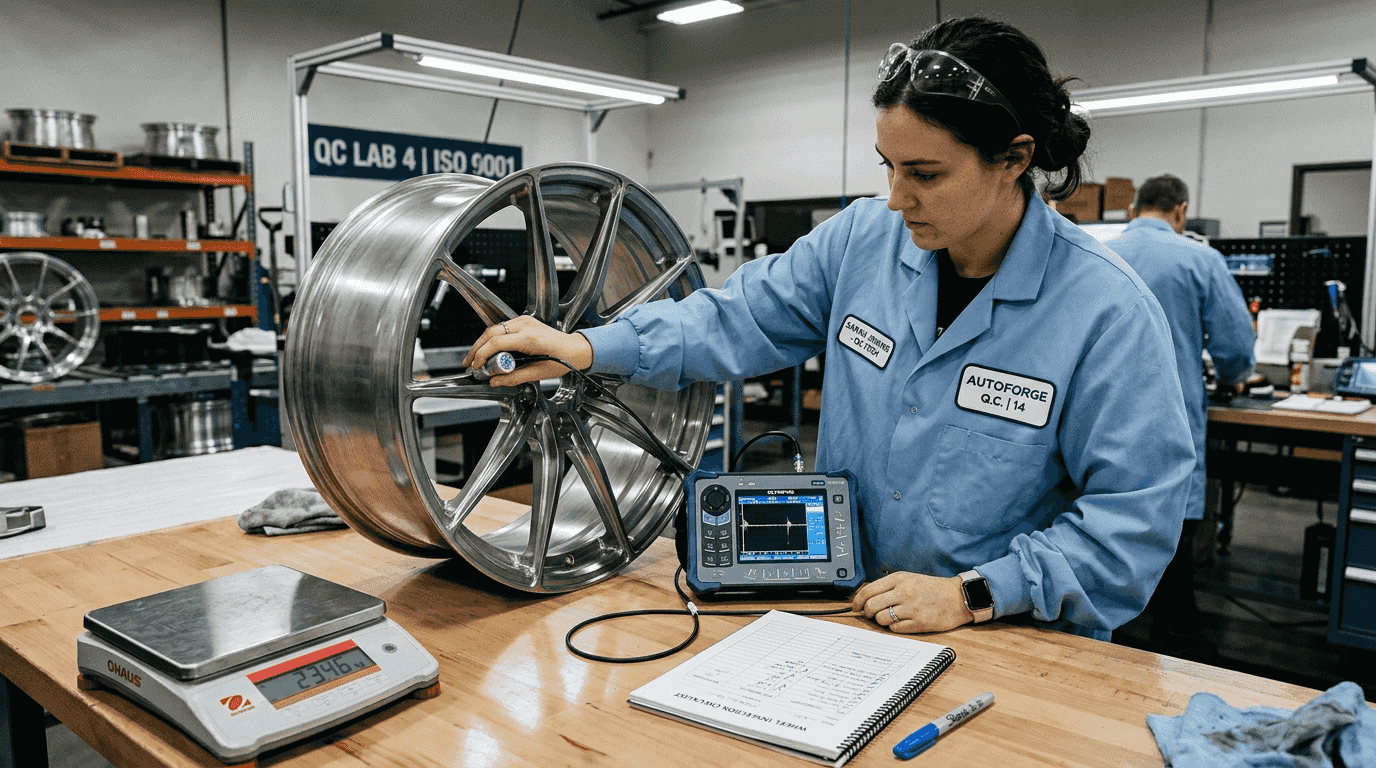
These advanced techniques require specialized equipment and training but offer unmatched defect detection capability. Many wheel shops and NDT service providers can perform these tests for a reasonable fee. The investment pays dividends in confidence and safety, especially for track-use wheels subjected to extreme loads.
Document your findings with photographs and written notes. This record serves multiple purposes: warranty claims, resale documentation, and baseline reference for future inspections. Understanding performance wheel upgrades helps you appreciate how inspection fits into the broader enhancement strategy.
Common defects and how to identify them
Cracks represent the most serious defect category, typically appearing near high-stress areas like spoke junctions and lug holes. These fractures propagate under load and can lead to sudden, catastrophic failure. Early detection requires careful visual inspection with magnification and good lighting.
Porosity creates internal voids that weaken the wheel structure without visible external signs. This defect results from gas trapped during forging or inadequate material consolidation. While small amounts may be cosmetically acceptable, significant porosity compromises strength and requires rejection.
Surface laps and folds occur when metal folds over itself during forging without proper fusion. These defects create stress concentration points and potential crack initiation sites. They appear as linear marks or seams on the wheel surface, sometimes hidden under finish coating.
Common defects in forged wheels include cracks, laps, folds, and porosity, all of which compromise structural integrity and require detection through combined visual and non-destructive testing methods.
Defect detection strategies include:
- Using raking light at shallow angles to reveal subtle surface irregularities
- Running your fingertips over suspicious areas to feel texture changes
- Applying dye penetrant to suspected crack locations for confirmation
- Examining spoke undersides and barrel interiors where defects hide
- Comparing suspect areas to corresponding locations on other wheels
Curb rash and impact damage differ from manufacturing defects but equally threaten wheel integrity. Deep gouges remove material and create stress risers that can initiate cracks. Even apparently minor cosmetic damage warrants careful evaluation to rule out underlying structural compromise.
When you find defects, assess severity based on location, size, and type. Surface finish imperfections may be acceptable, while any crack or deep fold requires rejection regardless of size. Remember that your forged wheel investment deserves components that meet the highest safety standards.
Common mistakes and failure points in inspection
Many enthusiasts dismiss minor surface damage as purely cosmetic without considering underlying structural implications. What appears as simple curb rash may hide cracks extending deep into the wheel material. This oversight can lead to installing compromised wheels that fail under load.
Relying exclusively on visual inspection overlooks internal defects invisible to the naked eye. Porosity, internal cracks, and incomplete forging consolidation require non-destructive testing for detection. Skipping NDT on high-value or safety-critical applications represents false economy given the potential consequences.
Misinterpreting tap test results leads to incorrect assessments of wheel integrity. Environmental factors like temperature, mounting position, and tester technique affect acoustic response. Without experience or comparison to known good wheels, this method produces unreliable results.
Additional pitfalls include:
- Accepting weight discrepancies as normal manufacturing variation
- Failing to verify alloy composition matches specifications
- Skipping dimensional measurements in favor of visual checks alone
- Not documenting findings for future reference or warranty claims
- Rushing the process instead of methodically examining each wheel
Pro Tip: Create a checklist covering all inspection steps and check off each item as you complete it. This systematic approach prevents overlooking critical elements when fatigue or distractions interfere with concentration.
Neglecting chemical composition verification risks installing wheels made from incorrect or substandard alloys. Counterfeiters sometimes use cheaper materials that look correct but lack the strength properties of proper forging alloys. Material testing provides definitive proof of authenticity.
Inspection under poor lighting conditions masks surface defects and texture variations that indicate problems. Invest time in proper workspace setup with multiple light sources at different angles. The extra effort reveals issues that quick, casual examination misses.
Learn from others’ mistakes by consulting resources about avoiding common inspection errors and following established protocols. Wheel safety is not the place to cut corners or rush through critical verification steps.
Expected outcomes: how to know the results of your inspection
A successful inspection produces clear evidence that your wheels meet authentic forged standards. Visual examination reveals consistent machining marks and grain flow patterns typical of forged production. The surface should show uniform finish quality without suspicious irregularities or texture changes.
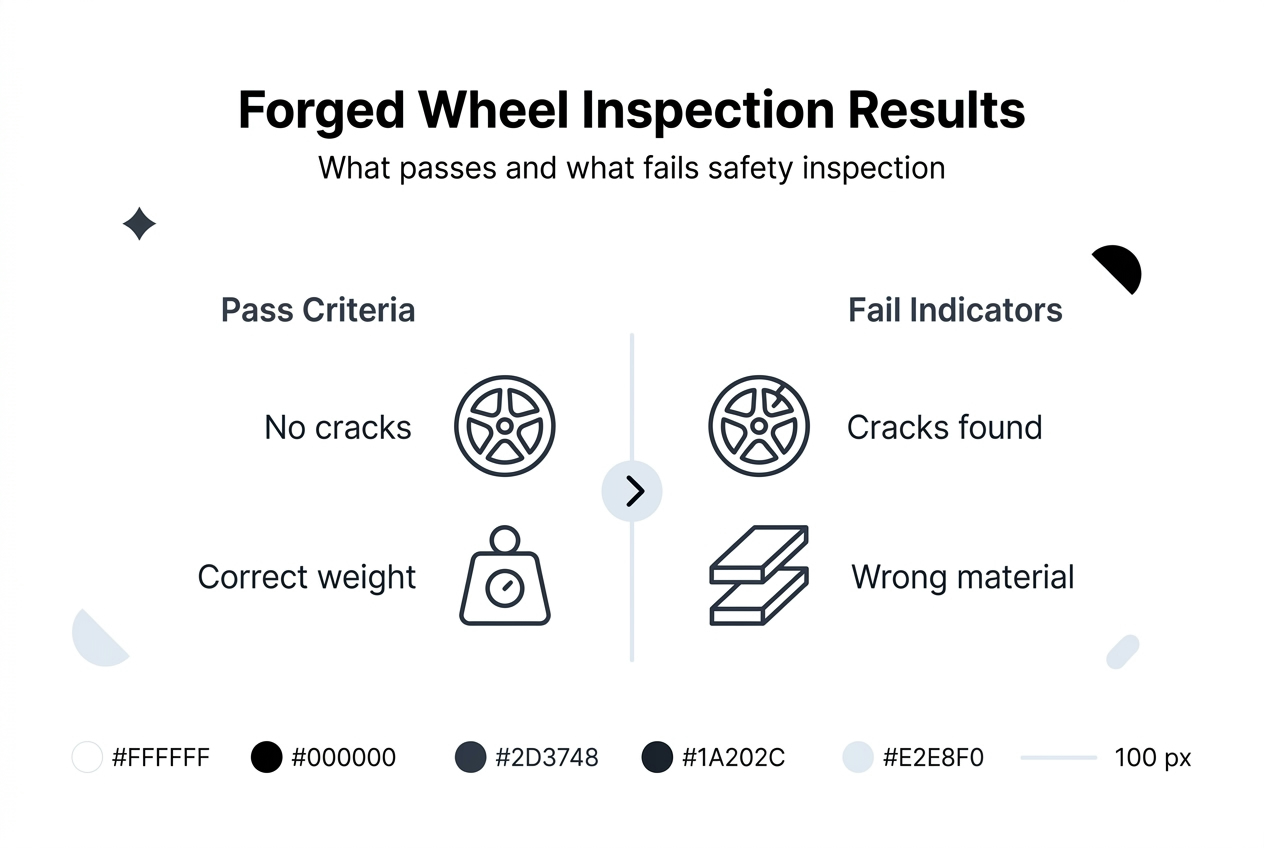
Weight measurements provide objective verification of forged construction. Your wheels should weigh at least 20% less than comparable cast alternatives. Measurements within 5% of manufacturer specifications across all wheels in the set confirm consistent production quality.
Tap testing produces a clear, sustained bell-like tone when you strike the wheel face and barrel. This acoustic response indicates dense, uniform metal structure without internal voids or defects. Dead spots or dull sounds warrant additional investigation with NDT methods.
Complete inspection results include:
- No cracks, laps, folds, or significant surface damage detected
- Dimensions matching manufacturer specifications within stated tolerances
- Weight consistent with published data for forged construction
- Clear acoustic response indicating structural integrity
- Documentation including photographs and measurements
| Inspection Aspect | Pass Criteria | Fail Indicators |
|---|---|---|
| Visual | Clean machining, uniform finish | Cracks, deep gouges, texture irregularities |
| Weight | Within 5% of spec, 20%+ lighter than cast | Exceeds tolerance, matches cast weight |
| Acoustic | Clear bell tone, consistent response | Dull thud, dead spots, variation |
| Dimensional | All measurements within tolerance | Significant deviations from specifications |
Your documented findings support informed decisions about purchasing, installing, or returning wheels. Wheels passing all inspection criteria deserve confidence for street and track use. Those showing defects or inconsistencies require return, repair assessment, or professional NDT evaluation.
Use your inspection results to guide conversations with sellers, manufacturers, or installers. Objective measurements and photographs provide evidence that supports warranty claims or return requests when products fail to meet standards.
Successful inspection gives you confidence to proceed with proper wheel installation, knowing your investment will deliver the safety and performance you expect from genuine forged components.
Explore E6 forged wheels and installation guidance
Now that you understand proper inspection methods, consider wheels from manufacturers who prioritize quality and provide verification documentation. E6 Carbon specializes in premium forged wheels engineered for performance vehicles, combining lightweight construction with the structural integrity your inspection process validates.

Our AR03 multipiece wheels exemplify the forged quality characteristics this guide helps you verify. Each wheelset undergoes rigorous quality control before shipping, ensuring you receive components that pass the most demanding inspection protocols.
Pair your verified wheels with our comprehensive installation guide for proper setup. Correct installation techniques maximize the performance and safety benefits that inspection confirms your wheels can deliver.
FAQ
How can I tell if my forged wheels are genuine?
Check for precise machining marks on the barrel and face, weigh the wheel to confirm it’s significantly lighter than cast alternatives, and perform a tap test listening for a clear bell-like tone. Combine visual inspection with weight verification and acoustic testing for reliable authentication. Non-destructive testing provides definitive confirmation when authenticity concerns remain.
What are the most common defects found in forged wheels?
Cracks near spoke junctions or lug holes represent the most critical defects, while porosity, surface laps, and metal folds also compromise structural integrity. These flaws may result from manufacturing issues, shipping damage, or material inconsistencies. Visual examination combined with ultrasonic or magnetic particle inspection detects these problems before they cause failures.
Is visual inspection enough to ensure forged wheel safety?
Visual inspection alone misses internal defects like porosity and subsurface cracks that threaten structural integrity. Non-destructive testing methods including ultrasonic and magnetic particle inspection reveal hidden flaws invisible to the eye. For high-performance or track applications, professional NDT provides essential verification beyond what visual examination can deliver.
How often should forged wheels be inspected for safety?
Inspect wheels thoroughly before initial installation and perform visual checks regularly based on driving conditions and usage intensity. Track wheels warrant inspection after each event, while street wheels benefit from quarterly examination. Schedule professional NDT evaluation annually or after any impact that could cause hidden damage. Regular inspection catches developing problems before they escalate to failures.