TL;DR:
- Forged monoblock wheels made from aerospace-grade aluminum offer superior fatigue resistance and weight savings for the AMG GT, enhancing track performance. Proper fitment, brake clearance verification, and load ratings are essential for maximizing the benefits of lightweight wheels on the high-G demanding platform. Pairing these wheels with racing tires like Michelin Pilot Sport Cup 2 or Pirelli Trofeo R optimizes grip and handling on circuit.
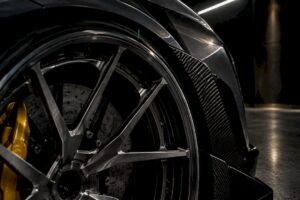
Track focused wheels for the AMG GT are forged monoblock aluminum wheels engineered specifically to reduce unsprung mass, clear carbon-ceramic brake calipers, and sharpen suspension response under sustained high-G cornering loads. The Mercedes-AMG GT platform demands more from its wheel geometry than virtually any other production GT car. Factory cast wheels work adequately on the street, but on circuit they become the single largest obstacle between you and the car’s full dynamic potential. This guide covers the material science, fitment specs, and tire pairings that define a proper AMG GT track wheel upgrade.
What are the material advantages of forged monoblock wheels for the AMG GT?
Forged monoblock wheels built from aerospace-grade T6-6061 aluminum deliver superior fatigue resistance and tensile strength compared to cast or flow-formed alternatives. The forging process aligns the grain structure of the aluminum billet, producing a wheel that handles repeated high-load stress cycles without the micro-fracture propagation that eventually compromises cast units. For the AMG GT, which generates lateral G-forces that stress wheel spokes far beyond street driving norms, this distinction is not cosmetic. It is structural.
Cast wheels are poured into molds, leaving porosity and inconsistent density throughout the material. Flow-formed wheels improve on cast by stretching the barrel under heat, but the face remains cast. Only a true forged monoblock produces a single-piece wheel with uniform density from spoke to barrel. The result is a wheel that can be machined thinner and lighter while maintaining or exceeding the load rating of a heavier cast unit.
Key construction advantages of forged monoblock wheels for the AMG GT:
- Fatigue resistance: The forged grain structure resists crack propagation through thousands of thermal and mechanical load cycles on track.
- Weight reduction: Forged construction allows thinner cross-sections, cutting rotational mass without sacrificing structural integrity.
- Precision machining: CNC finishing on a forged blank achieves tighter tolerances than cast surfaces, critical for hub-centric fitment on the AMG GT’s 66.6mm center bore.
- Beadlock compatibility: Manufacturers like YPG Motorsport offer CNC-machined beadlock rings on forged monoblock units, eliminating tire slip under extreme cornering loads.
Pro Tip: When comparing wheel options, always request the load rating certificate alongside the weight spec. A wheel that saves 2 kg per corner but carries an insufficient load rating for the AMG GT Black Series is a liability, not an upgrade.
How do wheel size, fitment, and brake clearance impact AMG GT track performance?
The AMG GT runs a 5×112 PCD bolt pattern with M14x1.5 lug thread pitch and a 66.6mm center bore. These specs are non-negotiable. Any aftermarket wheel that deviates from hub-centric fitment at 66.6mm introduces vibration and lateral load stress at the lug seats, which becomes dangerous at track speeds. The factory torque specification for wheel bolts is 180 Nm, and this figure applies equally to aftermarket fitments.
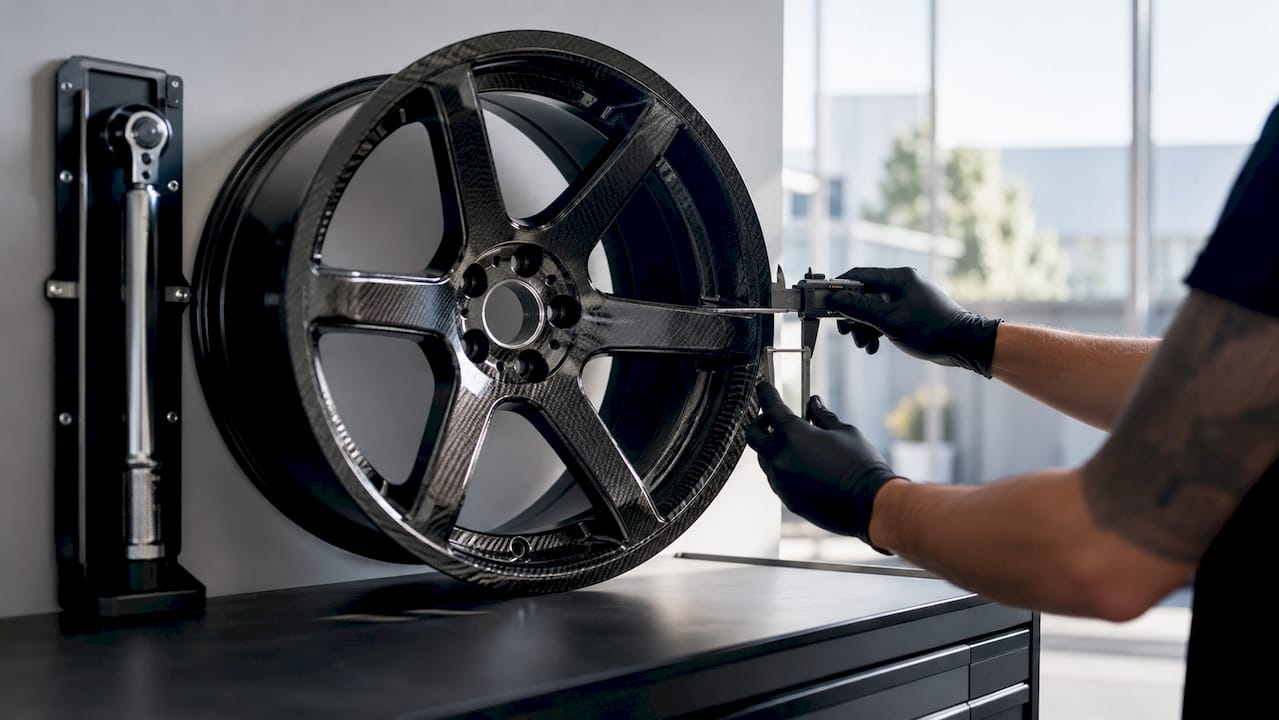
For track setups, the most effective staggered configuration on the AMG GT is a 19×9.5 front and 20×11 rear. This preserves the factory’s rear-biased contact patch philosophy while allowing fitment of wider rear tires for traction under hard acceleration out of slow corners. The front 19-inch diameter also opens up tire selection for racing compounds that are not manufactured in 20-inch sizes.
| Setup | Front | Rear | Primary benefit |
|---|---|---|---|
| Street staggered | 19×8.5 | 20×10 | Comfort and daily usability |
| Track staggered | 19×9.5 | 20×11 | Wider contact patch, racing compound availability |
| Dedicated track (18/19 inch) | 18×9 or 19×9.5 | 19×11 | Thicker sidewall, better tire compliance and heat management |
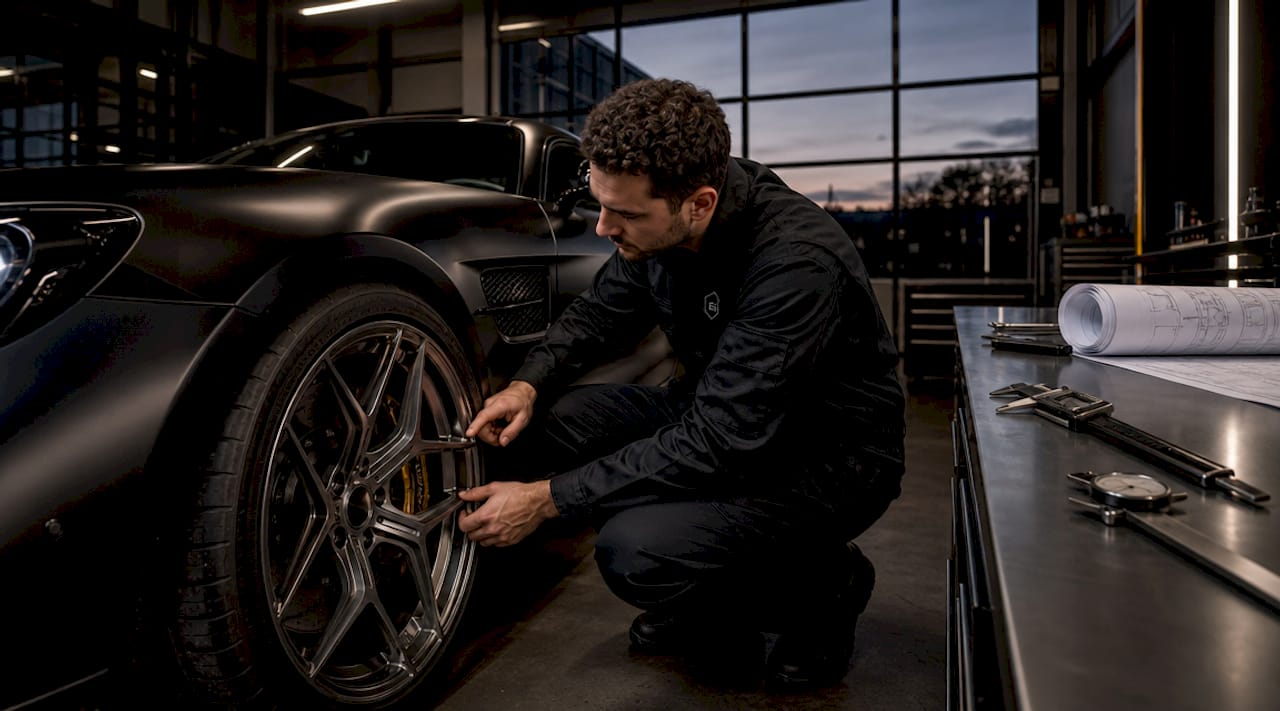
Brake clearance is the primary limiting factor when selecting AMG GT track wheels. The factory iron brakes are large, and the optional carbon-ceramic system fitted to the GT R, GT R Pro, and Black Series is larger still. Brake clearance verification requires physical mock-up with the specific caliper and rotor combination on the car before committing to a wheel. A minimum of 3mm clearance between the inner barrel and the caliper body is the accepted safety margin for track use.
Pro Tip: If your AMG GT runs a carbon-ceramic brake upgrade, confirm caliper clearance with a cardboard template before ordering wheels. The carbon-ceramic calipers on the GT R Pro sit noticeably further outboard than the standard iron setup.
What are the performance benefits of reducing unsprung weight on the AMG GT?
Unsprung weight is defined as all mass not supported by the suspension springs, including wheels, tires, brake rotors, and calipers. Reducing unsprung mass directly improves the suspension’s ability to follow road surface variations, because the spring and damper no longer have to accelerate a heavier rotating assembly into and out of bumps. On a track surface with kerbs and surface irregularities, this translates to more consistent tire contact and measurably better grip.
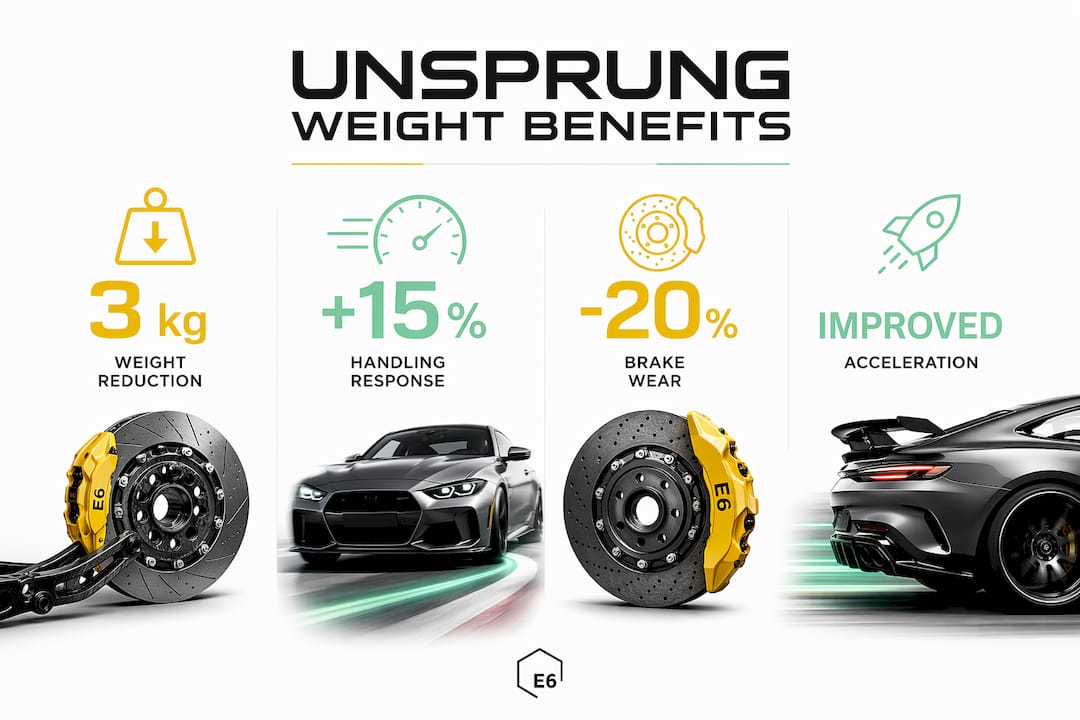
The AMG GT Track Series uses 18-inch forged alloy wheels as a factory-backed solution to rotational mass reduction. Mercedes-AMG’s own engineers chose forged wheels over cast for the track variant, confirming that the weight savings are significant enough to justify the cost differential at the OEM level. A quality forged monoblock wheel typically saves between 1.5 and 3 kg per corner compared to the equivalent cast wheel in the same size. Across four corners, that reduction directly lightens the load on every damper, spring, and control arm on the car.
Benefits of unsprung weight reduction on the AMG GT platform:
- Turn-in precision: Lighter rotating mass responds faster to steering inputs, sharpening initial corner entry behavior.
- Suspension compliance: Reduced inertia allows dampers to react more quickly to surface changes, maintaining contact patch pressure through mid-corner bumps.
- Brake response: Lower rotational inertia means the braking system reaches threshold force faster, shortening stopping distances.
- Tire wear consistency: More consistent contact patch pressure across a lap reduces uneven tire wear patterns common on heavy-wheeled track cars.
Correct load ratings are non-negotiable when specifying forged wheels for AMG GT variants. The Black Series and GT R carry significantly more dynamic load than the base GT, and a wheel rated for the lighter variant will be underspecified for the heavier, more powerful cars.
What tires should you pair with track wheels on the AMG GT?
Tire selection determines whether a lightweight forged wheel delivers its full performance potential or simply looks the part. The three tires that consistently perform at the top of the AMG GT track category are the Michelin Pilot Sport Cup 2, Pirelli Trofeo R, and Yokohama Advan A052. Each handles the thermal cycling demands of circuit driving differently, and the right choice depends on track surface temperature and session length.
- Michelin Pilot Sport Cup 2: The benchmark for street-legal track tires. It builds heat quickly, maintains consistent grip across a full session, and is available in the 19-inch and 20-inch sizes most relevant to AMG GT track setups. It is the default recommendation for mixed-use cars that see both track days and road miles.
- Pirelli Trofeo R: Operates closer to a slick compound and requires more heat to reach peak grip. On a warm track with a driver who can generate tire temperature early in a lap, it outperforms the Cup 2 in peak cornering force. It is the correct choice for dedicated track days, not street driving.
- Yokohama Advan A052: The most forgiving of the three in cold conditions, making it the preferred option for early-season track days or circuits in cooler climates. Grip levels are slightly below the Trofeo R at peak temperature but more accessible across a wider thermal window.
Downsizing to 18 or 19-inch wheels on a dedicated track AMG GT increases sidewall height, which improves tire compliance through thermal cycles and expands the available selection of racing compounds. The thicker sidewall also acts as a secondary suspension element, absorbing kerb strikes that would otherwise transmit directly into the wheel structure.
Key takeaways
Track focused wheels for the AMG GT require forged monoblock construction, verified brake clearance, and hub-centric fitment at 66.6mm to deliver measurable performance gains on circuit.
| Point | Details |
|---|---|
| Material matters | T6-6061 forged monoblock wheels outperform cast alternatives in fatigue resistance and weight. |
| Fitment specs are fixed | AMG GT requires 5×112 PCD, 66.6mm center bore, M14x1.5 threads, torqued to 180 Nm. |
| Brake clearance is critical | Carbon-ceramic systems demand physical mock-up verification before committing to any wheel. |
| Unsprung weight reduction | Forged wheels save 1.5 to 3 kg per corner, directly improving suspension response and turn-in. |
| Tire pairing completes the setup | Michelin Pilot Sport Cup 2 and Pirelli Trofeo R are the top pairings for AMG GT track wheels. |
Why brake clearance is the detail most builders get wrong
We have built enough AMG GT track setups at E6 Carbon to say this plainly: the most common and most costly mistake is ordering wheels without physically verifying brake clearance first. It sounds obvious. It is still the number one reason customers come to us after a failed fitment from another supplier.
The AMG GT’s carbon-ceramic brake package is not just large. It is positioned in a way that catches out even experienced wheel builders who rely on published caliper dimensions rather than a physical mock-up. We require a caliper clearance check on every AMG GT build we take on, regardless of how confident the customer is in their measurements. The 3mm minimum clearance rule exists because track vibration and thermal expansion reduce real-world clearance by more than most people expect.
The second thing we see consistently is builders prioritizing aesthetics over load rating. A forged wheel that looks correct and fits the bolt pattern but carries an insufficient load rating for the GT R or Black Series is a wheel that will eventually fail under race conditions. Choosing hub-centric fitment with a verified load rating is not optional. It is the foundation of every wheel spec we produce.
The performance gains from a proper forged wheel setup on the AMG GT are real and immediate. Sharper turn-in, more consistent mid-corner grip, and better brake response are all measurable on a data logger within the first session. But none of that matters if the fitment is wrong.
— E6 Engineering
E6 Forged wheels built for the AMG GT track
E6 Forged produces monoblock and multi-piece wheels from 6061-T6 aluminum forging, engineered specifically for platforms like the Mercedes-AMG GT where brake clearance, load rating, and unsprung weight reduction are performance-critical requirements. Every wheel is built to your specified offset, barrel width, and face profile, with a standard lead time of 2 to 4 weeks from order confirmation.
If you are serious about extracting the full dynamic capability of your AMG GT on track, explore the E6 Forged wheel catalog and configure your fitment with our engineering team. For a deeper understanding of how manufacturing tolerances affect track performance, the forged wheel tolerances guide covers every variable that separates a race-ready wheel from a street wheel wearing a track price tag. You can also review the 2026 performance wheel upgrade guide for a full breakdown of how wheel selection translates to lap time gains on the AMG GT platform.
FAQ
What bolt pattern do AMG GT aftermarket wheels require?
The Mercedes-AMG GT uses a 5×112 PCD bolt pattern with M14x1.5 lug thread pitch and a 66.6mm center bore. All aftermarket wheels must match these specs exactly for safe track use.
What wheel size is best for AMG GT track days?
A 19×9.5 front and 20×11 rear staggered setup is the most effective track configuration for the AMG GT. Dedicated track builds often downsize to 18 or 19-inch diameters to access thicker-sidewall racing compounds and improve tire compliance.
Why do forged wheels improve AMG GT track handling?
Forged monoblock wheels reduce unsprung mass by 1.5 to 3 kg per corner compared to cast equivalents. This reduction improves suspension response, sharpens turn-in, and maintains more consistent tire contact through surface irregularities.
What torque setting is required for AMG GT wheel bolts?
The factory torque specification for AMG GT wheel bolts is 180 Nm. This applies to both OEM and aftermarket wheel fitments and must be verified after the first heat cycle on track.
Which tires work best with track wheels on the AMG GT?
The Michelin Pilot Sport Cup 2 is the top recommendation for mixed-use track setups. The Pirelli Trofeo R delivers higher peak grip on warm circuits, while the Yokohama Advan A052 performs best in cooler track conditions.