TL;DR:
- E6 Forged Beadlock Wheels prevent tire bead unseating during extreme torque or low-pressure conditions in high-horsepower builds. They are essential when tire pressures drop below 10 PSI and torque causes bead spin during launches, especially on exotic platforms requiring custom fitment. For daily use above 10 PSI, bead grip wheels offer reliable performance with lower maintenance and legal considerations.
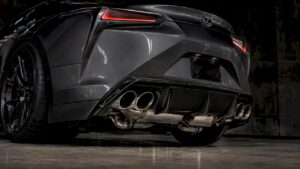
E6 Forged Beadlock Wheels are defined as forged wheel assemblies that use a physical locking ring to clamp the tire bead against the wheel barrel, preventing tire spinning, de-beading, and pressure loss under extreme torque or very low tire pressure conditions. The industry term for this mechanism is a “beadlock ring system,” and it represents a fundamentally different engineering approach from standard drop-center wheels. For high-horsepower drag builds, track cars, and exotic platforms like the Mercedes-AMG GT, Lexus LC500, McLaren 720S, and Lamborghini Huracán, this technology has moved from niche off-road application to performance necessity.
When does your car need E6 Forged Beadlock Wheels?
The real decision point for beadlocks is not horsepower alone. The true trigger is the combination of tire pressure and torque that creates a bead unseating risk during aggressive launches or sustained high-load cornering. A car running 700 to 1,000 wheel horsepower on a drag strip with intentionally reduced tire pressure is the textbook candidate. At that power level, the rotational force applied to the tire during a full-throttle launch can cause the tire to spin independently of the wheel, shearing the bead from its seat.
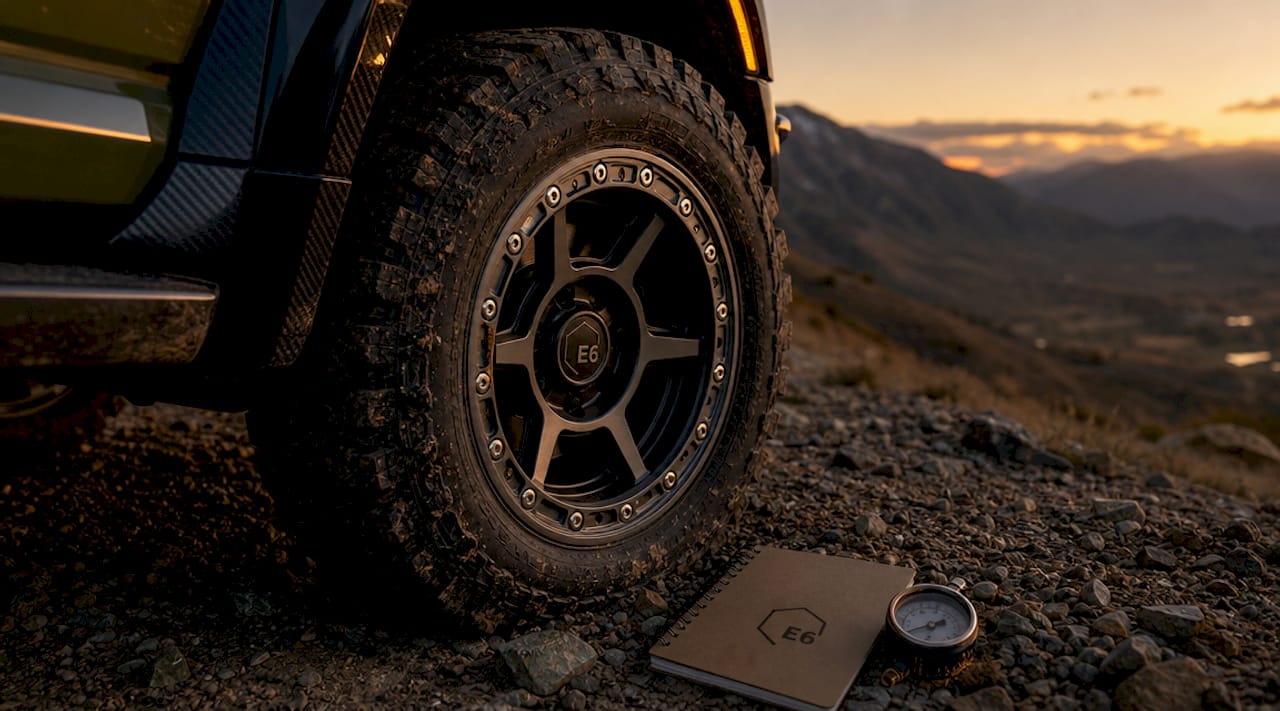
The pressure threshold matters more than most tuners expect. Beadlocks are most appropriate when your build regularly operates below 10 PSI. At normal highway pressures of 32 to 40 PSI, the tire bead is held in place by internal air pressure alone, and a beadlock ring adds weight without functional benefit. Drop that pressure to 5 to 7 PSI for a drag strip pass or a timed autocross run, and the bead has almost no mechanical retention. That is when the locking ring earns its place.
Here are the clearest signs your build needs beadlock wheels:
- You run tire pressures below 10 PSI for any competitive or performance application
- Your build produces enough torque to cause tire spin relative to the wheel during launches
- You compete in drag racing, time attack, or autocross where tire pressure manipulation is part of setup strategy
- You have experienced tire bead movement or pressure loss during high-torque events
- Your platform carries 700 or more wheel horsepower and uses sticky performance tires at reduced pressures
For daily highway driving, beadlocks offer minimal functional benefit and add unsprung weight that works against ride quality and fuel economy. The upgrade makes sense only when the performance scenario genuinely demands it.
How do beadlocks compare with bead grip wheels?
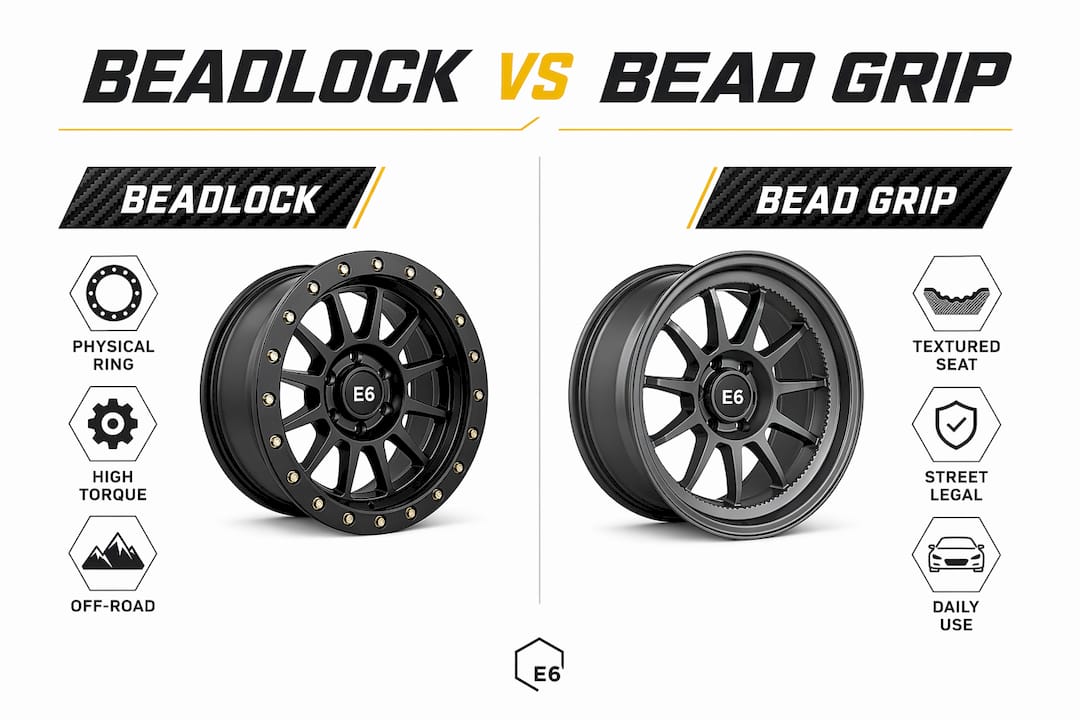
The beadlock vs. bead grip decision comes down to use case, not preference. Beadlocks physically clamp the tire bead with a bolted outer ring. Bead grip systems use a knurled or textured bead seat to increase friction between the tire and wheel without any mechanical clamping. Each approach has a defined performance envelope.
| Feature | Beadlock wheels | Bead grip wheels |
|---|---|---|
| Tire retention method | Physical locking ring | Surface friction and knurling |
| Optimal tire pressure | Below 10 PSI | 10 PSI and above |
| Street legality | Restricted in many states | Generally DOT compliant |
| Maintenance requirement | Monthly bolt torque checks | Standard wheel maintenance |
| Weight impact | Higher unsprung weight | Minimal weight addition |
| Best application | Drag strip, extreme track, competition | Daily driving, mixed-use, moderate track |
Bead grip wheels excel for daily-driven, mixed-use performance rigs that need traction benefits without the legal and maintenance overhead of a full beadlock system. If your Mercedes-AMG C63 sees both track days and weekend street use, bead grip is the more practical solution. If that same car is a dedicated strip build running 8 PSI on drag radials, a forged beadlock is the correct engineering choice.
Pro Tip: If you are unsure which system fits your build, map your lowest intended tire pressure. If it never drops below 10 PSI, bead grip delivers the traction benefit without the maintenance burden of a beadlock ring system.
What exotic platforms benefit most from E6 Forged beadlock builds?
E6 Forged’s multipiece forged beadlock wheels are engineered specifically for exotic platforms where off-the-shelf fitment is not an option. The AR03 multipiece configuration allows precise control over offset, bolt pattern, center bore, and barrel width. For a Mercedes-AMG GT Black Series running a built motor and a drag-focused tire setup, the wheel must handle both the torque load and the fitment demands of a wide-body kit without compromising structural integrity.
The platforms that benefit most from E6 Forged’s bespoke beadlock program include:
- Mercedes-AMG (GT, C63, E63): High-torque AWD and RWD platforms with aggressive launch control systems that stress tire beads during full-throttle starts
- Lexus LC500: A rear-wheel-drive grand tourer with a high-revving V8 that responds well to weight reduction at the wheel, where forged construction reduces unsprung mass while the beadlock ring handles low-pressure track setups
- McLaren 720S and 765LT: Mid-engine platforms with extreme power-to-weight ratios where tire pressure strategy during track sessions demands mechanical bead retention
- Lamborghini Huracán and Urus: AWD torque delivery at launch creates bead stress on sticky compound tires, particularly during drag strip applications
E6 Forged’s manufacturing process uses autoclave-cured construction and precision CNC machining to maintain structural integrity across the full wheel assembly, including the beadlock ring interface. The result is a wheel that meets the exacting fitment standards of these platforms while delivering the safety and performance benefits that forged beadlock technology provides under competition conditions.
What maintenance and legal requirements come with beadlock wheels?
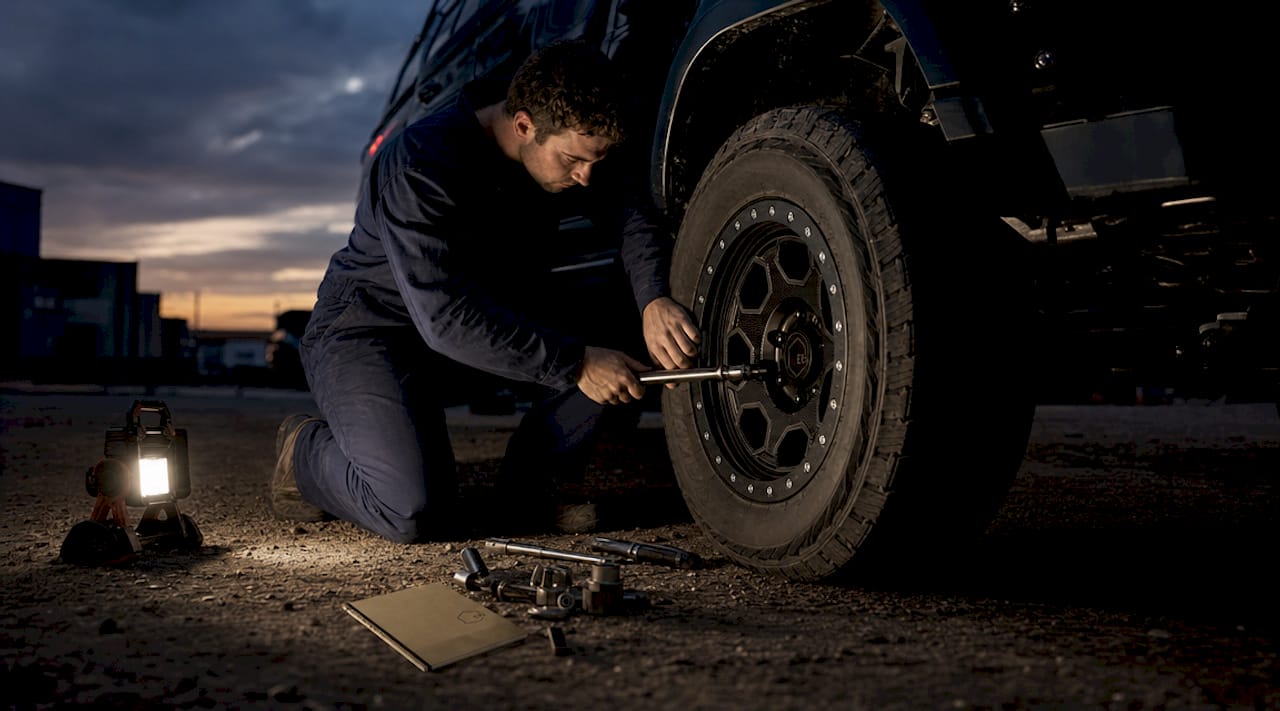
Beadlock wheels carry a higher maintenance burden than any standard or bead grip wheel. The outer locking ring is secured by a series of bolts, and those bolts require monthly torque inspections to prevent loosening under vibration and thermal cycling. Neglecting this step risks bolt failure, ring separation, and sudden tire loss at speed.
The installation process itself requires specialized tools and a precise sequence:
- Mount the tire onto the inner barrel of the wheel before attaching the beadlock ring
- Position the outer ring over the tire bead and align all bolt holes
- Hand-thread all bolts before applying torque to prevent thread cross-loading
- Use a calibrated torque wrench and follow a gradual cross-pattern tightening sequence to avoid ring deformation
- Verify final torque values match the manufacturer specification after the first heat cycle
Street legality is a separate concern. Even beadlock rings marked as DOT compliant may not be 50-state street legal. State laws vary significantly, and some jurisdictions prohibit beadlock wheels on public roads entirely. Check your state and local regulations before mounting beadlocks on any vehicle that sees street use. For track-only builds, this restriction is irrelevant. For dual-purpose cars, it is a real constraint that may push the decision toward a bead grip system.
Pro Tip: Many tire shops will not service beadlock wheels. Before committing to a beadlock build, identify a shop in your area with the tools and experience to handle beadlock mounting and torque verification. Factor that into your maintenance plan from day one.
Key takeaways
E6 Forged Beadlock Wheels are the correct upgrade when your build combines sub-10 PSI tire pressures with high-torque launches, and E6 Carbon’s bespoke forged construction delivers the fitment precision and structural integrity that exotic platforms demand.
| Point | Details |
|---|---|
| Pressure is the real trigger | Beadlocks become necessary when tire pressure drops below 10 PSI during performance use. |
| Torque load matters more than HP | Tire bead unseating is caused by torque and pressure strategy, not peak horsepower alone. |
| Bead grip suits mixed-use builds | For street and moderate track use above 10 PSI, bead grip offers traction without legal risk. |
| Exotic platforms need bespoke fitment | Mercedes-AMG, Lexus LC500, McLaren, and Lamborghini require custom offset and bolt pattern engineering. |
| Maintenance is non-negotiable | Monthly bolt torque checks and specialized installation are required to keep beadlock wheels safe. |
The case for knowing your build before you spec your wheels
From our experience building wheels for Mercedes-AMG GT Black Series builds and Lexus LC500 track programs, the most common mistake we see is tuners specifying beadlocks because they look serious, not because the build actually demands them. A beadlock ring on a street car running 35 PSI adds unsprung weight, creates a maintenance obligation, and may put you on the wrong side of state law. That is not a performance upgrade. It is a liability.
The builds where beadlocks genuinely change outcomes are the ones running 6 to 8 PSI on a prepped drag surface, or the McLaren 765LT on a time attack program where the tire pressure strategy is part of the lap time equation. In those scenarios, a standard wheel is a failure point waiting to happen. The locking ring is not optional.
What we find with E6 Forged’s multipiece beadlock program is that the engineering conversation starts with fitment and ends with function. Getting the offset, barrel width, and ring bolt pattern right for a specific platform is as important as the beadlock mechanism itself. A wheel that fits perfectly and holds the bead under 900 wheel horsepower is the only acceptable outcome.
— E6 Engineering
Build with the wheel your platform actually needs
If your build is pushing into the territory where tire bead retention becomes a real concern, E6 Carbon’s forged beadlock program is engineered for exactly that application. The AR03 multipiece forged beadlock wheels are built to order for Mercedes-AMG, Lexus LC500, McLaren, and Lamborghini platforms, with custom offset, bolt pattern, and barrel width specified to your exact fitment requirements.
Every wheel ships with full installation documentation, and the E6 Carbon team provides fitment verification before production begins. For builders who want to understand the full installation process before committing, the forged wheel installation guide covers every step from mounting sequence to final torque verification. Explore the full E6 Forged wheel catalog at e6carbon.com/e6-forged-wheels and spec the wheel your build has earned.
FAQ
When should you upgrade to beadlock wheels?
Upgrade to beadlock wheels when your build regularly runs tire pressures below 10 PSI during competition or high-torque launches. At normal street pressures, standard or bead grip wheels are sufficient and carry fewer legal and maintenance complications.
Are E6 Forged Beadlock Wheels street legal?
Street legality depends on your state. Even DOT-marked beadlock rings may not be legal for on-road use in all jurisdictions, so check local regulations before mounting beadlocks on any street-driven vehicle.
What is the difference between beadlock and bead grip wheels?
Beadlock wheels use a physical bolted ring to clamp the tire bead, while bead grip wheels rely on a textured bead seat for friction-based retention. Beadlocks work at extreme low pressures; bead grip suits daily and moderate track use above 10 PSI.
How often do beadlock wheels need maintenance?
Beadlock bolt torque should be inspected monthly and after every track or competition event. Neglecting this check risks bolt loosening, ring separation, and tire failure at speed.
Which exotic platforms does E6 Forged support with beadlock wheels?
E6 Forged builds bespoke beadlock wheels for Mercedes-AMG, Lexus LC500, McLaren, and Lamborghini platforms, with custom offset, bolt pattern, and barrel dimensions engineered to each vehicle’s specific fitment requirements.