“JWL VIA” means a wheel design was tested against Japan’s JWL standard and that those results were independently verified and registered by VIA. JWL alone can be self-certified by the manufacturer, which means the marking alone proves nothing. Before you buy, ask the seller for the VIA certificate number and the accompanying lab report. If they can’t produce either, treat the claim as unverified.
TL;DR:
- JWL certification is based on self-testing by manufacturers, so only VIA-registered wheels with independent lab verification offer reliable safety assurance.
- Independent VIA registration requires third-party labs to confirm every test, providing a certificate number and traceable test report for verification.
- Genuine markings include stamped or cast identifiers with specific load ratings and standard locations, which should match the tested configuration.
- Buyers must request the VIA certificate number and lab report directly from sellers to verify authenticity before purchasing, avoiding reliance on stamped logos alone.
- In the U.S., JWL VIA certification is voluntary, but importers and high-end brands often require it as proof of quality and liability mitigation.
Table of Contents
- What Is JWL Certification, and Where Does Self-Testing Fall Short?
- What Is VIA, and Why Does Its Registration Matter?
- How Do the Core Tests and Wheel Markings Actually Work?
- How Do You Verify a JWL VIA Claim Before You Buy?
- Does the U.S. Require JWL VIA Certification?
- Why Does Independent Verification Matter for High-End Forged Wheels?
- What Shops Actually Check Before They Trust a Wheel
- Verified Engineering, Built for the Platforms That Demand It
- Sources
- FAQ
What Is JWL Certification, and Where Does Self-Testing Fall Short?
JWL stands for Japan Light Alloy Wheel, a technical standard developed to keep aftermarket aluminum wheels from failing under road loads. It sets minimum performance thresholds for strength and durability, and it has been the baseline reference for wheel safety testing across the Japanese aftermarket for decades.
The standard requires a specific battery of mechanical tests before a wheel design earns the JWL mark:
- A radial fatigue test that simulates the vertical loads a wheel absorbs over its service life.
- A bending fatigue test (sometimes called a cornering fatigue test) that reproduces the lateral stress of hard cornering.
- An impact test that checks how the wheel handles a sudden shock, like a curb strike or pothole hit.
- A roundness and dimensional check confirming the wheel meets its stated geometry within tolerance.
Here’s the catch enthusiasts frequently miss: JWL permits the manufacturer to run these tests in-house. There’s no requirement for an outside lab to witness or confirm the results. A reputable manufacturer with real engineering discipline can produce a legitimately strong wheel this way. But a stamped “JWL” logo, on its own, is a self-reported claim, not an audited one. That gap is exactly what VIA was built to close.
What Is VIA, and Why Does Its Registration Matter?
VIA stands for the Vehicle Inspection Association, and it functions as the independent check on JWL claims. Rather than trusting a manufacturer’s own test bench, VIA requires an accredited third-party laboratory to run the full JWL test sequence and confirm the results before a wheel design earns registration.
That distinction changes what the marking actually proves:
- VIA is a voluntary, third-party registration system, and passing wheels get authorized to display the VIA mark, which functions as a verifiable indicator of outside audit.
- Registered designs receive a certificate number and a bound test report from the accredited lab, giving buyers a paper trail to check against.
- The VIA mark is legally restricted. A manufacturer can’t slap it onto a wheel design that hasn’t cleared registration, and unauthorized use of the logo carries legal exposure for the offending company.
- Registration and marking placement follow specific rules under Japan’s technical standards, which is why legitimate VIA wheels carry the mark in a consistent, documented location.
For buyers, the practical value is traceability. JWL tells you a design was tested against a recognized standard. VIA tells you someone other than the manufacturer confirmed it actually passed, and gave that pass a certificate number you can ask to see.
How Do the Core Tests and Wheel Markings Actually Work?
Each JWL test targets a different failure mode a wheel can encounter on the road, and understanding what each one measures helps you interpret a lab report instead of just skimming it.
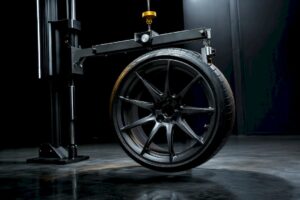
- Radial fatigue test. The wheel is loaded and rotated repeatedly to simulate the vertical stress of normal driving over an extended mileage equivalent, checking for cracking or deformation at the hub and spoke junctions.
- Bending (cornering) fatigue test. A rotating bending moment is applied to mimic lateral loads from cornering, exposing weaknesses that radial loading alone won’t reveal.
- Impact test. A weighted mass strikes the wheel rim at a defined angle and energy level, replicating a curb or pothole impact to confirm the structure won’t fracture on a single hard hit.
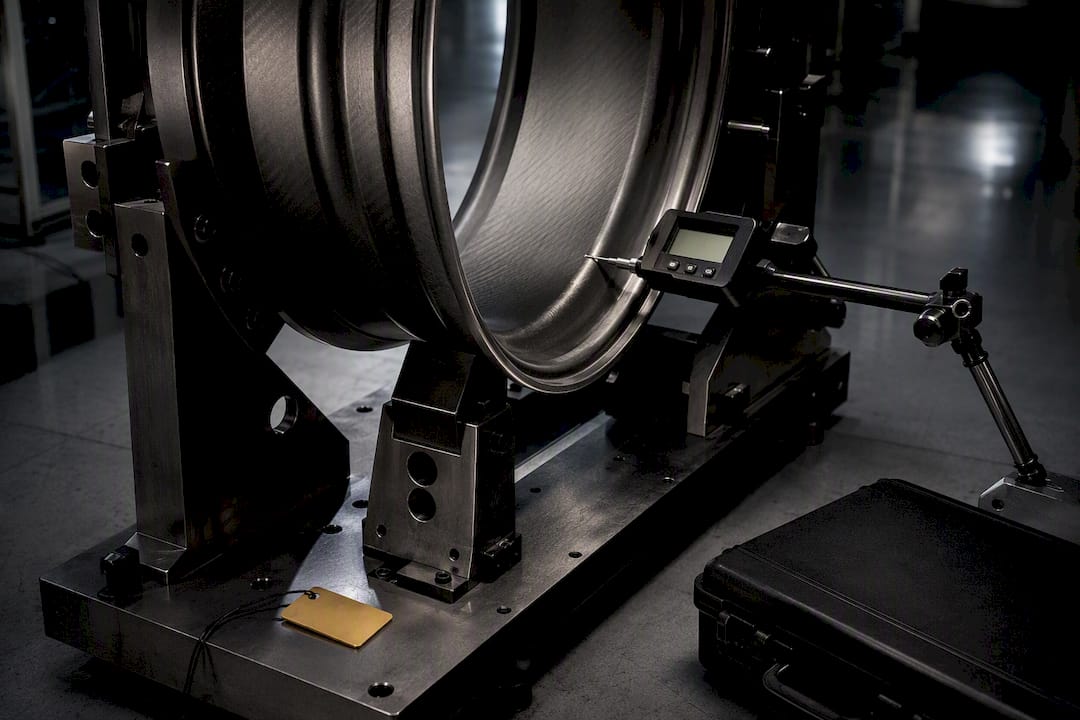
- Roundness and dimensional check. The finished wheel is measured against its design geometry to confirm out-of-round tolerance stays within an acceptable range for balance and tire seating.
Legitimate markings appear stamped or cast into the wheel, typically on the back of a spoke or near the hub, and include the JWL or JWL-T designation (JWL-T applies to wheels rated for trucks and heavier load duty), along with a maximum load rating expressed as a qualitative weight rating. Some wheels also carry a limited-use marking restricting them to specific vehicle applications rather than general road use. If you can’t locate a stamp in one of these standard positions, or the load marking looks inconsistent with the wheel’s stated application, that’s worth flagging before purchase. Forged wheels built for track use should carry markings that match the intended duty cycle, not a generic passenger-car rating stretched to cover it.
How Do You Verify a JWL VIA Claim Before You Buy?
A stamped logo tells you nothing about whether a wheel actually passed independent testing. The only way to confirm the claim is to request the paperwork behind it, and know what to look for once you have it.
Work through this sequence before you commit to a purchase:
- Ask for the VIA certificate number, not just a photo of the stamped wheel. A real registration has a traceable number tied to an accredited lab.
- Request the full test report, including the testing date, the batch or lot number, and the lab’s signature or letterhead. A vendor who only offers a cropped screenshot is giving you marketing material, not documentation.
- Match the tested configuration to your actual order. The report needs to cover the same diameter, width, offset, PCD, and material as the wheel you’re buying, not a different spec from the same product line.
- Check the certificate’s issue date against current production. Design or manufacturing process changes can trigger a required re-test, so an old certificate may not reflect the wheel currently being sold.
- Watch for red flags: stamped-wheel photos with no accompanying report, vague or evasive answers about the testing lab, fitment data that doesn’t match what’s advertised, or a VIA logo with no certificate number attached.
False JWL and VIA claims are common enough in the aftermarket that a stamp alone should never be treated as proof. Public access to VIA’s registration records is also limited, so in most cases the certificate number has to come directly from the manufacturer.
Pro Tip: Send this exact question to the seller before you pay a deposit: “Can you provide the VIA certificate number and the original lab test report for this specific wheel size and offset?” A legitimate supplier answers in one reply with a document attached. A vague response, or a delay past a day or two, is your answer too.
Does the U.S. Require JWL VIA Certification?
No. The United States has no federal mandate requiring JWL or VIA certification on aftermarket wheels, which surprises a lot of first-time import buyers. Both remain entirely voluntary here.
That said, importers and premium retailers routinely require JWL VIA documentation anyway, because it functions as their liability and warranty backstop even without a legal requirement behind it.
- Shops use it to demonstrate due diligence if a wheel failure ever becomes a legal dispute.
- Distributors lean on it to justify warranty claims against overseas manufacturers.
- Track-use buyers should treat JWL VIA documentation as a baseline, not a bonus, given the loads involved in repeated hard cornering and braking.
- Importers bringing in new product lines should request certificates before the first container ships, not after.
Why Does Independent Verification Matter for High-End Forged Wheels?
Independent verification and fitment-first engineering solve the same underlying problem: consistency. A JWL VIA test report proves a design held up under controlled load conditions. Manufacturing tolerance determines whether every wheel coming off the line actually matches that tested design.
That relationship matters most in monoblock and multi-piece forged construction, where tighter grain structure and precision machining are supposed to deliver both strength and meaningful unsprung weight reduction over cast alternatives.
- Consistent tolerances mean the wheel that ships matches the one that was tested, batch after batch.
- Documented fitment data (diameter, offset, PCD, load rating) lets a buyer confirm the tested configuration matches their exact application before ordering.
- Traceable testing supports the same liability and warranty standards that shops already expect from imported wheels.
Fitment and tolerance documentation for monoblock and multi-piece forged wheel programs typically lives on the individual product page, where diameter, width, offset, and load specifications are listed against the vehicle platform.
What Shops Actually Check Before They Trust a Wheel
Reputable shops don’t stop at a stamp. They want a traceable lab report, a configuration match to the exact wheel being sold, and a physical inspection before it goes on a car. Documentation gets filed for warranty and liability reasons, not left in an inbox.
— E6 Engineering
Verified Engineering, Built for the Platforms That Demand It
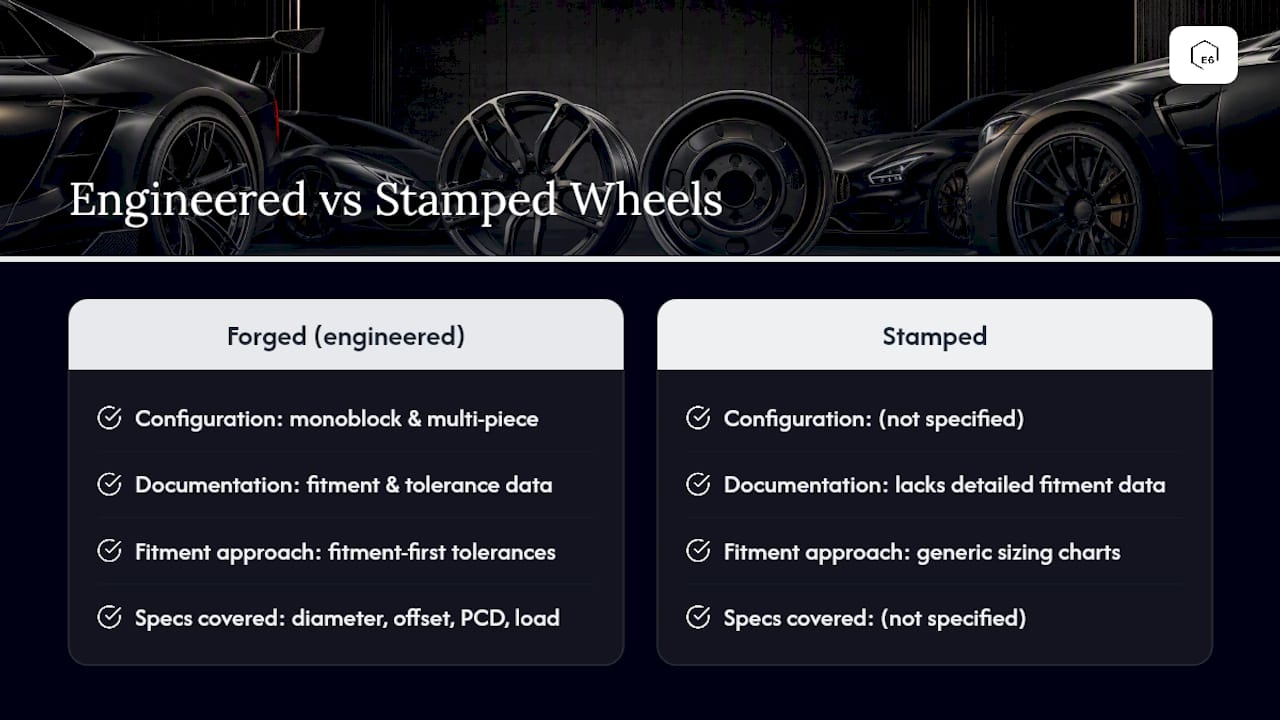
Every forged wheel program is engineered around fitment-first tolerances, not generic sizing charts stretched across multiple platforms. Monoblock and multi-piece configurations are documented with fitment and tolerance data covering diameter, offset, PCD, and load specifications for luxury and exotic car applications. Such documentation is what separates an engineered wheel from a stamped one.
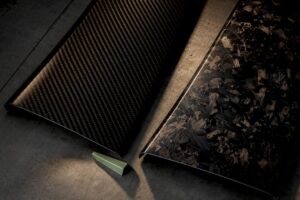
If you’re speccing wheels for a Lexus LC500 build, the E6 Carbon Elite Kit pairs with our forged wheel programs to complete an autoclave-cured 2×2 twill aesthetic without compromising the fitment tolerances your wheels depend on. Explore the E6 forged wheels catalog to review monoblock and multi-piece options by platform, check available specifications, and request a fitment consultation before you order.
Sources
FAQ
What Is JWL Certification?
JWL is a Japanese technical standard covering radial fatigue, bending fatigue, and impact testing for aluminum wheels, and manufacturers can self-test to earn the marking without third-party oversight.
What Is JWL, and How Does It Differ From JWL VIA?
JWL alone reflects self-reported testing by the manufacturer. JWL VIA means an accredited independent lab verified those same tests and VIA registered the design, giving buyers a certificate number to check.
Do Aftermarket Rims Void My Car’s Warranty?
Installing aftermarket wheels generally does not void your vehicle’s full factory warranty, but a manufacturer can deny a specific warranty claim if it can prove the aftermarket wheel directly caused the failure. Retaining your JWL VIA documentation and fitment records helps if that dispute ever comes up.
How Much Do Four Alloy Wheels Cost?
Pricing for a set of four alloy wheels varies enormously by size, material, and whether they’re mass-produced cast wheels or custom forged units, so there’s no single reliable figure to quote. Request a fitment-specific quote for your exact platform and configuration rather than relying on a general estimate.
How Do I Check if a VIA Mark on a Wheel Is Genuine?
Ask the seller for the VIA certificate number and the original lab report, then confirm the tested diameter, width, offset, and PCD match the exact wheel you’re buying before you pay.