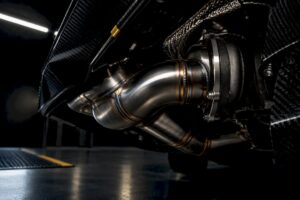
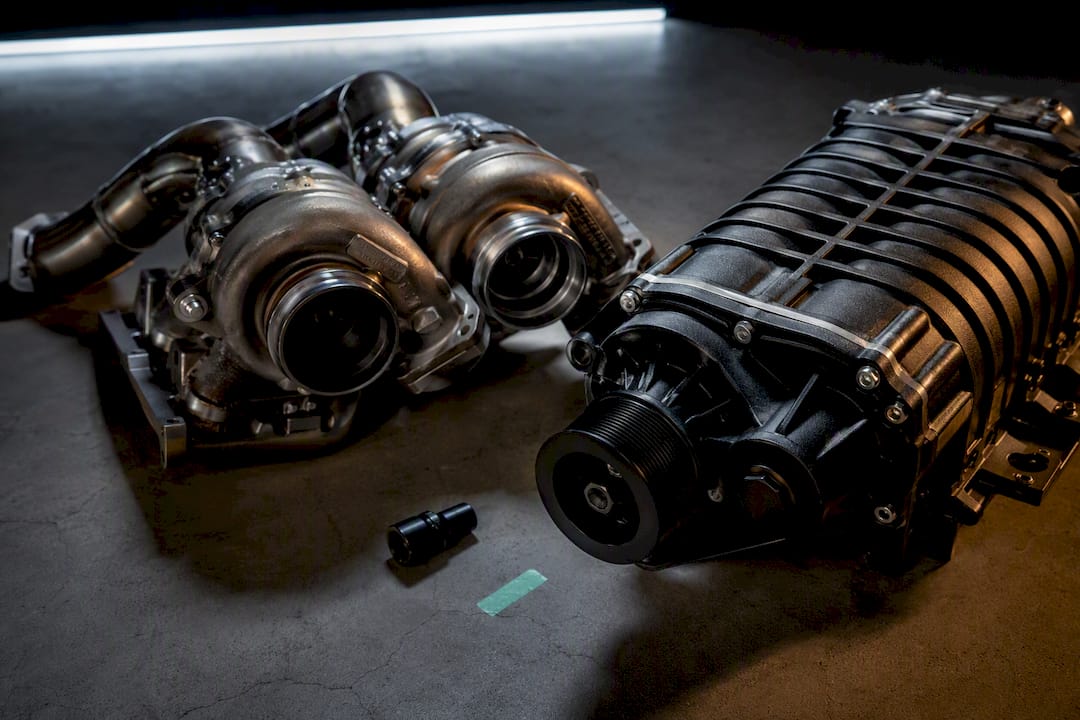
For peak power and long-term tunability, a well-executed twin-turbo system wins. For instant throttle response and a simpler bolt-on path, a supercharger wins. Modern turbo hardware like variable-geometry turbines and electronic wastegates has closed most of the old lag gap, but you should still confirm any forced-induction install meets your state’s emissions rules before you commit.
TL;DR:
- Twin-turbo setups provide higher peak power potential and better long-term efficiency but require complex, costly installation and careful intercooler packaging.
- Superchargers deliver immediate, linear torque with simpler bolt-on installation but are limited in maximum output and increase drivetrain wear from belt and bearing stress.
- Modern turbo technology has significantly reduced lag, especially with variable-geometry turbines and electric assist, making turbos more responsive at low RPM.
- Achieving optimal performance depends on proper intercooler placement, cooling airflow, and thorough planning to prevent aerodynamic and thermal interference on exotic and luxury models.
- Both systems demand diligent maintenance, proper oil quality, and compliance with local emissions rules to ensure longevity and legal operation.
Table of Contents
- Twin Turbo vs Supercharger: Quick Comparison
- How Turbochargers and Superchargers Actually Work
- Turbo Lag, Torque Curves, and Peak Power: What Actually Changes
- Heat, Wear, and What Breaks First
- What Installation and Budget Actually Look Like
- Choosing the Right Forced-Induction Path for Your Build
- E6 Engineering’s Take: Fitment First on Priority Platforms
- Build Support From E6 Carbon
- Sources
- FAQ
Twin Turbo vs Supercharger: Quick Comparison
Neither system is objectively “better.” Each solves a different problem, and the right pick depends on what you’re actually trying to fix on your car.
Twin-turbo:
- Higher peak power ceiling and better part-throttle efficiency because it recovers exhaust energy instead of stealing crankshaft power.
- Historically leggier off-idle, though modern twin-scroll and variable-geometry designs have largely closed that gap.
- More expensive and labor-intensive to install: custom exhaust routing, oil lines, and intercooler plumbing add fabrication time.
Supercharger:
- Immediate, linear torque the moment you touch the throttle, with no spool delay.
- Simpler installation on many V8 platforms since kits often bolt onto the existing accessory drive.
- Lower peak-power ceiling than a comparable turbo setup because it draws mechanical power straight off the crank.
Ask yourself one question before reading further: do you want instant response, or do you want the highest number on the dyno sheet?
How Turbochargers and Superchargers Actually Work
The core difference is where each system gets its energy. A turbocharger sits in the exhaust stream, spun by exhaust gas that would otherwise go to waste, while a supercharger is mechanically driven off the crankshaft by a belt, gear, or chain. That single distinction explains almost every trade-off between them, according to MotorTrend’s breakdown of the two systems.
Twin-turbo layouts come in two flavors: parallel (two identical turbos, each feeding one bank of cylinders) and sequential (a small turbo for low-end response, a larger one for top-end flow). Superchargers split into three main types: Roots (simple, high boost at low RPM, less efficient), twin-screw (better efficiency, common on modern factory applications), and centrifugal (behaves more like a turbo, building boost with RPM).
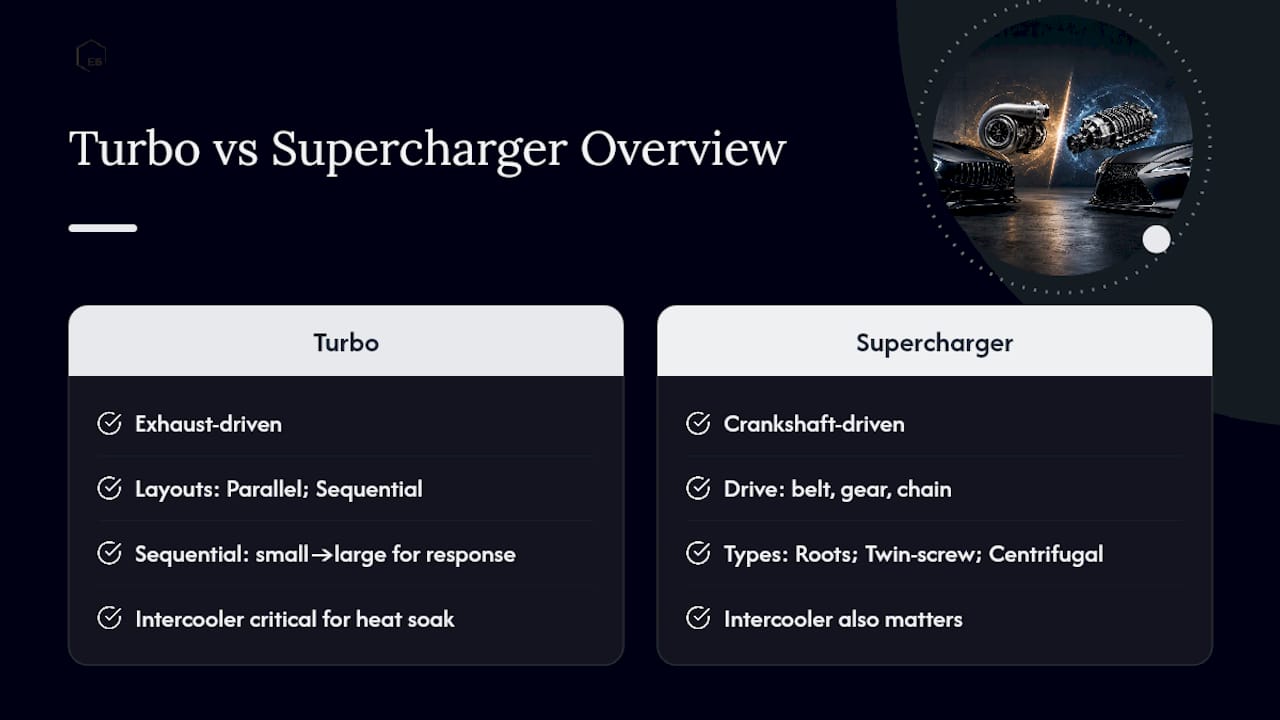
Intercoolers matter for both. Compressed air heats up, and heat kills density and detonation resistance. A turbo system running heat-soaked after a hard pull loses boost response fast, which is why intercooler sizing and duct routing matter as much as the compressor itself.
Turbo Lag, Torque Curves, and Peak Power: What Actually Changes
Turbo lag is real but overstated in 2026. The delay comes from spooling a turbine using exhaust flow that only builds as RPM climbs, and it used to mean a noticeable dead spot before boost arrived. That has changed significantly with:
- Variable-geometry turbines (VGT) that adjust vane angle to build boost sooner across the RPM range.
- Twin-scroll housings that separate exhaust pulses to spin the turbine more efficiently at low RPM.
- Low-inertia turbine wheels and electronic wastegates that respond to throttle input almost instantly.
- Electric turbo assist, which uses a small motor to spin the turbine before exhaust flow is sufficient, virtually eliminating lag on some high-end platforms.
Superchargers avoid lag entirely, but they pay what engineers call the “crank tax.” Because the supercharger’s rotating assembly is driven directly off the crankshaft, it consumes engine power to make boost, which caps the net gain compared to a turbo’s exhaust-energy recovery. Turbochargers are generally more thermodynamically efficient for exactly this reason, and it’s the main reason turbos dominate modern high-output exotic and luxury platforms rather than blowers.
The tunability gap matters more at high power. A twin-turbo setup has enormous headroom: bigger turbos, higher boost, aftermarket internals, and a tune can push output well beyond what a supercharger’s fixed displacement and drive ratio typically allow without swapping the whole unit. This is why most modern manufacturer-backed 700+ horsepower platforms lean turbo, not supercharged.
Heat, Wear, and What Breaks First
Every forced-induction system trades power for stress somewhere in the drivetrain, and knowing where that stress lands tells you what to inspect and how often.
Turbo-specific wear points:
- Bearing wear from sustained high-RPM spinning, especially without proper spool-down time.
- Oil coking, where residual heat bakes oil in the turbo’s bearing housing after a hard drive and immediate shutdown.
- Thermal cycling stress on the turbine housing from repeated heat-up and cool-down cycles.
Supercharger-specific wear points:
- Drive belt fatigue from the constant tension needed to spin the unit.
- Drive bearing wear inside the supercharger case itself.
- Added accessory-drive load that can shorten water pump and alternator bracket life over time.
Pro Tip: Let a turbocharged car idle for 30 to 60 seconds before shutdown after hard driving. That short cool-down keeps oil from coking inside the center housing and adds real years to bearing life.
Regardless of system, stick to the OEM-specified oil grade and interval, inspect intercooler end tanks for cracking, and confirm your build complies with local emissions requirements. There’s no blanket federal ban on twin-turbo setups, but state-level rules on modified emissions equipment vary and are worth checking before you finalize a build.
What Installation and Budget Actually Look Like
- Turbo builds typically need custom exhaust manifolds, oil feed and return lines, larger intercoolers, an ECU remap or standalone tune, and often stronger internals (rods, pistons, head studs) once you push boost past stock power targets.
- Supercharger installs usually need a mounting bracket, drive pulley, belt, intake modification, and an ECU tune; an intercooler is common but not always mandatory depending on boost level and kit design.
- Labor complexity favors superchargers on most V8 platforms, since many kits are designed as direct bolt-ons, while turbo kits often require custom fabrication that adds shop hours and cost.
- Hidden costs to budget for on either system: dyno tuning time, fueling upgrades (injectors, pumps) to match new airflow, and, on exotics, aero and packaging changes to keep front-end cooling adequate.
On tightly packaged exotics, that last point decides a lot. There’s often no room for a supercharger’s footprint under the hood, which pushes many modern luxury and exotic platforms toward compact twin-turbo layouts almost by default.
Choosing the Right Forced-Induction Path for Your Build
Run through this checklist before you sign off on a direction:
- What’s the actual goal? Straight-line torque, track lap times, or a daily-driven exotic that still needs to be livable in traffic?
- How much maintenance are you willing to take on? Turbo systems demand more attention to oil quality and cool-down habits.
- What’s your real budget, including fabrication and tuning, not just the kit price?
- What peak output are you targeting, and does that number require headroom a supercharger can’t give you?
- How much room does your engine bay actually have?
As a rule of thumb, large-displacement V8 muscle platforms tend to favor superchargers because the immediate torque suits drag and street use, and the simpler install keeps costs down. Modern downsized exotics and luxury turbo platforms, Mercedes-AMG’s current lineup among them, favor twin-turbo because the packaging is tighter and the efficiency argument matters more at that price point.
Before you commit, bring three questions to your tuner: What’s the expected turbo or supercharger lifespan at my target boost level? What supporting fuel and cooling upgrades are non-negotiable? And what does a realistic dyno number look like after tune, not just on paper? If a shop can’t answer those with specifics, that’s a reason to keep shopping.
E6 Engineering’s Take: Fitment First on Priority Platforms
Forced-induction upgrades don’t happen in isolation. They interact with everything else on the car, and that’s where most DIY plans fall apart. Our BMW S58 turbo upgrade work, which pushed output to the 750 to 950 WHP range, made one thing clear: intercooler sizing and placement have to be locked in before final turbo selection, not after.
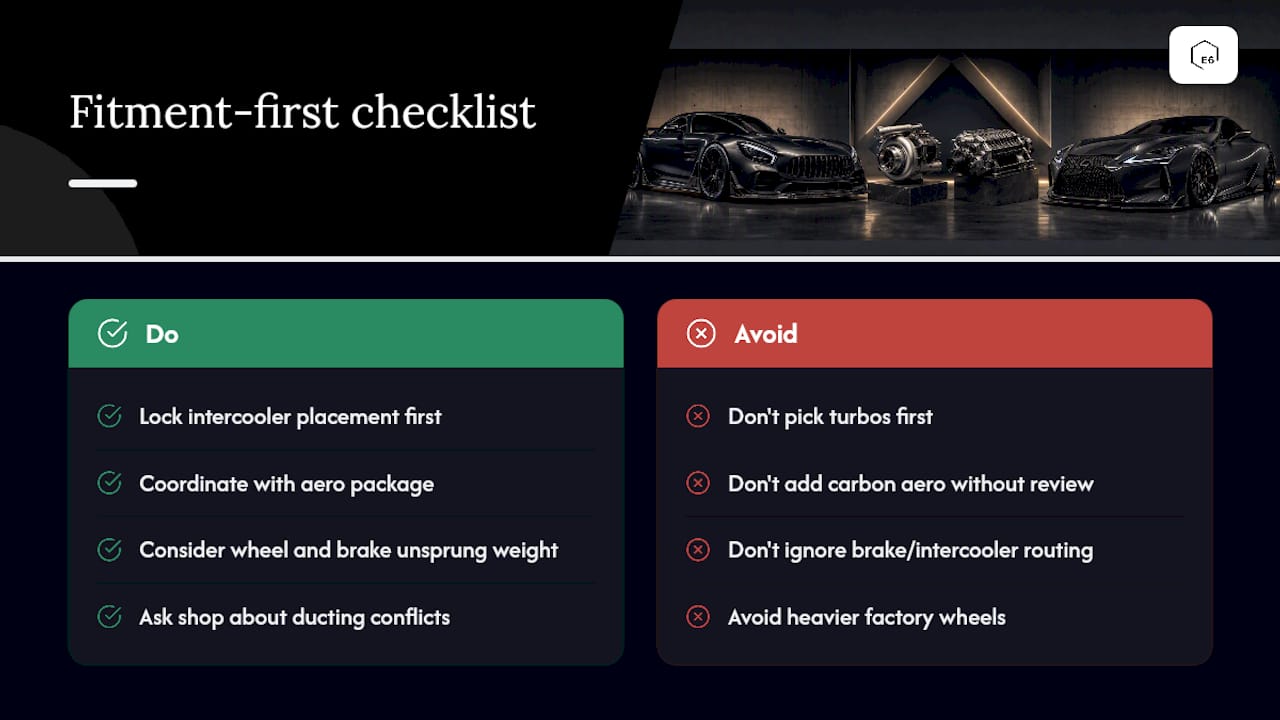
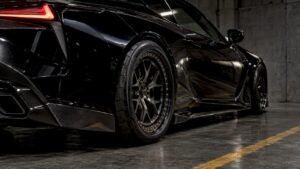
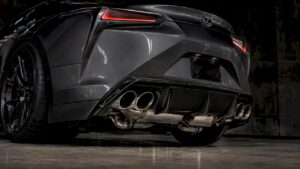
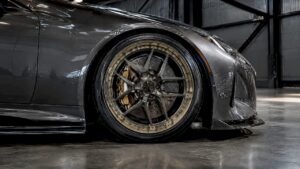
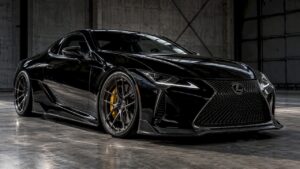
On Mercedes-AMG and Lexus LC500 platforms specifically, front-end cooling airflow, intercooler duct routing, and brake ducting all compete for the same limited real estate behind the front fascia. Add a carbon aero package without accounting for that, and you choke the exact cooling path your new turbo setup depends on. Unsprung weight matters here too. A heavier factory wheel setup works against every horsepower gain you just paid for.
Ask your shop specifically how intercooler placement affects your aero package and how the wheel and brake package changes cooling airflow before finalizing any turbo integration plan.
— E6 Engineering
Build Support From E6 Carbon
A company like E6 Carbon engineers bespoke forged wheels and autoclave-cured carbon fiber components with fitment-first precision for Mercedes-AMG, Lexus LC500, and exotic platforms, and applies rigorous engineering discipline to turbo integration and fueling upgrades. Our BMW S58 turbo upgrade program shows what happens when aero, cooling, and forced induction get engineered as one system instead of three separate afterthoughts.
The E6 Carbon Elite Kit for Lexus LC500 is a working example: a carbon aero package built to preserve the cooling airflow a turbo or supercharger upgrade needs, rather than blocking it. If planning a forced-induction build on an AMG, LC500, or exotic platform, consulting a specialist on fitment and thermal management before finalizing intercooler or wheel packages is recommended.
Sources
- Twin-turbo vs twincharged engines differences — Jalopnik
- Turbocharger vs supercharger: what’s the difference? — MotorTrend
- Turbocharger vs Supercharger: Which Is Better for Your Car? — Car Care Total
FAQ
Is a Twin-Turbo Setup Illegal?
No federal law bans twin-turbo systems, but performance modifications must still meet state-level emissions requirements, so check your state’s rules before installing one.
Is It Better to Have a Turbo or a Supercharger?
It depends on your goal: turbos generally offer higher peak power and better efficiency, while superchargers deliver instant, predictable torque with a simpler install, and both are valid choices for different builds.
What Lasts Longer, a Turbo or a Supercharger?
Neither has a clear lifespan edge across the board. Turbos face bearing wear and heat cycling risk if you skip cool-down habits, while superchargers face belt fatigue and drive-bearing wear, so longevity comes down to maintenance more than the system itself.
Can You Run Twin Turbos With a Supercharger?
Yes, this is called twin-charging, but it’s rare in production and aftermarket builds because the added weight, packaging, and complexity rarely justify the gains, though newer electric supercharger and 48V systems are making hybrid setups more practical on select high-end platforms.