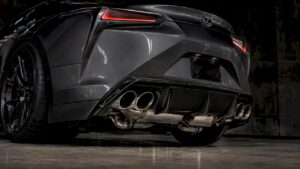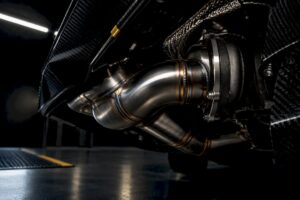

For most S58 owners chasing a reliable 100 to 400 wheel horsepower bump, an upgraded Stage 2 or hybrid turbo pairing on the factory twin-turbo layout is the practical route. Full-frame single-turbo conversions belong to the 900 to 1,500+ WHP crowd running standalone fueling and built transmissions. Either way, budget for a professional tune, upgraded fueling, and fresh oil and coolant lines before you touch a turbo housing.
TL;DR:
- Upgrading from factory twin turbos to Stage 2+ or hybrid setups is suitable for 100 to 400 WHP boosts, with full-frame conversions reserved for over 900 WHP builds.
- Supporting hardware such as intercoolers, charge piping, and fuel systems must be upgraded in tandem to prevent heat soak, compressor surge, and fueling limitations.
- Realistic power gains are best supported with proper fueling, transmission capacity, and drivetrain strength, typically capping at around 750 WHP on stock internals before further reinforcement is needed.
- Installation requires replacing all oil and coolant lines, checking shaft play, and calibrating wastegate actuators carefully to ensure turbo longevity and reliability.
- Vendor specifications, proper calibration, and chassis-specific fitment are critical; OEM replacements restore stock performance, while aftermarket options aim for higher power but demand careful supporting modifications.
Table of Contents
- What Are the Real BMW S58 Turbo Upgrade Options?
- How Much Power Can an Upgraded S58 Turbo Realistically Make?
- What Supporting Hardware Does a Turbo Upgrade Actually Need?
- What Does an S58 Turbo Upgrade Cost, and How Long Does It Take?
- How Do You Install and Tune an Upgraded S58 Turbo Safely?
- What Do Owners Actually Say About Upgraded S58 Turbos?
- Are Upgraded S58 Turbos Street Legal?
- Aftermarket vs. OEM: Which Turbo Path Actually Makes Sense?
- How Long Do Upgraded S58 Turbos Actually Last?
- How Do You Choose a Vendor for an S58 Turbo Upgrade?
- E6 Engineering Perspective: Fitment Comes Before Power
- Let E6 Carbon Support Your S58 Turbo Build
- Sources
- FAQ
What Are the Real BMW S58 Turbo Upgrade Options?
The S58 already ships with two mono scroll turbos, one per bank, so any BMW S58 turbo upgrade starts by deciding how far past factory boost you actually need to go. There are four distinct categories, and they solve different problems.
CHRA rebuilds replace the center housing and rotating assembly inside the stock turbo shell. This is the cheapest path when a turbo has failed from bearing wear or oil starvation, and it restores factory output without touching the compressor or turbine wheel geometry.
Stage 2 and Stage 2+ upgrades swap in a billet compressor wheel, often paired with a larger turbine housing, while keeping the factory shell and mounting points. CTS Turbo’s Stage 2+ kit for the S58, for example, specs a 53.0mm inducer and 70.0mm exducer billet compressor wheel that bolts into the OEM location and retains the stock wastegate actuators, though the actuators still need recalibration through ISTA+.
Hybrid turbos push further, mixing a larger compressor with a reinforced CHRA rated for higher boost and sustained heat, usually built around a proprietary or aftermarket housing rather than the stock casting.
Full-frame single-turbo conversions discard the twin-turbo architecture entirely, replacing both units with one large frame turbo fed by a custom manifold. This is a fabrication-heavy swap, not a bolt-on.
A few packaging notes matter regardless of tier:
- Larger inducer/exducer dimensions shift the compressor map toward higher flow but delay spool, so a 2 to 3mm inducer change can noticeably alter throttle response on the S58’s factory layout.
- Stock wastegate actuators often bolt back on for Stage 2+ kits, but they require dedicated calibration and vendor-specified duty-cycle limits.
- Core-exchange remanufactured units make sense when you want upgraded internals without machining lead time; new upgraded housings make sense when you want documented, repeatable specs.
How Much Power Can an Upgraded S58 Turbo Realistically Make?
Realistic numbers depend heavily on what supports the turbo, not just the turbo itself. An optimized stock-turbo setup running port injection commonly reaches around 750 WHP on E85 or a strong ethanol blend, according to Kassel Performance’s S58 build guide. That’s the ceiling before you need to touch the turbos at all.
Upgraded Stage 2+ or hybrid twin-turbo setups push that range to roughly 850 to 950 WHP, but only when paired with adequate fueling and a transmission that can hold the torque. Pure Turbos and similarly positioned vendors advertise 900+ WHP potential from their Stage 2+ core-exchange kits, with the explicit caveat that custom ECU calibration is required to get there safely.

Statistic to plan around: the jump from a well-tuned stock-turbo car to an upgraded-turbo car is smaller in WHP terms than most owners expect. The real gain often comes from spool character and sustained boost under load, not just a bigger peak number.
Three systems cap safe power gains before the turbo does:
- Direct-injection fuel rail pressure and injector duty cycle. Past a certain point, the factory high-pressure pump and injectors simply can’t flow enough fuel, which is why builds targeting 800+ WHP usually add port injection alongside the factory DI system.
- Transmission torque capacity. Both the factory dual-clutch and manual options have a ceiling; exceeding it repeatedly shortens clutch and internals life regardless of engine health.
- Connecting rods and bearings. These become the limiting factor only at the extreme end, generally north of 1,000 WHP, where full-frame single-turbo builds live.
A conservative rule of thumb: pick your target WHP first, then work backward to confirm fueling and drivetrain can support it with margin, rather than choosing a turbo and hoping the rest keeps up.
What Supporting Hardware Does a Turbo Upgrade Actually Need?
No turbo upgrade survives long term on its own. The hardware around it determines whether the extra flow turns into usable power or into heat soak and knock retard.
Charge-air cooling has to scale with the new turbo’s output. A larger compressor moves more air, and more compressed air means more heat that has to be rejected before it reaches the intake valves. Factory intercooler cores that were adequate at stock boost start to fall behind on hybrid or Stage 2+ setups, particularly in stop-and-go traffic or repeated track sessions.
Inlet and charge piping matter more than owners expect. Undersized or restrictive factory inlet tubes cause compressor surge on a bigger wheel, which shows up as a fluttering or chuffing sound under lift-off and, over time, accelerates bearing wear.
Here’s the practical build order for supporting hardware:
- Upgrade intercooler or charge-air cooling to match the new compressor’s flow rate.
- Install high-flow inlet piping sized for the larger compressor housing to prevent surge.
- Add port injection once direct-injection duty cycle approaches its limit, typically above 700 to around around 750 WHP.
- Replace downpipes with high-flow units rated for the increased exhaust volume and heat.
- Renew oil feed and coolant lines as a matter of course, not as an afterthought.
Pro Tip: Never reuse old oil and coolant lines when installing new turbos. Coking and debris in aged lines is one of the most common causes of a brand-new turbo failing within the first few thousand miles.
Exhaust hardware deserves its own line item. A catless downpipe setup reduces backpressure enough to matter once turbine housings grow, and it’s typically installed at the same time as the turbo swap since labor overlaps heavily.
What Does an S58 Turbo Upgrade Cost, and How Long Does It Take?
Budget in three buckets: parts, labor, and tuning, because vendors price these separately and owners who forget one bucket get blindsided.
- OEM-spec turbo pair replacement runs on the lower end of the spectrum when you’re just restoring factory function, plus the mandatory oil and coolant line kits.
- Core-exchange Stage 2+ upgrades cost more than OEM replacement but less than buying new housings outright, since you’re trading in your factory cores against the upgraded unit.
- New billet-wheel Stage 2+ or hybrid kits sit at the top of the parts budget, especially when bundled with matched inlet piping and actuators.
- Supporting hardware (intercooler, downpipes, port injection) adds a meaningful line item on top of the turbo cost itself, often rivaling the turbo price when you go all in.
Labor for both turbos on the S58 typically runs between 10 and 15 hours, reflecting the tight engine bay packaging and the need to access both banks. This isn’t a weekend driveway job unless you’ve done it before.
Core deposit and exchange policies vary by vendor. Most core-exchange programs require your factory cores back within a set window or they charge the deposit outright, so confirm the return timeline before you order. Warranty terms differ too. Ask specifically what’s covered if a supplied unit fails under boost, not just under idle.
Tuning sessions and dyno verification time should get their own line in your budget, since a rushed calibration is where most upgraded-turbo problems start.
How Do You Install and Tune an Upgraded S58 Turbo Safely?
Installation quality determines whether an upgraded turbo lasts 60,000 miles or fails in the first month. Follow this sequence:
- Replace oil feed, oil return, and coolant lines as part of the swap, never reusing factory lines on new hardware.
- Torque all fasteners to spec and replace every gasket the turbo housing touches, since reused gaskets are a common source of boost and oil leaks.
- Check shaft play on any core-exchange or rebuilt unit before installation. Excessive play signals a bad rebuild.
- Calibrate wastegate actuators (ISTA+ or equivalent) if you’re reusing factory actuators on a Stage 2+ kit.
- Bring boost up in stages rather than jumping straight to target, datalogging wastegate duty cycle, lambda, and fuel trims at each step.
Tuning platforms like Bootmod3 and MHD are the standard tools for S58 calibration, and both support the datalogging needed to verify wastegate duty cycle percentage, closed-loop fuel trims, and lambda targets are behaving as expected before you push further.
Pro Tip: Run your first 50 to 100 miles after any turbo swap with conservative boost targets and frequent datalog reviews. Early warning signs, like rising long-term fuel trims or unexplained boost creep, show up before a catastrophic failure does.
Watch for oil consumption increases, unusual turbo whistle changes, or boost that climbs past target on its own. All three point to a problem worth addressing immediately, not monitoring for a few more weeks.
What Do Owners Actually Say About Upgraded S58 Turbos?
Forum communities like BimmerPost are where the unfiltered feedback lives, and it paints a more nuanced picture than most vendor marketing pages. Owners running Stage 2+ and hybrid setups generally report the WHP gains vendors advertise are achievable, but only when the supporting fuel and cooling upgrades are done at the same time, not added piecemeal afterward.
The recurring theme across owner threads is spool character, not peak number. A build that gains 150 WHP but pushes spool RPM up noticeably can feel slower in everyday driving than a build with fewer peak horsepower but sharper response. Several owners specifically flag that a compressor upgrade sized for track use feels sluggish in daily traffic, which reinforces the idea that turbo choice should match how you actually drive the car, not just a dyno chart.
Feedback on installation quality varies more by installer than by parts brand. The same Stage 2+ kit installed by two different shops produces different reliability outcomes, largely tied to whether oil and coolant lines were renewed, whether shaft play was checked on core-exchange units, and whether the tune was verified with real datalogging instead of a generic calibration file.
Complaints that do surface tend to center on unclear core-deposit timelines and turnaround delays when a shop is waiting on a vendor’s exchange program, reinforcing why confirming warranty and core terms upfront matters as much as the parts specs themselves.

Are Upgraded S58 Turbos Street Legal?
Emissions compliance for aftermarket turbos depends heavily on where you register and drive the car, and the rules are not uniform. Turbo hardware itself sits in a gray area in most jurisdictions because the turbo doesn’t directly control emissions output the way a catalytic converter does, but pairing an upgraded turbo with a catless downpipe changes that equation immediately.
Removing catalytic converters is restricted or prohibited on emissions-controlled vehicles in many states and under federal Clean Air Act provisions for street-driven cars, regardless of what the turbo hardware itself is rated for. If your build includes a catless downpipe alongside the turbo upgrade, that’s the component most likely to trigger inspection failures or legal exposure, not the turbo itself.
Custom ECU calibration required for most Stage 2+ and hybrid turbo kits also affects OBD-II readiness monitors, which can cause a vehicle to fail state emissions testing even when the physical hardware would otherwise pass a visual inspection. Owners in states with mandatory emissions testing should confirm their tune maintains readiness monitor function, or plan to revert to a compliant calibration before inspection windows.
None of this is legal advice specific to your state or country. Confirm local requirements before finalizing a build, particularly if the car sees regular street use in an area with active emissions enforcement.
Aftermarket vs. OEM: Which Turbo Path Actually Makes Sense?
OEM replacement turbos restore exactly what the factory specified, no more and no less. That’s the right call when a turbo has failed under warranty-adjacent conditions and you want the car back to baseline reliability without changing the power curve or triggering new tuning requirements.
Aftermarket upgrades exist because the factory turbos, while well matched to stock power targets, aren’t sized for meaningfully higher boost. The tradeoff is that aftermarket hardware shifts responsibility onto you and your installer. OEM parts come with BMW’s engineering validation built in. Aftermarket Stage 2+ and hybrid kits come with vendor-published specs and testing, but the real-world reliability outcome depends on install quality, tune quality, and whether supporting hardware kept pace.
Cost also splits differently than owners expect. OEM replacement parts often cost less per unit than a premium billet-wheel aftermarket kit, but aftermarket kits deliver power gains OEM parts simply can’t, so the comparison isn’t really apples to apples once you factor in what you’re trying to achieve.
The practical answer: if your goal is restoring factory function, buy OEM or a straight CHRA rebuild. If your goal is more power, aftermarket is the only path, and the real decision becomes which vendor’s engineering and support you trust with your car.
How Long Do Upgraded S58 Turbos Actually Last?
Longevity tracks installation quality and boost management more than it tracks brand name. A Stage 2+ kit installed with fresh oil and coolant lines, correctly calibrated wastegates, and a conservative tune will generally outlast a poorly installed OEM replacement running on old, coked lines.
Billet compressor wheels themselves are typically more durable under sustained boost than cast factory wheels, since billet construction resists the fatigue cracking that can develop in cast aluminum under repeated heat cycling. That durability advantage only holds if the surrounding systems, oil supply, cooling, and boost control, are sound.
Hybrid and full-frame single-turbo setups introduce more variables simply because they involve more custom fabrication. A well-executed single-turbo conversion can be extremely durable, but a rushed one introduces failure points at every custom fitting, weld, and bracket that a bolt-on Stage 2+ kit never has to deal with.
The single biggest longevity factor owners overlook is heat cycling from repeated short trips and aggressive cold-boost driving. Letting boost build before oil temperature stabilizes accelerates wear on any turbo, stock or upgraded, and it’s a driving habit issue that no amount of hardware upgrading solves.
How Do You Choose a Vendor for an S58 Turbo Upgrade?
Vendor selection matters more on this platform than almost any other decision in the build, because the S58’s tight packaging leaves little room for parts that don’t fit exactly right.
Look for vendors that publish specific compressor wheel dimensions (inducer and exducer measurements in millimeters), not just a vague “Stage 2” label. CTS Turbo’s published a 53.0mm inducer and 70.0mm exducer specs are the kind of detail that lets you actually compare one kit against another instead of trusting marketing copy.
Confirm the vendor’s core-exchange and warranty terms in writing before ordering, including what happens if a core-exchange unit fails after installation and whether tuning support is included or billed separately. Vendors offering documented ISTA+ calibration guidance for wastegate actuators, like CTS Turbo does, tend to produce more predictable installs than vendors that leave calibration entirely to the installing shop.
Ask whether the kit requires a specific tuning platform. Most S58 Stage 2+ and hybrid kits are validated against Bootmod3 or MHD calibration files, and a vendor who can’t tell you which platform their kit was developed on is a red flag worth taking seriously.
E6 Engineering Perspective: Fitment Comes Before Power
Every turbo upgrade conversation skips the packaging problem until it becomes one. Inlet piping routing, intercooler clearance, and heat management around the engine bay all compete for the same limited space that carbon aero components and forged wheel designs also depend on for airflow.
“Fitment First” engineering means checking inlet routing and thermal clearance against the actual chassis, not a generic diagram, before any part gets ordered. A carbon hood or vented bumper changes underhood airflow in ways that interact directly with a bigger turbo’s cooling demands, and wheel selection affects brake and intercooler airflow more than most owners assume.
When you request fitment engineering on a turbo-supported build, have your VIN, current modification list, and target WHP ready. That’s the baseline information any serious engineering consult needs to get clearance and airflow right the first time.
— E6 Engineering
Let E6 Carbon Support Your S58 Turbo Build
A turbo upgrade doesn’t happen in isolation. It changes cooling demand, underhood airflow, and exhaust routing, and that’s exactly where E6 Carbon fits into your build. Beyond installing the turbo itself, E6 Carbon supplies the carbon aero and exhaust hardware that make the upgrade work as a system rather than a collection of parts fighting each other for space and airflow.
Our catalog includes catless downpipe setups sized for higher exhaust flow, carbon bumper vents for improved heat extraction, and fitment engineering consultations that check your specific chassis before parts ship. We supply the hardware and engineering; installation and tuning are handled by specialized shops.
Before reaching out for a quote, have your VIN, current modification list, and target WHP on hand. That information lets our team confirm clearance and cooling compatibility instead of guessing. Start your fitment consultation and browse the full catalog at E6 Carbon.
Sources
FAQ
How Much HP Can an S58 Handle?
Stock internals with an optimized stock-turbo, port-injected setup can reach around around around 750 WHP before turbos become the limiting factor. Beyond that, upgraded turbos plus fueling and transmission work are required to reach 900 WHP and above.
What Is the Turbo Size for a BMW S58?
The factory setup uses two separate mono scroll turbos, one per bank of cylinders, and they’re not interchangeable between front and rear positions. Aftermarket Stage 2+ kits like CTS Turbo’s spec a a 53.0mm inducer and 70.0mm exducer billet compressor wheel in the stock housing location.
What Performance Upgrades Are Available for the S58?
Options range from CHRA rebuilds and Stage 2/Stage 2+ billet compressor upgrades to hybrid turbos and full-frame single-turbo conversions, each paired with supporting fueling, cooling, and exhaust hardware appropriate to the power target.
Does the S58 Have Two Turbos?
Yes. The S58 uses a front turbo serving cylinders 1 through 3 and a rear turbo serving cylinders 4 through 6, and the two units use different part numbers and are not interchangeable.
How Do I Upgrade an S58 Turbo Without Risking Reliability?
Renew oil and coolant lines during installation, calibrate wastegate actuators properly, and bring boost up in stages while datalogging fuel trims and lambda. Skipping any of these steps is the most common cause of early turbo failure after an upgrade.