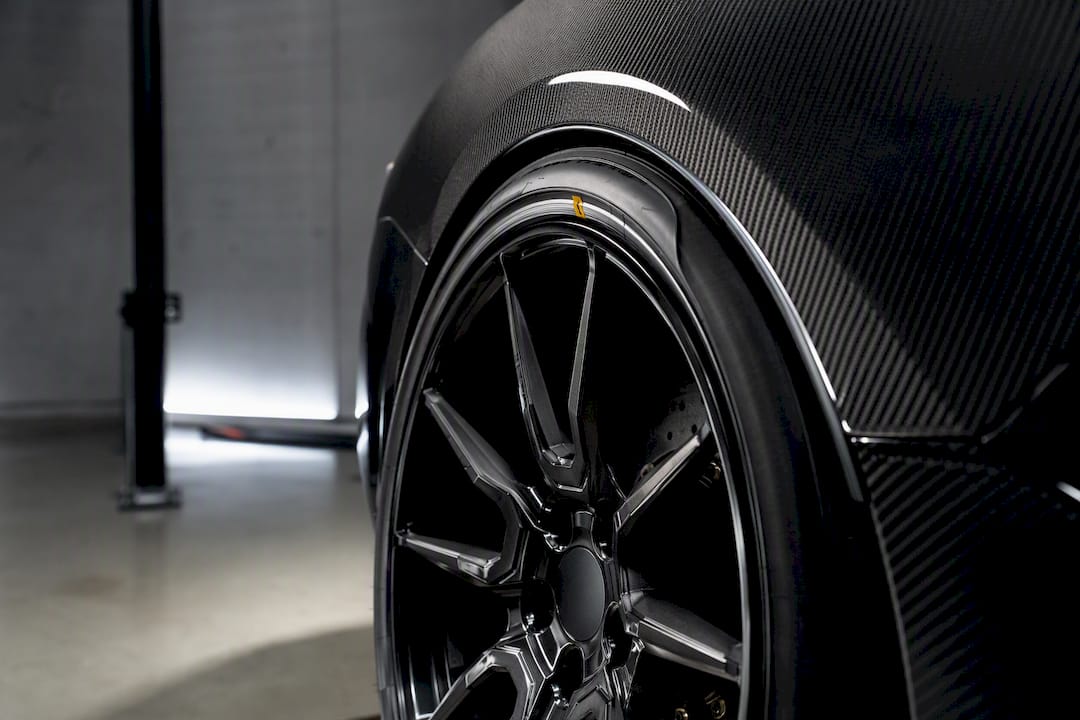
Some forged wheels carry a limited lifetime structural warranty for the original purchaser and a separate finish warranty with care conditions attached. The single rule that protects both is to inspect fitment before tire mounting and never let a third party heat, weld, or machine the wheel. Skip either step, and you risk voiding coverage you already paid for.
TL;DR:
- The structural warranty covers manufacturing defects in forged 6061-T6 aluminum wheels for life, but only if fitment is inspected before tire mounting and no unauthorized heat or weld repairs are performed.
- The finish warranty lasts two years and covers issues like peeling or bubbling if proper cleaning and maintenance guidelines are followed; neglecting finish care can nullify coverage.
- Inspection before mounting tires involves checking for shipping damage, matching fitment specifications, and verifying brake and caliper clearance, with photographic proof recommended for claim support.
- Damage from impact, potholes, or impacts causing deformation is not covered, whereas cracks or porosity from manufacturing defects are protected under the lifetime warranty.
- Proper storage involves cleaning, drying, and storing wheels in a cool, dry place, and using barrier protection during shipment prevents damage from shifting or moisture.
Table of Contents
- E6 Forged Wheels Warranty and Care Guidelines: What’s Actually Covered
- What Should You Check Before Mounting Tires?
- How Do You Clean Forged Wheels Without Damaging the Finish?
- When Is Wheel Damage Covered, and When Does It Void the Warranty?
- How Should You Store E6 Forged Wheels for the Off-Season?
- Why Forging and Fitment Discipline Protect Your Warranty
- E6 Engineering: Practical Priorities for Owners
- Get Warranty-Backed Wheels and Aero for Your Build
- Sources
- FAQ
E6 Forged Wheels Warranty and Care Guidelines: What’s Actually Covered
The structural warranty and the finish warranty run on different clocks, and confusing the two is the most common reason owners misjudge a claim. Structural coverage protects the original purchaser against manufacturing defects in the forged 6061-T6 aluminum barrel and spoke assembly for the lifetime of ownership. That means cracking, porosity, or a structural failure traced back to a manufacturing flaw, not damage from a pothole, a curb strike, or an improperly torqued lug.
The finish warranty is narrower: two years from the purchase date, covering premature peeling, bubbling, or clear-coat failure under normal use, provided the owner has followed the cleaning and finish care guidance for their specific finish. Neglect a polished finish that needs periodic sealing, and E6 Carbon can reasonably attribute the resulting oxidation to lack of maintenance rather than a defect.
Filing a claim requires:
- Original proof of purchase tying the wheel set to the purchaser of record
- Clear photos of the affected area, taken in daylight, showing the full wheel and a close detail
- A written description of when and under what conditions the issue appeared
- Contact with E6 Carbon’s warranty team before any independent shop attempts repair
E6 Carbon’s warranty policy draws a hard line between cosmetic wear (curb rash, minor scuffs) and structural defects (cracks, deformation, weld or casting flaws). Only the second category is guaranteed for the life of the ownership; cosmetic issues fall under the two-year finish terms or are excluded entirely if caused by road contact.
What Should You Check Before Mounting Tires?
Every claim conversation starts with the same question from E6 Carbon’s service team: was the wheel inspected before tires went on? If the answer is no, the claim gets a lot harder to support.
- Unbox each wheel and inspect the finish under bright light for shipping damage, checking for scuffs, chips, or discoloration around the lip and spokes.
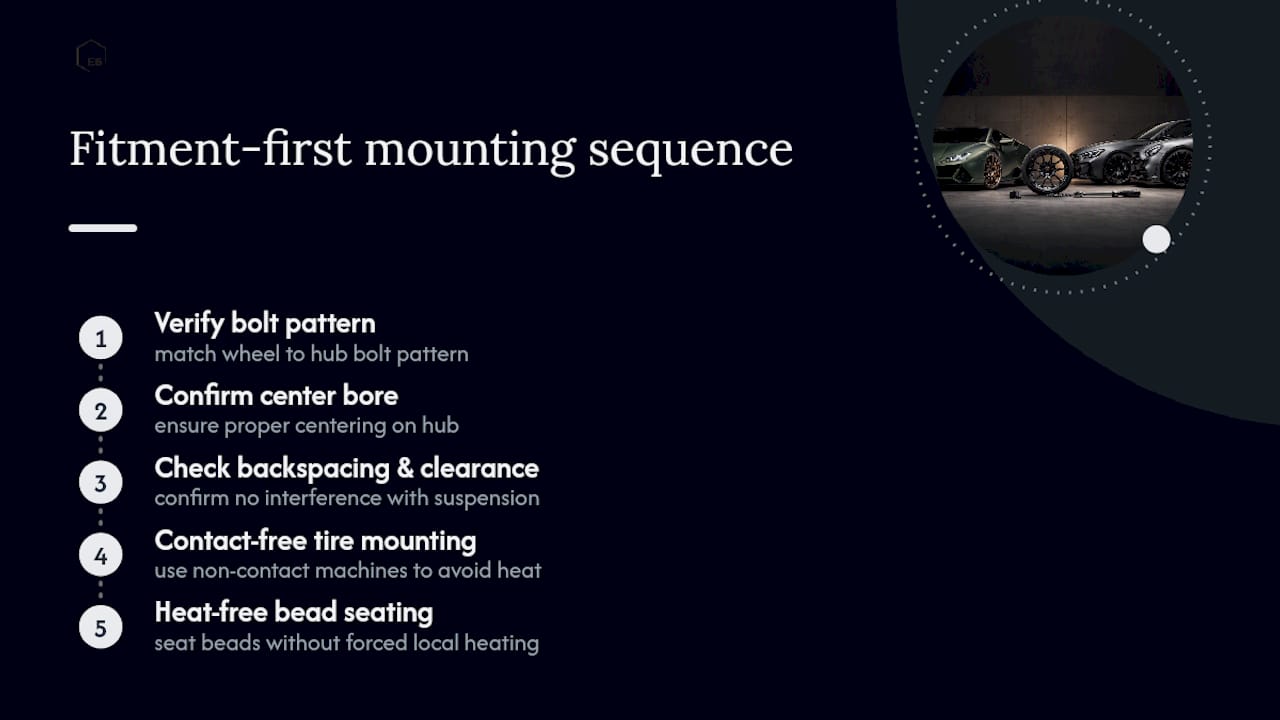
- Confirm bolt pattern and center bore match your hub specification exactly. A fitment guide built for your platform, whether that’s a Mercedes-AMG multi-piece spec or a Lexus LC500 monoblock, removes the guesswork here.
- Measure backspacing and confirm brake caliper clearance, particularly on platforms running larger front calipers where a fraction of a millimeter matters.
- Do not mount tires until fitment is fully verified. Once rubber is on the wheel, most shops and E6 Carbon itself will treat a fitment dispute as a mounted, used product rather than a pre-installation defect.
- Hand the shop a copy of E6 Carbon’s installation guide so the technician knows the wheel-specific torque sequence and re-torque interval before they touch a machine.
Approved shop practice matters as much as the inspection itself. Insist on contact-free (rim-clamp) tire machines, never a bead-breaker or mounting head that contacts the face or barrel directly. Balancing must use stick-on weights only; clip-on weights can mar forged lips and, on some finishes, initiate corrosion at the contact point. Re-torque lug fasteners after initial driving, a step Mercedes-AMG and Lexus dealer service departments already build into new wheel installs.
Pro Tip: Photograph the wheel and hub before the tire ever touches the machine. If a fitment or shipping issue surfaces later, that timestamped image is often the difference between an approved claim and a denied one.
How Do You Clean Forged Wheels Without Damaging the Finish?
Wash wheels cold. Heat from recent driving or direct sun opens the pores of the clear coat and any cleaner residue left behind bakes into streaks or etching almost immediately. Rinse first to knock off loose brake dust and grit, because dragging a dirty microfiber across a dry finish is how most swirl marks happen.
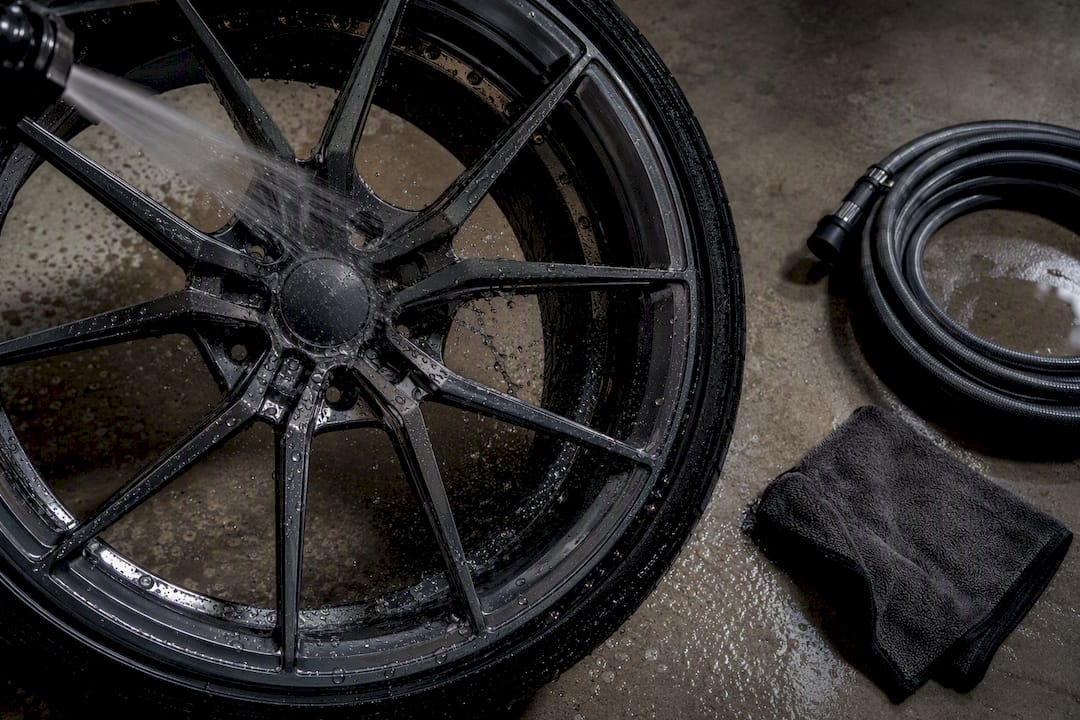
From there, use a pH-neutral, acid-free wheel cleaner applied with a soft-bristle brush or microfiber towel. Skip anything labeled “acid wheel cleaner” or a strong degreaser pulled from the shop shelf. Those products are formulated for painted steel wheels, and on a bare polished or clear-coated forged finish they can etch the surface in a single application. Dry immediately with a clean microfiber towel; air drying leaves mineral spots that are far harder to remove than the dust you just cleaned off.
Finish type changes the routine:
- Clear-coated finishes tolerate routine soap-and-water washes and hold up well to occasional wax for added gloss and water beading.
- Raw polished aluminum needs regular polishing and sealing to prevent oxidation, since there’s no clear coat acting as a barrier.
- Brushed and satin finishes show streaking easily, so wipe in the direction of the brush pattern rather than in circles.
- Powder-coated and matte finishes are the most chemical-tolerant of the group but still lose their sheen under abrasive pads or high-pH cleaners.
A wheel-rated ceramic coating or sealant, applied after a full detail, cuts down brake dust adhesion and stretches the interval between deep cleans, but confirm the product is rated for wheel surface temperatures before applying it near the barrel. Iron removers deserve the same caution. A pH-neutral iron remover is generally safe on clear coat but can stain raw polished aluminum, so match the decontamination product to the finish rather than grabbing whatever is on the shelf.
Track days and daily winter driving both accelerate finish wear, just through different mechanisms: brake dust and heat cycling on track, salt and road brine in winter. Either scenario calls for washing after every session or every few drives rather than the monthly cadence that’s fine for a fair-weather garage car.
When Is Wheel Damage Covered, and When Does It Void the Warranty?
Not every mark on a forged wheel is a warranty issue, and not every repair is permitted. E6 Carbon separates the two clearly.
Covered under structural warranty:
- Cracking or porosity traced to the forging or machining process
- Structural deformation not caused by impact
- Defects present at the time of delivery, documented in the pre-mount inspection
Excluded from warranty coverage:
- Curb impact, pothole damage, or bent barrels from road hazards
- Any heating, welding, or unauthorized machining performed by a third party. Heating or welding forged aluminum alters the metal’s microstructure in ways E6 Carbon cannot verify or reverse, and it voids coverage immediately, no exceptions.
- Repairs attempted by a shop not authorized for forged wheel service
Minor curb rash is treated differently from structural damage. Light cosmetic scuffing on the outer lip can typically be addressed through professional cosmetic refinishing without affecting the underlying structural warranty, provided the repair shop doesn’t apply heat to reshape the metal. If a wheel has taken a hard impact, hits a pothole at speed, or shows any visible deformation, pull it from service and get a structural inspection before running it again. A wheel that looks fine after a hard hit isn’t automatically fine.
How Should You Store E6 Forged Wheels for the Off-Season?
Wheels coming off the car for winter storage, a wheel swap, or seasonal track use need the same attention going into the garage as they get on the road.
- Clean and fully dry every wheel before storage. Trapped moisture under a cover is worse than no cover at all.
- Bag each wheel individually in a sealed plastic wheel bag, or use fitted wheel covers, and store in a cool, dry space away from direct sun.
- Keep stored wheels off concrete floors where possible; a rubber mat or shelf limits moisture wicking.
- If you’re running these wheels through winter instead of storing them, expect to wash weekly and rinse after every drive that involves salted roads. Brine sitting in the barrel overnight is a fast track to corrosion.
- When shipping wheels for service or resale, pack with individual barrier protection between the face and the box wall. Loose wheels shifting in transit is a leading cause of avoidable lip damage.
Why Forging and Fitment Discipline Protect Your Warranty
E6 Carbon builds every wheel from 6061-T6 forged aluminum, a grade chosen because forging compresses the grain structure in a way casting or flow-forming can’t replicate, giving the alloy better fatigue life under repeated load cycles. That controlled thermal history is also exactly what a third-party weld repair or aggressive local heating disrupts. It’s not a policy detail invented to make claims harder. It’s metallurgy.
The same logic drives E6 Carbon’s mounting guidance. Contact-free tire machines and heat-free bead seating exist because forced heat during mounting risks the same microstructural change a repair weld would cause, just introduced earlier in the wheel’s life. Fitment-first engineering, verified bolt patterns, confirmed center bore, and clearance-checked backspacing before a tire ever goes on, exists to keep that risk out of the equation from day one.
E6 Engineering: Practical Priorities for Owners
Verify fitment before mounting and use a professional installer. It protects both your safety and your claim. If we had to rank owner priorities: correct fitment first, finish-appropriate cleaning second, a post-impact inspection third. Questions about fitment or starting a warranty record? Contact E6 Carbon directly before the wheel goes on the car.
— E6 Engineering
Get Warranty-Backed Wheels and Aero for Your Build
Every E6 Forged wheel ships with the structural and finish coverage detailed above, backed by a manufacturer that engineers fitment first instead of retrofitting it after the fact. If you’re running a Lexus LC500, the Elite Kit carbon aero package pairs with your wheel upgrade using the same autoclave-cured 2×2 twill construction standard across E6 Carbon’s body components, matched for fitment rather than sold as a generic bolt-on. Browse the E6 Forged wheel catalog to find your platform’s monoblock or multi-piece configuration, and reach out to the fitment team before you buy if your setup involves aftermarket calipers or a non-standard offset. That one conversation upfront saves most of the fitment disputes this guide just walked you through.
Sources
- How to Safely Use Chemical Cleaners on Forged / Specialty Wheels – Jimbo’s Detailing
- Ultimate Guide: How To Clean & Maintain Polished And Brushed Forged Wheels
- Wheel Care & Maintenance | How to Clean Wheels Safely
FAQ
Are Bent Rims Covered Under the E6 Warranty?
No. A bent or deformed wheel caused by impact, a pothole, or road debris is treated as damage from use, not a manufacturing defect, and falls outside structural coverage.
Do E6 Forged Wheels Have a Lifetime Warranty?
Yes, the structural warranty covers manufacturing defects for the original purchaser’s lifetime of ownership, while the finish carries a separate two-year warranty under stated care conditions.
Do Aftermarket Wheels and Tires Void a Vehicle’s Factory Warranty?
Installing aftermarket wheels typically does not void your vehicle manufacturer’s warranty unless the wheels directly cause a mechanical failure, though this varies by automaker; E6 Carbon’s own wheel warranty is separate and covers the wheels themselves.
Is Curb Rash Repair Allowed Without Losing Coverage?
Yes. Light cosmetic curb rash on the outer lip can generally be professionally refinished without affecting structural warranty coverage, as long as no heat is applied to reshape the metal.
Does Welding or Heating a Wheel Void the E6 Warranty?
Yes. Any third-party heating, welding, or unauthorized machining voids the warranty immediately because it can alter the forged aluminum’s microstructure in ways that can’t be verified afterward.
Recommended
- When Does Your Car Need E6 Forged Beadlock Wheels?
- High Torque Launch Performance With E6 Forged Beadlock Wheels
- E6 Forged Monoblock Wheels: Track Performance and Strength
- Precision Machining: The Engineering Behind E6 Forged Wheels
Pricing, custom fitment options, and surface finishes subject to availability. Please contact E6 Carbon or E6 Forged directly to confirm vehicle-specific offset parameters, brake clearances, and current lead times prior to placing your order.