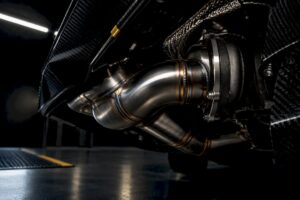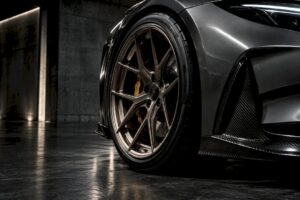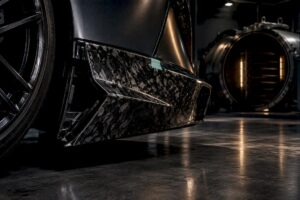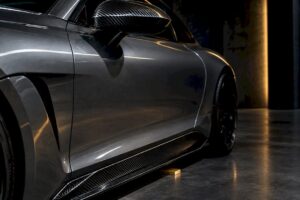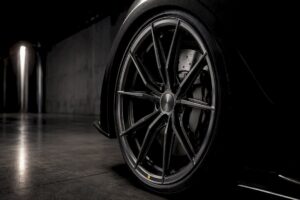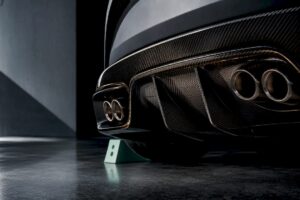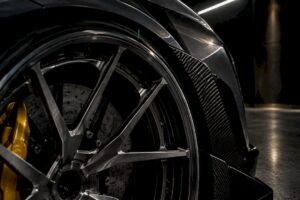
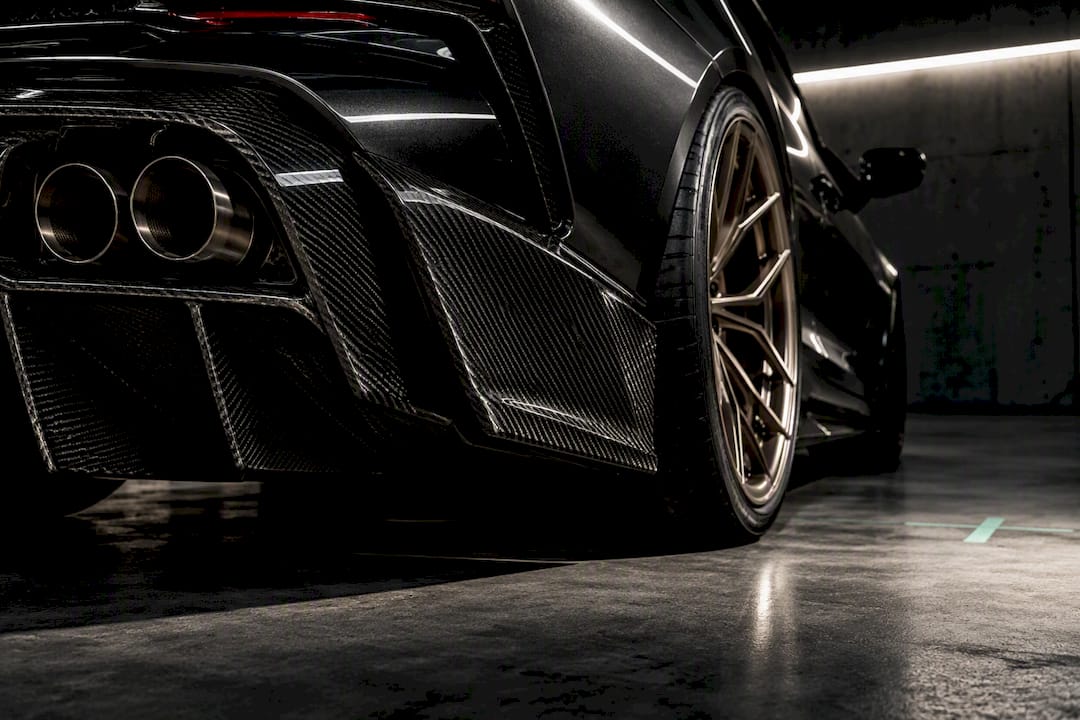
For most 2024 C192 AMG GT owners, the right call is a full E6 Carbon autoclave-cured conversion paired with E6 Forged wheels and an E6 Motorsports exhaust, since the C192’s grand-tourer weight and dimensions reward integrated aero over isolated panels. Owners on a tighter budget, or those who want to keep the factory silhouette mostly intact, are better served by accent pieces like a splitter lip or diffuser insert. Either path should start with CAD-verified, autoclave-cured prepreg construction, not wet layup.
TL;DR:
- Full conversions use autoclave-cured prepreg carbon for structural panels, improving durability, shape retention, and UV resistance compared to wet layup accents.
- Upgrading to forged wheels, especially monoblock designs, reduces unsprung mass and enhances ride response, complementing the aero improvements for high-speed stability.
- Accurate fitment relies on CAD-verified panels based on your VIN and factory options, with factory active wing removal needing proper software deactivation to avoid fault codes.
- Autoclave-cured panels feature specific weave patterns like twill, NCF, or unidirectional, with prepreg options offering better longevity and repairability over cheaper, inconsistent wet layup parts.
- The cost difference is significant, with full conversions costing more due to engineering, curing, and finishing, requiring detailed documentation and careful planning before purchase.
Table of Contents
- Custom Carbon Fiber Body Kits by E6 Carbon for 2024 AMG GT Coupes: Full Conversion vs. Accents
- Why Autoclave-Cured Prepreg and Weave Selection Matter
- What Fitment Looks Like on the C192
- How the Full Build Changes On-Road Behavior
- What a C192 Kit Actually Costs
- How to Choose Between a Full Conversion and Accents
- E6 Carbon’s Engineering Background on This Platform
- Keeping a Carbon Fiber Body Kit Looking Right for Years
- What C192 Owners Are Actually Building
- A Straight Answer for Borderline Buyers
- Starting Your Custom C192 Build
- Sources
- FAQ
Custom Carbon Fiber Body Kits by E6 Carbon for 2024 AMG GT Coupes: Full Conversion vs. Accents
Two distinct product tiers exist for the C192 platform, differing not only in price but also in engineering scope.
The full conversion, built in the spirit of Black Series and Paragon-style programs, replaces or overlays every major aero surface: front splitter, hood, side skirts, rear diffuser, and decklid wing. It’s engineered as one system, with panel-to-panel gaps and weave orientation matched across the whole car rather than treated as separate parts bolted on in sequence. Accent packages take the opposite approach: a single splitter, a canard set, or a diffuser insert designed to slot into the factory bodywork with minimal cutting.
Typical E6 Carbon C192 kit contents include:
- Front splitter with integrated end plates or canards
- Vented or vented-style carbon hood
- Side skirt extensions
- Rear diffuser (multi-fin, track-oriented, or subtle grand-touring profile)
- Decklid spoiler or active-wing replacement
- Mirror caps and trim accents as optional add-ons
Material selection tracks the tier. Full conversions are almost always specified in full autoclave-cured prepreg carbon for structural panels, while some accent pieces use a carbon/fiberglass hybrid to hit a lower price point on non-structural trim. Reviewing the prepreg versus wet layup breakdown before ordering clarifies which construction method belongs on which panel.
Use-case guidance is straightforward. GT 53 drivers chasing daily-driver refinement usually land on accent pieces plus a wheel upgrade. GT 63 and 63 S E Performance owners running higher output and higher top-speed potential are the ones who benefit most from the full conversion’s stability gains, since that variant carries the most weight and the most power to manage at speed.
Why Autoclave-Cured Prepreg and Weave Selection Matter
The manufacturing method behind a carbon panel matters more than how it looks in a product photo. Autoclave curing applies heat and pressure simultaneously to pre-impregnated carbon sheets, driving out trapped air and locking the resin-to-fiber ratio to a tight, repeatable spec. Automotive composite research on B-pillar and structural reinforcement manufacturing confirms that autoclave-cured prepreg systems and automated ply layup deliver low-void, high-strength parts that wet-lay fiberglass simply can’t match on a consistent basis.
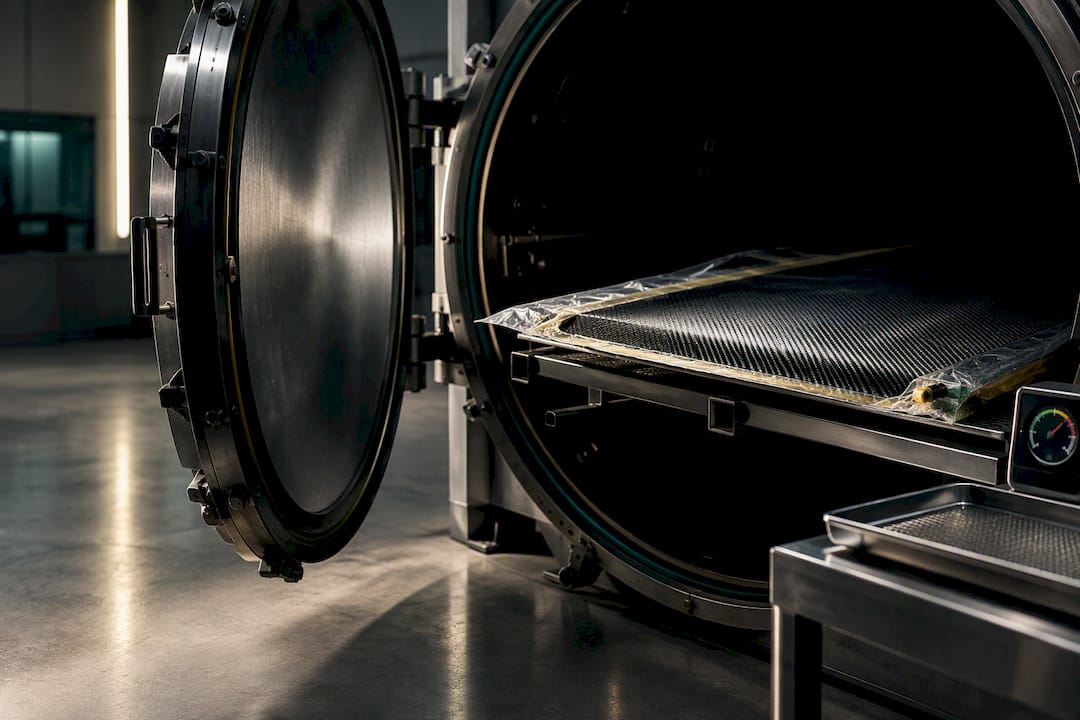
Pro Tip: Ask any carbon fiber vendor for their ply schedule and cure cycle in writing before you order. A vendor that can’t produce this documentation is likely running a wet-lay process regardless of what the listing says.
Weave choice affects both cosmetics and mechanical behavior:
- 2×2 twill: the industry-standard diagonal pattern, chosen for its balance of strength and the classic visual weave most AMG GT owners want
- Non-crimp fabric (NCF): stitched rather than woven, offering higher structural strength per layer where load paths matter, such as splitter mounting points
- Unidirectional (UD): fibers run in a single direction, used selectively to reinforce high-stress zones without adding unnecessary bulk
The tradeoff is cost against longevity. Autoclave prepreg parts run higher up front, but they hold their shape, resist UV-driven resin degradation longer, and are more repairable because the ply structure is documented and known. Wet-lay parts are cheaper to produce, but void content and resin pooling vary panel to panel, which shows up years later as surface crazing or delamination at stress points. E6 Carbon’s own breakdown on why cheap carbon fiber parts fail at high speeds walks through the failure modes in more depth.
What Fitment Looks Like on the C192
The C192 isn’t a reskin of the outgoing car. At roughly 4,343 pounds (1,970 kg) with a length and width increased compared to previous generation, the current-generation AMG GT is heavier and physically larger than the C190 it replaced, and that shift changes how splitters, skirts, and diffusers need to be shaped to sit flush.
Installation on this platform follows a predictable sequence:
- Vehicle intake and photo documentation to confirm trim level and factory options
- Removal of factory bumpers, skirts, and the active rear wing assembly
- ECU handling for the active wing: replacing or removing the factory unit typically requires software deactivation or a validated bypass module, since aftermarket active-wing removal without this step commonly triggers persistent error codes
- Dry-fit of all carbon panels before any adhesive or fastener goes permanent
- Final alignment check across panel gaps, followed by clear-coat or paint matching if specified
Some fender vent and hood-adjacent pieces require limited trimming to clear factory brackets, a fitment caution that shows up across published C192 kit installation notes from other manufacturers building for this chassis. Shop labor for a full conversion typically runs multiple full days once you account for wing ECU work, dry-fitting, and finish matching, so any quote should itemize labor separately from parts.
Pro Tip: Get the active-wing bypass documented as a separate line item on your installer’s quote. It’s the single most common source of post-install error codes on the C192, and it’s often left out of initial estimates.
How the Full Build Changes On-Road Behavior
A body kit doesn’t operate in isolation, and on the C192 that’s especially true. The front splitter, side skirts, rear diffuser, and decklid wing work together to manage airflow around a car that’s grown heavier and longer than its predecessor, and the platform’s own character shift toward grand-touring stability means aero changes should prioritize high-speed balance over shaving lap-time seconds on a short circuit.
Pairing carbon panels with a forged wheelset compounds the effect in a way isolated upgrades can’t:
- Replacing steel or cast wheels with a forged monoblock or multi-piece design reduces rotational and unsprung mass, which improves both ride response and how quickly the suspension reacts to road input
- Monoblock wheels save the most weight for a given strength target; multi-piece designs trade a small weight penalty for wider fitment flexibility and serviceable barrels, a distinction covered in E6 Carbon’s monoblock vs. multi-piece comparison
- Wheel width and offset need to clear the factory fender line the diffuser and skirts establish, particularly given the C192’s factory tire sizing-53-Coupe-4MATIC±SPEEDSHIFT-MCT-9G.html) of 295/35R20 front and 305/35R20 rear
- Exhaust routing matters once you add a carbon diffuser underneath: heat shielding and clearance need to be verified so exhaust tips and mid-pipe sections don’t cook the resin on a underbody panel
The result of building all three systems together, rather than adding them one at a time over separate visits, is a car whose aero, mass, and exhaust heat management were solved as one problem instead of three unrelated ones.
What a C192 Kit Actually Costs
Full autoclave-cured conversions for the C192 run at a meaningfully higher price than accent packages, and the gap isn’t arbitrary markup. Autoclave prepreg construction requires oven time, vacuum bagging, and tighter tolerance controls at every stage, all of which cost more than a wet-lay shop running a fiberglass mold.
A few factors move the number beyond the base kit price:
- Bespoke weave orientation or custom color-through-clear finishes add engineering and layup time
- Structural reinforcement at high-load mounting points (splitter end plates, diffuser fins) adds material and labor
- Primer and paint-matched clear coat work is typically quoted separately from the raw carbon panel cost
Lead time follows a similar logic to the price. Expect an engineering and fitment verification phase first, based on your VIN and factory options, followed by production, then finishing, then shipping. Custom or bespoke configurations extend each of those stages compared with a stock kit spec already in production.
Before committing, get warranty terms and installer liability in writing, specifically what’s covered if the active-wing bypass causes a fault code, and what’s covered on the carbon finish itself versus workmanship during install.
How to Choose Between a Full Conversion and Accents
Three questions settle most of the decision before you ever request a quote.
- What’s the use case? A car that sees regular high-speed highway miles benefits more from the full conversion’s aero balance. A car kept mostly stock-looking for resale or daily use is better served by one or two accent pieces.
- What’s the budget, and how much modification are you willing to accept? The active-wing ECU work alone is a meaningful decision point. If you’re not willing to touch factory software or wiring, accent pieces that don’t require wing removal are the safer route.
- Can the vendor answer the technical questions? Ask directly: autoclave or wet layup, full ply schedule, expected weight delta per panel, how active-wing removal is handled, and what’s included in paint and clearcoat scope.
Red flags to watch for: a vendor who won’t share a ply schedule, who quotes a single flat price with no line-item breakdown for the wing bypass or finish work, or who can’t produce fitment photos of a completed C192 build. At minimum, a legitimate vendor should provide cure-method documentation, a fitment reference photo set, and a written scope of what’s included in the quoted price.
E6 Carbon’s Engineering Background on This Platform
E6 Carbon builds its C192 program on the same autoclave-cured 2×2 twill and CAD-driven fitment process used across its Mercedes-AMG, Lexus LC500, and McLaren and Lamborghini catalog. That cross-platform experience, visible in products like the carbon aero kit built for the Lexus LC500 and the GT3-style carbon wing engineered for the Corvette C8, reflects a Fitment First engineering philosophy: every panel starts as a CAD model verified against factory tolerances before it ever reaches a mold. That process is what keeps panel gaps consistent across a full conversion instead of varying part to part.
Keeping a Carbon Fiber Body Kit Looking Right for Years
Carbon fiber body panels are durable, but the clear coat protecting the weave underneath is the part that actually ages. UV exposure is the main threat: unprotected or thin clear coat yellows and chalks over a few seasons of direct sun, which dulls the weave pattern that’s the entire visual point of a carbon panel.
A ceramic coating applied over the clear coat extends that protection meaningfully, but the prep work matters as much as the coating itself. Surface prep before ceramic application, including whether to polish beforehand, changes how well the coating bonds and how long it lasts, a distinction covered well in this guide on polishing before ceramic coating.
Beyond coating, a few habits protect the investment: hand wash with a pH-neutral soap rather than automated brush washes, which can introduce fine swirl marks into clear coat; avoid parking nose-first into direct sun for extended periods if the splitter or hood has exposed weave; and inspect fastener points on splitters and skirts periodically, since these are the first spots to show stress cracking if a panel flexes under repeated curb strikes or speed bumps. Panels that see track use should get a post-session inspection for edge chipping, particularly on splitter lips and diffuser fins that run closest to the road surface.
What C192 Owners Are Actually Building
The C192’s short time on the market means the population of documented full-conversion builds is still small compared with the outgoing C190, but the pattern among early owners is consistent. Most are commissioning the front splitter, hood, and diffuser together rather than piecemeal, specifically to avoid mismatched weave alignment between panels ordered at different times from different sources.
The GT 63 S E Performance variant, given its added hybrid powertrain weight, shows up disproportionately among owners pursuing the full aero package rather than accents alone, which tracks with the aero-balance priority the platform’s grand-touring shift creates. Owners pairing a full body conversion with a forged wheel upgrade in the same order cycle also report smoother scheduling, since fitment verification for wheels and body panels can happen in the same shop visit rather than two separate appointments months apart.
Documented before-and-after photo sets, VIN-specific fitment notes, and direct owner feedback on the C192 program will continue to expand as more 2024 and 2025 model-year builds reach completion.
A Straight Answer for Borderline Buyers
If you want the aero, the stance, and the exhaust note to all feel like one engineering decision rather than three separate purchases, the full conversion is worth the cost and the shop time. If you’re happy with the factory look and just want a subtle edge, a splitter or diffuser accent gets you there for less money and less risk. Whichever route you take, send clear VIN and photo documentation before requesting a quote. Fitment accuracy depends on it.
— E6 Engineering
Starting Your Custom C192 Build
E6 Carbon builds every C192 kit around in-house CAD engineering and autoclave-cured 2×2 twill, which means your quote is based on your actual chassis and options, not a generic fit-all template. That’s the practical advantage over ordering a wet-lay accent piece off a marketplace listing and hoping the panel gaps line up. Starting a project is straightforward: send your VIN, current photos of the bumper and wing area, and the scope you’re considering, whether that’s a full conversion or a single accent piece.
From there, E6 Carbon’s engineering team can scope the fitment verification stage and give you a realistic production timeline. Browse the full catalog on the E6 Carbon homepage, or start with a specific reference point like the Lexus LC500 dry vs. wet carbon guide if you’re comparing construction methods before you commit to a spec.
Sources
- Autozine analysis: Mercedes-AMG GT C192 platform character
- Carbon fiber composite B-pillar reinforcement manufacturing: ply nesting and automated ply layup — SPE Automotive
- Maxton Design Carbon Fiber Body Kit for Mercedes-Benz AMG C192 GT — Creative Mods
FAQ
How much does a carbon fiber kit cost for an AMG GT?
Pricing varies by scope, with full autoclave-cured conversions costing considerably more than single accent pieces because of the added engineering, cure time, and finish work. Current pricing for E6 Carbon’s C192 kits and individual panels is listed on the E6 Carbon site, since exact figures depend on the specific parts and finish selected.
Is the AMG GT Coupe worth the price?
The C192 earns its price through refinement rather than raw track focus, leaning into the grand-touring character its platform shift established over the outgoing C190. For owners who want high-speed stability and a daily-usable interior, it holds up well; buyers chasing stripped-down track agility may prefer the earlier generation’s character.
Which is faster, the M8 or the GT63?
Both cars compete in the same high-performance grand-tourer class, and outright figures depend on the specific trim and options on each vehicle. Rather than a blanket answer, compare the exact configurations you’re cross-shopping, since power output and weight vary meaningfully within each model’s own trim lineup.
Is Mercedes discontinuing the AMG GT?
There’s no confirmed discontinuation date publicly listed for the current C192 generation. Buyers considering aftermarket carbon upgrades should treat the 2024 and newer model years as an active platform worth investing in for the foreseeable future.
Does removing the factory active rear wing cause error codes?
Yes, in most cases. Replacing or removing the factory active rear wing without ECU deactivation or a validated bypass module commonly triggers persistent fault codes, so this step needs to be planned into any installation quote from the start.
Recommended
- GT63 Owners: 192 MPa Forged Carbon or Autoclaved 2×2 Twill?
- Why Forged Aluminum Beats Cast and Flow Formed Wheels
- Top 6 Performance Exhaust Systems 2026
Pricing, custom fitment options, and surface finishes subject to availability. Please contact E6 Carbon or E6 Forged directly to confirm vehicle-specific offset parameters, brake clearances, and current lead times prior to placing your order.