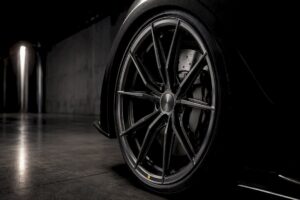
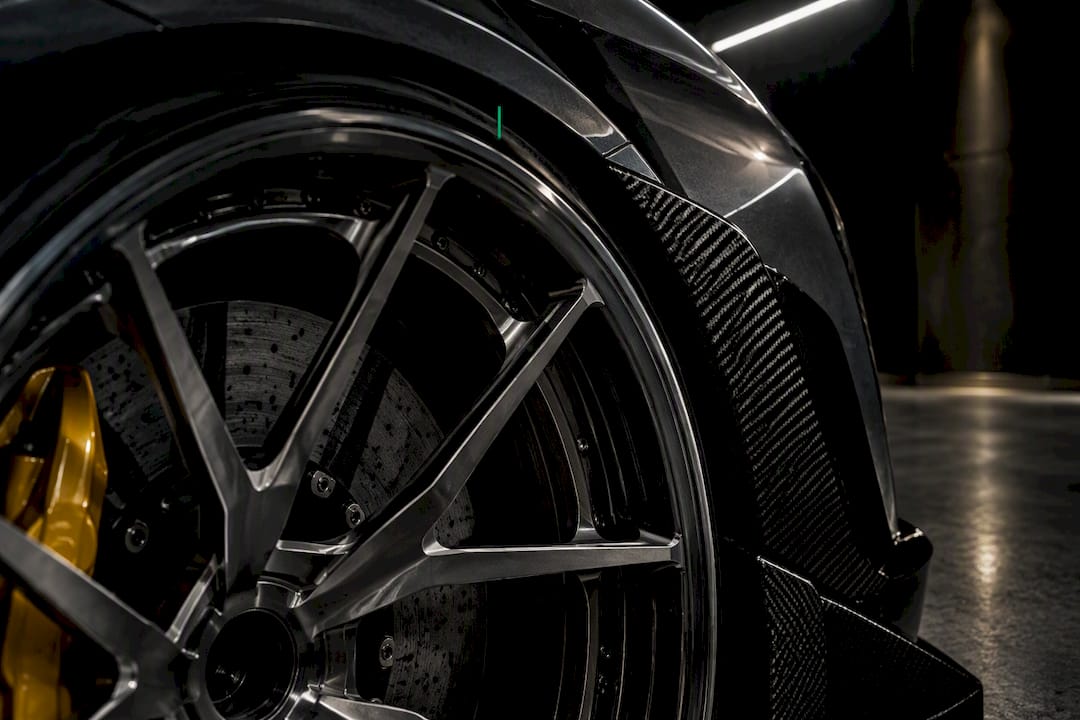
E6 Forged HX5 wheels run 21 to 26 inches in diameter, starting at $3,500 per set at 21" and scaling to $7,000 at 26", with widths from 8.0" to 14.0". Before ordering, confirm bolt pattern, center bore, offset, brake caliper clearance, and certified load rating against your vehicle’s GAWR, then submit vehicle specifications for verified fitment.
TL;DR:
- Larger HX5 wheels from 21 to 26 inches come with significantly higher prices, scaling from $3,500 to $7,000 per set, based on diameter.
- Confirmed vehicle-specific measurements, including bolt pattern, center bore, offset, and load rating, are mandatory before ordering to ensure proper fitment.
- Brake caliper clearance and fender fit are critical considerations, especially on models like G-Class and LC500, requiring precise offset and inner clearance checks.
- Forged from 6061-T6 aluminum, HX5 wheels are built for high load capacity, with certification standards that protect against fatigue failure and ensure safety.
- Proper installation procedures, including re-torque and TPMS verification, are essential to prevent vibrations, fastener failure, or sensor issues after wheel fitment.
Table of Contents
- HX5 Diameters, Widths, and Pricing Explained
- How Do Mercedes-AMG, Lexus LC500, and Exotic Platforms Fit?
- Why 6061-T6 Forging and Load Ratings Matter
- Installer Checklist: Fasteners, Torque, and TPMS
- Getting Offset and Brake Clearance Right When Upsizing
- Warranty Protection Starts With Verified Fitment
- Pairing HX5 Wheels With E6 Carbon Aero and Motorsports Upgrades
- Which Other Large-Diameter Vehicles Fit the HX5 Platform?
- Matching Tire Sizes to Each HX5 Diameter and Width
- How Offset and Width Change Handling on Large Wheels
- Measuring Your Vehicle Before You Order
- How HX5 Compares to Other Large-Diameter Luxury Wheels
- From Order to Delivery: What the HX5 Timeline Looks Like
- What Actually Drives the Diameter Decision
- Ready to Order Your Engineer-Verified HX5 Set
- Sources
- FAQ
HX5 Diameters, Widths, and Pricing Explained
The HX5 is E6 Carbon’s full-face luxury platform, built for owners who want the deep step lip and circular perimeter cutout aesthetic without gambling on structural integrity at 26 inches of diameter. It’s a look you’ll recognize on G-Wagens rolling through Miami and LC500s parked outside Scottsdale hotels, but the engineering underneath is what separates a wheel that survives a pothole from one that doesn’t.
Every HX5 is forged from 6061-T6 aluminum, not cast. Forging aligns the metal’s grain structure under extreme pressure rather than letting it cool randomly in a mold, which is why forged wheels routinely carry higher load ratings than cast wheels at a comparable weight. That matters more on a 6,500-pound G63 than on a compact sedan, because every additional pound of curb weight multiplies the stress a wheel absorbs over potholes, speed bumps, and hard cornering.
Pricing scales with diameter, and the tiers are straightforward:
- 21" — starting at $3,500 per set
- 22" — starting at $4,000 per set
- 23" — starting at $4,500 per set
- 24" — starting at $5,000 per set
- 25" — starting at $6,000 per set
- 26" — starting at $7,000 per set
Those figures reflect starting price per set, shipped, before custom finish upcharges or bespoke width adjustments. Widths run from 8.0" up to 14.0", and this is where a lot of buyers underestimate the ripple effect of a single decision. Going wider doesn’t just fill the fender better. It changes your tire’s aspect ratio requirements, pushes your offset selection into a narrower window, and can alter backspacing enough to introduce fender or suspension component rub if nobody checks the math first.
Pro Tip: Don’t pick your width based on how it looks in a rendering. Pick it based on your target offset range, then let E6 Engineering confirm the aesthetic still works within that constraint.
Finish options include polished, brushed metallic, and custom-tinted finishes, and the choice isn’t purely cosmetic. Polished finishes show brake dust and swirl marks faster, and they demand more frequent care to avoid oxidation, especially in coastal climates where salt air accelerates corrosion on exposed aluminum. Brushed metallic finishes hide micro-scratching better and tend to age more gracefully between details.
Construction-wise, the HX5’s defining feature is its full-face design: the face and barrel are treated as a single aesthetic unit, with circular cutouts machined around the center perimeter and a deep step lip that pushes the barrel outward for a more aggressive stance. That deep lip is also why offset selection carries more consequence on the HX5 than on a shallow-lip wheel. Every millimeter of additional lip depth shifts the wheel’s center of mass further from the hub face, and that shift has to be compensated for in the offset calculation or you end up with a wheel that looks right in a photo and rubs the fender liner on a driveway.
Lead times for bespoke forged wheels typically run several weeks from confirmed specification to delivery, since each set is manufactured to the vehicle’s verified fitment parameters rather than pulled from generic stock. Buyers upgrading a G63 or LC500 should expect the process to include a fitment confirmation step before the forging run begins, which is a deliberate checkpoint, not a delay for its own sake.
How Do Mercedes-AMG, Lexus LC500, and Exotic Platforms Fit?
Fitment specs vary enough between platforms that treating “22-inch wheel” as a universal spec is how expensive mistakes happen. Here’s what actually matters for the three platform groups E6 sees most often in large-diameter builds.
Mercedes-AMG G-Class and G63
The 2025 Mercedes-Benz G-Class uses a 5×130 bolt pattern with a center bore around 84.1 mm. Those two numbers are non-negotiable. Get the PCD wrong and the wheel simply won’t bolt up; get the center bore wrong and the wheel may bolt up but ride off-center, inducing a vibration that no amount of balancing will fix.
Owners moving from the factory 20 to 22 inch range up into 24 or 26 inch HX5 territory need to think carefully about offset. The G-Class’s boxy fender flares and portal-style suspension geometry give it more visual real estate than most SUVs, but the brake calipers on AMG-spec G63 models are large, and a wheel with insufficient inner clearance will contact the caliper before it contacts anything else. E6 Engineering typically pairs 24" to 26" HX5 upgrades on the G63 with offsets calculated to preserve at least the OE scrub radius, adjusting backspacing rather than guessing at a “look right” number.
Brake clearance checklist for G-Class upsizing:
- Measure caliper outer edge to hub face before ordering
- Confirm offset maintains 3 to 5 mm minimum clearance to caliper body
- Verify spoke design doesn’t create a pinch point against caliper mounting bolts
- Cross-check tire sidewall height against fender liner clearance at full lock
Lexus LC500
The 2025 Lexus LC runs a 5×120 bolt pattern with a center bore near 60.1 mm, a noticeably tighter bore than the G-Class. OE offsets on the LC500 sit close to ET25 on its factory 20 to 21 inch wheels, and that narrow factory window means upsizing to 22 or 23 inches leaves very little room for offset error before the wheel either tucks too far in or pokes past the fender line.
For LC500 owners chasing the widened stance the HX5’s deep lip delivers, E6 recommends pairing the wheel upgrade with the E6 Carbon Elite Kit for the Lexus LC500. The LC500’s fender arches were designed around a specific visual proportion, and a wider wheel without a complementary aero treatment can look disconnected from the body rather than integrated into it. Beyond 23 inches, hub-centric ring machining becomes standard practice on this platform given the bore differential.
McLaren and Lamborghini
Exotic platforms carry their own risk profile. McLaren and Lamborghini hub and axle designs frequently use smaller center bores paired with caliper architecture that leaves minimal radial clearance, which is why E6 treats every exotic fitment as mandatory engineer-verified, no exceptions. A generic offset recommendation that works fine on a G-Class can cause caliper contact on a 720S. E6’s McLaren 720S fitment work illustrates how tightly these specs have to be controlled, down to the millimeter, before a wheel is cleared for that chassis.
| Platform | Bolt pattern (PCD) | Center bore | Starting price per set |
|---|---|---|---|
| Mercedes-AMG G-Class/G63 | 5×130 | ~84.1 mm | $4,000 (22") |
| Lexus LC500 | 5×120 | ~60.1 mm | $3,500 (21") |
| McLaren/Lamborghini (exotic) | Model-specific, engineer-verified | Model-specific, small bore | Custom quote |
Hub-centric rings are the standard solution when a wheel’s center bore is larger than the hub, and they’re the correct fix in the overwhelming majority of large-diameter installs. Spacers are acceptable in limited cases where offset math requires a small, precisely engineered adjustment, but they become contraindicated when the added stack height pushes wheel studs beyond their engaged thread depth or when the vehicle’s suspension geometry wasn’t designed to accommodate the extra scrub radius.
Why 6061-T6 Forging and Load Ratings Matter
A wheel’s rated load capacity isn’t a marketing number. It’s the maximum weight the wheel can bear across its service life without fatigue cracking, and on a heavy luxury SUV or flagship truck, that number has to exceed the vehicle’s Gross Axle Weight Rating (GAWR) with margin to spare.
6061-T6 aluminum earns its place in forged wheel construction because the forging process compresses the aluminum’s grain structure, producing significantly better fatigue resistance than cast aluminum of the same alloy. That difference is what allows a deep step lip design like the HX5 to carry substantial rated load despite the extra material concentrated at the barrel rather than distributed evenly across a shallow profile.
Certification and standards buyers should verify before ordering:
- JWL/VIA certification guidance, which establishes structural testing benchmarks for load-bearing wheel performance
- The wheel’s stated maximum load rating against your vehicle’s GAWR, not its curb weight alone
- Rim marking requirements under FMVSS No. 110, which mandate that rims carry size designation and related data so tire and rim combinations can be verified as compatible
- Tire load index compatibility once the wheel’s rated capacity is confirmed
Load rating also drives tire selection. A wheel rated for a given weight is only as safe as the tire mounted on it, so once you know your HX5’s certified load capacity, that number should set the floor for the tire’s load index, not the other way around. Skipping this step is one of the more common, and more preventable, mistakes on large-diameter SUV builds.
Installer Checklist: Fasteners, Torque, and TPMS
Getting a large-diameter forged wheel onto a luxury SUV correctly takes more than a torque wrench and a good guess. Follow this sequence every time:
- Confirm PCD and thread type first. Verify whether the vehicle uses lug bolts (common on Mercedes-AMG platforms) or wheel studs, and match fastener length and thread pitch exactly. A wrong thread pitch can appear to seat correctly and fail under load.
- Torque to spec, then re-torque. Forged wheels should be torqued to the manufacturer’s specified range and re-checked after approximately 50 to 100 miles of driving, since new wheel-to-hub mating surfaces can settle slightly under initial load cycles.
- Verify TPMS compatibility before mounting tires. Deep-lip wheels can complicate valve stem access and sensor clearance, so confirm sensor placement and stem length before the tire goes on, not after.
- Machine center bores where needed. If the wheel’s bore doesn’t match the hub, install hub-centric rings rather than relying on lug torque alone to center the wheel.
- Document everything. Keep a record of torque values, ring installation, and fastener part numbers for warranty purposes.
Pro Tip: Skipping the re-torque step is the single most common reason a fresh wheel install develops a click or vibration within the first month. Set a calendar reminder, not just a mental note.
Getting Offset and Brake Clearance Right When Upsizing
Offset and backspacing get used interchangeably by people who shouldn’t be trusted with a torque wrench. Offset is the distance from the wheel’s true centerline to its mounting face, expressed in millimeters, positive when the mounting face sits toward the outside of the wheel. Backspacing measures from the mounting face to the back edge of the wheel, expressed in inches. Both numbers matter, but offset is what most directly governs caliper clearance and how far the wheel face sits from the fender.
On a G-Class or G63 moving into 22 to 26 inch HX5 territory, offsets that preserve something close to the factory scrub radius tend to keep steering feel and tire wear predictable, while more aggressive offsets push the wheel face outward for a bolder stance at the cost of increased steering effort and accelerated tire wear on the outer shoulder. The LC500 has less margin to work with given its tighter factory offset window, so a 22" or 23" upgrade generally needs conservative offset changes rather than aggressive ones.
Brake clearance verification steps before you order:
- Measure caliper diameter and mounting bolt clearance directly, not from a spec sheet estimate
- Use a cardboard or 3D-printed template matching the wheel’s inner barrel profile to mock up clearance
- Check clearance at full steering lock, not just straight ahead, since the wheel’s inner edge travels closer to suspension components when turned
- Confirm spoke placement doesn’t intersect caliper mounting hardware
When clearance comes up short, rolling the fender lip, adjusting ride height, or selecting a slightly different offset are the standard fixes, in roughly that order of preference over reaching for a spacer.
Warranty Protection Starts With Verified Fitment
E6 Carbon’s warranty coverage is built around a simple premise: a wheel installed to verified specifications survives longer than one installed on assumption. That’s the logic behind E6’s fitment-first verification process, which requires confirmed vehicle specs, offset, and load requirements before a set ships, rather than leaving fitment as a downstream problem for the installer.
What protects your warranty coverage:
- Submitting accurate PCD, center bore, and offset specs during the ordering process
- Following E6’s documented fitment and care guidelines for torque schedules and re-torque timing
- Using appropriate cleaning products on polished or brushed finishes, avoiding acidic wheel cleaners that etch aluminum over time
- Keeping installation records, including torque values and any hub-centric ring or spacer use
Polished finishes benefit noticeably from a ceramic coating, which creates a sacrificial barrier against brake dust and road salt, extending the interval between full detailing sessions. Brushed finishes are more forgiving but still benefit from periodic inspection for surface oxidation, particularly in coastal or high-salt climates.
Pro Tip: Photograph your wheels at installation and again at your first service interval. It’s a small habit that makes any future warranty claim faster to process.
Pairing HX5 Wheels With E6 Carbon Aero and Motorsports Upgrades
A 26-inch HX5 on a G63 looks unfinished without aero elements that visually anchor the wider stance to the body. Pairing large-diameter HX5 wheels with E6 Carbon’s Elite Kit for the Lexus LC500 or the M-Style carbon fiber mirrors creates that visual continuity, particularly on LC500 builds where fender proportion is easy to throw off with the wrong wheel width.
There’s a performance side to this pairing too. Increasing wheel diameter adds unsprung weight, and unsprung weight increase directly degrades suspension responsiveness because it’s mass the suspension has to control rather than mass the springs and dampers are working to isolate. E6 Motorsports components, including upgraded fueling and turbo hardware, don’t offset that weight gain directly, but a properly specified suspension setup alongside those upgrades helps a heavier wheel package feel controlled rather than sluggish.
Recommended steps after any large-diameter wheel install:
- Complete a four-wheel alignment before extended driving
- Recalibrate ADAS systems if the vehicle uses camera or radar systems referencing ride height or wheel position
- Corner-weight the vehicle if the build is track-focused, since forged wheel weight distribution can shift slightly from OE specs
Which Other Large-Diameter Vehicles Fit the HX5 Platform?
The G-Class and LC500 get top billing in E6’s engineering priorities, but the HX5’s full-face design and wide diameter range fit a broader set of flagship platforms. Large luxury trucks, including three-quarter-ton and one-ton pickup platforms with dual-piston front calipers, generally have generous fender clearance that accommodates 24 to 26 inch diameters without the tight offset constraints seen on the LC500.
Full-size luxury SUVs built on truck-derived platforms, think large body-on-frame SUVs from American and Japanese luxury brands, typically run 6 or 6×135-style bolt patterns with center bores that differ meaningfully from both the G-Class and LC500, which makes independent PCD and bore verification essential before assuming any spec transfers across models.
European luxury sedans and performance sedans built on wide-track platforms can often accommodate the HX5 in its 21 to 23 inch range, though these platforms tend to have far tighter fender clearance than SUVs and trucks, making offset precision even more critical. Flagship coupes in the same family as the LC500, including other rear-wheel-drive grand tourers, share similar fitment sensitivities: narrow OE offset windows and lower ride heights that leave less forgiveness for backspacing errors.
Whatever platform you’re working with, the same principle applies: confirm PCD, center bore, and offset independently rather than assuming compatibility because another vehicle in the same class fits.
Matching Tire Sizes to Each HX5 Diameter and Width
Tire selection isn’t an afterthought bolted on after the wheel decision. It’s a variable that has to be solved alongside diameter and width, because the wrong aspect ratio can undo an otherwise correct fitment.
As a general pattern across HX5 sizing, narrower widths in the 8.0" to 9.5" range typically pair with taller sidewall profiles that preserve ride comfort on SUVs and trucks, while wider configurations from 10.5" up to 14.0" call for lower-profile tires to maintain proper sidewall bulge and avoid contact with fender liners at full compression. On a 24-inch HX5 at 10.5" width, that generally means a noticeably lower aspect ratio than a 22-inch wheel at 9.0" would use, simply because the wheel diameter itself is eating into the space the tire’s sidewall would otherwise fill.
Overall tire diameter matters just as much as aspect ratio in isolation. Jumping from a factory 22-inch wheel to a 26-inch HX5 without recalculating overall rolling diameter throws off speedometer accuracy, ABS calibration, and in some cases ADAS distance sensing. The safest approach is to keep overall tire diameter within roughly 2 to 3 percent of factory spec, adjusting aspect ratio downward as wheel diameter increases to compensate. This is exactly the kind of calculation E6 Engineering runs during fitment verification, because guessing at tire size after the wheel order ships is how owners end up with a set that looks right on paper and rubs on the first speed bump.
How Offset and Width Change Handling on Large Wheels
Every millimeter of offset change moves the tire’s contact patch relative to the steering axis, and that shift has consequences well beyond aesthetics. Pushing offset outward, a more aggressive stance, increases the scrub radius, which raises steering effort and can introduce more pronounced bump steer over uneven pavement.
Widening the wheel without adjusting offset accordingly also changes the vehicle’s effective track width, and on a heavy SUV like the G63, a wider track can improve cornering stability at the cost of increased tire scrub during low-speed maneuvers like parking. It’s a legitimate trade-off, not a flaw, but it’s one owners should decide on deliberately rather than discover after the fact.
Suspension geometry adds another layer. Vehicles with multi-link or double-wishbone front suspension, common across the G-Class and LC500, are more sensitive to offset changes than simpler strut-based setups because the additional pivot points amplify small geometry errors into noticeable handling changes. A 26-inch wheel at an aggressive offset can alter camber gain through suspension travel enough to accelerate inner tire wear, which is why E6 Engineering treats offset selection on large-diameter builds as a suspension geometry question first and a styling question second. Get the offset right, and the stance takes care of itself.
Measuring Your Vehicle Before You Order
Confirming fitment before ordering takes about twenty minutes and prevents the most expensive mistakes in this entire process. Start with your vehicle’s factory door jamb sticker or owner’s manual, which typically lists OE wheel size, tire size, and sometimes bolt pattern directly.
From there, measure your current wheel’s offset by removing it and measuring from the mounting face to the wheel’s true centerline, a task made far easier with a straight edge and a tape measure across the barrel. Center bore is measured across the hub-mounting hole’s inner diameter, not across the wheel’s outer bore chamfer, a distinction that trips up a surprising number of first-time measurers.
Brake caliper clearance requires the wheel off the vehicle: measure from the hub face out to the caliper’s outermost point, then compare that figure against the wheel’s published inner barrel clearance spec. If you don’t have the current wheel off the car, a tape measure across the fender opening, from lip to lip, gives a rough ceiling on outer diameter, though it won’t tell you anything about offset or caliper clearance on its own.

For anyone uncertain about any of these measurements, the safer route is sending E6 Engineering your vehicle’s VIN and trim level rather than guessing. Verified fitment data on file for G-Class, LC500, and most other flagship platforms usually resolves the question faster than a DIY measurement session.
How HX5 Compares to Other Large-Diameter Luxury Wheels
Large-diameter luxury wheel shopping tends to sort into three categories: entry-level cast wheels marketed as “luxury” without any forged construction or certified load rating, mid-tier forged wheels that hit reasonable specs but skip platform-specific fitment verification, and engineering-first forged wheels built around confirmed vehicle data before manufacturing begins.
The meaningful differences show up in three places: material and construction (cast versus forged, and whether the alloy is a genuine 6061-T6 forging), certification (whether the wheel carries JWL/VIA-grade load testing or simply a manufacturer’s internal claim), and fitment process (whether offset and center bore are confirmed against your specific vehicle before the wheel ships, or whether you’re expected to make it work with a generic size chart). The HX5 competes in that third category, with forged 6061-T6 construction, engineer-verified fitment against your submitted vehicle data, and starting prices from $3,500 at 21 inches that scale predictably with diameter rather than jumping unpredictably between size tiers.
Buyers comparing options should ask any large-diameter wheel supplier three direct questions: what’s the certified load rating, is the offset confirmed against your specific vehicle before manufacturing, and what happens if fitment doesn’t match on arrival. The answers separate an engineering-first product from a size chart with a nice finish.
From Order to Delivery: What the HX5 Timeline Looks Like
Ordering a bespoke forged wheel set is a different process than buying off a shelf, and knowing the sequence removes most of the anxiety around lead times. The process begins with a fitment consultation, where you submit vehicle details, either VIN and trim or manually measured specs, along with your desired diameter, width, and finish.
E6 Engineering reviews those specs against known platform data or runs a verification pass if your vehicle isn’t already on file, confirming PCD, center bore, offset range, and load rating requirements before anything moves to manufacturing. Once specs are locked, the forging process begins: raw 6061-T6 aluminum billet is forged under pressure, then machined to the confirmed bore, PCD, and offset, followed by the finishing process, polished or brushed, and quality inspection.
Bespoke manufacturing of this kind typically runs several weeks from confirmed specification to completed set, with timing influenced by finish complexity and current production volume. Custom finishes and larger diameters, 24 inches and above, generally sit toward the longer end of that window given the additional machining time deep step lips require. Shipping follows completion, with the full set shipped together to avoid the finish inconsistencies that can occur when wheels from the same set are packaged separately.
The most common delay isn’t manufacturing. It’s incomplete fitment data at the start, which is why the initial consultation step matters more than buyers often expect going in.

What Actually Drives the Diameter Decision
Most owners chase diameter first and fitment second, and it’s exactly backward. The right question isn’t “how big can I go,” it’s “what’s the largest diameter this platform can carry without compromising ride quality, brake clearance, or the load margin the manufacturer engineered in.” Nominal fitment charts get you in the neighborhood. They don’t account for the specific caliper package on your G63, or whether your LC500 has the sport suspension option that tightens fender clearance by several millimeters versus the standard setup.
That’s why E6 treats every large-diameter order past 24 inches as an engineer-verified build rather than a catalog pull. ADAS recalibration, ride comfort, and long-term wheel fatigue all trace back to decisions made at the offset and load-rating stage, not the finish stage. If there’s one trade-off owners underestimate, it’s this: a slightly more conservative offset that preserves brake clearance and steering geometry will always outlast an aggressive stance that clips a caliper eighteen months in.
— E6 Engineering
Ready to Order Your Engineer-Verified HX5 Set
E6 Carbon builds every HX5 set around your vehicle’s actual specifications, not a generic size chart, which is the difference between a wheel that fits and one that merely bolts on. Submit your VIN or measured fitment data and E6 Engineering confirms bolt pattern, center bore, offset, and certified load rating before your set enters production, catching the caliper clearance or backspacing issue before it becomes a returned wheel.
Start your build on the E6 Forged wheels page, where you can select diameter, width, and finish and request an engineer-verified fitment consultation for your specific platform. LC500 owners rounding out the build should also look at the Elite Kit carbon aero package and the M-Style carbon mirrors, both engineered to complement the HX5’s widened stance rather than compete with it visually. Fitment verification is included in the consultation process, so you’re confirming specs before you commit, not after your set arrives.
Sources
- Wheel-size
- Code of Federal Regulations Title 49: FMVSS No. 110 (Rim and Rim Marking Requirements) | Cornell Law
FAQ
What diameters are available for E6 Forged HX5 wheels?
The HX5 is offered in 21, 22, 23, 24, 25, and 26 inch diameters, with widths ranging from 8.0" to 14.0". Starting prices scale from $3,500 at 21 inches up to $7,000 at 26 inches per set.
How much do HX5 wheels cost?
Pricing starts at $3,500 for a 21" set and increases by diameter tier: $4,000 for 22", $4,500 for 23", $5,000 for 24", $6,000 for 25", and $7,000 for 26", all shipped per set. Final pricing depends on width, finish, and any custom specifications.
What bolt pattern does the Mercedes G-Class use?
The 2025 Mercedes-Benz G-Class uses a 5×130 bolt pattern with a center bore of approximately 84.1 mm. Confirming both figures precisely is required before ordering any large-diameter wheel upgrade for the platform.
What bolt pattern does the Lexus LC500 use?
The 2025 Lexus LC500 runs a 5×120 bolt pattern with a center bore near 60.1 mm. The factory offset window is narrow, so upsizing beyond 21 inches requires careful offset selection to avoid fender or caliper interference.
Do large-diameter HX5 wheels affect ride quality?
Increasing wheel diameter typically reduces sidewall height, which can transmit more road impact into the cabin, and adds unsprung weight that affects suspension responsiveness. E6 Engineering factors these trade-offs into offset and width recommendations during fitment verification rather than optimizing for stance alone.
Why does E6 require engineer-verified fitment before manufacturing?
Nominal size charts don’t account for vehicle-specific caliper packages, suspension options, or center bore tolerances that vary between trims. E6’s fitment-first process confirms these details against your actual vehicle before production, which protects both safety and warranty coverage.
Recommended
- Engineer Verified E6 RF20 Fitment for Luxury & Exotics, $3,500–$7,000
- How to Spec High-End Wheels for Performance Cars
- 57.1 mm Bore, 5×112: Engineer Verified McLaren 720S Fitment
- Track Focused Wheels for the AMG GT: Engineering Guide
Pricing, custom fitment options, and surface finishes subject to availability. Please contact E6 Carbon or E6 Forged directly to confirm vehicle-specific offset parameters, brake clearances, and current lead times prior to placing your order.