For most C192 AMG GT63 owners, E6 Motorsports high-flow catted downpipes are the right call: they cut turbo backpressure and sharpen throttle response while keeping the car emissions-compliant. Decatted race pipes belong on dedicated track builds. Either option requires ECU tuning and fits the C192’s M177 4.0L biturbo V8 without chassis modification.
TL;DR:
- High-flow catted downpipes offer improved flow and throttle response while maintaining emissions compliance, making them suitable for daily driving.
- Decatted pipes significantly reduce backpressure, leading to quicker spool times, midrange power gains, and a deeper exhaust note, but require custom tuning to avoid ECU fault codes.
- Proper fitment depends on OEM flange spacing, sensor placement, and optional heat shielding, so owners should confirm their specific setup before installation.
- A high-quality, stainless steel, mandrel-bent construction and professional installation are essential to withstand the heat and packaging constraints of the M177 engine.
- Pairing downpipes with a dedicated ECU tune maximizes performance gains and drivability, with the hardware alone only offering limited benefits.
Table of Contents
- E6 Motorsports Downpipe Options for the AMG GT63
- How Reduced Backpressure Changes the Way the M177 Drives
- Construction and Fitment: What the C192 Actually Needs
- Installation and the ECU Tuning Reality
- Choosing Between Catted and Decatted for Your Build
- Why E6 Engineering Backs This Recommendation
- What Most Owners Get Wrong About This Upgrade
- Get Your C192 GT63 Fitted and Tuned Right
- FAQ
E6 Motorsports Downpipe Options for the AMG GT63
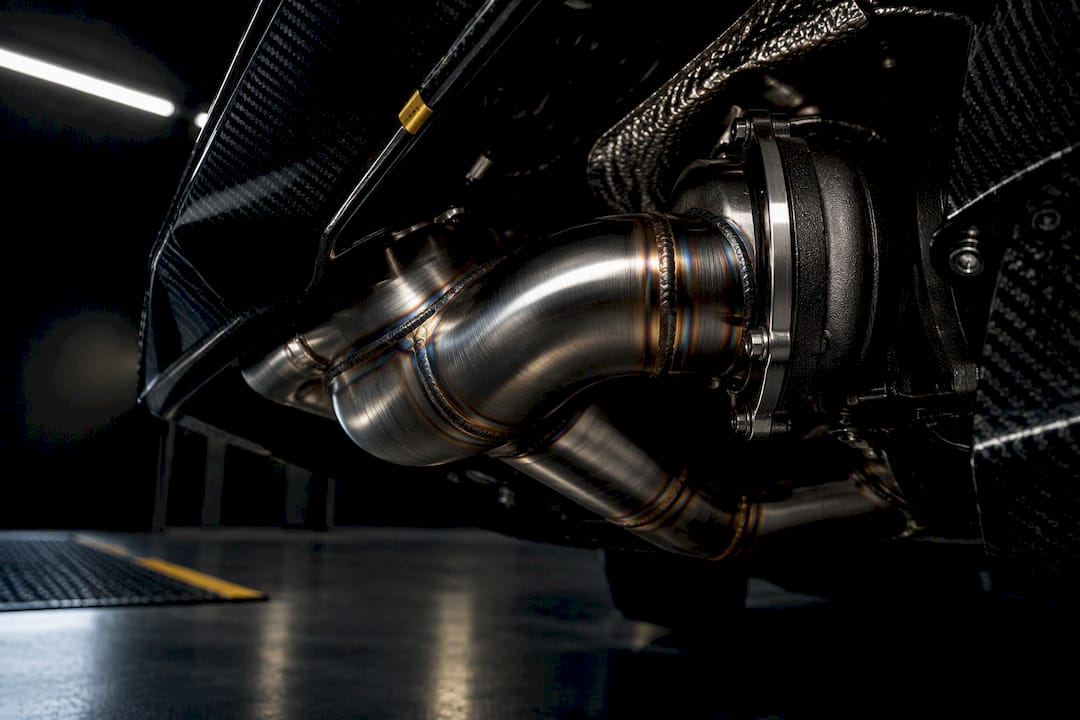
E6 Motorsports builds two distinct downpipe configurations for the C192 AMG GT63, and the choice between them comes down to how the car is actually driven. The catted version runs high-flow 200-cell catalytic converters in place of the OEM units, which are far denser and more restrictive. The decatted version removes the catalytic substrate entirely, replacing it with an open-flow test pipe section built for competition use.
Both variants share the same core hardware:
- Mandrel-bent 304 stainless steel piping sized to match OEM-style flange geometry for a direct bolt-up.
- TIG-welded flanges at the turbo outlet and mid-pipe junction for a durable, leak-free seal.
- Pre-installed oxygen sensor bosses positioned to match factory sensor locations.
- Gaskets, mounting hardware, and OEM-style hangers included in the kit.
- An optional thermal ceramic heat shield for owners parking the car in tight engine bay clearances or running the car hard on track.
The E6 Engineering product page documents both the catted and catless configurations for the AMG GT platform, along with the mandrel-bent 304 stainless construction and heat shield options. Fitment is engineered specifically around the C192 chassis and the M177 biturbo V8, not adapted from a universal design. Owners cross-shopping decatted “race pipe” or “test pipe” listings from other sellers should confirm the same attention to OEM flange spacing and sensor placement, since a slight mismatch in flange geometry is the most common reason a downpipe swap turns into a fitment headache.
How Reduced Backpressure Changes the Way the M177 Drives
The OEM downpipes on the M177 4.0L biturbo V8 are tuned for noise regulations and emissions durability, not flow. That restriction sits directly downstream of the turbine housing, and it matters more than most owners assume: exhaust backpressure at the turbine is one of the dominant limiters of spool speed on a modern turbocharged V8. Every bit of resistance the exhaust gas meets on its way out raises the pressure the turbine has to push against before it can spin the compressor wheel.
Reducing that restriction near the turbine, through larger-diameter downpipes and either high-flow cats or a decatted section, lowers turbine inlet pressure and shortens spool time. That is the same mechanical logic behind E6’s downpipe design for AMG GT platforms.
The practical effects an owner notices:
- Quicker turbo spool and a shorter gap between throttle input and boost delivery.
- More usable power in the midrange, where the OEM pipes choke flow hardest.
- A deeper, harder-edged exhaust note as backpressure drops and cylinder pulses reach the exit with less dampening.
- Additional peak power headroom, but only when the downpipe is paired with a matching ECU calibration.
None of this replaces a dyno session. Exact horsepower and torque gains vary by fuel quality, ambient conditions, and the specific tune applied, so treat any flat number you see quoted online with suspicion and get your own car measured on a dyno with the tune loaded.
Construction and Fitment: What the C192 Actually Needs
Material choice matters more on a car like the GT63 than most owners realize, because the M177’s exhaust temperatures and the tight packaging around the turbos punish anything less than aerospace-grade stainless. E6 builds its AMG GT downpipes from mandrel-bent 304 stainless steel with TIG-welded flanges, a combination chosen for resistance to thermal cycling and long-term corrosion rather than just raw flow numbers.
Key fitment considerations for the C192 chassis:
- OEM-style flange spacing at the turbo outlet, matching factory bolt patterns without spacers or clearancing.
- Oxygen sensor bosses located to preserve factory sensor angle and depth, which affects how cleanly the ECU reads exhaust gas composition.
- Optional ceramic heat shielding for sections routed near wiring harnesses, plastic underbody panels, or carbon fiber aero components.
- Hanger points aligned to stock locations so the mid-pipe and catback sit without added stress on the flanges.
Pro Tip: Before ordering, confirm which catback exhaust you are running, since downpipe flange orientation should match your specific mid-pipe and catback setup for a stress-free installation.
Owners running carbon fiber undertrays or splitters close to the exhaust routing should lean toward the heat shield option. Ceramic shielding keeps radiant heat away from resin-based components that can discolor or degrade under sustained high temperatures.

Installation and the ECU Tuning Reality
A downpipe swap on the M177 is a bolt-on job in the literal sense, but it is not a job to treat casually. The exhaust manifold-to-downpipe connection sits close to the turbos, and getting the flanges torqued evenly without cross-threading or warping the gasket surface takes the right tools and some patience. Unless you have lift access and experience with turbocharged German V8s, professional installation is the safer route.
The bigger issue is what happens after the pipes are on. Both catted and decatted downpipes change what the oxygen sensors read:
- Removing or reducing catalytic density alters the post-catalyst oxygen sensor signal the ECU expects to see.
- Without a matching tune, the ECU flags a check engine light or an OBD readiness failure almost immediately, more consistently with decatted pipes since there is no catalytic buffering at all.
- A generic off-the-shelf map may quiet some codes but will not properly compensate fueling and ignition timing for the new flow characteristics.
- A custom dyno tune, built specifically around the installed downpipe configuration, corrects fueling, timing, and often TCU shift behavior to match the engine’s new power delivery.
- Simply disabling diagnostic trouble codes through a generic tune is not a fix. It hides the symptom while leaving the car running an uncalibrated fuel and ignition strategy long term.
Pro Tip: Book your ECU and TCU tune at the same time as your downpipe installation. E6 offers a dedicated ECU and TCU tune for the AMG GT platform, which avoids the gap between install day and a properly calibrated car.
Run a pre-install check of existing fault codes and a post-install OBD readiness check once the tune is loaded, following best practices outlined in this Haldex controller tuning guide. That two-step process catches issues before they turn into a drivability complaint weeks later.
Choosing Between Catted and Decatted for Your Build
The right downpipe depends entirely on how the car spends its time.
- Street-driven cars should default to the catted high-flow option. It keeps the car within emissions expectations for daily use, avoids constant check engine light battles, and still delivers a noticeably deeper tone without crossing into a raw, unfiltered exhaust note.
- Track and race-registered builds are where decatted pipes make sense. Maximum flow matters more than daily drivability, and owners in this category have usually already accepted the inspection and emissions trade-offs that come with a catless setup.
- Mixed-use owners sometimes keep the catted pipes installed for inspection season and swap in a decat section for track days, though this adds labor and cost that a straight catted setup avoids.
- Before buying either, ask your installer or tuner about tune availability for your specific configuration, warranty terms on the hardware, the return policy if fitment issues arise, and what your local inspection process expects from a modified exhaust.
Why E6 Engineering Backs This Recommendation
The downpipes are one piece of a larger platform:
- A matching E6 catback exhaust completes the exhaust path and preserves the tone the downpipes create.
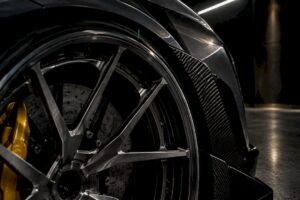
- E6 Forged wheel sets and autoclave-cured carbon aero components round out a full platform build once the exhaust and tune are dialed in.
Before ordering, request fitment confirmation for your exact model year and have the tune scheduled through E6 or an authorized shop rather than treating installation and calibration as separate, unrelated purchases.
What Most Owners Get Wrong About This Upgrade
The conventional advice treats the downpipe swap as a sound upgrade with a power bonus attached. That framing undersells the actual mechanism. The real gain is in reduced turbine backpressure and the spool improvement that follows, and the sound is a byproduct of that change, not the point of it.

The bigger mistake is skipping or underfunding the tune. Owners who install decatted pipes and load a generic canned map are often disappointed, either by a dashboard full of warning lights or by a car that feels no different because the ECU is still fighting the old fueling logic against new flow characteristics. The hardware is only half the job.
If you are deciding where to spend money first, prioritize the tune budget as highly as the pipes themselves. A catted downpipe with a proper custom calibration will usually outperform a decatted setup running on a mismatched generic map, both in real drivability and in how long the car stays trouble-free.
— E6 Engineering
Get Your C192 GT63 Fitted and Tuned Right
E6 Motorsports engineers these downpipes, the matching catback, and the ECU/TCU tune as one system built specifically for the C192 chassis, not a generic add-on. Start with the AMG GT performance downpipes, confirm fitment for your model year, and pair it with a dedicated tune before you drive it hard.
FAQ
Do decatted downpipes trigger a check engine light on the AMG GT63?
Yes, in most cases, because removing the catalytic converter changes what the downstream oxygen sensor reads compared to what the ECU expects. A tune calibrated for the decatted setup, rather than disabling the codes outright, is the reliable way to resolve it.
Can I pass emissions inspection with catted E6 downpipes installed?
Catted high-flow downpipes retain catalytic converters, which keeps the car closer to emissions expectations than a decatted setup, though local inspection rules vary by jurisdiction. Check your specific state or region’s requirements before assuming compliance.
Do E6 downpipes fit the M177 engine without modification?
Yes, E6’s AMG GT downpipes are built with OEM-style flange geometry and mandrel-bent 304 stainless sized for the C192’s M177 4.0L biturbo V8, so installation does not require cutting or fabrication.
Is a custom tune required after installing catted downpipes?
A tune is strongly recommended even with catted downpipes, since the reduced catalytic density still changes exhaust flow and sensor readings enough to affect fueling accuracy. A dedicated AMG GT tune corrects that rather than leaving the ECU running an uncalibrated strategy.
How much horsepower do AMG GT63 downpipes add?
Exact power gains depend on the tune, fuel, and supporting hardware, so there is no fixed number that applies across every car. A dyno session with the matching tune loaded is the only reliable way to measure the real gain for your specific setup.
Recommended
- Autoclaved 2×2 Twill Delivers 0.1 mm Fit vs Forged Carbon on C192 AMG GT63
- E6 Fitment First: Downforce & Thermal Management for C192 AMG GT63
- PTG High Flow Exhaust Manifolds | AMG GT / C63S
Pricing, custom fitment options, and surface finishes subject to availability. Please contact E6 Carbon or E6 Forged directly to confirm vehicle-specific offset parameters, brake clearances, and current lead times prior to placing your order.