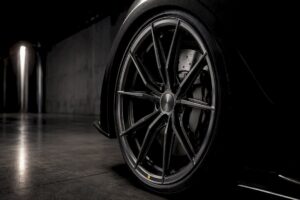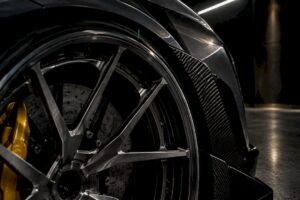
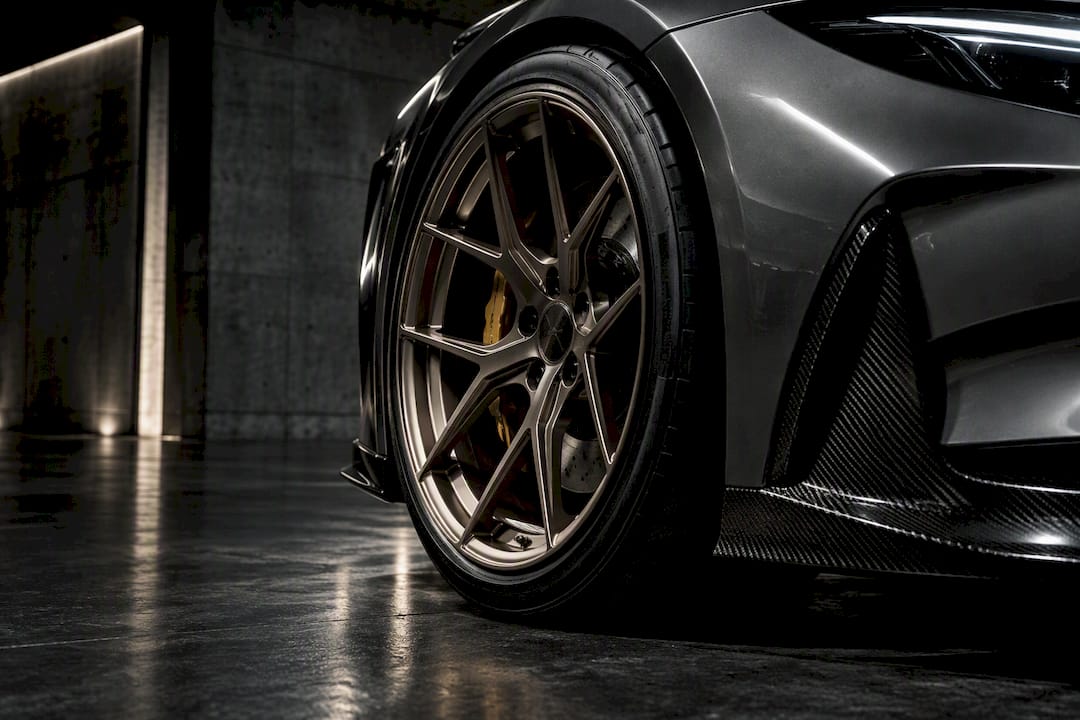
Yes, E6 Forged 6061-T6 monoblock wheels fit the Mercedes-AMG GT63 (C192) when machined to spec. Confirm three things before ordering: the 5×112 bolt pattern with 66.6 mm center bore, clearance around the carbon-ceramic brake package, and an offset that matches your ride height and fender profile. Measure the car, never assume from photos.
TL;DR:
- Forged 6061-T6 monoblock wheels significantly improve fatigue resistance and weight savings compared to cast alternatives, especially important for high-performance driving.
- Precise fitment verification involves matching bolt pattern, center bore, offset, and ensuring adequate brake caliper clearance, especially with optional carbon-ceramic brakes.
- Upgrading to 22-inch wheels requires careful measurement of offset, tire sidewall height, and clearance to avoid contact and maintain proper rolling diameter.
- Proper torque, retorque, and ongoing fitment checks are essential to prevent vibrations and ensure safe, lasting wheel installation.
- Custom machining and fitment testing, based on actual car specifics, are crucial for optimizing performance, safety, and durability in high-stress conditions.
Table of Contents
- Why forged 6061-T6 monoblock construction matters on the C192
- C192 (Br192) AMG GT63 fitment specs every installer must verify
- Recommended wheel sizes, widths, and offsets for street and track
- Brake clearance and caliper fitment for AMG carbon-ceramic rotors
- Tire pairing and rolling diameter for speedometer and stability accuracy
- Installation checklist, load ratings, fasteners, and post-fit verification
- E6 Engineering proof points behind the fitment-first process
- When monoblock forged wheels earn their place on a GT63
- Ordering E6 Forged monoblock wheels and getting fitment verified
- Sources
- FAQ
Why forged 6061-T6 monoblock construction matters on the C192
The C192 GT63 carries a hybrid powertrain and a curb weight that punishes any component sitting outside the sprung mass. Wheels are the single heaviest rotating assembly a shop can change, which makes material choice and construction method the highest-leverage upgrade available to an owner chasing transient response.
6061-T6 aluminum starts as a wrought billet, then gets forged under compressive load before final CNC profiling. That process aligns the grain structure along load paths instead of leaving the random, porous grain you get from a cast mold. The result is a wheel with higher fatigue resistance and a better strength-to-weight ratio than cast alternatives, which lets an engineer remove material from the barrel and spokes without giving up structural margin.

Monoblock construction, a single forged piece rather than a bolted or welded multi-piece assembly, removes the joints where stress concentrates. Fewer joints mean fewer notch-sensitive zones, and published fatigue testing on aluminum road wheels shows that finite-element models validated against rotary bending tests can predict strain within about 10% of measured values, which is why reputable wheel programs lean on FE modeling before cutting metal. That same research flags local notch geometry and surface finish in fillets as the details that decide long-term fatigue life, not the alloy grade alone.
Cutting rotating mass at the wheel has an outsized effect versus cutting mass elsewhere on the car, since a wheel’s mass sits at the rim, farthest from the axis, where it contributes most to rotational inertia. Lighter, stiffer monoblocks reduce unsprung weight, which improves how quickly the suspension can react to a bump, and they reduce rotational inertia, which quickens throttle response and shortens the distance a brake system needs to slow the car down.
- Forged 6061-T6 offers a better strength-to-weight ratio than typical cast wheel alloys.
- Monoblock geometry eliminates the bolted or welded seams that concentrate fatigue stress in multi-piece designs.
- CNC machining after forging holds tighter, more repeatable tolerances than cast-and-polish production.
Wheel fatigue testing under SAE J328 style rotary bending protocols, combined with FE fatigue modeling, is the standard validation path serious wheel programs use before a design reaches production. That combination is what separates an engineered wheel from a good-looking casting.
Pro Tip: Ask any wheel supplier whether their monoblock design has FE fatigue correlation data behind it, not just a load rating on a spec sheet.
C192 (Br192) AMG GT63 fitment specs every installer must verify
The GT63 built on the Br192 chassis uses a fixed set of hardware specs that never change regardless of wheel brand, and getting any one of them wrong turns a beautiful wheel into a returned wheel.
The bolt pattern is 5×112 with a 66.6 mm center bore, and the lug bolts use an M14 x 1.5 thread. Factory tightening torque runs around 180 Nm (133 lbf·ft), and that number should anchor your torque wrench setting regardless of which aftermarket wheel you install.
| Specification | Value |
|---|---|
| Bolt pattern (PCD) | 5×112 |
| Center bore | 66.6 mm |
| Lug bolt thread | M14 x 1.5 |
| Tightening torque | Approximately 180 Nm (133 lbf-ft) |
| Typical OE wheel size | 21 inch |
OE fitment on the GT63 commonly runs 21-inch forged wheels with roughly a 10.5J front and 11J rear width, which is the baseline any 21-inch or 22-inch aftermarket conversion should be measured against. A 22-inch upgrade is achievable, but it demands verified offset and tire sizing rather than a straight diameter swap.
Center bore matters as much as bolt pattern. E6 machines its monoblocks hub-centric to 66.6 mm, meaning the wheel bore itself locates on the hub rather than relying on the lug bolts to center the wheel. Hub-centric fitment reduces vibration and keeps the wheel concentric under load, while a lug-centric setup, common with universal-fit aftermarket wheels, depends entirely on bolt torque to stay centered and can develop a shimmy over time. Hub-centric rings are only necessary when a wheel’s bore is cut larger than 66.6 mm for cross-platform compatibility.
Before placing an order, run this checklist:
- Confirm PCD and center bore against your specific model year, since running changes can shift hardware across production.
- Measure the actual OE wheel offset on your car rather than trusting a spec sheet, since ride height modifications shift the effective fitment window.
- Check lug bolt length compatibility if switching from OE bolts to aftermarket hardware.
- Verify brake caliper diameter and pad wear state before finalizing wheel bore and spoke design.
Recommended wheel sizes, widths, and offsets for street and track
E6’s baseline recommendation for a GT63 running staggered fitment is a 21×10 ET22 front paired with a 21×11.5 ET25 rear, sized to match the OE stance while trimming weight at every corner. Owners chasing a more aggressive stance often step up to 22-inch diameters, which requires revisiting tire sidewall height to protect rolling diameter.
- Start from the OE offset and adjust in small increments, since a 5 mm offset change measurably shifts scrub radius and steering effort on a car this heavy.
- Favor a true offset change over a spacer whenever the goal is a flush fitment, because spacers add leverage on the hub bearing rather than solving the geometry.
- Keep ET within a few millimeters of the baseline unless you have also confirmed fender clearance through full suspension travel and steering lock.
- Reserve the most aggressive flush setups for cars already running camber correction, since stock camber alone will not clear an ET in the low teens without contact risk.
Backspacing controls how far the wheel’s mounting face sits from the outer lip, and less backspacing pushes the tire outward toward the fender. That shift changes scrub radius, which affects steering feel and tie rod loading, and it changes the load path into the wheel bearing. A wheel that looks flush in a static photo can still contact the fender liner under compression, so any aggressive fitment plan should be checked against ride height and camber settings together, not in isolation. E6’s structural rigidity and weight savings guide for monoblock wheels covers how offset choices interact with the forging process itself.
Pro Tip: Order your custom offset with the tire and suspension setup you plan to run for at least a full season, since chasing a slightly different stance later means remachining rather than a quick swap.
Brake clearance and caliper fitment for AMG carbon-ceramic rotors
Insufficient radial clearance around the caliper is the most common fitment failure builders encounter when moving to a track-oriented wheel, and the GT63’s optional carbon-ceramic brake package makes this check non-negotiable rather than optional.
Carbon-ceramic rotors on performance AMG platforms run larger diameters and wider caliper bodies than the steel-rotor setup, and the caliper’s mounting ears extend closer to the wheel’s inner barrel than most owners expect. E6’s process starts with a CAD overlay of the customer’s actual rotor and caliper dimensions against the wheel design, followed by a physical template check on the car before any final machining runs.
- Measure the caliper’s outer envelope at its widest point, including brake line routing, not just the pad housing.
- Confirm radial clearance between the caliper body and the wheel spoke faces, allowing margin for rotor runout under heavy braking.
- Account for axial clearance at the wheel’s inner barrel, since thermal expansion during hard track use changes caliper-to-wheel spacing slightly from a cold measurement.
- Flag any spoke geometry that sits within a few millimeters of the caliper ear for a design revision before production.
When a stock spoke design cannot clear a carbon-ceramic caliper without a compromise on offset, E6 re-profiles the inner spoke face or adds targeted spoke relief rather than forcing the customer into a wider offset that hurts scrub radius. That kind of custom machining is part of why a fitment-first process takes longer than pulling a wheel off a shelf, but it is also why the finished product clears the caliper with margin instead of by luck.
Pro Tip: Bring your actual caliper and rotor measurements, not the published spec sheet, to any fitment consultation since running changes and optional brake packages vary those numbers between build dates.
Tire pairing and rolling diameter for speedometer and stability accuracy
Changing wheel diameter without adjusting tire sidewall height shifts your rolling diameter, which throws off speedometer accuracy and can confuse the ABS and stability control systems that rely on wheel speed sensors to judge road speed.
The fix is arithmetic: calculate the OE rolling diameter first, then choose a tire aspect ratio on the new wheel that lands within a small percentage of that original figure. Track-focused tires generally favor a stiffer sidewall construction and a stickier compound over outright comfort, while street-driven cars benefit from retaining more sidewall height for compliance over broken pavement.
- Keep rolling diameter within a tight tolerance of stock to avoid speedometer error and ABS calibration drift.
- Choose a tire construction rated for sustained high-speed track use if lapping regularly, not a comfort-oriented touring tire.
- Expect a shorter sidewall on a 22-inch setup to transmit more road noise and impact harshness than the 21-inch OE fitment.
- Have TPMS and any speed-dependent driver assistance features rechecked after a tire and wheel change, since a significant rolling diameter shift can trigger fault codes.
Installation checklist, load ratings, fasteners, and post-fit verification
Getting a monoblock wheel onto the car correctly is only half the job. The other half is verifying it stays correct after the first heat cycle and the first hard corner.
- Confirm the wheel’s load rating meets or exceeds the GT63’s per-corner weight before the wheel ever touches the hub.
- Seat the wheel fully against the hub face, checking for any gap that suggests debris or a bore mismatch, then hand-thread the lug bolts before applying any torque.
- Torque to the OE-equivalent 180 Nm (133 lbf-ft) specification in a star pattern, then retorque after the first 50 to 100 miles and again after the first sustained heat cycle on track.
- Book a wheel alignment and, for track builds, a corner-weighting session before the first hot lap, then inspect all four wheels for uneven tire wear or unusual vibration after that first session.
Persistent vibration, uneven torque retention between retorque intervals, or visible witness marks on the hub face after removal all indicate a fitment problem that needs E6 engineering involved rather than a shop-floor workaround.
Pro Tip: Log your retorque values at each interval, since a bolt that keeps loosening slightly is telling you something about seating or bore fit that a single check will miss.
E6 Engineering proof points behind the fitment-first process
A fitment-first approach means every monoblock order starts with the customer’s actual chassis code and hardware, not a generic size chart. This workflow spans custom CNC machining, installation services, and engineering consultation, and extends across various forged wheel and carbon fiber product lines. The same fitment discipline applies to E6’s Lexus LC500 Carbon Elite aero kit, where autoclave-cured carbon body components go through the equivalent CAD verification before production. Full detail on the monoblock design process lives in E6’s track performance and strength overview.
When monoblock forged wheels earn their place on a GT63
Forged monoblocks make the most sense for GT63 owners who track the car regularly and want the unsprung weight and rotational inertia savings to actually matter, not just look good in a driveway. A street-only car with occasional spirited drives will feel some benefit, but the return on investment sharpens with lap count. Track use also means a real maintenance commitment: retorque checks, periodic runout inspection, and a willingness to have the fitment reverified if you change tires, calipers, or ride height. E6 supports that ongoing relationship rather than treating the sale as a one-time transaction.
— E6 Engineering
Ordering E6 Forged monoblock wheels and getting fitment verified
Most aftermarket wheel sellers size a GT63 order off a catalog chart and hope the offset works. E6 starts from your car’s actual hardware, then machines to that number, which is the difference between a wheel that clears your carbon-ceramic calipers on paper and one that clears them on the car.
- Submit your chassis details and current brake package for a fitment review before ordering.
- Confirm target offset and width against your ride height and any suspension modifications already installed.
- Place your custom order through the E6 Forged Monoblock collection once fitment is verified.
Pair the finished wheel setup with in-house installation services so torque sequence, retorque scheduling, and initial alignment happen under the same fitment-first standard the wheels were machined to. Once your car is on track, protect the finish with routine brake dust removal rather than letting contamination sit on a forged face between sessions. Owners weighing a full aesthetic package alongside wheels can also review E6’s Carbon Fiber Parts catalog and the E6 Luxury Wheels line for complementary builds.
Sources
- Wheel-size
- Lightweight design and construction of road vehicle aluminum wheels (Politecnico di Milano technical paper)
- Mercedes-AMG GT Coupe features and specs | Car and Driver
FAQ
What bolt pattern and center bore does the C192 GT63 use?
The Br192 GT63 uses a 5×112 bolt pattern with a 66.6 mm center bore, and lug bolts use an M14 x 1.5 thread. Any aftermarket monoblock wheel needs to match those numbers exactly to seat and center correctly on the hub.
Are 22-inch wheels safe on a GT63 with carbon-ceramic brakes?
A 22-inch fitment is workable, but it requires verified caliper clearance and a tire aspect ratio chosen to protect rolling diameter, since OE fitment centers on 21-inch forged wheels. Skipping that verification is the most common cause of caliper contact on upsized fitments.
How much lighter is a forged monoblock than a stock cast wheel?
Forged 6061-T6 monoblocks generally offer a better strength-to-weight ratio than cast alloy wheels because forging aligns the material’s grain structure and allows more material removal without sacrificing fatigue life. The exact weight saved depends on the specific design and load requirements of each wheel.
Does changing wheel diameter affect my GT63’s ABS or speedometer?
Yes, a rolling diameter change from switching wheel and tire sizes can throw off speedometer readings and affect how ABS and stability control interpret wheel speed. Matching tire aspect ratio to keep rolling diameter close to OE, and rechecking TPMS after the change, avoids most of these issues.
What torque should I use when installing new wheels on a GT63?
Factory guidance points to roughly 180 Nm (133 lbf-ft) for the M14 x 1.5 lug bolts, applied in a star pattern. Retorque after the first 50 to 100 miles and again after the first sustained heat cycle to catch any seating settlement.
Recommended
- Track Focused Wheels for the AMG GT: Engineering Guide
- How to Spec High-End Wheels for Performance Cars
- Engineer Backed E6 Wheels: Fitment and Care to Protect Warranty
- Brake Upgrade | AMG GT (C190/R190)
Pricing, custom fitment options, and surface finishes subject to availability. Please contact E6 Carbon or E6 Forged directly to confirm vehicle-specific offset parameters, brake clearances, and current lead times prior to placing your order.