VR5 monoblock wheels fit many Mercedes-AMG, Lexus LC500, and exotic performance platforms when three things check out first: bolt pattern and PCD match, offset and caliper clearance, and lug-seat compatibility. Confirm those before mounting and torque to OEM spec in sequence to preserve fitment safety and warranty terms.
TL;DR:
- VR5 wheels must have matching bolt pattern, offset, and lug-seat type to fit specific vehicle configurations without modifications.
- Proper pre-mount checks—including measuring hub bore, brake clearance, and torque sequence—are essential to prevent damage and warranty voids.
- Using OEM torque specifications in a star pattern and verifying seat geometry reduces the risk of lug nut loosening and wheel vibration.
- Only non-acid, pH-neutral cleaners should be used to maintain the polished finish and structural integrity of forged VR5 wheels.
- Authentic wheels should carry valid certification, meet weight and finish standards, and be purchased through authorized channels to avoid counterfeits.
Table of Contents
- Does the E6 Forged VR5 Monoblock Fit Your Vehicle?
- What Does the E6 Warranty Cover on Forged Wheels?
- What Should You Check Before Mounting VR5 Wheels?
- How Should You Torque and Fasten Monoblock Wheels?
- How Do You Clean and Maintain the VR5 Finish?
- How Should You Store VR5 Wheels During the Off-Season?
- VR5 Monoblock Specifications and Starting Pricing
- Why Does Fitment Discipline Matter for Safety and Warranty?
- Which Vehicles Work Best with the VR5 Monoblock?
- What Causes Fitment Problems, and How Do You Fix Them?
- How Can You Verify Your VR5 Wheels Are Authentic?
- Common Installer Mistakes We See Most
- Ready to Order Your VR5 Monoblock Set?
- Sources
- FAQ
Does the E6 Forged VR5 Monoblock Fit Your Vehicle?
The honest answer is: it depends on what you drive, not what you wish you drove. VR5 monoblock wheels are engineered in custom offsets and widths specifically so they can be matched to a given chassis rather than forced onto one. A Mercedes-AMG GT with staggered factory fitment needs a different offset calculation than a Lexus LC500 running stock Brembo calipers, and a McLaren with center-lock hardware is an entirely different fastening conversation.
That’s the real answer behind “E6 Forged VR5 Monoblock Performance Wheels Fitment Guide” as a search query. People aren’t asking whether the wheel is good. They’re asking whether it will bolt onto their specific car without a machine shop intervention, a caliper collision, or a voided warranty. The short version: yes, if you run the pre-mount checks in this guide. The long version covers the bolt pattern data, the offset math, the torque sequence, and the exact points where installers get it wrong.
Industry terminology matters here too. What most owners call a “fitment guide” is what SAE documentation and OEM engineering departments call wheel/tire assembly compatibility verification, governed in part by standards like SAE J2530 for aftermarket wheel performance and SAE J2316 for fastening systems. Both terms describe the same process. This guide uses them interchangeably, but if you’re talking to a shop technician, “assembly compatibility verification” is the phrase that gets taken seriously.
What Does the E6 Warranty Cover on Forged Wheels?
E6 Carbon splits warranty coverage into two tiers, and conflating them is the single most common source of denied claims. Structural warranty covers the forged monoblock barrel and spoke assembly against manufacturing defects in the 6061-T6 aluminum forging itself. This is the engineer-backed guarantee tied directly to material integrity and load-bearing performance. Finish warranty is narrower. It covers defects in the polished metallic or coated surface, but it excludes damage caused by road debris, improper cleaning chemicals, curb impacts, or corrosion from neglected storage.
Certain actions void coverage outright, regardless of which tier you’re claiming under. E6 Engineering’s published guidance is explicit that fitment inspection before tire mounting is the single most important step in protecting both structural and finish coverage.
Actions that void warranty coverage include:
- Welding, brazing, or any heat application to the barrel, spokes, or hub bore
- Machining, re-drilling, or modifying bolt patterns, offset, or center bore diameter
- Mounting without verifying lug-seat taper compatibility
- Chemical damage from acid-based wheel cleaners or improper de-icing agents left on the finish
- Installation without documented torque values applied in the correct sequence
Shops should keep a claim-ready file for every set they mount: dated photos of the hub mating surface before installation, a torque log noting the sequence and final values, and a written note of any shims or hardware used. This paperwork is what separates a five-minute warranty approval from a drawn-out dispute. For warranty support specifics, reach out through E6 Carbon’s official warranty and care guidelines rather than relying on secondhand shop advice, since terms are updated periodically and the published page is the governing reference.
What Should You Check Before Mounting VR5 Wheels?
Skipping pre-mount verification is how a $2,750 wheel becomes a $2,750 paperweight sitting next to a caliper it was never going to clear. Run through this sequence in order, every time, on every vehicle, even if you’ve mounted the same wheel on the same platform before.
- Confirm PCD and bolt pattern. Cross-reference the vehicle’s OEM bolt circle diameter against the VR5 spec sheet. A Mercedes-AMG on a 5×112 pattern and a Lexus LC500 on 5×114.3 are close enough numerically to cause a costly mistake if measured carelessly.
- Verify stud versus bolt hardware. European platforms often use bolt-on hardware threaded into the hub; some aftermarket and motorsport builds use press-in studs. Using the wrong hardware type strips threads fast.
- Measure center bore and hub-centric fit. Check whether the VR5’s bore matches the hub diameter exactly (hub-centric) or requires a hub-centric ring to take up clearance (lug-centric fit relying on the lugs for centering). Use a caliper gauge, not a visual estimate.
- Check offset (ET) and backspacing against caliper and suspension clearance. Measure from the hub mounting face to the wheel’s true centerline, then physically test-fit against the largest brake caliper and any coilover or sway bar components before final torque.
- Verify lug-seat geometry. Confirm whether the vehicle requires a 60-degree conical taper, a ball seat, or a flat washer-style seat, and match lug nuts or adapters accordingly. Mismatched seats are the top cause of wheels going out of round after a few hundred miles.
- Document everything. Photograph the hub face, record the torque log, and get a written pre-mount inspection sign-off before the tire ever touches the balancer.
Pro Tip: Keep a printed torque spec card in the wheel box for the life of the vehicle. Track day tech inspectors and future shop technicians will ask for it, and “I think it was around 100 pound-feet” doesn’t satisfy a tech sheet or a warranty adjuster.
For a full walk-through with photos and torque templates, E6 Carbon’s step-by-step installation guide covers the mounting sequence in more visual detail than a checklist alone can convey.
How Should You Torque and Fasten Monoblock Wheels?
Fastening geometry is where most fitment guides get vague, and where most actual failures happen. The seat where the lug nut meets the wheel isn’t a cosmetic detail. It’s the load path that keeps 2,000 pounds of unsprung and rotating mass attached to the hub at 150 miles per hour.
Lug seat type matters more than torque value. A 60-degree conical taper seat is the most common configuration across Mercedes-AMG, Lexus, and most forged aftermarket applications, and SAE J2315 recommends a minimum contact area at that seat to guarantee adequate strength for tightening and long-term retention. Insufficient contact area, even at correct torque, leaves the assembly under-clamped in ways a torque wrench alone won’t reveal.
Fastening requirements to follow on every VR5 install:
- Match lug seat taper exactly. Do not substitute a ball-seat lug nut on a conical taper wheel or vice versa.
- Torque in a star or cross pattern, never sequentially around the circle, to seat the wheel evenly against the hub face.
- Use the vehicle manufacturer’s OEM torque specification as the governing number. Generic aftermarket torque charts are a starting reference only. OEM specs always supersede generic ranges.
- Inspect stud and bolt threads for galling, elongation, or corrosion before every mount. Damaged threads should be replaced, not re-used.
- Re-torque after the first 50 to 100 miles of driving to account for initial seating compression, then check periodically before track sessions.
SAE J2316 governs performance requirements and test procedures for aftermarket wheel fastening systems, and it puts specific weight on contact area, friction coefficients, and vehicle-specific validation rather than a single universal torque number. That’s why “just torque it to 100” is bad advice on its own. The standard also acknowledges that wheel assemblies need a degree of built-in flexibility alongside seat strength, because over-rigid mounting or a mismatched seat can cause fatigue cracking or gradual loosening even when initial torque readings look correct.
How Do You Clean and Maintain the VR5 Finish?
The polished metallic finish on a VR5 monoblock is a warranty-relevant surface, not just a cosmetic one, and the wrong cleaning chemical can strip protective coating faster than a season of brake dust ever would.
Stick to non-acid, pH-neutral wheel cleaners, especially on ceramic-coated finishes, where safe cleaning routines specifically avoid acidic formulas that etch clear coats and metallic finishes over repeated use. A rinse-first approach removes loose grit before contact, and a dedicated wash bucket for wheels (separate from body panel wash water) keeps brake dust particulate from cross-contaminating your paint sponge.
Maintenance habits that protect the finish long term:
- Rinse first, then apply cleaner, keeping brake-dust dwell time under 5 to 10 minutes before agitation, following the two-bucket wash method that reduces swirl marks on polished surfaces.
- Use a soft wheel brush or microfiber mitt dedicated only to wheels, never the same tool used on paint.
- Avoid automatic touchless car washes with high-pressure acid-based reclaim systems.
- Inspect the polished lip and spoke faces monthly for pitting, discoloration, or coating lift, and address it early rather than waiting for a full refinish.
- Seek professional correction for deep scratches or curb damage rather than attempting DIY polishing compounds on a forged lip.
How Should You Store VR5 Wheels During the Off-Season?
Wheels sitting in a garage corner for a winter are just as capable of finish damage as wheels on the road, minus the visible warning signs.
Store forged wheels in a dry, climate-controlled space, and never stack them bare wheel-on-wheel, since the polished face and spoke edges will scuff under their own weight. Individual wheel sacks or foam padding between each wheel prevent contact damage during storage.
- Keep mounting surfaces (hub bore and lug seats) clean and apply a light anti-seize or corrosion inhibitor if storage will exceed a few months.
- Store wheels upright on a rack rather than flat-stacked when floor space allows.
- Re-torque to spec when remounting after any storage period longer than a few weeks, since thermal cycling can subtly shift initial clamp load.
VR5 Monoblock Specifications and Starting Pricing
The VR5 is built around a 6061-T6 forged aluminum monoblock structure, meaning the wheel is machined from a single solid billet rather than assembled from a barrel and separate face sections. That forging process compresses the aluminum’s grain structure, which delivers meaningfully higher fatigue resistance and structural rigidity than a cast wheel of comparable weight. E6 Carbon’s engineering documentation on monoblock construction ties this directly to unsprung weight reduction, a factor that affects suspension response, braking performance, and steering feel more than most owners realize until they’ve felt the difference back to back.
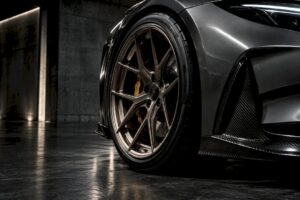
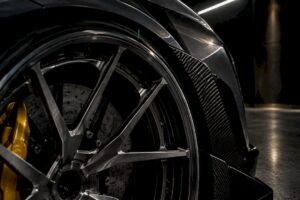
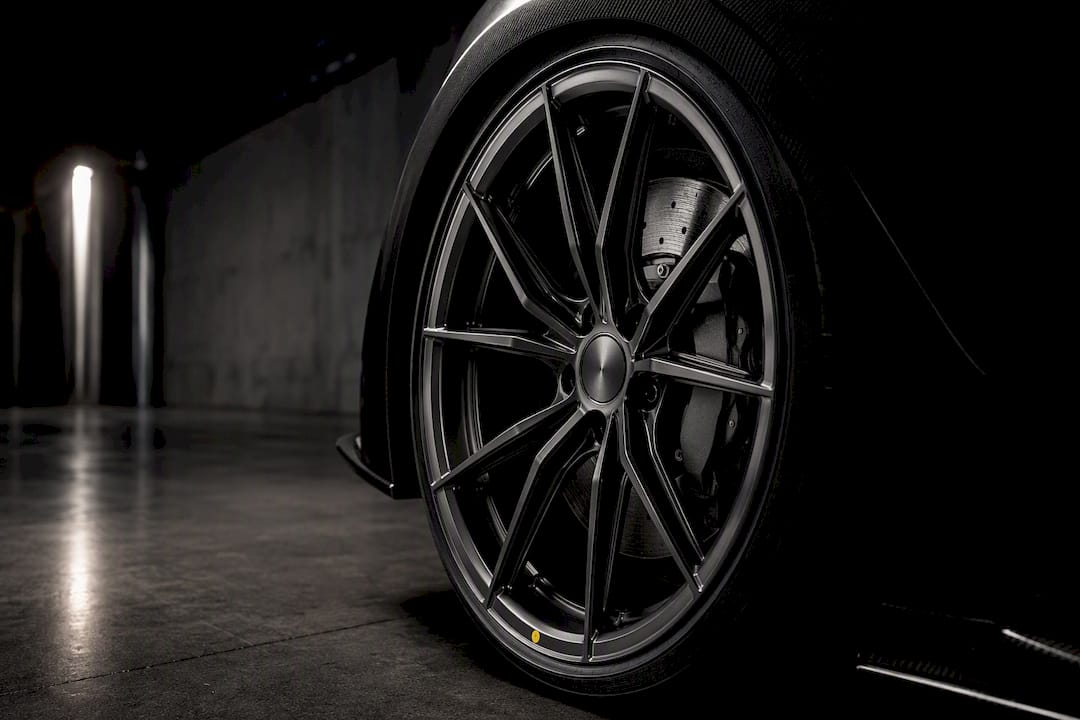
The design itself is unmistakable on the road: an aggressive 5 split-spoke, or Y-spoke, geometry with slim spoke profiling and deep concavity. That concavity isn’t purely aesthetic. The dish depth is engineered to visually and physically clear larger performance brake calipers, which matters directly for platforms like Mercedes-AMG models running big-brake packages or a Lexus LC500 fitted with upgraded Brembo hardware. The polished metallic finish is specified to highlight caliper color and rotor detail rather than compete with it.
Available specifications:
- Diameters: 18 inches through 22 inches
- Custom widths: 8.0 inches to 13.0 inches, built to the specific application
- Construction: 6061-T6 forged aluminum monoblock
- Bolt pattern and hub bore: matched per vehicle during the fitment consultation process, not sold as a one-size specification
Starting pricing tiers, shipped per set:
| Diameter | Starting Price (Set of Four, Shipped) |
|---|---|
| 18" | $2,750 |
| — | $2,950 |
| — | $3,100 |
| — | $3,250 |
| 22" | $3,400 |
Custom widths beyond base specification, specialty finishes, and center-lock conversions for platforms like McLaren or Lamborghini applications carry additional engineering cost beyond the listed starting tiers.
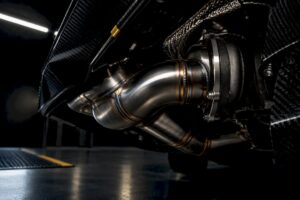
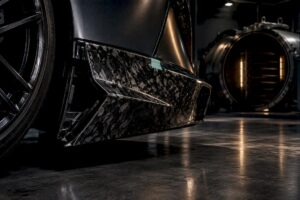
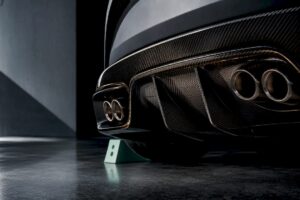
For owners building a complete aero and performance package, VR5 wheels are commonly paired with E6 Carbon’s autoclave-cured dry carbon aero components and E6 Motorsports performance upgrades, including turbo and fueling hardware. The combination addresses both rotational unsprung weight and static aerodynamic weight in the same build, which is where the real lap-time and street-presence gains compound. A Lexus LC500 running VR5 wheels alongside the E6 Carbon Elite Kit is a common configuration among owners chasing that exact combination.
Why Does Fitment Discipline Matter for Safety and Warranty?
The physics behind fitment discipline come down to one relationship: contact area, taper geometry, and bolt tension together determine axial retention, meaning how well the wheel stays clamped to the hub under cornering load, braking force, and vibration. SAE J2316 frames this explicitly around friction coefficients and vehicle-specific validation rather than a generic torque number applied universally.
Monoblock construction introduces its own trade-off worth understanding. A one-piece forged structure is stiffer than a multi-piece assembly, which is exactly why it performs well on track, but that stiffness means there’s less built-in flex to absorb a marginal fitment error. A multi-piece forged wheel has some tolerance for minor offset imprecision because the barrel and face can flex slightly at the joint. A monoblock does not, which is why measured clearance tests matter more, not less, on a one-piece design.
Shop-level validation should include three checkpoints: a dial-caliper measurement of offset against the spec sheet, a torque audit using a calibrated wrench rather than an impact gun’s felt resistance, and a documented sign-off before the car leaves the bay. When OEM specifications conflict with generic aftermarket torque charts, the OEM number wins every time. This is precisely the conflict E6 Carbon’s fitment-first engineering approach is built to resolve, by matching bolt pattern, offset, and hub bore to the specific chassis before the wheel ever ships rather than leaving that math to the installer.

Pro Tip: If a shop hesitates to request engineering support for an unusual fitment (a widebody kit, a spacer stack, or a non-standard hub adapter), that hesitation is itself a red flag. A properly resourced fitment consultation costs nothing compared to a cracked spoke at speed.
Which Vehicles Work Best with the VR5 Monoblock?
VR5 wheels are engineered around a handful of priority platforms, and the fitment data reflects that focus rather than a generic universal offering. Mercedes-AMG models, particularly the AMG GT, C63, and E63 chassis, represent the largest share of current fitment consultations, largely because their staggered factory setups and big-brake AMG packages require precise offset and concavity matching to clear calipers without pushing the fender line.
The Lexus LC500 is the second major focus platform. Its factory staggered wheel sizing and available Brembo brake upgrade make it a strong candidate for the VR5’s deep concavity design, which is specifically profiled to showcase larger calipers rather than obscure them behind a shallow face. Owners moving from the factory forged wheel to a VR5 typically see both a weight reduction and a visual depth the factory wheel doesn’t offer.
McLaren and Lamborghini platforms represent a smaller but growing share of fitment requests, often involving center-lock hardware or unique hub configurations that require a dedicated engineering consultation rather than an off-the-shelf spec match. BMW M platforms, while not a primary focus, are supported through the same fitment verification process.
In every case, the starting point is the same: confirm the exact trim, brake package, and any suspension modifications before finalizing offset, since a car with an aftermarket coilover setup or a widebody kit shifts the clearance math significantly from the factory baseline.
What Causes Fitment Problems, and How Do You Fix Them?
Most fitment complaints trace back to one of three root causes, and none of them are the wheel’s fault when the pre-mount checklist is actually followed.
Caliper rub after mounting usually means the offset was calculated against a generic spec sheet rather than the specific brake package on the car. A big-brake upgrade added after the original fitment consultation changes the clearance envelope entirely. The fix is a physical test-fit against the actual caliper before final torque, not a spec sheet comparison alone.
Vibration at highway speed after a fresh install is almost always a torque sequence problem, not a wheel balance problem, even though most shops check balance first. An uneven torque pattern seats the wheel slightly off-center against the hub face, which no amount of rebalancing corrects. Re-torque in the proper star pattern and recheck.

Wheel not seating flush against the hub typically points to debris, corrosion, or old sealant residue on the hub mating surface. Clean the hub face to bare metal before every mount, including reinstalls of the same wheel.
Lug nuts loosening over time despite correct initial torque usually comes down to seat mismatch, a ball-seat nut on a conical taper hole, for example, rather than an actual torque failure. Verify seat geometry against the wheel spec before assuming the torque wrench was wrong.
How Can You Verify Your VR5 Wheels Are Authentic?
Counterfeit forged wheels are a real problem in the exotic and performance aftermarket, and a fake monoblock carries genuine safety risk since it skips the forging process, the material certification, and the fastening validation that a legitimate wheel goes through entirely.
Start with certification documentation. Legitimate performance wheels intended for road use should carry JWL/VIA certification, and E6 Carbon’s guidance on verifying a VIA certificate number explains exactly what documentation should accompany a genuine set before you trust it on the road. If a seller can’t produce a certificate number tied to the specific wheel design, that’s a immediate red flag, not a minor omission.
Check the finish and machining quality directly against published product photography. Genuine 6061-T6 forged construction has a distinct grain consistency and precise CNC-machined spoke transitions that cast or poorly forged counterfeits rarely replicate convincingly under close inspection. Weight is another tell. A counterfeit is often noticeably heavier than the published spec because it substitutes cast aluminum or lower-grade alloy for genuine forged 6061-T6 material.
Always purchase through E6 Carbon’s official ordering channel or an authorized dealer, and confirm the order includes the documented fitment consultation, since a legitimate purchase includes bolt pattern and offset matching, not just a boxed wheel shipped without vehicle-specific data.
Common Installer Mistakes We See Most
Pre-mount inspection with documentation isn’t a suggestion. It’s the difference between a warranty claim that gets approved in a day and one that drags for weeks. The mistakes we see repeatedly: wrong lug-seat taper installed against the wrong nut style, offset clearance eyeballed instead of measured against the actual caliper, and torque applied sequentially around the wheel instead of in a star pattern.
If you’re unsure about any step, our engineering team offers fitment consultations before you ever mount a tire. That verification call costs you nothing and prevents the kind of mistake that shows up as a warranty denial six months later.
— E6 Engineering
Ready to Order Your VR5 Monoblock Set?
Once your bolt pattern, offset, and lug-seat checks are confirmed, ordering is straightforward through E6 Carbon’s forged wheels catalog, where every VR5 set is built to your vehicle’s specific fitment rather than pulled from generic stock sizing. Custom widths from 8.0 inches to 13.0 inches are available across the full 18 inch to 22 inch diameter range, and most orders ship as a matched set with documented specs included for your shop’s records.
Lead times vary by diameter, width, and finish complexity, so requesting your engineering fitment verification early in the process, before you schedule tire mounting, keeps the whole build on track. If you’re pairing your wheel order with aero components, the Lexus LC500 carbon aero kit is a common companion order for owners building out a complete visual and performance package in one pass. Reach out for a fitment consultation before you buy, not after the wheels arrive.
FAQ
Will VR5 Monoblock Wheels Fit My Car Without Modification?
In most cases, yes, since E6 Carbon builds each VR5 set to your vehicle’s specific bolt pattern, offset, and hub bore during the fitment consultation rather than selling generic sizing. Confirm caliper clearance and lug-seat type before mounting to avoid any surprises.
What Voids the E6 Forged Wheel Warranty?
Welding, machining, heat damage, chemical damage from acid-based cleaners, and mounting without verified lug-seat compatibility all void coverage. Full terms are listed on E6 Carbon’s warranty and care guidelines page.
How Much Do E6 Forged VR5 Wheels Cost?
Starting pricing runs from $2,750 for an 18 inch set up to $3,400 for a 22 inch set, shipped per set of four, with custom widths from 8.0 to 13.0 inches available at additional cost.
What Torque Spec Should I Use for Monoblock Wheels?
Always use the vehicle manufacturer’s OEM torque specification, applied in a star or cross pattern, since OEM numbers supersede generic aftermarket torque charts. Re-torque after the first 50 to 100 miles of driving.
How Do I Know If My VR5 Wheels Are Authentic?
Verify JWL/VIA certification documentation tied to the specific wheel design, check the forged 6061-T6 finish and weight against published specs, and purchase only through E6 Carbon’s official channel or an authorized dealer.
Recommended
- How to Spec High-End Wheels for Performance Cars
- E6 Motorsports LFA Style Valved Exhaust for LC500 V8
- Valved Supercar Exhaust Systems: Daily Drivability Guide
- Brake Upgrade | E63 AMG (W213/S213)
Pricing, custom fitment options, and surface finishes subject to availability. Please contact E6 Carbon or E6 Forged directly to confirm vehicle-specific offset parameters, brake clearances, and current lead times prior to placing your order.