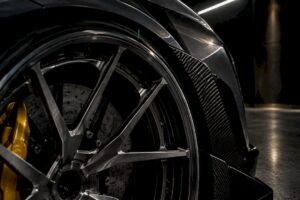
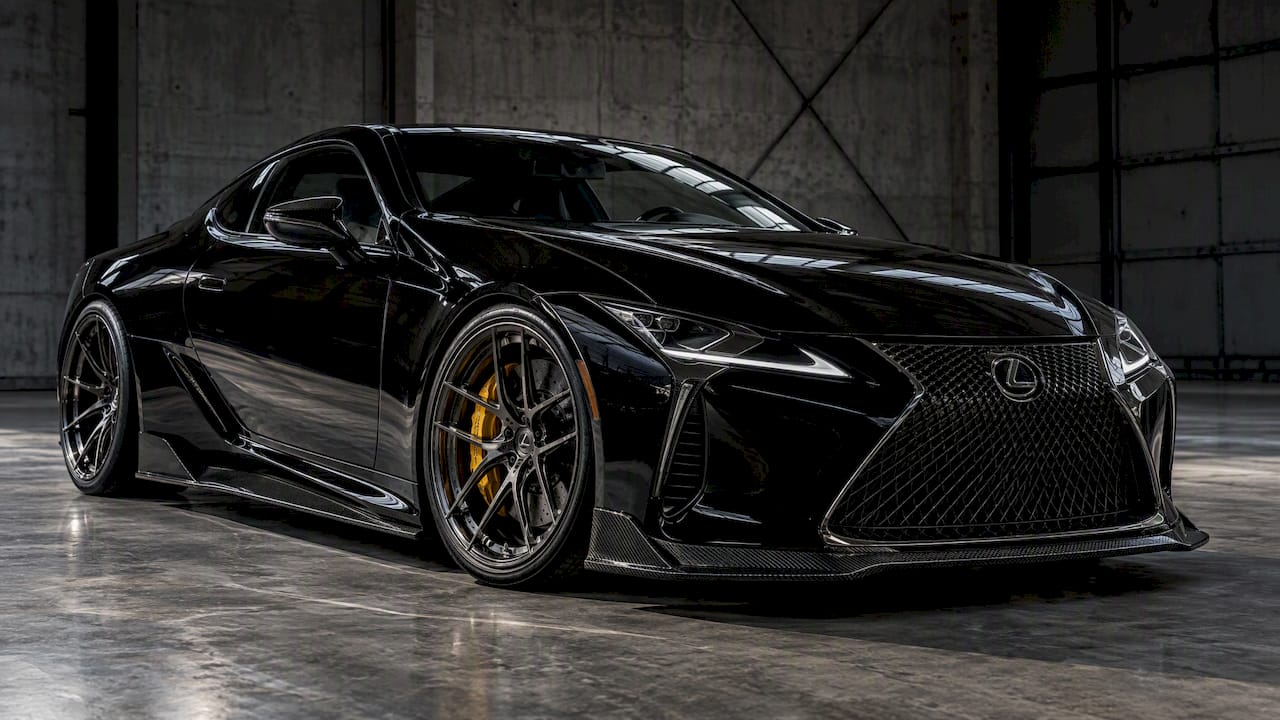
E6 Forged two-piece modular wheels are the fitment-first choice for LC500 owners chasing a precise wide stance. They deliver tailored offset, controllable lip depth, and hub-centric accuracy without touching the fender. Verify brake and caliper clearance and steering lock before ordering by consulting expert advice on caliper clearance requirements, and skip destructive fender rolling whenever the offset math allows it.
TL;DR:
- A well-chosen two-piece modular wheel lets you widen the LC500 stance without fender modifications by adjusting the barrel and offset independently.
- Precise fitment requires measuring brake caliper clearance, suspension travel, and fender space under load to prevent rubbing or contact at full lock and suspension movement.
- Welded wheels offer maximum rigidity and a slimmer profile, while bolted designs provide easier maintenance and future customization options.
- Forged 6061-T6 wheels deliver enhanced fatigue resistance and balanced weight, benefiting high-performance and daily driving applications.
- Custom fitment consultations ensure correct offset, backspace, and finish, reducing long-term costs and maintaining vehicle reliability.
Table of Contents
- Fitment-first engineering: how two-piece modular wheels let you dial a precise stance for the LC500
- Critical clearance zones to measure on an LC500 (brake, suspension, wheel well)
- Welded vs. bolted two-piece designs: engineering trade-offs for LC500 builds
- Offset, backspace, and lip depth: planning a staggered 21" wide stance without destructive fender work
- Materials and manufacturing: why 6061‑T6 forging and tight CNC tolerances matter
- Maintenance, hardware, and long-term care for two‑piece wheels on a daily-driven LC500
- Finish, color, and visual styling: selecting center faces and barrels that complement the LC500 silhouette
- E6 engineering validation and pairing wheels with E6 Carbon aero and E6 Motorsports exhausts
- How to specify, order, and install a bespoke E6 two‑piece wheel set for your LC500
- Why bespoke two-piece forged wheels are the right investment for LC500 owners
- Get a bespoke E6 Forged fitment built for your LC500
- Sources
- FAQ
Fitment-first engineering: how two-piece modular wheels let you dial a precise stance for the LC500
A two-piece wheel separates the structural center from the outer barrel, joined either mechanically or by weld. That separation is the entire point. The center carries the bolt pattern, hub bore, and load-bearing spokes, while the barrel determines width and lip depth. Swap the barrel and you change the wheel’s visual footprint and offset without touching the center’s engineering or its balance characteristics.
This matters enormously on an LC500, where Lexus already engineers the factory wheel package around a staggered-width, split-five-spoke design that trims unsprung weight relative to earlier iterations of the car, according to Lexus’s own newsroom material. A modular wheel lets you keep that unsprung weight discipline while pushing the visual stance outward, something a one-piece casting cannot do without a full retool.
CNC tolerance is where the engineering claim either holds up or falls apart. A hub-centric bore machined to tight tolerance centers the wheel on the hub itself rather than relying on the lug bolts to do that job. At 21 inches, even small runout shows up as vibration at highway speed, so the precision of that bore machining directly affects ride quality and long-term wheel bearing wear.
What modular construction changes for an LC500 build:
- The center casting stays fixed while the barrel width adjusts, so bolt pattern and hub bore never move.
- Lip depth becomes a specification you choose, not a limitation of a single mold.
- Offset shifts independently of wheel diameter, which lets you widen the stance without touching tire diameter.
- Hub-centric machining keeps the wheel self-centering on the hub, reducing vibration risk at high speed.
Pro Tip: Always confirm hub bore diameter and bolt pattern with a measured mockup before ordering barrels, since factory tolerances can shift slightly across LC500 model years.
Critical clearance zones to measure on an LC500 (brake, suspension, wheel well)
A wide-stance build lives or dies on four clearance checks, and skipping any one of them turns a show-quality wheel into a warranty claim.
- Caliper sweep: measure the radial distance from the inner barrel to the caliper body at full compression, not just at ride height.
- Inner barrel to control arm: check clearance through full steering lock in both directions, since the control arm and tie rod travel closer to the barrel as the wheel turns.
- Steering knuckle and ball joint clearance: confirm the barrel does not contact the knuckle during suspension droop, particularly on lowered builds.
- Outer lip to fender at full lock: test with the suspension both compressed and extended, since a lip that clears at rest can still strike the fender lip under load.
Shops typically run these checks with a spacer and test tire mounted to the actual hub, followed by a steering lock test and a bounce test to simulate compression. Checking clearance under load, with a passenger or ballast in the car, catches issues that a static garage check misses entirely.
LC500 variants complicate this further. The Sport Package includes a Torsen limited-slip differential, a Yamaha performance damper, and factory 21-inch forged alloy wheels on select builds, according to Lexus’s 2023 model update. Cars equipped with the larger sport-package brakes need extra caliper clearance margin compared to base trims, and wheel well geometry has shifted slightly across model years, so a spec sheet from one year should never be assumed to carry over unchanged.

Welded vs. bolted two-piece designs: engineering trade-offs for LC500 builds
Welded two-piece wheels fuse the center and barrel into a single permanent seam, producing a slimmer profile and a structure closer in behavior to a monoblock forged wheel. Bolted construction joins the same two components with hardware, trading a small amount of seam elegance for serviceability: barrels can be replaced or refinished independently of the center.
Maintenance differs accordingly. A welded wheel needs periodic seam inspection for stress cracking, especially on track-driven cars. A bolted wheel needs scheduled bolt torque checks and seal inspection where the barrel meets the center, since a compromised seal invites moisture and corrosion between the two surfaces.
Choosing between the two for an LC500 build:
- Pick welded construction when the priority is maximum rigidity and the lightest possible seam for track use.
- Pick bolted construction when you want flexibility to change lip depth, finish, or width later without buying a new wheel.
- Bolted wheels suit daily-driven LC500s where finish refreshes or width changes are likely over ownership.
- Welded wheels suit owners who have finalized their spec and want the cleanest possible sidewall profile.
Offset, backspace, and lip depth: planning a staggered 21" wide stance without destructive fender work
Offset, backspace, and lip depth are three related but distinct measurements, and confusing them is the single most common mistake in stance builds. Offset describes the distance from the wheel’s centerline to its mounting surface. Backspace measures from the mounting surface to the back edge of the barrel. Lip depth is what’s left visible from the mounting surface to the front edge of the wheel, which is what actually creates the visual push you see from outside the car. Getting these principles right, as outlined in general wheel offset and fitment references, is the foundation of any no-contact wide-stance build.
For a staggered 21-inch LC500 setup, a narrower offset and shorter backspace pushes the wheel face outward, widening the visual stance while keeping the same overall wheel diameter. The tradeoff is reduced inner clearance to suspension components, which loops directly back to the clearance checks above.
Practical considerations for spec’ing the build:
- Front and rear offsets are typically specified differently on a staggered LC500 build to match the car’s factory width bias.
- A custom outer barrel gives you precise lip depth control without introducing the failure points a bolt-on spacer can create.
- Spacers are cheaper and faster but add a second mating surface that must be torqued and inspected on its own schedule.
- Excessive lip depth without a matching barrel width increases scrub radius changes that affect steering feel.
Pro Tip: Specify your target lip depth in millimeters, not inches, when ordering: it removes ambiguity between the visual mockup and the machined barrel.
Materials and manufacturing: why 6061‑T6 forging and tight CNC tolerances matter
Forging starts with a solid billet of 6061 aluminum and compresses it under extreme pressure, which aligns the metal’s grain structure along the wheel’s stress lines rather than leaving it randomly oriented the way a cast wheel does. That aligned grain structure is what gives forged wheels their fatigue resistance advantage, a point well documented in Hagerty’s explainer on forged wheel production.
The T6 designation refers to a solution heat-treatment and artificial aging process applied after forging, which is the industry standard for achieving the strength properties expected of a 6061-T6 forging, as detailed in technical heat-treatment references for aluminum forgings. Skipping or shortcutting that step leaves the aluminum softer and more prone to fatigue cracking under repeated load.
Why forging beats casting or flow-forming for this application:
- Forged aluminum carries a denser, more uniform grain structure than cast aluminum, which improves fatigue life under repeated cornering loads.
- CNC machining to tight tolerance after forging reduces radial and lateral runout, directly improving hub-centric accuracy.
- Forged wheels generally offer more repair and refinish flexibility than cast wheels, since the base material tolerates more machining without weakening.
- Cast and flow-formed wheels are typically heavier for the same strength target, working against the unsprung weight goals that matter on a car like the LC500.
Maintenance, hardware, and long-term care for two‑piece wheels on a daily-driven LC500
A bolted two-piece wheel needs a re-torque check after the first 100 miles following installation, then a periodic inspection on the same interval as routine tire rotation. Titanium hardware saves weight and resists corrosion better than steel, though it carries a higher cost and, in some applications, requires anti-seize to prevent galling. Stainless hardware is more forgiving to install and less expensive, at a small weight penalty.
A short maintenance routine that keeps a modular wheel set safe and presentable:
- Re-torque barrel bolts after the first 100 miles, then check at every tire rotation.
- Inspect the barrel-to-center seal for moisture intrusion, especially after winter driving or car washes with high-pressure water.
- Clean polished or bright finishes with a dedicated aluminum-safe wheel cleaner, never an acidic degreaser.
- Avoid road salt exposure where possible, since dissimilar metals between hardware and barrel can accelerate galvanic corrosion.
Pro Tip: Keep a torque log for each wheel position: a barrel that consistently loosens faster than the others is an early warning sign worth investigating before it becomes a safety issue.
Finish, color, and visual styling: selecting center faces and barrels that complement the LC500 silhouette
The LC500’s factory 21-inch forged alloy wheels already lean on a staggered-width, split-five-spoke design with a polished finish and gloss black accents, according to Lexus’s own 2019 LC brochure. A custom build can push that language further: deeper spoke relief and a thinner spoke profile read as more aggressive, while a flatter center face with a polished lip reads closer to the car’s grand tourer intent.
Finish combinations that work well against LC500 paint and carbon trim:
- Brushed center with a polished outer lip reads clean against dark exterior colors without looking flashy.
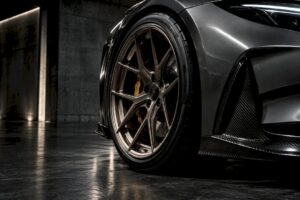
- Liquid bronze center paired with a polished lip complements warm exterior tones and contrasts well against carbon fiber trim.
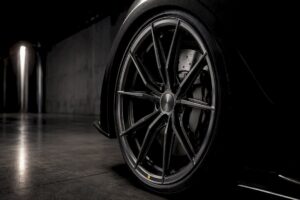
- Matte black centers with a satin lip keep the stance understated on lighter exterior colors.
- Color-matched centers tie the wheel directly to the body, a popular choice on builds already running carbon aero components.
Wheel finish should be chosen alongside any aero or exhaust hardware already on the car, since a mismatched finish undercuts an otherwise cohesive build faster than almost any other single detail.
E6 engineering validation and pairing wheels with E6 Carbon aero and E6 Motorsports exhausts
Every bespoke fitment starts with measurement: bolt pattern, hub bore, caliper dimensions, and ride height are captured before any barrel is machined. That data feeds a mockup stage, followed by CNC finishing to the specified offset and lip depth, then a dynamic clearance check before the set ships.
What that process looks like in practice:
- Offset and width targets are set to preserve steering geometry rather than simply chasing the widest visual stance.
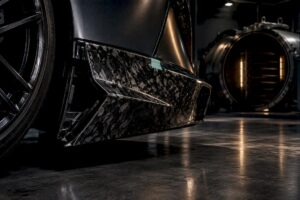
- Wheel specs are cross-checked against aero components such as splitters and side skirts to keep front and rear visual balance consistent.
- Finish selection happens alongside hardware selection, so color-matched centers and exhaust tip finishes are considered together rather than as afterthoughts.
- Final sign-off includes a fitment check specific to the vehicle platform, not a generic size chart.
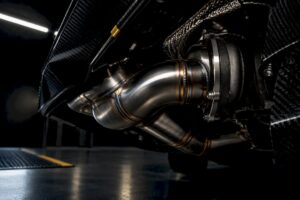
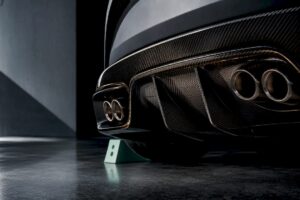
A wheel set built this way pairs naturally with carbon aero components and an LFA-style exhaust, since offset and width decisions made for the wheels also inform how the rest of the build reads from outside the car.
How to specify, order, and install a bespoke E6 two‑piece wheel set for your LC500
- Gather bolt pattern, hub bore diameter, caliper width and height, current ride height, and target tire size before starting a consultation.
- Ask about offset and backspace ranges for your specific brake package, since sport-package calipers change the safe margin.
- Confirm finish options for the center and barrel, including whether color-matching to your paint code is available.
- On installation day, confirm hub-centric seating before torquing, then torque to the wheel manufacturer’s specification in the correct sequence.
- Test drive at low speed first, checking for rubbing at full lock and any new vibration or noise, before taking the car to highway speed.
Pro Tip: Bring your build’s exact ride height measurement to the consultation, not the factory spec sheet number: lowered cars need barrel width and offset adjusted to match actual clearance, not published figures.
Why bespoke two-piece forged wheels are the right investment for LC500 owners
Fitment-first engineering is the difference between a wheel that looks right in a photo and one that clears every suspension component through a full range of motion. That distinction compounds over years of ownership: a wheel spec’d correctly the first time avoids the recurring cost of re-machining, spacers, or fender damage that a rushed build creates. For an LC500 owner, pairing that fitment discipline with matched aero and exhaust hardware is what turns a wheel upgrade into a complete, coherent build worth the investment.
— E6 Engineering
Get a bespoke E6 Forged fitment built for your LC500
A precise wide stance on an LC500 comes down to getting offset, lip depth, and clearance right the first time, and that’s exactly what E6 Forged’s two-piece modular platform is built to deliver. Rather than guessing at spacers or off-the-shelf sizing, you work through a measured consultation that accounts for your car’s actual brake package and ride height.
What a consultation with E6 typically covers:
- Bolt pattern, hub bore, and caliper measurements specific to your LC500.
- Offset and backspace recommendations for your target stance and tire size.
- Finish and color-match options for the center and barrel.
- An estimated lead time for your custom configuration before production begins.
Explore the full E6 Forged wheels lineup to start a fitment consultation, or check in-house installation services if you want the mounting and clearance verification handled by the same team that engineered the wheels.
Sources
- 2021 LEXUS LC: LUXURY DRIVING EVOLVED – Lexus USA Newsroom
- Brochure for the 2019 LC
- How forged wheels are made – Hagerty
- Southwestalu
FAQ
Will E6 Forged two-piece wheels fit my LC500 without cutting the fender?
In most cases, yes: choosing the correct offset, backspace, and barrel width lets you widen the visual stance without destructive fender rolling. The exact margin depends on your ride height and whether your car has the Sport Package’s larger brakes, so a measured consultation is the safest way to confirm clearance before ordering.
What is the difference between welded and bolted two-piece wheels?
A welded two-piece wheel fuses the center and barrel permanently for a slimmer profile and maximum rigidity, while a bolted design joins them with hardware so barrels can be replaced or refinished later. Bolted wheels need periodic torque checks and seal inspection, while welded wheels need periodic seam inspection instead.
Why does 6061‑T6 forged construction matter for a wide-stance build?
Forging aligns the aluminum’s grain structure along the wheel’s stress lines, which improves fatigue resistance compared with a cast wheel, as described in Hagerty’s overview of forged wheel manufacturing. The T6 heat-treatment step that follows forging is what gives the finished 6061-T6 wheel its target strength.
How much does a custom E6 Forged two-piece wheel set cost?
Pricing depends on the product line: E6 Forged Multipiece wheels start from 3800 USD per set, while E6 Luxury Wheels start from 3500 USD per set. Final pricing depends on size, finish, and offset specification chosen during your consultation.
Do I need hub-centric rings if my wheels are already hub-centric machined?
No, a wheel machined with a hub-centric bore that matches your LC500’s hub diameter seats directly on the hub without needing separate centering rings. This is part of why CNC tolerance during manufacturing matters so much for ride quality and long-term wheel bearing wear.
Recommended
- AeroTech Carbon Fiber Hood | Lexus LC500
- Z-Carbon Aero Kit | Lexus LC500
- Dry Carbon Fiber Canards | Lexus LC500
- AeroTech Diffuser Combo | Lexus LC500
Pricing, custom fitment options, and surface finishes subject to availability. Please contact E6 Carbon or E6 Forged directly to confirm vehicle-specific offset parameters, brake clearances, and current lead times prior to placing your order.