TL;DR:
- Forged carbon fiber offers isotropic strength and complex shaping capabilities, making it ideal for high-performance automotive parts. Its distinctive marbled appearance and structural reliability depend on quality manufacturing and proper inspection. The material is increasingly popular for interior trims, aerodynamic components, and wheels, combining weight savings with visual appeal.
Forged carbon fiber has moved well past novelty status. These days, the best forged carbon fiber examples show up on Lamborghini rooftops, Ferrari interior trims, and competition-spec suspension brackets where every gram matters. The material’s signature marbled pattern is visually unmistakable, and its mechanical properties go beyond aesthetics. If you’re building, modifying, or just planning your next upgrade, understanding what makes this material different, and where it performs best, changes how you shop and spec your car.
Table of Contents
- Key takeaways
- 1. What to look for in forged carbon fiber parts
- 2. Forged carbon fiber wheels and rims
- 3. Interior trims, door cards, and cabin components
- 4. Aerodynamic components: splitters, side skirts, and diffusers
- 5. Structural components: suspension brackets and engine covers
- 6. Forged carbon fiber vs. traditional woven carbon fiber vs. forged aluminum
- 7. OEM vs. aftermarket forged carbon fiber
- 8. Recommendations for choosing forged carbon fiber for your build
- My honest take on forged carbon fiber in automotive builds
- Explore forged carbon fiber upgrades at E6 Carbon
- FAQ
Key takeaways
| Point | Details |
|---|---|
| Isotropic strength advantage | Forged carbon fiber delivers uniform strength in all directions, unlike traditional woven carbon fiber. |
| Complex shapes made possible | The compression molding process enables 3D geometries that woven layup simply cannot achieve. |
| Market is growing fast | Forged composite demand hit $134M in 2025 and is projected to reach $163M by 2030. |
| Best for multi-load applications | Suspension brackets, aero components, and interior trims benefit most from forged carbon’s balanced stress response. |
| Inspection matters more here | Forged carbon parts require specific non-destructive testing methods to verify structural integrity over time. |
1. What to look for in forged carbon fiber parts
Before diving into specific forged carbon fiber examples, you need a framework for evaluating what you’re actually buying. Not all forged carbon parts are created equal, and the market has enough low-quality imitations to trip up even experienced buyers.
Material properties to assess:
- Fiber density: Genuine forged carbon composite uses roughly 500,000 intertwined fibers per square inch, producing a density one-third that of titanium with comparable or greater strength.
- Isotropic behavior: The randomized chopped fiber structure means strength is consistent across all directions, unlike woven carbon fiber’s directional bias.
- Resin content: Forged carbon parts carry around 25% more resin by weight than traditional woven carbon, which matters for total part weight and repairability.
- Surface finish: Compression molding produces high repeatability and consistent finishes, so uneven texture or visible voids are quality red flags.
- Shape complexity: If the part has compound curves, integrated brackets, or thickness transitions, forged carbon is likely the right choice. Flat or mildly curved parts don’t justify the price premium over woven layups.
For decorative parts like interior accents, the visual standard matters as much as structural performance. For load-bearing components like wheels or suspension pieces, you want documented compression molding cycles and matched metal tooling, not DIY kits.
Pro Tip: Ask the manufacturer or retailer whether the part uses genuine compression-molded forged composite or a surface-applied forged carbon film. The film versions look similar but offer none of the structural benefits and cost far less to produce.
2. Forged carbon fiber wheels and rims
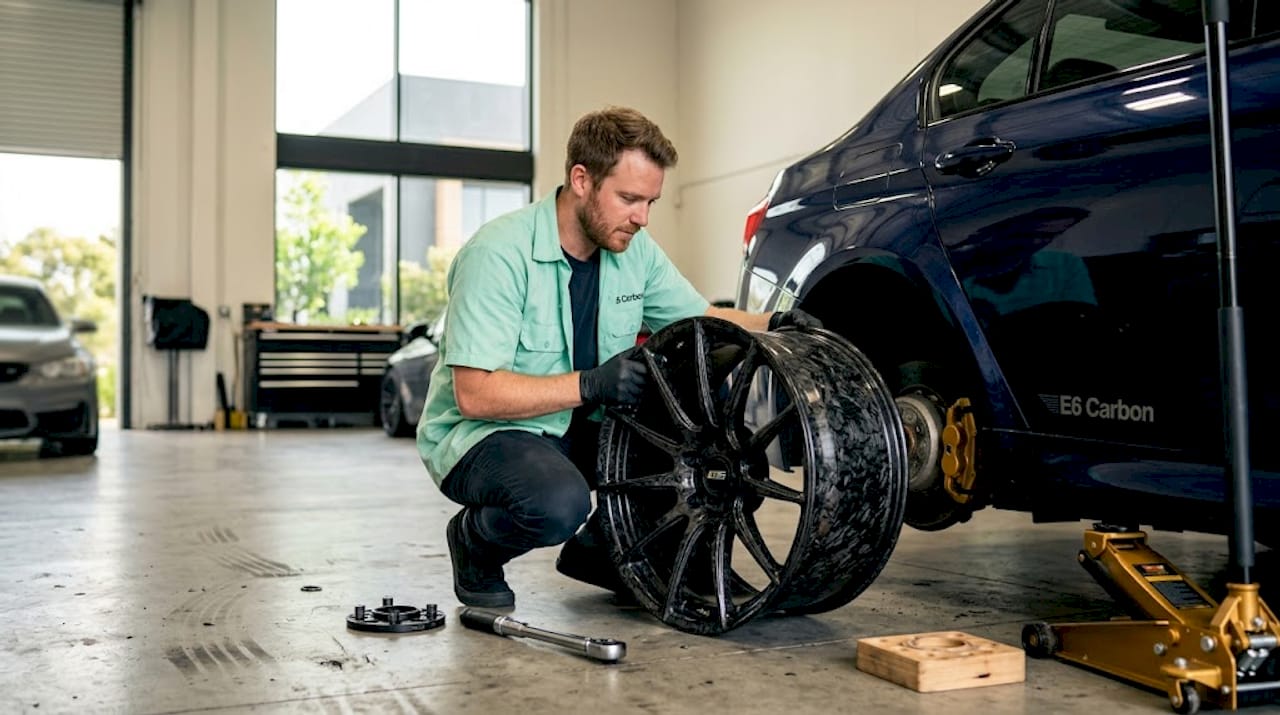
Wheels are the most performance-critical forged carbon fiber application you’ll find in the aftermarket. The engineering case is strong. Reducing unsprung and rotational mass directly improves acceleration, braking, and steering response in ways that most other modifications simply cannot match.
Forged carbon wheels take that concept further than forged aluminum by combining extreme rigidity with a weight reduction that aluminum cannot approach at equivalent thickness. The isotropic load distribution of forged carbon fiber handles the multi-directional stresses of cornering, braking, and curb impacts better than directional woven carbon fiber, which can delaminate under off-axis loads.
For a deeper breakdown of how carbon fiber wheels perform against conventional options, the E6 Carbon guide on carbon fiber wheel performance covers the technical and practical side with specifics. E6 Carbon’s own AR01 and AR03 multi-piece wheel lines are built around exactly this engineering philosophy.
3. Interior trims, door cards, and cabin components
Interior applications represent the largest category of forged carbon fiber examples in production and aftermarket settings. The automotive sector holds 40% of the forged carbon composite market, and a significant slice of that is cabin trim work.
Door cards, dashboard inserts, center console panels, gear surround trims, and steering wheel accents are all natural fits. These parts often have complex compound curves that would require expensive multi-piece woven layups, but forged carbon handles them in a single compression cycle. The marbled visual texture also commands a luxury premium that plain woven weave no longer delivers in the same way. Buyers familiar with the standard 2×2 twill weave actively seek out forged carbon for exactly that reason.
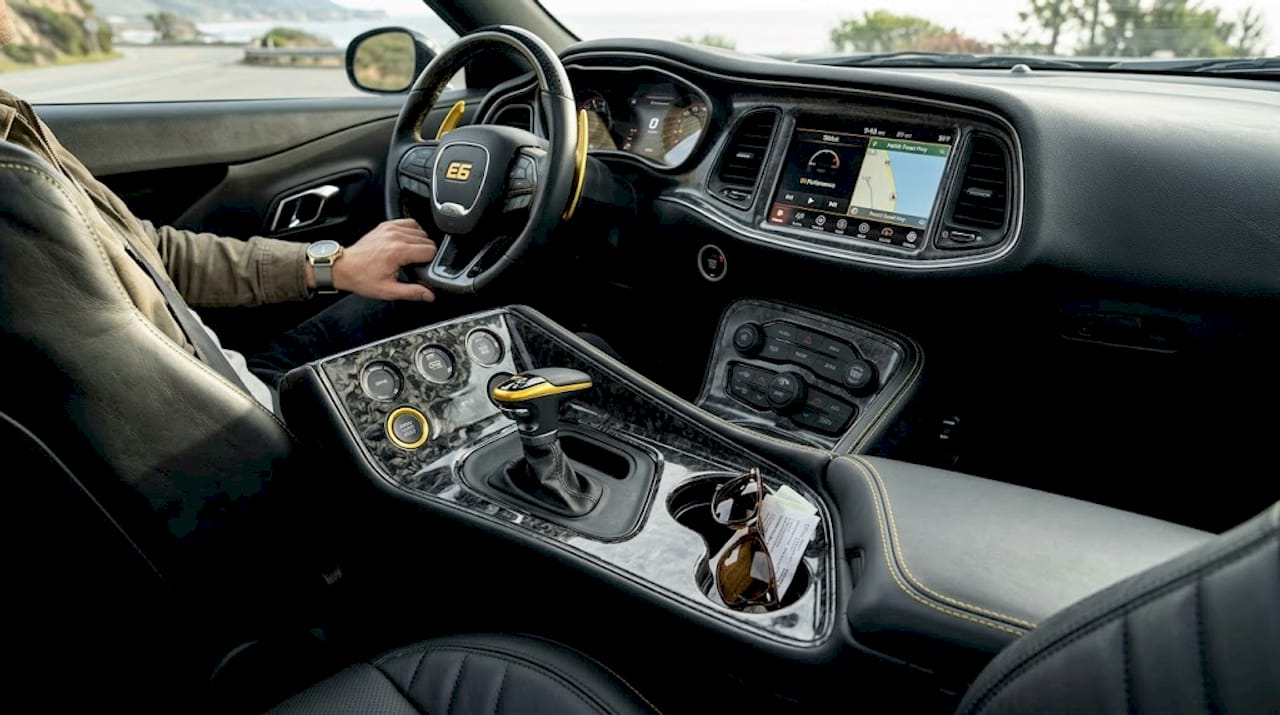
Lamborghini pioneered this approach in production cars, offering forged carbon interior options that combine motorsport inspiration with manufacturing efficiency. The aftermarket has followed at scale, with parts available for platforms ranging from BMW M-series to McLaren 720S.
4. Aerodynamic components: splitters, side skirts, and diffusers
Aero components are where the geometry advantages of forged carbon really show up. A front splitter or rear diffuser with integrated mounting flanges, underbody channels, and variable thickness sections would require hours of hand layup in woven carbon fiber. Forged carbon produces the same part in a fraction of the time with more consistent results.
Quasi-isotropic stress distribution also makes forged carbon ideal for parts that take impacts from road debris, curbing, and airflow-induced vibration simultaneously. Woven carbon can splinter along fiber lines under these mixed loads. Forged carbon absorbs them more evenly.
For C8 Corvette owners specifically, the E6 Carbon roundup of C8 Corvette side skirts includes forged carbon options alongside traditional materials, with comparisons that show exactly where the material advantage is real versus marketing.
5. Structural components: suspension brackets and engine covers
This is where the engineering conversation gets serious. Aerospace lattice brackets in forged composite can run 60% lighter than aluminum equivalents. Automotive suspension brackets don’t hit that exact number, but the principle holds. A forged carbon fiber suspension control arm or differential mount bracket delivers meaningful weight savings with no structural compromise when engineered correctly.
Engine covers are a more accessible entry point. The parts sit in high-vibration, high-heat environments where the consistent resin consolidation of compression-molded forged carbon outperforms hand-laid alternatives in durability. They also showcase the marbled aesthetic under an open hood, which matters to anyone who takes their car to shows or track days where engine bays get scrutinized.
Pro Tip: For structural suspension or drivetrain brackets, request the manufacturer’s compression molding cycle documentation and ask whether matched metal tooling was used. Parts made with open or soft tooling won’t deliver the same density or mechanical consistency.
6. Forged carbon fiber vs. traditional woven carbon fiber vs. forged aluminum
Understanding the trade-offs helps you place each material correctly in your build.
| Category | Forged carbon fiber | Woven carbon fiber | Forged aluminum |
|---|---|---|---|
| Strength direction | Isotropic (all directions equal) | Anisotropic (strongest along fiber axis) | Isotropic |
| Weight | Very low | Very low (slightly lower resin ratio) | Low to moderate |
| Shape complexity | Excellent for 3D complex geometries | Limited by layup and mold access | Moderate via CNC and die forging |
| Visual appeal | Distinctive marbled pattern | Classic weave pattern | Metallic, polished or matte finish |
| Repairability | Difficult (specialized inspection required) | Possible but technically demanding | Good (weldable, machinable) |
| Cost for complex parts | Lower tooling cost than woven | High labor cost | Moderate |
| Best use cases | Aero parts, trims, brackets, wheels | Flat/curved panels, monocoques | Structural suspension, hubs |
The comparison with forged aluminum for aesthetic and design flexibility shows that aluminum still wins for high-load structural hubs and knuckles where weldability and machinability matter. Forged carbon wins on aero components and interior trims where weight and geometry complexity drive the decision.
7. OEM vs. aftermarket forged carbon fiber
There’s a real quality gap between the two categories, and it’s worth understanding before you spend serious money.
OEM forged carbon parts, like Lamborghini’s roof and interior pieces, are developed with matched metal tooling, validated compression molding cycles, and full quality assurance programs. The parts are expensive because the process is expensive to do right.
Aftermarket parts range from legitimate compression-molded components to surface-wrapped parts using a printed forged carbon film over fiberglass or standard carbon. The visual difference can be subtle. The structural difference is not. Reputable aftermarket manufacturers will specify the manufacturing process, fiber content, and molding method. If that documentation doesn’t exist, treat the part as decorative only.
Industry demand reaching $134M in 2025 has attracted both serious manufacturers and opportunistic ones. Vet your sources carefully.
8. Recommendations for choosing forged carbon fiber for your build
Matching the material to the application is more important than maximizing the use of forged carbon across your entire car. Here’s how to approach it:
- For visual impact with low structural demand: Interior trims, engine covers, and mirror caps are perfect entry points. You get the full aesthetic benefit at the lowest engineering risk.
- For aerodynamic performance: Splitters, diffusers, and side skirts benefit from forged carbon’s geometry flexibility. Prioritize parts with integrated mounting points rather than bonded-on tabs.
- For wheel upgrades: Luxury car aesthetics with forged wheels covers how to match wheel specification to chassis requirements, which is worth reading before you commit to a set.
- For suspension components: Demand full manufacturing documentation. The non-destructive inspection requirements for forged carbon structural parts include CT scans and leak-down testing. Reputable suppliers acknowledge this and build it into their QA process.
- Budget approach: Start with interior trims or a single aero component from a proven manufacturer. Forged carbon at the entry level is still a legitimate performance and style upgrade. You don’t need to do the entire car at once.
Pro Tip: The marbled surface pattern of genuine forged carbon is random and three-dimensional. Hold the part in different lighting angles. A printed film will show repeating patterns under close inspection. Genuine forged composite will not.
My honest take on forged carbon fiber in automotive builds
I’ve watched forged carbon fiber go from a Lamborghini-exclusive novelty to a broadly available material, and my view on it has evolved considerably.
What I’ve learned is that most enthusiasts overestimate the weight savings relative to woven carbon and underestimate the aesthetic premium. The marbled pattern is genuinely distinctive in ways that photos don’t capture well. In person, on a well-lit interior or under an open hood, it commands attention that standard weave no longer delivers as effectively.
Where I’ve seen people go wrong is chasing structural applications without verifying manufacturing quality. A forged carbon suspension bracket from a manufacturer who can’t produce tooling documentation is a liability, not an upgrade. I’ve seen parts fail inspection under CT scanning that looked perfect on the surface.
The material technology is still evolving. Fiber lengths, resin systems, and molding pressures continue to improve, and the gap between OEM and aftermarket quality is narrowing as more manufacturers invest in proper tooling. My advice is to buy from manufacturers who are transparent about the process, start with lower-stakes applications to build familiarity, and treat forged carbon as a long-term investment rather than a quick visual upgrade.
— Kunal
Explore forged carbon fiber upgrades at E6 Carbon
E6 Carbon builds forged wheels and carbon fiber performance parts for the platforms you care about, including BMW, Lamborghini, Ferrari, McLaren, and Mercedes-AMG. Every component is engineered for real-world performance, not just show car presentation.

Browse the AR03 multi-piece wheels and AR01 multi-piece wheels for fully customizable forged wheel options that match your build goals. Before installation, the E6 Carbon forged wheel safety inspection guide walks you through what to check so you get the most from your investment. Whether you’re upgrading for the track, the street, or the show floor, E6 Carbon has the specification options to make it happen.
FAQ
What is forged carbon composite, exactly?
Forged carbon composite is a material made from randomly oriented chopped carbon fibers mixed with resin and compression-molded under heat and pressure. Unlike woven carbon fiber, it delivers isotropic strength across all directions and can form complex 3D shapes in a single molding cycle.
How does forged carbon fiber compare to woven carbon fiber?
Forged carbon fiber is stronger in all directions simultaneously, handles complex geometries better, and has a distinctive marbled appearance. Woven carbon fiber is slightly lighter due to a lower resin ratio and excels in applications with predictable directional loads.
What are the most common forged carbon fiber automotive applications?
The most common applications include interior trims, door cards, aerodynamic components like splitters and diffusers, engine covers, suspension brackets, and wheels. Interior and aero parts account for the largest share of aftermarket forged carbon use.
Are forged carbon fiber parts safe for structural use?
Yes, when manufactured using matched metal tooling and validated compression molding cycles. Structural components should come with documentation and be inspected using non-destructive methods like CT scanning, particularly for wheels and suspension brackets.
Why does forged carbon fiber have a marbled look?
The marbled pattern results directly from the randomized orientation of chopped fibers during compression molding. No two parts look identical, which is why the aesthetic carries a genuine exclusivity that printed carbon film alternatives cannot replicate.