TL;DR:
- Buying forged wheels is a critical upgrade for performance vehicles, with load ratings and fitment specs being vital for safety and proper function. Understanding construction types, material standards, and finishes helps buyers choose wheels that balance weight, durability, and maintenance needs effectively. Certification marks like JWL, VIA, or TÜV ensure the wheels have undergone rigorous safety testing, making informed comparison essential to prevent costly mistakes.
Buying forged wheels is one of the highest-impact upgrades you can make to a performance vehicle, but the sheer volume of options makes the decision genuinely hard. You’re sorting through bolt patterns, forging methods, load ratings, finish types, and brand claims, all while trying to figure out which specs actually matter for your car and driving style. This forged wheel buying guide cuts through that noise. By the end, you’ll know exactly which technical criteria to evaluate, how to compare brands side by side, and how to match your final choice to your budget and use case.
Table of Contents
- Key Takeaways
- 1. Your forged wheel buying guide starts with load ratings
- 2. Fitment is more than bolt pattern
- 3. Monoblock, two-piece, and three-piece construction
- 4. Material: why 6061-T6 aluminum is the standard
- 5. Finish options and what they actually cost you in maintenance
- 6. Brand landscape: who’s making what and at what price
- 7. Side-by-side comparison framework for your shortlist
- 8. Situational recommendations by driver type
- My honest take on where buyers go wrong
- Ready to put this guide to work with E6carbon’s forged lineup
- FAQ
Key Takeaways
| Point | Details |
|---|---|
| Load rating is non-negotiable | Match your wheel’s load class to your vehicle weight and dynamic forces to avoid safety failures. |
| Fitment specs go beyond bolt pattern | Center bore, offset, and caliper clearance all affect whether a wheel actually works on your car. |
| Monoblock vs. multipiece changes the math | Monoblock wheels are lighter and stiffer; multipiece wheels offer deeper customization for specific fitments. |
| Finish type drives long-term care | Ceramic coatings outlast anodized or machined finishes and require less frequent maintenance. |
| Certifications signal real quality | Look for JWL, VIA, or TÜV certification to confirm a wheel has passed rigorous safety and fatigue testing. |
1. Your forged wheel buying guide starts with load ratings
Load rating is the spec most buyers skip and the one that bites them hardest. Every wheel has a maximum load it can carry under the dynamic forces of acceleration, braking, and cornering. Those forces multiply your vehicle’s static weight several times over.
A well-structured load class system puts wheel categories into Standard Duty at 850 kg, Performance Duty at 1,050 kg, and Racing Duty at 1,250 kg per wheel. A heavy luxury SUV running undersized load-rated wheels is a liability, not a performance upgrade. Pull your vehicle’s gross axle weight rating before you start comparing anything else.
2. Fitment is more than bolt pattern
Most buyers check the bolt pattern and stop there. That’s not enough. Center bore matters just as much. If your wheel’s center bore is larger than your hub, the wheel sits on the lug nuts rather than the hub flange, and vibration follows. Hub-centric rings correct an oversized center bore and restore proper hub-centered mounting.
Offset and caliper clearance are the other two variables people consistently underestimate. Offset controls how far the wheel sits inside or outside the fender. Get it wrong and you’re rubbing tires on suspension components or pushing the wheel so far out it changes your steering geometry. Caliper clearance is especially relevant if you’ve already upgraded your brakes. A beautiful wheel that won’t clear your six-piston calipers is useless.
Pro Tip: Before ordering, tape a cardboard template of the wheel’s inner profile to your hub and test caliper clearance physically. It takes ten minutes and prevents an expensive mistake.
3. Monoblock, two-piece, and three-piece construction
Understanding forged wheel construction types is where the real engineering tradeoffs live. Each approach serves a different priority.
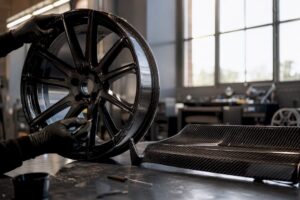
Monoblock forged wheels are machined from a single aluminum billet. They’re the lightest option per diameter, structurally continuous with no hardware points, and typically the most rigid. They also offer fewer fitment adjustments since the width and offset are fixed at machining.
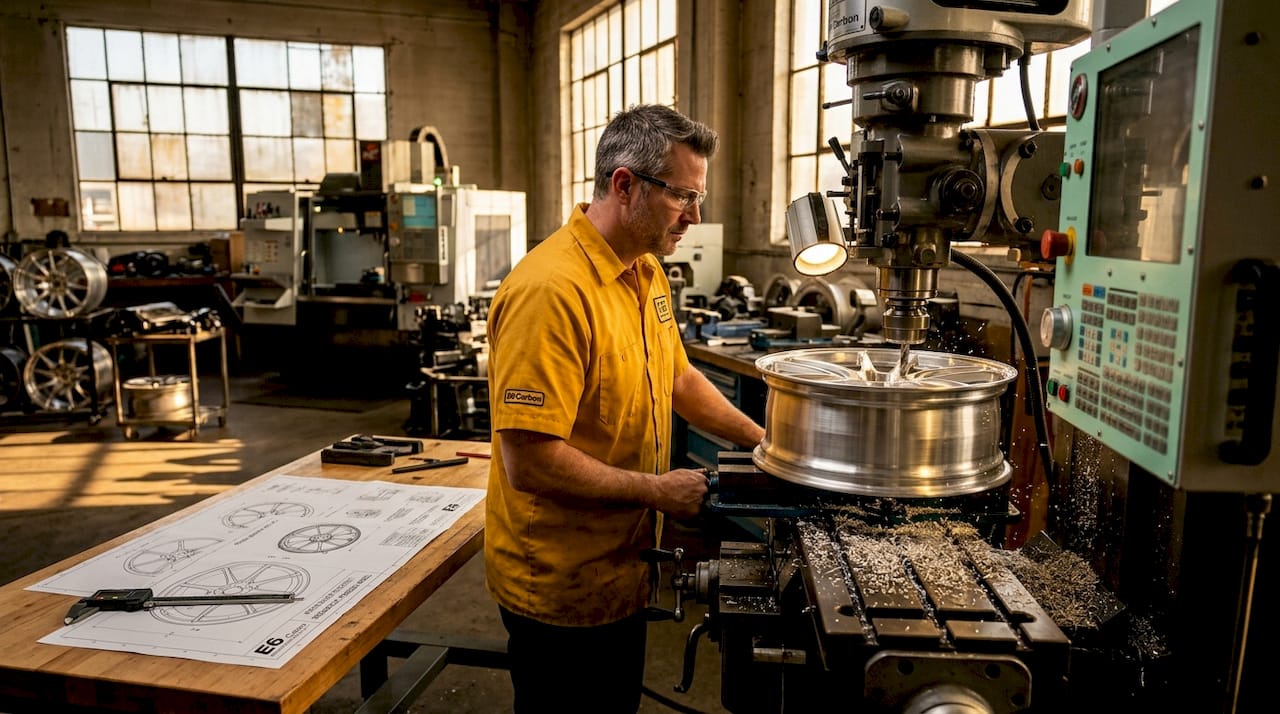
Two-piece forged wheels combine a forged center with a spun or forged outer barrel. This lets you dial in width and offset more precisely. The barrel can be made wider without changing the center tooling, which matters for fitment-specific builds.
Three-piece forged wheels add a forged inner barrel to the mix. You get maximum customization, the ability to rebuild or replace individual sections, and access to deep-dish profiles that look exceptional on track-oriented cars. They weigh more than monoblock but offer a level of bespoke fitment that’s nearly impossible to match otherwise.
Lightweight forged wheels of the monoblock variety consistently deliver the highest performance gains for track-focused builds by reducing unsprung mass. But for a wide-body Lamborghini or a deep-dish show build on a luxury sedan, a three-piece unit is often the right call.
4. Material: why 6061-T6 aluminum is the standard
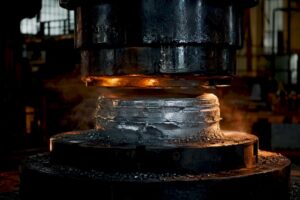
The alloy designation tells you a lot about a wheel’s durability and repairability. 6061-T6 aluminum is the benchmark in performance forging. The grain structure is compressed during the forging process rather than poured into a mold, which produces a denser, more impact-resistant material than any cast equivalent.
Cast wheels crack. Forged wheels tend to bend before they break, which gives you a warning rather than a sudden failure at speed. That’s not a minor distinction when you’re pushing a car hard on track. Forged aluminum also handles the stress cycles of repeated hard braking and cornering significantly better over time.
One thing worth knowing: forged wheel repair is more complex than repairing cast wheels. Forged repair work requires precise heat treatment and must be performed by certified technicians to maintain structural integrity. Factor that into your long-term ownership calculus.
5. Finish options and what they actually cost you in maintenance
Your finish choice is a long-term commitment. Every finish type looks great when new. The differences show up after 18 months of brake dust, road salt, and washing cycles.
- Ceramic coating is the most durable option. It resists brake dust and corrosion better than anodized or machined finishes and can withstand temperatures up to 650°C. Expect five to seven years before recoating is needed.
- Powder coat offers solid protection at lower cost and comes in the widest color range. It’s not as heat-tolerant as ceramic but holds up well for street use with basic forged wheel care tips followed consistently.
- Anodized finishes look sharp but are more susceptible to chemical cleaners and road salt. They require pH-neutral cleaners specifically.
- Polished or machined finishes are the highest maintenance option. They’re visually stunning but oxidize without regular sealing and scratch more easily.
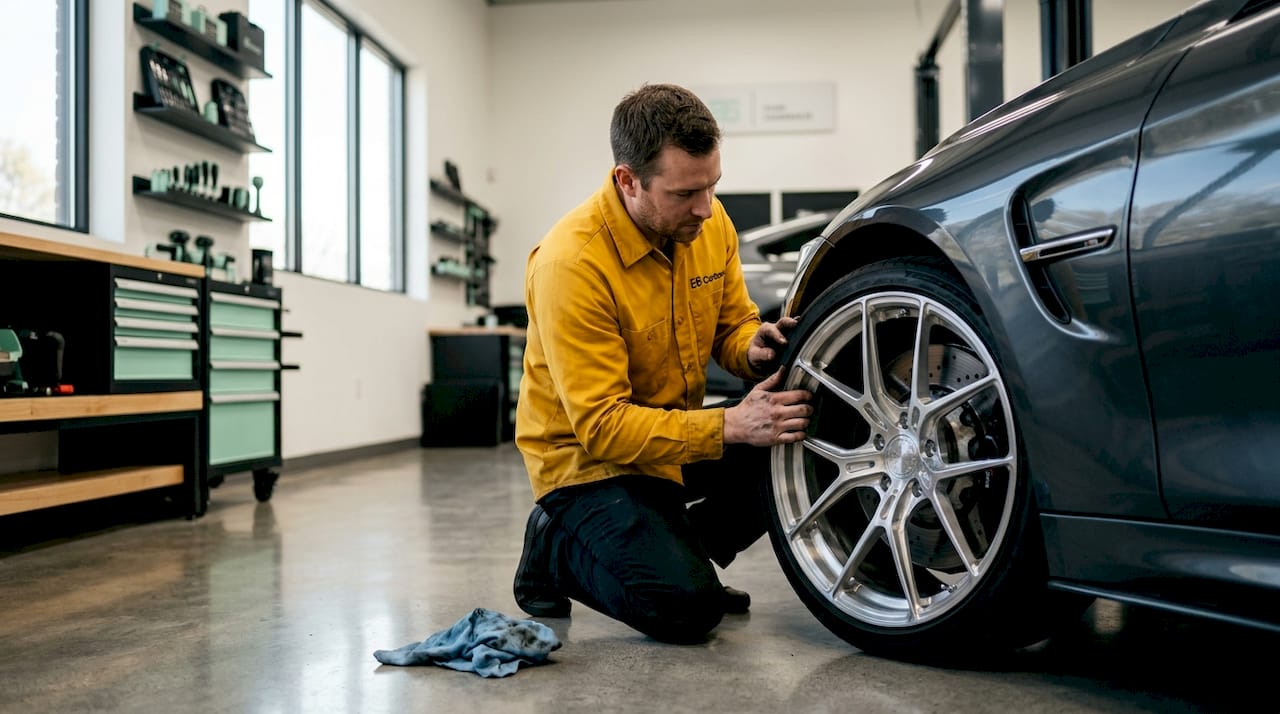
A forged wheel care checklist for any finish type should include weekly rinsing of brake dust, monthly washing with a pH-neutral soap, and inspecting for chips or surface damage every three months. Brake dust is chemically corrosive when hot. Leaving it on a wheel for weeks accelerates surface degradation regardless of finish type.
6. Brand landscape: who’s making what and at what price
Pricing spreads wide in this category. Monoblock forged wheels typically start around $700 per wheel. High-end multipiece forged wheels can reach over $5,000 per wheel. Here’s how the major players stack up:
| Brand | Origin | Specialty | Price Range (per wheel) |
|---|---|---|---|
| Forgeline | USA | Custom monoblock, motorsport applications | $800 to $1,800 |
| HRE | USA | Luxury, three-piece bespoke fitment | $1,500 to $5,000+ |
| Hongcheng | China | Load-rated performance, value-oriented | $500 to $1,200 |
| E6 Forged | International | Multipiece luxury and sport, deep customization | Custom pricing |
US brands like Forgeline and HRE command premium prices because of custom engineering, domestic production standards, and the ability to build true one-off fitments. That premium is real and justified for certain buyers. For performance enthusiasts who want solid engineering at a more accessible price, Asian-manufactured options with proper certification are worth serious consideration.
Certified wheels bearing JWL, VIA, or TÜV marks have passed dynamic radial fatigue and impact resistance testing that simulates over one million kilometers of road use. A wheel without those marks is an unknown quantity, regardless of how good it looks in the product photos.
7. Side-by-side comparison framework for your shortlist
Once you have a shortlist of three to five wheels, the temptation is to go with the best-looking one. Resist that. Build a comparison across these five dimensions:
| Criteria | What to compare | Why it matters |
|---|---|---|
| Weight per wheel | Kilograms at your target size | Unsprung mass directly affects handling response |
| Load rating | Standard, Performance, or Racing class | Must exceed your vehicle’s dynamic load requirements |
| Finish durability | Ceramic vs. powder vs. anodized | Determines long-term maintenance frequency and cost |
| Fitment flexibility | Fixed offset vs. adjustable barrel | Critical for wide-body builds or unusual hub specs |
| Certification | JWL, VIA, TÜV presence | Confirms tested safety margins |
Weight is the spec most people underweight in their comparison. Forged wheel benefits for handling come almost entirely from reducing unsprung mass. A wheel that’s 1.5 kg lighter per corner is a meaningful difference in steering feel and suspension response. You can read more about how wheel strength and weight interact on the E6carbon blog.
8. Situational recommendations by driver type
Not every buyer has the same priorities. Here’s how to filter your decision by actual use case.
Track enthusiasts should prioritize monoblock construction for minimum weight, Racing Duty load ratings, and ceramic or powder coat finishes that resist brake heat. Skip polished finishes entirely. Your wheels will take punishment and you need coatings that don’t require babying between sessions.
Daily drivers have more flexibility. A two-piece forged wheel in a powder coat finish hits a solid balance between performance and aesthetics without demanding intensive care. Focus on getting fitment right, particularly offset, to avoid premature tire wear.
Luxury sedan and SUV owners should lean toward three-piece multipiece construction for the fitment control it offers. Heavier vehicles need wheels at the upper end of load ratings. Finish quality matters more here for curb appeal, so ceramic coating is worth the added cost.
Off-road builds are a different calculation. Beadlock-capable designs and higher load ratings matter more than minimum weight. Common buyer mistakes in off-road applications usually involve underestimating the load rating required under articulation and trail forces.
Pro Tip: For any vehicle that sees track use even occasionally, always retorque your lug nuts after the first 50 to 100 miles of driving on new wheels. Torque specifications vary by stud diameter and vehicle type, generally running 80 to 150 ft-lbs, and the consequences of getting this wrong at speed are severe.
One forged wheel care best practice that gets overlooked: check your lug nut torque after the initial break-in miles. Wheels and hubs seat against each other as you drive, which can cause initial torque to relax.
My honest take on where buyers go wrong
I’ve watched a lot of enthusiasts spend serious money on forged wheels and still end up disappointed. Most of the time, the wheels themselves aren’t the problem. The process was.
The biggest mistake I see is treating wheel selection like a visual decision with specs as a secondary check. It works the opposite way. You nail the specs first, then you find the best-looking wheel within that constraint set. When someone buys a wheel because it looks perfect on someone else’s build and then discovers the offset is wrong for their car, they’re either modifying suspension geometry to make it fit or selling at a loss. Neither outcome is good.
I’ve also seen people skip the certification question entirely when buying from newer or smaller manufacturers. A wheel that looks identical to a certified product but carries no JWL or TÜV mark has simply never been tested to those standards. You’re trusting marketing photography, not engineering data.
The maintenance side is where I see the most unnecessary long-term damage. Forged wheels are durable, but they’re not indestructible. Brake dust left on a wheel for weeks becomes chemically aggressive as it heat-cycles repeatedly. A proper forged wheel care checklist doesn’t need to be complicated. Rinse the wheels weekly, wash monthly, inspect quarterly, and recoat when the finish shows wear. That’s it. Skipping those steps on a $3,000 set of wheels to save twenty minutes is a false economy.
If I had one piece of advice for any buyer: slow down on aesthetics and spend thirty more minutes on fitment verification before clicking purchase. The wheel that fits your car correctly and handles your driving style will always look better than the wrong wheel in the right color.
— Kunal
Ready to put this guide to work with E6carbon’s forged lineup
E6carbon builds multipiece forged wheels specifically for the buyers this guide is written for: enthusiasts who’ve done the research and want a manufacturer that matches their standards. Their product range covers the full spectrum, from track-focused monoblock options to deeply customized multipiece builds for luxury and wide-body applications.
If you’re ready to move from research to fitment, the E6carbon step-by-step installation guide walks you through torque specs, hub-centric setup, and break-in best practices. For buyers who want to see the hardware first, the AR03 Multipiece Wheels and AR01 Multipiece Wheels are strong starting points across different width and offset configurations. E6carbon’s team also offers custom wheel consultation for buyers with specific fitment requirements or one-off builds. Before mounting anything, run through the forged wheel safety inspection checklist to confirm everything is correct before you hit the road.
FAQ
What makes forged wheels better than cast wheels?
Forged wheels use a grain-compression process that produces a denser, stronger aluminum structure than casting, resulting in better impact resistance and a lower weight for the same diameter and load capacity. The reduced unsprung mass directly improves handling response and braking feel.
How do I know what load rating I need?
Check your vehicle’s gross axle weight rating and match it to a wheel load class that exceeds that figure under dynamic load conditions. Hongcheng’s classification system, for example, spans 850 kg to 1,250 kg per wheel to cover everything from daily performance cars to heavier track builds.
What certifications should forged wheels have?
Look for JWL, VIA, or TÜV certification. These marks confirm the wheel has undergone dynamic radial fatigue and impact testing equivalent to over one million kilometers of simulated road use, which is the industry benchmark for verified safety.
How often should I maintain my forged wheels?
A solid forged wheel care routine means rinsing weekly to remove brake dust, washing with pH-neutral soap monthly, and inspecting the finish every three months for chips or surface damage. Ceramic-coated wheels need recoating roughly every five to seven years under normal conditions.
Do I need to retorque my lug nuts after installation?
Yes. Retorque your lug nuts after the first 50 to 100 miles of driving. Wheels and hubs physically seat against each other during initial use, which can relax the initial torque value and create a safety risk if left unchecked.