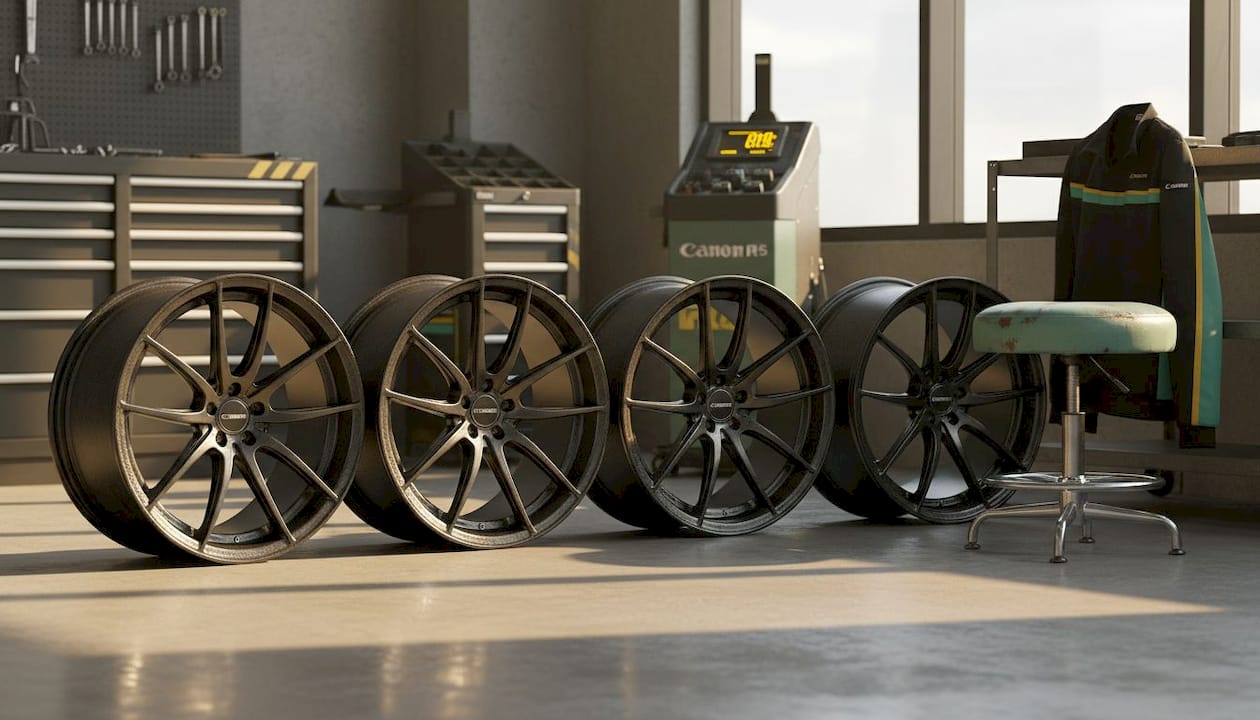
TL;DR:
- Not all carbon fiber wheels are equal due to various construction methods, architectures, and materials. These wheels offer benefits like weight reduction, improved handling, and better damping but also pose risks such as internal damage and limited repairability. Enthusiasts should carefully consider their driving environment, maintenance needs, and investment in quality support to maximize performance and safety.
Not all carbon fiber wheels are created equal, and most enthusiasts discover this the hard way. The term “carbon composite wheel” covers a range of construction methods, architectures, and material combinations that produce wildly different real-world results, and understanding their structure is the first step toward making a truly informed upgrade decision. This guide breaks down exactly how these wheels are built, what performance gains you can realistically expect, the risks most sellers won’t tell you about, and what separates a worthwhile investment from an expensive mistake.
Table of Contents
- Understanding carbon composite wheels: Construction and types
- Performance benefits: Why top enthusiasts choose carbon composite wheels
- Risks, maintenance, and repairs: The hidden side of carbon composite wheels
- Should you make the switch? Practical considerations for enthusiasts
- What most guides miss about carbon composite wheels
- Upgrade your ride with advanced carbon and forged wheels
- Frequently asked questions
Key Takeaways
| Point | Details |
|---|---|
| What defines a carbon composite wheel | It is constructed using carbon fiber laminates for the rim and often paired with lightweight metal spokes or hubs. |
| Performance gains | Lower weight and rotating mass deliver acceleration, handling, and lap time advantages for performance cars. |
| Maintenance complexity | Carbon wheels require specialized inspection and care, with damage from impacts often not visible on the surface. |
| Tradeoff decision | Enthusiasts must weigh significant benefits against high costs and increased repair/inspection demands. |
Understanding carbon composite wheels: Construction and types
With the basics established, let’s break down exactly what makes a carbon composite wheel unique and how they’re engineered.
A carbon composite wheel is a wheel whose structural rim (and sometimes spokes and/or hub) is made from a carbon-fiber reinforced composite material. This means carbon fiber strands are woven into specific patterns and then infused or pre-impregnated with epoxy resin. The resulting laminate is autoclave-cured under controlled heat and pressure to lock in its final mechanical properties. The process is labor-intensive, which is a major reason these wheels cost significantly more than forged aluminum or magnesium alternatives.
There are three main architectures you’ll encounter when exploring types of carbon wheels in the premium market:
- Monocoque (full carbon): The entire wheel structure, rim, spokes, and hub, is manufactured from carbon fiber composite. This delivers the absolute lowest weight but also the highest cost and the most sensitivity to impact damage.
- Carbon-spoked: The rim barrel is forged metal (typically aluminum or magnesium), while the spokes are carbon fiber. This balances weight savings with improved repairability.
- Hybrid designs: A carbon fiber rim is paired with forged magnesium or aerospace-grade aluminum spokes and a machined hub. This is increasingly the preferred architecture for performance road cars and track-focused builds because it provides excellent stiffness, manageable weight, and better crash tolerance.
| Architecture | Rim material | Hub/spokes | Weight savings | Repairability |
|---|---|---|---|---|
| Monocoque full carbon | Carbon fiber | Carbon fiber | Maximum | Very limited |
| Carbon-spoked | Forged metal | Carbon fiber | Moderate-high | Moderate |
| Hybrid carbon/metal | Carbon fiber | Forged metal | High | Better |
The way the carbon fiber layers are oriented matters enormously. Engineers specify the fiber angle in each ply to control stiffness, impact resistance, and fatigue strength in different load directions. A wheel that sees track use needs different ply schedules than one designed for a show car or daily driver.
Pro Tip: When evaluating a carbon composite wheel, ask the manufacturer for documentation on fiber orientation, cure cycle, and load testing. Reputable manufacturers will have this data available. If they can’t provide it, that’s a red flag.
Construction also determines repairability. A monocoque full-carbon wheel that takes a sharp curb strike may not show visible damage on the outside, but internal delamination can compromise the entire structure. Hybrid wheels often allow the carbon rim section to be inspected, replaced, or machined separately, which gives you more flexibility post-incident.
Performance benefits: Why top enthusiasts choose carbon composite wheels
Now, understanding their build, let’s analyze the performance impact that makes these wheels the choice of serious enthusiasts.
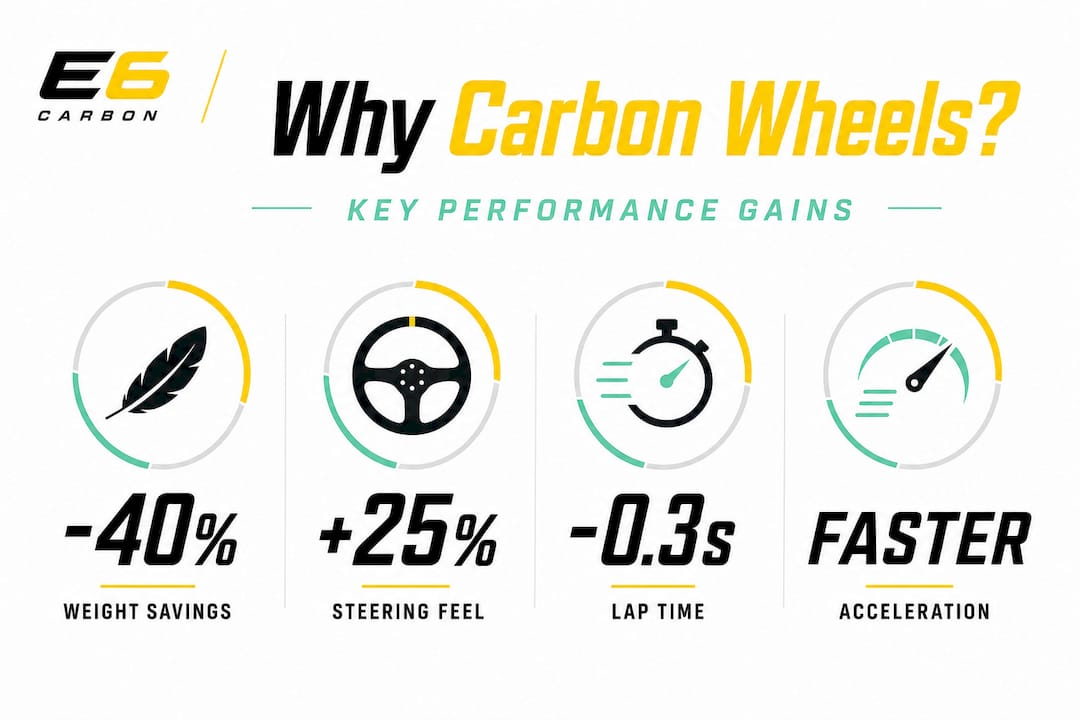
Reducing rotating mass is one of the highest-value modifications you can make to a performance vehicle. Compared to metal wheels, carbon composite wheels reduce rotating and unsprung mass and can improve stiffness and damping behavior, which translates into sharper throttle response, quicker cornering transitions, and shorter braking distances.
Here’s a concrete example that illustrates why this matters: A steel wheel on a Porsche GT3 RS can weigh around 14 kg per corner. A carbon/magnesium hybrid replacement for the same fitment can drop that to approximately 6.5 kg. That’s 7.5 kg saved per wheel and 30 kg removed from the rotating assembly alone. Because rotating mass requires more energy to accelerate and decelerate than static weight, the real-world performance improvement is disproportionate to the raw kilogram figure.
| Wheel type | Approx. weight per wheel | Rotating mass (4 wheels) | Estimated performance impact |
|---|---|---|---|
| Steel (OEM) | 14 kg | 56 kg | Baseline |
| Forged aluminum | 9 kg | 36 kg | Moderate improvement |
| Carbon/magnesium hybrid | 6.5 kg | 26 kg | Significant improvement |
| Full monocoque carbon | 5.5 kg | 22 kg | Maximum improvement |
The performance benefits of carbon fiber wheels extend well beyond straight-line acceleration. Here’s how each gain compounds in a real driving scenario:
- Acceleration: Less inertia to overcome means your engine’s torque goes further, faster. 0 to 60 times tighten noticeably on lightweight setups.
- Braking: Lighter wheels reduce the rotational momentum that brakes must fight against. Stopping distances shorten, and brake fade takes longer to set in.
- Cornering: Lower unsprung weight allows suspension components to react more precisely to road surface changes. The wheel follows the road instead of bouncing over it.
- Steering feel: Higher wheel stiffness transmits more accurate feedback to the driver through the steering system.
- Ride quality: Carbon fiber has inherent damping properties that absorb high-frequency vibrations better than aluminum, meaning the ride feels more refined without sacrificing sharpness.
Drivers who’ve moved from forged aluminum to carbon composite often describe the transition as the car feeling “more alive,” especially through technical corners where wheel responsiveness makes the biggest difference. That’s not marketing language. That’s what reduced rotational inertia and improved damping do when you put them together.
Pro Tip: If you’re building a track car or a time-attack setup, racing wheel performance upgrades can measurably cut lap times, particularly on circuits with technical sections requiring rapid direction changes. Even a 0.5 second per lap improvement compounds significantly over a race distance.
Risks, maintenance, and repairs: The hidden side of carbon composite wheels
It’s not all upside. The benefits come with real responsibilities and risks, especially compared to traditional wheels.
The most important thing every enthusiast needs to understand is that carbon composite wheels introduce failure modes that are fundamentally different from typical metals. Cracking and delamination from impacts can occur internally without any visible external sign. A metal wheel that takes a hard hit will often dent visibly or crack at the impact point. A carbon wheel may look perfect and still be structurally compromised.
This creates a genuine safety concern. If you hit a pothole or curb at speed and the wheel looks fine, that doesn’t mean it is fine.
Key risks and maintenance considerations to know before buying:
- Hidden internal damage: Delamination between carbon fiber plies may not appear on the surface. Only specialist inspection, including ultrasonic testing or X-ray scanning in some cases, can confirm structural integrity.
- Impact sensitivity: Carbon composites have less tolerance for sharp, localized impacts than forged metals. Curb strikes and road debris are higher risk events than they would be on an aluminum wheel.
- Repair limitations: Not all damage can be repaired safely. Some cracks can be addressed by qualified carbon fiber technicians, but many impacts require full wheel replacement because no repair can restore original structural properties.
- Inspection intervals: Most manufacturers recommend a professional structural inspection after any significant impact, not just a visual check.
- Temperature sensitivity: Extreme and sustained heat, such as prolonged hard braking on a track, can affect the epoxy matrix in lower-quality carbon wheels. Always verify that your chosen wheel is rated for your intended use case.
“The safest approach after any impact on a carbon composite wheel is to treat it as damaged until proven otherwise. A visual inspection is never enough.” This is the standard that serious motorsport teams apply, and it should be the standard for track enthusiasts as well.
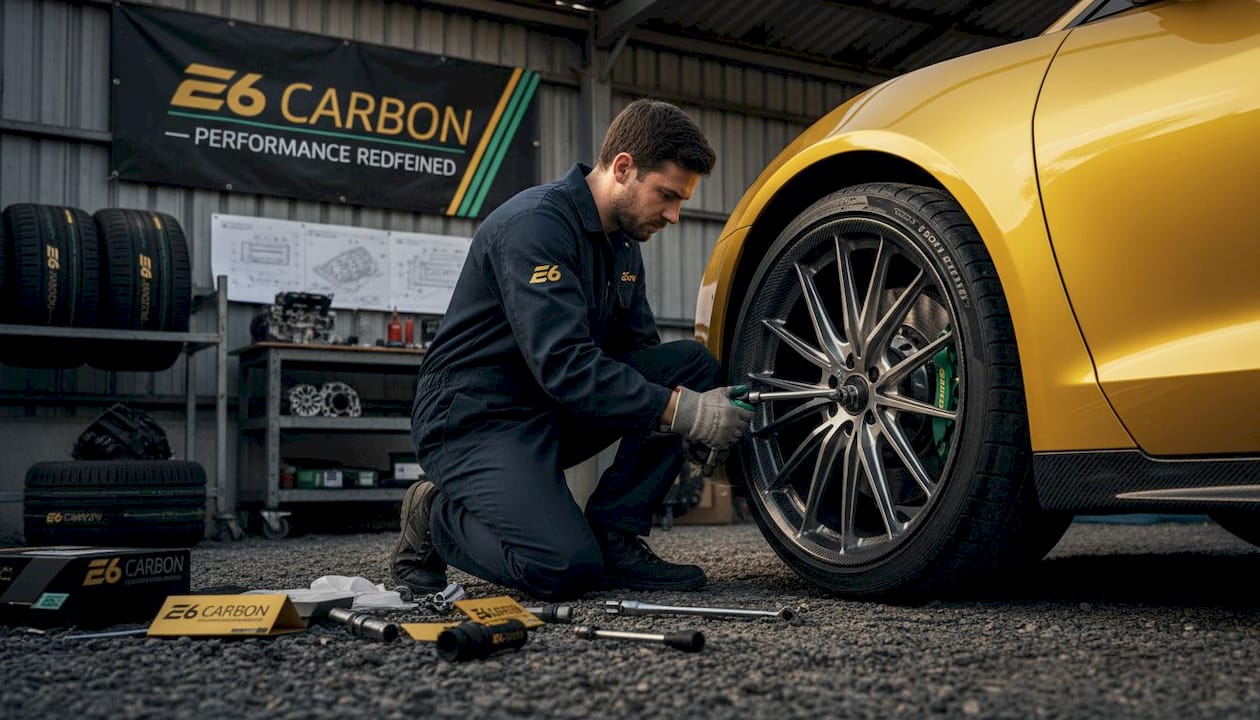
Proper wheel installation and inspection practices are especially critical with carbon composite setups. Torque specs must be followed exactly. Overtorquing lug seats in a carbon hub can initiate microcracks that grow under load. This is not a place to cut corners or guess.
Should you make the switch? Practical considerations for enthusiasts
To decide if carbon composite wheels fit your goals, consider the following practical points.
The practical decision for any enthusiast often becomes a trade-off: potential mass, inertia, and stiffness benefits versus premium cost, specialized inspection and repair paths, and reduced tolerance for certain kinds of impacts. Neither side of that equation is wrong. The right answer depends entirely on how and where you drive.
Here’s a structured decision framework:
- Define your primary use case. Track-only builds benefit most from carbon composite wheels because the performance gains are maximized, road hazards are minimized, and the car is inspected regularly by knowledgeable people anyway. Daily drivers face the most risk from potholes, debris, and curb proximity.
- Calculate total cost of ownership. The purchase price is only part of the equation. Budget for specialist inspections after impacts, potential replacement costs, and storage if you rotate seasonal setups.
- Assess your risk tolerance and driving environment. If you live in a city with rough roads or tight parking, a hybrid wheel with a forged metal hub and spokes might give you most of the performance gains with more tolerance for the inevitable daily driving hazards.
- Verify warranty and support coverage. Premium manufacturers stand behind their products with documented load ratings, crash test data, and clear warranty terms. If a warranty doesn’t address impact damage or doesn’t specify repair procedures, read it carefully before you commit.
- Consider the resale and insurance angles. Carbon composite wheels can significantly increase a vehicle’s value for the right buyer, but not every insurance policy treats them the same as OEM wheels. Check your policy before you install.
For show cars and weekend track builds on vehicles like Ferrari, Lamborghini, McLaren, or Mercedes-AMG platforms, carbon composite wheels are genuinely transformative. They reduce weight in the most effective location possible and make a visual statement that forged aluminum simply cannot match. For a BMW M3 used daily with occasional track days, a premium hybrid carbon/metal design often makes more practical sense than a full monocoque carbon setup.
Pro Tip: Before purchasing, ask the manufacturer what their recommended inspection protocol is after a hard impact. If they say “just look at it,” find a different manufacturer. Quality brands will specify non-destructive testing procedures. Look at custom wheel options for luxury cars and performance parts for luxury vehicles to understand what the best manufacturers document and support.
What most guides miss about carbon composite wheels
Most buyer guides for carbon composite wheels focus on weight charts and lap time projections. Those numbers are real and meaningful. But after working with serious enthusiasts across a range of builds, from dedicated track weapons to ultra-premium show cars, there’s a dimension that pure data misses entirely.
The real differentiator between enthusiasts who love their carbon composite wheels and those who regret them is the relationship they build with the product. Carbon composite wheels are not a bolt-on upgrade that you forget about. They are specialized equipment that reward owners who understand them and punish those who treat them like a set of aluminum rollers.
Feel matters. The change in steering response and damping behavior that carbon composite wheels deliver is something that doesn’t translate into numbers on a spec sheet. Experienced drivers often say the car’s personality shifts when they go to carbon. The car feels more connected, more responsive, more immediate. That’s a combination of reduced unsprung weight, higher wheel stiffness, and improved damping working together in a way that data can only approximate.
Peace of mind has a cost. The enthusiasts who get the most from their carbon composite investment are those who budget proactively, not just for the wheels but for the support structure around them: specialist inspections, proper storage, quality tire installation, and, when needed, replacement rather than a compromised repair. Treating carbon composite wheels as a lifetime purchase the same way you might treat a set of cast aluminum wheels is a category error.
We’ve also seen the opposite mistake: enthusiasts who over-protect their carbon wheels to the point of never driving hard enough to enjoy the benefits. Explore the full range of premium carbon wheel types and architectures to find the construction that matches how aggressively you actually drive, not how aggressively you plan to.
The final point that most guides skip: not every car benefits equally. On a lightweight sports car under 3,000 pounds, rotating mass reduction has a disproportionately large effect. On a heavier GT car, the gains are still real but less dramatic. Know your platform before you commit.
Upgrade your ride with advanced carbon and forged wheels
If you’ve made it through this guide, you now understand carbon composite wheels at a level most enthusiasts never reach. That knowledge should translate directly into a smarter buying decision.

E6 Carbon and E6 Forged offer a range of premium wheel options built for exactly the kind of informed buyer this guide addresses. Whether you’re looking to clear up performance myths about carbon wheels before you commit or you’re ready to spec a set like the AR03 multipiece carbon wheels for your build, the product range covers the full spectrum from track-focused monoblock designs to bespoke luxury fitments. Every option is engineered with documented performance data, full customization, and the support infrastructure that serious enthusiasts require. Your next step is a conversation with a team that knows this material as well as you do.
Frequently asked questions
What is the main difference between a carbon composite wheel and a traditional alloy wheel?
A carbon composite wheel uses carbon fiber in an epoxy matrix for its rim and sometimes spokes, making it substantially lighter and stiffer than a traditional cast or forged metal alloy wheel.
Are carbon composite wheels more durable than metal wheels?
They perform exceptionally under normal conditions, but carbon wheels introduce failure modes like cracking and delamination that may not be visible externally, requiring specialist inspection after any significant impact.
Do carbon composite wheels improve acceleration?
Yes. By reducing rotating and unsprung mass, carbon composite wheels allow quicker acceleration, sharper braking response, and more precise handling through corners.
Can carbon composite wheels be repaired if damaged?
Some damage can be addressed by qualified specialists, but repairs are often limited and may not restore original structural integrity, making full replacement the safest choice after significant impacts.