TL;DR:
- Beadlock wheels mechanically clamp tires to prevent slippage and de-beading during extreme conditions. They enhance grip, safety, and tire longevity but are heavier, often less street-legal, and require regular maintenance. For high-performance drivers, especially off-road or track enthusiasts, beadlocks offer a significant advantage over standard wheels.
Most people assume beadlock wheels belong exclusively to Baja racers and hardcore rock crawlers. That’s the kind of outdated thinking that costs performance drivers real seconds on track and real safety margins under pressure. Beadlock wheels are mechanical systems that physically clamp the tire’s bead to the rim, preventing the tire from losing its seal or rotating on the wheel during extreme conditions. Whether you’re running a Ferrari through a track day, pushing a lifted truck through loose terrain, or chasing consistent lap times on a purpose-built race car, understanding tire beadlocks could be the most important wheel decision you make this year.
Table of Contents
- What is a tire beadlock and how does it work?
- Top benefits of beadlock wheels for performance enthusiasts
- Beadlock vs. standard wheels: What really matters?
- How to maintain and use beadlock wheels safely
- What most enthusiasts get wrong about beadlock wheels
- Upgrade your ride: Experience the beadlock advantage with E6
- Frequently asked questions
Key Takeaways
| Point | Details |
|---|---|
| Crucial grip and safety | Beadlock wheels prevent tire slippage and keep tires securely in place under high stress. |
| Ideal for high-performance | Beadlocks are a must-have for racing, off-road, and aggressively driven luxury vehicles. |
| Not just for off-roaders | Luxury and track car owners also benefit from the added confidence and safety, not just hardcore off-roaders. |
| Proper maintenance is vital | Routine checks and correct installation are essential for beadlock performance and safety. |
What is a tire beadlock and how does it work?
A tire beadlock is a wheel system that uses a mechanical outer ring to clamp the tire’s bead (the stiff inner edge of the tire that seats against the rim) firmly in place. On a standard wheel, the tire bead is held in position purely by air pressure. Reduce that pressure enough, and the tire can rotate on the rim or even unseat completely. A beadlock eliminates that vulnerability by adding a physical, bolted ring that locks the outer bead against the wheel’s outer lip.
Here’s how the system works in practice:
- The tire is mounted on the wheel with the outer bead sitting on a specific shelf on the rim
- The beadlock ring is placed over the tire’s outer bead, sandwiching it against the rim
- A series of bolts (typically 16 to 32, depending on the design) are torqued in a star pattern to evenly clamp the ring
- The inner bead is still sealed by air pressure, while the outer bead is now mechanically secured
- The result is a tire that stays fully functional even at very low air pressures, such as 5 to 8 psi
Non-beadlock wheels fail in predictable ways under pressure. In off-road settings, dropping tire pressure to improve traction means the tire can walk around the rim, causing dangerous vibrations or a sudden blowout. In racing, violent acceleration, hard braking, and high cornering loads can torque the tire against the rim, causing micro-slippage that ruins tire consistency and feedback. Even on track days with aggressive driving, this slippage adds up quickly.
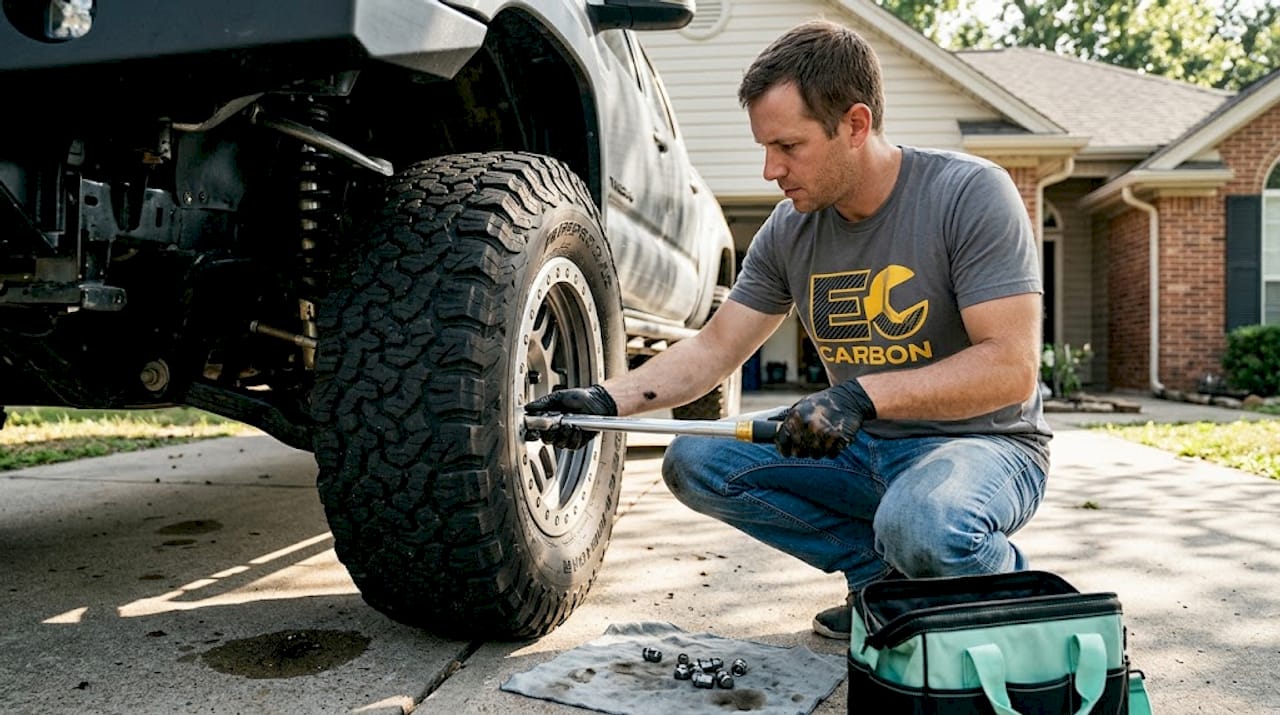
Pro Tip: Always torque beadlock bolts in a star pattern, not in a circle. Torquing in a sequence ensures even clamping pressure and prevents the ring from seating unevenly, which can lead to air leaks or premature wear on the bead area. Consult a forged wheel installation guide before tackling this yourself.
Top benefits of beadlock wheels for performance enthusiasts
With a clear understanding of how beadlocks work, let’s break down the real-world benefits they deliver to performance-focused drivers.
Dramatically improved grip at low pressure. Running lower tire pressure increases the contact patch, spreading the load over more rubber. On sand, gravel, or loose dirt, this can be the difference between progress and getting stuck. On a track with a rough or deteriorating surface, a slightly lower pressure can improve compliance and feel. Beadlocks make this pressure range safely usable.
Elimination of tire rotation on the rim. Under heavy acceleration, the rotational force applied through the wheel can cause the tire to rotate slightly around the rim. Over time, this moves the valve stem, stresses the tire internally, and throws off balance. Beadlocks physically prevent this from happening.
Protection against de-beading. A de-bead is exactly what it sounds like: the tire’s bead separates from the rim. On a standard wheel at low pressure, this can happen suddenly with almost no warning. A beadlock makes de-beading essentially impossible from the outer bead side.
Greater driver confidence under load. When you know your tires are mechanically locked to the wheel, you drive with more commitment. That’s not a small thing. Confidence in your equipment translates directly into faster, cleaner, more controlled driving.
Extended tire life in performance applications. Tire rotation on the rim scuffs the bead area and causes uneven wear. Beadlocks stop that cycle entirely, which can meaningfully extend tire service life during demanding use.
“The difference between a tire that walks on the rim and one that’s locked in place is the difference between guessing what the car is doing and actually knowing.” This kind of feedback precision is why serious racers and performance builders treat beadlocks as a non-negotiable part of a complete wheel setup.
Pro Tip: If you’re running track days in a Lamborghini, McLaren, or high-output BMW, upgrading to racing wheels with a beadlock option is not overkill. It’s what separates a reactive setup from a proactive one. The same applies when exploring wheel customization that targets significant weight reduction and structural precision.
Beadlock vs. standard wheels: What really matters?
To make the right wheel choice, it’s crucial to compare beadlocks directly to standard wheels.
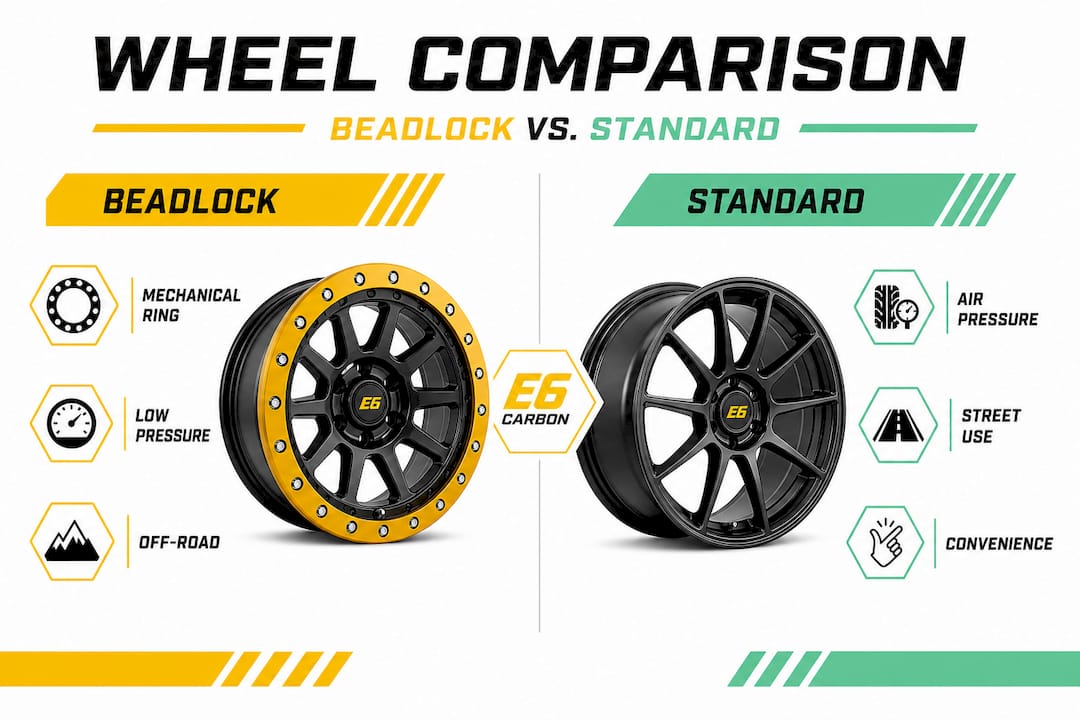
| Feature | Beadlock wheels | Standard wheels |
|---|---|---|
| Tire retention method | Mechanical ring and air pressure | Air pressure only |
| Safe operating pressure | As low as 5 to 8 psi | Typically 28 psi or higher |
| Weight | Heavier due to locking ring | Lighter overall |
| Street legal status | Restricted in many US states | Universally street legal |
| Maintenance requirement | Regular bolt inspection and re-torque | Standard tire rotation and balance |
| Best use case | Racing, off-road, track days | Daily driving, highway use |
| Tire rotation prevention | Yes, mechanically locked | No, relies on pressure only |
| Cost | Higher due to added hardware | Lower baseline cost |
The differences above tell a clear story: beadlocks are a specialized tool, not a universal upgrade. Standard wheels handle the vast majority of real-world driving conditions perfectly well. The moment you push into extreme pressure drops, sustained high cornering loads, or repeated aggressive driving, the gap between the two systems widens considerably.
Key considerations when choosing between the two:
- Legal compliance: In many US states, externally beadlocked wheels are not street-legal because the protruding ring can cause tire damage in a collision. Always verify your local regulations before installing them on a street-driven vehicle.
- Weight trade-off: Beadlock rings add real mass to the wheel, and unsprung weight (weight not supported by the suspension) directly affects ride quality and handling response. High-quality forged beadlocks minimize this penalty but don’t eliminate it entirely.
- Maintenance commitment: A standard wheel needs periodic balancing and rotation. Beadlocks require regular bolt torque checks, especially after sessions involving heavy vibration or impact loads. Skip this and you risk air leaks or a loose ring.
- Application fit: If your car spends 90% of its time on public roads and 10% at the track, a beadlock may not be the right daily setup. If you have dedicated track or off-road wheels, beadlocks on that set make complete sense.
Understanding wheel design and performance relationships helps you select wheels that match both your driving environment and your performance goals. If you’re still undecided, a direct look at racing vs. street wheels can sharpen the decision.
How to maintain and use beadlock wheels safely
If you’re considering beadlocks, here’s how to ensure they perform at their best and keep you safe on every drive.
Beadlock maintenance is not optional. It’s the price of admission for using a mechanical system that carries real consequences if it fails. The good news is that the work is straightforward, and a disciplined schedule keeps everything running perfectly.

Routine service intervals for beadlock wheels:
| Service item | Frequency | Action required |
|---|---|---|
| Bolt torque check | Before every session | Torque to spec in star pattern |
| Visual ring inspection | Before every session | Check for cracks, warping, or corrosion |
| Bead seal inspection | Monthly or after impact | Check for air loss or bead movement |
| Full re-torque | Every 500 miles or 5 hours of use | Complete torque sequence on all bolts |
| Ring removal and cleaning | Once per season | Remove, clean, inspect ring and mating surfaces |
| Tire bead area inspection | At every tire change | Look for scuffing, tearing, or bead deformation |
Here’s a practical step-by-step routine to follow before and after every race or off-road event:
- Pre-session inspection: Visually check all beadlock bolts for signs of backing out or corrosion. Check the ring for visible damage. Verify tire pressure is set correctly for the application.
- Torque check: Use a calibrated torque wrench to verify every bolt is at the manufacturer’s specified torque value. Do not skip this even if everything looks fine visually.
- Post-session check: After any hard session, re-inspect for loosening caused by vibration or impact. Off-road use is especially demanding on bolt retention.
- After impact events: If you hit a significant rock, curb, or obstacle, pull the wheel and do a full inspection before continuing. Impact can shift the ring or unseat a bolt without making it obvious from outside.
- Tire changes: When mounting new tires, completely remove the ring, clean all mating surfaces, inspect for wear, and reinstall using fresh hardware if the old bolts show any thread wear.
A good forged wheel installation reference gives you the torque specs and sequences specific to your wheel design. Never guess on torque values; the beadlock ring is only as reliable as the installation behind it.
What most enthusiasts get wrong about beadlock wheels
Here’s an uncomfortable truth about the performance world: most enthusiasts who dismiss beadlock wheels have never actually experienced what a tire slipping on a rim feels like during a hard session. They’ve read the spec sheet, noted the weight penalty, and moved on. That’s a mistake built on incomplete information.
The biggest misconception is that beadlocks are “overkill” for anything short of Baja racing or extreme rock crawling. In practice, any vehicle running aggressive tire pressures for performance reasons, whether that means dropping PSI for better compliance on a rough track surface or maximizing contact patch on loose ground, benefits from the security of a beadlock. The question isn’t whether you need maximum grip. It’s whether you want your equipment working with you or against you at the exact moment you need it most.
The second common mistake is treating beadlock maintenance as optional. Drivers will invest five figures in wheels and then skip the 15-minute bolt torque check before a track session. A loose beadlock ring causes air loss, vibration, and potentially catastrophic tire failure at speed. The mechanical complexity that gives beadlocks their advantage also demands more attention than a standard wheel. Ignore that relationship and you’ve turned a safety upgrade into a liability.
There’s also a real gap in how performance drivers think about wheels and suspension as a connected system. Your suspension geometry, spring rates, and damper tuning are all calibrated to work with specific wheel and tire behavior. When a tire slips on a rim, even subtly, the feedback reaching your suspension is corrupted. Beadlocks eliminate that noise, giving your suspension cleaner inputs and giving you more accurate feedback through the steering wheel. That’s not just a safety story. It’s a performance story.
The challenge for enthusiasts is letting go of assumptions formed in a different era of the sport. Beadlock technology has evolved dramatically, particularly at the forged wheel level where weight penalties have been minimized and ring designs have become significantly more refined. If your last impression of beadlocks was formed looking at heavy fabricated steel units on a trail rig, it’s time to revisit.
Upgrade your ride: Experience the beadlock advantage with E6
Now that you’re equipped with the facts, see how E6’s expertise and products can help you put beadlock advantages into action.
At E6 Carbon and E6 Forged, beadlock capability is built into a lineup that prioritizes weight, strength, and precision in equal measure. Every design balances the mechanical demands of a proper beadlock system against the performance expectations of the vehicles we build for: Lamborghini, Ferrari, McLaren, BMW, and other platforms where compromise is not part of the conversation.

Start with a forged wheel safety inspection to understand exactly what to look for in any performance wheel setup, then work through our wheel installation guide to see how professional-grade installation is done right. When you’re ready to explore specific hardware, the AR03 Multipiece Wheels represent the kind of precision engineering that makes every beadlock advantage accessible without sacrificing the aesthetic standards that matter to serious enthusiasts.
Frequently asked questions
Do I need beadlock wheels for everyday driving?
Most daily street drivers do not need beadlock wheels; they are primarily designed for high-performance, off-road, or racing conditions where tire pressure is dramatically reduced or extreme loads are applied to the tire bead.
Can beadlock wheels be used legally on public roads?
Beadlock legality varies significantly by state and country; many US states restrict external beadlock rings on street-driven vehicles, so checking local regulations before installation is essential.
What maintenance do beadlock wheels require?
Beadlock wheels require regular bolt torque verification, visual ring inspection before every session, and periodic full removal and cleaning of the ring and mating surfaces to maintain safety and performance.
Are beadlock wheels heavier than standard wheels?
Yes, beadlock wheels are generally heavier than comparable standard wheels because the mechanical locking ring adds mass, though high-quality forged designs minimize this weight penalty considerably compared to older fabricated designs.