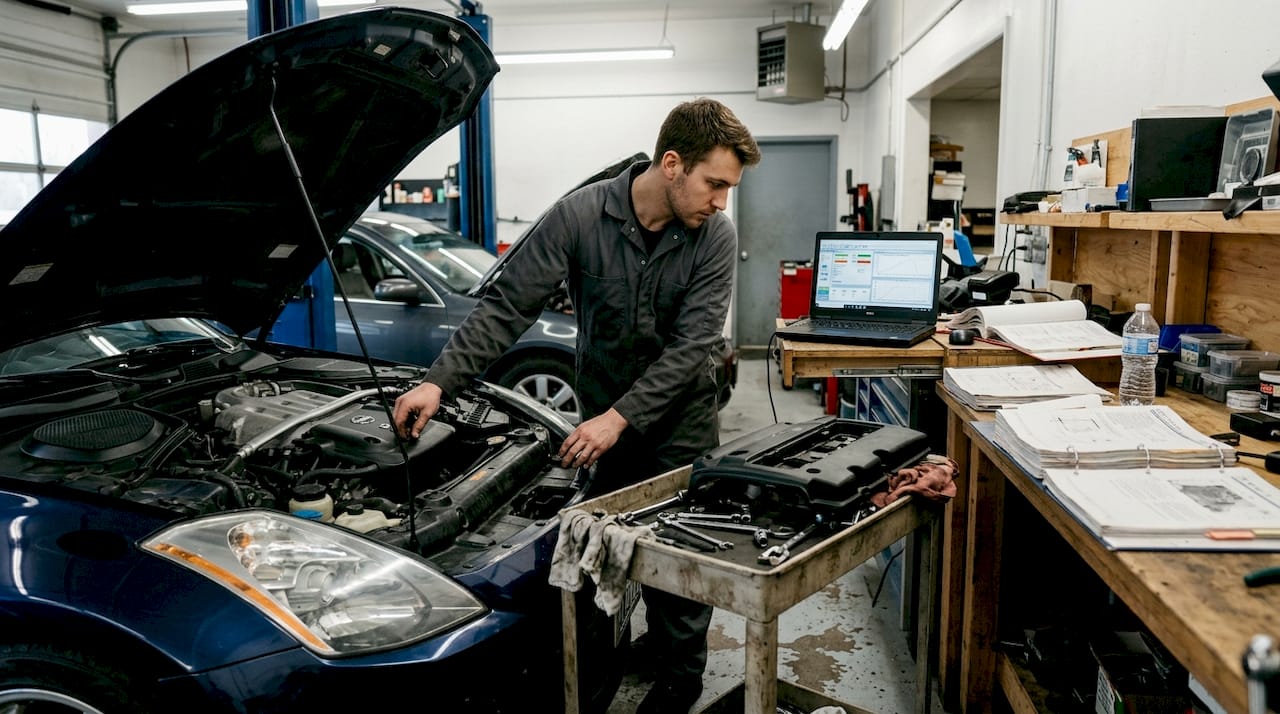
Choosing the right performance modifications for your luxury or sports car requires more than just chasing peak horsepower numbers. Serious tuners understand that balancing power gains with reliability and exclusivity defines successful builds. Whether you’re planning your first stage one tune or mapping out a complete transformation, knowing which modifications deliver real value separates enthusiasts from amateurs. This guide walks you through expert criteria for evaluating performance upgrades, explores the most impactful modifications available, and reveals how bespoke craftsmanship elevates your build beyond off-the-shelf solutions.
Table of Contents
- Key takeaways
- How to evaluate performance mods: criteria for serious tuners
- ECU remapping and chip tuning: unlocking engine potential
- Performance hardware upgrades: turbos, intakes, and exhaust systems
- Craftsmanship and bespoke mods: exclusivity in high-performance tuning
- Comparing mod options: staged builds and practical choices for tuners
- Explore exclusive performance upgrades from E6 Carbon
- Frequently asked questions
Key Takeaways
| Point | Details |
|---|---|
| Reliability first | Begin with diagnostics, fluids, cooling, and traction upgrades before pursuing power gains to prevent common failures. |
| Custom tunes advantage | Custom tunes account for a vehicle’s hardware, fuel quality, and driving style, delivering smoother power and better drivability. |
| Remap power gains | ECU remapping and chip tuning unlock more power by optimizing fuel delivery, ignition timing, boost pressure, and throttle response. |
| Bespoke exclusivity | Bespoke craftsmanship with custom fabricated parts and hand finished carbon creates a unique build that stands apart from cookie cutter modifications. |
| Street versus track | Street versus track tradeoffs influence every modification choice, as aggressive suspensions and race tunes may compromise daily drivability. |
How to evaluate performance mods: criteria for serious tuners
Selecting modifications requires a methodical framework that accounts for your vehicle’s capabilities and your performance goals. Start by addressing the foundation: prioritize diagnostics and fluids first, followed by cooling and traction upgrades before adding power. This sequence prevents common failures that plague builds where enthusiasts chase horsepower without supporting infrastructure.
Reliability-focused builds incorporate upgraded heat exchangers, oil coolers, and transmission cooling before significant power increases. These components manage the thermal load that accompanies higher boost levels and sustained performance driving. Traction upgrades like limited-slip differentials and performance tires ensure you can actually use the added power without compromising safety or drivability.
Custom tunes consistently outperform generic off-the-shelf maps because they account for your specific hardware configuration, fuel quality, and driving style. A proper custom tune eliminates the stumbling and surge issues that plague OTS solutions while maintaining smooth power delivery across the rev range. This attention to drivability matters significantly for street-driven vehicles where you experience every throttle input daily.
Street versus track compromises influence every modification choice. Aggressive suspension setups that excel on smooth racetracks become punishing on public roads with imperfections. Similarly, race-oriented engine tunes may sacrifice low-end torque and fuel economy that street drivers need. Understanding these tradeoffs helps you select modifications aligned with how you actually use your vehicle.
Bespoke craftsmanship appeals to luxury tuners who value exclusivity alongside performance. Custom-fabricated components, hand-finished carbon fiber parts, and tailored ECU calibrations create builds that stand apart from cookie-cutter modifications. This approach transforms your vehicle into a unique expression rather than another clone following the same modification path as thousands of others.
Pro Tip: Research component failure points specific to your platform before modifying. Many engines have well-documented weak links like crank hub issues or transmission limits that become critical when power levels increase. Addressing these vulnerabilities proactively saves thousands in potential repairs.
Understanding performance parts for luxury cars requires recognizing how premium vehicles differ from mass-market platforms. Luxury manufacturers often incorporate sophisticated engine management systems and tight tolerances that demand equally refined modifications to maintain the refined driving experience owners expect.
ECU remapping and chip tuning: unlocking engine potential
ECU remapping and performance chip tuning serve as the foundation for most serious builds because they optimize how your engine manages fuel delivery, ignition timing, boost pressure, and throttle response. Modern engine control units contain conservative factory programming designed to accommodate varying fuel quality, extreme climates, and drivers with different skill levels. Remapping removes these safety margins to extract significantly more power from existing hardware.
Chip tuning specifically targets fuel and ignition maps to increase efficiency and power output. By adjusting air-fuel ratios and advancing ignition timing within safe limits, tuners unlock horsepower gains that feel transformative during daily driving. Throttle response sharpens noticeably, turbo lag diminishes, and power delivery becomes more linear throughout the rev range.
Bespoke tunes created on a dynamometer with your specific vehicle deliver superior results compared to generic maps loaded from a laptop. Custom tuning accounts for variations in engine condition, altitude, fuel octane availability, and any supporting modifications you’ve installed. This personalized approach maintains smooth drivability while maximizing performance, eliminating the surging or stumbling that plague poorly calibrated tunes.
Typical power gains vary dramatically based on your platform and turbocharger configuration. Naturally aspirated vehicles might see 8-15% increases, while turbocharged engines often gain 20-40% with tuning alone. These numbers increase substantially when combined with supporting modifications like upgraded intercoolers and exhaust systems that address airflow restrictions.
Risks of improper tuning include engine knock, excessive exhaust gas temperatures, and premature component wear. Amateur tuners sometimes push timing too aggressively or run excessively lean air-fuel ratios chasing dyno numbers. Professional calibration includes safety parameters that protect your engine during unexpected conditions like poor fuel quality or hot weather.
Pro Tip: Always datalog your tune during real-world driving conditions. Review parameters like knock counts, air-fuel ratios, and intake air temperatures to identify issues before they cause damage. Many catastrophic failures result from hidden tuning problems that could have been caught with proper monitoring.
Exploring top performance parts luxury cars reveals how software modifications integrate with premium hardware to create cohesive performance packages. The synergy between proper tuning and quality components defines successful builds that deliver both power and reliability.
Performance hardware upgrades: turbos, intakes, and exhaust systems
Upgraded turbochargers represent the most dramatic hardware modification for forced induction engines. Larger turbos deliver +45-50% gains in wheel horsepower and torque by flowing significantly more air than restrictive factory units. Modern ball-bearing turbos spool quickly enough for street use while supporting power levels that exceed most transmission and drivetrain limits.
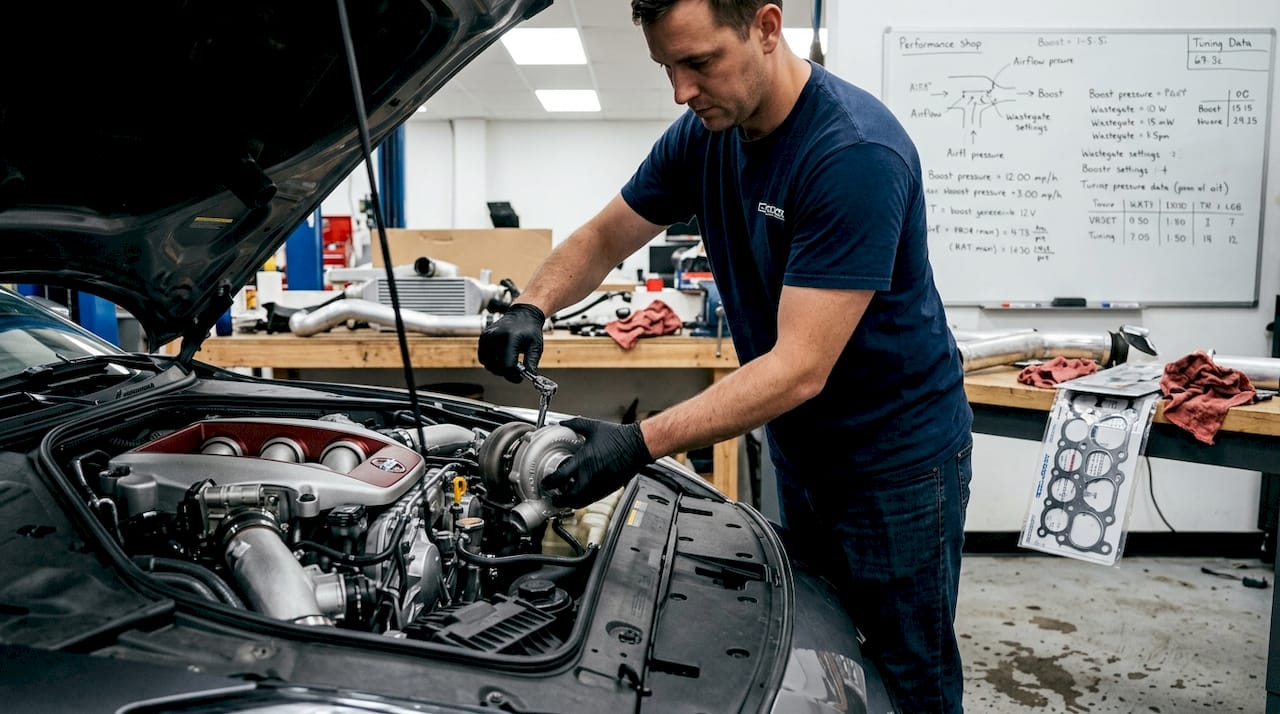
Performance intake systems improve airflow by reducing restrictions in the factory airbox and ducting. Quality intakes add measurable horsepower, typically 10-20 wheel horsepower on turbocharged applications. More importantly, they improve throttle response and induction sound, enhancing the driving experience even when peak power numbers seem modest.
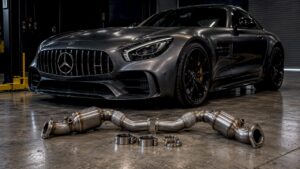
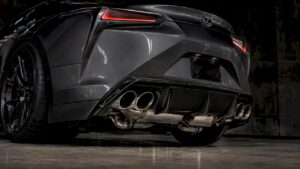
Downpipes and cat-back exhaust systems reduce backpressure that robs power and creates excessive heat. Removing catalytic converters or installing high-flow alternatives unlocks substantial torque gains, particularly in the midrange where you spend most of your driving time. Complete exhaust systems paired with tuning often yield 60+ wheel horsepower on platforms with restrictive factory exhaust routing.
Heat exchangers and upgraded intercoolers control intake air temperatures that directly impact power output and engine safety. Every 10 degrees reduction in intake temps supports more aggressive timing and boost without knock. On track-focused builds, maintaining consistent IATs during sustained high-load driving separates reliable performance from heat-soaked disappointment.
| Modification combo | Typical power gain | Reliability impact | Best application |
|---|---|---|---|
| Intake + tune | +15-25 whp | Minimal | Daily drivers seeking bolt-on gains |
| Downpipes + tune | +40-60 whp | Moderate (heat) | Street/track hybrids |
| Turbo + supporting mods | +100-150 whp | High (drivetrain stress) | Dedicated performance builds |
| Full bolt-ons + custom tune | +80-120 whp | Moderate to high | Serious enthusiasts balancing power and usability |
Balancing power increases with cooling capacity and drivetrain limits protects your investment. Transmissions, clutches, and differentials have torque thresholds beyond which failures become inevitable. Understanding these limits before modification prevents expensive repairs and keeps your build reliable enough for consistent enjoyment.
Integrating custom wheels luxury cars with performance hardware creates a cohesive aesthetic that matches your power upgrades. Lightweight forged wheels reduce unsprung mass, improving acceleration, braking, and handling response to complement your engine modifications.
Craftsmanship and bespoke mods: exclusivity in high-performance tuning
Luxury tuners increasingly prioritize bespoke carbon fiber parts and custom fabrication over mass-produced components. Exclusive modifications deliver both performance advantages and aesthetic distinction that separates your build from typical examples. Hand-laid carbon fiber hoods, trunks, and aero components reduce weight while creating visual impact impossible with painted metal panels.
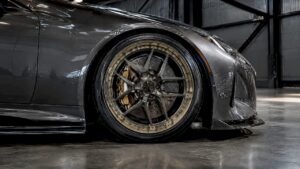
Custom forged wheels combine lightweight construction with personalized sizing, offsets, and finishes tailored to your specific vehicle and vision. Unlike cast wheels available to anyone, forged designs can incorporate unique spoke patterns, custom center caps, and finish combinations that make your build immediately recognizable. The weight savings improve handling dynamics while the exclusivity satisfies enthusiasts who value individuality.
Bespoke ECU calibrations go beyond generic stage tunes by incorporating your specific modifications, driving style, and performance priorities. A custom-calibrated tune might emphasize low-end torque for street driving, optimize gear-specific boost curves, or include features like launch control and flat-foot shifting tailored to your skill level and usage patterns.
Reversible modifications maintain resale value while allowing personalization. Quality bespoke parts install without permanent vehicle alterations, preserving factory mounting points and wiring. This approach lets you enjoy exclusive upgrades while keeping options open for future changes or returning to stock configuration if needed.
Pro Tip: Document your bespoke modifications with professional photography and detailed build logs. Quality documentation significantly enhances resale value by demonstrating the thought, investment, and craftsmanship behind your build. Buyers pay premium prices for well-executed custom work with proper provenance.
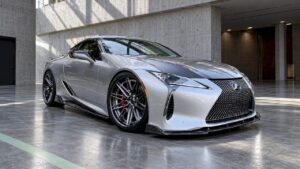
Exploring options like the AeroTech carbon hood Lexus LC500 demonstrates how manufacturer-specific bespoke parts deliver perfect fitment and styling integration. These components feel like factory options rather than aftermarket additions, maintaining the luxury aesthetic while improving performance through weight reduction.
Combining custom wheels luxury cars with carbon fiber aero creates visual cohesion that elevates your entire build. The interplay between lightweight wheels and complementary body components transforms appearance while delivering measurable performance benefits through reduced mass and improved aerodynamics.
Comparing mod options: staged builds and practical choices for tuners
Successful builds follow logical progression that manages risk while maximizing performance gains. Staged modifications for BMW S55 illustrate this approach: start with tires and alignment, add stage one tuning, install heat exchangers for IAT control, then progress to downpipes for stage two power levels. This sequence addresses traction and cooling before adding power that could overwhelm stock components.
Ideal modification order for balanced performance builds:
- Address maintenance and diagnostics to establish a healthy baseline
- Upgrade fluids, filters, and wear items to factory or better specifications
- Install performance tires and alignment for improved traction and handling
- Add stage one tuning for initial power gains with stock hardware
- Upgrade cooling systems including heat exchangers and oil coolers
- Install exhaust modifications and progress to stage two tuning
- Consider turbo upgrades only after supporting mods are complete
- Address drivetrain limits with clutch, differential, or transmission upgrades as needed
| Modification stage | Power potential | Cost range | Reliability risk | Street vs track suitability |
|---|---|---|---|---|
| Stage 1 (tune only) | +20-30% | $500-1500 | Low | Excellent for both |
| Stage 2 (tune + bolt-ons) | +35-50% | $3000-6000 | Moderate | Good street, great track |
| Stage 3 (turbo + supporting mods) | +60-100% | $8000-15000 | High | Compromised street, track-focused |
| Full build (built motor + big turbo) | +100-200% | $20000-40000+ | Very high | Track/show only |
Crank hub slip and torque management become critical considerations on platforms known for these issues. BMW N54 and S55 engines require crank hub reinforcement or replacement when torque exceeds safe thresholds. Ignoring these known failure points leads to catastrophic engine damage that far exceeds prevention costs.
Street and track compromises influence every decision. Coilover suspension that performs brilliantly on smooth racetracks becomes punishing during daily commutes over broken pavement. Similarly, aggressive clutches with high clamping force cause leg fatigue in traffic despite offering superior holding power for launches.
Pro Tip: Review datalogs after every modification to identify hidden issues before they cause failures. Parameters like misfires, knock events, and fuel trims reveal tuning problems that might not produce obvious symptoms until damage occurs. Proactive monitoring catches issues when they’re still correctable.
Understanding performance parts luxury cars helps you select modifications appropriate for premium platforms. Luxury vehicles demand refined solutions that maintain comfort and sophistication while delivering performance gains.
Visual enhancements like the ADR Style carbon bumper BMW complement performance modifications by creating cohesive styling that matches your power upgrades. Integrating appearance and performance modifications from the planning stage produces builds with intentional, professional results rather than haphazard collections of parts.
Explore exclusive performance upgrades from E6 Carbon
E6 Carbon specializes in premium forged wheels and carbon fiber components designed specifically for luxury and sports car enthusiasts who demand both performance and exclusivity. Our monoblock and multi-piece forged wheel designs reduce unsprung weight while offering customization options that create truly unique builds. Each wheelset combines aerospace-grade materials with precision engineering to deliver strength, lightweight construction, and visual impact.
Our carbon fiber aero kits integrate seamlessly with factory body lines while reducing weight and improving aerodynamics. Hand-laid construction ensures consistent quality and perfect fitment that mass-produced alternatives cannot match. Whether you’re building a street-focused luxury cruiser or a dedicated track weapon, E6 Carbon components deliver the bespoke craftsmanship serious tuners appreciate.
Comprehensive guides help you inspect forged wheels safely and complete professional-quality installations. Our forged wheel installation guide walks through proper torque specifications, hub-centric fitment, and maintenance procedures that protect your investment.
Pro Tip: Combining E6 Carbon forged wheels with expert engine tuning and carbon aero creates synergistic performance gains. Reduced rotational mass improves acceleration and braking while weight reduction enhances handling dynamics. This integrated approach delivers results greater than individual modifications alone.
Explore our complete range of performance parts luxury cars to discover how premium components transform your build into something truly exceptional.
Frequently asked questions
What is the most effective first performance mod for tuners?
ECU remapping or quality chip tuning typically delivers the best initial gains in power and throttle response for your investment. Most turbocharged platforms gain 20-30% power with tuning alone, transforming drivability without requiring additional hardware. Always pair power increases with upgraded cooling systems and quality tires to maintain reliability and usable traction.
How can I maintain reliability when upgrading my sports car?
Prioritize diagnostics, fresh fluids, and cooling system upgrades before adding significant power modifications. Use custom tunes calibrated specifically for your hardware configuration and driving style rather than generic off-the-shelf maps. Regular datalogging helps identify potential issues before they cause expensive failures, and addressing known platform weaknesses proactively prevents common problems.
Are bespoke mods worth the cost for luxury tuners?
Bespoke modifications offer unique styling and tailored performance that mass-produced parts cannot match, creating builds with genuine exclusivity. Custom carbon fiber components and forged wheels can preserve warranty coverage when installed properly while significantly enhancing vehicle value and appeal. For enthusiasts who value craftsmanship and individuality over simply following popular modification trends, bespoke parts justify their premium pricing through quality and distinction.
What risks should I consider with high-torque builds?
Watch for platform-specific failure points like crank hub slip on BMW engines, transmission gear failures, and clutch pack degradation under sustained high torque loads. Ensure proper torque management through ECU programming and consider upgraded drivetrain components when exceeding factory torque ratings by more than 30%. Adequate cooling for engine oil, transmission fluid, and differential becomes critical as heat accelerates component wear and can trigger protection modes that limit performance.