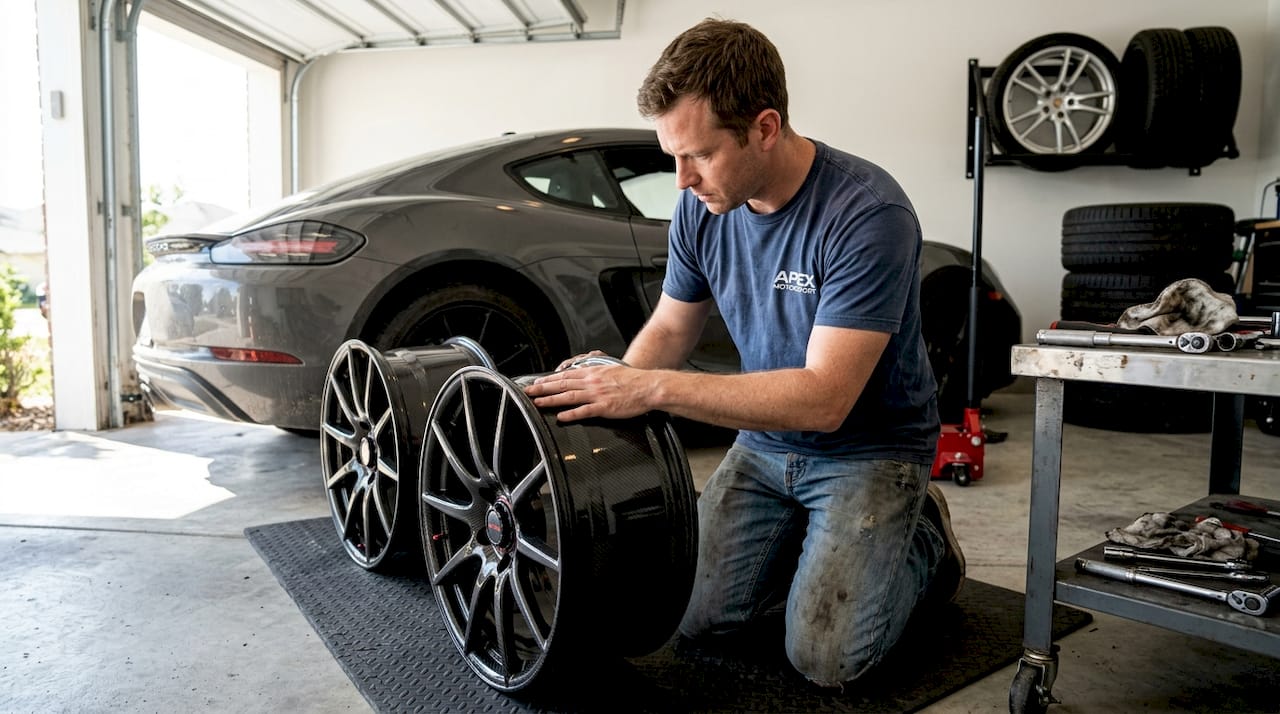
Choosing the right carbon wheels for your high-performance vehicle presents a genuine challenge. Multiple types exist, each with distinct manufacturing methods, performance characteristics, and price points. One-piece monocoques deliver maximum rigidity and weight savings but demand premium budgets. Two-piece designs offer modularity with easier repairs. Hybrids blend carbon aesthetics into alloy construction for cost-conscious enthusiasts. This article clarifies the main carbon wheel types, their manufacturing processes, performance differences, and decision guidance to help you select the optimal option for your track car, luxury vehicle, or electric performance machine.
Table of Contents
- How To Evaluate Carbon Wheels: Key Criteria For Enthusiasts
- One-Piece Carbon Wheels: Full Carbon Fiber Monocoque Benefits And Trade-Offs
- Two-Piece Carbon Wheels: Modular Design For Balance Of Performance And Repairability
- Carbon-Aluminum Hybrid Wheels: Affordable Style With Moderate Performance Gains
- Comparing The Main Types Of Carbon Wheels: Performance, Cost, And Use Case
- Explore Premium Carbon And Forged Wheels At E6 Carbon
Key takeaways
| Point | Details |
|---|---|
| One-piece carbon wheels | Deliver top rigidity and lightness but cost $5,000+ per wheel with limited repairability |
| Two-piece modular design | Combine carbon rims with metal centers for easier repairs and customization flexibility |
| Hybrid carbon-aluminum | Blend carbon layers in alloy wheels to balance cost and moderate weight savings |
| Weight reduction impact | Carbon wheels cut vehicle weight up to 40%, boosting EV range and lap times substantially |
| Selection priority | Track use favors full carbon; street durability favors forged aluminum in pothole-heavy areas |
How to evaluate carbon wheels: key criteria for enthusiasts
Before diving into specific wheel types, you need a clear evaluation framework. Weight, rigidity, repairability, cost, durability, noise reduction, and aesthetics form the critical decision criteria. Unsprung mass reduction improves handling, acceleration, and braking response, especially for EV and track cars where every pound counts. Carbon wheels can reduce rotational inertia dramatically, translating to sharper turn-in and faster lap times.
Durability concerns center on brittleness during sharp impacts. Carbon fiber reinforced polymer (CFRP) excels in tensile strength but can crack under sudden point loads that forged aluminum would absorb. Surface and road conditions matter enormously. Smooth tracks and well-maintained highways showcase carbon’s benefits, while pothole-riddled urban streets expose its vulnerabilities.
Certification and testing standards ensure safety and performance validation. Look for TÜV, SAE, or JWL markings confirming rigorous impact, fatigue, and load testing. These third-party validations separate quality carbon wheels from questionable alternatives. Verify third-party testing credentials before committing to any carbon wheel purchase.
Pro Tip: Pair carbon wheels with high-quality suspension components to maximize benefits and mitigate downsides. Premium dampers and springs help absorb road imperfections that would otherwise stress brittle carbon structures. This combination delivers the performance gains you seek while protecting your investment. Consider exploring racing wheels performance gains to understand the complete upgrade ecosystem.
One-piece carbon wheels: full carbon fiber monocoque benefits and trade-offs
One-piece monocoque wheels represent the pinnacle of carbon wheel technology. Manufacturers create these as a single integrated CFRP rim and center, eliminating joints and fasteners. The construction process involves layered carbon fiber sheets arranged in specific orientations, then cured under heat and pressure in precision molds. This creates a seamless structure with exceptional strength-to-weight ratios.
The performance advantages are substantial. One-piece monocoque wheels deliver the lightest weight and highest rigidity available in production wheels. Typical weight savings reach 40% compared to cast aluminum equivalents. For a set of four wheels, this translates to 40-60 pounds of unsprung mass reduction. Electric vehicles gain up to 5% additional range from reduced rotational resistance. Track cars shave seconds off lap times through improved acceleration, braking, and cornering response.
The manufacturing precision required drives premium pricing. Expect $5,000 to $8,000 per wheel for top-tier one-piece carbon designs. Brands like Carbon Revolution pioneered this technology for production vehicles, initially supplying Ford and Ferrari before expanding to aftermarket applications. The curing process requires specialized autoclaves and quality control that smaller manufacturers cannot replicate.
“One-piece carbon wheels transform vehicle dynamics by eliminating rotational inertia that conventional wheels cannot match. The difference becomes immediately apparent in throttle response and braking feel.”
Downsides include brittleness to sharp impacts and essentially zero repairability. A single pothole strike can crack the rim structure, requiring complete wheel replacement. Insurance and road hazard protection become essential considerations. These wheels shine brightest on tracks and smooth roads where their performance advantages outweigh durability concerns. For dedicated track cars and high-performance EVs prioritizing outright performance, one-piece carbon wheels represent the ultimate upgrade. Learn more about carbon fiber wheels benefits and their real-world impact.
Two-piece carbon wheels: modular design for balance of performance and repairability
Two-piece wheels offer a pragmatic middle ground between ultimate performance and real-world practicality. These designs combine a carbon fiber rim with a forged aluminum or magnesium center, joined using titanium fasteners or advanced bonding techniques. The modular construction preserves most of carbon’s weight advantages while introducing repair flexibility that one-piece designs cannot match.
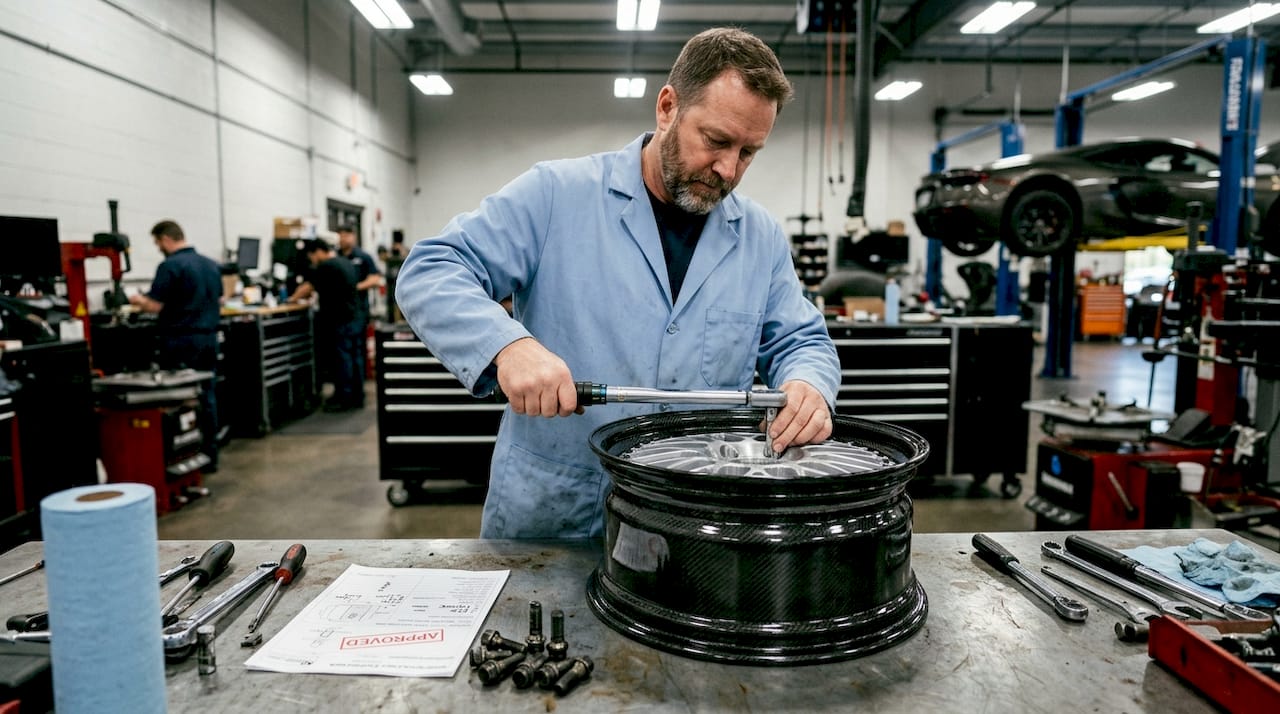
Manufacturing processes include VARTM (vacuum-assisted resin transfer molding) or high-pressure RTM for the carbon rim sections. The metal center undergoes traditional forging to create a strong, lightweight hub structure. Two-piece wheels feature carbon rims bonded to aluminum or magnesium centers, as demonstrated by manufacturers like Dymag, HRE CRBN, and Rotobox. This hybrid approach allows manufacturers to optimize each component independently.
The modularity facilitates easier repair and customization. If you damage the rim on a curb or debris strike, you can potentially replace just the carbon rim section rather than the entire wheel. The metal center remains intact, reducing replacement costs significantly. This design also enables finish customization on the center section without affecting the carbon rim structure.
Weight savings typically fall between 25-35% compared to forged aluminum wheels. While not matching one-piece carbon’s ultimate lightness, two-piece designs still deliver substantial unsprung mass reduction. Rigidity remains excellent due to the carbon rim’s structural properties, though the bonded joint introduces a minor compliance point that one-piece designs avoid.
| Feature | One-Piece Carbon | Two-Piece Carbon |
| — | — |
| Weight Savings | 35-40% vs. aluminum | 25-35% vs. aluminum |
| Repairability | None (full replacement) | Modular (rim replaceable) |
| Cost per Wheel | $5,000-$8,000 | $3,000-$5,000 |
| Rigidity | Maximum | Excellent |
| Best Use | Track, EV performance | Street/track blend |
Pro Tip: Regularly inspect bonding and hardware connections every 5,000 miles to maintain wheel integrity and safety. Torque specs matter enormously with two-piece wheels. Use a calibrated torque wrench and follow manufacturer specifications precisely. Explore wheel customization weight reduction strategies to maximize your setup’s potential.
Carbon-aluminum hybrid wheels: affordable style with moderate performance gains
Hybrid wheels embed carbon fiber layers on the exterior or within the structure of forged alloy wheels. This approach prioritizes visual appeal and moderate weight savings over maximum performance. The carbon layers create an authentic carbon fiber aesthetic while the underlying aluminum structure provides proven durability and impact resistance.
Manufacturers apply carbon fiber sheets to forged wheel faces or integrate carbon strands into the alloy matrix during casting. Hybrids have carbon layers in alloy wheels with lower cost but less weight savings than pure carbon wheels. The result delivers a premium appearance that distinguishes your vehicle from standard alloy wheels without the financial commitment of full carbon construction.
Weight savings typically reach 10-20% compared to standard forged aluminum wheels. While this falls short of pure carbon performance, it still provides noticeable improvements in acceleration response and handling precision. The aluminum core maintains excellent durability against potholes, curbs, and road debris that would damage pure carbon structures.
Pricing ranges from $1,500 to $3,000 per wheel, making hybrids the most accessible carbon wheel option. This positions them perfectly for luxury vehicle owners who prioritize style with some performance uplift but cannot justify $20,000+ for a complete carbon wheel set. The visual impact matches pure carbon wheels while maintenance concerns and replacement costs remain manageable.
Durability exceeds pure carbon but still requires care compared to standard forged wheels. The carbon layers can delaminate under extreme impacts or improper repair techniques. Avoid aggressive curb contact and inspect regularly for separation between carbon and aluminum layers. These wheels excel on well-maintained streets where their aesthetic appeal and moderate performance gains shine without exposing durability limitations. Consider custom wheels for luxury cars to understand the full range of premium wheel options available.
Comparing the main types of carbon wheels: performance, cost, and use case
Direct comparison clarifies which carbon wheel type matches your specific priorities and driving conditions. Each design occupies a distinct position in the performance, cost, and durability spectrum. Understanding these trade-offs prevents expensive mismatches between wheel capabilities and your actual needs.
| Wheel Type | Weight Reduction | Rigidity | Cost Range | Repairability | Durability | Ideal User |
|---|---|---|---|---|---|---|
| One-Piece Carbon | 35-40% | Maximum | $5k-$8k/wheel | None | Low impact tolerance | Track cars, performance EVs |
| Two-Piece Carbon | 25-35% | Excellent | $3k-$5k/wheel | Modular rim replacement | Moderate impact tolerance | Street/track blend |
| Hybrid Carbon-Aluminum | 10-20% | Good | $1.5k-$3k/wheel | Standard wheel repair | Good impact tolerance | Luxury street vehicles |
One-piece carbon wheels are lightest and stiffest; two-piece offer modularity; hybrids cost less but save less weight. Your selection should align with specific use cases and priorities.
For dedicated track use where lap times and weight matter most, one-piece carbon wheels justify their premium cost. The performance gains translate directly to competitive advantages and driving satisfaction. Electric vehicle owners seeking maximum range also benefit from the substantial rotational mass reduction.
Two-piece wheels suit enthusiasts who split time between street driving and track days. The modular design provides peace of mind for occasional aggressive driving while maintaining daily usability. If you encounter varied road conditions or want customization flexibility, two-piece construction delivers the best compromise.
Hybrid wheels target luxury vehicle owners prioritizing aesthetics and moderate performance improvements. These work beautifully for cars that rarely see tracks but deserve visual distinction and noticeable handling refinement. The durability and cost profile make them practical for daily driving without constant worry about road hazards.
“Choose carbon wheels when weight reduction drives your performance goals. Select forged aluminum when durability and cost efficiency dominate your priorities. Match the technology to your actual driving conditions, not aspirational scenarios.”
Consider road conditions critically. Pothole-heavy urban environments may favor forged aluminum over any carbon option, regardless of performance benefits. The replacement cost of damaged carbon wheels can exceed the cumulative performance gains over time. Check out the performance wheel upgrade guide and explore automotive wheel technology trends to stay informed about emerging innovations.
Explore premium carbon and forged wheels at E6 Carbon
E6 Carbon offers a curated selection of multipiece forged and carbon wheels tailored to enthusiasts and luxury owners seeking premium performance upgrades. Our AR03 multipiece wheels feature modular, high-performance construction that balances weight savings with real-world durability. Each wheelset undergoes rigorous quality control to ensure the structural integrity and aesthetic excellence you demand.

Explore our comprehensive guides on racing wheels upgrade benefits to understand how premium wheels transform your vehicle’s capabilities. Our forged wheel safety guide provides essential inspection protocols to maintain optimal performance and safety. E6 Carbon combines advanced manufacturing techniques with personalized customization options, positioning us as your go-to source for premium aftermarket wheel modifications that deliver measurable performance gains and head-turning aesthetics.
FAQ
What are the main advantages of carbon one-piece wheels over two-piece?
One-piece carbon wheels deliver the absolute lightest weight and highest structural rigidity available in production wheels. This translates to measurable improvements in lap times, acceleration response, and braking performance. However, they sacrifice modular repair capabilities entirely. Two-piece wheels trade approximately 5-10% of those weight savings for significantly easier repair and customization flexibility, making them more practical for mixed street and track use.
Can carbon wheels withstand daily street driving over potholes?
Carbon wheels perform exceptionally on smooth roads and tracks but demonstrate brittleness to sharp impacts compared to forged aluminum alternatives. A single severe pothole strike can crack the rim structure, requiring complete wheel replacement at substantial cost. For frequent driving in pothole-heavy urban areas, forged aluminum wheels offer better durability and cost-effectiveness despite their weight penalty. Evaluate your typical road conditions honestly before committing to carbon wheels.
How much weight can carbon wheels save compared to traditional alloys?
Carbon wheels reduce weight by approximately 25-40% compared to cast or forged aluminum wheels, depending on the specific design and manufacturing method. This significantly cuts unsprung mass, which amplifies the performance impact beyond simple weight reduction. For a complete set of four wheels, expect to save 40-70 pounds total. This contributes measurably to improved handling precision, acceleration response, EV range extension, and reduced brake wear over time.
Are carbon-aluminum hybrid wheels a good compromise for luxury cars?
Yes, hybrid wheels provide authentic carbon fiber aesthetics with noticeable weight savings at substantially lower costs than full carbon construction. They deliver 10-20% weight reduction while maintaining the durability characteristics of forged aluminum cores. This makes them ideal for luxury street vehicles where cost management, visual distinction, and moderate performance gains align as priorities. The improved impact tolerance compared to pure carbon reduces replacement anxiety during daily driving.