Many enthusiasts believe lighter wheels automatically deliver better racing performance, but this oversimplification ignores critical engineering realities. Racing spec wheels represent a sophisticated balance of weight, strength, aerodynamics, and application-specific design that separates track-focused components from everyday street wheels. Understanding what truly sets racing wheels apart requires examining material science, thermal management, structural engineering, and how these elements work together under extreme motorsport conditions. This guide breaks down the technical fundamentals of racing spec wheels and explains how they enhance high-performance driving in 2026.
Table of Contents
- Fundamentals Of Racing Spec Wheels: Materials, Weight, And Design
- Wheel Sizing And Its Impact On Performance And Tire Behavior
- Engineering For Durability And Aerodynamic Optimization In Racing Wheels
- Choosing The Right Racing Spec Wheels: Application, Balance, And Expert Advice
- Explore Forged Racing Wheels For Your High-Performance Car
- Frequently Asked Questions About Racing Spec Wheels
Key takeaways
| Point | Details |
|---|---|
| Unsprung weight reduction | Racing spec wheels reduce unsprung mass for sharper handling and faster acceleration response. |
| Material engineering | Advanced aluminum alloys and construction methods ensure durability under extreme racing stresses. |
| Size impacts dynamics | Wheel diameter and width directly affect tire contact patch, sidewall behavior, and thermal management. |
| Application-specific design | Optimal performance requires balancing weight, strength, aerodynamics, and track conditions. |
Fundamentals of racing spec wheels: materials, weight, and design
Racing wheels prioritize aluminum alloy construction for their exceptional strength-to-weight ratio and superior heat dissipation properties. Unlike cast wheels found on production vehicles, racing wheels undergo forging or flow-forming processes that align the metal’s grain structure for maximum strength with minimal material. This manufacturing approach creates wheels that withstand enormous lateral loads, brake heat, and impact forces while remaining significantly lighter than their street counterparts.
Reducing unsprung weight delivers measurable performance gains across every aspect of vehicle dynamics. When you decrease mass in the wheel and tire assembly, suspension components respond faster to road surface changes, allowing better tire contact and improved grip. Acceleration improves because the engine expends less energy spinning lighter wheels, and braking benefits from reduced rotational inertia. The cumulative effect of these improvements translates directly to faster lap times and more responsive handling characteristics.
Material distribution represents another critical design element in racing wheels. Engineers strategically vary thickness and reinforcement across different wheel areas, placing material exactly where structural demands require it while removing excess weight from less-stressed zones. Spoke geometry, barrel thickness, and hub mounting surfaces all receive careful optimization to achieve the ideal strength-to-weight balance. Racing wheels are built specifically to make your vehicle perform better through advanced materials and engineering.
Formula 1 wheels exemplify extreme engineering precision, with each wheel weighing approximately 13 pounds despite supporting massive aerodynamic loads and cornering forces exceeding 5G. These wheels incorporate complex internal structures and precisely calculated wall thicknesses that maximize rigidity while minimizing rotational mass. The lessons learned from F1 engineering trickle down to consumer racing wheels, informing design choices that benefit track day enthusiasts and amateur racers.
Pro Tip: When evaluating racing wheels, examine the spoke design closely. Thinner, more numerous spokes often indicate advanced engineering that distributes stress efficiently, while chunky designs may rely on excess material rather than optimized geometry.
“The difference between a well-engineered racing wheel and a heavy factory wheel becomes obvious within the first corner. You feel the suspension working with precision instead of fighting mass.” – Track Engineer, Professional Racing Team
Understanding carbon fiber wheels benefits and myths provides additional context for material choices in high-performance applications, though aluminum alloys remain the dominant choice for most racing categories due to their proven durability and cost effectiveness.
Wheel sizing and its impact on performance and tire behavior
Wheel dimensions follow a standardized format expressing diameter and width in inches, such as 18×10, where 18 represents the diameter and 10 indicates the width measured between the inner bead seats. These measurements directly influence how tires mount, deform under load, and manage heat during aggressive driving. Selecting appropriate wheel sizing requires understanding how these dimensions affect your vehicle’s suspension geometry, brake clearance, and tire performance envelope.
Wheel width determines the tire contact patch shape and sidewall support characteristics. Wider wheels allow mounting wider tires that increase the contact patch area, potentially improving grip, but only when properly matched to suspension settings and vehicle weight distribution. Excessive width can actually reduce performance by overloading the tire’s outer edges or creating unfavorable camber curves. Racing applications typically push width to the maximum that the tire manufacturer recommends for a given tire size, ensuring optimal sidewall support without compromising tire shape.
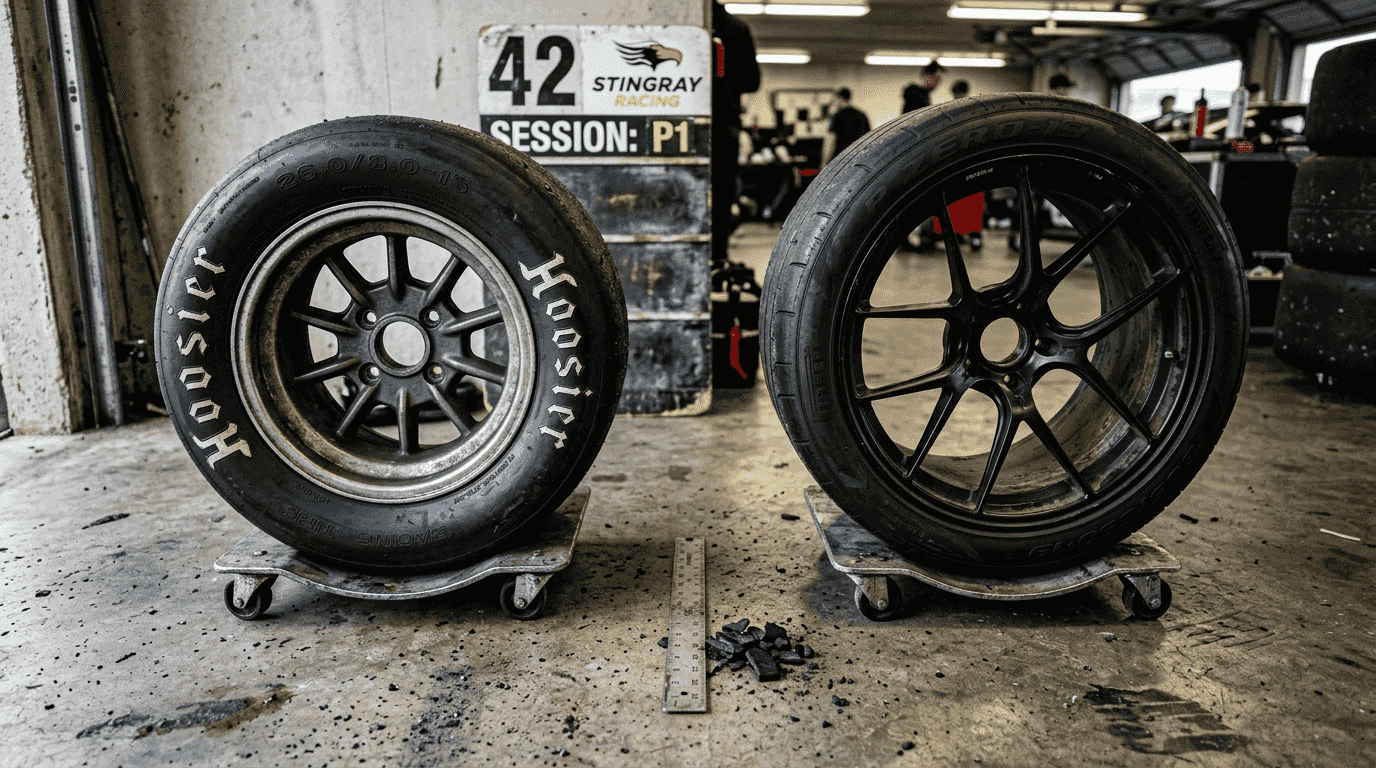
Diameter changes fundamentally alter sidewall height and behavior. Larger diameter wheels reduce sidewall height when maintaining overall tire diameter, creating a stiffer sidewall that flexes less under cornering loads. This stiffness improves steering response and cornering precision but transfers more impact harshness to the suspension. Smaller sidewalls also affect heat dissipation, as less rubber volume means faster temperature changes that require careful tire pressure management.
| Wheel Diameter | Sidewall Height | Primary Benefits | Key Considerations |
|---|---|---|---|
| 15-16 inches | Taller sidewall | Better impact absorption, lower cost tires | More sidewall flex, less precise steering |
| 17-18 inches | Medium sidewall | Balanced performance and comfort | Moderate tire costs, good heat management |
| 19-20 inches | Low profile | Maximum steering precision, minimal flex | Higher tire costs, harsher ride, careful pressure monitoring |
Formula 1’s transition to 18-inch wheels in 2022 illustrates how diameter affects vehicle dynamics. The shift from 13-inch wheels reduced sidewall flex dramatically, forcing teams to rely more on suspension tuning rather than tire deformation for mechanical grip. This change improved consistency and predictability while reducing the tire’s role as a suspension element.
When selecting racing wheel sizes, follow this systematic approach:
- Verify brake caliper clearance with the wheel’s inner spoke design and offset
- Confirm the wheel width matches your target tire size per manufacturer specifications
- Calculate the resulting sidewall height to ensure adequate impact protection for your track conditions
- Consider how diameter affects your vehicle’s gearing and speedometer accuracy
- Validate that the overall package fits within your fender wells at full suspension compression and steering lock
Pro Tip: Many racing tire manufacturers publish detailed fitment guides showing recommended wheel widths for each tire size. Staying within these ranges ensures proper bead seating and optimal tire shape under racing loads.
Exploring performance gains from racing wheels helps contextualize how sizing decisions integrate with broader performance objectives and vehicle setup philosophy.
Engineering for durability and aerodynamic optimization in racing wheels
Racing wheels endure extraordinary mechanical stresses that would quickly destroy conventional street wheels. Cornering forces, brake heat, curb impacts, and vibration create a punishing environment requiring meticulous engineering. Racing wheels handle stresses beyond factory wheels through strategic material grade selection, variable thickness design, and precise mass placement that maximizes structural integrity.
Material thickness varies significantly across different wheel zones to optimize the strength-to-weight ratio. The hub mounting area features reinforced material to handle bolt torque and lateral loads transferred from the suspension. Spoke sections use carefully calculated profiles that resist bending while minimizing rotational inertia. The outer barrel balances rigidity for tire bead retention against the need for impact energy absorption. This variable engineering approach ensures every gram of material serves a structural purpose.
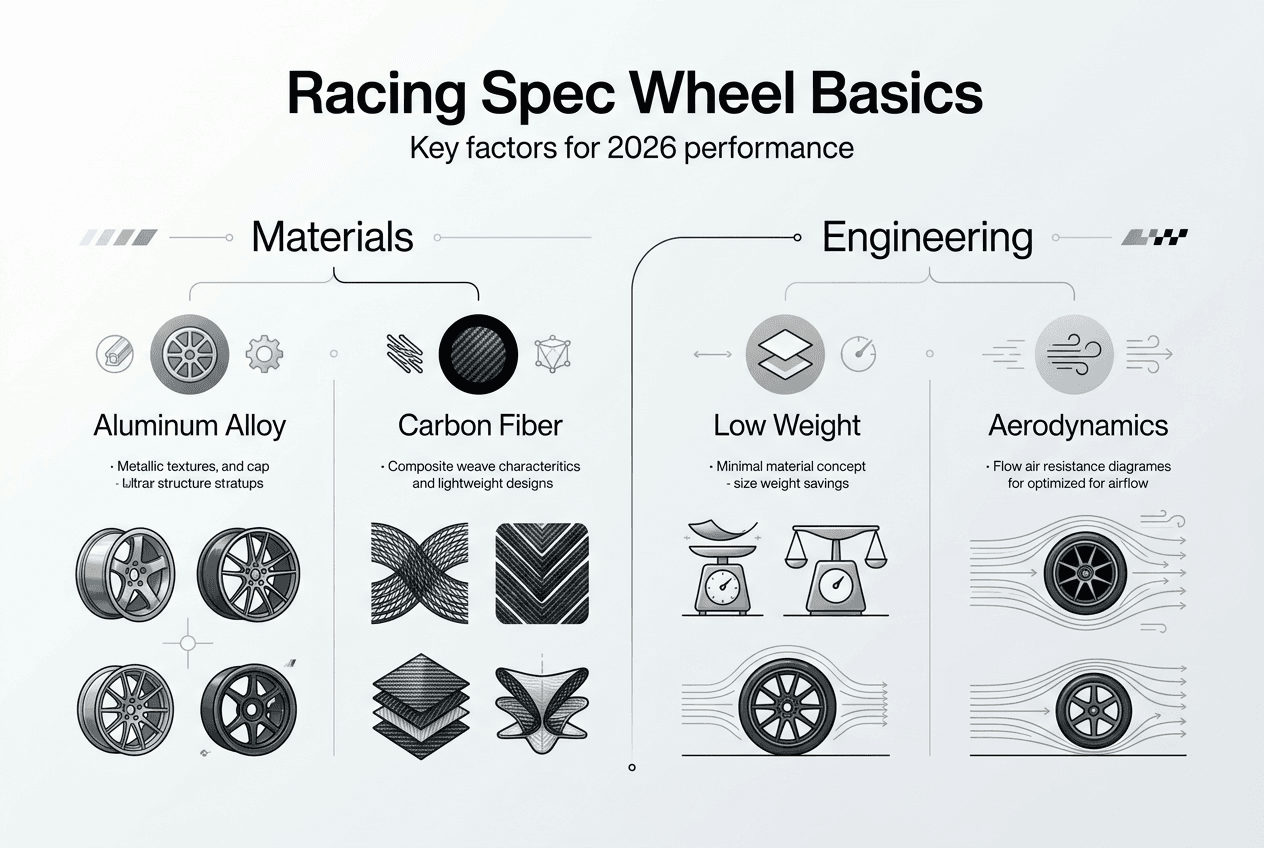
Aerodynamic optimization has evolved from an afterthought to a primary design consideration in modern racing wheels. Spoke shapes, surface contours, and vent patterns all influence airflow around the wheel, affecting both aerodynamic drag and brake cooling efficiency. Computational fluid dynamics analysis reveals that wheel design influences aerodynamics and brake cooling, improving efficiency up to 10% based on optimized spoke geometry and surface treatments.
| Design Feature | Aerodynamic Impact | Brake Cooling Effect | Weight Consideration |
|---|---|---|---|
| Flat spoke faces | Reduced turbulence | Moderate airflow | Minimal impact |
| Directional vanes | Improved air channeling | Enhanced cooling | Slight increase |
| Covered designs | Lowest drag | Reduced cooling | Variable |
| Open spoke patterns | Higher drag | Maximum cooling | Lightest option |
Brake cooling deserves special attention because inadequate heat dissipation causes brake fade and reduced stopping power during extended track sessions. Racing wheels incorporate strategic vent placement and spoke geometry that channels air directly onto brake rotors and calipers. Some designs feature directional spoke patterns that actively pump air through the wheel when rotating, creating measurable temperature reductions compared to conventional spoke layouts.
Key durability factors to evaluate in racing wheels include:
- Material certification and alloy grade specifications
- Manufacturing process documentation showing forging or flow-forming
- Finite element analysis validation of stress distribution
- Impact testing results demonstrating failure thresholds
- Quality control procedures ensuring consistent production standards
SFI Foundation certification provides objective verification that racing wheels meet established safety and performance standards. The SFI Foundation has issued quality assurance standards for specialty performance and racing equipment since 1978, offering racers confidence that certified products undergo rigorous testing. While not all racing wheels carry SFI certification, those that do have demonstrated compliance with demanding structural and safety requirements.
“Aerodynamic efficiency in wheel design isn’t just about reducing drag. Proper airflow management keeps brakes cool, which maintains consistent stopping power lap after lap when it matters most.” – Aerodynamics Engineer, GT Racing Team
Reviewing the performance wheel finish guide reveals how surface treatments and coatings protect racing wheels from corrosion and impact damage while maintaining their engineered performance characteristics.
Choosing the right racing spec wheels: application, balance, and expert advice
Selecting optimal racing wheels requires matching specifications to your specific motorsport environment and vehicle characteristics. A time attack car demands different wheel properties than a drift vehicle or endurance racer. Track surface quality, typical weather conditions, racing duration, and vehicle power output all influence which wheel design delivers the best performance and reliability balance.
The weight versus strength trade-off represents the most critical decision point in wheel selection. Lighter wheels improve acceleration, braking, and suspension response, potentially shaving tenths of seconds per lap. However, ultra-lightweight designs may sacrifice impact resistance, risking catastrophic failure from curb strikes or debris impacts. Choosing the right racing wheel balances weight, strength, and aerodynamic properties tailored to track and vehicle setup.
Many enthusiasts fall into the trap of prioritizing weight reduction above all other factors, but this approach ignores real-world racing conditions. The misconception that lighter wheels are always better is false because durability and impact resistance prove crucial during wheel-to-wheel racing or on tracks with aggressive curbing. A wheel that fails mid-session costs far more time than the incremental lap time gains from extreme weight savings.
Consider these application-specific factors when selecting racing wheels:
- Track surface quality and curbing aggressiveness determine required impact resistance
- Session duration affects heat management needs and thermal cycling durability
- Vehicle power output influences the importance of rotational mass reduction
- Tire availability and sizing options constrain wheel width and diameter choices
- Rule compliance for your racing series may mandate specific certifications or construction methods
Aerodynamic effects deserve careful evaluation, particularly for high-speed racing applications. Wheel designs that reduce drag benefit straight-line speed, while those optimizing brake cooling prove more valuable on technical circuits with heavy braking zones. Some racing categories restrict wheel designs, limiting aerodynamic optimization options and forcing focus on weight and strength characteristics.
Tire compatibility extends beyond simple width matching to include considerations of bead seat design, safety humps, and valve stem accessibility. Racing tires often feature stiffer bead construction than street tires, requiring wheels with appropriate bead seat geometry for reliable retention under extreme lateral loads. Valve stem placement affects ease of pressure checks during pit stops, a seemingly minor detail that matters during time-critical race situations.
Pro Tip: Before committing to racing wheels, consult with experienced racers in your specific series or discipline. Their real-world insights about which wheels survive season-long use versus those that fail prematurely can save thousands in replacement costs.
Certifications and testing documentation provide objective validation of wheel performance claims. Beyond SFI certification, look for manufacturers who publish detailed specifications including material grades, load ratings, and testing methodologies. Reputable racing wheel manufacturers transparently share this information, while those making vague performance claims without supporting data should raise concerns.
Exploring the benefits of upgrading racing wheels helps frame your selection criteria within broader performance objectives and budget considerations, ensuring your wheel choice aligns with overall vehicle development priorities.
Explore forged racing wheels for your high-performance car
Now that you understand the engineering principles behind racing spec wheels, you can make informed decisions about upgrading your high-performance vehicle. E6 Forged specializes in premium forged and multipiece racing wheels engineered for maximum performance and durability in motorsport applications. Our wheels combine advanced materials, precision manufacturing, and track-proven designs that deliver measurable performance gains.

Whether you’re building a dedicated track car or upgrading a street-driven sports car for occasional racing, proper wheel selection and maintenance ensure safety and performance. Our forged wheels safety inspection guide walks you through critical checkpoints before each track session. The forged wheel installation guide provides detailed torque specifications and mounting procedures. Explore our AR03 multipiece forged wheels to see how precision engineering translates to real-world performance advantages.
Frequently asked questions about racing spec wheels
What makes racing spec wheels different from regular wheels?
Racing spec wheels use advanced materials like forged aluminum alloys and specialized manufacturing processes that create superior strength-to-weight ratios compared to cast street wheels. They incorporate engineering optimizations for reduced unsprung weight, improved heat dissipation, and enhanced durability under extreme cornering and braking forces. Racing wheels also feature aerodynamic designs that reduce drag and improve brake cooling, delivering measurable performance advantages on track.
Are racing spec wheels suitable for street use?
Most racing-specific wheels lack DOT approval required for legal street use in the United States, as they’re engineered purely for track performance without meeting street safety standards. Some manufacturers offer dual-purpose wheels with appropriate certifications that work for both street and track applications. Always verify local regulations and confirm wheel certifications before installing racing wheels on a street-driven vehicle.
How much can racing spec wheels improve lap times?
Lap time improvements from racing wheels vary based on track layout, vehicle setup, and driver skill, but reducing unsprung weight by 1 kg can improve lap times by approximately 0.1 to 0.2 seconds on typical race tracks. The cumulative effect of lighter wheels across all four corners, combined with better brake cooling and aerodynamic efficiency, often produces gains of 0.5 to 1.5 seconds per lap on road courses. Shorter autocross courses show smaller absolute time reductions but similar percentage improvements.
What standards should racing wheels meet for safety?
Reputable racing wheels should carry SFI certification, which indicates compliance with rigorous testing standards established by the SFI Foundation for quality assurance of specialty performance and racing equipment since 1978. Additionally, verify that wheels meet any specific requirements mandated by your racing series or sanctioning body. Look for manufacturers who publish detailed load ratings, material specifications, and testing documentation supporting their performance claims.
Can I use racing spec wheels with stock suspension?
Racing wheels can mount on vehicles with stock suspension, but achieving optimal performance requires ensuring proper fitment including offset, width, and diameter compatibility with your suspension geometry. Stock suspension may limit how wide or large you can go before encountering clearance issues at full compression or steering lock. Consider that racing wheels’ reduced weight may slightly alter suspension behavior, though most drivers find the changes beneficial even with stock components.