TL;DR:
- Choosing the right wheels is essential for safety, performance, and durability in track environments, with forged options offering superior strength and impact resistance. Lightweight, properly certified, and correctly sized wheels tailored to your specific use case can significantly improve handling and reduce stress on your vehicle’s suspension and brakes. Carefully verify wheel specifications and certification marks before investing, especially for competitive racing or high-stress applications.
Choosing the wrong wheels for a track day is not just an expensive mistake. It can compromise your lap times, damage your suspension, and in worst cases, put you at risk. The world of examples of track-ready wheels is larger than most enthusiasts realize, spanning everything from fully forged monoblock units to practical flow-formed options built for club-level motorsport. This article breaks down what separates a true performance track wheel from a street wheel with good marketing, covers the features of track-ready wheels you need to understand, and gives you concrete examples you can act on.
Table of Contents
- Key takeaways
- 1. Examples of track-ready wheels: what makes a wheel truly track-capable
- 2. Forged track-ready wheel examples for competitive use
- 3. Flow-formed wheel examples for club-level track days
- 4. Track-ready wheel comparison by specs and use case
- 5. How to decide which track wheel fits your needs
- My take on track wheel selection after years at the track
- Upgrade your track setup with E6carbon forged wheels
- FAQ
Key takeaways
| Point | Details |
|---|---|
| Wheel size matters for track use | Common track sizes like 17×9 or 18×9.5 balance brake clearance, rotational mass, and tire width. |
| Construction type drives performance | Forged wheels offer the best strength-to-weight ratio; flow-formed wheels are a smart mid-tier choice. |
| Unsprung mass affects everything | Lighter wheels directly improve acceleration, braking, and handling response on track. |
| Certification protects you | Authentic JWL/VIA markings verify a wheel has passed structural safety testing for real-world use. |
| Match wheels to your use case | Casual track days, club racing, and endurance events each demand different construction priorities. |
1. Examples of track-ready wheels: what makes a wheel truly track-capable
Before you can evaluate any specific wheel, you need to understand what separates a track-ready wheel from everything else on the market. The features of track-ready wheels are not cosmetic. They are structural and mechanical.
Common track wheels run in the 17×9 or 18×9.5 range, paired with 245 to 275 width tires. This balance keeps rotational mass manageable while giving enough rubber contact for high-load cornering. Go too wide and you increase rotational inertia. Go too narrow and you sacrifice cornering grip.
Offset is equally critical and often overlooked. A wheel with the wrong offset pushes the tire too far inward or outward relative to the hub, which loads bearings unevenly and can cause premature wear. Improper wheel specs can also trigger ABS errors and create brake clearance problems on modified track cars.
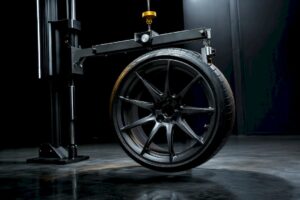
Reducing unsprung mass through lightweight wheels directly improves your car’s acceleration, braking, and handling response. This is not theoretical. Every pound you remove from the wheel and tire assembly translates into sharper turn-in and faster transitions between corners.
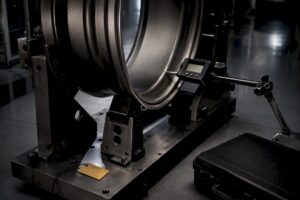
Construction types break down into three main categories: cast, flow-formed, and forged. Cast wheels are made by pouring molten aluminum into a mold. They are the heaviest and least suitable for serious track use. Flow-formed wheels start as cast centers but are spun under pressure to refine the barrel, producing a denser and lighter structure. Forged wheels are machined from a solid billet of aluminum, offering the highest material density and the best strength-to-weight performance.
For certification, look for genuine JWL/VIA markings. Authentic JWL/VIA marks are deeply embossed or molded near the valve stem with registration numbers and a test year. Printed or surface-etched marks are common on counterfeits and should be treated as a red flag.
Pro Tip: When evaluating any performance track wheel, check that the JWL/VIA mark has a registration number alongside it. A mark without a traceable number is almost always cosmetic and offers no structural guarantee.
2. Forged track-ready wheel examples for competitive use
Forged wheels are the gold standard for competitive track applications. They are produced from a solid billet of aluminum alloy, compressed and shaped under extreme pressure. The result is a grain structure that runs continuously through the wheel rather than having porosity like cast options.
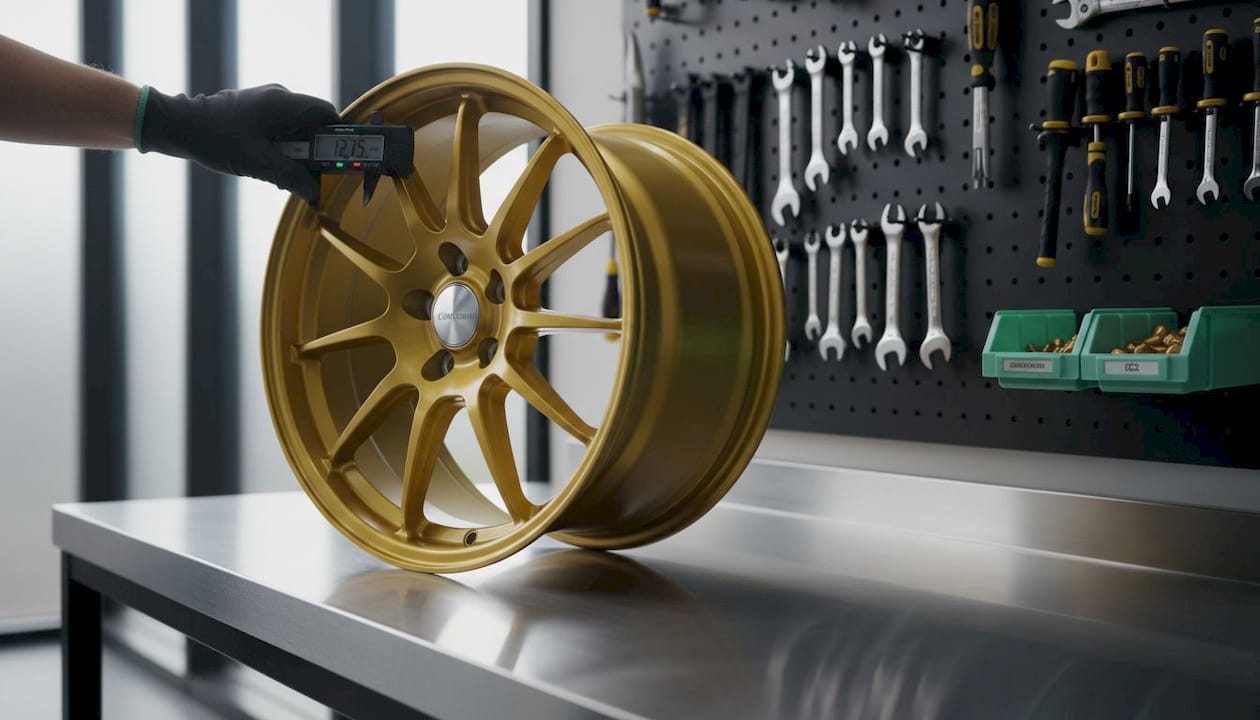
Forged wheels deliver superior tensile strength and impact resistance, which matters when you are pushing hard over curbs, through chicanes, or during extended endurance stints. Heat management is also better on forged wheels because the denser alloy conducts and dissipates thermal energy more effectively than cast alternatives.
Here are well-regarded examples of forged wheels that appear regularly in competitive track environments:
- BBS RE-V: A monoblock forged wheel available in 18 and 19-inch diameters, commonly seen on GT-class race cars and time attack builds. Weights start around 17 lbs in 18×9.5.
- Volk Racing TE37SL: One of the most referenced lightweight racing wheels in the industry. The 18×9.5 version weighs approximately 16.5 lbs and has appeared on countless Nurburgring record attempts.
- CCW Classic: A forged multi-piece wheel with a long motorsport pedigree. Highly customizable in offset and width, which makes it popular for cars running aggressive suspension setups.
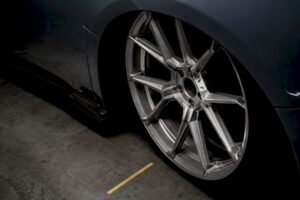
- E6 Forged AR03 and AR01: Multi-piece forged wheels from E6carbon designed specifically for performance applications on vehicles like BMW M-series, Ferrari, and Lamborghini. Both models prioritize low weight and precision fitment.
- HRE FF01: A flow-spun wheel from a brand better known for forged work, serving as their accessible entry into track-grade construction with verified structural performance.
Forged wheels start at around $400 per wheel and can exceed $1,500 each for custom sizes or premium finishes. That price gap compared to flow-formed or cast options is a real consideration, but for anyone running regular competitive sessions, the durability and weight advantage justify the investment.
3. Flow-formed wheel examples for club-level track days
Flow-formed wheels occupy a genuinely useful middle ground. They are not as light or strong as fully forged options, but they are a major step up from traditional cast wheels and sit at a price point that makes sense for club racers and enthusiasts who track their car a few times a year.
The manufacturing process starts with a cast aluminum center, but the barrel is then spun on a mandrel under high pressure rollers. This refines the grain structure of the outer barrel and produces a wheel that is meaningfully stronger and lighter than a standard cast unit.
Flow-formed wheels typically save 2 to 4 lbs per wheel compared to gravity-cast alternatives, with a price premium of roughly $100 to $200 per wheel. Across a set of four, you could shed 8 to 16 lbs of unsprung mass while spending significantly less than a full forged set.
Popular track-ready flow-formed examples include:
- Enkei RPF1: The most cited club-track wheel in North America. Available in 15 through 18-inch diameters, with the 17×9 version weighing just over 15 lbs.
- Konig Hypergram: A strong budget-performance choice often used at SCCA and NASA events. Solid construction, competitive weight, and available in common track fitments.
- OZ Racing Ultraleggera HLT: Uses OZ’s proprietary flow-forming process. The 18-inch version weighs approximately 16.5 lbs and is widely used in touring car series across Europe and the US.
- Gram Lights 57CR: Produced by Rays Engineering using their flow-forming technology. A favorite among Time Attack competitors who want forged-tier weight without the full forged price.
Flow-formed wheels are suitable for occasional track use, particularly for club-level events and track days where sessions are not as sustained or abusive as professional competition. If you race competitively and frequently, forged remains the better choice.
4. Track-ready wheel comparison by specs and use case
Comparing examples side by side cuts through the noise quickly. Here is how some of the most referenced performance track wheels stack up across the specs that actually matter.
| Wheel | Construction | Size Example | Weight (approx.) | Price Range (each) | Best Use Case |
|---|---|---|---|---|---|
| Volk TE37SL | Forged monoblock | 18×9.5 | 16.5 lbs | $700 to $900 | Competitive time attack, circuit |
| BBS RE-V | Forged monoblock | 18×9.5 | 17.0 lbs | $800 to $1,100 | GT class, endurance racing |
| E6 Forged AR03 | Forged multi-piece | Custom fitment | TBD by spec | Premium | Sports cars, circuit performance |
| Enkei RPF1 | Flow-formed | 17×9 | 15.2 lbs | $150 to $200 | Club track days, SCCA, NASA events |
| Gram Lights 57CR | Flow-formed | 18×9 | 17.5 lbs | $250 to $350 | Time attack, enthusiast track use |
| OZ Ultraleggera HLT | Flow-formed | 18×9.5 | 16.5 lbs | $300 to $450 | Touring car, club motorsport |
| Konig Hypergram | Flow-formed | 17×8 | 15.8 lbs | $100 to $150 | Budget club racing, HPDE events |
A few observations worth noting. Multi-piece wheels like the AR03 offer an advantage that monoblock options cannot match: you can rebuild them. If you damage the outer barrel on a curb strike, you replace that barrel rather than the whole wheel. For endurance racers and privateer teams managing costs across a season, this matters a lot.
Pro Tip: For any wheel you plan to use at sanctioned events, cross-reference the manufacturer’s certification documentation, not just the mark on the wheel itself. Most reputable manufacturers publish their JWL/VIA test results online.
5. How to decide which track wheel fits your needs
You do not need the most expensive forged wheel on the market to have a fast, safe track setup. The right wheel depends on how you actually use your car, what it weighs, and what your budget allows.
Here is a practical decision framework:
- Frequency of use: If you run more than six track days a year or compete in timed events, forged is worth the investment. Fewer sessions or HPDE events make a quality flow-formed wheel the smarter financial call.
- Car weight and power: Heavier cars and high-horsepower builds generate more heat and stress at the wheel. Forged construction handles sustained thermal and structural loads better.
- Discipline matters: Endurance racing rewards durability and repairability, which favors multi-piece forged wheels. Autocross and short sprint events reward outright lightness, which can favor light monoblock options.
- Suspension and fitment: Always verify offset before purchasing. Running the right wheel specs for your car’s suspension geometry prevents bearing wear and keeps the car handling as intended.
- Certification and authenticity: Verify JWL/VIA marks are genuine. Counterfeit certification marks are common on budget imports and represent a real safety risk under track stress.
For anyone serious about understanding the full performance wheel selection process before committing to a set, doing your research on construction standards is worth the time.
My take on track wheel selection after years at the track
I’ve watched racers spend $3,000 on coilovers and then bolt on cast wheels because they balked at the price of forged options. It’s the wrong trade-off, every time. In my experience, the wheel is where compromising on quality costs you the most. Not in lap times alone, but in safety and reliability under real race conditions.
That said, I’ve also seen club racers running Enkei RPF1s lap after lap with zero issues on well-maintained cars. Flow-formed wheels are not a step backward for occasional or semi-competitive use. They are a genuinely smart choice when the alternative is stretching your budget dangerously thin.
What I’ve learned is that the biggest mistake people make is buying wheels that don’t match their suspension geometry. I’ve seen beautiful forged sets arrive that couldn’t be run because the offset was off by 15mm and the builder hadn’t verified fitment before ordering. You cannot undo a custom forged order easily.
My second caution is about counterfeit certifications. I’ve personally held wheels with embossed JWL/VIA marks that looked convincing until you noticed the registration number was either missing or didn’t correspond to any public database entry. If a deal looks too good for the spec, it almost certainly involves a wheel that has never seen a structural test.
The honest answer is: buy the best forged wheel you can afford for the level you compete at, and verify every specification before you commit.
— Kunal
Upgrade your track setup with E6carbon forged wheels
If you’re ready to move beyond stock or budget cast wheels, E6carbon’s forged multi-piece lineup is worth serious attention. The AR03 multi-piece wheels and AR01 multi-piece wheels are engineered for exactly the performance applications this article covers: circuit driving, competitive track events, and builds on vehicles like BMW M-series, Ferrari, and McLaren. Both models combine precision forged construction with the repairability advantage of multi-piece design. E6carbon also publishes a detailed forged wheel installation guide and a forged wheel safety inspection resource to help you get setup right the first time.
FAQ
What are the best examples of track-ready wheels?
Forged options like the Volk TE37SL and BBS RE-V are benchmarks for competitive track use, while flow-formed wheels like the Enkei RPF1 and Gram Lights 57CR are excellent for club-level and occasional track applications.
How much do track-ready wheels cost?
Forged wheels typically start around $400 per wheel and can exceed $1,500 for custom designs, while quality flow-formed options generally range from $100 to $450 per wheel.
What does JWL/VIA certification mean for track wheels?
JWL/VIA marks indicate a wheel has passed Japanese structural and impact testing standards. Authentic marks are deeply embossed near the valve stem with a traceable registration number, not printed or surface-etched.
Are flow-formed wheels safe for track days?
Yes. Flow-formed wheels are suitable for occasional track use and club motorsport events, though forged construction is recommended for frequent competitive sessions due to higher sustained stress demands.
Why does wheel weight matter on a track car?
Reducing unsprung mass through lighter wheels directly improves acceleration, braking, and handling responsiveness because the suspension and drivetrain have less rotating mass to manage through direction changes.