TL;DR:
- Proper wheel fitment for the Lamborghini Huracán with carbon ceramic brakes depends on precise offset and caliper clearance considerations. Factory minimum size is 19 inches, with spoke geometry and offset engineering crucial to avoid caliper contact and ensure optimal performance. Accurate physical verification and software recalibration are essential to prevent failures and maximize braking efficiency in custom builds.
Lamborghini Huracán custom offsets and carbon ceramic brake clearance are the two variables that determine whether your custom wheel build performs flawlessly or fails at the caliper face. The Huracán’s factory carbon ceramic system runs 380 mm front rotors with 6-piston front calipers and 356 mm rear rotors with 4-piston rear calipers. Those dimensions are non-negotiable. Every offset decision you make flows from them. Get the relationship between spoke geometry, barrel depth, and caliper clearance wrong, and you risk spoke-to-caliper contact at speed, which is a catastrophic and entirely preventable failure.
What are the carbon ceramic brake dimensions and clearance requirements on the Huracán?
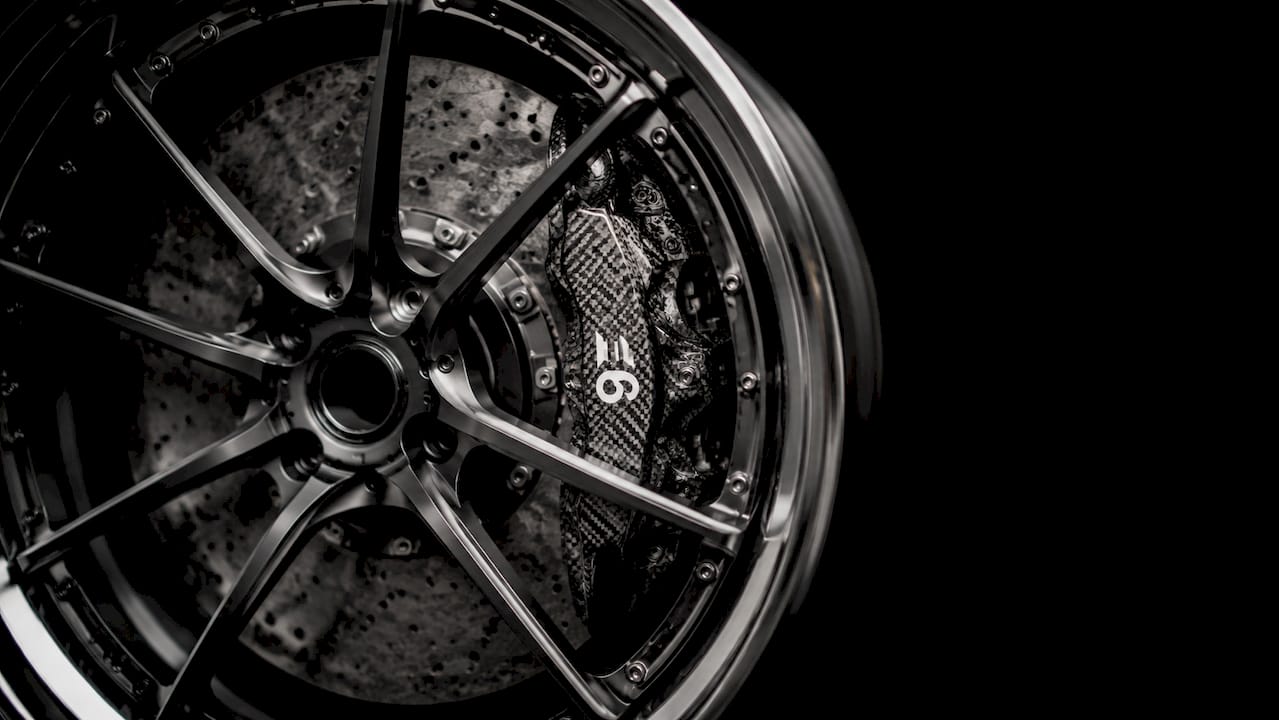
The Huracán’s carbon ceramic brake system sets the physical boundaries for every wheel you consider. The minimum wheel diameter is 19 inches to clear the front calipers and rotors. Running anything smaller is not a fitment compromise. It is a mechanical interference guarantee.
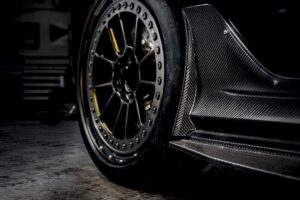
The 6-piston front calipers have a large physical footprint that extends deep into the wheel barrel. Spoke design matters as much as diameter. A wheel with wide, flat spokes positioned at the wrong radial angle will contact the caliper body even at a correct offset. This is why barrel depth and spoke profile must be engineered together, not selected independently.
Key dimensional constraints for the Huracán carbon ceramic system:
- Front rotor: 380 mm diameter, requiring maximum barrel clearance at the inner spoke face
- Rear rotor: 356 mm diameter, with 4-piston calipers that are narrower but still demand precise spoke clearance
- Minimum wheel diameter: 19 inches front and rear to physically clear rotor and caliper geometry
- Caliper projection: 6-piston front units project further inboard than most aftermarket wheel designers account for
- Spoke poke risk: Narrow, deep-dish spoke profiles at aggressive offsets are the most common interference point
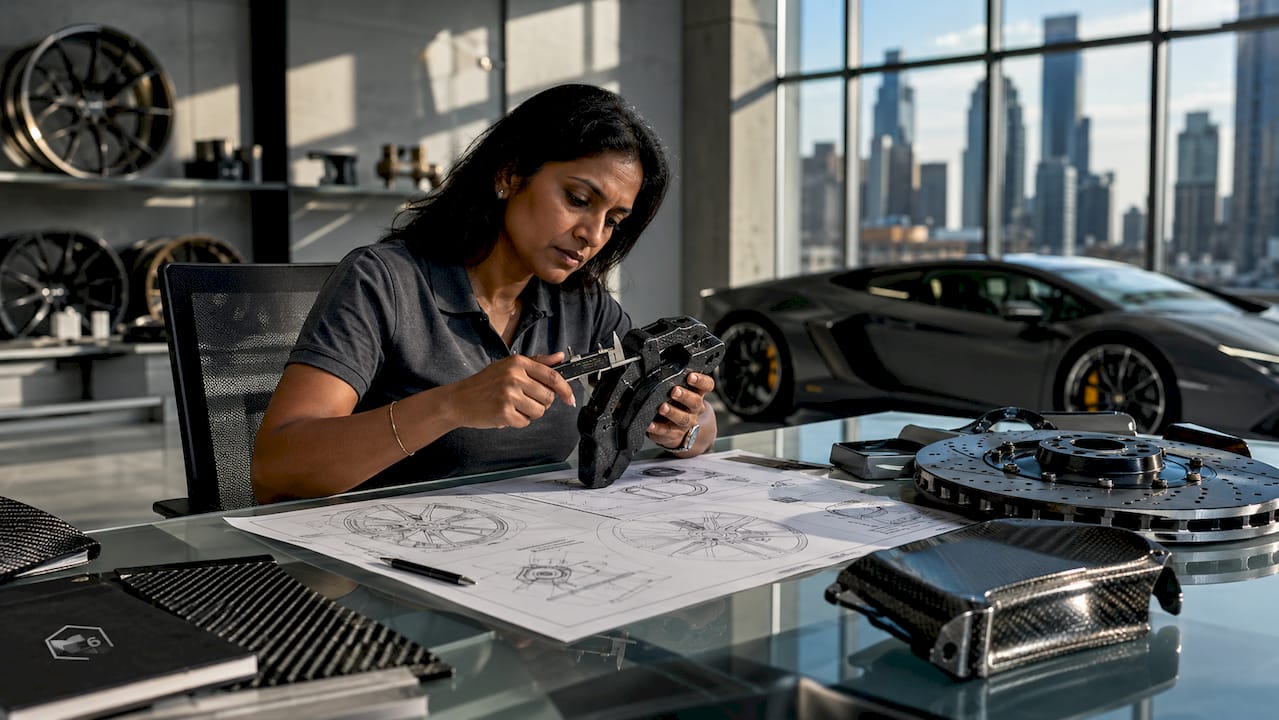
Pro Tip: Request a 3D caliper model from your wheel manufacturer before finalizing spoke geometry. Matching the spoke path to the caliper profile in CAD eliminates the most common failure mode before a single piece of aluminum is cut.
If you are considering a Huracán brake upgrade, verify that your wheel builder has the exact caliper dimensions on file, not generic Lamborghini data.
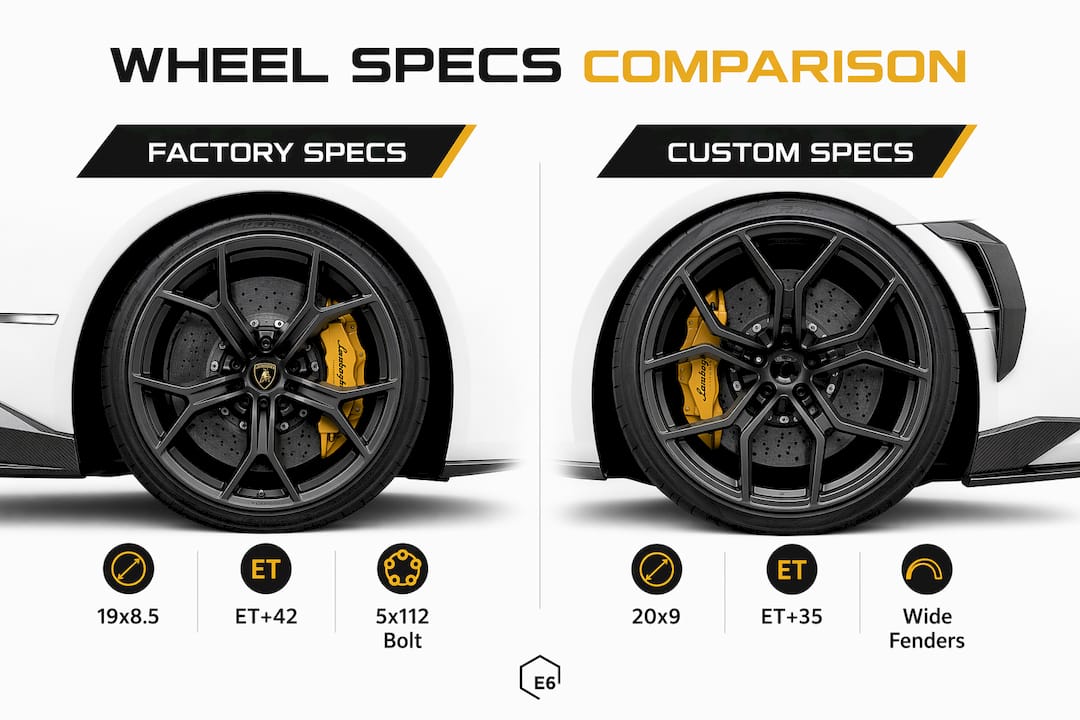
How do custom wheel offsets affect brake clearance and fender fitment on the Huracán?
Wheel offset is defined as the distance in millimeters from the wheel’s mounting face to its centerline. On the Huracán, offset governs two clearances simultaneously: the gap between the inner spoke face and the caliper body, and the gap between the outer lip and the fender arch. Tightening one typically opens the other. The engineering challenge is finding the offset that satisfies both without compromise.
A positive offset pushes the wheel inboard. This increases the gap between the outer lip and the fender but reduces the clearance between the inner spoke and the caliper. A negative or lower positive offset moves the wheel outboard, creating a more aggressive flush stance but demanding that the spoke geometry clears the caliper at a wider radial position.
Here is the correct sequence for dialing in offset on a Huracán with carbon ceramic brakes:
- Establish the minimum caliper clearance first. Measure the maximum inboard projection of the 6-piston caliper. This sets the hard limit on how far inboard your spoke face can sit.
- Calculate the offset range. Work backward from the caliper clearance limit to determine the minimum permissible offset for your chosen barrel width.
- Check fender clearance at the calculated offset. Use a physical mockup or CNC-cut 1:1 template to confirm the outer lip does not contact the fender arch under full suspension compression.
- Verify spoke path, not just offset value. Two wheels with identical offsets but different spoke profiles can produce entirely different caliper clearance results. Spoke angle and width both matter.
- Reject spacers as a solution. Cheap wheel spacers push the wheel outboard but simultaneously stress hub bearings and can reduce the effective caliper clearance by shifting the spoke face closer to the caliper at a different angle. They are not a substitute for correct offset engineering.
Pro Tip: When using VRS carbon fenders on an LP580 or LP610, the wider arch profile changes your fender clearance envelope. Recalculate your outer lip clearance with the new fender geometry before committing to an offset.
Comparing common custom rim specs for the Huracán with carbon ceramic brakes
The Huracán LP580 leaves the factory on 19×8.5 ET+42 front and 19×11 ET+40 rear wheels with a 5×112 bolt pattern. Those factory specs are conservative. They prioritize caliper clearance over stance. Custom builds typically push the envelope on both diameter and offset.
| Spec | Factory (LP580) | Custom 19-inch | Custom 20/21-inch |
|---|---|---|---|
| Front size | 19×8.5 | 19×9.5 | 20×9.5 / 21×9.5 |
| Front offset | ET+42 | ET+35 to ET+38 | ET+30 to ET+35 |
| Rear size | 19×11 | 19×12 | 20×12 / 21×12 |
| Rear offset | ET+40 | ET+32 to ET+38 | ET+28 to ET+35 |
| Caliper clearance | Conservative | Tight, requires verification | Improved barrel depth |
| Spoke poke risk | Low | Moderate to high | Lower with correct design |
Moving to 20-inch or 21-inch wheels increases the barrel diameter, which creates more physical space between the spoke face and the caliper body. This is the primary engineering reason to go larger, not aesthetics. The trade-off is unsprung weight. A 21-inch forged monoblock wheel in a wider barrel adds rotational mass unless the wheel is engineered specifically for weight reduction through spoke geometry and wall thickness optimization.
Key considerations when selecting custom rim specs:
- Wider rear barrels (19×12 or 20×12) require careful offset calculation to avoid fender contact under load
- Spoke count and width affect caliper clearance independently of offset; fewer, narrower spokes reduce interference risk
- Monoblock vs. multi-piece construction affects where weight sits in the barrel, which influences both unsprung mass and structural rigidity at the spoke root
What are the best practices for ensuring optimal brake clearance with custom offsets?
Physical verification is the only standard that matters. CAD models and offset calculators are starting points. A 1:1 CNC cut fitment template replicating the exact spoke profile of your chosen wheel is the only way to confirm no interference exists before the wheel is mounted under load.
Follow these practices before finalizing any custom wheel build on a Huracán with carbon ceramic brakes:
- Maintain a minimum 1.0 mm gap between the brake pad face and rotor surface at all times. Pad-to-rotor contact below this threshold causes pad glazing and uneven rotor wear that owners frequently misdiagnose as wheel imbalance.
- Use feeler gauges on hub mounting surfaces to identify runout or irregularities. Hub surface irregularities cause the rotor to wobble slightly under rotation, which reduces effective clearance at the spoke face.
- Check spoke-to-caliper clearance at multiple rotational positions, not just at the 12 o’clock spoke position. Caliper geometry is not symmetric, and clearance varies as the wheel rotates.
- Update ABS and ESC software after any brake material change. Carbon ceramic friction profiles differ significantly from iron rotors, and the factory stability systems require recalibration to maintain correct intervention thresholds. This step is missed by a large number of owners. For current ECU coverage on Lamborghini platforms, ECU update coverage is worth reviewing before any brake system modification.
Pro Tip: Mount the fitment template on the hub with the actual wheel bolts torqued to spec before checking clearance. Hub face deflection under torque load can reduce caliper clearance by 0.3–0.5 mm compared to a hand-fitted check.
Key takeaways
Precise offset engineering and physical clearance verification are the two non-negotiable requirements for any Huracán custom wheel build with carbon ceramic brakes.
| Point | Details |
|---|---|
| Brake dimensions set the limits | Front 380 mm rotors and 6-piston calipers require a minimum 19-inch wheel diameter. |
| Offset affects two clearances at once | Positive offset increases fender gap but reduces caliper clearance; balance both through calculation. |
| Spoke geometry is as critical as offset | Spoke profile and angle determine caliper clearance independently of the offset value. |
| Spacers are not a solution | Cheap spacers stress hub bearings and can worsen caliper clearance at a different spoke angle. |
| Software calibration is mandatory | ABS and ESC modules require recalibration after any change from iron to carbon ceramic brake material. |
The engineering reality most builders skip
I have reviewed enough failed Huracán wheel builds to identify the single most common mistake: treating offset as the only variable. Builders calculate the correct ET value, confirm it on paper, then mount a wheel whose spoke geometry was never verified against the caliper body. The offset is right. The spoke hits the caliper at the 4 o’clock position. The car goes back apart.
The second mistake is the software gap. Owners spend significant money on carbon ceramic brake upgrades, then drive the car with ABS and ESC calibrated for iron rotors. The friction coefficient difference between iron and carbon ceramic is substantial. The stability systems are actively working against the new brake’s performance envelope until they are recalibrated. This is not a minor tuning detail. It affects real-world stopping distance and pedal feel in ways that make the upgrade feel worse than the factory setup.
The third mistake is the spacer shortcut. I understand the appeal. A 10 mm spacer is cheap and fast. But on a platform with 6-piston calipers and a 380 mm rotor, a spacer changes the spoke-to-caliper geometry in a way that is difficult to predict without a physical check. It also adds a mechanical interface under the hub that was not engineered into the original bearing load path. The correct answer is always a wheel built to the right offset from the start.
At E6 Carbon, the approach is to engineer the offset into the wheel, not bolt it on afterward.
— E6 Engineering
Build your Huracán wheel fitment right the first time
E6 Carbon engineers monoblock forged wheels specifically for exotic platforms where carbon ceramic brake clearance is the primary constraint. Every Huracán build starts with physical caliper dimensions, not generic offset tables.
The E6 Forged catalog covers monoblock, multi-piece, and AeroDisc configurations, all built to forged wheel tolerances that meet the clearance requirements of the Huracán’s 6-piston front calipers. Spoke geometry is validated against 1:1 CNC templates before production begins. If you want a flush, aggressive fitment without spacers and without spoke-to-caliper contact, explore the full range of E6 Forged wheels built for the Huracán platform.
FAQ
What is the minimum wheel size for Huracán carbon ceramic brakes?
The minimum wheel diameter is 19 inches front and rear. This is the smallest size that physically clears the 380 mm front rotors and 6-piston calipers.
What are the factory wheel offsets for the Huracán LP580?
The LP580 runs 19×8.5 ET+42 front and 19×11 ET+40 rear with a 5×112 bolt pattern. Custom builds typically reduce offset to ET+30–ET+38 for a more aggressive stance.
Why does spoke geometry matter as much as offset?
Two wheels with identical offsets but different spoke profiles produce different caliper clearance results. Spoke width and angle determine whether the spoke face contacts the caliper body at any rotational position.
Do I need a software update after installing carbon ceramic brakes?
Yes. ABS and ESC modules require recalibration after switching from iron to carbon ceramic rotors because the friction and thermal profiles differ significantly between the two materials.
Are wheel spacers safe on the Huracán with large brake calipers?
Cheap wheel spacers are not a safe substitute for correct offset engineering. They stress hub bearings, alter spoke-to-caliper geometry unpredictably, and add a mechanical interface not designed into the original bearing load path.