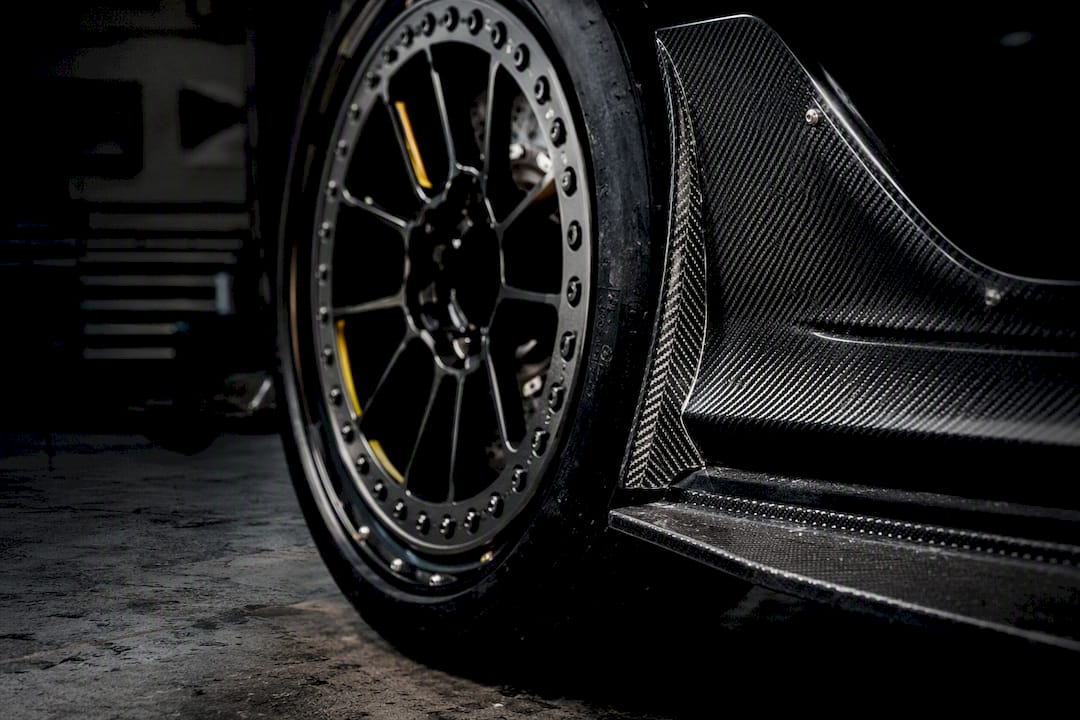
E6 Forged beadlock wheels are the right call for a dedicated high-torque launch build. Not for a daily driver that occasionally sees a green light at a stoplight, but for a car engineered to put serious torque through the tire in under a second.
The verdict comes down to three mechanisms working together: a mechanical outer ring that clamps the tire bead independent of air pressure, a knurled bead seat that adds physical bite against rotational shear, and a 6061-T6 forged aluminum structure strong enough to hold that clamp under repeated launch loads without fatiguing.
- Recommended for: drag-prepped C8 Corvettes, AMG GT track builds, launch-focused McLaren and Lamborghini setups
- Not recommended for: street-only cars with no launch-control use or drag radial setup
- Next step: request a fitment consult with E6 Carbon’s engineering team before ordering
Beadlock wheels are typically sold and rated for off-road or racing use, and the ring system’s functional clamping mechanism requires periodic bolt torque checks to stay safe under repeated stress.
Key Takeaways
E6 Forged beadlock wheels improve high-torque launch consistency by mechanically clamping the tire bead and using a knurled seat to resist rotational shear that bleeds power on conventional wheels.
| Point | Details |
|---|---|
| Match the wheel to the duty cycle | Beadlocks make sense for dedicated launch, drag, or track builds, not street-only driving. |
| Clamping beats air pressure alone | The mechanical ring holds the bead in place independent of tire pressure, cutting microslip at launch. |
| Torque discipline is non-negotiable | Re-torque the ring after the first 50 to 100 miles and before every track or launch event. |
| Weigh the mass trade-off | Added ring weight is worth it on traction-limited setups, less so on cars with grip to spare. |
| E6 builds within a strict product rail | E6 Carbon offers monoblock, beadlock, 2pc, and AeroDisc forged wheels engineered under a Fitment First approach for platforms including the C8 Corvette, AMG GT, and Lexus LC500. |
Table of Contents
- How E6 Forged Beadlock Wheels Are Engineered for High Torque
- Which Platforms Actually Need a Beadlock Setup?
- What Torque and Maintenance Steps Keep Beadlocks Safe?
- Does a Beadlock Wheel Actually Improve Launch Times?
- Why E6 Builds Beadlocks the Way It Does
- How to Order E6 Forged Beadlock Wheels
- Sources
- FAQ
How E6 Forged Beadlock Wheels Are Engineered for High Torque
The clamping ring is only half the story. What actually determines whether a beadlock wheel survives a season of launches is the metal underneath it and the geometry cut into the bead seat.
6061-T6 forged aluminum starts as a solid billet compressed under extreme pressure, which aligns the metal’s grain structure instead of leaving it randomly oriented the way a cast wheel does. That grain alignment is what gives forged wheels their fatigue resistance, the ability to absorb thousands of load cycles without developing microcracks. For a launch-focused car generating peak torque in a fraction of a second, that fatigue margin is not optional. It is the difference between a wheel that survives 200 launches and one that starts showing stress cracks at the spoke roots after 20.
E6 builds its beadlock wheels in two structural formats, and each solves a different problem:
- Monoblock beadlock: a single forged barrel and face with the bead ring bolted on, offering the stiffest possible load path for cars prioritizing minimal flex under torque
- Two-piece (2pc) beadlock: a forged face bolted to a separate forged barrel, giving builders more flexibility on width and finish without sacrificing structural integrity
The bead seat itself is where E6’s knurled ridge design earns its keep. A smooth bead seat relies almost entirely on clamping force and tire pressure to keep the bead from rotating against the barrel during a hard launch. A knurled seat cuts a fine, controlled texture into that contact surface, creating thousands of micro-interlock points that physically resist shear, not just friction from clamping pressure alone.
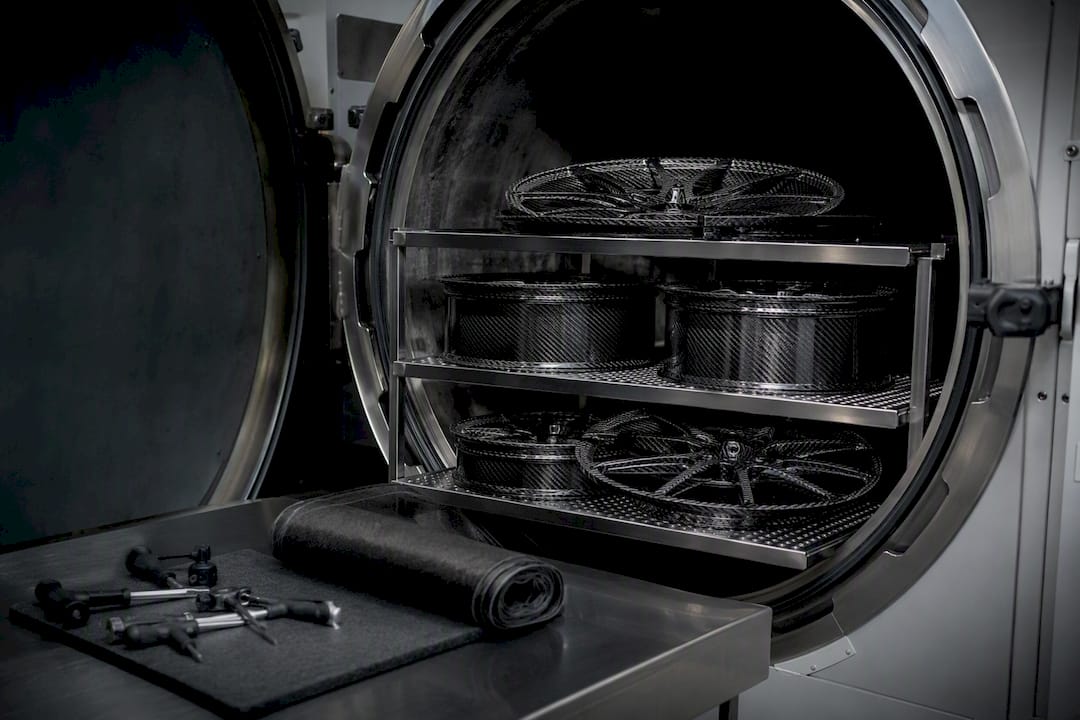
Precision machining keeps runout and the bead-clamping surface within motorsport tolerances, and autoclave curing does the same job for E6’s carbon fiber components, which pair with forged wheels for a system-level reduction in rotating and aerodynamic mass rather than a wheel-only weight claim.
Pro Tip: Ask E6’s engineering team whether a monoblock or 2pc beadlock construction fits your torque profile before locking in a finish. The structural format matters more to launch durability than cosmetic spoke design.
Which Platforms Actually Need a Beadlock Setup?
Not every high-horsepower car needs a beadlock wheel, and the platform matters less than how the car gets driven.
A C8 Corvette running a stock street tune on all-season tires does not need mechanical bead retention. A C8 running a built LT2 or supercharged setup on drag radials at the strip, launching repeatedly at high RPM, is a different animal entirely. Same logic applies to an AMG GT with a tuned M178 engine and a dedicated set of drag tires. The bead unseating risk climbs sharply once torque delivery becomes abrupt and tire sidewall stress spikes at launch.
The Lexus LC500 sits in an interesting spot. It is not a drag-strip regular for most owners, but the naturally aspirated V8’s torque curve and the platform’s growing presence in track-day and canyon-carving builds make it a legitimate candidate for E6’s beadlock and monoblock lines. The E6 Carbon Elite Kit for the Lexus LC500 pairs well with a forged wheel upgrade for owners building a complete track-oriented package rather than a wheel-only swap.
Before an engineering consult, come prepared with:
- Your platform and drivetrain configuration (naturally aspirated, turbo, supercharged)
- Intended use split, street versus track versus dedicated drag
- Tire compound and sidewall construction
- Valve stem preference, single or dual, for airing frequency
E6 prioritizes support across Mercedes-AMG and Lexus LC500 builds first, with McLaren and Lamborghini fitment expanding as a growing share of the beadlock product line.
What Torque and Maintenance Steps Keep Beadlocks Safe?
A beadlock wheel is a maintenance commitment, not a set-and-forget upgrade. Skipping the procedural side is where most beadlock failures actually happen, not in the metal itself.
- Mount the bead ring using a star pattern, never a sequential clockwise pass, to seat the ring evenly against the tire bead.
- Torque every bolt to the wheel manufacturer’s specified value. Never estimate or “feel” it with an impact gun.
- Re-torque the full ring after initial driving miles of driving, since initial bead seating can loosen fasteners slightly as the tire settles.
- Recheck torque before every track or launch event, not just once per season.
- Inspect every bolt and the ring itself for corrosion or thread damage, and replace any hardware that shows wear before it becomes a failure point.
Dual valve stems make sense for anyone airing tires up and down regularly for track sessions, and they’re worth specifying at order time rather than retrofitting later.
Pro Tip: Keep a torque log for your beadlock ring. A quick note of date, mileage, and torque value takes thirty seconds and tells you instantly if a bolt is backing off faster than it should.
One more thing before you order: most beadlock wheels are sold for off-road or racing use only. Street legality varies by state and by local inspection standards, so confirm your local regulations and follow the wheel manufacturer’s intended-use guidance before running one on public roads.
Does a Beadlock Wheel Actually Improve Launch Times?
The mechanical case is straightforward, but the real question every buyer asks is whether it shows up on a timeslip.
Mechanical clamping removes bead retention from the air pressure equation entirely. On a conventional wheel, the tire bead is held in place by pressure pushing the bead against the rim flange. Hammer that setup with peak torque at launch and the bead can rotate slightly against the barrel, a microslip that bleeds power transfer before the tire ever gets a chance to hook up. A beadlock ring clamps the bead mechanically, and the knurled seat beneath it adds a second layer of resistance to that same rotational shear.
What that translates to at the strip is more consistent initial bite, run after run, rather than a single dramatic gain. Expect:
- More repeatable 60-foot times across multiple launches, since the tire is not fighting bead slip on top of managing wheel spin
- Steadier traction at the exact moment torque peaks, which matters most on high-horsepower, traction-limited setups
- A modest increase in rotating mass at the wheel, since the ring and hardware add weight the barrel alone would not carry
That added mass is the real trade-off. On a car that’s already traction-limited rather than power-limited, the bead retention benefit typically outweighs the small penalty from extra rotating weight. On a car with grip to spare and no history of bead slip, a beadlock may add weight without a proportional gain.
Validate it properly: run back-to-back launches on the same track, same tire pressure, same tire temperature, and log 60-foot and eighth-mile times before and after the swap. Anecdotal seat-of-the-pants impressions are not proof. A telemetry log or a handful of consistent timeslips is.
Why E6 Builds Beadlocks the Way It Does
Fitment First is not a slogan at E6. It is the reason precision machining and autoclave curing sit at the center of every beadlock program, from bead-seat tolerance to how a carbon component pairs with a forged barrel.
That is also why the product rail stays narrow: monoblock, beadlock, two-piece, and AeroDisc. No shortcuts, no configurations that compromise the clamping geometry a launch-focused build depends on. If you’re weighing a beadlock setup for a C8, an AMG GT, or an LC500, an engineering consult is the fastest way to find out if your specific build actually needs one.
— E6 Engineering
How to Order E6 Forged Beadlock Wheels
Once you know a beadlock setup fits your build, ordering starts with a conversation, not a checkout cart. E6 Carbon’s engineering team works through your platform, your intended use, your tire compound, and your finish preferences before a single spec sheet gets drawn up, because a launch-focused beadlock has to match the exact torque profile and tire setup it will see at the strip.
Bring your vehicle platform, drivetrain configuration, whether the car sees street, track, or dedicated drag use, your tire size and compound, and any finish or ring-color preferences to the consult. From there, most builds move from initial engineering review to delivery within a standard custom-manufacturing timeline, since every wheel is forged and finished to your specific fitment rather than pulled from generic stock.
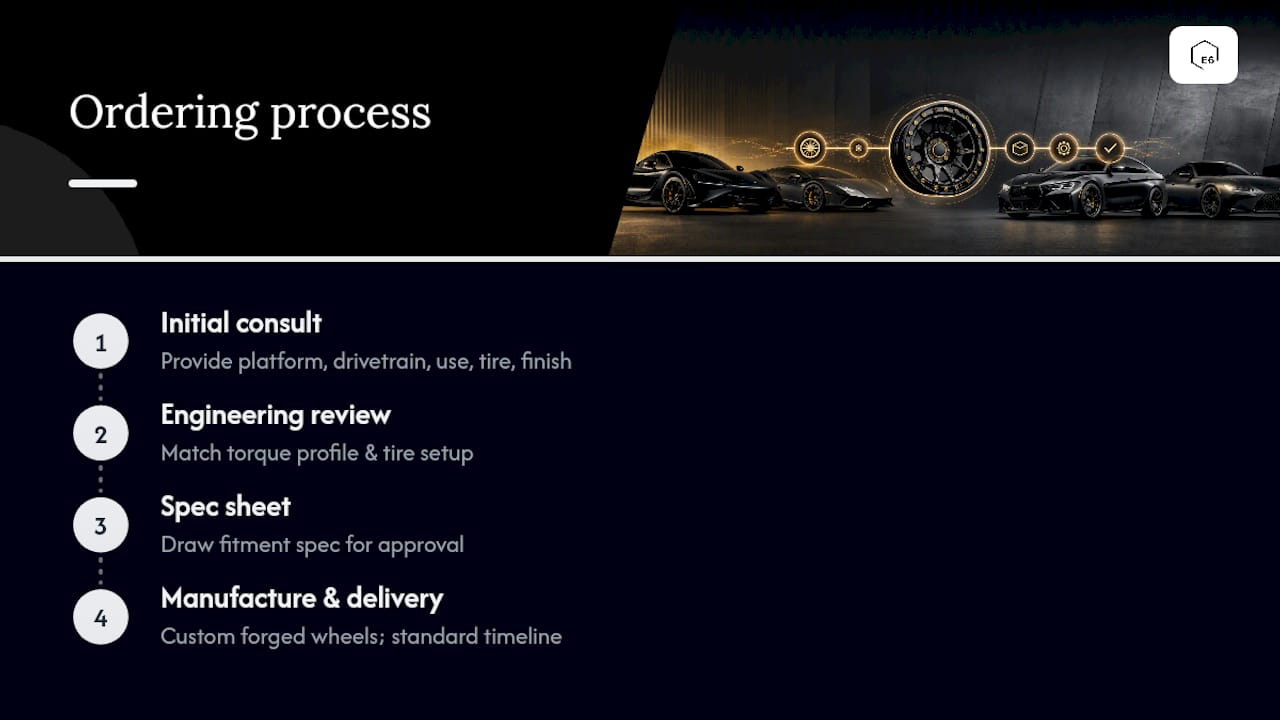
If you’re ready to spec a set, start with the E6 Forged beadlock wheels catalog and request a fitment consult for your platform.
Sources
- Beadlock Wheels Explained: Do You Need Them? | Rocky 4×4
- Lose Air, Gain Traction: KMC Machete Crawl Beadlock Review Video | DrivingLine
FAQ
Do E6 Forged beadlock wheels help with launch traction?
Yes, on high-torque launch builds. The mechanical clamp and knurled bead seat resist the bead rotation that causes microslip during aggressive throttle application.
Are beadlock wheels street legal?
It varies by location and wheel design. Most true beadlocks are sold for off-road or racing use, so confirm local regulations before running one on public roads.
How often should I re-torque a beadlock ring?
Re-torque after the first 50 to 100 miles, then recheck before every track or launch event as part of standard maintenance.
Does a beadlock wheel add weight?
Yes, the ring and bolt hardware add rotating mass compared to a standard barrel. On traction-limited setups, the bead retention benefit generally outweighs that penalty.
Which E6 wheel construction is right for a launch build, monoblock or 2pc?
Monoblock offers the stiffest load path for pure torque resistance, while 2pc beadlock adds finish and width flexibility. An E6 engineering consult can match the construction to your specific torque and tire setup.