TL;DR:
- E6 forged monoblock wheels are one-piece aluminum wheels made from aerospace-grade alloy under extreme pressure, providing superior strength and track performance. Their continuous grain flow and optimized geometry reduce stress concentrations, fatigue, and unsprung mass, leading to sharper response and better durability. They are the ideal choice for high-performance supercars on the track, as they eliminate joint flex and maximize structural integrity.
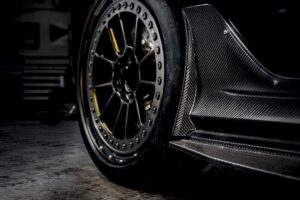
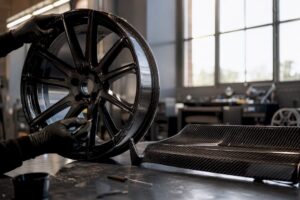
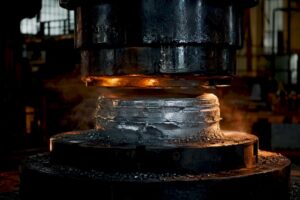
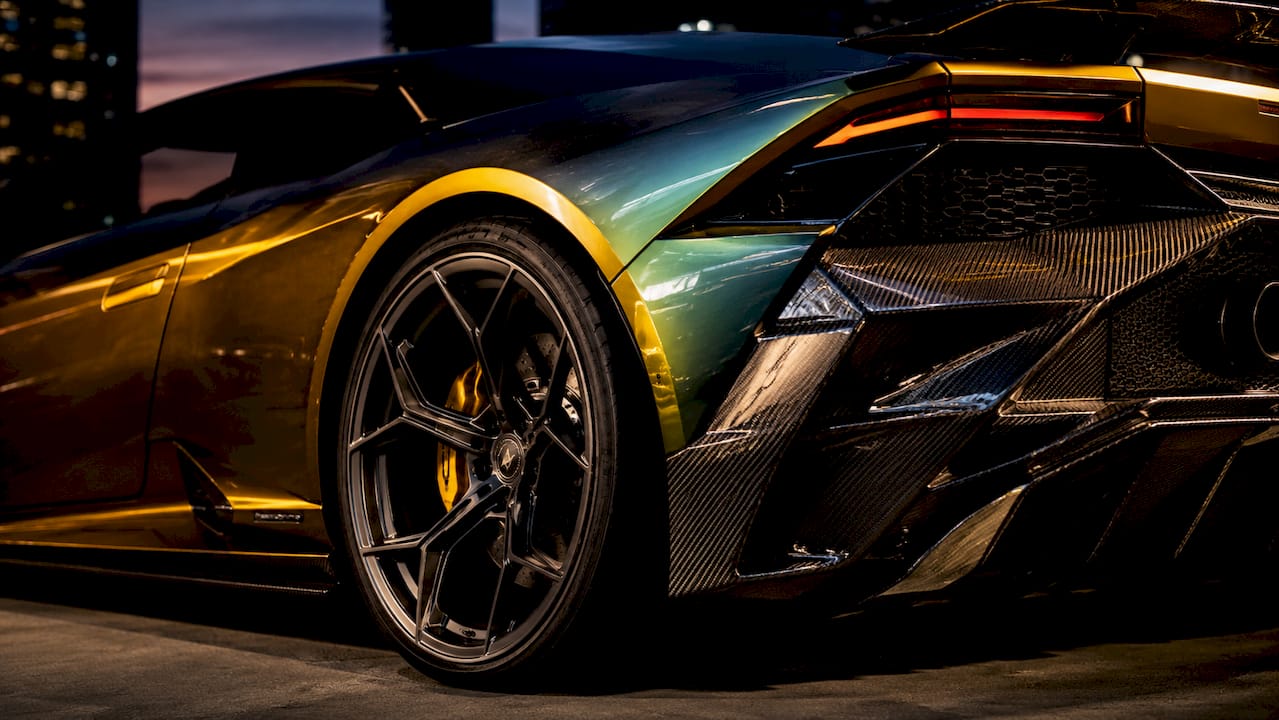
E6 forged monoblock wheels are one-piece forged aluminum wheels machined from a solid billet of 6061-T6 aerospace-grade aluminum under more than 10,000 tons of pressure, delivering structural integrity and track performance that cast or multi-piece wheels cannot match. The monoblock construction, an industry term for single-billet forging, eliminates every joint, seam, and assembly interface found in modular designs. Platforms like the McLaren 750S, C8 Corvette Z06, Lexus LC500, and Mercedes-AMG GT demand this level of engineering. E6 Carbon builds each wheel to meet those demands without compromise.
How E6 forged monoblock wheels deliver structural strength
The structural advantage of a forged monoblock wheel starts at the molecular level. Forging under extreme pressure forces aluminum grain structures to align continuously throughout the entire wheel. Continuous grain flow eliminates the microstructural discontinuities that act as crack initiation sites in cast or assembled wheels. The result is a wheel that resists fatigue under the repeated dynamic loads of a track session.
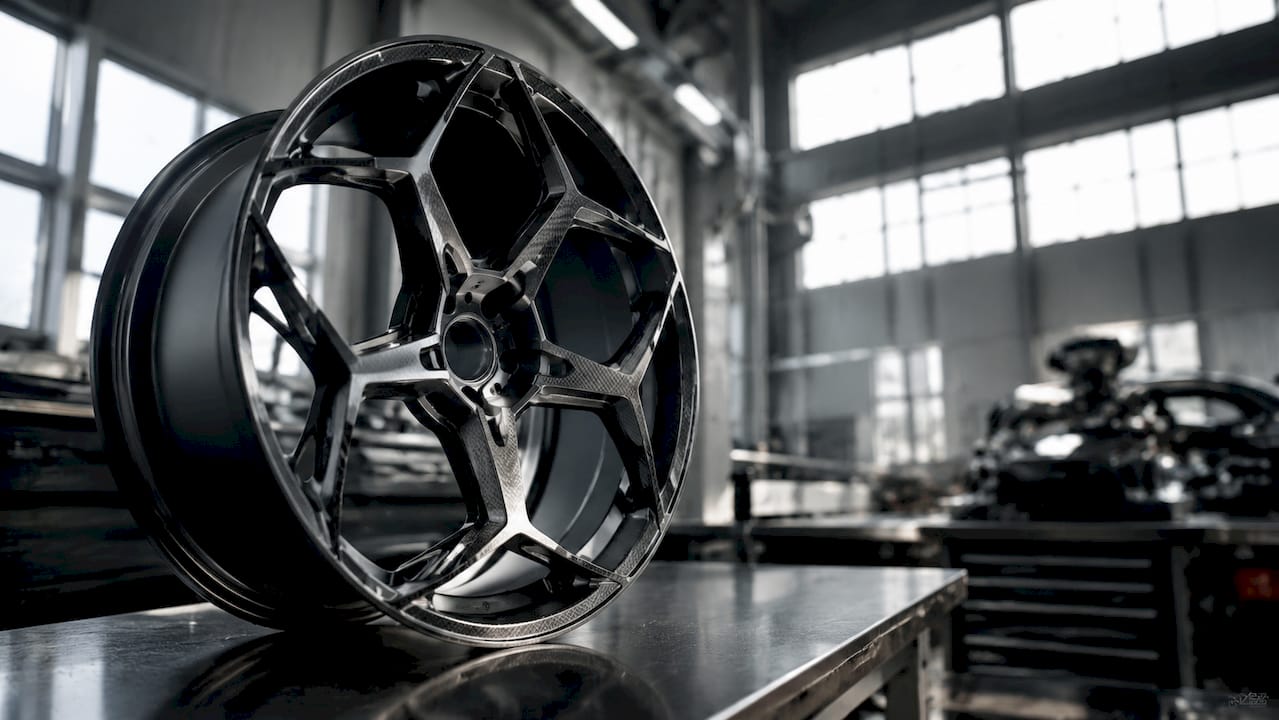
6061-T6 aerospace aluminum is the material of choice for this process. Its yield strength and toughness support high-velocity cornering loads without permanent deformation. 6061-T6 aluminum balances strength, corrosion resistance, and machinability in a way that few alloys can match at this weight class.
Cast wheels, by contrast, cool from a liquid state and develop random, unaligned grain structures. Multi-piece wheels add another liability: the bolted or welded interfaces between barrel and face introduce stress concentration points that no torque spec can fully eliminate. A monoblock forging removes both problems simultaneously.
- Continuous grain alignment reduces deflection under extreme cornering loads
- No joints or interfaces means no fretting, micro-movement, or preload loss between components
- Single-billet construction allows geometry to be machined to tighter tolerances than assembled wheels
- Fatigue crack initiation sites are minimized compared to cast or multi-piece alternatives
Pro Tip: Geometry optimization matters as much as the forging process itself. A poorly designed spoke profile wastes the structural advantage of monoblock construction. Specify spoke geometry that distributes stress evenly from hub to rim to get the full benefit of the one-piece billet.
What are the track performance gains from monoblock forged wheels?
Unsprung mass is the single most consequential variable in suspension response. Forged monoblock wheels reduce unsprung mass by 1.5 to 3 kg per corner compared to cast wheels. That reduction translates directly into faster suspension reaction times, sharper turn-in, and better tire contact patch consistency through corners.
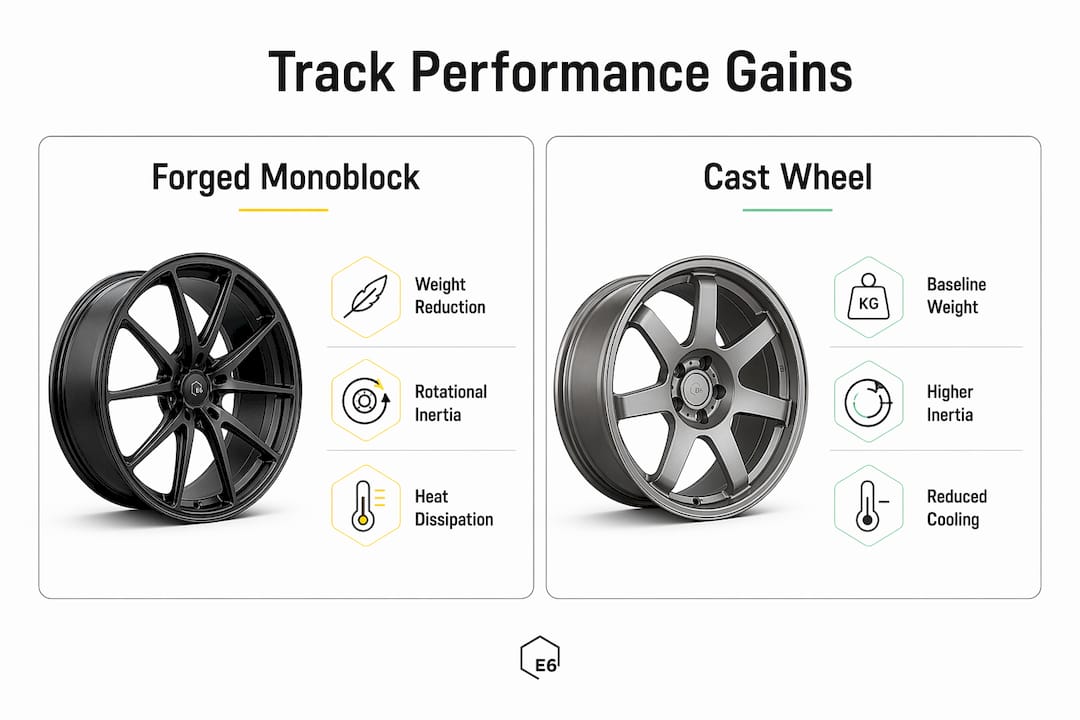
Rotational inertia compounds the benefit. A lighter wheel resists changes in rotational speed more weakly, so the drivetrain accelerates and decelerates the wheel faster. On a platform like the McLaren 750S, where unsprung mass reduction is a factory engineering priority, aftermarket forged monoblock wheels extend that advantage further.
Heat dissipation is the less-discussed performance factor. Under repeated hard braking from high speed, brake rotors and calipers generate heat that must travel somewhere. Forged aluminum wheels dissipate heat faster than cast equivalents because their lower thermal mass and denser grain structure conduct heat away from braking components more efficiently. Brake fade becomes less likely during extended track sessions.
| Metric | Forged Monoblock | Cast Wheel |
|---|---|---|
| Weight reduction per corner | 1.5–3 kg lighter | Baseline |
| Grain structure | Continuous, aligned | Random, unaligned |
| Heat dissipation | High, rapid cooling | Lower, slower cooling |
| Fatigue life | Significantly higher | Lower under track loads |
| Joint interfaces | None | None (cast) / Multiple (multi-piece) |
Pro Tip: Even a 1.5 kg reduction in unsprung mass per corner improves tire contact consistency through high-speed direction changes. On a Lexus LC500 or Mercedes-AMG GT, that consistency shows up as more predictable understeer balance and faster lap times.
How does wheel geometry optimization improve fatigue life?
Forging alone does not guarantee maximum fatigue life. Geometry design determines where stress concentrates under load. Research published by Springer Nature shows that geometry optimization reduces peak Von Mises stress by 18.7% at the spoke and 22.4% at the hub. That stress reduction produces a 98% improvement in fatigue life. Optimized wheels in that study survived more than 102,000 cycles without failure and achieved a 6.2% weight reduction alongside better impact resistance.
The practical implication is significant. Fatigue and impact strength gains come more from stress concentration management than from forging alone. A well-forged wheel with a poorly designed spoke profile will fail sooner than a geometry-optimized wheel made from the same billet.
Heat treatment adds another layer of durability. Residual tensile stresses from the quenching stage of T6 treatment range from approximately 85 to 119 MPa. Stress relief annealing reduces those residual stresses by up to 56–68%, cutting crack initiation risk and extending service life under repeated track loading.
Key engineering steps that drive long-term durability:
- Spoke and hub geometry profiled to distribute Von Mises stress evenly
- T6 heat treatment applied after forging to maximize yield strength
- Stress relief annealing to reduce quench-induced residual tensile stresses
- Final machining to tight dimensional tolerances for precise fitment
Post-forge heat treatment is not optional for track wheels. It is the step that converts raw forging strength into long-term fatigue robustness under the thermal and mechanical cycling of a real track environment.
Monoblock vs. multi-piece forged wheels for track use
The choice between monoblock and multi-piece forged wheels is a direct tradeoff between structural unity and fitment flexibility. Monoblock forged wheels are lighter, stiffer, and free from assembly-induced weaknesses. Multi-piece wheels allow the barrel width and offset to be adjusted by swapping components, which suits street builds where fitment requirements change.
On track, the joints in a multi-piece wheel introduce stiffness loss. The bolted interface between face and barrel flexes under lateral load. That flex absorbs energy that should transfer to the tire contact patch. For a supercar driver running a McLaren 750S or Lamborghini Huracán at track limits, that energy loss is measurable in lap time.
| Factor | Monoblock forged | Multi-piece forged |
|---|---|---|
| Structural stiffness | Maximum, no joints | Reduced at barrel joint |
| Weight | Lightest configuration | Slightly heavier |
| Fitment flexibility | Fixed at manufacture | Adjustable barrel width |
| Repair after damage | Full replacement | Barrel or face replaceable |
| Track suitability | Optimal | Acceptable |
Multi-piece wheels serve a purpose for street builds and show cars where stance adjustability matters. For track-focused supercar owners, the monoblock forged wheel is the correct choice. E6 Carbon builds both configurations, but the monoblock is the engineering answer when lap time and structural integrity are the priority.
Key takeaways
E6 forged monoblock wheels deliver superior track performance and structural strength through continuous grain flow, geometry-optimized spoke profiles, and post-forge heat treatment that together reduce fatigue crack risk and unsprung mass simultaneously.
| Point | Details |
|---|---|
| Monoblock grain flow | Continuous billet forging eliminates crack initiation sites present in cast or multi-piece wheels. |
| Unsprung mass reduction | Forged monoblock wheels save 1.5–3 kg per corner, sharpening suspension response and turn-in. |
| Geometry optimization | Optimized spoke and hub profiles reduce peak stress by up to 22.4% and improve fatigue life by 98%. |
| Heat treatment necessity | Stress relief annealing after T6 treatment reduces residual tensile stresses by up to 68%. |
| Track vs. multi-piece | Monoblock construction eliminates joint flex, making it the correct choice for track-focused supercar platforms. |
What track experience with E6 forged wheels actually teaches you
The engineering data is compelling, but the track tells you something the data cannot fully capture. I have seen Mercedes-AMG GT owners switch from multi-piece wheels to monoblock forged sets and immediately report a change in steering feedback. The wheel feels more connected. That is not a subjective impression. It is the physical result of eliminating flex at the barrel joint.
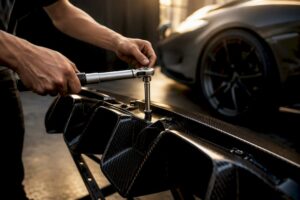
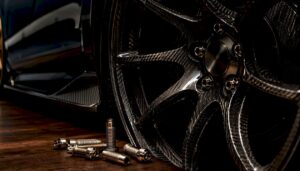
The fitment detail that most track drivers underestimate is hardware. Seat geometry, bolt type, and torque procedure form a coupled system on forged monoblock wheels. Tighter dimensional tolerances mean seat mismatches cause fretting and micro-movement that re-torquing alone will not fix. Specify the correct hardware from the start. Use a calibrated torque wrench. Check torque after the first heat cycle on track.
For Lexus LC500 owners, the unsprung mass reduction from a quality forged monoblock set changes the character of the rear suspension noticeably. The LC500’s rear-biased weight distribution amplifies every gram saved at the wheel. For McLaren and Lamborghini owners, the stiffness gain matters most. Those platforms already have sophisticated suspension geometry. A stiffer wheel lets that geometry do its job without absorbing energy at the rim.
The uncomfortable truth about wheel selection is that most buyers focus on finish and spoke count. The engineers who build fast cars focus on grain structure, spoke stress distribution, and heat treatment. Buy the wheel the engineers would choose.
— E6 Engineering
E6 Carbon forged wheels: built for track precision
E6 Carbon engineers each forged monoblock wheel from 6061-T6 aerospace-grade billet with geometry profiles designed to minimize spoke and hub stress concentrations. Every wheel goes through T6 heat treatment and stress relief processing before final machining.
Track racers driving Mercedes-AMG, McLaren, or Lexus LC500 platforms can specify fitment-first builds that meet the dimensional tolerances required for competitive use. Understanding how tolerances affect both safety and lap time is the foundation of every wheel E6 Carbon produces. The E6 forged wheel tolerance guide covers the engineering behind those specifications in full. For the complete range of monoblock and multi-piece configurations, the E6 forged wheel catalog details every available platform fitment.
FAQ
What makes a forged monoblock wheel stronger than a cast wheel?
Forging under high pressure aligns aluminum grain structures continuously throughout the wheel, eliminating the random grain orientation and microstructural voids that weaken cast wheels. This continuous grain flow significantly reduces fatigue crack initiation sites.
How much weight does a forged monoblock wheel save per corner?
Forged monoblock wheels reduce unsprung mass by 1.5 to 3 kg per corner compared to cast wheels. That reduction improves suspension response speed and tire contact consistency under cornering loads.
Does wheel geometry affect fatigue life as much as the forging process?
Geometry optimization reduces peak Von Mises stress by up to 22.4% at the hub and produces a 98% improvement in fatigue life. Spoke profile design is as critical as the forging process itself for long-term durability.
Why is heat treatment necessary after forging a track wheel?
T6 heat treatment maximizes yield strength, but the quenching stage introduces residual tensile stresses of 85–119 MPa. Stress relief annealing reduces those stresses by up to 68%, cutting crack initiation risk under repeated track loading.
Are monoblock forged wheels better than multi-piece forged wheels for track use?
Monoblock forged wheels are lighter, stiffer, and free from the joint flex that reduces stiffness in multi-piece designs. For track-focused supercar platforms, monoblock construction is the correct engineering choice.