TL;DR:
- Lexus LC500’s aggressive aero kit includes front splitters and side skirts designed to enhance downforce while maintaining factory styling. The E6 Carbon Elite kit uses autoclave-cured dry carbon fiber and OEM mounting points for a perfect fit without damaging the vehicle. Proper staged installation and post-drive inspections ensure a seamless, factory-like appearance and optimal aerodynamic performance.
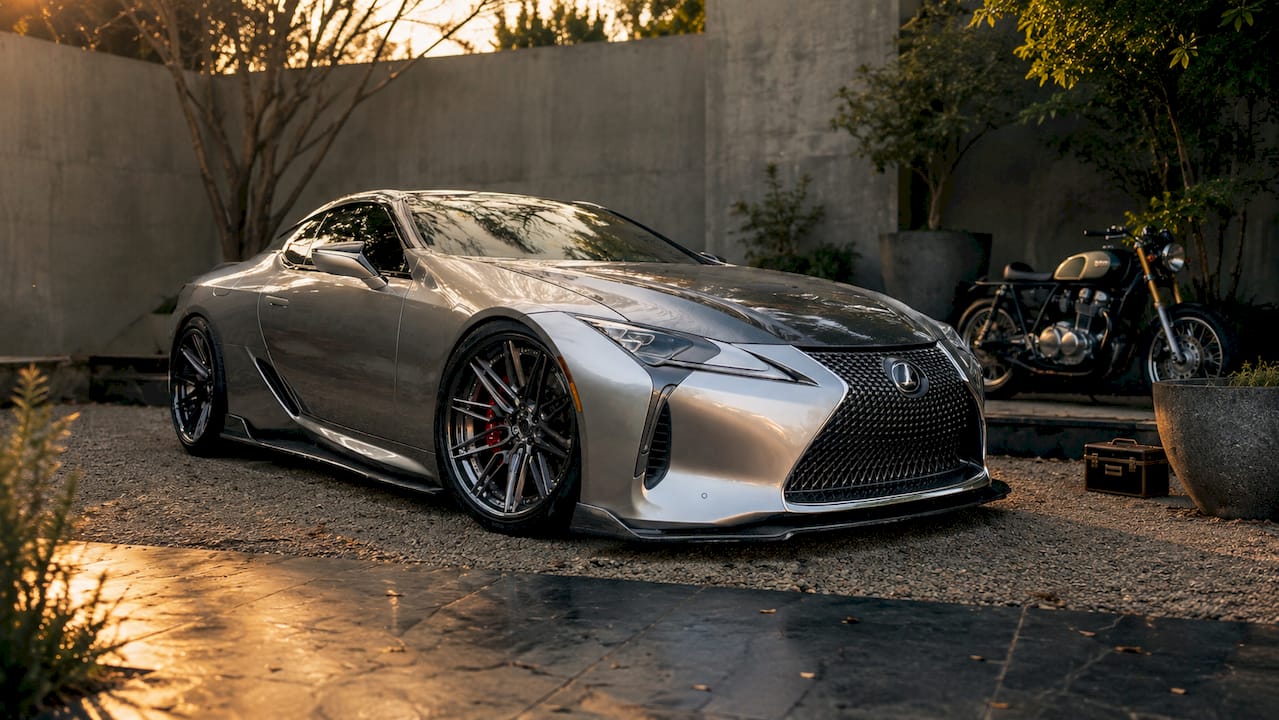
Lexus LC500 front and side aggressive aero is defined as a set of precision-engineered aerodynamic components, specifically front splitters and side skirts, designed to increase downforce and manage airflow without altering the vehicle’s factory design language. The LC500’s sweeping grand-tourer silhouette demands a different approach than track-only widebody builds. The E6 Carbon Elite aero kit sets the benchmark for this category, combining autoclave-cured 2×2 twill dry carbon fiber construction with exact 1:1 OEM mounting replication. For affluent LC500 owners, the goal is never raw lap times. It is visual authority paired with genuine aerodynamic function.
What are the key components of Lexus LC500 front and side aggressive aero?
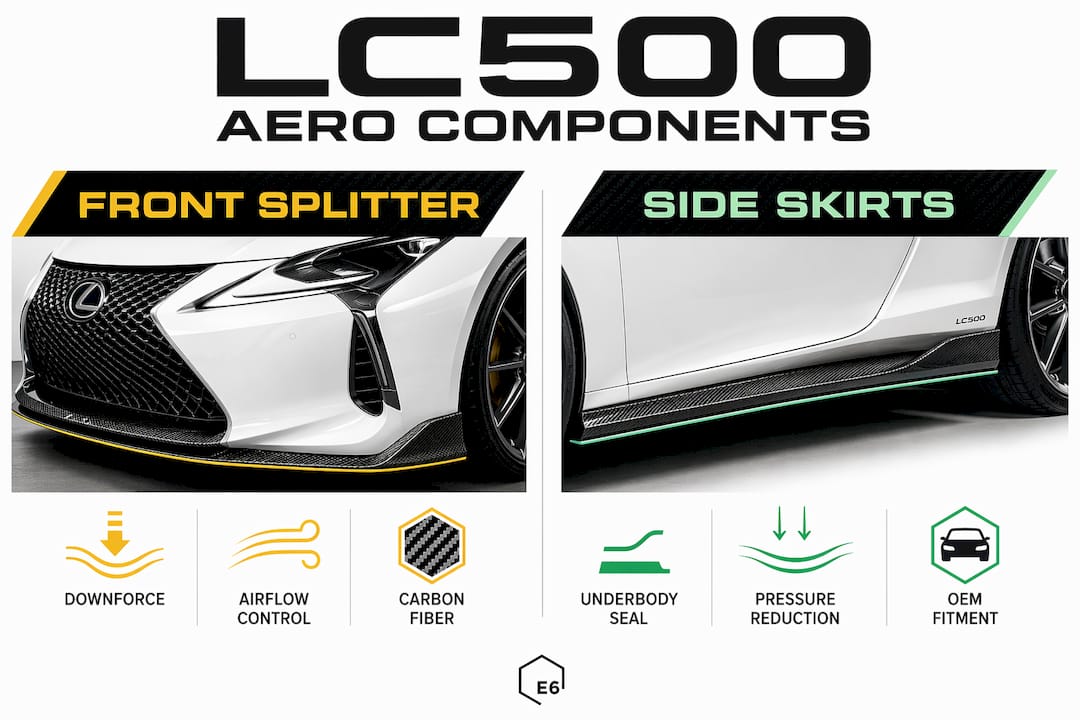
Aggressive aero for the LC500 centers on two primary components: the front splitter and the side skirts. Each serves a distinct aerodynamic function, and together they define the character of the build.
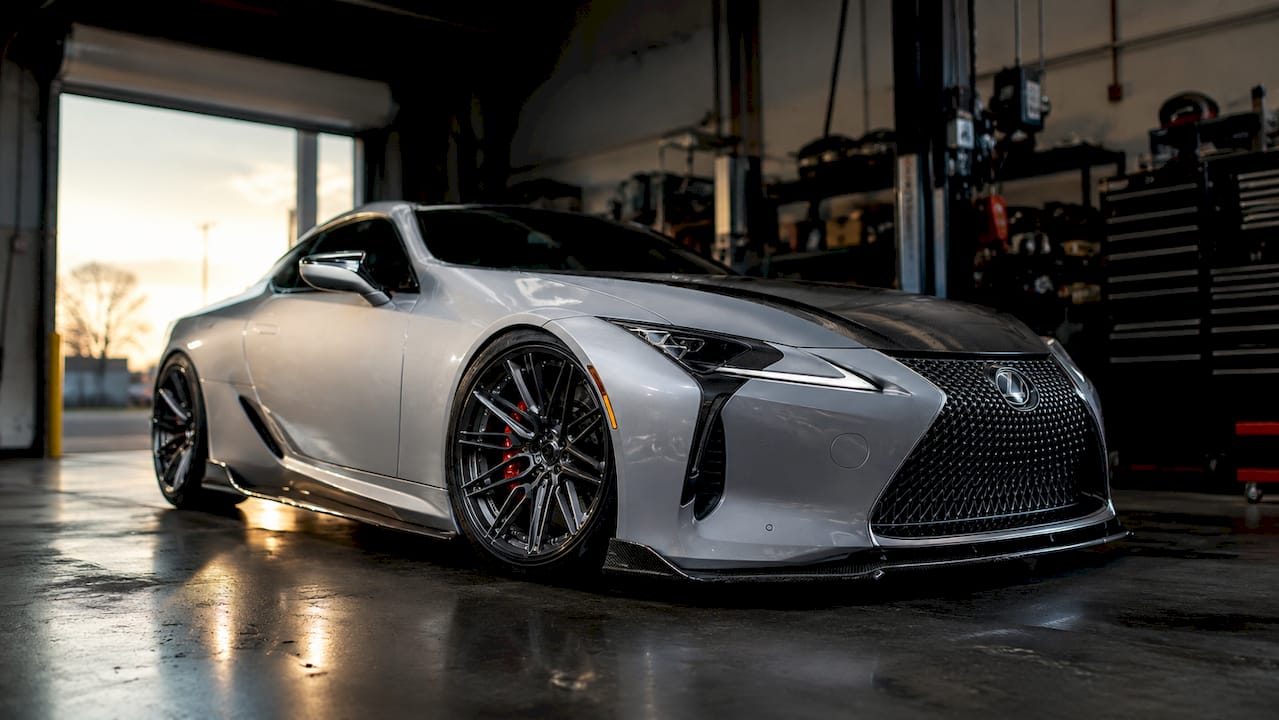
Front splitter (front lip): The front splitter extends the lower front fascia forward and downward. This geometry forces high-pressure air upward over the hood and low-pressure air beneath the car, generating front-end downforce. On the LC500, a well-fitted LC500 front splitter also channels air away from the front wheel wells, reducing turbulence that would otherwise increase drag.
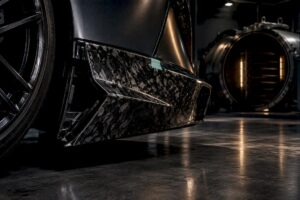
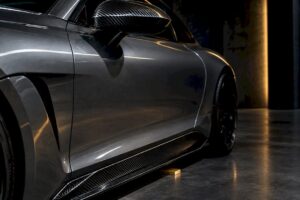
Side skirts: Side skirts seal the gap between the front and rear of the underbody. They prevent high-pressure air from the sides from disrupting the low-pressure zone beneath the car. The result is a more stable aerodynamic platform at speed, with less side-to-side buffeting. On the LC500, side skirts also visually lower the car’s stance, reinforcing the coupe’s already aggressive roofline.
Dry carbon fiber offers a premium 2×2 twill weave pattern, autoclave curing, and a glossy finish with an excellent strength-to-weight ratio. That combination makes it the material of choice for high-end aero parts on luxury vehicles. Wet-laid carbon fiber, by contrast, uses heavier resin ratios and produces inconsistent weave patterns that diminish both structural performance and visual quality.
OEM+ styling cues are non-negotiable for LC500 owners. The factory design language features sharp character lines, a low hood, and a fastback roofline. Aggressive aero components must follow these lines precisely. Parts that ignore OEM geometry create visual dissonance that no amount of gloss finish can correct.
Pro Tip: Before purchasing any aero kit, compare the component’s profile lines against factory body panel photographs. A front lip that does not follow the factory fascia curve will create visible gaps and undermine the entire build.
How does the E6 Carbon Elite aero kit enhance the LC500?
The E6 Carbon Elite aero kit fits 2018–2026 LC500 models using factory mounting points, delivering a plug-and-play installation that preserves the vehicle’s structural integrity. This is the defining feature that separates OEM+ aero from generic aftermarket alternatives.
| Feature | E6 Carbon Elite Kit |
|---|---|
| Material | Autoclave-cured 2×2 twill dry carbon fiber |
| Fitment method | 1:1 OEM mounting point replication |
| Finish | High-gloss UV-resistant clear coat |
| Compatible years | 2018–2026 Lexus LC500 |
| Primary function | Downforce, drag management, visual enhancement |
Autoclave curing improves resin infusion, weave consistency, and structural stiffness compared to vacuum-bagged or wet-laid alternatives. That process directly reduces unsprung weight while maintaining the rigidity required for aero components that experience sustained aerodynamic loads at highway speeds.
The kit’s visual contribution is equally significant. The LC500’s sweeping grand-tourer lines, from the long hood to the fastback tail, create a design that rewards proportion. The E6 Carbon Elite components follow these proportions exactly, adding visual mass at the lower body without raising the visual center of gravity. The car reads as lower, wider, and more purposeful without appearing modified in the conventional sense.
Factory mounting point replication also means no drilling, no bracket fabrication, and no risk of misaligned fasteners stressing body panels. The Elite aero kit installs with the same hardware locations Lexus engineers specified, which preserves panel gaps and paint edges across the life of the vehicle.
How to install aggressive front and side aero on the Lexus LC500
Precision installation is the difference between a build that looks factory and one that looks aftermarket. Staged alignment and reference-point-based fitting are the two practices that determine the outcome.
- Test-fit before fastening. Hold each component in its approximate final position and assess the gap uniformity along every edge. Do not tighten any fastener during this phase.
- Mark reference points with painter’s tape. Apply tape along the panel edges adjacent to the aero component. Mark the intended position on the tape. This gives you a repeatable reference if the part shifts during fastening.
- Install fasteners loosely. Thread every screw, bolt, or clip to finger-tight only. This allows micro-adjustments across the full length of the component before final torque.
- Align from center outward. Begin alignment at the centerline of the vehicle and work toward each end. This prevents cumulative offset that causes one side to sit higher or further out than the other.
- Tighten in sequence. Once alignment is confirmed against your tape marks, tighten fasteners from center to edge in alternating passes. Never tighten one end fully before the other.
- Verify ground clearance. Measure the clearance between the lowest point of the front splitter and the ground. Ground clearance verification after installation prevents contact damage on driveway transitions and parking ramps.
- Conduct a shake test and first-drive check. Apply firm lateral pressure to each component before driving. After the first drive, re-inspect all fasteners and check for any new gaps or movement.
Pro Tip: If you use 3M VHB tape as a secondary adhesive on side skirts, clean the mating surfaces with isopropyl alcohol and allow full cure time before driving. Premature stress on uncured VHB is the most common cause of side skirt separation on the first drive.
Professional installation is worth considering for LC500 owners who want zero risk to factory paint edges. A shop experienced with carbon fiber aero will have the alignment tools and torque specifications to match factory tolerances.
Aggressive aero vs. widebody: which approach fits the LC500?
Aesthetic preservation is the primary goal for affluent LC500 owners selecting aero upgrades. This philosophy separates OEM+ aggressive aero from track-focused widebody builds.
The Artisan Spirits widebody kit, featured on a 2018 LC500 build in PASMAG, demonstrates the widebody approach. That build used Universal Air suspension alongside the widebody panels to create maximum visual presence. The result is dramatic and show-ready. It also permanently alters the factory body lines and requires significant fitment work that cannot be reversed without repainting.
The E6 Carbon Elite approach takes the opposite position. The components add visual aggression at the lower body while the factory character lines above remain untouched. The LC500’s roofline, hood, and door surfaces read exactly as Lexus intended. Only the lower third of the car signals modification, and it does so with restraint.
Key differences between the two approaches:
- OEM+ aero (E6 Carbon Elite): Preserves factory body lines, uses OEM mounting points, reversible, maintains resale value, suits daily driving and occasional track days.
- Widebody kits: Alters factory fender geometry, requires custom fitment, permanent modification, maximizes visual drama, suited to show builds and dedicated track cars.
Air suspension, as used in the PASMAG LC500 feature, works with aero components to lower the car’s ride height for static presence and raise it for daily driving. This pairing suits both approaches but adds particular value to OEM+ builds where ground clearance management is a daily concern.
Key Takeaways
The most effective Lexus LC500 aero upgrade combines autoclave-cured dry carbon fiber components with 1:1 OEM mounting replication to deliver genuine downforce and visual authority without altering the factory design language.
| Point | Details |
|---|---|
| Front splitter function | Generates front-end downforce and channels air away from wheel wells to reduce drag. |
| Side skirt function | Seals underbody airflow and visually lowers the car’s stance for a more purposeful profile. |
| Material choice | Autoclave-cured 2×2 twill dry carbon fiber delivers the best strength-to-weight ratio and finish quality. |
| Installation method | Staged alignment with loose fasteners and painter’s tape reference marks prevents misalignment. |
| OEM+ vs. widebody | OEM+ aero preserves factory lines and resale value; widebody builds prioritize maximum visual drama. |
The case for precision over drama
Working with LC500 owners across a range of build goals, the pattern is consistent. The owners who are most satisfied with their builds two years later are the ones who chose OEM+ aero over widebody drama. The widebody builds photograph well at shows. The OEM+ builds look exceptional every single day, in every parking lot, at every stoplight.
The LC500 is one of the few modern grand tourers with factory proportions that genuinely do not need correction. The job of aggressive aero on this platform is not to fix the car. It is to sharpen what is already there. Autoclave-cured dry carbon fiber does that with a finish quality that wet-laid alternatives cannot match, and the weight savings are real enough to feel in the car’s response.
The installation step that most owners skip is the post-first-drive inspection. Fasteners settle under aerodynamic load. A five-minute re-torque check after the first highway run has saved more than one set of side skirts from a freeway departure. Precision at installation and precision afterward are both part of the process.
Protecting the carbon finish with a ceramic coating after installation is the final step most owners overlook. UV degradation attacks clear coat on carbon fiber faster than on painted surfaces. A professional ceramic application preserves the gloss and the weave definition for years.
— E6 Engineering
E6 Carbon Elite aero for the Lexus LC500
The E6 Carbon Elite aero kit is built for LC500 owners who will not accept a compromise between performance and aesthetics. Every component uses real autoclave-cured 2×2 twill dry carbon fiber, finished in high-gloss UV-resistant clear coat, and engineered to mount directly to factory locations on 2018–2026 models.
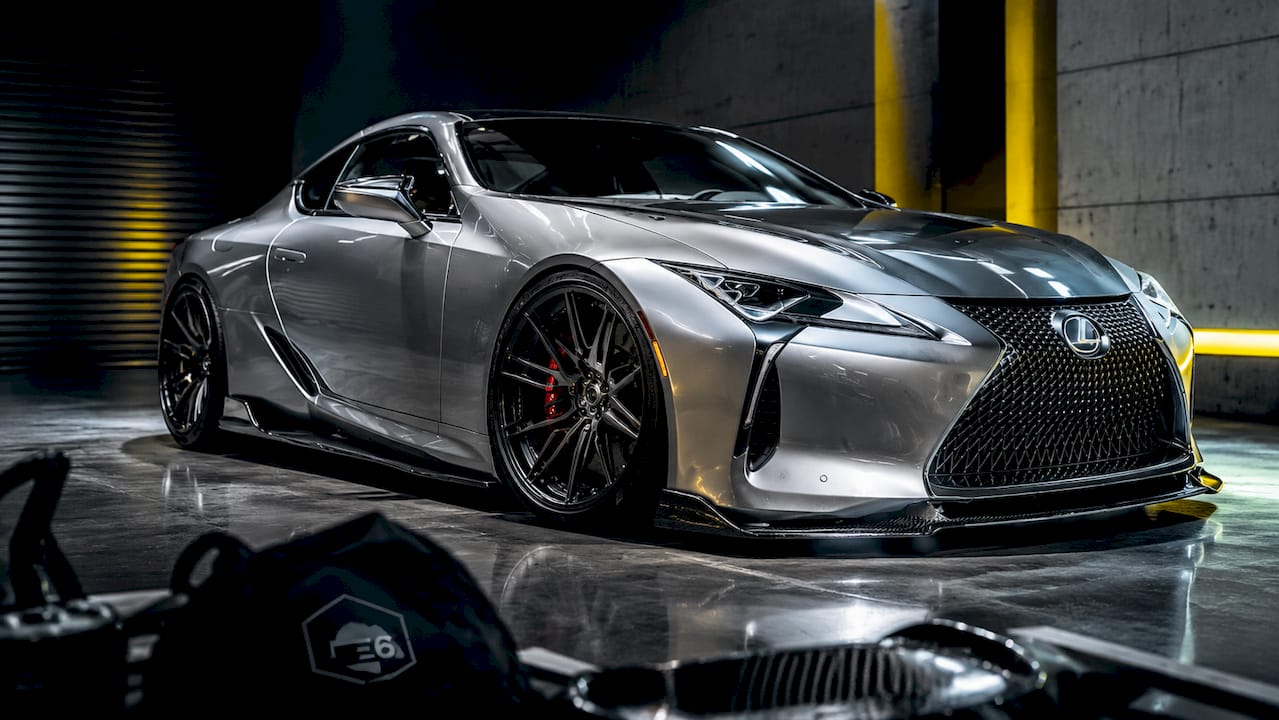
No drilling. No bracket fabrication. No visible gaps. The E6 Carbon Elite kit installs with the same mounting geometry Lexus specified, which means the panel gaps and paint edges stay exactly where they belong. Pair the front and side components with the E6 Carbon Elite wing for a complete aero package that reads as factory from every angle. For LC500 owners who want the full carbon treatment, the AeroTech carbon hood completes the upper body transformation.
FAQ
What does aggressive aero actually do for the Lexus LC500?
Aggressive aero components, specifically front splitters and side skirts, increase front-end downforce and reduce aerodynamic drag by managing underbody airflow. The result is improved high-speed stability and a more planted feel through corners.
Is the E6 Carbon Elite kit reversible?
The kit uses factory OEM mounting points, so removal requires no body repair or repainting. All original mounting hardware locations remain intact after the kit is removed.
What is the difference between dry carbon fiber and wet-laid carbon fiber?
Dry carbon fiber uses autoclave curing under heat and pressure, producing a denser, lighter, and more consistent weave than wet-laid alternatives. Wet-laid carbon uses heavier resin ratios and is more prone to surface inconsistencies.
How long does LC500 aero installation take?
A staged, reference-point-based installation of a front splitter and side skirts typically takes 2–4 hours for an experienced installer. Professional installation is recommended for owners who want factory-level panel gap consistency.
Does aggressive aero affect the LC500’s ground clearance?
Front splitters reduce ground clearance at the front fascia. Ground clearance checks after installation are necessary to confirm the car clears driveway transitions and parking ramp angles without contact.