

TL;DR:
- Two-piece forged wheels are essential for widebody C8 Corvettes because they allow precise offset and width customization. They provide the necessary fitment, deep lip profiles, and structural integrity needed when using aftermarket widebody kits. Re-torque and correct installation practices are vital for maintaining safety and performance.
Two-piece forged wheels are the definitive wheel architecture for widebody C8 Corvette builds, delivering modular construction that allows precise offset, width, and lip depth customization no monoblock wheel can match. When you bolt on an aftermarket widebody kit, the factory wheel geometry becomes obsolete. The fender openings grow, the track widens, and the tire contact patch demands a wheel engineered from scratch for that specific geometry. That is exactly what a two-piece forged configuration solves. For C8 Corvette builders running conversion kits or custom wide fenders, these wheels are not a luxury upgrade. They are a structural requirement.
What technical features make two-piece forged wheels ideal for widebody C8 Corvettes?
The modular construction of a two-piece forged wheel is its defining engineering advantage. The center and outer barrel are manufactured separately, then bolted or welded together. That separation gives builders control over every dimension that matters for widebody fitment: outer lip depth, barrel width, and offset.
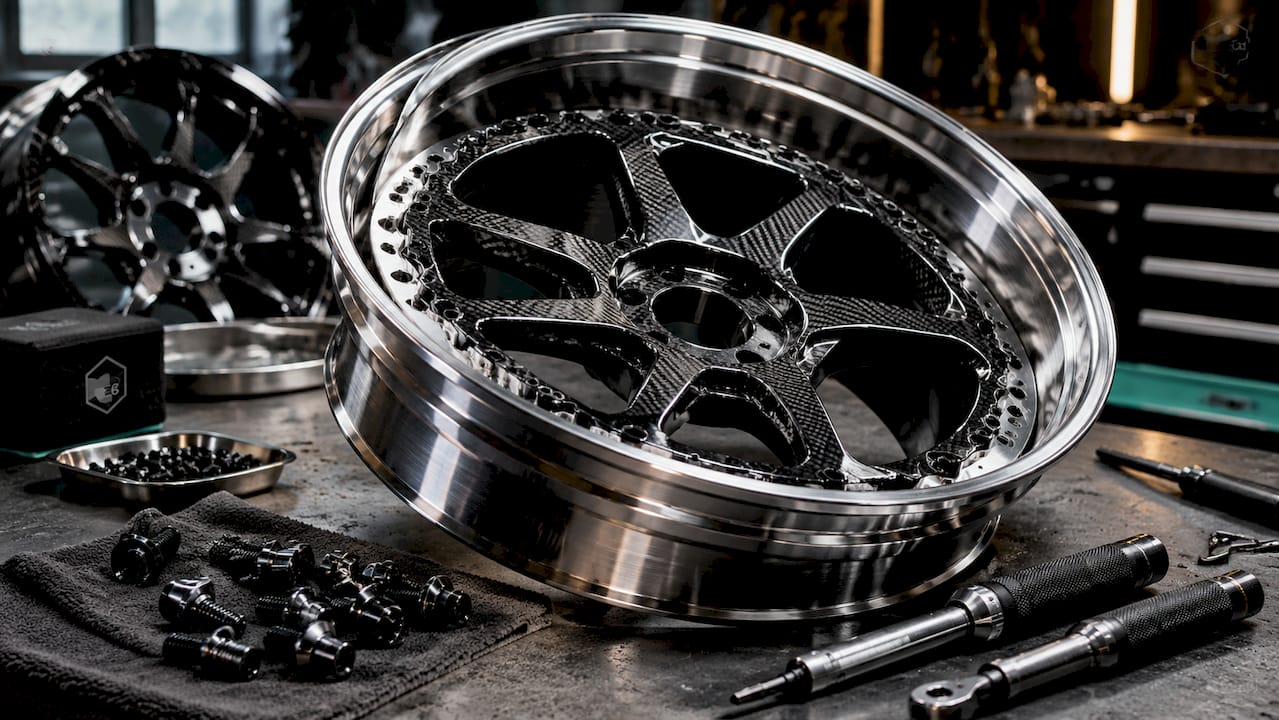
Deep outer lips are the most visible benefit on a widebody build. A standard monoblock wheel offers a fixed lip depth determined at casting. A two-piece configuration lets you specify a lip that fills the extended fender arch completely, pushing the tire face flush with the body line. On a C8 Z06 widebody or a Stingray running a full fender conversion, that flush fitment is the difference between a finished build and a wheel that looks lost inside the arch.
Negative offset is the second critical variable. Widebody kits push the fender outward, which means the wheel centerline must shift outward too. Two-piece forged wheels accommodate aggressive negative offset values without compromising the structural integrity of the barrel. The forged aluminum center retains its strength even when the offset is dialed far from the factory specification.
Key engineering features that matter for widebody C8 fitment:
- Modular barrel construction allows width adjustments from the standard factory spec up to 13 inches at the rear without retooling the center
- Deep outer lip profiles fill extended fender arches and frame large brake calipers visually
- Offset flexibility accommodates the track widening that widebody kits introduce
- Forged aluminum centers maintain structural integrity under the lateral loads generated by wide, high-grip rear tires
- TPMS compatibility is engineered into the barrel design, preserving factory sensor function
Pro Tip: Before finalizing offset on a widebody build, measure the distance from the hub face to the inner fender liner at full suspension compression. That number sets your maximum safe inset and prevents tire rub under load.
Two-piece vs. monoblock wheels: which is right for a widebody C8?
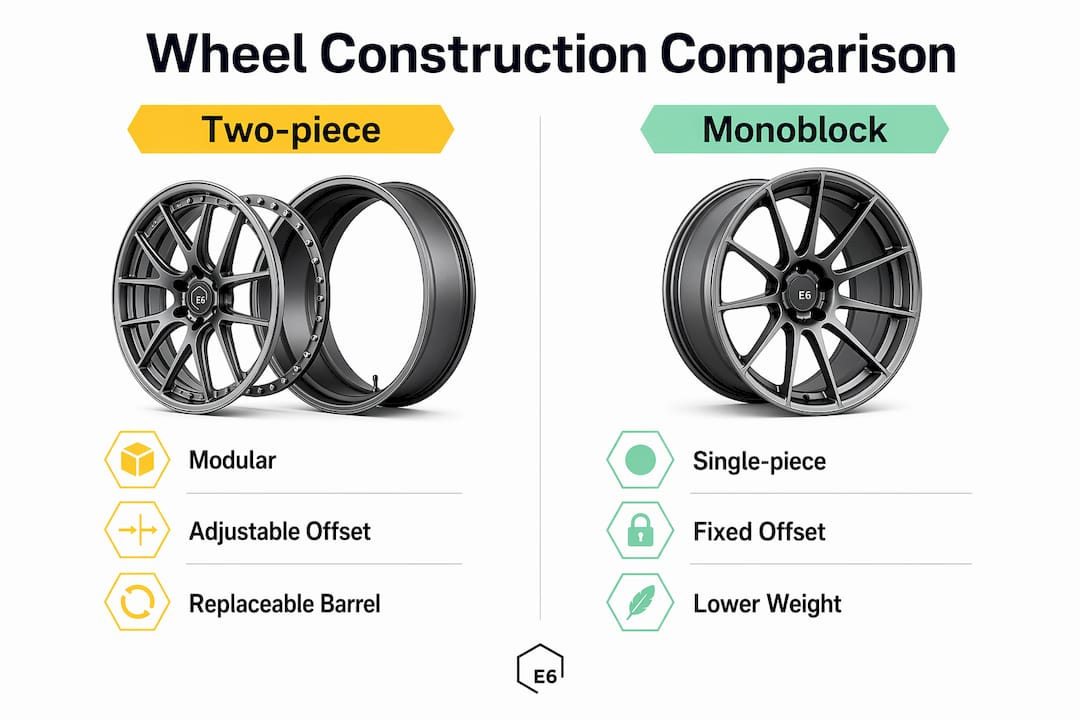
The strength-to-weight advantage of two-piece forged wheels over one-piece cast or flow-formed wheels is well established. The more relevant comparison for C8 builders is two-piece forged versus monoblock forged, since both use aerospace-grade aluminum billet.
| Feature | Two-piece forged | Monoblock forged |
|---|---|---|
| Offset range | Fully adjustable per build | Fixed at machining |
| Barrel width | Customizable up to 13 in. rear | Limited by billet blank size |
| Outer lip depth | Specified per order | Fixed at machining |
| Finish options | Center and barrel finished independently | Single finish across wheel |
| Repairability | Barrel or center replaced independently | Full wheel replacement required |
| Weight | Marginally heavier at hardware joints | Slightly lighter in equivalent size |
The monoblock’s weight edge is real but narrow. For a widebody C8 running a 21×13 rear, the monoblock option simply does not exist at that width in most catalogs. The two-piece format is the only path to that dimension. Customization options including varied diameters, widths, offset ranges, and independent finishes make the two-piece format the practical choice for any serious widebody project.
The ability to finish the center and barrel independently also matters aesthetically. A brushed center against a gloss black barrel, or a polished lip against a matte center, creates visual depth that a monoblock cannot replicate. On a show-quality widebody C8, that detail is not trivial.
Pro Tip: If you are building for both track and street use, specify a two-piece configuration with a replaceable barrel. A curbed or damaged outer lip can be replaced without scrapping the center, which protects your investment on a set priced at the premium tier.
Installation and maintenance best practices for widebody C8 forged wheels
Proper installation is where most fitment problems originate. The engineering quality of a forged wheel means nothing if the mounting procedure is wrong.
- Torque in a star pattern. Tighten lug nuts in a crossing sequence, not a circular one. This distributes clamping force evenly across the hub face and prevents the wheel from seating at an angle.
- Use a calibrated torque wrench. The C8 Corvette hub requires a specific torque value. Impact guns without torque control overtighten and distort the hub face, creating runout that feels like a wheel imbalance.
- Re-torque after the first heat cycle. Skipping re-torque after initial heat exposure is the most common owner mistake. Metal expands and contracts during the first drive, and lug nuts settle slightly. Re-torquing after 50–100 miles eliminates perceived looseness that is not a design defect.
- Confirm hub-centric fitment. The C8 hub bore must match the wheel center bore exactly. A hub-centric fit eliminates vibration at speed. Hub-centric rings close any gap between a wheel with a larger bore and the factory hub.
- Verify TPMS and lug nut compatibility before purchase. Two-piece forged wheels often allow reuse of existing TPMS sensors if valve stem seat geometry matches. Confirm this with your wheel supplier before ordering to avoid additional costs at installation.
The torque sequence and re-torque schedule after initial heat cycles is the single procedural habit that separates a solid, vibration-free wheel from one that generates unnecessary service calls. Follow it without exception.
Pro Tip: Mark each lug nut with a paint pen after final torque. If a nut rotates between inspections, you will see it immediately. This takes 30 seconds and removes all guesswork from your re-torque check.
What sizing and offset setups work for widebody C8 Corvette builds?
The standard reference sizing for a widebody C8 Corvette two-piece forged setup is 20×10 front and 21×13 rear. That staggered configuration fills the factory Z06 widebody arches and accommodates the large rear contact patch that high-grip track tires require.
| Position | Diameter | Width | Typical offset range |
|---|---|---|---|
| Front | 20 in. | 10 in. | ET40 to ET55 |
| Rear | 21 in. | 13 in. | ET25 to ET45 |
These numbers are reference points, not universal specifications. Widebody aftermarket kits for the C8 vary significantly in geometry, and a size that clears one kit may rub against another. Every build requires individual offset modeling confirmed against brake caliper clearance, suspension travel, and inner liner position.
The E5 Forged Sonoma is a real-world example of this sizing in production. It uses a multi-spoke two-piece layout in the 20×10 and 21×13 stagger, designed specifically to fill factory Z06 widebody fenders and frame the large Brembo brake calipers. The four-wheel set is priced at $12,000, which reflects the premium positioning of bespoke forged fitment at this specification level.
For builders running a Stingray-to-Z06 full conversion kit, the fender geometry differs from the factory Z06 body. Published sizes still apply as a starting point, but a custom offset model is mandatory before ordering. Measure brake caliper clearance at full lock and suspension compression before committing to a final offset specification.
Key takeaways
Two-piece forged wheels are the only wheel architecture that delivers the offset range, barrel width, and lip depth a widebody C8 Corvette build demands without structural compromise.
| Point | Details |
|---|---|
| Modular construction is the core advantage | Separate center and barrel allow offset, width, and lip depth to be specified per build. |
| Reference sizing is 20×10 front / 21×13 rear | Confirm clearance against your specific kit geometry before ordering. |
| Re-torque after the first heat cycle | Skipping this step causes perceived looseness that is not a defect but is avoidable. |
| Hub-centric fitment eliminates vibration | Match wheel center bore to the C8 hub bore exactly, using rings if needed. |
| Two-piece beats monoblock for widebody width | At 13-inch rear widths, the two-piece format is the only practical option in most catalogs. |
The fitment detail most builders get wrong
Working with widebody C8 builds, the pattern I see most often is builders selecting wheel sizing based on what another builder posted online, then discovering the offset is wrong for their specific kit. The Z06 factory widebody and an aftermarket Stingray conversion do not share the same fender geometry. A wheel that fits one will not necessarily clear the other.
The second consistent issue is installation torque. Builders who invest $12,000 in a set of forged wheels and then use an uncalibrated impact gun at installation are undermining the engineering they paid for. The re-torque requirement is not a sign of a weak design. It is physics. Metal settles after heat exposure, and a 10-minute re-torque check at 50 miles eliminates every complaint I have heard about perceived looseness.
The customization potential of a two-piece forged wheel is genuinely exceptional for this platform. The ability to dial in a 21×13 rear with a deep outer lip and an aggressive negative offset, then finish the center and barrel independently, produces a result that no catalog monoblock can replicate. Work with a supplier who does individual offset modeling for your specific kit. That conversation, before the order is placed, is what separates a build that looks finished from one that requires spacers and compromises.
— E6 Engineering
E6 Carbon forged wheels for your widebody C8 build
E6 Carbon engineers two-piece forged wheels for builders who need exact fitment, not catalog approximations. Every configuration starts with your specific widebody geometry, brake caliper clearance, and offset target before a single wheel is machined.
The E6 Forged wheel catalog covers monoblock, two-piece, and multi-piece configurations across the full range of C8 Corvette widebody applications. For builders who want to understand the engineering behind tolerances and safety margins before ordering, the forged wheel tolerances guide covers every specification that affects performance and longevity. You can also pair your wheel upgrade with a review of the C8 Corvette side skirts catalog to complete the widebody aesthetic with matched carbon components.
FAQ
What sizes work best for a widebody C8 Corvette?
The standard reference setup is 20×10 front and 21×13 rear. Confirm offset and clearance against your specific widebody kit before ordering, since aftermarket fender geometry varies.
Are two-piece forged wheels high maintenance?
No. The maintenance concern is largely a misconception. Proper torque procedure and a single re-torque after the first heat cycle address the only real procedural requirement.
Can I reuse my factory TPMS sensors with two-piece forged wheels?
Yes, in most cases. TPMS reuse depends on valve stem seat compatibility. Confirm with your wheel supplier before purchase to avoid additional hardware costs.
Why choose two-piece over monoblock forged for a widebody build?
At 13-inch rear widths, monoblock options are scarce in most catalogs. Two-piece construction is the only format that delivers that barrel width with full offset flexibility and independent finish options.
How much do premium two-piece forged wheels cost for a C8 Corvette?
A four-wheel set at the bespoke forged level is priced at $12,000 for production examples like the E5 Forged Sonoma. Custom configurations with individual offset modeling may vary from that figure depending on specification.