Yes, the E6 Carbon taillight covers earn a spot on every LC500 upgrade list. They swap the factory’s dated chrome trim for an autoclave-cured carbon fiber finish, add real scratch and chip protection over stock plastic, and install in under 30 minutes with basic tools. The E6 Carbon Elite Kit is the version most owners should start with.
TL;DR:
- Genuine autoclave-cured carbon fiber taillight covers feature a dense weave pattern that resists UV fade and last significantly longer than vinyl overlays.
- The covers protect factory chrome trim from swirl marks, road debris chips, and light scratches, but do not prevent damage from impacts or affect taillight brightness.
- Installation takes 10 to 30 minutes per side with basic tools, using a partial peel adhesive method for precise alignment and an option for heat-assisted repositioning.
- They fit both naturally aspirated and hybrid LC500 models, including coupe and convertible variants, but verifying fitment for special editions is recommended.
- Authentic E6 Carbon parts cost more but offer higher durability, better finish, and a true OEM+ appearance compared to cheaper printed vinyl or hydro-dipped plastic alternatives.
Table of Contents
- Why the E6 Carbon Taillight Covers Are Must Have for Your LC500
- What “E6 Carbon” Actually Means: Material and Construction
- How Much Protection Do the Covers Actually Add?
- Do Carbon Covers Affect Handling or Aerodynamics?
- What Installing the Covers Actually Looks Like
- Where the Covers Fit in the Cost-to-Impact Equation
- How to Choose the Right Taillight Cover for Your LC500
- Manufacturing Proof Points Behind the Fitment-First Approach
- Which Model Years and LC500 Variants Does This Fit?
- How Carbon Covers Compare to Other Taillight Trim Options
- Will Carbon Covers Dim the Taillights or Cause Legal Issues?
- What Owners Actually Say After Living With the Covers
- Maintaining and Cleaning Your Carbon Fiber Covers
- What This Upgrade Actually Deserves in Your Mod Priority List
- Get the E6 Carbon Elite Kit for Your LC500
- Sources
- FAQ
Why the E6 Carbon Taillight Covers Are Must Have for Your LC500
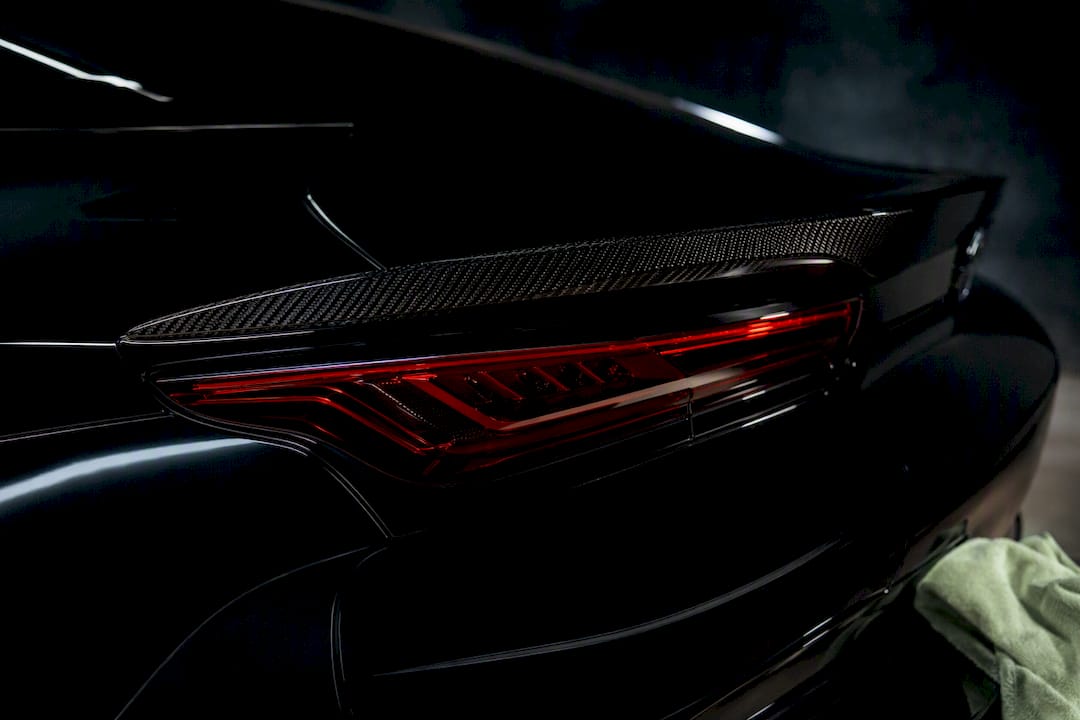
The stock LC500’s taillight trim is chrome plastic. It photographs fine and looks fine from ten feet away, but up close, enthusiasts consistently describe it as the one detail that reads “budget” on an otherwise flagship rear end. Swap that trim for glossy autoclave-cured carbon and the entire rear quarter changes character.
This is what the enthusiast community calls an OEM+ upgrade: a modification that looks like it could have come from the factory, only better executed. Owners posting before-and-after threads on ClubLexus routinely describe the transformation as turning a “cheaper-looking” trim piece into something that finally matches the LC500’s design intent. The chrome brow around each taillight, which catches light in a flat, almost costume-jewelry way, gets replaced by a woven carbon surface that absorbs light instead of bouncing it around. The rear profile reads sharper, more deliberate, closer to what you’d see on a factory performance trim than a base model.
A few visual changes stand out immediately after install:
- The chrome strip along the top of each taillight becomes a deep, textured carbon weave instead of a flat reflective surface.
- Reflections shift from harsh and mirror-like to diffused, which reads as more expensive and less “aftermarket bling.”
- The rear end gains visual continuity with other carbon trim, like mirror caps or a rear diffuser, instead of standing alone as an odd chrome accent.
- Under direct sun, the twill pattern creates subtle depth that flat chrome simply cannot replicate.
Color and finish pairing matters more than most first-time buyers expect. Owners running darker exterior colors (Nebula Gray, Caviar, black) tend to prefer a high-gloss carbon finish because it creates contrast without competing with the paint. Lighter colors like Cloudburst Gray or Structural Blue often pair better with a slightly lower-sheen finish, since a mirror-gloss carbon panel can look almost too reflective against pale paint under direct sun. Either way, the goal is cohesion: matching the taillight covers to other carbon accents on the car, rather than treating them as an isolated detail.
What “E6 Carbon” Actually Means: Material and Construction
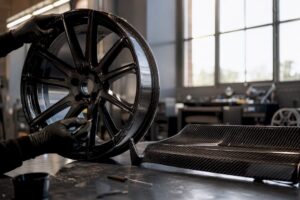
Not all carbon fiber trim is built the same way, and the difference shows up within a year of ownership, not on day one. E6 Carbon components start as autoclave-cured 2×2 twill, a curing process that applies heat and pressure inside a pressurized chamber rather than relying on a simple vacuum bag layup. That process pushes excess resin out of the weave, raising the fiber-to-resin ratio and producing a tighter, crisper twill pattern than you get from cheaper open-mold methods.
The practical effect: autoclave curing typically yields a stiffer, more dimensionally stable panel with a deeper, more uniform weave appearance. Cheaper “carbon-look” overlays, by contrast, are often vinyl wraps or hydro-dipped plastic printed to mimic a twill pattern. They can look convincing in a listing photo, but the pattern is flat and doesn’t hold up the same way under close inspection or years of UV exposure.
Finish and coating matter just as much as the base weave. E6 Carbon parts are finished with a UV-resistant clearcoat, which is the layer actually responsible for keeping the surface glossy and preventing the amber or cloudy fade that plagues lower-grade carbon overlays after a summer or two of sun exposure. Owners comparing vendors on forums like ClubLexus note that genuine autoclave carbon holds its finish and resists UV fade noticeably better than the inexpensive overlay alternatives, which is exactly the kind of difference that only becomes obvious after a year outdoors.
A few construction factors worth knowing before you buy:
- Weave type: 2×2 twill produces a diagonal pattern with more visual depth than the plainer 1×1 weave found on budget parts.
- Cure method: autoclave curing beats vacuum-bag or wet-layup methods for consistency and strength.
- Clearcoat quality: a proper UV-stable clearcoat is what actually prevents fading, not the carbon itself.
- Adhesive backing: automotive-grade 3M-style adhesive systems are designed for exterior temperature swings, unlike generic double-sided tape.
Autoclave-cured 2×2 twill produces a higher fiber-to-resin ratio than non-autoclave layups, which is why the finish looks glossier and holds up longer once a clearcoat is applied on top of it.
How Much Protection Do the Covers Actually Add?
Carbon taillight covers aren’t armor, but they do change what your factory trim has to absorb day to day. The factory chrome trim on an LC500 is thin plastic with a metallic film, and it picks up swirl marks, road debris chips, and fine scratches faster than most owners expect for a car in this price bracket. A carbon cover, especially one finished with a hard UV clearcoat, sits over that vulnerable surface and takes the brunt of minor abrasion instead of the factory plastic underneath.
Here’s what that protection realistically covers and where it stops:
- Light road debris, parking lot brush contact, and fine surface scuffs are exactly the kind of damage a carbon overlay is built to absorb.
- Car wash brushes and improper drying technique, the most common source of swirl marks on chrome trim, do far less visible damage to a textured carbon surface.
- A direct impact, like backing into a curb or a shopping cart strike, will still crack or dent the cover; no adhesive-backed overlay stops that kind of force.
- The covers do nothing for the taillight lens or bulb assembly itself. A broken lamp is still a broken lamp.
Pro Tip: Clean carbon covers with a pH-neutral car soap and a microfiber towel, the same products you’d use on paint. Avoid ammonia-based glass cleaners near the edges, since they can degrade the adhesive bond over time and cause lifting at the corners.
If you do pick up a light scratch, most gloss-clearcoat carbon covers respond well to the same light polishing compounds used on clear-coated paint. Skip anything abrasive enough to cut through the clearcoat itself. Once you’re past that layer, you’re looking at a replacement, not a repair.
Do Carbon Covers Affect Handling or Aerodynamics?
No, and it’s worth being direct about that because some buyers overthink cosmetic trim. A taillight cover weighs a few ounces. Even a full set contributes a negligible amount to the car’s overall mass, and none of it is unsprung weight since it isn’t attached to the suspension, wheels, or brakes, the components where weight actually affects ride quality and handling response.
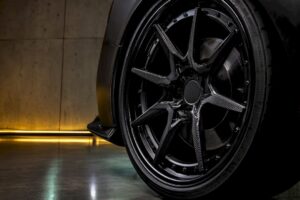
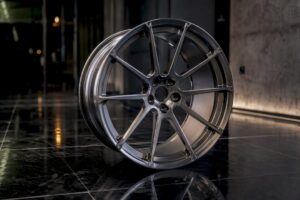
Compare that to parts that genuinely move the needle: a carbon fiber hood removes real weight over the front axle and can shift static weight distribution slightly. Forged wheels reduce rotating and unsprung mass directly, which is where weight savings actually translate into sharper turn-in and reduced suspension load. A rear aero kit or diffuser can influence airflow and rear-end stability at speed. Taillight covers do none of this. They’re a cosmetic and light-protective upgrade, full stop, and any claim otherwise is marketing noise.
The only scenario where a few ounces at the rear corners could theoretically matter is competitive time-attack or wheel-to-wheel racing, where teams chase every gram for minimum class weight or corner-balance rules. Even then, taillight trim ranks near the bottom of any serious weight-reduction checklist, well behind wheels, seats, and body panels.
What Installing the Covers Actually Looks Like
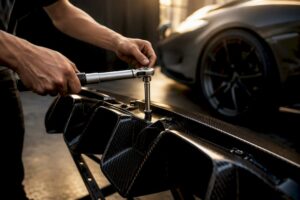
Most owners complete the install in 10 to 30 minutes per side, working with nothing more than isopropyl alcohol, a microfiber cloth, and patience. This isn’t a job that requires a shop lift or specialty tools, which is a big part of why it’s such a popular first modification.
- Clean the mounting surface thoroughly. Wipe down the factory trim area with isopropyl alcohol to strip away wax, road film, and oils. Any residue left behind weakens the adhesive bond.
- Dry-fit the cover before committing. Set the piece in place without removing any adhesive backing to confirm the edges line up with the taillight housing and body panel gaps.
- Peel the backing partially, not all at once. Expose roughly a third of the adhesive, position that section precisely, then press it down.
- Work outward in sections. Slowly peel the remaining backing while smoothing the panel into place, checking alignment as you go rather than committing the whole piece at once.
- Apply firm, even pressure. Use a microfiber cloth or a plastic trim tool to seat the adhesive fully, working from the center outward to push out any trapped air.
That partial-peel technique isn’t just a nice-to-have shortcut. Owners on ClubLexus specifically recommend exposing only part of the adhesive backing to align the cover precisely before committing to the full bond, since a rushed install with the backing fully removed at once is the single most common way to end up with a crooked panel.
Pro Tip: If you notice a slight misalignment right after pressing the cover down, a heat gun or hair dryer on low heat softens automotive-grade adhesive just enough to allow careful repositioning within the first few minutes. After that window closes, you’re committed.
Where the Covers Fit in the Cost-to-Impact Equation
Taillight covers sit near the bottom of the price ladder and near the top of the visual-impact scale, which is exactly why they’re one of the first upgrades most LC500 owners make. Aftermarket carbon taillight trim for the LC500 generally runs from the low hundreds to several hundred dollars, with the spread largely explained by material authenticity. Genuine autoclave-cured carbon costs more to produce than a printed vinyl overlay, and that price gap is the clearest signal of which product you’re actually buying.
For context on where this sits in a broader upgrade plan:
- A carbon hood or full aero kit runs into the thousands and changes the car’s whole silhouette.
- Forged wheels represent one of the largest single investments an LC500 owner can make, with a direct effect on handling and unsprung weight.
- Taillight covers cost a fraction of either, yet transform one of the most visually scrutinized details on the car.
- Mirror caps and roof-blade accents sit in a similar price tier and pair naturally with taillight covers for a cohesive look.
Warranty and customer service matter more than most buyers realize until something goes wrong. Forum comparisons among LC500 owners consistently rank E6 Carbon favorably on quality, pricing, and responsiveness, with several owners noting they were willing to pay a modest premium for a vendor that backs its fitment claims and answers install questions promptly. That responsiveness is worth more than it sounds when you’re staring at a dry-fit that doesn’t quite line up.
How to Choose the Right Taillight Cover for Your LC500
Buying decisions on this part come down to six checkpoints, and skipping any one of them is how owners end up with a mismatched, peeling, or ill-fitting cover.
- Confirm genuine autoclave-cured carbon, not a printed overlay. Ask directly. Vinyl wraps and hydro-dipped plastic are common substitutes marketed loosely as “carbon fiber.”
- Match the finish to your car’s color and other trim. Gloss and satin finishes read differently depending on paint color and what other carbon accents are already on the car.
- Check the adhesive system. Automotive-grade adhesive rated for exterior temperature swings outperforms generic double-sided tape by a wide margin.
- Review the return and fitment-guarantee policy. A seller confident in their tooling will stand behind exact-fit claims for your specific model year.
- Ask about shipping lead time before ordering. Custom or made-to-order carbon components can carry longer production windows than in-stock generic parts.
- Prioritize matched components for a cohesive rear-end look. Pairing the taillight covers with M-Style carbon mirrors creates visual continuity that a single isolated part can’t achieve on its own.
If a seller can’t answer questions about weave type, cure method, or fitment guarantee with specifics, treat that as a red flag rather than an oversight.
Manufacturing Proof Points Behind the Fitment-First Approach
E6 Carbon builds every component around a “fitment first” philosophy, meaning the engineering process starts with the exact geometry of the target platform rather than a generic mold adapted after the fact. For an LC500, that means the taillight cover’s curvature and mounting points are engineered to match the factory housing precisely, not approximated from a universal template stretched to fit.
The manufacturing side backs that claim up. Autoclave curing of the 2×2 twill layup produces a denser, more UV-stable laminate than open-mold alternatives, which is the same reasoning that governs E6’s larger body kit and wheel programs across Mercedes-AMG, BMW M, and exotic platforms.
A fitment-first process means the panel is engineered against the actual LC500 housing geometry, not a generic mold stretched to approximate it, and the autoclave cure gives that panel a laminate dense enough to hold its finish through years of UV exposure without the fade or lifting that plagues cheaper overlays.
Owners considering the E6 Carbon Elite Kit or M-Style mirrors are buying into that same manufacturing discipline, whether the part in question is a taillight cover or a full aero component.
Which Model Years and LC500 Variants Does This Fit?
The LC500’s rear taillight housing has stayed geometrically consistent across the platform’s production run, which is good news for compatibility. Carbon covers engineered for the LC500 generally fit both the naturally aspirated LC500 and the hybrid LC500h, since the taillight housing and surrounding trim are shared across both drivetrains. This includes the LC500 Coupe and, on covers designed for the exposed rear trim area, the LC500 Convertible as well, though convertible owners should always confirm fitment against their specific trim year given occasional minor trim revisions.
Where things get more specific is limited-production trims. Special editions like the Inspiration Series or Structural Blue Edition sometimes carry unique badge or trim details around the rear that can interact with an aftermarket cover’s edge profile. It’s worth confirming fitment against your exact trim level before ordering, particularly if your car carries a special-edition rear badge or unique chrome accent package.
A reputable seller should be able to confirm fitment by model year without hedging. If a listing simply says “fits LC500” with no year range or trim distinction, that’s a sign the tooling wasn’t developed against actual factory specs for every variant, and you should ask before buying rather than after the part arrives.
How Carbon Covers Compare to Other Taillight Trim Options
Three material categories dominate the aftermarket for LC500 taillight trim, and they are not interchangeable despite often looking similar in a thumbnail photo.
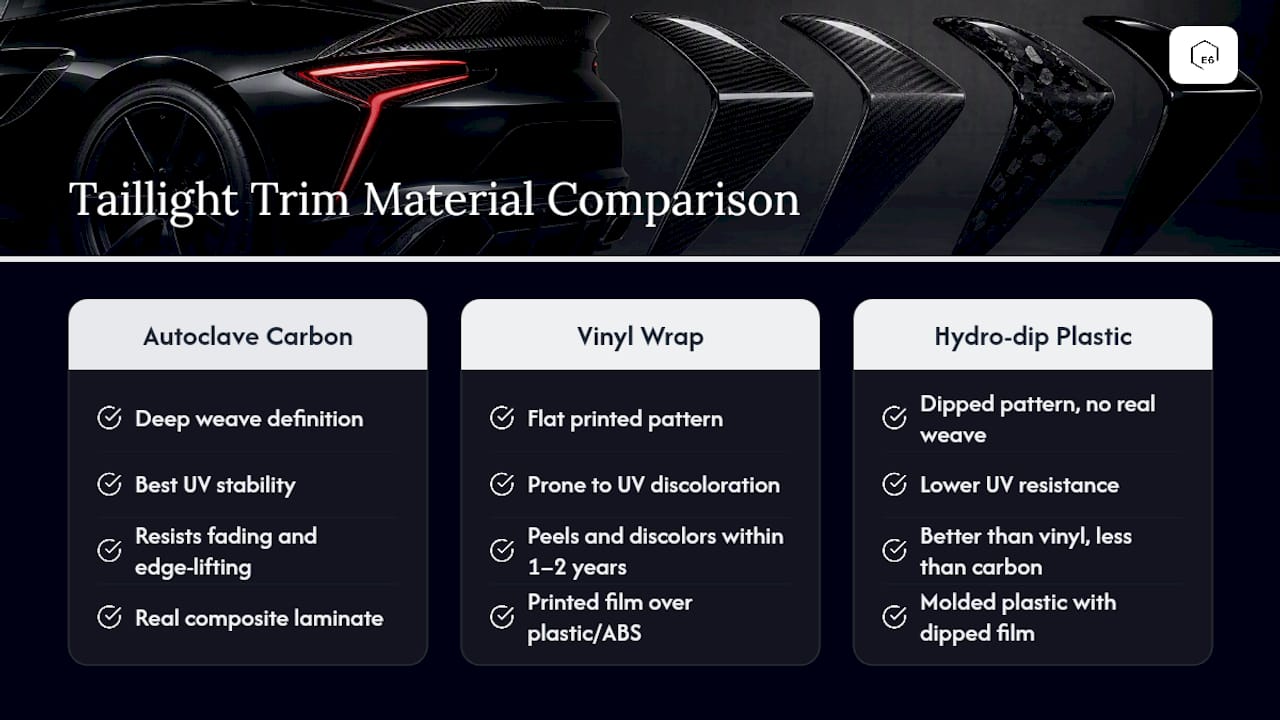
Genuine autoclave-cured carbon fiber, the category E6 Carbon parts fall into, offers the deepest weave definition, the best UV stability, and the highest per-unit cost. It’s a real composite laminate, not a surface treatment, which is why it resists fading and edge-lifting far longer than the alternatives below.
Carbon fiber vinyl wraps are a printed film applied over a plastic or ABS base. They’re the cheapest option and can look reasonably convincing from a few feet away, but the printed pattern is flat under close inspection, and vinyl is notably more prone to UV-driven discoloration and edge peeling within a year or two of sun exposure.
Hydro-dipped or hydrographic carbon-look plastic sits in the middle. It’s molded plastic with a dipped pattern film, offering better durability than a simple wrap but still lacking the structural weave and UV resistance of a true autoclave laminate. It’s a reasonable budget compromise, but not a substitute for genuine carbon if longevity matters to you.
The practical takeaway: if a listing price seems unusually low for “carbon fiber” taillight trim, it’s almost certainly one of the two overlay categories rather than a genuine autoclave laminate.
Will Carbon Covers Dim the Taillights or Cause Legal Issues?
Properly designed taillight covers are trim accents that surround the lens, not tinted films placed over the lens itself, so they generally don’t reduce taillight brightness or light output. The covers in question here sit on the chrome brow and surrounding trim area, leaving the actual lens surface, and its brightness, completely untouched.
Legality concerns typically arise with taillight tint films or smoked lens covers, which are a genuinely different product category regulated separately in many states because they directly reduce light transmission through the lens itself. A trim overlay that doesn’t touch the lens surface avoids that regulatory gray area entirely, since it changes the surrounding cosmetic trim rather than the light-emitting surface.
That said, rules on vehicle lighting modifications vary by state, and it’s worth a quick check of your local regulations if you’re combining a trim cover with any other lighting modification, like a smoked lens or aftermarket bulb color. For a straightforward trim overlay on the chrome brow area alone, most owners report no inspection issues, since the taillight’s actual function and output remain unchanged.
What Owners Actually Say After Living With the Covers
The most consistent feedback across enthusiast forums centers on two things: fitment quality and how dramatically the rear end reads different once installed. Before-and-after posts on Reddit’s r/Lexus show owners rating fit around 9 out of 10, with repeated praise for how much the carbon trim sharpens the rear profile compared to stock chrome.
Complaints, where they exist, tend to cluster around two issues that have nothing to do with the carbon itself: shipping lead times from certain suppliers, and buyer’s remorse from owners who initially bought a cheaper vinyl overlay and later upgraded to genuine carbon once they saw the finish difference in person. Vendor comparison threads on ClubLexus consistently place quality and customer responsiveness above raw price as the deciding factor in owner satisfaction, reinforcing that this is a purchase where cutting corners on the vendor, not just the material, tends to backfire.
The recurring theme across owner reports: nobody regrets the upgrade itself. The regret, when it exists, is buying the wrong version of it the first time.
Maintaining and Cleaning Your Carbon Fiber Covers
Carbon covers with a proper UV-resistant clearcoat require essentially the same care routine as your car’s clear-coated paint, which makes maintenance simple rather than an added chore. A weekly rinse with a pH-neutral car soap and a soft microfiber towel handles routine dirt and road film without risking swirl marks in the clearcoat.
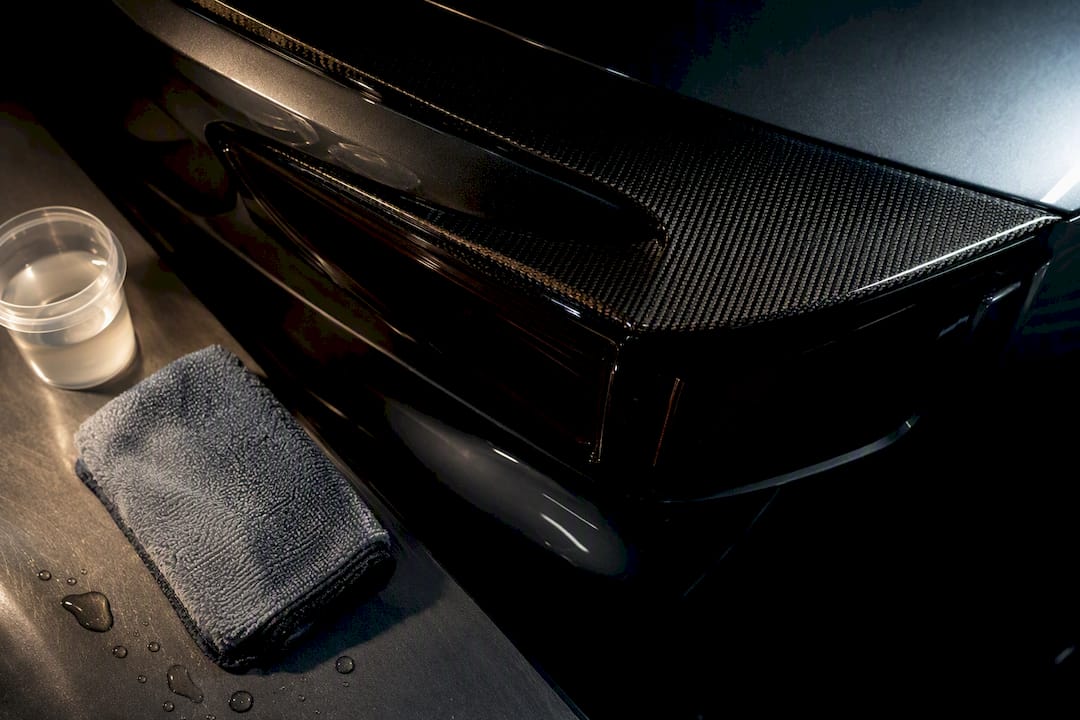
Avoid ammonia-based glass cleaners and harsh degreasers near the panel edges, since these can weaken the adhesive bond over time and cause corners to lift. Automatic car washes with abrasive brushes are also worth skipping for the same reason they’re bad for paint: they introduce fine swirl scratches that dull the weave’s depth over time.
For a deeper clean or to restore gloss after several months, a light coat of carbon-fiber-safe sealant or a paint-safe spray wax adds a layer of UV protection on top of the factory clearcoat, extending the finish’s life without altering the weave’s appearance. If you do pick up a fine surface scratch, the same light polishing compounds used on clear-coated paint typically buff it out, provided you’re working within the clearcoat layer and not through it.
What This Upgrade Actually Deserves in Your Mod Priority List
The honest read on taillight covers is that they’re overrated as a “just cosmetic” afterthought and underrated as a first mod. Most buying guides bury trim upgrades near the bottom of a priority list behind wheels and aero, treating them as an afterthought once the “real” mods are done. That ordering misses what actually drives satisfaction for most owners: the parts you see every single time you walk up to the car matter disproportionately to daily enjoyment, and taillight trim sits in that direct line of sight more than a diffuser ever will.
Where the research holds up is durability. Genuine autoclave carbon with a real UV clearcoat outlasts vinyl overlays by a meaningful margin, and that difference only shows up after a year of sun exposure, which is exactly when a cheaper wrap starts peeling at the edges. Buyers who skip the material question to save money almost always end up paying twice.
If you’re planning a broader rear-end refresh, sequence it: covers first, since they’re the lowest-risk, highest-visibility change, then mirrors or a full aero kit once you’ve confirmed the finish and color pairing works on your specific car.
— E6 Engineering
Get the E6 Carbon Elite Kit for Your LC500
You’ve seen what separates genuine autoclave carbon from a printed overlay, and the E6 Carbon Elite Kit is built to that same standard: fitment-first engineering matched against actual LC500 housing geometry, finished with a UV-stable clearcoat instead of a vinyl skin that fades by summer’s end. For owners chasing a fully cohesive rear-end look, pairing the kit with M-Style carbon fiber mirrors extends that same weave and finish from the taillights to the side mirrors, so nothing on the car looks like an isolated add-on.
If you’re also refreshing the cabin, partner accessories like custom-fit floor liners round out the interior side of the project. Start with the Elite Kit’s product page, confirm your model year and trim, and check current fitment notes before checkout, that single step prevents nearly every alignment complaint owners report after the fact.
Sources
FAQ
How long does the E6 Carbon taillight cover install take?
Most owners complete the install in 10 to 30 minutes per side using isopropyl alcohol, a microfiber cloth, and the partial-peel adhesive technique to align the panel before final bonding.
Does the LC500 depreciate quickly?
The LC500 depreciates at a rate typical for a low-volume luxury coupe, meaning steeper early losses than a mainstream sedan but stronger long-term retention than most GT cars in its price range, largely because production numbers stay limited relative to demand.
What is the best color for a Lexus LC 500?
There’s no single “best” color, but darker exterior colors like Caviar or Nebula Gray tend to pair most naturally with gloss carbon trim, since the contrast reads cleaner than it does against very light paint under direct sun.
Is the Lexus LC 500 considered a supercar?
No, the LC500 is a grand tourer, not a supercar. It emphasizes long-distance comfort and V8 character rather than an outright lap-time focus typical of supercars.
Is the Lexus LC 500 a future classic?
Many enthusiasts and collectors already treat the LC500 as a strong future-classic candidate, largely due to its naturally aspirated V8, limited production, and distinct design language that sets it apart from mass-market models.
Do the taillight covers affect resale value?
A well-installed genuine carbon cover from a reputable fitment-first manufacturer generally has a neutral to positive effect on resale, since it reads as a tasteful factory-style upgrade rather than an aftermarket alteration, provided the finish and fit hold up without peeling or fading.