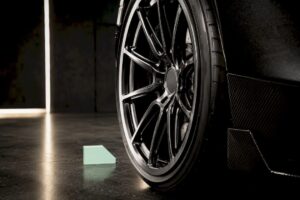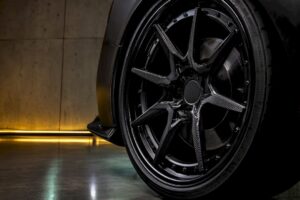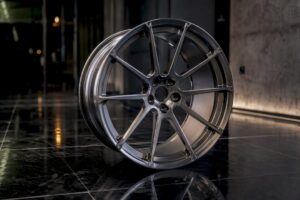
Expect to pay somewhere between $2,000 and $8,000 for a complete set of forged wheels, with ultra-premium bespoke builds pushing past $10,000. Per-wheel pricing typically starts around $900 and climbs sharply with diameter, custom finish, and monoblock versus multi-piece construction. Add additional costs for mounting, TPMS work, and spacers, as the wheel price on a vendor’s site usually does not include all fees.
TL;DR:
- Forged wheel prices range from $2,000 to over $10,000 per set, depending on construction, size, and customization, with premium builds pushing costs higher.
- Monoblock designs in the budget tier are typically 19 to 20 inches with minimal machining, while mid-range and premium options offer larger diameters, custom finishes, and multi-piece configurations.
- Forging involves higher raw material and labor costs due to billet compression and CNC machining, especially for multi-piece wheels that add assembly expenses.
- Additional costs for mounting, balancing, TPMS sensors, spacers, and coatings often add several hundred dollars, making total ownership expenses significantly higher than just wheel prices.
- Tolerance precision, verification, and fitment customization are critical factors that influence actual performance and can vary greatly even among wheels with similar spec sheet numbers.
Table of Contents
- How Much Do Forged Wheels Cost by Tier?
- Why Do Forged Wheels Cost More Than Cast Ones?
- What Extra Costs Come With a New Wheel Set?
- Are Forged Wheels Worth the Extra Money?
- How Do I Get an Accurate Forged Wheel Quote?
- What Lead Times and Upcharges Should You Expect?
- Forged vs. Cast vs. Flow-Formed: Which Costs What?
- Budgeting for the Full Ownership Cost
- The Engineering Perspective Most Buyers Miss
- What Actually Matters When You’re Comparing Prices
- Get a Custom Forged Wheel Quote From E6 Carbon
- Sources
- FAQ
How Much Do Forged Wheels Cost by Tier?
Where you land in that $2,000 to $8,000 range depends almost entirely on three variables: construction method, diameter, and how much custom machining goes into the face and lip. Market pricing surveys place forged sets in that band, with premium bespoke finishes and larger diameters pushing the top end well beyond it.
Budget tier ($2,000 to $3,500 per set). These are typically 19 to 20 inch monoblock designs in a standard finish like satin black or brushed silver, with minimal custom machining. You get real forged strength without the upcharges that come from staggered widths or multi-piece construction.
Mid-range tier ($3,500 to $6,000 per set). This covers most 20 to 21 inch fitments for platforms like the Mercedes-AMG C63 or GT lineup, often in a two-piece configuration with a painted or polished lip. Custom rim pricing guides show total project budgets in this range once you factor in finish upgrades and moderate customization.
Premium tier ($6,000 to $10,000+ per set). Bespoke diameters, directional spoke patterns, brushed or two-tone finishes, and three-piece construction for Lexus LC500 or exotic platforms live here. Per-wheel starters from established forged manufacturers commonly range from $900 to $3,000 or more depending on brand and finish, and staggered rear setups often carry a fixed upcharge rather than a simple percentage bump.
- Budget: 19 to 20 inch monoblock, standard finish, minimal machining
- Mid-range: 20 to 21 inch, two-piece, upgraded finish
- Premium: bespoke diameter, three-piece, custom lip and center machining
Why Do Forged Wheels Cost More Than Cast Ones?
Forging starts with a solid billet of aluminum, usually 6061 or 7075 grade, compressed under thousands of tons of press force until the grain structure aligns and the metal becomes denser than anything a casting mold can produce. That process alone explains a large share of the price gap, since the raw billet costs more than casting alloy and the press time adds labor hours a foundry never sees.
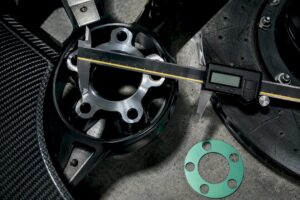
CNC machining is the next major cost layer. A monoblock wheel needs hours of programmed cutting to hollow out the barrel and shape the face, while a multi-piece forged wheel adds the cost of machining separate barrel and face sections, plus the hardware and gasket work to bolt them together.
- Billet cost: forged-grade aluminum runs higher than cast alloy stock
- Press tonnage: multi-thousand-ton forging presses require specialized facilities
- CNC hours: monoblock designs need extensive single-piece machining; multi-piece adds assembly labor
- Finish complexity: brushed, two-tone, or forged inner lip work adds machine time per wheel
Monoblock construction generally costs less per wheel than multi-piece, since there’s no assembly hardware or barrel-to-face fitment work. Multi-piece designs cost more but allow width and offset adjustments that monoblock wheels can’t match.
Pro Tip: Ask any vendor whether their quoted price includes the finish you want as-shown, or as a base color with an upcharge. Brushed and two-tone finishes are the single most common line item that surprises buyers after the fact.
What Extra Costs Come With a New Wheel Set?
The wheel price is never the whole bill. Mounting and balancing typically run $20 to $40 per wheel at a competent shop, and alignment afterward adds another $100 to $200 depending on the vehicle.
- Mounting and balancing: roughly $80 to $160 for a full set at most performance shops
- TPMS sensors: reprogramming or replacing sensors for new wheels commonly costs $50 to $100 per corner
- Spacers and hub-centric rings: $150 to $400 for a set, depending on material and thickness
- Coatings and protective finish: ceramic coating for wheel faces adds a meaningful chunk to total spend but extends finish life against brake dust and curb rash
Budgeting guidance consistently flags ancillary charges like mounting, TPMS transfer, spacers, and coatings as the items that push a project from “wheel price” to “total cost.” A $400 pair of spacers and a $150 alignment aren’t optional line items if you’re changing offset, and skipping them is how curb impacts and premature bearing wear show up six months later.
Statistic Callout: Ancillary costs on a typical custom forged-wheel project commonly add several hundred dollars beyond the wheel price itself, according to pricing guides that break down mounting, TPMS, and finish work as separate line items.
Are Forged Wheels Worth the Extra Money?
The performance case rests on unsprung mass. Forged wheels run 15% to 25% lighter than cast equivalents of the same size, and unsprung mass reduction improves handling, acceleration, and braking response more directly than an equivalent amount of weight saved from the chassis. On a McLaren or Lamborghini platform, that reduction in rotating and unsprung weight translates to sharper turn-in and less strain on suspension components over a track day.
Who actually benefits most:
- Track drivers chasing lap times, where every pound of rotating mass matters more than a pound of static weight
- Mercedes-AMG and Lexus LC500 owners building a platform for both street presence and occasional track use
- High-end show builds where finish quality and construction pedigree matter as much as performance
The trade-offs are real, though. Forged wheels are more vulnerable to curb damage on tight, expensive lips, and repair costs run higher than a cast wheel repaint. Editorial coverage of forged wheel ownership notes theft risk and maintenance burden as legitimate downsides that upfront pricing doesn’t capture. If your driving is entirely commuting with no track days, a flow-formed set priced around $800 to $2,500 captures much of the strength benefit at a lower cost.
How Do I Get an Accurate Forged Wheel Quote?
Vendors can’t give you a firm number without exact specs, and vague requests get vague estimates. Provide bolt pattern, offset front and rear, diameter and width per axle, and your target finish before asking for pricing.
- Confirm lead time in writing, since custom forged orders often run 6 to 12 weeks depending on complexity
- Ask about deposit requirements, typically 50% down before production starts
- Clarify the warranty on structural integrity versus finish, since these are usually covered differently
- Request fitment verification against your exact chassis and brake package, not just the model name
A conservative budget for a mid-range set on a performance sedan looks like $4,500 for the wheels, $150 for mounting and balancing, $300 for TPMS work, and $200 for spacers, landing near $5,150 total. An optimistic budget on a similar build without spacers or sensor work might land closer to $4,700.
- Bolt pattern, offset, diameter, and width per axle
- Target finish and any custom machining requests
- Lead time, deposit percentage, and refinishing policy in writing
What Lead Times and Upcharges Should You Expect?
Custom forged orders typically run 6 to 12 weeks from deposit to delivery, though bespoke centers, uncommon diameters, or brushed two-tone finishes can push that toward the longer end. Rush production, when a vendor offers it, usually carries its own upcharge on top of the base price.
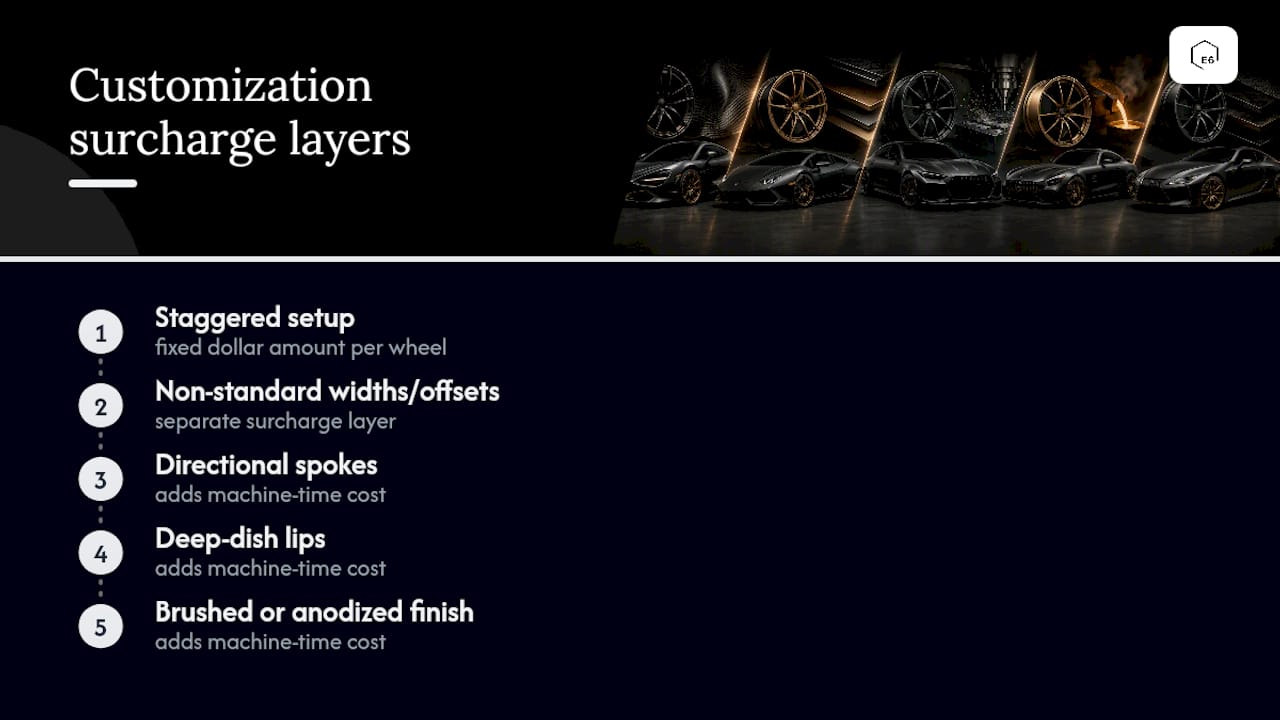
Customization upcharges tend to follow predictable patterns rather than a flat percentage. Staggered setups where the rear wheel is wider than the front commonly add a fixed dollar amount per wheel, and non-standard widths or extreme offsets add their own surcharge layer. Directional spoke designs, deep-dish lips, and hand-brushed or anodized finishes each carry separate machine-time costs that stack on top of the base wheel price.
Warranty terms vary more than buyers expect. Most reputable forged manufacturers warranty structural integrity, meaning the wheel itself against manufacturing defects, for a defined period, but finish warranties are typically shorter and don’t cover curb damage, brake dust etching, or coating wear from track use. Read the fine print on what voids the finish warranty specifically, since aggressive brake pad compounds and improper cleaning chemicals are common exclusions.
Ask any vendor directly whether their quoted lead time assumes in-stock billet or a fresh forging run, because that single detail can double your wait. Also confirm whether refinishing after curb damage is offered as a service at a set price, since that’s often cheaper than replacement and worth knowing before you need it.
Forged vs. Cast vs. Flow-Formed: Which Costs What?
Cast wheels remain the cheapest option on the market, often available for a few hundred dollars per wheel, because the molten-metal casting process requires far less labor and no forging press. The trade-off is a less dense grain structure, meaning more material is needed to hit the same strength target, which makes cast wheels heavier for equivalent load ratings.
Flow-formed wheels sit in the middle. Manufacturers cast a wheel blank, then spin and stretch the barrel under heat and pressure, which densities that section without the cost of full forging. Flow-formed sets typically run $800 to $2,500 and capture a real portion of the weight and strength benefit at a meaningfully lower price than forged construction.
| Construction | Typical set price | Relative weight | Strength profile |
|---|---|---|---|
| Cast | $900 to $3,000 or more | Heaviest | Adequate for street use, prone to cracking under impact |
| Flow-formed | $800 to $2,500 | Moderate reduction | Denser barrel, weaker face than forged |
| Forged (monoblock) | $2,000 to $6,000 | 15 to 25% lighter than cast | Uniform density, highest impact resistance |
| Forged (multi-piece) | $3,500 to $10,000+ | Similar to monoblock | Comparable strength, added assembly complexity |
The gap between flow-formed and forged narrows in daily driving and widens dramatically under track load or curb impact, where forged construction resists cracking that a cast or flow-formed wheel might not survive.
Budgeting for the Full Ownership Cost
The purchase price is the start of the ledger, not the end of it. Over a few years of ownership, maintenance and repair costs on forged wheels can add up in ways that a cast wheel owner rarely faces, simply because the finishes and lips on forged sets are more expensive to restore.
Curb damage is the most common repair expense, and refinishing a single forged wheel with a damaged lip typically costs several hundred dollars at a specialty refinisher, sometimes more if the barrel needs straightening. Budget for at least one refinishing event over a multi-year ownership period if you drive in an urban environment with curbs and potholes.
Coating maintenance is the second recurring cost. Ceramic coating reapplication every year or two protects the finish from brake dust etching and extends the interval between refinishing jobs, and routine brake dust removal with proper technique prevents the kind of etching that turns a quick wash into a refinishing bill.
Theft risk deserves a line item too, particularly for recognizable forged designs on exotic platforms. Wheel locks add a modest cost upfront and are cheap insurance against a very expensive replacement. Build a rough annual maintenance reserve of a few hundred dollars into your ownership budget, covering coating touch-ups, occasional curb rash repair, and TPMS battery replacement over the wheel’s service life. Treat that reserve as part of the real cost of forged wheels, not an optional extra.
The Engineering Perspective Most Buyers Miss
Most pricing guides treat forged wheels as a single product category, but the real cost variable is tolerance, not just material. A wheel forged from 6061 billet and machined to loose tolerances will weigh about the same as a tightly toleranced one on a spec sheet, yet perform very differently once it’s mounted, balanced, and pushed hard on track.
- Tighter CNC tolerances reduce the need for excessive counterweight during balancing, which is itself a small but real performance gain
- Fitment-first engineering, meaning bolt pattern, offset, and hub bore verified against the actual chassis rather than a generic spec sheet, prevents the vibration and premature bearing wear that generic fitment guesses can cause
- Autoclave-cured carbon fiber components paired with forged wheelsets, when used on aero-focused builds, follow the same tolerance discipline: a 2×2 twill layup cured under pressure and heat holds dimensional accuracy the way a properly forged and machined wheel does
The wheel that looks identical to a competitor’s on a spec sheet can behave completely differently under load once you account for tolerance stack-up in the bore, the balance pad thickness, and the barrel wall consistency. Price differences between forged wheel suppliers often trace back to how much time went into tolerance verification, not just the raw forging process itself.
Buyers evaluating forged wheel tolerances as part of their research will find that the cheapest forged wheel on paper and the most expensive one can share nearly identical weight specs while differing enormously in how consistently they perform once mounted.
What Actually Matters When You’re Comparing Prices
The conventional advice tells buyers to compare per-wheel prices across vendors and pick the lowest number that meets their diameter and finish preference. That advice is incomplete, and it leads people to compare numbers that aren’t actually comparable.
A $2,200 monoblock set and a $2,200 multi-piece set are not the same purchase. One trades assembly complexity for a lower parts count and simpler repair; the other trades a higher parts count for width and offset flexibility you may never use. Buyers should prioritize matching construction type to actual use case before comparing dollar figures, because the price tag alone tells you almost nothing about whether the wheel fits your platform’s real demands.
The most overlooked factor in this whole category is tolerance consistency, not raw weight savings. Two forged wheels can post identical spec-sheet numbers for weight and material grade while performing very differently once mounted, balanced, and loaded on track. That gap doesn’t show up in a price comparison chart, and it’s exactly where the premium end of the market earns its higher number.
If you’re weighing the AMG or LC500 platform against a track budget, prioritize fitment verification and tolerance data over the lowest quoted per-wheel price. The cheaper set that needs a refinish or rebalance within a year rarely ends up cheaper.
— E6 Engineering
Get a Custom Forged Wheel Quote From E6 Carbon
E6 Carbon builds monoblock, multi-piece, beadlock, and AeroDisc forged wheels engineered around fitment-first tolerances for platforms including Mercedes-AMG, Lexus LC500, McLaren, and Lamborghini. Every configuration goes through precision CNC machining and structural verification before it ships, so the price you quote reflects tolerance work most vendors skip, not just raw material and finish.
Requesting a quote starts with your exact bolt pattern, offset, diameter, and finish preference. E6 Carbon works through a deposit and lead-time structure for bespoke builds, with fitment verified against your specific chassis before production starts, whether you’re speccing a monoblock design for track use or a multi-piece setup for street presence. Browse the E6 Forged wheel catalog to see current configurations and start a quote for your platform.
Sources
- What Are Forged Wheels?
- Flow Formed vs Forged vs Cast: Which Wheel to Buy | WheelPrice
- Custom Rim Costs and Pricing Guide 2026 – Cost Insider
- What Are The Pros And Cons Of Forged Wheels?
FAQ
Are Forged Wheels Worth the Extra Money?
For track driving and performance platforms, yes: the 15 to 25% weight reduction improves handling and acceleration in ways a heavier cast wheel can’t match. For pure daily commuting, a flow-formed wheel often delivers most of the benefit at a lower price.
Why Are Forged Rims So Expensive?
The cost comes from the forging press itself, which compresses a solid billet under thousands of tons of force, plus the extensive CNC machining hours needed to shape monoblock or multi-piece designs to precise tolerances.
How Much Do Specialty Forged Wheels Cost?
Bespoke or specialty forged sets with custom diameters, directional spokes, or two-tone finishes typically run $6,000 to $10,000 or more per set, with ultra-premium builds exceeding $10,000 depending on complexity.
Who Has the Most Affordable Forged Wheels?
Entry-level monoblock forged sets in standard finishes start around $2,000 to $3,500 per set from several manufacturers. Configurations are available across a budget-to-premium spectrum, with pricing scaled to construction type and customization level.
What’s the Real Difference Between Monoblock and Multi-Piece Pricing?
Monoblock wheels generally cost less per wheel since they skip assembly hardware and barrel-to-face fitment work, while multi-piece construction costs more but allows width and offset customization monoblock designs can’t offer.