TL;DR:
- Choosing wider wheels increases lateral grip in dry conditions but also raises rolling resistance and sidewall vulnerability.
- Selecting wheel size and width depends on specific driving needs, balancing handling, comfort, and safety considerations.
Swapping to wider or larger wheels seems like an obvious path to better performance, but that assumption gets expensive fast. The relationship between wheel geometry, tire behavior, and actual lap-time improvements is far more complex than forum posts suggest. Recent SAE research confirms that wider rims boost lateral grip in dry conditions but simultaneously raise rolling resistance and sidewall vulnerability. Understanding these trade-offs before you spec a set of wheels separates the engineers from the guessers.
Table of Contents
- Understanding the basics: How wheels influence vehicle handling
- The trade-offs: Wider vs. narrower wheels for different conditions
- Larger wheel diameters: Sportier looks, sharper handling, or ride compromise?
- Engineering trade-offs: Key factors most enthusiasts overlook
- Reality check: What most handling guides get wrong (and what works)
- Ready for optimized performance and style?
- Frequently asked questions
Key Takeaways
| Point | Details |
|---|---|
| Wider wheels increase dry grip | Choosing wider wheels improves lateral grip for dry conditions but brings trade-offs in wet performance and sidewall safety. |
| Larger wheels affect comfort | Bigger diameters look sporty and can improve handling sharpness, but can also make your ride noticeably harsher. |
| Narrower wheels enhance durability | Narrower rims reduce rolling resistance and are less prone to pinch-cut damage, benefiting everyday driving and rough roads. |
| Context matters most | Matching wheel width and diameter to intended driving conditions is crucial for optimal performance and longevity. |
Understanding the basics: How wheels influence vehicle handling
Let’s first establish how wheels physically interact with the vehicle and the road. Most drivers think of wheels as passive components, essentially metal circles that hold tires. In reality, wheel geometry directly governs how a tire deforms under load, how quickly a suspension reacts to inputs, and how efficiently energy transfers from the engine to the pavement.
Wheel width controls how the tire’s contact patch is shaped laterally. A wider wheel stretches the tire carcass, spreading the footprint side to side. That matters when you’re pushing through a high-speed corner because a broader patch can generate more lateral grip. However, as SAE rig testing confirms, wider rims increase lateral contact at the cost of higher rolling resistance and reduced wet-weather performance.
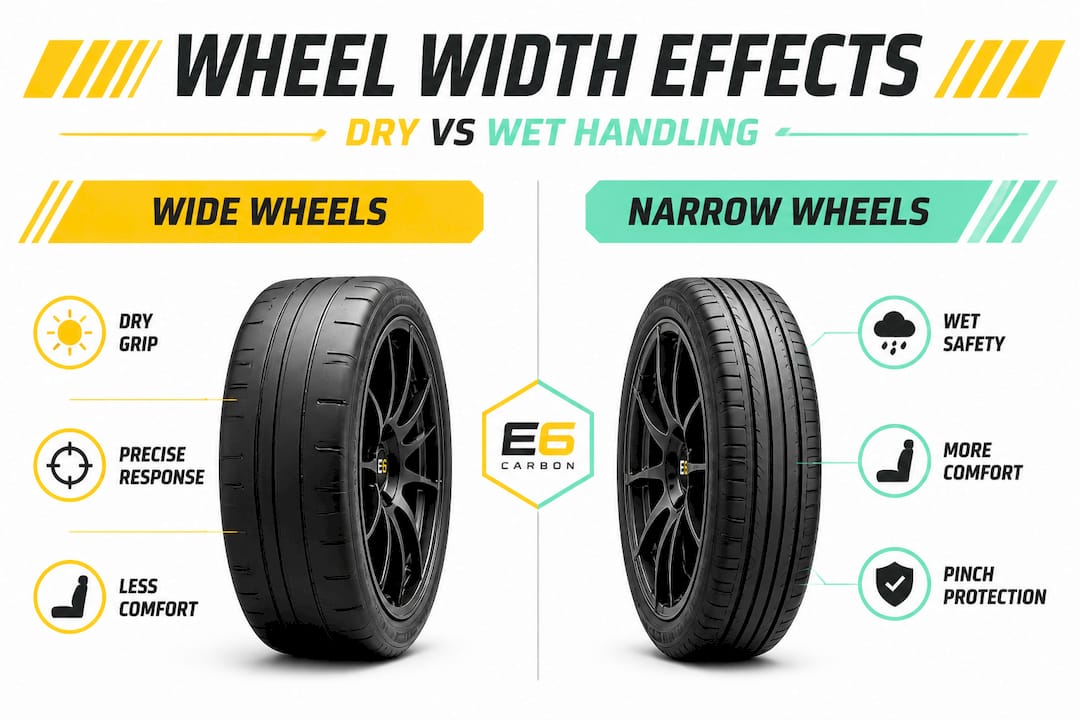
Wheel diameter reshapes the tire’s sidewall height relative to total wheel diameter. Go larger in diameter, and the sidewall gets shorter. That means less flex buffer between the rim and the road. Shorter sidewalls respond more sharply to steering inputs, but they absorb less impact energy before transmitting it directly to the suspension and chassis.
Wheel weight is the variable most people underestimate. Unsprung mass, the total weight of components not supported by the suspension, directly affects how quickly the wheel follows surface changes. A heavier wheel takes longer to track road imperfections, which shows up as vague steering feedback and slower cornering transitions. Lightweight forged or wheel design and performance choices cut unsprung mass meaningfully, often delivering more tactile handling improvement than a width change.
Key physical effects of wheel specification changes:
- A wider wheel increases the lateral spread of the tire contact patch, which boosts cornering stability in dry conditions
- A larger diameter wheel reduces sidewall height, sharpening response but reducing compliance over rough surfaces
- Heavier wheels increase unsprung mass, dulling suspension response and increasing wheel hop risk
- Wheel offset and backspacing determine scrub radius, affecting steering weight and brake torque feedback
“The wheel is the mechanical intermediary between your engineering intentions and the road. Getting that interface wrong undermines every other performance upgrade on the car.”
The trade-offs: Wider vs. narrower wheels for different conditions
Now that we’ve set the foundation, it’s time to examine how “bigger is better” gets complicated in practice. The SAE study on rim width confirms that narrower rims deliver lower rolling resistance and better pinch-cut resistance, while wider rims enhance lateral grip but deteriorate sidewall performance. Neither is universally superior. Use matters enormously.
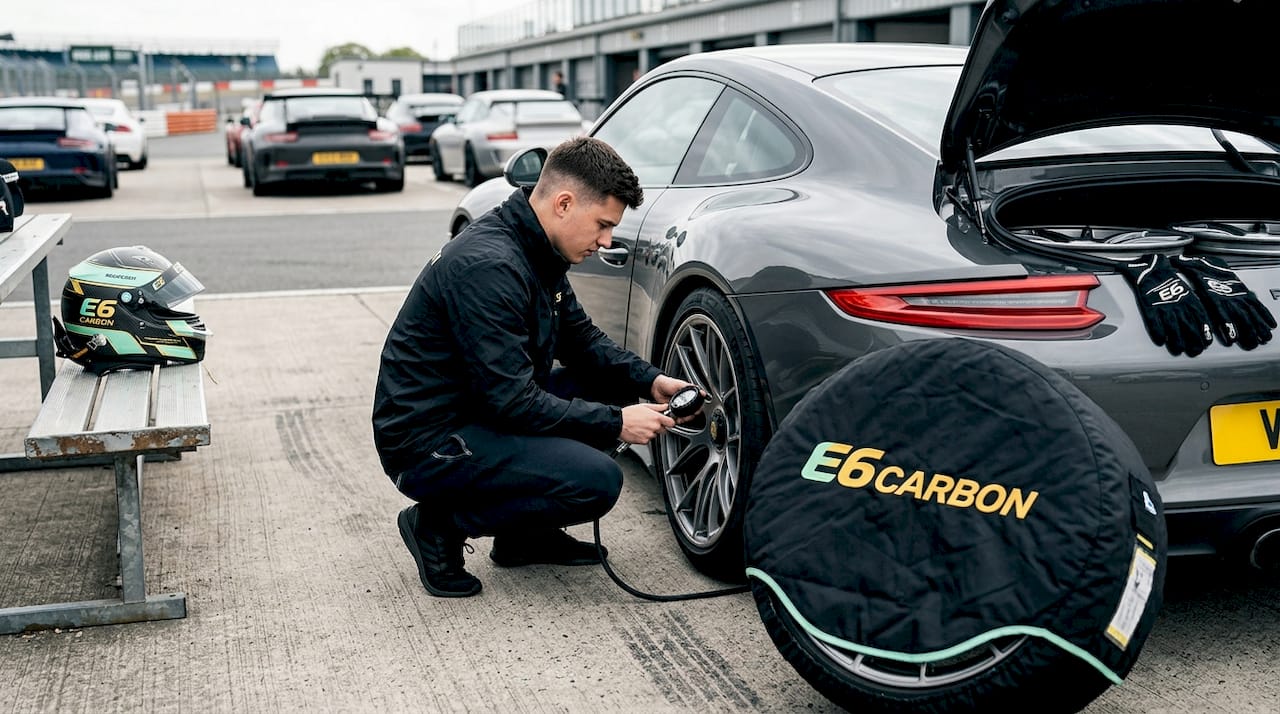
For track days, wider wheels paired with a high-performance dry tire make clear sense. The enhanced lateral grip, improved cornering stability, and stiffer sidewall feel are exactly what a circuit rewards. Your lap times will reflect the improvement.
For daily driving, a wider wheel often works against you. Urban roads, speed bumps, pothole-filled streets, and rain introduce conditions where wheel fitment for luxury cars becomes a safety and comfort consideration. Wet grip can actually decrease with overly wide tires because the contact patch generates more aquaplaning risk.
For off-road or rough road use, a narrower wheel with a taller sidewall is almost always the better choice. Sidewall flex acts as a natural shock absorber, and pinch-cut vulnerability near sharp rocks or curb edges drops dramatically.
| Scenario | Recommended width | Key benefit | Main risk |
|---|---|---|---|
| Dry track day | Wide | Maximum lateral grip | Rolling resistance, heat buildup |
| Daily driving (mixed) | Moderate | Balanced grip and comfort | Neither optimized |
| Wet roads | Narrower | Reduced aquaplaning risk | Less dry cornering bite |
| Off-road or rough urban | Narrower | Pinch-cut protection | Lower lateral grip limits |
| Show car or low-speed use | Wide or staggered | Aesthetic impact | Practical limitations |
Pro Tip: When you’re selecting width for street performance, choose a wheel width that keeps your tire’s aspect ratio within the manufacturer’s recommended range. Stretching a tire beyond recommended width looks aggressive but reduces structural integrity and ruins the contact patch shape.
According to wheel width and tire safety analysis from tire safety experts, mismatched rim and tire width combinations create asymmetric stress on the tire carcass, which accelerates wear and increases blowout risk in high-load cornering. Consult the performance wheel selection guide for pairing width recommendations specific to your car’s intended use before you commit.
Larger wheel diameters: Sportier looks, sharper handling, or ride compromise?
The conversation around width often overlaps with debates about wheel size. Going from an 18-inch to a 20-inch or 21-inch wheel changes far more than aesthetics. The entire dynamic character of the car shifts, sometimes for better, sometimes not.
When you increase wheel diameter on a Ferrari, Lamborghini, or BMW M car, you generally need to reduce the tire’s sidewall height to maintain the correct overall rolling circumference. A 245/35R20 replaces a 245/40R19, for example. That thinner sidewall changes several things at once.
Steering response sharpens. Less sidewall flex means your inputs translate to the contact patch faster. On a well-surfaced track or a smooth mountain road, that sharpness feels alive and connected. On a broken city surface, it feels harsh and unforgiving.
Ride quality drops noticeably. The tire can no longer absorb micro-impacts before they reach the chassis. Speed bumps feel more aggressive. Road texture becomes more audible inside the cabin. For drivers who use their sports car daily, this is a real cost.
Visual impact increases substantially. Large-diameter wheels fill the wheel arch more aggressively, improving the stance and proportions of performance vehicles. There’s a reason upgrading to racing wheels has become standard practice even for road-legal luxury vehicles.
📊 Key stat: SAE testing confirms the sportier handling versus harsher ride consensus for larger diameter wheels while noting that wider rims simultaneously increase pinch-cut vulnerability. More diameter is not a free performance upgrade.
Here’s a step-by-step decision process before upsizing wheel diameter:
- Verify your target tire size is available in the new diameter with the performance rating your car requires
- Confirm the overall rolling circumference stays within 2 to 3 percent of OEM spec to preserve speedometer accuracy and ABS calibration
- Check suspension clearance for any rubbing risk under full compression and full lock steering
- Evaluate your primary driving surfaces because a 21-inch setup on a pothole-heavy commute will suffer structurally over time
- Assess performance wheel finishes that protect against curb rash and brake dust corrosion, which becomes more visible on larger diameter wheels
Engineering trade-offs: Key factors most enthusiasts overlook
Still, even savvy owners can miss key engineering realities hidden in test data. The most counterintuitive finding in recent SAE research is that footprint area stays similar when you air down a tire, regardless of rim width. The total contact area is largely determined by vehicle weight divided by tire pressure. What changes with a wider rim is the shape of that footprint, longer and narrower versus shorter and wider, which directly affects lateral versus longitudinal grip balance.
This insight matters practically. Many enthusiasts believe a wider tire dramatically increases contact area and therefore traction in all directions. That’s not how physics works. You’re trading longitudinal contact length for lateral width. That’s ideal for high-speed sweeping corners but can actually reduce straight-line braking bite.
| Rim width change | Contact patch shape | Lateral grip | Longitudinal grip | Rolling resistance |
|---|---|---|---|---|
| Wider | Shorter, broader | Increases | Slight decrease | Increases |
| Narrower | Taller, narrower | Decreases | Slight increase | Decreases |
| Pressure drop (same rim) | Broader overall | Minor increase | Minor increase | Variable |
The pinch-cut risk with wider wheels deserves a separate warning. According to wheel choices and driving safety research, low-profile tires on wide rims offer very little sidewall material between the rim flange and the road hazard. One sharp pothole edge at speed can create an instantaneous blowout. On a car with 400-plus horsepower and active suspension, the consequences are not minor.
“Understanding the shape of your contact patch matters more than its total area. Engineers optimize for where grip is needed, not just how much tire touches the road.”
Pro Tip: If you’re running wider wheels on a street car, add a minimum of 2 psi to your front tires above the OEM recommendation. This slightly stiffens the sidewall and reduces pinch-cut exposure without meaningfully reducing dry-weather grip.
Before committing to any significant wheel change, study the custom wheels buying process in detail. Offset, load rating, center bore, and bolt pattern must all align precisely with your specific platform. A wheel that fits visually but carries the wrong load rating is a liability on track. Also, dismissing carbon fiber wheel myths upfront will save you from making decisions based on outdated information about material strength.
Reality check: What most handling guides get wrong (and what works)
Here’s the frank reality from inside the industry. Most handling guides give you a simplified answer because nuance doesn’t generate clicks. “Go wider for grip” is a satisfying soundbite. “It depends on your contact patch shape, tire construction, intended surface, and sidewall stiffness” is not. But the second answer is the one that keeps your car on the road and off the barrier.
We see this pattern regularly. An owner of a McLaren or an M4 reads that their favorite racing driver runs 21-inch staggered setups, then replicates that choice on a car primarily driven on imperfect roads. The result is constant tire damage, elevated road noise, and handling that actually feels worse on their real-world roads compared to the OEM spec.
The bigger mistake is treating forums as engineering data. Perception of handling is subjective and highly influenced by placebo. A firmer ride feels like sharper handling even when lap times say otherwise. Vehicle-level testing, the kind conducted by SAE engineers with instrumented cars, consistently shows that wheel design’s impact is conditional on use case, not absolute.
What actually works is matching the wheel to your driving scenario with clarity. Want the best experience on a track day? Go wider with a proven dry compound. Want the best daily driver feel from your sports car? Stick close to OEM width, prioritize lightweight construction to reduce unsprung mass, and use a tire compound matched to your climate. Want the best of both worlds? Run two sets, one for street and one for track, which is what serious drivers actually do.
The enthusiast community has a tendency to optimize for aesthetics and call it performance. That’s fine if you know what you’re doing. But when you conflate “looks aggressive” with “handles better,” you’ve left engineering behind and entered marketing territory. Separating those two motivations makes every wheel purchase cleaner and more intentional.
Ready for optimized performance and style?
Equipped with fresh knowledge, you’re ready to rethink your wheel choices for the next upgrade. Making the right call means going beyond aesthetics and applying what the engineering data actually supports for your specific car and driving environment.

At E6 Carbon and E6 Forged, every wheel in the lineup is built around the principle that performance and visual impact should reinforce each other, not compete. From monoblock forged designs for track-focused builds to multi-piece luxury wheel configurations for street presence, each fitment is engineered for the platform it goes on. Explore the full range of luxury car accessories designed for BMW, Ferrari, Lamborghini, McLaren, and more. Take a closer look at options when you explore carbon fiber wheels or learn how to inspect forged wheels for safety before your next track day or long-distance drive.
Frequently asked questions
Does upsizing wheels always improve handling?
No, upsizing can sharpen steering response but often reduces ride comfort and may not increase actual cornering grip without the right tire pairing. SAE data confirms the sportier feel versus harsher ride trade-off alongside pinch-cut risk from wider rims.
Are wider wheels better for daily driving?
Not always. They deliver more grip in dry conditions but wider rims raise rolling resistance and reduce sidewall protection, making them less ideal for wet or rough road conditions.
What is a pinch-cut, and why does wheel choice affect it?
A pinch-cut occurs when a tire sidewall is compressed between the rim flange and a sharp road hazard, and SAE testing confirms that wider rims worsen sidewall performance, making wider setups more vulnerable to this failure mode.
Is there an ideal wheel size for both comfort and performance?
There is no universal best size. The right choice depends on your specific car, primary driving surfaces, and performance goals, requiring a deliberate balance of grip, ride quality, and structural durability.
Recommended
- How wheel design transforms vehicle aesthetics and performance
- What are racing spec wheels? Expert guide to 2026 performance
- Why upgrade to racing wheels: performance gains 2026
- How to select performance wheels: expert guide for 2026
- Best Auto Steering Wheels for Budget Car Buyers in Utah 2025 | ReVroom