TL;DR:
- CNC machining produces highly precise, customizable, and lightweight performance wheels.
- It ensures superior strength, tight tolerances, and complex spoke designs unmatched by cast or flow-formed wheels.
- Upgrading to CNC wheels enhances handling, braking, vibration reduction, and car visual appeal.
Not all performance wheels are built equal, and the gap between a truly bespoke wheel and a mass-produced alternative comes down to one critical manufacturing process: CNC machining. Builders and collectors who chase the finest fitment, lightest rotating mass, and most striking designs know that CNC technology is what separates show-stopping wheelsets from ordinary hardware. Whether you’re running a Ferrari on the track, a Lamborghini on weekend drives, or a BMW at a concours event, understanding how CNC machining works puts you in the driver’s seat when making your next upgrade decision.
Table of Contents
- What is CNC machining? Basics every enthusiast should know
- How CNC machining creates premium wheels: Step by step
- CNC vs. cast and flow-formed wheels: What’s the real difference?
- The performance and style impact of CNC wheels on your vehicle
- Choosing a CNC machined wheel: What to consider
- The hidden power of CNC wheels: Lessons luxury owners learn late
- Take the next step with precision CNC wheels
- Frequently asked questions
Key Takeaways
| Point | Details |
|---|---|
| Precision manufacturing | CNC machining delivers unmatched accuracy for strength, fit, and finish in wheels. |
| Endless customization | You can tailor wheel design, finish, and material for unique performance and style. |
| Performance upgrade | Lighter, stronger, CNC wheels improve traction, handling, and visual appeal. |
| Smart selection matters | Choosing the right CNC wheel involves considering material, fit, finish, and proven build quality. |
What is CNC machining? Basics every enthusiast should know
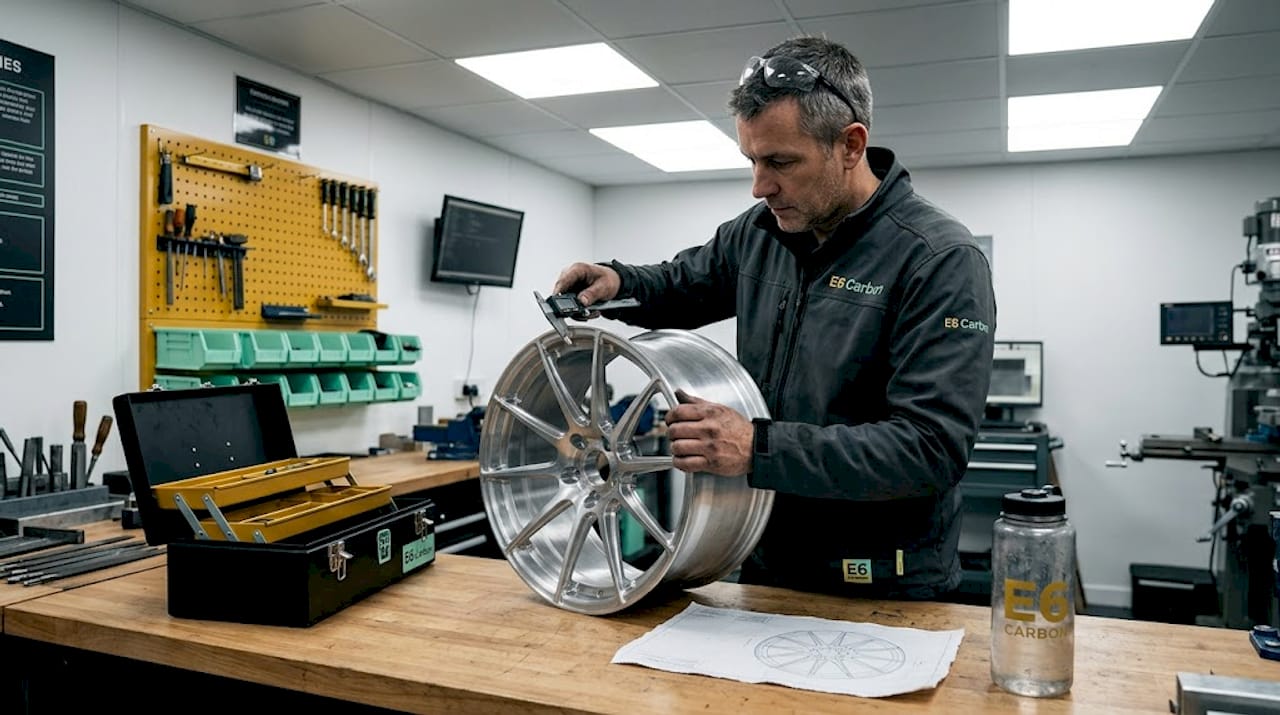
CNC stands for Computer Numerical Control, a manufacturing method where pre-programmed software directs cutting tools to remove material from a workpiece with extreme precision. Unlike manual machining, which relies on operator skill and is prone to human error, CNC machines follow digital instructions down to fractions of a millimeter. The result is consistent, repeatable parts that meet exact specifications every single time.
For wheel production, the core CNC processes you’ll encounter are:
- Milling: A rotating cutting tool removes material across multiple axes to carve spoke designs, pockets, and surface profiles.
- Turning: The workpiece spins while a stationary tool shapes it, ideal for creating the circular barrel and hub face.
- Drilling: CNC-controlled bits create lug holes and valve stem openings with tolerances tighter than 0.01 mm.
- Multi-axis machining: Advanced five-axis CNC centers cut from any angle simultaneously, enabling complex, undercut spoke geometries impossible with conventional methods.
The real advantage for enthusiasts is that CNC machining produces tolerances (the allowable margin of error in a dimension) that are virtually impossible to achieve by hand. A well-executed CNC wheel face can hold tolerances as tight as ±0.025 mm, which directly affects balance, vibration, and how cleanly the wheel seats against the hub. Those numbers matter enormously when you’re running high-grip tires at speed.
Understanding the wheel customization basics helps illustrate why CNC machining isn’t just a marketing term. It’s the foundation of any wheel that’s genuinely engineered rather than simply manufactured.
Pro Tip: Always ask a wheel manufacturer about their machining tolerances. A company confident in their CNC process will state specific numbers. Vague answers about “precision machining” without data are a red flag.
How CNC machining creates premium wheels: Step by step
The journey from raw material to a finished, show-quality wheel is longer and more detailed than most buyers realize. Here’s how it works at a high level:
- CAD design and digital modeling: Engineers create a three-dimensional model using Computer-Aided Design software. Every spoke angle, offset measurement, hub bore diameter, and surface contour is defined digitally before any metal is touched. Changes are virtually free at this stage, allowing for true customization.
- Material selection: Depending on application, a billet (a solid block or rod of metal) of forged aluminum, titanium, or magnesium alloy is selected. Forged billets are denser and stronger than cast blanks because the forging process aligns the metal grain structure.
- Rough CNC turning: The billet is mounted on a CNC lathe that shapes the outer barrel, inner barrel, and hub area. This removes the bulk of excess material quickly.
- Precision milling: The blank moves to a multi-axis CNC milling center where spoke designs, weight-reduction pockets, and complex surface geometries are cut. This is the most time-intensive step and where the artistry of the design comes to life.
- Drilling: Lug holes, center bore, and valve holes are drilled with CNC-controlled bits to exact specifications, ensuring a flush, vibration-free fitment on your specific hub.
- Deburring and inspection: Technicians inspect every machined surface, remove any machining burrs (small raised edges left by cutting tools), and verify dimensions against the original CAD file.
- Surface finishing: Options include brushing, polishing, anodizing (an electrochemical process that hardens the surface and adds color), powder coating, or clear coating. Premium finishes do more than look good. They resist corrosion and protect structural integrity over thousands of kilometers.
| Manufacturing stage | CNC role | Quality impact |
|---|---|---|
| CAD design | Digital blueprint for all cuts | Enables true customization |
| Rough turning | Removes bulk material | Sets barrel geometry |
| Precision milling | Carves spokes and faces | Defines design complexity |
| Drilling | Creates lug and bore holes | Ensures hub fitment accuracy |
| Surface finishing | Anodizing, coating, polishing | Protects and elevates aesthetics |
The SS6 multipiece wheel process and the JF10 wheel design workflow are excellent real-world examples of how multi-step CNC manufacturing translates into finished, competition-grade wheelsets.
Pro Tip: Multi-piece wheels take full advantage of CNC machining because each individual component, the center, inner barrel, and outer barrel, can be machined independently and assembled with precision hardware. This gives you more fitment and finish flexibility than any monoblock can offer.
CNC vs. cast and flow-formed wheels: What’s the real difference?
Here’s where things get concrete. If you’ve ever wondered why CNC machined wheels command a premium over cast or flow-formed options, the answer isn’t just marketing.
| Feature | CNC machined | Flow-formed | Cast |
|---|---|---|---|
| Material strength | Very high | Moderate to high | Moderate |
| Weight | Optimized, very light | Lighter than cast | Heaviest |
| Design complexity | Unlimited | Limited | Moderate |
| Tolerances | Extremely tight | Moderate | Loose |
| Customization | Fully bespoke | Limited options | Catalog options only |
| Production cost | High | Moderate | Low |
| Durability | Excellent | Good | Acceptable |
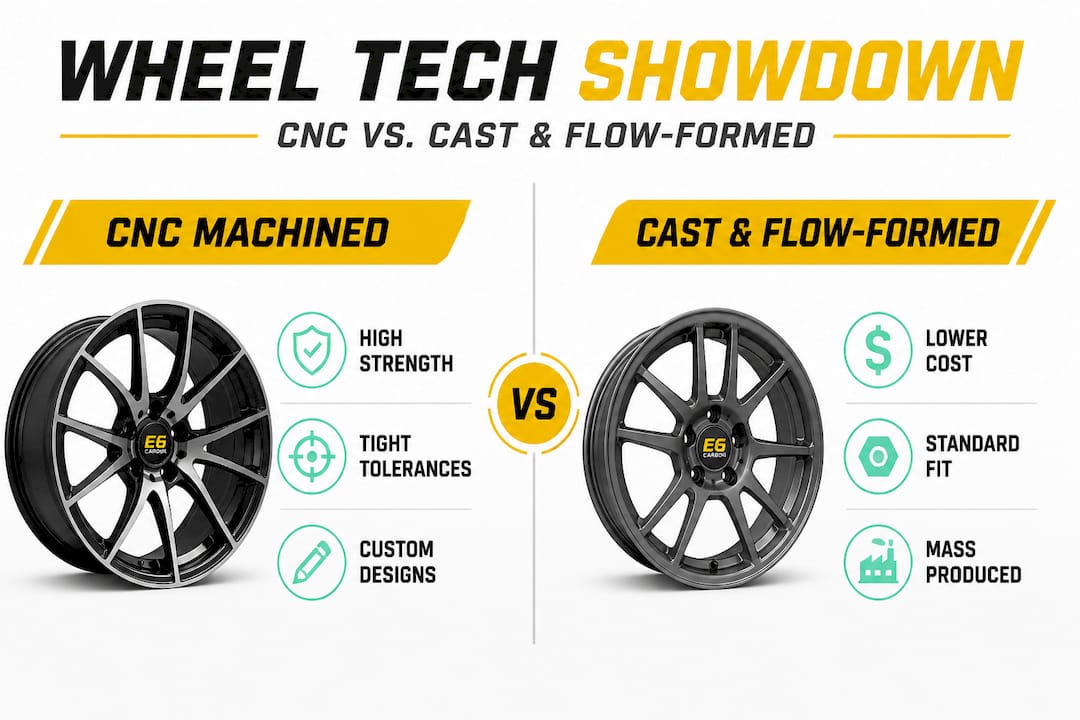
Cast wheels are made by pouring molten metal into a mold. It’s fast and inexpensive, which is why most OEM (original equipment manufacturer) wheels use this method. The downside is porosity (tiny air pockets trapped in the metal during cooling), lower material density, and limited design complexity. You’re essentially stuck with whatever shape the mold allows.
Flow-formed wheels start as a cast blank and then spin while rollers compress and stretch the barrel section. This improves barrel strength without dramatically increasing cost. However, the center section is still cast, which means the hub face and spoke area don’t benefit from the same improvement.
CNC machined wheels start from a forged or billet blank and are shaped entirely by cutting tools guided by software. There are no mold limitations, no porosity, and no compromises on spoke geometry.
“The difference between a cast wheel and a CNC machined wheel isn’t just measurable on a scale. It’s measurable at every corner, every braking zone, and every time someone walks up to your car.”
The weight reduction from CNC machining is a good place to start if you want to see what real, percentage-based improvements look like for your build.
Key advantages CNC machined wheels hold over the alternatives:
- No porosity or casting defects
- Spoke designs can incorporate undercuts and complex geometry
- True per-vehicle fitment with custom offsets and bore sizes
- Consistent quality across an entire set
- Dramatically better strength-to-weight ratio
The performance and style impact of CNC wheels on your vehicle
Let’s talk about what actually changes when you bolt on a set of CNC machined wheels. The improvements aren’t subtle.
Unsprung weight reduction is the biggest performance story. Unsprung weight refers to the mass of components not supported by the suspension, namely your wheels, brakes, and tires. Reducing unsprung weight has an outsized effect on handling because the suspension doesn’t have to work as hard to keep your tires in contact with the road. A reduction of even two to three kilograms per corner translates into noticeably sharper turn-in response and more communicative steering feel.
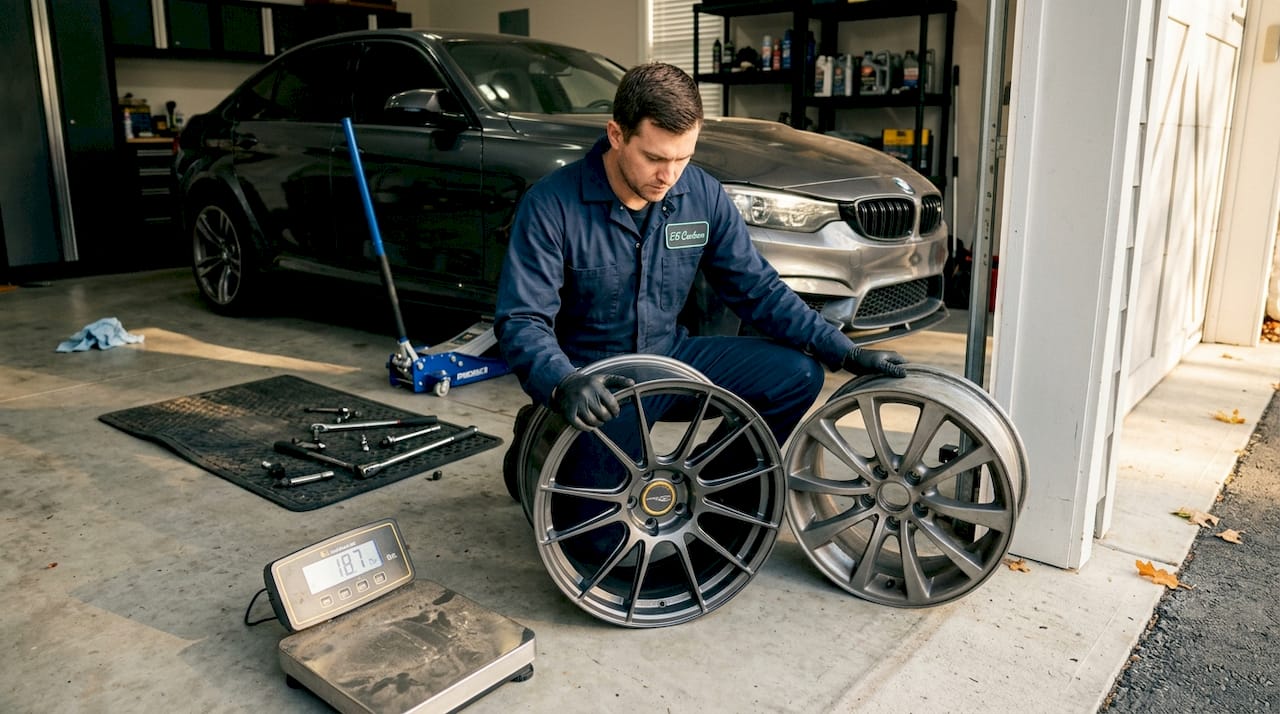
Braking improvement follows naturally. Lighter rotating mass means the brakes have less rotational inertia to overcome. Track drivers and canyon runners feel this immediately in shorter stopping distances and reduced brake fade under repeated heavy stops.
Vibration reduction is less talked about but just as important. Wheels with tighter tolerances and perfect balance require less corrective counterweight during balancing. That means the wheel runs truer at speed, reducing the high-frequency vibration that causes steering wheel shimmy and fatigues components over time.
Visual impact is real and measurable in terms of car value. A factory car fitted with bespoke CNC wheels is instantly differentiated from the same model with stock or aftermarket cast wheels. The depth of machined surfaces, the crisp spoke edges, and the quality of finish visible from ten feet away communicate that this is not a catalog build.
Key performance and style gains from CNC machined wheels:
- Faster acceleration due to reduced rotating mass
- Shorter braking distances and improved brake feel
- Sharper, more communicative steering response
- Reduced high-speed vibration
- Unique visual signature no catalog wheel can replicate
- Higher resale value for the complete vehicle
Designs like the SS7 multipiece and the AR01 multipiece style demonstrate how CNC machining enables spoke geometry and surface profiles that genuinely can’t be replicated in cast production.
For context: reducing unsprung weight by four kilograms per corner is roughly equivalent to removing 16 kilograms of sprung mass in terms of handling responsiveness. That’s a meaningful number.
Choosing a CNC machined wheel: What to consider
You’re ready to upgrade. Here’s what to evaluate before you commit:
- Material and application match: Forged aluminum suits most street and track applications. If you’re building a track-only car where every gram counts, investigate magnesium or carbon center options. Titanium hardware for fasteners adds another level of weight reduction without sacrificing strength.
- Fitment precision: Custom offset, center bore, and lug pattern must match your specific vehicle. CNC machining makes this straightforward, but you need accurate hub specs from your car. A wheel that’s off by even half a millimeter in bore diameter will require an adapter, which adds weight and a potential failure point.
- Finish durability: Clear-coated bare aluminum looks stunning but requires maintenance. Anodized or powder-coated finishes are more corrosion-resistant and easier to clean. Consider your climate and how hard you drive the car before choosing aesthetics over practicality.
- Manufacturer reputation and warranty: CNC machining is only as good as the machines and the programmers operating them. Look for manufacturers who publish their tolerances, use verified billet or forged blanks, and back their products with a structural warranty.
- Post-purchase support: Custom wheels sometimes need refinishing or repair after curb strikes or track incidents. A manufacturer with in-house CNC capability can re-machine a wheel face or replace a single component in a multi-piece set without scrapping the entire wheel.
The details around customization for safety and fit are worth reviewing before you finalize any order, especially if you’re fitting wheels to a modified suspension setup with non-standard offset requirements.
Pro Tip: For multi-piece wheels, ask whether the barrel and center are secured with aerospace-grade fasteners and whether the mating surfaces are machined flat. Any gap or misalignment here creates a vibration path that no amount of balancing will eliminate.
The hidden power of CNC wheels: Lessons luxury owners learn late
Here’s a perspective that doesn’t get written about enough. Most buyers focus on spoke design and finish color when they should be interrogating material certification and tolerance documentation. The visual element is the easiest part of a CNC wheel to get right. The engineering is where the real variance exists between manufacturers.
The mistake we see repeatedly is buyers choosing a wheel based on renders and price, only to discover the machined faces show tool marks under strong lighting, or the bore doesn’t sit flush on the hub without adapters. These aren’t cosmetic failures. They’re manufacturing failures disguised as cosmetic ones. A tool mark is evidence of wrong cutting speed or worn tooling. A bore that needs an adapter means the manufacturer used a generic blank rather than machining to your specific vehicle spec.
Seasoned enthusiasts who’ve been through two or three wheel upgrades understand that the warranty language matters as much as the finish quality. A manufacturer confident in their CNC process will cover structural defects without requiring you to prove the wheel was defective before a failure occurred.
There’s also the question of design exclusivity. Off-the-rack CNC wheels exist, and some are excellent. But the real advantage of working with a manufacturer who controls their own CNC floor is the ability to adjust spoke count, change the spoke profile, or add custom milling to a spoke face for a look that literally no other car in the world shares. That exclusivity has real value both emotionally and at resale.
The AR02 unique wheel features illustrate exactly what’s possible when CNC capability is paired with genuine design intent rather than catalog selection.
Finally, don’t underestimate the importance of surface finishing as a performance feature, not just an aesthetic one. A properly anodized wheel surface is harder than bare aluminum and more resistant to the heat cycles that cause microcracking over time. That’s a structural benefit most buyers never consider until they see a cast wheel develop surface cracks after a track day.
Take the next step with precision CNC wheels
You now understand the engineering, the process, and the performance returns that separate CNC machined wheels from everything else on the market. The next step is finding the right set for your specific build and driving goals.
E6 Forged’s AR03 multipiece options represent exactly what CNC manufacturing makes possible: complex geometry, fully custom fitment, and a finish quality that holds up under both track stress and showroom scrutiny. If you want to go deeper on how these wheels pair with the rest of your build, the guide to luxury car accessories covers complementary performance components worth considering alongside your new wheels. And when you’re ready to make your final decision, the upgrade guide walks you through the full selection and installation process with expert recommendations at every step.
Frequently asked questions
How does CNC machining improve wheel strength?
CNC machining enables precise control over material removal, producing stronger and denser wheels than cast or generic methods by eliminating the porosity and structural inconsistencies common in poured metal production.
What materials can be CNC machined into wheels?
Aluminum alloys, forged magnesium, and titanium are the most common materials, with carbon fiber centers used in ultra-lightweight multi-piece applications where every gram of rotating mass matters.
Are CNC wheels heavier than forged or cast wheels?
CNC machined wheels are typically lighter than cast equivalents and can match or beat forged wheel weights because material is removed precisely where it’s not structurally necessary, optimizing the strength-to-weight ratio.
Is customization only cosmetic, or does CNC machining improve performance?
CNC machining delivers both: you get a wheel designed exactly for your vehicle’s geometry and driving demands, with weight reduction and tighter tolerances that directly improve acceleration, braking, and handling response.