TL;DR:
- Wheel dimensions and offset directly influence suspension geometry, affecting handling and component stress.
- Excessive offset changes, especially with spacers or lowered ride height, can cause bump steer and instability.
- Proper wheel selection and alignment are essential for balanced aesthetics and high-performance handling.
Most enthusiasts spend hours choosing wheels based on spoke design, finish, and brand cachet. That makes sense — a stunning set of forged wheels on a Ferrari or Lamborghini is genuinely jaw-dropping. But here’s where many builds quietly go wrong: the moment you bolt on a wheel with a dramatically different offset, diameter, or width, you’ve also reconfigured your suspension geometry. The visual upgrade and the mechanical consequence are inseparable. Understanding how these two variables interact is what separates a truly optimized high-performance build from one that looks the part but handles unpredictably.
Table of Contents
- How wheel design influences suspension dynamics
- Wheel offset and its effect on scrub radius, steering, and suspension stress
- Wheel fitment and suspension kinematics: Bump steer, camber gain, and roll center
- Balancing aesthetics and performance: OEM vs. aftermarket wheels
- Optimizing your wheel and suspension setup for performance and style
- The uncomfortable truth: Most enthusiasts underestimate wheel-suspension interplay
- Upgrade your build: Expert wheel guides and performance solutions
- Frequently asked questions
Key Takeaways
| Point | Details |
|---|---|
| Wheel offset impacts suspension | Offset choices change scrub radius, steering feel, and stress on suspension parts—crucial for performance builds. |
| Fitment affects handling | Improper wheel fitment or spacers can double bump steer and cause unpredictable handling in high-performance cars. |
| Trade-off: style vs. control | Aesthetics-driven wheel upgrades may compromise OEM handling—balance looks with safe geometry. |
| Optimize with data | Use performance data and fitment guides to select wheels that enhance suspension without compromising safety. |
| Expert advice is critical | Consult advanced guides and tuners to achieve both performance and style in wheel and suspension setups. |
How wheel design influences suspension dynamics
Wheels are not passive cosmetic components. Every dimensional choice you make, from diameter to width to offset, feeds directly into how your suspension behaves through corners, over bumps, and under hard braking. The wheel design impact extends far beyond rolling aesthetics into measurable engineering territory.
The three primary dimensions that matter most are offset, width, and diameter. Width affects the tire contact patch and lateral load distribution. Diameter changes the rolling radius and, consequently, the leverage applied to suspension links. Offset, measured in millimeters from the wheel’s mounting face to its centerline, determines exactly where the wheel sits relative to the suspension pivot points. Together, these three variables define your wheel’s relationship with every component that connects it to the chassis.
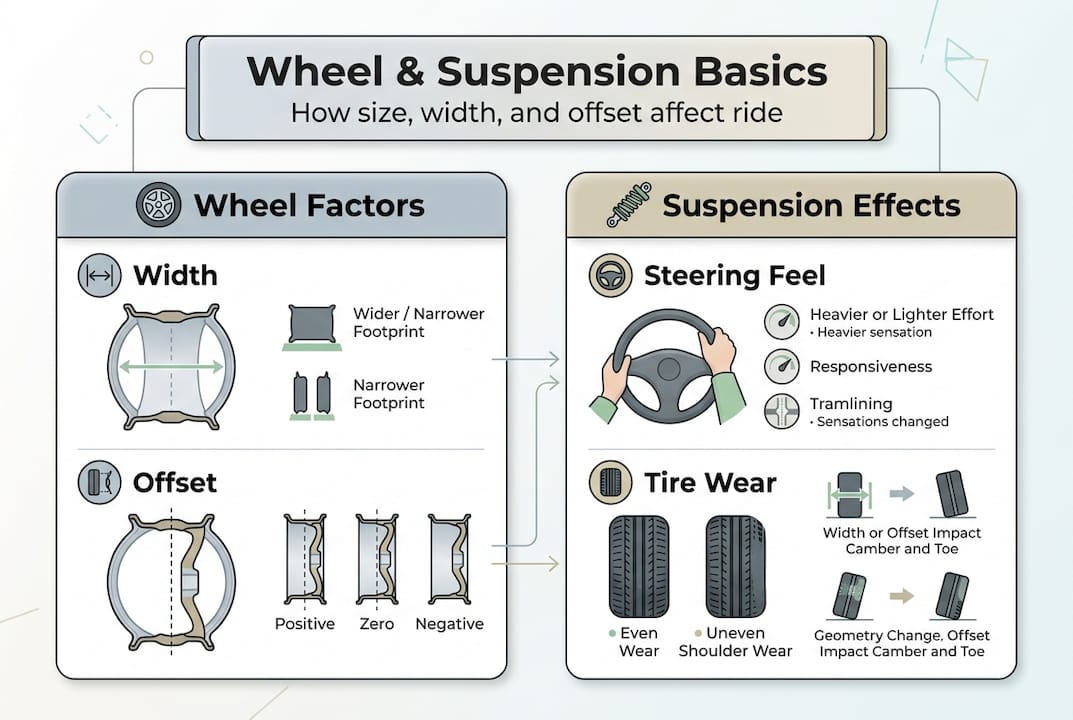
Wheel offset determines wheel position relative to suspension, affecting scrub radius, track width, and leverage on suspension components. Change any of these, and you’re altering how forces travel through tie rods, ball joints, control arms, and bearings. Even a 10mm deviation from OEM offset can produce noticeable changes in steering feedback and tire wear patterns.
Here are the key suspension parameters that shift when you modify wheel design:
- Scrub radius — the distance between the steering axis and the tire contact patch centerline, influencing steering effort and feedback
- Track width — wider track improves lateral stability but increases stress on outer bearings
- Moment arm length — longer arms from offset changes amplify forces on ball joints and wheel bearings
- Bump steer tendency — altered wheel positions change how the toe angle shifts during suspension travel
- Camber gain rate — the rate at which camber angle changes through suspension stroke
When you choose your next set of wheels for performance wheel selection, knowing these variables puts you in control of the outcome rather than guessing after the fact.
Pro Tip: Always cross-reference your target wheel’s offset against your OEM specification before purchase. A difference of more than 15mm in either direction typically requires suspension recalibration to maintain intended handling behavior.
Wheel offset and its effect on scrub radius, steering, and suspension stress
Offset is arguably the single most misunderstood dimension in wheel selection. Most buyers evaluate it as a “fitment” issue, asking whether the wheel will clear the fender. That’s only the beginning of the story.
Negative offset increases scrub radius, stressing ball joints, bearings, and tie rods while changing steering geometry in ways that compound over time. When the wheel is pushed outward relative to the hub, the contact patch moves away from the steering axis. This creates a longer lever arm for road forces to act through, meaning every bump, rut, and braking event transmits more torque into your steering system and suspension joints.
Here’s a direct comparison of how offset affects these dynamics:
| Offset type | Scrub radius effect | Steering feel | Suspension stress | Track width |
|---|---|---|---|---|
| Positive offset | Reduced scrub radius | Lighter, more precise | Lower bearing load | Narrower |
| Zero offset | Neutral | Balanced, OEM-like | Moderate | Stock |
| Negative offset | Increased scrub radius | Heavier, less precise | Higher bearing/tie rod load | Wider |
The visual appeal of a wide-stance, negative-offset setup is undeniable. Cars running significantly pushed-out wheels look planted and aggressive. But the trade-off in a racing wheel upgrade context needs honest evaluation.
“Extreme offset amplifies edge cases — torque steer becomes pronounced under hard acceleration, bump steer introduces unpredictability mid-corner, and bearing failure accelerates dramatically because the contact patch is no longer aligned with the hub’s load path. You’re essentially applying a wrench action to components designed to receive primarily vertical and lateral loads.”
This perspective matters because it reframes how you should think about the wheel fitment guide process. The goal isn’t just clearance. It’s maintaining the load path integrity that your suspension was engineered to exploit.
Wheel fitment and suspension kinematics: Bump steer, camber gain, and roll center
Suspension kinematics is the study of how geometry changes as the suspension moves through its travel. This is where wheel fitment choices get genuinely complex and where the consequences become most visible in real-world handling.
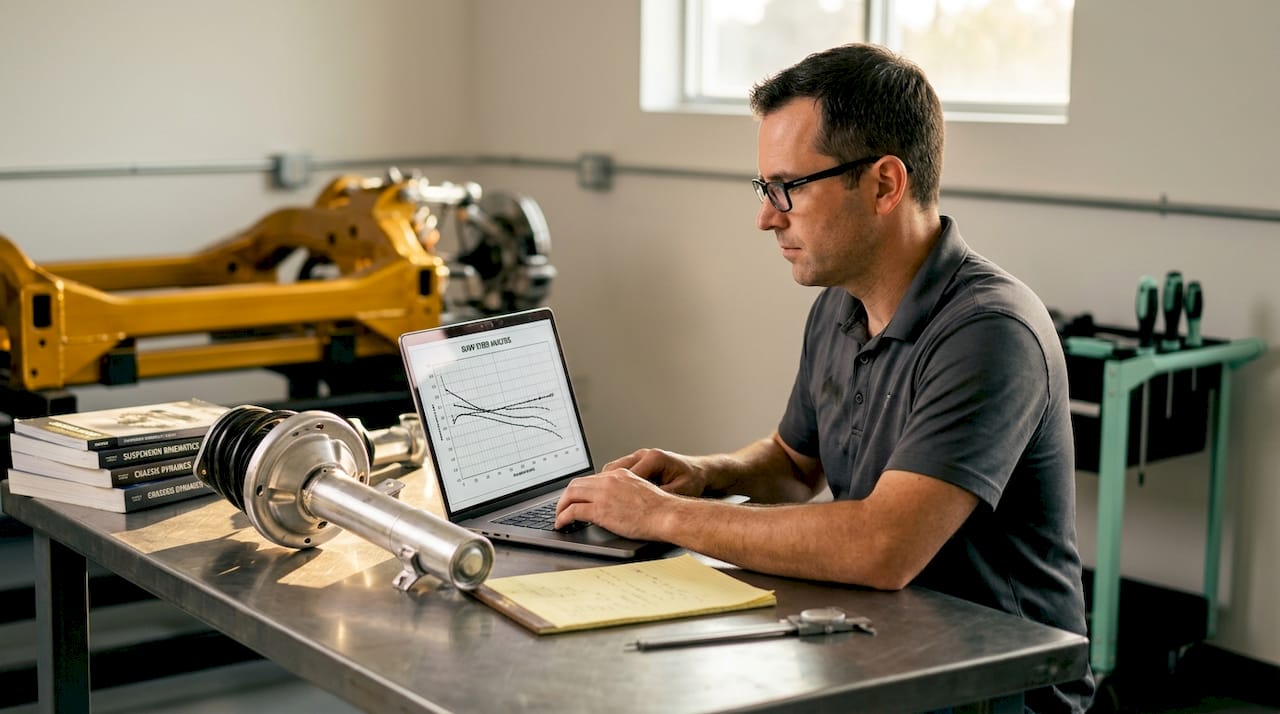
Improper wheel offset alters suspension kinematics — including bump steer, camber gain, and roll center position during dynamic conditions, leading to understeer or degraded handling. Wheel spacers compound this effect significantly. A spacer effectively mimics extreme negative offset, pushing the contact patch further outward while leaving the suspension geometry anchored at the original mounting point.
Here’s a data comparison showing what happens when you combine a lowered ride height with spacers on a typical performance platform:
| Parameter | Stock configuration | Lowered + spacers |
|---|---|---|
| Bump steer coefficient | Approximately 6.2 deg/m | Up to 12.4 deg/m |
| Roll center height | Approximately 80mm above ground | Drops to near ground level |
| Camber gain rate | Designed curve | Disrupted, often inconsistent |
| Steering precision under load | High | Reduced noticeably |
The mechanism works like this, step by step:
- Adding spacers pushes the wheel outward, shifting the effective pivot point of the steering geometry.
- The tie rod now operates at a different angle relative to the control arm, altering how toe changes through suspension travel.
- As the suspension compresses over a bump, the toe angle shifts more aggressively than the OEM design intended.
- This unintended toe change is “bump steer,” and it makes the car feel nervous or unpredictable during high-speed inputs.
- Simultaneously, the roll center drops, reducing the suspension’s ability to resist lateral body roll, which pushes the car toward understeer.
The result in high-performance driving is a vehicle that feels planted when you’re driving smoothly but introduces instability precisely when you need the most confidence — hard cornering, trail braking, or aggressive lane changes. Understanding this through your custom wheels buying guide process is essential before committing to any significant fitment deviation.
The tire wear story is equally important. When bump steer is elevated, the contact patch repeatedly scrubs through alignment angles it wasn’t designed to sustain. This generates uneven wear patterns, increases rolling resistance, and degrades tire compound performance faster. In a track context, that translates to lost lap time and increased tire budget. You can also review what wheel customization strategies help minimize these kinematics disruptions while still delivering visual impact.
Balancing aesthetics and performance: OEM vs. aftermarket wheels
This is where the philosophical tension in performance builds lives. OEM engineers design wheel specifications to serve a specific, validated handling envelope. Aftermarket wheels, particularly those built for visual drama with wide lips and deep dishes, often push well outside that envelope.
That doesn’t automatically make aftermarket wheels wrong. It means they require more informed selection. Extreme offsets and spacers amplify edge cases like torque steer, bump steer, and bearing failure — but the right aftermarket wheel matched carefully to your suspension setup can actually improve on OEM performance by reducing unsprung mass and improving heat management.
Key differences between OEM and aftermarket wheel impact:
- OEM wheels are validated for your car’s specific suspension geometry, load ratings, and safety margins
- Aftermarket wheels offer weight savings, finish options, and size flexibility but require geometry-aware selection
- Forged aftermarket wheels at the premium tier can match or exceed OEM structural integrity while dramatically reducing unsprung weight
- Mass-market aftermarket wheels often add rotational inertia and introduce offset deviations that compromise handling
- Unsprung weight reduction from quality aftermarket forged wheels directly improves suspension response speed and ride quality
The important nuance here is that not all aftermarket choices create problems. A correctly spec’d set of racing spec wheels with the right offset, matched to your suspension and aligned accordingly, can transform handling. The problem isn’t aftermarket wheels. It’s poorly matched aftermarket wheels treated as a pure cosmetic choice.
Pro Tip: When upgrading for aesthetics with a different offset than OEM, budget for a four-wheel alignment immediately after installation and consider requesting a suspension geometry report from your alignment shop. This tells you exactly what has shifted and what adjustable components, if any, can compensate.
Matching your wheel and suspension goals requires knowing your use case. A car used primarily for track days has different priorities than a street car built for aesthetics with occasional canyon driving. The wheel matching guide process should start with use case definition, not spoke count.
Optimizing your wheel and suspension setup for performance and style
Knowing the theory is step one. Applying it through a deliberate setup process is what produces results you can actually feel and trust.
Here are the practical steps for optimizing your wheel and suspension configuration:
- Establish your baseline. Document your current alignment settings, OEM offset specification, and ride height before changing anything. This gives you a reference point to return to if problems emerge.
- Define your offset envelope. Most suspension engineers suggest staying within plus or minus 12mm of OEM offset for street driving and within 8mm for track use. Beyond that, geometry compensation is required.
- Choose wheel width carefully. Wider wheels improve lateral grip but require careful fender clearance checks through full suspension travel, not just static fitment.
- Get a dynamic alignment. Standard four-wheel alignment is a static measurement. A dynamic or full-geometry alignment accounts for how your suspension behaves in motion, which is what actually matters at speed.
- Monitor after 500 miles. Re-check tire wear patterns, listen for new noises from joints or bearings, and note any steering feedback changes. Early detection of stress prevents expensive component failure.
The quantitative case for careful fitment is striking. Lowered ride height combined with spacers can cause bump steer to double to a coefficient of negative 12.4 deg/m, a dramatic deviation from intended handling behavior. That’s not a theoretical risk. It’s a measurable degradation that affects every dynamic event the car experiences. The carbon fiber wheel myths content addresses related misconceptions about material choice and its own role in suspension performance optimization.
Common pitfalls to avoid when modifying wheels:
- Choosing offset based on looks alone without checking scrub radius impact
- Running spacers without compensating alignment adjustments
- Ignoring the relationship between wheel diameter increase and rolling radius change
- Assuming “it fits” means “it performs” — fitment and geometry are separate conversations
- Neglecting wheel bearing inspection after any significant offset change
The uncomfortable truth: Most enthusiasts underestimate wheel-suspension interplay
Here’s what separates experienced builders from enthusiasts who keep chasing problems: the builders treat wheels as the first component in the suspension system, not the last cosmetic choice. Every serious race team engineer we’ve encountered thinks about wheel offset before they think about wheel brand. The geometry comes first. Everything else is secondary.
The glamor conversation in the aftermarket is loud and visually compelling. A staggered fitment with dramatically wide rear wheels looks incredible in photographs and at shows. But there’s a reason factory race programs, from GT3 to time attack, obsess over wheel positioning with a precision that most street builds completely ignore. When true wheel impact is evaluated honestly, the conclusion is always the same: geometry integrity is the foundation.
“The most expensive mistake in a performance build isn’t buying cheap parts. It’s buying premium parts in the wrong specification and then spending twice as much trying to fix what should have been right the first time.”
What the luxury and motorsport segment gets right, and what the broader enthusiast community sometimes misses, is that the best-looking setups are usually also the best-engineered ones. A precisely fitted set of forged monoblock wheels on a McLaren or BMW M car, with the correct offset, proper alignment, and matched suspension calibration, looks aggressive because the geometry is right. The flush fitment and planted stance aren’t accidents. They’re consequences of engineering discipline. The visual appeal and the performance outcome reinforce each other when the work is done properly.
Upgrade your build: Expert wheel guides and performance solutions
If this article has shifted how you think about wheel selection, you’re ready to make upgrade decisions that actually improve your build rather than just change its appearance.

E6 Carbon and E6 Forged offer a full range of performance wheel upgrades engineered with offset precision, unsprung weight reduction, and structural integrity at their core. Whether you’re building for the track, the show floor, or daily performance driving, the process starts with knowing exactly what your suspension demands. You can explore our forged wheel inspection guidelines to understand what quality looks like before you commit, and walk through our complete forged wheel installation guide to ensure your new setup delivers everything it promises from the first drive.
Frequently asked questions
What is wheel offset and why does it matter?
Wheel offset is the distance from the wheel’s mounting surface to its centerline; it directly determines how wheel position affects scrub radius and suspension stress, making it one of the most critical dimensions in any wheel selection decision.
How do spacers and lowered ride height affect suspension kinematics?
Adding spacers and lowering ride height is a combination that doubles bump steer to 12.4 deg/m and significantly drops the roll center, which produces unpredictable handling, especially under dynamic cornering conditions.
Is it possible to maintain OEM handling with aftermarket wheels?
Yes, matching offset and fitment closely to OEM specifications preserves geometry integrity, but extreme offsets amplify torque steer and bearing failure risk, making geometry-aware selection mandatory for any performance-focused build.
What are the signs of suspension stress from wheel modifications?
Accelerated and uneven tire wear, noticeably heavier or imprecise steering, and unusual noises from ball joints or tie rods are all indicators that offset changes are stressing components beyond their designed load paths.
Can visual upgrades like larger wheels harm suspension?
Yes, larger wheels and extreme fitment choices alter suspension kinematics through disrupted camber gain, elevated bump steer, and roll center drop, all of which increase component stress and can meaningfully degrade handling precision.