TL;DR:
- Racing wheels are engineered for performance specifics, while street wheels prioritize durability and comfort.
- Material choice and stiffness affect ride quality, impact resistance, and suitability for daily driving.
- Proper fitment, including offset and hub tolerance, is crucial to avoid safety and handling issues.
Most enthusiasts assume that slapping a set of lightweight racing wheels onto a street car is an automatic performance win. That assumption costs people money, comfort, and sometimes safety. Racing wheels and street wheels share a basic shape, but the engineering logic driving each is fundamentally different. From offset tolerances to material stiffness and tire compatibility, every dimension means something specific to its intended environment. This guide breaks down the actual differences in design, materials, tire pairing, and real-world application so you can make a confident, informed decision before your next upgrade.
Table of Contents
- The engineering foundations: Why racing wheels are built differently
- Materials, stiffness, and ride quality: The real performance trade-offs
- Tires, wheels, and intended use: A symbiotic relationship
- What about street/strip wheels and dual-use setups?
- Perspective: Why real-world usage, and not just specs, should drive your wheel choice
- Upgrade your wheels with confidence
- Frequently asked questions
Key Takeaways
| Point | Details |
|---|---|
| Fitment and geometry matter | Racing wheels require precise geometry and mounting for high-performance demands—street wheels prioritize ride and alignment tolerance. |
| Stiffness isn’t always better | Choosing the stiffest wheel can harm comfort and handling on the street; balance is essential for real-world use. |
| Tires and wheels work together | Optimized wheel and tire combinations are critical—track slicks and street tires demand different wheel designs. |
| Street/strip wheels offer compromise | Dual-purpose wheels blend daily comfort with occasional track capability, but require careful engineering checks. |
| Prioritize real use | The best upgrade fits your actual driving needs—not just track specs or trends. |
The engineering foundations: Why racing wheels are built differently
To unravel the core differences, let’s first examine the engineering principles shaping wheel design for track versus street use.
Wheel geometry is the starting point for every serious fitment discussion. Three parameters define how a wheel interacts with your suspension and chassis: offset (how far the wheel’s mounting face sits from its centerline), hub bore (the center hole diameter), and bolt pattern (the number and spacing of lug holes). On the street, these numbers are selected for factory clearances, ride quality, and general durability. On the track, they are calculated down to fractions of a millimeter.
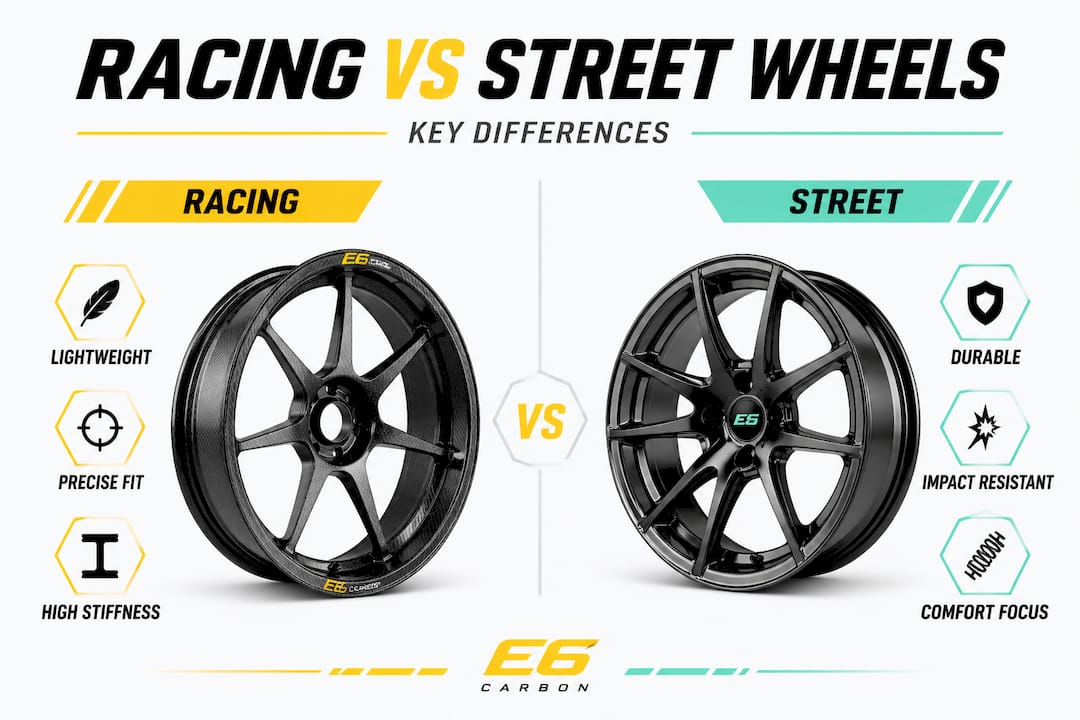
Racing applications commonly use more aggressive offsets and require precise hub-centric mounting and correct clearances for steering stability and braking under high lateral loads. That’s not an exaggeration. A miscalculated offset can shift the scrub radius enough to induce brake pull during hard stops at 120 mph. That level of consequence does not exist in the same way on public roads.
Street wheel engineering prioritizes impact resistance, compliance under varied load inputs, and long-term durability across potholes, speed bumps, and temperature swings. Racing wheel engineering strips away everything that isn’t contributing to lap time. The tolerance stack is tighter, the load ratings are calibrated for controlled environments, and the hub-centric precision is non-negotiable.
Here’s a direct comparison of how these parameters differ between the two categories:
| Parameter | Street Wheels | Racing Wheels |
|---|---|---|
| Offset range | Moderate, factory-matched | Aggressive, application-specific |
| Hub bore tolerance | ±0.5mm acceptable | ±0.1mm or tighter |
| Load rating | Designed for road impact spikes | Optimized for sustained lateral/braking force |
| Impact resistance | High priority | Lower priority |
| Material thickness | Variable, comfort-tuned | Minimum necessary for strength |
Common pitfalls enthusiasts run into when applying racing wheel logic to street cars include:
- Choosing offset for aesthetics without verifying suspension clearance under compression
- Ignoring hub bore diameter and relying on lug-centric mounting instead of hub-centric
- Overlooking brake caliper clearance when moving to wider-lipped designs
- Assuming a lower weight automatically improves all handling characteristics
- Using racing load ratings to justify running lighter wheels on cars that see daily road abuse
The wheel fitment guide framework is particularly useful here, because it reveals how even wheel design and performance choices that look purely visual have direct structural consequences.
Motorsport engineers don’t pick offsets based on aesthetics. Every millimeter affects tire contact patch geometry, scrub radius, and steering feel under braking. The math is done before the wheel is cast. — BMW performance engineering standards reflect exactly this level of precision in their factory motorsport programs.
Materials, stiffness, and ride quality: The real performance trade-offs
Having established the core engineering differences in design and fitment, let’s examine the material science and structural logic that dictate real-world performance and comfort.
Racing wheels are built from materials selected for one reason: the best possible strength-to-weight ratio in controlled conditions. Forged aluminum is the dominant choice in most motorsport categories because the forging process aligns the grain structure of the metal, producing a wheel that is significantly stronger than a cast equivalent at the same weight. Magnesium alloy wheels go further, shaving additional grams, but they require careful handling and are more susceptible to corrosion. Carbon fiber composite wheels represent the current performance ceiling, offering extraordinary stiffness at minimal mass, though at a cost that reflects the complexity of their construction.
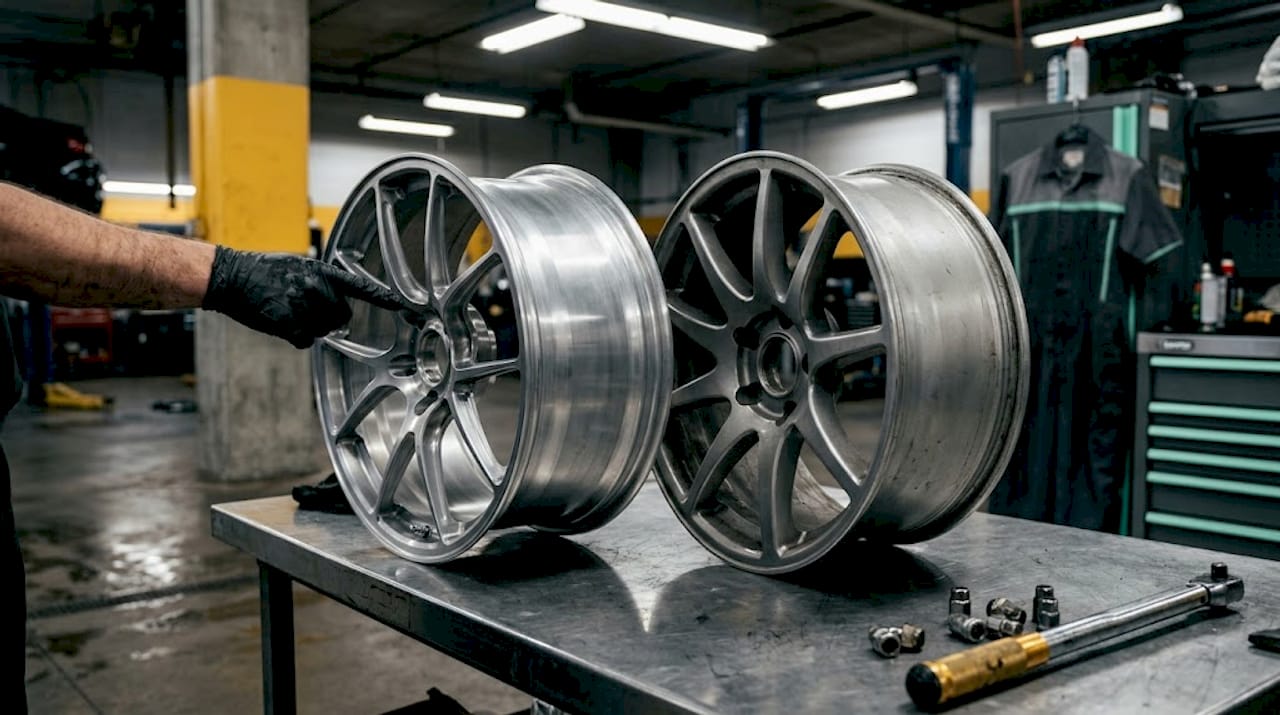
Here’s how these materials stack up across the metrics that matter:
| Material | Typical Weight (18") | Stiffness | Impact Tolerance | Best Use |
|---|---|---|---|---|
| Cast aluminum | 22-28 lbs | Moderate | High | Daily street |
| Forged aluminum | 16-22 lbs | High | Moderate-High | Street/track |
| Magnesium alloy | 12-16 lbs | Very high | Low | Track only |
| Carbon fiber | 9-14 lbs | Extremely high | Low | Racing/show |
Now here’s the part most people get wrong. Maximum stiffness is not a universal goal. A wheel that is too stiff for road inputs forces the tire to absorb more impact energy rather than allowing the structure to flex slightly and distribute that load. On a smooth racing circuit, this is fine because the surface is predictable and the tire compound is engineered to work in that environment. On public roads with variable surfaces, the same stiffness can worsen comfort, reduce traction feel, and actually degrade the driver’s ability to sense the road.
This is why a forged aluminum wheel built for mixed use, like the multi-piece designs available through the performance wheels expert guide, often outperforms a full racing-spec wheel for a street-driven sports car. The engineering target is different, and the result serves the driver better.
Pro Tip: If you drive a luxury performance vehicle on the street 90% of the time and visit the track occasionally, a high-quality forged aluminum wheel with moderate stiffness will serve you better than a magnesium or carbon fiber racing unit. You’ll preserve ride quality and tire life without sacrificing meaningful performance gains. For deeper insight into wheel customization and weight reduction strategies, matching the wheel’s construction to your actual use profile makes a measurable difference in both feel and longevity.
It’s also worth noting that thermal behavior matters. Racing wheels are designed to dissipate heat generated during sustained braking and high-speed cornering. Street wheels see far less sustained thermal load, which means a wheel optimized purely for heat dissipation on track may behave differently in the variable conditions that come with everyday driving and ceramic tint benefits for performance considerations remind us that managing heat across all vehicle systems is a coordinated effort, not an isolated one.
Tires, wheels, and intended use: A symbiotic relationship
Now that we understand the structures themselves, it’s essential to focus on the tire-wheel relationship and the real-world behaviors these combinations produce.
Wheels and tires are not independent choices. A racing wheel’s design assumes a specific tire profile, compound, and operating pressure range. Change the tire and the entire system’s behavior shifts. This is why professional teams spend as much time on tire selection as they do on wheel specification. The two exist as a single performance unit.
Racing tires (slicks) operate within a narrow temperature window to generate peak grip. Below that window, they’re greasy and unpredictable. In wet conditions, they become genuinely dangerous. This temperature dependency directly influences how racing wheels are designed, including their bead profile, internal volume, and pressure retention characteristics. Street tires are engineered for a completely different mission: consistent grip across a wide temperature range, noise reduction, aquaplaning resistance, and long tread life.
The differences between racing and street tire-wheel setups include:
- Tread pattern: Racing slicks have none. Street tires channel water and generate consistent contact across variable surfaces.
- Compound hardness: Racing compounds are soft and heat-sensitive. Street compounds are harder and more temperature-stable.
- Operating pressure: Racing setups run tighter pressure tolerances. Street wheels accommodate a wider operational range.
- Legal restrictions: Slicks and semi-slicks are either prohibited or impractical on public roads in most jurisdictions.
- Wear rate: Racing compounds can last fewer than 50 miles at full race pace. Street tires are measured in tens of thousands of miles.
Pro Tip: If you’re upgrading to racing wheels for track days, plan for a dedicated set of track tires and maintain a separate street tire-and-wheel setup. Attempting to use racing-compound rubber for street driving will leave you with cold, unpredictable traction for the first several miles of every drive, plus dramatically accelerated wear on tires that cost significantly more than their street equivalents.
What about street/strip wheels and dual-use setups?
What if you want the best of both worlds? Let’s look at hybrid wheels designed for both street and track.
The “street/strip” wheel category exists precisely because many enthusiasts don’t want to maintain two separate wheel sets. These wheels are engineered to improve unsprung weight and fitment for drag and track use while remaining usable on the street, with deliberate attention paid to brake clearance, hub-centric precision, and structural integrity across both environments. They represent a genuine engineering compromise rather than a marketing shortcut.
The primary trade-offs in a dual-use wheel include added material thickness to handle road impacts that pure racing wheels aren’t designed for, slightly higher weight compared to purpose-built track units, and geometric choices that balance road compliance with the occasional track session. You won’t find the ultimate lightness of a purpose-built magnesium racing wheel here, but you will find a wheel that handles a speed bump without cracking and still performs meaningfully on track days.
Before selecting a street/strip setup for your custom wheels for luxury cars application, check the following:
- Brake clearance: Confirm the wheel clears your specific caliper setup, especially if you’re running big-brake kits.
- Fitment precision: Hub-centric mounting quality is non-negotiable. Lug-centric street/strip wheels will vibrate under sustained high-speed use.
- Offset verification: Aggressive offsets that look great at a show can cause knuckle rub under full suspension compression on rough roads.
- Beadlock legality: Some street/strip wheels use beadlock rings that are not legal for public road use in many states.
- Heat load compatibility: A wheel optimized for short drag strip runs may not handle the sustained thermal cycling of road course laps.
The street/strip category is growing because enthusiasts are getting smarter about how they actually use their cars. Most track-day drivers spend 95% of their miles on public roads. A wheel that serves both without compromising either is genuinely valuable. — Dragzine’s street/strip wheel selection analysis reflects this shift in buyer priorities.
The performance wheel upgrade guide walks through this decision process with vehicle-specific guidance that saves you from expensive fitment mistakes.
Perspective: Why real-world usage, and not just specs, should drive your wheel choice
Here’s the candid version of what we’ve seen over years of working with high-performance and luxury vehicle owners: the most common wheel upgrade mistake is not choosing the wrong offset or the wrong material. It’s choosing for the wrong context.
Enthusiasts are drawn to racing wheel specifications because those numbers represent an idealized version of performance. Lighter, stiffer, more aggressive. The catalog looks like a podium finish waiting to happen. But a McLaren 720S or a BMW M4 driven daily on Los Angeles or Chicago roads is not operating in that environment. It’s absorbing expansion joints, road debris, and temperature cycles that a pure racing wheel was never engineered to handle. The result is a harsh ride, accelerated tire wear, and occasionally cracked wheels from impacts that a properly spec’d forged street unit would have absorbed without issue.
What actually moves the needle for a street-driven performance car is a wheel that reduces unsprung mass meaningfully without sacrificing structural compliance. A well-engineered forged aluminum or multi-piece wheel from a manufacturer who understands both track and street demands delivers 80% of the performance benefit of a full racing unit with none of the daily-use penalties.
The enthusiasts who get this right are the ones who are honest about their usage profile before they buy. They use the custom wheels buying process guide as a decision framework rather than browsing by looks first and justifying the spec later. That discipline is what separates a satisfying upgrade from an expensive lesson.
Pro Tip: Before specifying any wheel, write down three things: the road surfaces you drive most often, how many track days you realistically do per year, and your performance priority ranking between weight, stiffness, and ride quality. Those three answers will eliminate 80% of the options and point you directly at the right solution.
Upgrade your wheels with confidence
The engineering gap between racing and street wheels is real, and navigating it well is what separates a genuinely transformative upgrade from one that looks great in photos but underdelivers in practice.

At E6 Carbon and E6 Forged, our product development starts exactly where this article does: with your actual use case. Whether you’re building a dedicated track weapon, a daily-driven luxury performance vehicle, or a hybrid setup for weekend canyon runs and occasional circuit days, we engineer wheels that match the real demands of your driving environment. Explore the performance wheel upgrade guide for vehicle-specific recommendations, browse our custom wheels for luxury cars catalog for bespoke fitment solutions, and review our guide on inspecting forged wheels for safety to understand the quality benchmarks that matter most.
Frequently asked questions
Can I use racing wheels on the street?
Most racing wheels are not optimized for street comfort or durability and may lack proper impact resistance for public roads. Racing wheel fitment requirements involving aggressive offsets and precision hub-centric mounting also create compatibility challenges on vehicles that haven’t been specifically set up to accommodate them.
Are stiffer wheels always better for performance?
No, excessive stiffness can actually hurt both comfort and traction. When a wheel is too stiff for road inputs, the tire absorbs more impact energy than it’s designed for, which can alter grip feel and ride quality, particularly on varied road surfaces.
Why do racing tires require specialized wheels?
Racing tires need tailored bead profiles, specific internal volumes, and wheel materials that handle sustained heat cycles during braking and cornering. The coupling between slicks and racing setups means that changing either component without reconsidering the other changes the entire system’s behavior.
What should I look for in dual-use or street/strip wheels?
Verify brake caliper clearance, hub-centric mounting precision, and whether the wheel’s design is optimized for the heat and load patterns you’ll actually generate. Mixed-use wheel selection also requires checking beadlock legality in your state if that feature is part of the wheel’s design.