TL;DR:
- Custom wheel refinishing involves powder coating and liquid spray paint, each offering different durability and appearance. Powder coating provides a stronger, chip and UV-resistant finish that outlasts liquid paint and costs more upfront. Proper planning and execution enhance long-term aesthetics and performance, especially in harsh driving conditions.
Custom paint for wheels is a specialized application of protective and decorative coatings that transform both the appearance and structural resilience of automotive wheel surfaces. The industry term is wheel refinishing, and it covers everything from powder coating and liquid spray systems to metallic and matte topcoats. Whether you drive a Mercedes-AMG GT on track weekends or a Lexus LC500 on weekend canyon runs, the finish on your wheels takes more punishment than almost any other exterior surface. Choosing the right coating method determines how long that finish lasts, how much maintenance it demands, and how well it integrates with the rest of your build.
What is custom paint for wheels, and what are the main finish types?
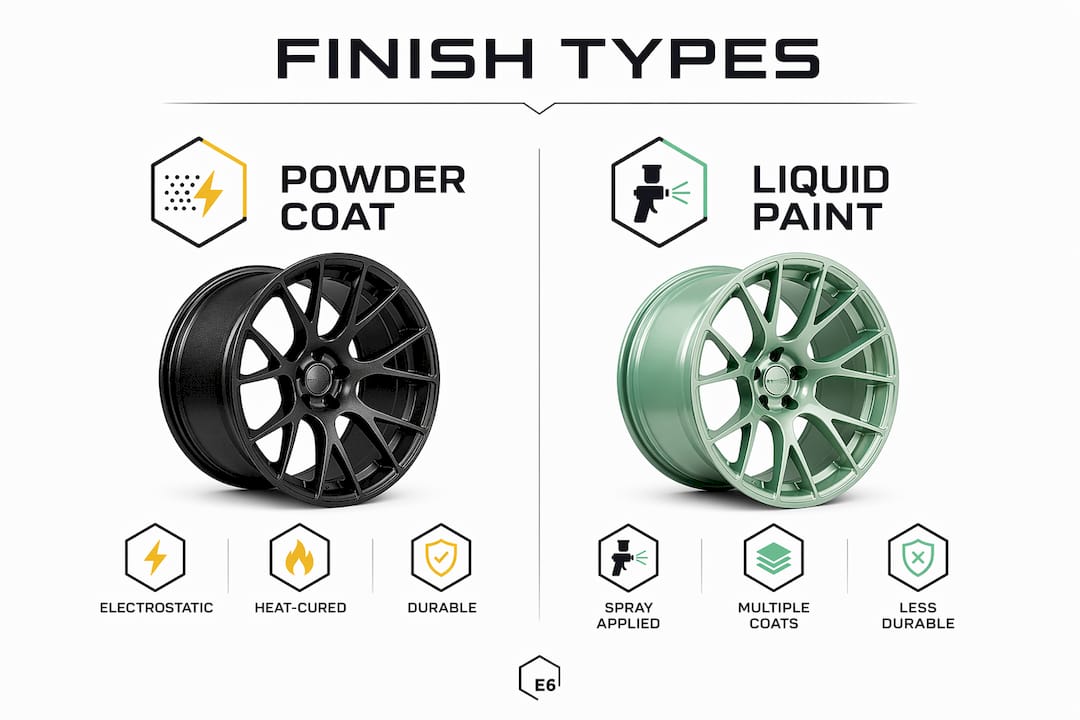
Custom wheel painting, or wheel refinishing, falls into two primary categories: powder coating and liquid spray paint. Each uses a fundamentally different bonding mechanism, and that difference drives every downstream decision about durability, cost, and appearance.
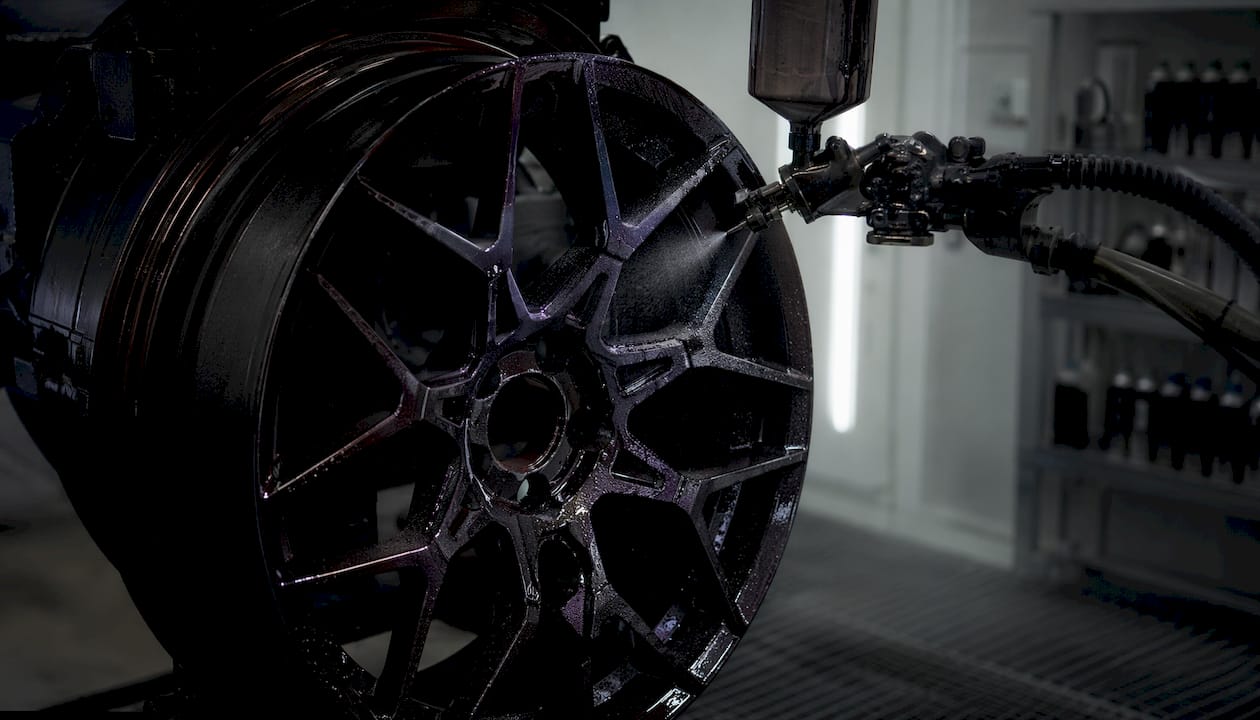
Powder coating uses an electrostatic charge to bond dry pigment and resin particles directly to the wheel surface. The wheel then passes through an oven where heat cures the coating into a hard, continuous shell. That shell bonds at a molecular level rather than sitting on top of the metal. The result is a finish that resists chips, UV degradation, and chemical attack far better than liquid alternatives.
Liquid spray paint builds finish through sequential layers: a self-etching primer, one or more base color coats, and a clear coat for gloss and UV protection. Each layer requires a flash period, which is the time needed for solvents to evaporate before the next coat goes on. Skip that window and you trap solvents beneath the surface, which causes bubbling and peeling once the wheel heats up.
The main finish textures available across both systems include:
- Gloss: High reflectivity, shows brake dust and road grime quickly, easiest to clean
- Matte: Flat, non-reflective surface that hides minor surface imperfections but requires pH-neutral cleaners to avoid sheen spots
- Satin: A midpoint between gloss and matte, popular on dark-colored builds
- Metallic: Aluminum or mica flake suspended in the coating for a depth effect, available in both powder and liquid systems
- Two-tone and candy: Require multiple powder or paint layers with translucent topcoats, best left to professional shops
Pro Tip: In liquid paint systems, never rush flash time between coats. Trapped solvents cause bubbling and peeling the moment the wheel reaches operating temperature, and no amount of clear coat will save a compromised base.
How does custom paint affect wheel durability in real driving conditions?
Finish selection directly determines how long your wheels look good under real-world stress. Road salt, brake dust, stone chips, and UV exposure attack every finish differently, and the gap between powder coating and liquid paint widens significantly in harsh conditions.
Winter road salts and brake dust cause faster failure in standard liquid painted finishes compared to powder-coated ones. Liquid paint sits on the surface and relies on adhesion rather than a chemical bond. Once a chip breaks the clear coat, moisture migrates under the paint layer and causes corrosion to spread laterally beneath the finish.
Powder coating costs 30%–50% more upfront than liquid spray paint. Over a 5–10 year period, however, powder-coated wheels typically require fewer refinishing cycles, making the total cost of ownership lower for daily drivers and performance cars alike.
One detail most enthusiasts miss: powder coating on machined-face wheels fills and obscures the machined texture unless the wheel is re-machined after coating. If you run diamond-cut or brushed-face wheels, confirm with your shop whether re-machining is part of the process before committing to powder.
Pro Tip: For a daily-driven Mercedes-AMG C63 or Lexus LC500, powder coating in a satin or gloss finish gives you the best balance of brake-dust resistance and long-term appearance retention. Reserve matte finishes for weekend cars that see less thermal cycling and road contamination.
What are the practical steps for DIY custom wheel painting?
DIY wheel refinishing is achievable with the right preparation and patience. Rushing any stage produces defects that require a full strip and restart.
- Remove and clean the wheels. Take wheels off the car completely. Clean with a degreaser, then scrub with a wire brush to remove embedded brake dust and oxidation. Rinse and allow to dry fully before touching the surface.
- Sand and etch the surface. Use 220-grit sandpaper to scuff the existing finish. This creates mechanical adhesion for the primer. Wipe down with isopropyl alcohol to remove sanding residue.
- Mask tires and valve stems. Use wheel-specific masking tape and foam backer rod to seal the tire bead area. Brake dust and overspray on tire sidewalls cause adhesion failures on the rubber over time.
- Apply self-etching primer. Two thin coats with a 10-minute flash between each. Primer bonds to bare metal and gives the base coat a uniform surface to grip.
- Apply base color coats. Two to three thin coats, allowing full flash time between each. Thin coats prevent runs and solvent entrapment.
- Apply clear coat. Two coats of 2K urethane clear coat for UV and chemical resistance. Allow 24 hours before handling and 72 hours before mounting tires.
- Cure and inspect. Check for orange peel, runs, or fish-eye defects. Light wet-sanding with 1500-grit followed by polishing compound corrects minor surface texture issues.
Professional mobile rim coloring services can paint wheels without removing them from the car by masking the brakes and tires in place. This reduces downtime but limits surface prep quality. For a show-quality finish, full removal and proper prep remain the standard.
How to choose a finish that fits your full vehicle build
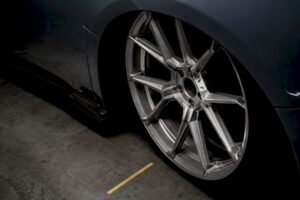
Wheel finish selection works best when it starts from the vehicle’s overall design plan, not the wheel in isolation. A gloss black powder coat that looks sharp on a matte gray wrap can read as visually disconnected on a gloss silver paint job.
Coordinating wheel finishes with vehicle-wide modifications like vinyl wraps, window tints, and chrome deletes produces a more cohesive result than treating each element separately. The most effective approach is to establish a primary tone (light or dark, warm or cool) and build every surface treatment around it.
Key considerations for finish planning:
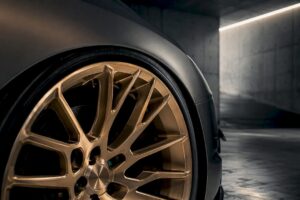
- Match or contrast intentionally. A bronze metallic wheel on a dark green or black car creates deliberate contrast. A color-matched finish on a monochromatic build reads as factory-intentional.
- Brake caliper color. Red or yellow calipers visible through open-spoke wheels shift the visual weight of the wheel face. A gloss or satin finish on the wheel lets the caliper color read clearly.
- Gloss vs. matte relative to body finish. Matte wheels on a gloss car create tension that works on aggressive builds. Gloss wheels on a matte car tend to look mismatched unless the design is very deliberate.
- Unsprung weight interaction. Finish choice does not affect unsprung weight directly, but it does affect which wheel construction makes sense. Forged monoblock wheels from E6 Carbon accept powder coating and liquid finishes equally well, while maintaining the weight advantage that makes wheel customization meaningful for performance builds.
- Performance context. Track-focused builds on McLaren or Lamborghini platforms benefit from finishes that tolerate high brake temperatures and repeated thermal cycling. Powder coating handles this better than single-stage liquid paint.
Professional custom wheel painting starts at approximately $200 per wheel for color matching and custom designs. That baseline covers a single-color liquid finish. Powder coating, multi-tone work, or candy finishes command higher rates.
Key Takeaways
Custom wheel refinishing requires matching your coating method, finish type, and color plan to your actual driving conditions and vehicle build.
| Point | Details |
|---|---|
| Powder coating outlasts liquid paint | Electrostatic bonding creates a heat-cured shell that resists chips, UV, and road salt far better than surface-applied liquid paint. |
| Flash time is non-negotiable | Rushing solvent evaporation between liquid paint coats traps gas beneath the surface and causes bubbling under heat. |
| Machined faces need re-machining | Powder coating fills machined wheel textures; confirm re-machining is included before committing to the process. |
| Coordinate finish with the full build | Wheel color and texture should align with wrap, caliper, and body finish choices for a cohesive result. |
| Upfront cost vs. long-term value | Powder coating costs 30%–50% more than liquid paint upfront but requires fewer refinishing cycles over 5–10 years. |
The finish decision most enthusiasts get wrong
From working across monoblock and multi-piece forged wheel builds for Mercedes-AMG, Lexus LC500, and McLaren platforms, the most common mistake I see is choosing a finish based on how it photographs rather than how it performs. Matte finishes look exceptional in studio shots and on show floors. On a daily-driven AMG GT that accumulates brake dust after every spirited run, a matte surface becomes a maintenance burden within weeks.
My honest recommendation: powder coat in satin for any car that sees regular road use. Satin gives you 80% of the visual depth of gloss with significantly better resistance to the micro-scratches that matte finishes show immediately. Reserve true matte for dedicated show cars or weekend-only builds where you control the cleaning schedule.
The second mistake is treating the wheel finish as an afterthought. On a Lexus LC500 with a full aero kit and a color-matched wrap, a mismatched wheel finish undermines the entire build. Plan the finish at the same time you plan the artisan wheel finish and body treatment. The builds that earn consistent recognition are the ones where every surface decision was made as part of a single design intent.
Budget matters, but the cost of stripping and refinishing a wheel twice exceeds the cost of doing it correctly the first time. Invest in proper prep, choose the right coating for your use case, and the finish will hold for years.
— E6 Engineering
E6 Carbon forged wheels and finish-ready engineering
E6 Carbon engineers forged aluminum wheels for platforms where finish quality and structural performance are equally non-negotiable. Every monoblock and multi-piece wheel in the E6 Forged catalog is built to accept professional powder coating and liquid finishes without compromising the dimensional tolerances that make them track-capable.
Forged aluminum construction reduces unsprung weight while providing the surface integrity that premium finishes require. Cast wheels with porosity issues cause finish adhesion failures that no coating system can prevent. E6 Carbon’s forged process eliminates that variable entirely. For enthusiasts building Mercedes-AMG, Lexus LC500, or McLaren platforms, the E6 Forged wheel catalog covers monoblock, multi-piece, beadlock, and AeroDisc configurations, each engineered to hold a show-quality finish under real driving conditions.
FAQ
What is the most durable finish for custom wheels?
Powder coating is the most durable finish for custom wheels. Its electrostatic bonding and heat-cure process creates a hard shell that resists chips, UV exposure, and road salt better than liquid paint.
How much does professional custom wheel painting cost?
Professional custom wheel painting starts at approximately $200 per wheel for standard color matching and custom designs. Powder coating and multi-tone finishes typically cost more.
Can you paint wheels without removing them from the car?
Mobile rim coloring services can paint wheels without removal by masking the tires and brakes in place. Full removal produces better surface prep and a higher-quality finish.
Does powder coating work on machined-face wheels?
Powder coating fills machined textures on diamond-cut or brushed-face wheels. Re-machining after coating restores the original texture, but this adds cost and must be confirmed with the shop beforehand.
How long does a powder-coated wheel finish last?
A properly applied powder coat on wheels lasts significantly longer than liquid paint over a 5–10 year period, particularly on vehicles exposed to winter road salts and high brake-dust environments.